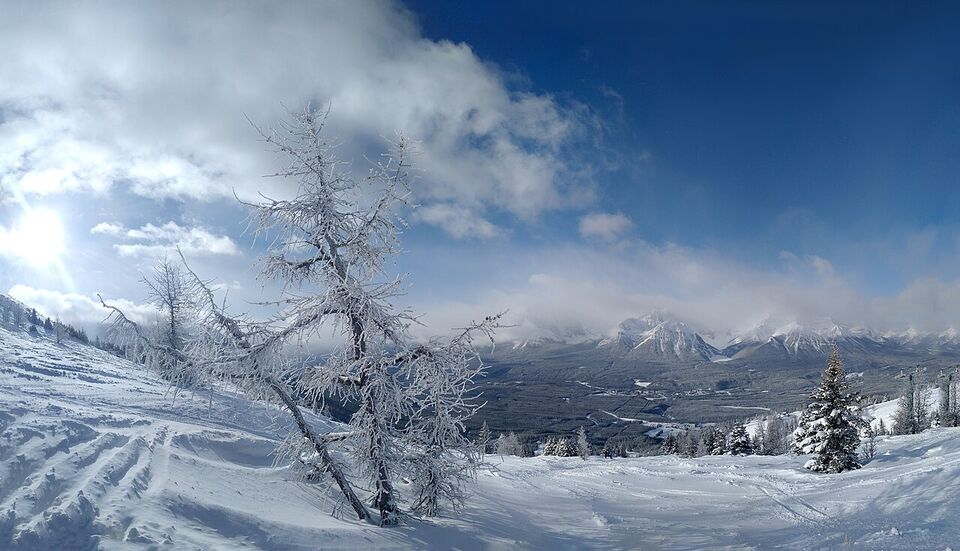
March is Canada's in-between month, and that is its charm. The mountains still have deep snow and long, sunny ski days, Quebec's maple farms open for sugar shack season, and the aurora is strong around the March equinox. In the southern cities the thaw brings slush and gray skies, but the days are noticeably longer and hotel rates are lower than in February once the school breaks end.
The timing is what to plan around. Canadian March breaks run from late February into mid-March, depending on province, and US spring breaks fill ski towns at the same time. Clocks change on Sunday, March 14, and Easter weekend is March 26 to 29. If you want snow, sun and a bargain, aim for the last week of March after the breaks.
Weather: the thaw begins
Approximate typical March highs and lows, rounded from long-term averages. Expect a wide swing: a bright 45°F (7°C) afternoon in Toronto can follow a night of freezing rain, and blizzards still happen in the Prairies and the East. Wind chill is still a factor in the North.
| Place | Average high | Average low | What to expect |
|---|---|---|---|
| Vancouver | 50°F (10°C) | 39°F (4°C) | Rain, with early flowers and cherry blossoms starting |
| Banff | 37°F (3°C) | 18°F (-8°C) | Sunny spring-ski days; frozen mornings |
| Winnipeg | 27°F (-3°C) | 10°F (-12°C) | Still winter, with a bright sun |
| Yellowknife | 14°F (-10°C) | -3°F (-19°C) | Still deep winter, with much longer days |
| Toronto | 40°F (4°C) | 25°F (-4°C) | Slush, wind and freeze-thaw |
| Ottawa | 34°F (1°C) | 18°F (-8°C) | Melting snowbanks; the Skateway is usually closed |
| Montreal | 35°F (2°C) | 19°F (-7°C) | Slushy, with patches of sun |
| Quebec City | 32°F (0°C) | 14°F (-10°C) | Cold nights and wet snow; ideal for sap |
For the full seasonal picture, see When to go.
What's on in March 2027
| Date | Event | Where |
|---|---|---|
| Late Feb into April | Sugar shack season | Quebec |
| Into March | Hôtel de Glace, weather permitting | Valcartier, near Quebec City |
| March (check dates) | Snowking Winter Festival; its 2026 run was March 1 to 28 | Yellowknife |
| Mid-March | March break (Ontario and other provinces; check your board) | Ski hills and family destinations |
| Sun, Mar 14 | Clocks spring forward | US and most of Canada |
| March to April, peak in late March | Gray whale migration | Tofino and Ucluelet, BC |
| Fri, Mar 26 – Mon, Mar 29 | Easter weekend (Good Friday is a nationwide holiday; Easter Monday is a day off for some workers) | Nationwide |
Winterlude, the Quebec Winter Carnival and Montréal en Lumière are all over by March 1. See February for those, and Festivals and events for later ones.
Sugar shack season in Quebec
Quebec makes most of the world's maple syrup, and from late February to April, when nights drop below freezing and days climb above it, the cabanes à sucre (sugar shacks) open their dining halls for long, loud, all-you-can-eat meals. It is one of the best reasons to visit Quebec in early spring, and March is the busiest month.
A traditional meal is a parade of farmhouse dishes with maple syrup poured over everything: pea soup, baked beans, ham, sausages, tourtière, an oven omelet, crispy pork rinds, potatoes and pancakes, then sugar pie. The finale is tire sur la neige: hot syrup poured onto clean snow and rolled up on a wooden stick. Many shacks add sleigh or wagon rides, music and a walk through the sugar bush.
- Price: in 2026, adults at well-known shacks paid about C$69 (about $50) to C$100 (about $70), plus tax and tip, with cheaper kids' menus. Check each shack's 2027 prices when you book.
- Book early: weekend seatings in March sell out weeks ahead, so reserve as soon as the shack announces its dates.
- Bring a driver: most shacks are in the countryside with no transit, and the meal is heavy. Spring roads are slushy; see Driving in Canada.
- Dietary needs: several shacks now offer vegetarian, vegan or gluten-free menus if you book ahead, but the classic pea soup and beans are cooked with pork.
Shacks near Montreal are often 30 to 60 minutes away by car, and Quebec City and Île d'Orléans have more modest family-run ones. See Canadian food, Montreal and Quebec City.
March break and spring break crowds
Canadian school boards schedule a week-long March break (spring break) that falls between late February and mid-March, depending on the province and sometimes the board. Ontario's usually comes in mid-March, and Quebec's runs near the start of the month. Check your destination's school calendar, since the dates are set by each board. US college and school spring breaks also fall mostly in March, so ski towns, Niagara Falls and family hotels get busy with both.
For skiers, the effect is concrete. At Tremblant, every Friday, Saturday and Sunday in March counts as high season, at C$164 to C$195 (about $117 to $139) for a one-day adult ticket, against C$156 (about $111) on regular days in 2026/27. Whistler has said lift tickets will be limited this season, and March spring breaks are among the dates when days can sell out, so buy at least seven days ahead. Dog-sled operators also book up during March break weeks.
Save money
Aim for the last week of March, after the break weeks. Rates drop, lift lines shorten, and spring sun makes the skiing better. Easter weekend, March 26 to 29, brings a smaller rush, so book that weekend early.
Spring skiing in the Rockies and Whistler
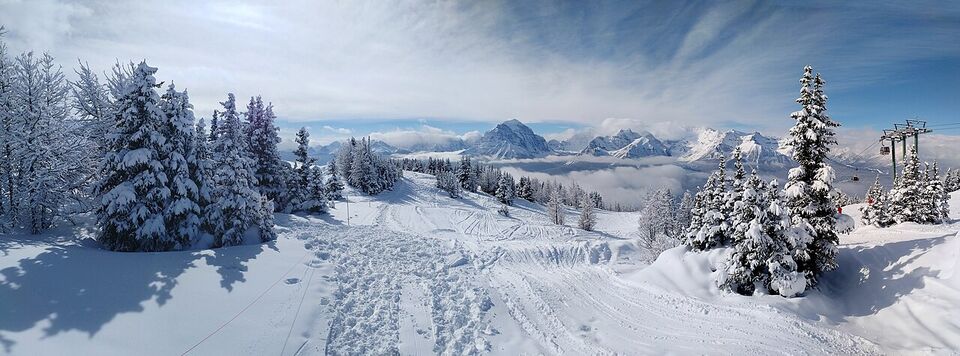
February and March bring the deepest snowpack, and March adds longer days and warmer afternoons, so spring skiing in the Rockies can be glorious. Most big resorts stay open to mid-April, and Banff Sunshine often runs into May. Lake Louise, Sunshine and Norquay share SkiBig3 tickets, which are up to 15% cheaper online; the Ikon Pass covers all three. See The Rockies and Winter in Canada.
- Start early. Mornings are firm and cold; afternoons at lower elevations turn to slush.
- Use sun protection. Sunscreen and goggles matter more in March than in January, since the glare off the snow is strong.
- Whistler: spring break crowds fill the village in March, then spring skiing and longer days follow. The World Ski & Snowboard Festival is usually in April. See Whistler.
- Rest day: soak at the Banff Upper Hot Springs, C$19.75 (about $14), or walk Johnston Canyon on ice cleats.
Parks Canada's Lake O'Hara bus reservations have used a random draw in March in the past (the 2026 window ran from March 2 to March 23). If you want that trip in summer, check the Parks Canada site in late February for the 2027 dates.
Late-season aurora in the North
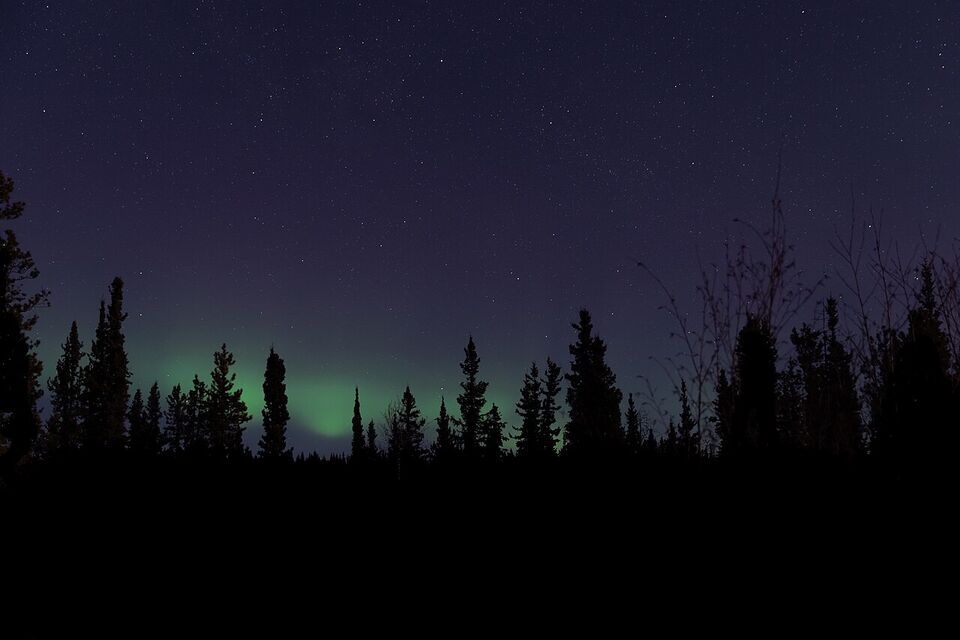
February and March are the sweet spot for the aurora plus a snowy trip. Geomagnetic activity tends to run a little higher in the weeks around the March equinox, the days are longer for sledding and snowshoeing, and it is slightly warmer. Under the auroral oval at Yellowknife or Churchill, a Kp index of 1 to 3 is often enough for a good show, while Whitehorse does well from about Kp 2 to 3.
Churchill's aurora season runs from late February through March, after the polar bears leave; one operator reported auroras on 29 of 31 nights in March 2026. Trips are all-inclusive packages from Winnipeg and cost several thousand dollars per person. In Yellowknife, the Snowking Winter Festival builds a snow castle on the frozen bay in March; the 2026 festival ran March 1 to 28, and the 2027 dates had not been announced when we checked, so look at snowking.ca before you plan a trip around it.
Plan four or five nights so a cloudy evening does not sink the trip, and connect through Vancouver, Calgary, Edmonton or Winnipeg since there are no nonstops from the US. Churchill is still very cold in March, with wind off the frozen bay. See Northern lights, The North and The Prairies.
Whales and early spring on the West Coast
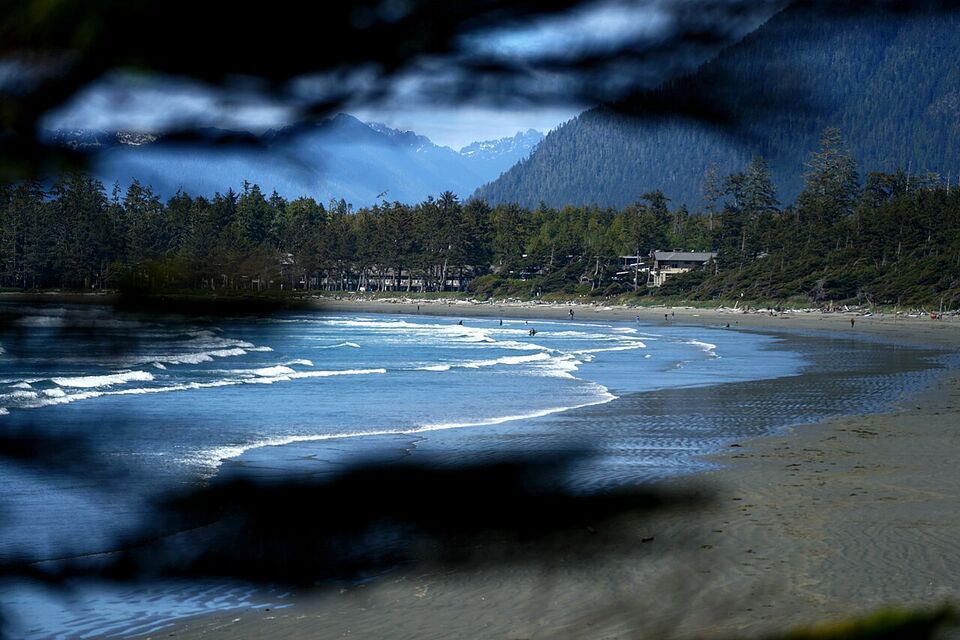
The Pacific coast is where spring arrives first. Cherry blossoms appear in Vancouver in late March and April, and Victoria's spring flowers show up in February and March, weeks ahead of the rest of Canada. Gray whales migrate past Tofino and Ucluelet from March to April, with the peak in late March, and some stay all summer. See Vancouver Island and Vancouver.
Expect rain, and pack a waterproof jacket; the coast is wet from October to April. The Coho car ferry from Port Angeles to Victoria runs year-round, so check its current schedule. Highway 4 to Tofino is narrow and winding, so fill your tank in Port Alberni and check DriveBC before you go.
The clock change on March 14
The US moves its clocks forward on Sunday, March 14, 2027, and most of Canada does the same, so the border time difference stays the same for most trips. There are three exceptions. Most of Saskatchewan stays on Central Standard Time all year, the Yukon stays on UTC-7 all year, and British Columbia stopped changing its clocks in 2026.
That last one matters. Since November 1, 2026, most of BC has stayed on daylight time, so from November to mid-March Vancouver and Victoria were an hour ahead of Seattle. On March 14, when Washington springs forward, they match Seattle again. The East Kootenay region near Alberta keeps following Alberta.
Europe changes two weeks later, on Sunday, March 28. For those two weeks, March 14 to 28, Europe is one hour closer to the US than usual, so check the time difference if you are calling home or connecting through London or Paris. Newfoundland, Atlantic Canada and Ontario and Quebec all change on March 14. Phones update automatically, but double-check any ferry, train or tour time you booked from home, and see Converters for time zones.
What to wear and driving in the thaw
March needs both winter and spring gear. Pack a warm coat, waterproof boots for slush and layers for sunny afternoons; in the mountains and the North it is still full winter, and Churchill and Yellowknife need an expedition-weight parka and boots rated to -40. See Packing.
- Winter tires: required on Quebec-registered cars, rentals included, until March 15; on signed BC highways to March 31 (April 30 on some mountain routes); and on the Icefields Parkway, with chains as an option, to March 31.
- Freeze-thaw: melting by day and refreezing at night makes roads and sidewalks icy in the morning. Carry ice cleats.
- Roads: check DriveBC, 511 Alberta and Québec 511 each morning, and see Driving in Canada for the rules.
- Flights: spring storms still delay flights, so avoid tight connections at Toronto, Montreal and Calgary.
A sample week
A week for spring-skiing and maple lovers in Quebec, from Monday, March 22 to Sunday, March 28, after the school breaks and before Easter weekend. Book the sugar shack first.
- Day 1
Mon · Montreal
Fly in. Walk Old Montreal and have a table d'hôte lunch.
- Day 2
Tue · Sugar shack
Drive out for a sugar shack lunch, with taffy on snow and a walk in the sugar bush.
- Day 3
Wed · Mont-Tremblant
Drive about 2 hours to Tremblant. Evening in the pedestrian village.
- Day 4
Thu · Ski day
A midweek spring ski day at the regular rate, then a soak at a Nordic spa.
- Day 5
Fri · Quebec City
Drive or train to Quebec City. The Hôtel de Glace may still be open, weather permitting.
- Day 6
Sat · Quebec City
Old Québec, the Petit-Champlain and Montmorency Falls.
- Day 7
Sun · Easter Sunday
A quiet day in Old Québec; some shops and restaurants may close or shorten hours, so check ahead.
Out west, pair three spring-ski days in Banff with a night in Lake Louise, or fly to Churchill or Yellowknife for four aurora nights.
Bottom line
Go in March for sugar shacks, spring skiing, late-season aurora and lower rates after the school breaks, if you can handle a gray, slushy city. Pick another month if you want Carnival and Winterlude (see February), mild weather, or open mountain trails and attractions; the shoulder months of May and June are better. For all regions, see All destinations.
Add it to a route in the trip builder, or ask us to plan the hotels, trains and guides for you.