How to plan your sightseeing
Paris has more than 130 museums and a skyline of monuments, and you cannot see them all. On a first trip, most people pick three or four big ones (usually the Eiffel Tower, the Louvre, Notre-Dame and the Musée d'Orsay), then fill in with smaller museums, churches and neighborhood walks. Two major sights a day is a comfortable pace; three is tiring. For neighborhoods and itineraries, see the Paris overview.
The biggest change for Americans in 2026 is price. Since January 2026, several national sites charge visitors from outside the European Economic Area (EEA) more than Europeans: the Louvre, Sainte-Chapelle, the Palais Garnier and some others. As a US passport holder you pay the higher rate. Prices below are the rates you will pay as an adult American; dollar figures use €1 = $1.12.
The second change is booking. Timed-entry tickets are now the norm. At the Louvre, Sainte-Chapelle, the Notre-Dame towers, the Eiffel Tower stairs and the Palais Garnier, a reserved time slot is either required or the only sensible way in. Book on the official sites linked below; resale sites often add large markups, and the Louvre warns that tickets from unofficial sellers may be refused.
Watch out
Paris sights close without much warning for strikes, demonstrations, state ceremonies and security alerts. On Saturday, October 24, 2026, for example, the Louvre, Orsay, Orangerie, Arc de Triomphe, Sainte-Chapelle, Conciergerie, Panthéon, the Notre-Dame towers and others all closed for a day of protests. Check each site's homepage the night before, and look at the closures list on the Paris Museum Pass site, which tracks them.
Eiffel Tower
Gustave Eiffel's iron tower was built for the 1889 World's Fair and is about 1,083 feet (330 m) tall. It has three visitor levels: the 1st floor (glass floor, exhibits, Madame Brasserie restaurant), the 2nd floor (the best views of the city's layout, plus Le Jules Verne restaurant) and the summit at 906 feet (276 m), with Gustave Eiffel's restored office and a Champagne bar.
| Ticket (2026) | Adult | Ages 12–24 | Ages 4–11 |
|---|---|---|---|
| Stairs to 2nd floor | €14.80 (about $17) | €7.40 | €3.80 |
| Elevator to 2nd floor | €23.50 (about $26) | €11.80 | €6 |
| Stairs to 2nd + elevator to summit | €28 (about $31) | €14 | €7 |
| Elevator to summit | €36.70 (about $41) | €18.40 | €9.20 |
Children under 4 go free. The youth rate applies to everyone aged 12 to 24, Americans included, which makes the tower a good deal for families with teenagers. New 2027 prices take effect on January 11, 2027.
- Hours: open every day, generally 9:30 a.m. to 11 p.m. with last ascents at 10:45 p.m.; hours run later in summer. The summit closes in high winds and sometimes at peak times.
- Booking: buy timed tickets on the official site as soon as your dates are firm; summer and holiday slots sell out weeks ahead. Since September 29, 2026, stairs tickets also need an advance reservation. A limited number of same-day tickets are sold on site, with long lines.
- Stairs or elevator: the stairs (674 steps to the 2nd floor) save money and skip the elevator line at the bottom. You can only reach the summit by elevator. The climb takes 30–45 minutes at a steady pace with breaks on the 1st floor.
- Time needed: 2 to 3 hours including security, lines and the summit.
- Best time: the first slot of the morning for short lines, or about an hour before sunset to see the city in daylight and lit up. The tower sparkles for five minutes on the hour after dark.
Insider tip
You do not need to go up to enjoy the tower. The best photos are from the Trocadéro across the river, from the Champ de Mars lawns behind it, and from the Pont de Bir-Hakeim. Large suitcases are not allowed and there is no left-luggage service, so do not come straight from the train.
The Louvre
The world's most visited museum, with about 9 million visitors in 2025, holds some 35,000 works on display in a former royal palace. Beyond the Mona Lisa, the Venus de Milo and the Winged Victory of Samothrace, its strengths are Italian and French painting, Greek and Egyptian antiquities, and the gilded Napoleon III apartments.
- Price: €32 (about $36) for visitors from outside the EEA, including Americans, since January 14, 2026. EEA residents pay €22. Under-18s are free regardless of nationality, but still need a time slot.
- Hours: 9 a.m. to 6 p.m. on Monday, Thursday, Saturday and Sunday; until 9 p.m. on Wednesday and Friday. Closed Tuesday, plus January 1, May 1 and December 25. Last entry is an hour before closing.
- Booking: book a timed ticket on the official Louvre site. During French school holidays (including October 17 to November 1, 2026), reservations are mandatory for everyone. Once you leave, you cannot come back in on the same ticket.
- Free entry: everyone gets in free on the first Friday evening of each month after 6 p.m. (except July and August) and on July 14. The Louvre no longer does free first Sundays.
- Time needed: 3 hours for highlights; a full day barely scratches the surface.
- Best time: Wednesday or Friday evening, when tour groups thin out, or right at 9 a.m. Avoid Mondays, when the Musée d'Orsay is closed and crowds pile into the Louvre.
Entrances. The glass Pyramid is the main entrance. The Carrousel du Louvre entrance, reached through the underground shopping mall at 99 rue de Rivoli or from the Palais-Royal–Musée du Louvre Métro station, often has a shorter security line. The Porte des Lions entrance on the river side opens only some of the time.
The 2025 jewel theft and what changed
On the morning of October 19, 2025, about half an hour after opening, a gang posing as workmen used a truck-mounted furniture lift to reach a balcony of the Galerie d'Apollon, cut through a window and smashed two display cases. In under eight minutes they took eight pieces of the French crown jewels, valued at about €88 million, and escaped on scooters. They dropped the crown of Empress Eugénie, which was recovered damaged and is being restored. The museum closed for three days.
Several suspects were arrested and charged in late 2025, but the jewels had not been recovered as of mid-2026. The theft exposed weak security and set off a national debate. The director resigned in February 2026, security was tightened, and you should expect thorough bag checks and some room closures. The Galerie d'Apollon was still closed in spring 2026; check the Louvre site if seeing it matters to you.
The Louvre is also starting a major overhaul called "Louvre New Renaissance", with works beginning in autumn 2026. The plan adds a second main entrance on the eastern side by the Colonnade and a dedicated room for the Mona Lisa with its own access, due in the early 2030s. Expect construction screens and occasional gallery closures for years.
Insider tip
The line to see the Mona Lisa can take 30–60 minutes, and you get a minute at the front. If it is not your priority, skip it and enjoy the empty rooms of the Richelieu wing: the Napoleon III apartments, the Marly sculpture courtyards and the Dutch and Flemish paintings. Watch your pockets in the Mona Lisa crush, a known pickpocket spot.
Notre-Dame de Paris
The Gothic cathedral on the Île de la Cité reopened on December 7, 2024, after the 2019 fire, and the restored interior is dazzling: cleaned pale stone, new furnishings and a rebuilt spire. Work continues on the exterior through about 2028, and the forecourt is being landscaped through 2027, so expect some scaffolding.
- Price: free. There is no charge to enter the cathedral.
- Hours: open daily from early morning into the evening, with Masses throughout the day. Check the official cathedral site for current hours.
- Booking: you can reserve a free time slot on the official site, which usually cuts the wait. Without one, join the standby line on the forecourt; it moves steadily but can reach an hour on summer afternoons.
- Time needed: 45 minutes to an hour inside.
- Best time: right at opening or in the evening. Sunday Mass with the great organ is a memorable experience if you sit quietly.
The towers
The towers reopened to visitors in September 2025. The climb runs up the south tower to 226 feet (69 m), with 424 steps, narrow passages, and close-up views of the gargoyles and the bell named Emmanuel. Tickets cost €16 (about $18), are sold online only with a time slot (no sales on site) on the official towers site, and are free for under-18s, who still need a slot. Hours are 9 a.m. to 5:30 p.m. from October to March and 9 a.m. to 11 p.m. from April to September. Time at the top is limited to about five minutes, and there is no elevator or toilet.
Islands and Left Bank sights
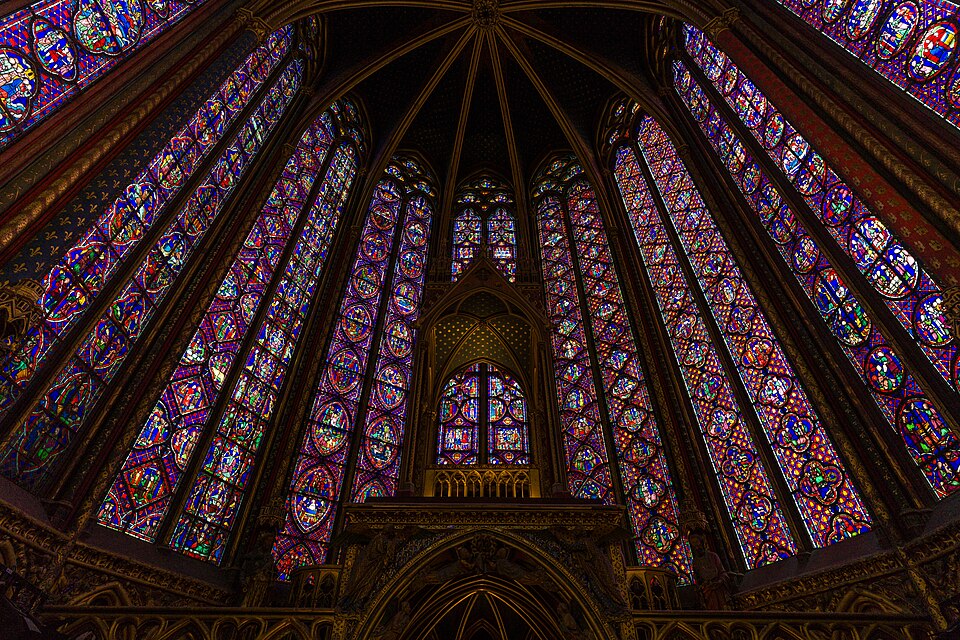
Sainte-Chapelle
A 13th-century royal chapel built to hold relics of the Passion, with 15 soaring windows of medieval stained glass. Adults from outside the EEA pay €22 (about $25); EEA residents pay €16. A combined ticket with the Conciergerie costs €30 (about $34). Open daily, 9 a.m. to 7 p.m. from April to September and 9 a.m. to 5 p.m. from October to March. Book a slot on the official site. It sits inside the Palais de Justice, so you go through airport-style security; arrive at your slot time, not earlier, and leave knives, glass bottles and aerosols at the hotel. Visit on a sunny day between late morning and mid-afternoon for the best light. The upper chapel is reached by a narrow spiral staircase.
Conciergerie
A medieval royal palace turned Revolutionary prison, where Marie Antoinette spent her last weeks before the guillotine. Its Gothic Hall of the Men-at-Arms is one of the largest surviving medieval halls in Europe. Tickets cost €13 (about $15), or €30 combined with Sainte-Chapelle. Open daily 9:30 a.m. to 6 p.m. An included HistoPad tablet shows rooms as they looked in the past, which kids enjoy. Rarely crowded; good for a rainy hour.
Panthéon
A neoclassical temple turned national mausoleum, where France buries its heroes: Voltaire, Rousseau, Victor Hugo, Émile Zola, Marie Curie and Josephine Baker. Foucault's pendulum swings under the dome. Tickets €13 (about $15). Open daily 10 a.m. to 6 p.m. (to 6:30 p.m. April to September); it opens at noon on the first working Monday of the month. The panoramic colonnade at the top was closed to visitors in 2026. Free on the first Sunday of January to March, November and December.
Musée de Cluny
The national museum of the Middle Ages, in a 15th-century abbots' mansion built against Roman baths. The star is the Lady and the Unicorn tapestry cycle, displayed in its own dim, circular room. Tickets €14 (about $16). Open 9:30 a.m. to 6:15 p.m., closed Monday. Calm and manageable, and an easy add-on to the Latin Quarter. Included in the Museum Pass; free for under-18s.
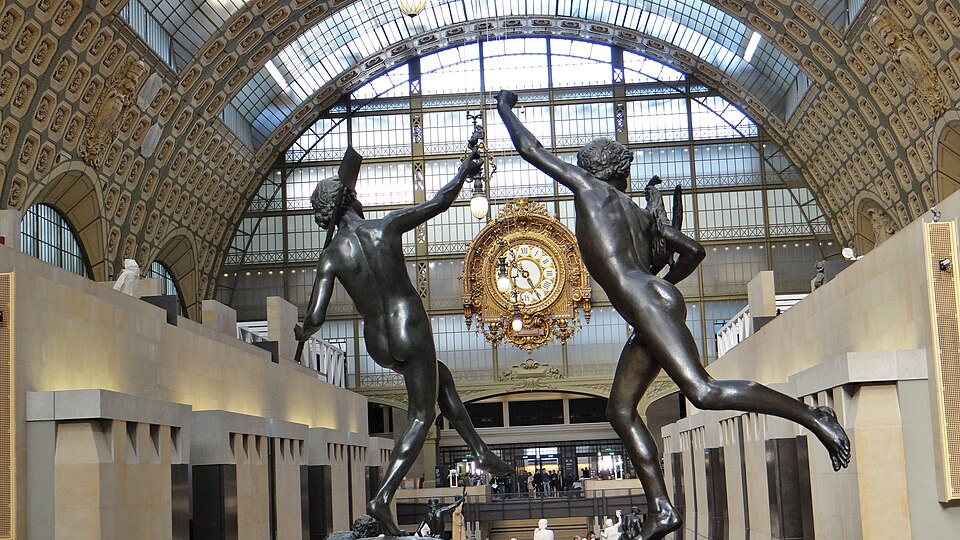
Musée d'Orsay
The great Impressionist collection, in a Beaux-Arts railway station: Monet, Renoir, Degas, Van Gogh, Cézanne, Manet's Olympia. Tickets €16 (about $18) online or €14 at the desk (when no booking is needed). Open 9:30 a.m. to 6 p.m., Thursdays to 9:45 p.m. (€12 online after 6 p.m.). Closed Monday. Book on the official site. Free on the first Sunday of each month with a mandatory reservation. Head straight to the 5th-floor Impressionist galleries before they fill, and look through the giant clock window toward Sacré-Cœur. Combined tickets with the Orangerie (€20, on site) and the Musée Rodin (€25) save a little.
Musée Rodin
Rodin's mansion and its rose garden, where The Thinker, The Gates of Hell and The Burghers of Calais stand among the trees. Tickets €14 (about $16). Open 10 a.m. to 6:30 p.m., closed Monday. Free on the first Sunday of the month from October to March, without booking. The garden café is a good lunch stop. Book on the official site.
Invalides and Army Museum
Louis XIV's veterans' hospital now holds the Musée de l'Armée, with armor, weapons, a fine World War I and II section, and Napoleon's tomb in red quartzite under the golden dome. Tickets €17 (about $19), covering the museum and the tomb. Open every day 10 a.m. to 6 p.m., plus the first Friday evening of each month, 6 to 10 p.m., for €10. Combined ticket with the Musée Rodin €26. Book at the official site. Rarely crowded, and the World Wars galleries resonate with American visitors.
Catacombs
About a mile of former quarry tunnels 65 feet (20 m) underground, lined with the bones of some six million Parisians moved from overflowing cemeteries in the late 1700s. The site reopened on April 8, 2026, after a renovation that added new lighting, ventilation, an immersive sound design and a new audio guide. Listed 2026 rates are €31 (about $35) with audio guide, €15 for ages 8–17, so American teens are not free here. Hours are Tuesday to Sunday, 9:45 a.m. to 8:30 p.m., last entry 7:30 p.m.; closed Monday. Buy timed tickets on the official site; they sell out, and the line without one can run for hours. The visit involves about 130 steps down and 112 up, a steady 57°F (14°C), and an exit on avenue René-Coty, a 10-minute walk from the entrance. Not for the claustrophobic, nor for wheelchair users or small children.
Luxembourg Gardens
The most Parisian of parks: formal flowerbeds around the Senate, the Medici Fountain, an orchard, tennis courts, a puppet theater, and toy sailboats to rent on the big pond. Grab one of the famous green metal chairs and sit. Free; opens early in the morning and closes around dusk, signaled by guards blowing whistles. Picnics are fine on the benches and chairs, but most lawns are off limits except a few marked ones.
Right Bank sights
Musée de l'Orangerie
Monet's eight huge Water Lilies panels in two oval rooms built to his design, plus a strong collection of Renoir, Cézanne, Matisse and Modigliani downstairs. Tickets €12.50 (about $14) online or €11 at the desk. Open 9 a.m. to 6 p.m., Fridays to 9 p.m. during exhibitions; closed Tuesday. Free on the first Sunday of the month with a reservation. Go at opening or late afternoon, when the oval rooms are quiet enough to sit.
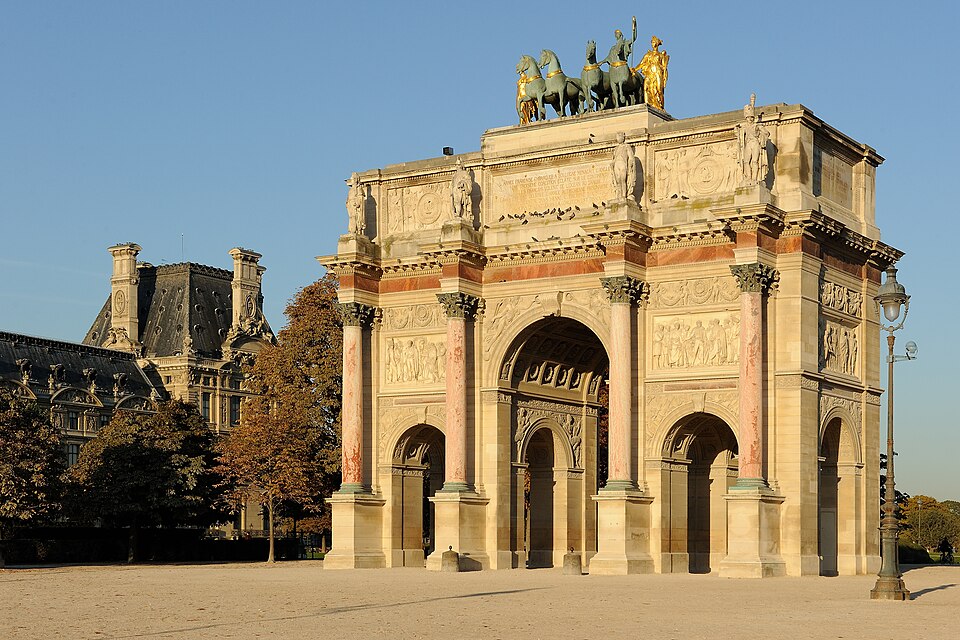
Tuileries Garden
The formal garden between the Louvre and Place de la Concorde, with fountains, sculptures (including Maillol bronzes), and chairs around the ponds. Free, open from early morning until evening, with seasonal hours. In summer a funfair with a Ferris wheel sets up along Rue de Rivoli. Café kiosks under the trees are pricey but pleasant.
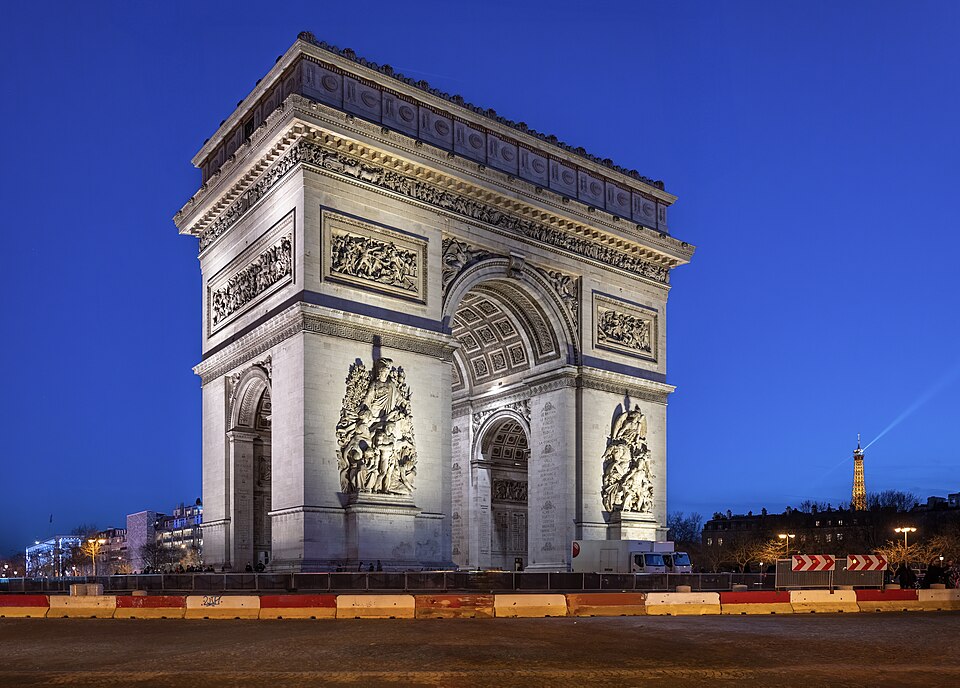
Arc de Triomphe
Napoleon's triumphal arch, over the Tomb of the Unknown Soldier, whose flame is rekindled every evening at 6:30 p.m. (free to watch). The rooftop has the best view straight down the Champs-Élysées. Tickets €16 (about $18) from October to March; €22 from April to September (€16 on Wednesdays). Open 10 a.m. to 10:30 p.m. (11 p.m. in summer), from 11 a.m. on Tuesdays. The elevator has been out of service since late July 2026, so the only way up is 284 steps, until a repair planned for 2027 (date not yet announced). Reach it by the underground passage from the Champs-Élysées; never try to cross the traffic circle. Free on the first Sunday of January to March, November and December. Tickets at the official site.
Palais Garnier
The gilded 1875 opera house that inspired The Phantom of the Opera, with its Grand Staircase, grand foyer and a Chagall ceiling in the auditorium. Self-guided visits cost €25 (about $28) for adults from outside the EEA (€15 for EEA residents), €20 for ages 13–25, and are free for children 12 and under. Guided tours run €35 for non-EEA adults. Online booking is mandatory on the Paris Opera site, up to 30 days ahead; no tickets are sold on site. Rehearsals can close the auditorium without notice. Seeing a ballet here is the most memorable way in.
Bourse de Commerce
François Pinault's contemporary art collection inside an 18th-century round grain exchange, remodeled by Tadao Ando with a concrete cylinder under a painted glass dome. Tickets €15 (about $17), €10 for ages 18–26. Open 11 a.m. to 7 p.m., Fridays to 9 p.m.; closed Tuesday. Free on the first Saturday of each month from 5 to 9 p.m. Shows through January 2027 include Barbara Kruger, Irving Penn and a big photography group show. Book at the official site.
Centre Pompidou (closed)
The inside-out modern art museum closed to visitors on September 22, 2025, and renovation work began in early 2026. It is due to reopen in 2030. Until then, its collection appears in partner venues, including exhibitions at the Grand Palais and, from spring 2027, the new Centre Pompidou Francilien in Massy, south of Paris, plus the Centre Pompidou-Metz in Lorraine (see Alsace-Lorraine). You can still enjoy the building's exterior and the Stravinsky Fountain next door.
Musée Picasso
The world's largest Picasso collection, displayed in the Hôtel Salé, a grand 17th-century Marais mansion. Tickets €16 (about $18). Open 9:30 a.m. to 6 p.m., closed Monday. Free on the first Sunday of each month; free for under-18s. Book a slot on the official site for priority entry.
Musée Carnavalet
The museum of the history of Paris, in two Marais mansions: shop signs, Revolutionary relics, Proust's bedroom, and a re-created Art Nouveau jewelry shop. The permanent collection is free with no booking. Open 10 a.m. to 6 p.m., closed Monday. A street-art exhibition on Jacques Villeglé runs to February 14, 2027 (paid). One of the best free museums in Europe.
Petit Palais
The city's fine arts museum, in a 1900 palace with a lovely courtyard garden café. The permanent collection, from Greek vases to Courbet and Monet, is free. Open 10 a.m. to 6 p.m., Fridays and Saturdays to 8 p.m. for temporary exhibitions; closed Monday. Rarely crowded.
Grand Palais
The 1900 exhibition hall with its vast glass-and-iron nave reopened in 2025 after a four-year restoration. It hosts blockbuster exhibitions, art fairs and events: "Cézanne and Us" runs September 23, 2026 to January 17, 2027, Paris Photo is November 12–15, 2026, and two shows open in December 2026. Prices and hours vary by event; book timed tickets at grandpalais.fr.
Musée Jacquemart-André
A gilded 19th-century mansion filled with Italian Renaissance art, Rembrandts and French 18th-century paintings, with one of the prettiest tearooms in Paris. Open daily 10 a.m. to 6 p.m., Saturday and Sunday to 7 p.m., Friday to 10 p.m. During the Tintoretto exhibition (to January 24, 2027), tickets are €19 (about $21), €10 for ages 7–18, free under 7. Not included in the Museum Pass.
Montmartre, the east and the west
Sacré-Cœur and Montmartre
The white basilica on top of Montmartre has one of the great free views of Paris from its steps. Entry is free; the basilica is open daily from 6:30 a.m. to 10:30 p.m. You can climb about 300 steps to the dome for a small fee, which gives an even wider view. The main organ is being restored until about May 2027. Take the funicular up from the bottom of the gardens for a single Métro ticket (€2.55) or a contactless card tap. Afterward, wander to Place du Tertre, the Musée de Montmartre, the vineyard and the quieter lanes west of the hill. Go early in the morning, before the crowds and the scammers arrive.
Père-Lachaise Cemetery
A hilly, wooded city of the dead with about 70,000 tombs, including Jim Morrison, Oscar Wilde, Chopin, Édith Piaf, Gertrude Stein and Molière. Free. Open from about 8 a.m. on weekdays (later on weekends) until 5:30 p.m. in winter and 6 p.m. in summer. Download a map or photograph the one at the entrance; graves are hard to find. Enter at the top from Gambetta Métro and walk downhill. Wear good shoes for the cobbles.
Château de Vincennes
A royal fortress with the tallest medieval keep in Europe, about 164 feet (50 m), plus a Gothic Sainte-Chapelle. Tickets €13 (about $15), with a tablet tour included. Open daily, 10 a.m. to 5 p.m. from late September to late May and 10 a.m. to 6 p.m. in summer; the chapel closes for a midday break. Free on the first Sunday of November to March. Take Métro line 1 to its end, Château de Vincennes, and combine it with a walk in the Bois de Vincennes.
Musée Marmottan Monet
The largest Monet collection anywhere, including Impression, Sunrise, the painting that gave Impressionism its name, in a quiet mansion near the Bois de Boulogne. Tickets €14 (about $16); €9 for under-18s and students under 25; free under 7. Open 10 a.m. to 6 p.m., Thursdays to 9 p.m.; closed Monday. "Histories of Landscape: From Monet to Hockney" runs to January 31, 2027. Not in the Museum Pass. Book a timed slot at marmottan.fr.
Fondation Louis Vuitton
Frank Gehry's glass "sails" in the Bois de Boulogne, housing big modern and contemporary art exhibitions. Tickets €18 (about $20), €10 for under-26s, €5 for under-18s, or €36 for a family of up to two adults and four children. Usually closed Tuesday, though it opens daily during French school holidays; check the calendar. A shuttle bus leaves every 20 minutes from 44 avenue de Friedland near the Arc de Triomphe; the alternative is a 15-minute walk from Les Sablons Métro (line 1). The current show, on the collector Gustave Fayet, runs to March 8, 2027.
Tour Montparnasse (closed)
The observation deck on the 56th floor of Paris's tallest skyscraper closed on March 31, 2026, for a renovation of several years; it is not expected to reopen before 2030. For high views now, try the Arc de Triomphe, the Notre-Dame towers or the Sacré-Cœur dome, or the free rooftop terrace of the Galeries Lafayette department store.
Seine cruises
A one-hour sightseeing cruise is touristy but genuinely good: you pass the Louvre, Notre-Dame, the Musée d'Orsay and the Eiffel Tower from the water, under bridges you will walk across later. Go at dusk, or after dark when the monuments are lit. Most boats run year-round, every 30–45 minutes.
| Operator | Departs from | Adult price | Notes |
|---|---|---|---|
| Bateaux-Mouches | Pont de l'Alma (8th) | €17 online, €20 standard; children €8–10 | The classic big open-deck boats; about 1 hour; tickets valid a year with no fixed time |
| Vedettes du Pont Neuf | Square du Vert-Galant, Île de la Cité | €15 online, €17 standard; children €7–9 | Smaller boats with a live guide; very central |
| Vedettes de Paris | Port de Suffren, by the Eiffel Tower | From about €18 | 1-hour guided cruise |
| Bateaux Parisiens | By the Eiffel Tower | Check the operator's site | Also runs lunch and dinner cruises |
| Batobus | Nine stops from the Eiffel Tower to the Jardin des Plantes | €23 for 24 hours, €27 for 48 hours | Hop-on, hop-off shuttle, no commentary; see getting around |
Save money
Always buy online, where every operator is cheaper than at the dock. Dinner cruises cost several times more than a sightseeing cruise, and the food rarely matches the price; most people do better with a sightseeing cruise followed by dinner on land. Free alternative: walk the lower quays from the Pont Neuf to the Pont Alexandre III at sunset.
The Paris Museum Pass
The Paris Museum Pass gives one entry to each of more than 50 museums and monuments in and around Paris. It costs €85 for 2 days, €105 for 4 days and €125 for 6 days (about $95, $118 and $140). The clock starts at your first visit and runs in consecutive hours, so a 2-day pass first used at 3 p.m. Wednesday is valid until 3 p.m. Friday.
What it covers and what it does not
- Included: the Louvre, Musée d'Orsay, Orangerie, Arc de Triomphe, Sainte-Chapelle, Conciergerie, Notre-Dame towers, Panthéon, Invalides and Army Museum, Musée Rodin, Musée Picasso, Musée de Cluny, Musée du Quai Branly, Musée des Arts Décoratifs, Hôtel de la Marine, Château de Vincennes, plus Versailles, Fontainebleau, Chantilly and the Basilica of Saint-Denis outside the city.
- Not included: the Eiffel Tower, Catacombs, Musée Marmottan Monet, Jacquemart-André, Fondation Louis Vuitton, Bourse de Commerce, Palais Garnier, the Sacré-Cœur dome, Grand Palais exhibitions and Seine cruises.
- Still need a time slot: the pass is a ticket, not a reservation. At sites with mandatory time slots (the Louvre, Versailles's palace, Sainte-Chapelle, the Notre-Dame towers and others), you must book a free slot for pass holders on each site's website. The pass does not skip security lines.
- Kids: do not buy one for anyone under 18. They get in free at almost every included site, though they also need free time-slot tickets where those are required.
Does it pay off? Worked math for Americans
The non-EU price increases of 2026 have made the pass better value for Americans than it used to be. Here are three realistic plans, using 2026 online adult prices.
| Plan | Separate tickets | Pass | Result |
|---|---|---|---|
| 2 busy days: Louvre (€32), Sainte-Chapelle and Conciergerie combo (€30), Orsay (€16), Orangerie (€12.50), Arc de Triomphe (€16) | €106.50 | €85 (2-day) | Saves €21.50 (about $24) |
| 4 days at a normal pace: Louvre, Orsay, Sainte-Chapelle (€22), Arc, Versailles Passport (€35), Invalides (€17) | €138 | €105 (4-day) | Saves €33 (about $37) |
| 2 days, typical first-timer: Louvre, Orsay, Eiffel Tower, Catacombs | €48 of included sights | €85 (2-day) | Loses €37; buy separately |
The rule of thumb: the pass pays off if you will visit at least four included paid sites in two days, or six in four days, especially if the Louvre, Sainte-Chapelle and Versailles are on your list. It also lets you pop into smaller sites like the Conciergerie or the Panthéon for a quick look without counting the cost. Buy it online from the official site or at the ticket desks of participating museums; avoid third-party sites selling it at a markup.
Free entry: what Americans can and cannot get
- Under 18: free at national museums and monuments, whatever your nationality. That includes the Louvre, Orsay, Orangerie, Sainte-Chapelle, Arc de Triomphe, Notre-Dame towers, Conciergerie, Panthéon, Cluny, Picasso, Rodin and Versailles. Bring passports for proof of age. Private and city-run paid sites (the Eiffel Tower, the Catacombs, Marmottan, Jacquemart-André, Fondation Louis Vuitton) charge children.
- Ages 18–25: not free for Americans. The free-entry rule for young adults applies only to EU citizens and long-term residents of France. Some private museums give a youth discount to anyone under 26 (Fondation Louis Vuitton, Bourse de Commerce for 18–26), and the Eiffel Tower youth rate covers ages 12–24.
- First Sunday of the month: still free at the Musée d'Orsay and Orangerie (booking mandatory, every month), the Musée Picasso (every month), and the Musée Rodin (October to March). The Arc de Triomphe, Sainte-Chapelle, Panthéon, Notre-Dame towers and Château de Vincennes are free on the first Sunday of November to March only (the Conciergerie in January to March and November). Expect crowds, and book slots the moment they open.
- The Louvre: no longer free on Sundays. Instead it is free for everyone on the first Friday evening of each month after 6 p.m. (except July and August) and on July 14.
- Other free evenings: the Bourse de Commerce on the first Saturday of the month from 5 to 9 p.m.
- Always free: the permanent collections of the 14 City of Paris museums, including Carnavalet, the Petit Palais, the Musée d'Art Moderne de Paris and the Maison de Victor Hugo; Notre-Dame; Sacré-Cœur; and every park and cemetery. See free things in Paris for more.
- European Heritage Days: on the third weekend of September, hundreds of normally closed buildings open free, including government ministries and the Élysée Palace (book ahead).
Which sights close on Monday or Tuesday
The most common planning mistake is arriving at a closed museum. National museums usually close on either Monday or Tuesday, and the big ones split the days so that something is always open.
| Closed Monday | Closed Tuesday | Open seven days |
|---|---|---|
| Musée d'Orsay | Louvre | Eiffel Tower |
| Musée Rodin | Musée de l'Orangerie | Notre-Dame and its towers |
| Musée Picasso | Bourse de Commerce | Sainte-Chapelle and Conciergerie |
| Musée Marmottan Monet | Fondation Louis Vuitton (usually, outside school holidays) | Arc de Triomphe and Panthéon |
| Musée de Cluny | Château de Fontainebleau (day trip) | Invalides and Army Museum |
| Catacombs | Jacquemart-André | |
| Carnavalet and Petit Palais (and most city museums) | Château de Vincennes, Sacré-Cœur, parks | |
| Versailles palace (day trip) | Palais Garnier (rehearsals permitting) |
A good Monday plan: the Louvre in the morning, Sainte-Chapelle and Notre-Dame after lunch, the Eiffel Tower at night. A good Tuesday plan: Musée d'Orsay, Musée Rodin and the Invalides, all in the 7th. Avoid Versailles on Tuesdays, when it fills up with people who cannot visit the Louvre; see day trips.
Beating the crowds
- Book the first time slot of the day at the Eiffel Tower, Louvre and Sainte-Chapelle. The first hour is the calmest everywhere.
- Use late openings: the Louvre on Wednesday and Friday, Orsay on Thursday, Marmottan on Thursday, Jacquemart-André on Friday. Evening crowds are a fraction of midday.
- Avoid French school holidays when you can. They include late October to early November, the Christmas period, staggered breaks across February and April, and all of July and August.
- Rainy days push everyone into museums. If it rains, go to smaller sites like Cluny, Carnavalet or the Conciergerie, and save big museums for sunny days.
- Free first Sundays are the most crowded days of the month. Unless budget is tight, pay and go another day.
- At the Louvre, start at the far end of the Richelieu or Sully wing and work back toward the Mona Lisa, against the flow.
- Visit Sacré-Cœur and Montmartre before 10 a.m., and Notre-Dame at opening or after 6 p.m.
- June, July and August are peak season. In May, September and October you get long days with smaller crowds. See when to go.
Different from home
French museum security is stricter than at most US museums. Expect bag checks and metal detectors everywhere, a ban on large bags and suitcases (most museums have small free cloakrooms, but not for luggage), and no selfie sticks in many galleries. Flash photography is generally banned. Guards close rooms 30 minutes before closing time and are not flexible about it.
Scams near the sights
Paris is safe, but the biggest sights attract organized pickpockets and street hustlers. Know the regular tricks and you can ignore them. See safety and scams for more, including what to do if your passport is stolen.
- The petition: young people with clipboards ask you to sign for a deaf charity, then demand a donation, while an accomplice works your pockets. Say "non merci" and keep walking. Common at the Eiffel Tower, Louvre and Sacré-Cœur.
- The friendship bracelet: on the Sacré-Cœur steps, men tie a string bracelet on your wrist and then demand payment. Keep your hands in your pockets and walk past.
- The gold ring: someone "finds" a ring at your feet and offers to sell it to you. It is brass.
- The shell game: crowds gather around a cup-and-ball game on the bridges near the Eiffel Tower. The "winners" are part of the team, and pickpockets work the crowd.
- Fake tickets and line-cutters: touts sell "skip-the-line" tickets outside the Louvre, Eiffel Tower and Catacombs. Buy only on official sites.
- Phone snatching: keep your phone in hand only when taking a photo, especially at café terraces and near Métro doors.
Accessibility
Most major museums are wheelchair accessible, and visitors with a disability plus one companion get in free at national museums and monuments, Americans included; bring documentation of the disability. Historic monuments are much harder.
- Good access: the Louvre (elevator in the Pyramid hall, wheelchairs on loan), Musée d'Orsay, Orangerie, Bourse de Commerce, Fondation Louis Vuitton, Petit Palais, Grand Palais and Notre-Dame's ground floor.
- Partial access: the Eiffel Tower is accessible to the 2nd floor by elevator, but the summit is not. Sainte-Chapelle's lower chapel is accessible; the upper chapel is only by spiral stairs. The Palais Garnier has an accessible route with advance notice.
- No access: the Catacombs, the Notre-Dame towers, the Sacré-Cœur dome, and for now the Arc de Triomphe, whose elevator is out of service until 2027.
- Getting there: Paris buses are all step-free, but most Métro stations are not. Plan routes with the step-free options in the transit apps; see getting around Paris and accessible travel.
Add it to a route in the trip builder, or ask us to plan the hotels, trains and guides for you.