How French wine labels work
In the US you buy wine by grape: a Cabernet, a Chardonnay, a Pinot. In France you buy it by place. The label says Chablis, Sancerre or Pauillac, and the place tells you the grape, because the rules for each appellation fix which grapes can be planted there. Chablis is always Chardonnay. Sancerre blanc is always Sauvignon Blanc. Red Burgundy is Pinot Noir. Once you learn a dozen place names, the wine list stops being a mystery.
The quality tiers
- AOP / AOC (Appellation d'Origine Protégée, the EU term, or Appellation d'Origine Contrôlée, the older French one). The wine comes from a defined area and follows rules on grapes, yields and methods. France has around 360 wine appellations, from huge (Bordeaux) to tiny single vineyards in Burgundy.
- IGP (Indication Géographique Protégée), once called vin de pays. A broader region with looser rules, so the label often names the grape. Pays d'Oc and Côtes de Gascogne IGPs are great value.
- Vin de France. No region beyond the country. It can be bulk wine, or it can be a top natural-wine producer who chose to work outside appellation rules.
Words you'll see on labels
| Label term | Meaning |
|---|---|
| Grand cru / Premier cru | In Burgundy, the top and second-tier vineyards. In Alsace, one of 51 top vineyards. In Saint-Émilion, a classification level. In the Médoc, premier grand cru classé refers to the 1855 ranking of châteaux |
| Mis en bouteille au château / au domaine | Estate-bottled, as opposed to bottled by a merchant |
| Négociant | A merchant house that buys grapes or wine and bottles it under its own name; common in Burgundy and Champagne |
| Millésime | Vintage year |
| Cuvée | A particular blend or bottling; on its own, it guarantees nothing |
| Vieilles vignes | Old vines; not legally defined |
| Sec, demi-sec, moelleux, liquoreux, doux | Dry, off-dry, sweet, very sweet (dessert), sweet |
| Blanc de blancs / blanc de noirs | White wine from white grapes / white wine from red grapes; mostly used for Champagne |
| Crémant | Sparkling wine made the Champagne way in another region (Alsace, Loire, Burgundy, Jura, Limoux, Bordeaux and others) |
| Bio / AB logo / green EU leaf | Certified organic |
| Demeter, Biodyvin | Certified biodynamic |
| Vin méthode nature | A natural-wine label recognized by French authorities: organic hand-picked grapes, native yeasts, no additives |
Different from home
French wines are usually lower in alcohol, higher in acidity and less oaky than many California wines. They're made to go with food, so a wine that tastes thin on its own can come alive with dinner. Give a Loire red or a Beaujolais a chance with a meal before you judge it.
Champagne sweetness
From driest to sweetest: brut nature (no added sugar), extra brut, brut (the standard), extra dry, sec, demi-sec, doux. Yes, "extra dry" is sweeter than brut. On a Champagne label, small letters tell you who made it: RM (récoltant-manipulant) is a grower who makes wine from their own grapes, and NM (négociant-manipulant) is a house that buys grapes, like most of the big names.
The wine regions
| Region | Signature styles | Main grapes | Base yourself in |
|---|---|---|---|
| Bordeaux | Structured red blends; dry whites; sweet Sauternes | Merlot, Cabernet Sauvignon, Cabernet Franc; Sauvignon Blanc, Sémillon | Bordeaux, Saint-Émilion, Pauillac |
| Burgundy | Single-vineyard reds and whites; Chablis | Pinot Noir, Chardonnay, Aligoté | Beaune, Dijon, Chablis |
| Champagne | Sparkling wine | Chardonnay, Pinot Noir, Meunier | Reims, Épernay |
| Loire | Crisp whites, light reds, sparkling, sweet Chenin | Sauvignon Blanc, Chenin Blanc, Cabernet Franc, Melon | Tours, Saumur, Sancerre, Nantes |
| Rhône | Peppery Syrah in the north; rich Grenache blends in the south | Syrah, Viognier; Grenache, Mourvèdre, Cinsault | Lyon or Tain-l'Hermitage (north); Avignon (south) |
| Alsace | Aromatic whites labeled by grape; Crémant | Riesling, Gewurztraminer, Pinot Gris, Muscat, Pinot Noir | Colmar, Riquewihr |
| Provence | Pale dry rosé; Bandol reds | Grenache, Cinsault, Syrah, Mourvèdre, Rolle (Vermentino) | Aix-en-Provence, Bandol, Cassis |
| Languedoc-Roussillon | Sunny reds, value whites, fortified sweet wines | Grenache, Syrah, Carignan, Mourvèdre; Picpoul | Montpellier, Carcassonne, Perpignan |
| Beaujolais | Juicy, light reds; ten "cru" villages | Gamay | Lyon, Villefranche-sur-Saône |
| Jura | Vin jaune, nutty oxidative whites, light reds | Savagnin, Chardonnay, Poulsard, Trousseau | Arbois |
| Southwest | Dark reds, sweet and dry Jurançon, Bergerac | Malbec, Tannat, Petit and Gros Manseng, Merlot | Cahors, Bergerac, Pau |
| Savoie | Light mountain whites; spicy Mondeuse reds | Jacquère, Altesse, Roussanne (Bergeron), Mondeuse | Chambéry, Annecy |
| Corsica | Herbal whites, rosés and reds | Nielluccio, Sciaccarellu, Vermentinu | Bastia (Patrimonio), Ajaccio |
Bordeaux
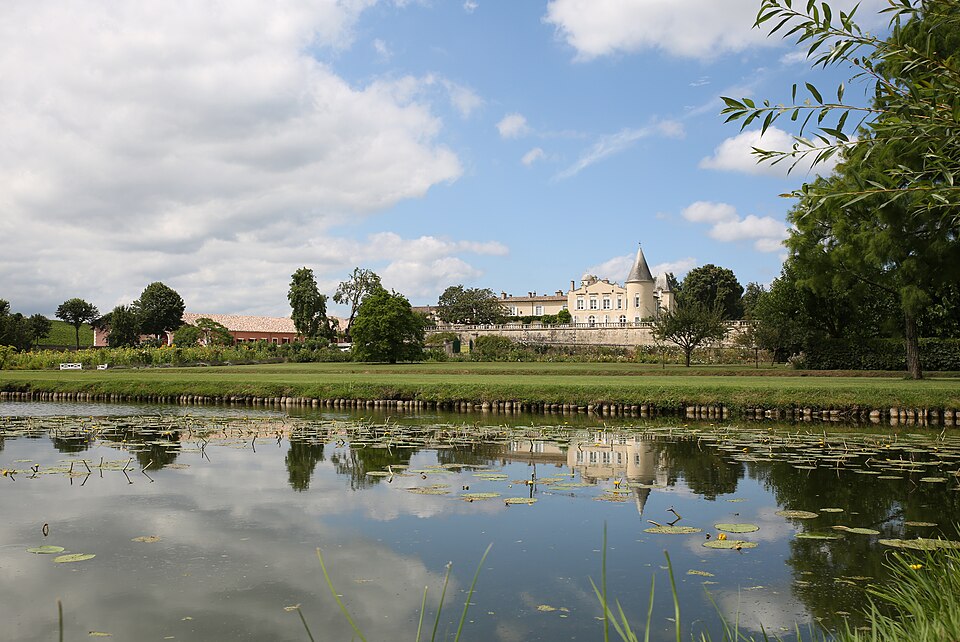
The biggest fine-wine region in France, split by the Gironde estuary. The Left Bank (Médoc and Graves, with villages like Margaux, Pauillac and Saint-Julien) makes Cabernet-led reds; the Right Bank (Saint-Émilion, Pomerol) leans on Merlot. Sauternes, south of the city, makes golden sweet wine from grapes affected by noble rot. Most visits are to châteaux by appointment, and many charge for tours. Saint-Émilion, a medieval village surrounded by vines, is the easiest place to taste without a car. In the city, La Cité du Vin is a wine museum with a tasting at the top; check its site for prices. See Bordeaux.
Burgundy
Burgundy is about place at its most extreme: two neighboring plots can produce wines of very different price and quality. The quality pyramid runs from regional Bourgogne up through village wines (Gevrey-Chambertin, Meursault), premier cru and grand cru. The Côte de Nuits makes the famous reds, the Côte de Beaune the great whites, and the Mâconnais and Côte Chalonnaise offer better value. Chablis, an hour and a half north, makes steely Chardonnay. Beaune is the base. The most famous estates don't receive visitors, but plenty of good growers do, and the négociant cellars in Beaune are open to drop-ins. See Burgundy & Jura.
Champagne
Only sparkling wine from this region, made by second fermentation in the bottle, can be called Champagne. Reims has the big houses with chalk cellars carved out centuries ago; Épernay has the Avenue de Champagne lined with grand houses. Reims is about 45 minutes from Paris by TGV and Épernay about 1 hr 15 min by regional train, so this is the easiest wine day trip from the capital. Book big-house tours online; small growers in villages like Le Mesnil-sur-Oger, Aÿ and Hautvillers usually need an appointment and often charge less for a tasting than the big houses. See Champagne and day trips from Paris.
Loire Valley
The Loire runs for hundreds of miles, so its wines vary. Near the Atlantic, Muscadet is the classic oyster wine. Around Saumur and Tours, Chenin Blanc makes everything from dry Savennières to sweet Vouvray and sparkling Crémant de Loire, and Cabernet Franc makes the light reds of Chinon, Bourgueil and Saumur-Champigny. Upstream, Sancerre and Pouilly-Fumé are benchmark Sauvignon Blanc. Many Saumur and Vouvray producers age wine in tufa caves cut into the hillsides, which are fun to visit. You can combine tastings with châteaux. See Loire.
Rhône
In the northern Rhône, south of Lyon, steep terraces produce Syrah (Côte-Rôtie, Hermitage, Cornas, Crozes-Hermitage, Saint-Joseph) and the apricot-scented Viognier of Condrieu. The southern Rhône around Avignon is warmer and makes Grenache-based blends: Châteauneuf-du-Pape, Gigondas, Vacqueyras and a lot of excellent everyday Côtes du Rhône. Tavel makes a darker, food-friendly rosé. Châteauneuf-du-Pape village has dozens of tasting rooms open to walk-ins. See Lyon and Provence.
Alsace
Alsace breaks the place-first rule: wines are labeled by grape. Expect dry Riesling, spicy Gewurztraminer, rich Pinot Gris and fine Crémant d'Alsace. Some wines are off-dry, and many producers now show a sweetness scale on the back label. The Route des Vins d'Alsace links half-timbered villages such as Riquewihr, Eguisheim and Kaysersberg, where you can walk between family cellars. Many open without an appointment. See Alsace-Lorraine.
Provence
Provence is rosé country: pale, dry and made for a terrace lunch. Côtes de Provence is the big appellation. Bandol makes serious Mourvèdre reds that age for decades, and Cassis makes whites to drink with seafood by the harbor. Rosé from the latest vintage is what locals drink; it isn't meant to be aged. See Provence.
Languedoc-Roussillon
France's largest vineyard area, stretching along the Mediterranean from Nîmes to the Spanish border. This is where to find value: Pic Saint-Loup, Faugères, Saint-Chinian, Minervois and Corbières reds, Picpoul de Pinet with oysters from the Étang de Thau, and sparkling Blanquette and Crémant de Limoux. Roussillon makes fortified sweet wines like Banyuls and Maury, which pair well with chocolate. See Occitanie.
Beaujolais
Forget the bubblegum image left by mass-market Beaujolais Nouveau. The ten crus (Brouilly, Côte de Brouilly, Chénas, Chiroubles, Fleurie, Juliénas, Morgon, Moulin-à-Vent, Régnié, Saint-Amour) make some of the best-value reds in France, and the region is an easy day from Lyon. Nouveau is released at 12:01 am on the third Thursday of November, an excuse for parties in Lyon's bars. See Lyon & Auvergne.
Jura
A small, quirky region between Burgundy and Switzerland with a cult following among sommeliers. Its signature, vin jaune, is Savagnin released only after more than six years, most of it spent in barrel under a film of yeast, then sold in a squat 62 cl bottle called a clavelin. It tastes of walnuts and curry spice and goes perfectly with Comté. Arbois is the wine town. See Burgundy & Jura.
Southwest
A patchwork of appellations from Bergerac (next to the Dordogne) to the Basque foothills. Cahors makes inky Malbec (where Argentina's grape came from), Madiran makes tannic Tannat for duck and cassoulet, Jurançon makes dry and sweet whites from Manseng, and Monbazillac makes a cheaper alternative to Sauternes. See Dordogne & Lot and Basque Country & Pyrenees.
Savoie
Alpine vineyards make crisp, light whites from Jacquère and fuller Roussette de Savoie from Altesse, plus peppery Mondeuse reds. They're the classic match for fondue and raclette and rarely seen in the US, so drink them here. The wine village of Jongieux is home to Les Morainières, which earned a third Michelin star in 2026. See Alps.
Corsica
Island grapes with Italian roots: Nielluccio (related to Sangiovese) in Patrimonio, Sciaccarellu around Ajaccio, and Vermentinu for herbal whites. Quality has risen sharply, and estates near Patrimonio and Calvi make a pleasant afternoon. See Corsica.

Visiting wineries
Big houses vs small growers
There are two kinds of visit, and they work very differently. Big houses and famous châteaux (Champagne houses in Reims and Épernay, classified Bordeaux châteaux, Cognac houses) run scheduled tours in English with set prices, booked online. You'll see cellars, learn the process and taste a few wines. Most basic tours at the big Champagne houses fall roughly in the €30–€60 range (about $34–$67) per person, with premium tastings going much higher. Check each house's site for current prices.
Small family estates (domaines) are where the magic happens. Often the person pouring is the winemaker. Tastings are frequently free or cost a few euros, sometimes refunded if you buy. The catch: you usually need an appointment, the conversation may be partly in French, and they're farmers with work to do.
How to book and visit
- Book ahead. Look for sur rendez-vous (by appointment). Email or call a few days to a week ahead; many growers now use online booking. Signs reading caveau, dégustation or dégustation-vente mean a tasting room, and some take walk-ins.
- Mind the hours. Most estates close for lunch from about noon to 2 pm and on Sundays, and some close on Saturday afternoons. During harvest (roughly September to mid-October), many small growers can't receive visitors at all.
- Plan two or three visits a day, with lunch in between. Each tasting can last an hour or more.
- Arrive on time and say "Bonjour." Show interest: ask about the vineyards, the year, what they eat with the wine.
- Taste in the order offered, usually white to red, dry to sweet, young to old.
- Buy something if you can. At a small domaine where the grower gave you an hour, buying a bottle or two is the polite thank-you. It isn't required at a paid tour at a big house. Cellar-door prices are usually at or below shop prices.
Tasting etiquette
- Spit. Spitting into the crachoir (spittoon) is normal and professional, even expected if you're driving or doing several visits. Pouring out the rest of your glass is fine too.
- Skip perfume or cologne; it interferes with smelling the wine.
- Hold the glass by the stem.
- It's fine not to like a wine. Say "c'est intéressant" and move on.
- Kids are usually welcome at small estates, but ask when booking.
- Pay by card where possible, but bring some cash for small growers.
Insider tip
Ask the local tourist office for a list of producers that welcome visitors, or look for the Vignobles & Découvertes label, a national tourism mark for wine areas with good visitor services. A friendly grower will often call a neighbor and send you on to the next tasting.
Wine tours vs driving yourself
Organized tours make sense when you want to taste freely, or when estates are spread out. Half-day and full-day minibus tours leave from Bordeaux, Beaune, Reims, Épernay, Avignon and Colmar, and private driver-guides cost more but let you choose the estates. Bike tours work well on the flat Loire, along the Burgundy vineyard bike path, and on the Alsace wine route. See cycling in France.
Driving gives you freedom, but French drink-driving rules are strict. The limit is 0.5 g of alcohol per liter of blood (0.05% BAC), compared with 0.08% in most of the US, and just 0.2 g/l for drivers with under three years' experience. Two glasses of wine can put an average adult over. Police run breath-test checkpoints, especially on weekends and in wine areas. Between 0.5 and 0.8 g/l you face a €135 fine (about $150) and possible immediate license suspension; above 0.8 g/l it's a criminal offense with heavy fines and possible jail. Pick a designated driver who spits everything, or take a tour. See driving in France.
Watch out
Rural tasting rooms close earlier than you think, and many villages have no taxis. If you plan to drink, book a driver or a tour for the day rather than counting on a ride back.
Ordering wine in restaurants
By the glass, pitcher or bottle
- By the glass: "un verre de rouge / blanc / rosé." In a bar, "un ballon de rouge" means a glass of red. Pours are smaller than at many US restaurants, about 4–5 oz (12–15 cl). Expect roughly €4–€8 (about $4.50–$9) at an ordinary bistro, more in Paris and at serious wine bars.
- By the pitcher: the pichet or carafe of house wine comes in 25 cl (un quart, about two small glasses), 50 cl (un demi-litre, or just un 50) and sometimes 1 liter. Don't ask for "un demi" on its own, which gets you a small beer. It's usually the cheapest way to drink at lunch.
- House wine: the vin de la maison or cuvée du patron is usually a regional wine the owner picked. In wine regions, it can be very good.
- By the bottle: wine lists are organized by region. Restaurant markups are generally lower than in the US, so a bottle can cost less than you'd expect.
How to choose
Drink local. In Alsace order Alsace; in Burgundy, Burgundy. Lists in the regions lean heavily on nearby wines, and those are usually the best value. If there's a sommelier, give a price range and say what you're eating: "Nous cherchons un rouge pas trop lourd, autour de 40 euros" (We're looking for a red that isn't too heavy, around €40). That's normal and appreciated.
When the bottle arrives, you'll be poured a taste. The point is to check for faults (a musty, wet-cardboard smell means the wine is corked). Personal taste doesn't count here, so unless something smells off, nod and say "C'est parfait." Wine stays on your table or nearby, and servers top up glasses, but less aggressively than in the US.
Corkage, leftovers and rosé on ice
- Bringing your own bottle isn't part of French restaurant culture, and most restaurants won't allow it. Where they do, the fee is called the droit de bouchon.
- Wine shops with tables (caves à manger) are the exception: you pick a bottle off the shelf at the shop price, and pay a modest corkage fee to drink it there with small plates.
- Leftovers: restaurants must provide a container for leftovers if you ask, and taking home an unfinished bottle of wine is normal. Ask to have it recorked: "Je peux emporter la bouteille ?"
- Ice: putting ice in wine is a faux pas, except for rosé in the south in summer, where a rosé piscine (rosé "swimming pool," served over ice in a big glass) is an accepted beach drink.
Wine bars
A bar à vin serves wine by the glass with cheese and charcuterie boards, and many are excellent places to taste a range of styles for little money. Paris, Lyon and Bordeaux have strong natural-wine scenes: look for chalkboard lists, small producers and unusual grapes. Natural wines can be cloudy or funky; ask for something "pas trop nature" if you'd like a cleaner style. See Paris food for Paris picks.
Save money
French supermarkets sell very drinkable wine from about €5–€10 (about $5.60–$11). In September and October, chains hold foires aux vins (wine fairs) with big discounts, a good time to stock a picnic or a rental. For the best bottles, buy at a caviste (independent wine shop) and ask for advice.
Bringing wine home to the US
The rules
US federal rules let each traveler 21 or older bring back 1 liter (about 34 oz, a bit more than one standard bottle) of alcohol duty-free as part of the $800 personal exemption. There's no federal limit on how much more you can bring for personal use, but you must declare it, and anything beyond the first liter is subject to duty and federal excise tax.
- Cost: at standard rates, duty and excise tax on a bottle of still wine come to well under a dollar, a little more for Champagne and around $2 for a bottle of spirits. US tariffs on European wine have changed several times since 2025. In late July 2026, trade press reported an extra tariff of about 10% on EU wine, with further US trade reviews still pending, so the rate may have changed by the time you travel. In practice, travelers declaring a few bottles often pay a few dollars or nothing. Check CBP's Know Before You Go before you fly.
- State law: the state where you clear customs can also apply its own limits or taxes. A few states cap quantities or charge state tax on declared alcohol, so check your state alcohol control board's site if you're bringing more than a case.
- Quantity: large amounts may look commercial and need an import license. A case or two for personal use is generally fine.
- Declare it in the Mobile Passport Control app or on the customs form. Undeclared alcohol can be seized.
For VAT refunds on purchases, and US rules on bringing home food like cheese and charcuterie, see shopping and US customs.
Packing wine in checked luggage
The TSA liquids rule still limits carry-on liquids to 3.4 oz (100 ml) containers, so wine goes in your checked bag. A few rules and tips:
- Wine and other drinks under 24% alcohol have no quantity limit in checked bags under US aviation rules. Drinks between 24% and 70% (most spirits, Chartreuse, Cognac) are limited to 5 liters per person in unopened retail packaging. Anything over 70% isn't allowed.
- Use padded wine sleeves (inflatable or bubble-wrap bottle bags, sold online and in many French wine shops). Put each bottle in a zip-top bag, then wrap it in clothes in the middle of your suitcase, away from the edges.
- Watch the weight. A bottle weighs about 3 lb (1.3 kg), so six bottles add 18 lb, and most transatlantic economy fares cap checked bags at 50 lb (23 kg).
- For a case or more, use a foam wine shipper box (often sold by wine shops in wine regions) and check it as a separate bag. Check your airline's fee and size limits first.
- Duty-free spirits and wine bought airside at CDG can go in your carry-on, sealed in a tamper-evident bag with the receipt. If you connect in the US, you'll go through security again; keep the bag sealed or move bottles to checked luggage after customs.
Shipping wine home
Shipping alcohol to the US is complicated. La Poste generally won't accept alcohol for the US, and US law requires imported alcohol to go through a licensed importer. Some larger estates, wine shops and specialized shippers in wine regions can arrange delivery through partners, but shipping, duties and fees often cost more than the wine for everyday bottles, and some states don't allow direct shipping to residents. It makes sense for valuable bottles you can't find at home. Ask the estate or shop what they offer and get the full delivered price in writing.
Different from home
Many wines you love at a French domaine never reach the US, or cost two to three times as much there. If you find a small grower you like, ask whether they have a US importer ("Vous avez un importateur aux États-Unis ?") so you can order through a local wine shop at home.
Harvest timing and wine festivals
The harvest (les vendanges) runs from late August into October, earlier in the south and in Champagne in hot years, later for sweet wines. Climate change has pushed dates earlier over the past few decades. Harvest is exciting to see (tractors full of grapes, the smell of fermenting juice in the villages), but small growers are flat out and may not receive visitors. Big houses keep running tours. A few estates offer harvest experiences for visitors; ask local tourist offices.
| When | Event | Where |
|---|---|---|
| Late January | Saint-Vincent Tournante: wine festival held in a different village each year | Burgundy |
| Early February | Percée du Vin Jaune: the new vintage of vin jaune is opened, in a rotating village | Jura |
| Summer | Village wine festivals, evening tastings and the Colmar wine fair | Alsace |
| September–October | Harvest, plus supermarket foires aux vins | Everywhere |
| Early to mid-October | Fête des Vendanges de Montmartre, celebrating the little vineyard on the hill | Paris |
| Third Thursday of November | Beaujolais Nouveau release (November 19, 2026) | Beaujolais, Lyon, bars across France |
| November, usually the third Sunday | Hospices de Beaune charity wine auction, with a weekend of street festivities | Beaune |
| December | Habits de Lumière light festival on the Avenue de Champagne | Épernay |
Dates and host villages change each year, so confirm on the regional tourism site before you plan around an event. See festivals and events and when to go.
Beyond wine: spirits, cider and beer
Champagne and other sparkling wine
Order "une coupe de champagne" for a glass. For less money, try Crémant from Alsace, Burgundy, the Loire or Limoux, made the same way and often very good.
Cognac
Brandy from the Charente region north of Bordeaux, double-distilled from white grapes and aged in oak. Ages on the label: VS (at least 2 years), VSOP (at least 4) and XO (at least 10). The big houses (Hennessy, Rémy Martin, Martell, Courvoisier) offer tours in Cognac and nearby Jarnac, and small producers sell direct. Pineau des Charentes, grape juice fortified with Cognac, is the local aperitif. See Bordeaux & Atlantic coast.
Armagnac
Gascony's grape brandy, older than Cognac and usually made in a single continuous distillation, which gives it more rustic character. Most is made by small farms, and a vintage Armagnac from your birth year is a classic gift. Floc de Gascogne is the regional aperitif. See Occitanie.
Calvados and cider
Normandy's apple brandy, aged in oak; Pays d'Auge is the top appellation. A trou normand is a shot of Calvados (or Calvados sorbet) between courses to "make room" for more. Normandy and Brittany both make cider (cidre), brut (dry) or doux (sweet), traditionally drunk from a ceramic bowl with crêpes. Also try pommeau (apple juice and Calvados), poiré (pear cider) and, in Brittany, chouchen (mead). See Normandy and Brittany.
Pastis
The anise-flavored aperitif of Marseille and the south. It comes with a carafe of cold water; add about five parts water to one part pastis and it turns cloudy. Add ice after the water. Order "un pastis" or ask for a brand like Ricard. See Provence.
Kir
White wine (traditionally Bourgogne Aligoté) with a splash of crème de cassis, blackcurrant liqueur from Dijon. It's named for a former mayor of Dijon. A kir royal uses Champagne. Easy, cheap and on every café menu. See Burgundy.
Chartreuse and mountain liqueurs
Chartreuse is made by Carthusian monks in the mountains near Grenoble from a secret recipe of herbs. Green Chartreuse is 55% alcohol; yellow is softer, sweeter and lower in alcohol. Since the monks limited production in 2023, bottles have been hard to find in the US, so this is a good place to buy one. In the Alps, also try génépi, an herbal liqueur served after skiing. See Alps.
Other French classics
- Bénédictine, an herbal liqueur from Fécamp in Normandy, where the ornate Palais Bénédictine is open to visitors.
- Absinthe, legal again and made around Pontarlier in the Jura.
- Lillet, a wine-based aperitif from near Bordeaux.
- Cointreau (Angers) and Grand Marnier, orange liqueurs.
- Rhum agricole from Martinique, made from fresh cane juice. See overseas France.
Craft beer and how to order it
France now has well over 2,000 breweries, and every city has craft beer bars. Alsace and the north have the deepest beer traditions; try a bière de garde in Lille. Ordering trips up Americans:
- Un demi: a 25 cl glass (about 8 oz) of draft beer. It's not half a liter.
- Une pinte: 50 cl (about 17 oz), a bit more than a US pint.
- Une pression: draft beer. Une blonde / une blanche / une ambrée / une IPA: lager / wheat beer / amber / IPA.
- Un panaché: beer mixed with lemon-lime soda. Un monaco adds grenadine.
If you don't drink
Saying "Je ne bois pas d'alcool" (I don't drink alcohol) is perfectly fine, and nobody will push. Options are getting better:
- Alcohol-free wine and beer: vin sans alcool and bière sans alcool are now in supermarkets and on many menus. The quality of alcohol-free beer is generally better than the wine.
- Mocktails: ask for "un cocktail sans alcool"; most cocktail bars have a list.
- Café classics: citron pressé (fresh lemon juice with water and sugar to mix yourself), sirop à l'eau (flavored syrup with water), diabolo menthe (lemonade with mint syrup), Orangina, and sparkling water (eau gazeuse) such as Badoit or Perrier.
- At wineries: you can still enjoy a visit. Smell, take a sip and spit, or ask for grape juice (jus de raisin); many growers make their own.
- Pregnancy: French bottles carry a pictogram of a pregnant woman with a line through it, and French health advice is no alcohol during pregnancy.
For ordering phrases with pronunciation, see French phrases, and for food pairings and meal etiquette, see our French food guide.
Add it to a route in the trip builder, or ask us to plan the hotels, trains and guides for you.