
March is the month when Italy wakes up. In Rome and the south, mimosa and almond blossom fade into spring greens and the first outdoor tables, while the north is still cool and changeable. In the first half of the month the cities remain quiet and cheap; from the third week they fill, because in 2027 Easter falls very early, on March 28.
That early Easter shapes everything. Holy Week in Rome runs from Palm Sunday, March 21, to Easter Monday, March 29, and it overlaps with spring-break travel, the return of Venice's access fee and a clock change in Europe. If you want a low-priced, uncrowded trip, travel in the first two weeks. If you want the rituals of Holy Week, book now.
Weather by region
March is a transition month. Rome, Naples and Sicily warm quickly and can feel like spring by midday, but nights stay cool and showers are common. The north can swing from sunny to cold within days, and the Alps still have winter snow. These are typical averages.
| Place | Average high | Average low | Rainy days |
|---|---|---|---|
| Milan and the lakes | 58°F (14°C) | 39°F (4°C) | About 7 |
| Venice | 56°F (13°C) | 40°F (4°C) | About 6 |
| Dolomites (Cortina) | 48°F (9°C) | 27°F (−3°C) | About 6, often snow |
| Florence | 60°F (16°C) | 40°F (4°C) | About 8 |
| Rome | 62°F (17°C) | 42°F (6°C) | About 7 |
| Naples and Amalfi | 62°F (17°C) | 45°F (7°C) | About 9 |
| Puglia (Bari, Lecce) | 61°F (16°C) | 44°F (7°C) | About 7 |
| Palermo | 64°F (18°C) | 50°F (10°C) | About 9 |
The sea is still cold, so March is for walking, not swimming. Rain tends to arrive in a few heavy spells rather than all month; keep a flexible day for museums. See when to go for other months.
What's on in March 2027
| Date | Event | Where |
|---|---|---|
| Expected in early March (2026: March 7–15) | Almond Blossom Festival (2027 dates to be confirmed) | Agrigento, Sicily |
| Sunday, March 7 | Free first Sunday at state museums | Nationwide |
| Monday, March 8 | International Women's Day (Festa della Donna) and mimosa | Nationwide |
| Sunday, March 14 | Rome Marathon; US clocks change | Rome |
| Friday, March 19 | San Giuseppe (St. Joseph) and Father's Day; zeppole pastries | Nationwide |
| Sunday, March 21 | Palm Sunday | Rome; nationwide |
| Thursday, March 25 | Holy Thursday | Nationwide |
| Friday, March 26 | Good Friday; evening Way of the Cross; Venice access fee returns | Rome; Venice |
| Sunday, March 28 | Easter Sunday; Italy's clocks go forward; Scoppio del Carro | Nationwide; Florence |
| Monday, March 29 | Easter Monday (Pasquetta), a national holiday | Nationwide |
Festa della Donna and mimosa
On March 8, Women's Day (Festa della Donna), Italians give women sprigs of yellow mimosa, and flower stalls sell bunches on the street. It is not a public holiday, but restaurants book up with groups of friends in the evening.
San Giuseppe and the zeppole
March 19 is St. Joseph's Day, which Italy also treats as Father's Day (Festa del Papà). Bakeries sell zeppole di San Giuseppe, fried or baked dough rings filled with custard and topped with a sour cherry, in Rome, Naples and Sicily. It is not a national holiday, but the Vatican Museums are closed.
The Rome Marathon
The Rome Marathon is set for Sunday, March 14, 2027, according to the race's official site. Check the route and road closures there before you book a hotel, since closures in the center can affect buses and taxis.
Holy Week and Easter 2027
Easter Sunday is March 28, 2027, one of the earliest dates possible. Palm Sunday is March 21, Holy Thursday March 25, Good Friday March 26 and Easter Monday March 29. Orthodox Easter falls later, on May 2, so Italy's Easter crowds are Catholic. Rome is the center of it, but Italy's towns have their own rites.
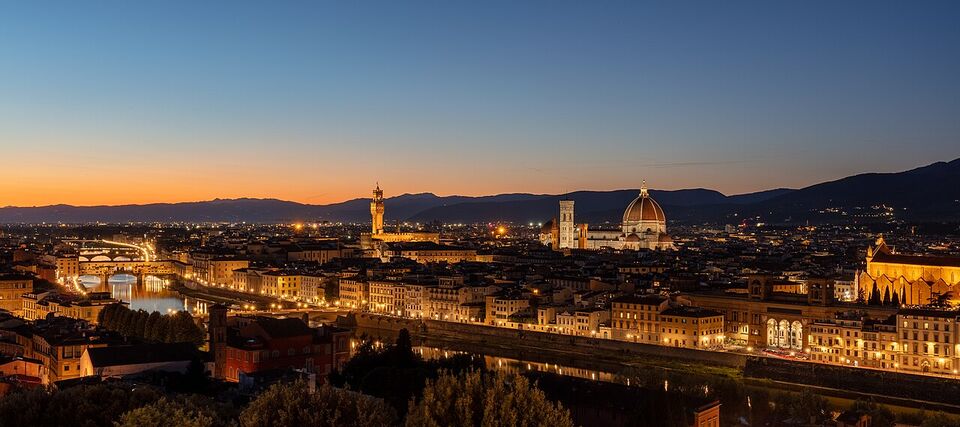
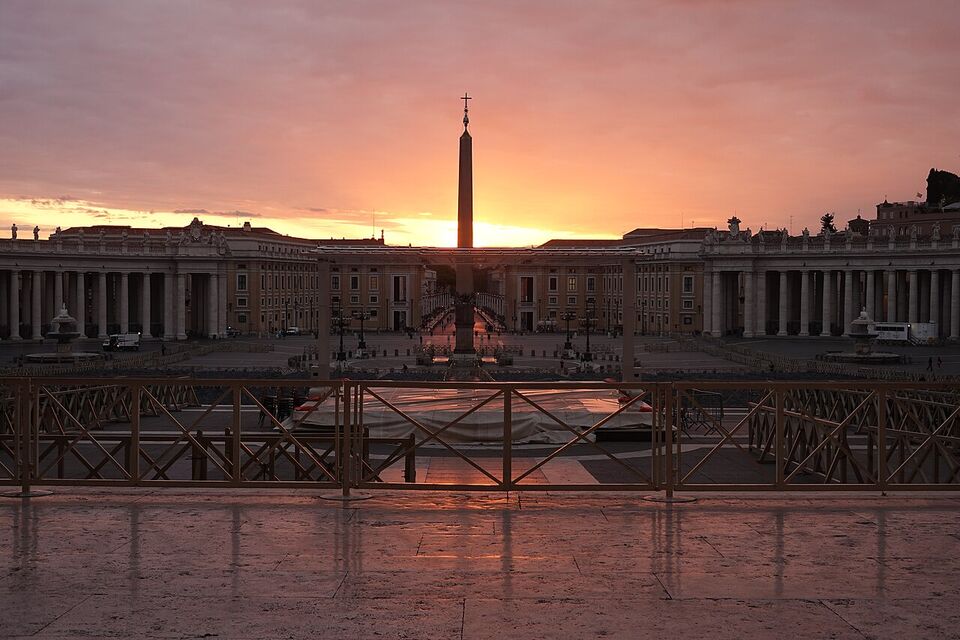
- Rome: the pope leads Palm Sunday Mass in St. Peter's Square, the Way of the Cross at the Colosseum on the evening of Good Friday and Easter morning Mass followed by the Urbi et Orbi blessing. The Vatican has not announced the 2027 program, so check the Vatican's official calendar a few weeks ahead. Masses in the square are free, but expect it to fill early. See the Vatican.
- Florence: on Easter morning the Scoppio del Carro, a cart packed with fireworks, is set off in front of the Duomo, lit by a mechanical dove. See Florence.
- Sicily and the south: processions take over towns on Holy Thursday and Good Friday, with hooded brotherhoods and statues carried through the streets. See Sicily.
- Pasquetta: on Easter Monday, Italians picnic in the countryside, so trains and highways out of the cities fill and beaches and lakes are busy.
Different from home
Easter in Italy is a long weekend with a large family lunch on Sunday and a picnic on Monday, not an egg hunt. Many restaurants are fully booked on Easter Sunday, so reserve a table as soon as you know your plans. Chocolate eggs with a toy inside (uova di Pasqua) fill the shops, and lamb is the traditional meal.
Hotels in Rome, Florence and Venice cost the most around Holy Week, roughly March 21 to 29, and the best rooms go months ahead. Venice is also a Carnival-free but still popular Easter destination, and the day-tripper fee starts on Good Friday. See festivals for the wider calendar.
Clock changes and time zones
The US moves its clocks forward on Sunday, March 14, 2027, but the EU, the UK, Ireland and Switzerland wait until Sunday, March 28, which is Easter. For two weeks, from March 14 to March 27, Europe is one hour closer to the US than usual, and Italy is five hours ahead of New York instead of six. The Bahamas and most of Canada change with the US; Mexico (outside some border areas), Japan, South Korea, India, Colombia, Jamaica, Costa Rica and the Dominican Republic do not change their clocks, so their gap to Italy moves by one hour on March 28 only.
| Time zone | Before March 14 | March 14–27 | From March 28 |
|---|---|---|---|
| New York (Eastern) | Italy 6 hours ahead | 5 hours | 6 hours |
| Chicago (Central) | 7 hours | 6 hours | 7 hours |
| Denver (Mountain) | 8 hours | 7 hours | 8 hours |
| Los Angeles (Pacific) | 9 hours | 8 hours | 9 hours |
| Mexico City (no change) | 7 hours | 7 hours | 8 hours |
On the night of March 27–28 Italy loses an hour, so you get an hour less sleep before an early flight, train or Easter service on March 28. Phones update automatically; a travel alarm or an old wristwatch does not. After the change, sunset comes after 7 p.m. in Rome and the evening light is a real pleasure.
Holidays and closures
- Easter Sunday, March 28, and Easter Monday, March 29: national holidays. Banks and offices close, many shops and restaurants close on Sunday or Monday, and trains and buses run holiday timetables. Many sites shorten their hours or close on Easter Sunday, so check each one.
- Vatican Museums: closed on Friday, March 19, on Easter Monday, March 29, and on Sundays except the last one. The free last Sunday is cancelled when it falls on Easter, so March 28 is not free. Free first-Sunday entry to state museums applies on March 7.
- Hours that change: St. Peter's Basilica is open 7 a.m. to 7 p.m. through March 28, 2027, with longer hours after; Pompeii is open 9 a.m. to 5 p.m. until March 15, with longer hours after that; the Colosseum's winter hours run through February 28 and change after that. Check each site before you go.
- The coast wakes up: some Amalfi, Capri and coastal hotels reopen around Easter, and ferry timetables expand from April. Every Cinque Terre trail except the Via dell'Amore is free until March 12; paid trails return after that.
- Strikes: transport strikes are generally barred around Easter, so the days around the holiday are usually calmer, but other weeks of March are not protected.
Venice's day-tripper fee returns
Venice has confirmed that its day-tripper access fee (contributo di accesso) returns in 2027 on 72 days, from March 26 to August 15, 2027. The first listed dates are March 26–29, which is Easter weekend. The official page lists a daily window of 8:30 a.m. to 4:30 p.m. Prices and rules for 2027 are due to be published by December 31, 2026, so do not assume the 2026 amounts will carry over. In 2026 the fee was €5 (about $5.60) if paid by the fourth day before the visit and €10 (about $11) after that. Press reports in September 2026 said the city was discussing a higher fee, but nothing had been decided.
The fee applies only to day visitors. Overnight guests in Venice, Mestre, the Lido and the rest of the municipality are exempt but should register for a free QR code, and many hotels send the link. Before March 26 there is no fee at all, and midweek dates in March are quiet. See Venice for the full calendar and the city's portal.
Insider tip
If you are basing yourself in Padua, Verona or the Dolomites and visiting Venice for a day, go between March 1 and 25, before the fee and the Easter crowds, or pick a weekday outside the fee calendar.
Crowds and prices
The first two to three weeks of March are among the best-value stretches of the year in Rome, Florence and Venice. Hotel rates are low, the Vatican Museums can be booked a few days ahead and the Uffizi and Accademia have short weekday lines. From about the third week prices usually jump, and by Holy Week Rome's best hotels are full. US college spring breaks fall in March, so the mid-month weeks bring more American students and families than January or February. Transatlantic fares rise toward Easter. See flights and where to stay.
The exceptions: Rome Marathon weekend and anywhere that Italians flock for the Easter long weekend, including the Dolomites, the lakes, Tuscan hill towns and the south.
Save money
On Sunday, March 7, state museums and sites, including the Colosseum, the Pantheon and Pompeii, are free under the culture ministry's monthly scheme, though lines are long. For a calmer visit, travel in the first half of the month, when rooms in the cities can be a third cheaper than in April.
Where to go, where to skip
Rome
Mild, bright days and the Easter rituals. Cheap in the first half, packed from the third week. See Rome.
Florence
Short lines until Holy Week and the Scoppio del Carro on Easter morning. See Florence.
Naples and Pompeii
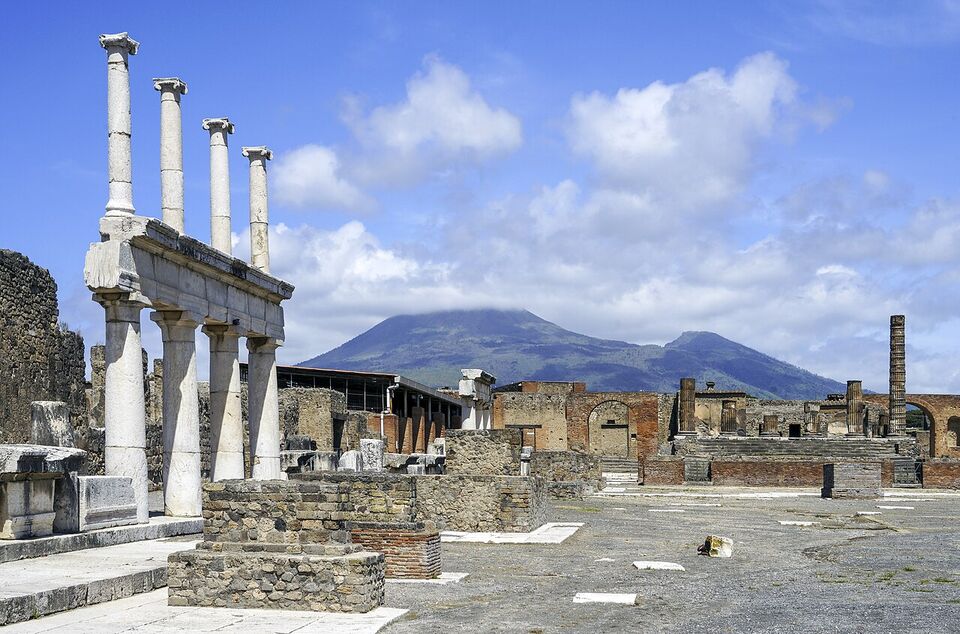
Pompeii without summer crowds; Naples is about 1 hour 10 minutes from Rome by fast train. See Naples and Pompeii.
Sicily
Temples, markets and Holy Week processions at 64°F (18°C). See Sicily.
The Dolomites
Late March often has good snow and sun, usually with lower prices than February. See the Dolomites.
Skip this month
Sardinia's beaches, Capri's boats and the swimming coast; most open only from Easter or later.
What to pack
- A light jacket or medium coat and a sweater; mornings and evenings stay cool.
- A compact umbrella and waterproof shoes with grip for wet stone.
- Layers you can remove, since sunny afternoons in Rome and the south feel warm.
- A scarf and covered shoulders and knees for churches, which are busy at Easter.
- A phone charger and a manual alarm if you travel across the clock changes.
See packing for the full list.
A sample week in March
This route uses the cheaper first half of March and avoids Holy Week.
- Day 1
Arrive in Rome
Leonardo Express to Termini, 32 minutes, €14 (about $16). Evening walk past the Trevi Fountain and the Pantheon.
- Day 2
Ancient Rome
The Colosseum and Forum at opening time; the afternoon in the Capitoline Museums.
- Day 3
The Vatican
An early Vatican Museums slot, booked a few days ahead, then St. Peter's.
- Day 4
Pompeii
Fast train to Naples, about 1 hour 10 minutes, then the Circumvesuviana to Pompeii. Book a named ticket; Express is €20 (about $22).
- Day 5
Florence
Fast train from Rome, about 1 hour 30 minutes. The Uffizi in the afternoon.
- Day 6
Florence
The Accademia, the Duomo climb and Piazzale Michelangelo at sunset.
- Day 7
Venice and home
Train, about 2 hours 5 minutes. A walk on the Grand Canal, then a flight from Marco Polo. If this is after March 26, day visitors need the access fee.
For Easter week, book Rome and Florence now and keep Holy Saturday free for travel. The planning page has more routes.
Getting around this month
- Strikes: we had not seen a confirmed list of March 2027 strikes as of November 2026, so check the government strike calendar before travel days. See getting around.
- Easter trains: fast trains and flights fill in the days before Easter and on Easter Monday, as Italians head out and back. Book Frecciarossa and Italo tickets as soon as they go on sale, usually about four months ahead.
- Rome Marathon day: central roads usually close, so plan airport and station transfers by metro or train.
- Clock change: timetables, flights and tours on March 28 run on the new time. Double-check that morning.
- Driving: winter tires or chains on board are required on many roads until April 15, and Alpine passes can still close after snow. The Amalfi Coast odd-even plate rule applies on peak dates in season; we found no 2027 dates, so check the local ordinance before you drive there. See driving.
- Entry: ETIAS was still not required as of November 2026, with its start expected in 2027. Check its status before you go on the entry requirements page.
Bottom line
Go in March for mild spring days, cheap rooms in the first half of the month and the rituals of an early Easter. It suits travelers who prefer cities, ruins and churches to beaches and can pack for rain.
Pick another month if you want warm sea, long days or the coast at its best; April to June is better. For carnival masks and skiing, see Italy in February; for Rome's sights, start with Rome.
Add it to a route in the trip builder, or ask us to plan the hotels, trains and guides for you.