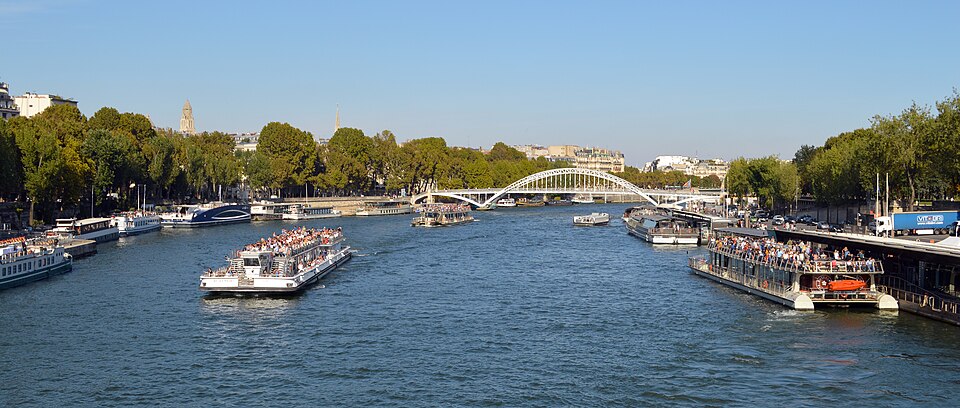
For a first trip, stay in the Marais if you want lively streets and late dinners, or in the Latin Quarter or Saint-Germain if you want classic Left Bank Paris and a direct train from the airport. Families do best in the calmer 7th near the Eiffel Tower or the 5th near the Jardin des Plantes. For nightlife and value, pick the 11th or Canal Saint-Martin; for luxury, the 8th or around Place Vendôme in the 1st; for an early Eurostar or TGV, a hotel near the station you leave from.
What matters more than the neighborhood is a hotel within a five-minute walk of a Métro station with two or more lines, and a room that faces the courtyard. For the full arrondissement-by-arrondissement guide, see our Paris overview; for how French hotels, stars and rentals work, see where to stay in France.
Paris neighborhoods compared
Walking times are to the Louvre or Notre-Dame, the middle of most first-trip plans. Price levels use the site's tiers for a double room: $ under €100, $$ €100–200, $$$ €200–400 and $$$$ over €400 a night.
| Area | Vibe | To the center | Métro and RER | Price | Best for | Drawbacks |
|---|---|---|---|---|---|---|
| Marais (3rd–4th) | Historic, busy, LGBTQ+ heart of Paris | Walk 10–20 min | Lines 1, 8, 11; RER at Châtelet | $$$ | First-timers, couples, shoppers | Small rooms, loud weekend nights |
| Latin Quarter (5th) | Student, bookish, markets | Walk 5–15 min | Lines 4, 10; RER B and C | $$–$$$ | First-timers, families, mid-range | Tourist-trap lanes near Rue de la Huchette |
| Saint-Germain (6th) | Elegant, cafés, galleries | Walk 10–20 min | Lines 4, 10, 12; RER B at Luxembourg | $$$–$$$$ | Couples, honeymooners | Expensive, quieter at night |
| Eiffel Tower (7th) | Grand, residential, calm | Métro 15–20 min | Lines 6, 8, 13; RER C | $$–$$$$ | Families, light sleepers | Little nightlife, long rides east |
| Louvre and the 2nd | Central, covered passages, food streets | Walk 0–15 min | Lines 1, 3, 7, 14; RER A, B, D | $$–$$$$ | First-timers, food lovers | Pricey near the Louvre; Les Halles scruffy late |
| Champs-Élysées (8th) | Palace hotels, luxury shops | Métro 10–15 min | Lines 1, 2, 6, 9; RER A | $$$–$$$$ | Luxury, shoppers | Business district, little neighborhood life |
| Montmartre and South Pigalle (18th, 9th) | Village hill, bars, views | Métro 15–25 min | Lines 2, 12; line 12 runs straight to Concorde | $–$$$ | Romance, nightlife, value | Hills, crowds and hustlers at Sacré-Cœur |
| Canal Saint-Martin and Oberkampf (10th–11th) | Young, bars, bistros | Métro 10–20 min | Lines 2, 3, 5, 9, 11 | $–$$ | Nightlife, budget, repeat visitors | Few sights, noisy streets, rough patches near Gare du Nord |
| Bastille and Gare de Lyon (12th) | Everyday Paris, markets, parks | Métro 10–15 min | Lines 1, 14; RER A, D | $–$$ | Families, long stays, trains south | Less charm around Bercy at night |
The Marais (3rd and 4th)
The Marais has the most of what people picture when they think of Paris: narrow medieval streets, 17th-century mansions turned into museums, the Place des Vosges, independent boutiques and a café on every corner. It is also the center of gay Paris and one of the few areas where many shops open on Sunday. You can walk to Notre-Dame, the Hôtel de Ville and the Pompidou's exterior in 10 to 15 minutes, and to the Louvre in about 20.
Pros: walkable to most sights, open late and on Sundays, great for food (falafel on Rue des Rosiers, the Marché des Enfants Rouges). Cons: rooms are small and expensive, Saturday afternoons are crowded, and street-facing rooms can be loud on weekend nights. The quieter southern end around Saint-Paul and the Île Saint-Louis is a good compromise. Métro line 1 at Saint-Paul runs straight to the Louvre, the Champs-Élysées and La Défense.
Hôtel Jeanne d'Arc Le Marais
A simple three-star on a quiet side street, 3 rue de Jarente, with family rooms. Location is the selling point; rooms are plain and it books up early.
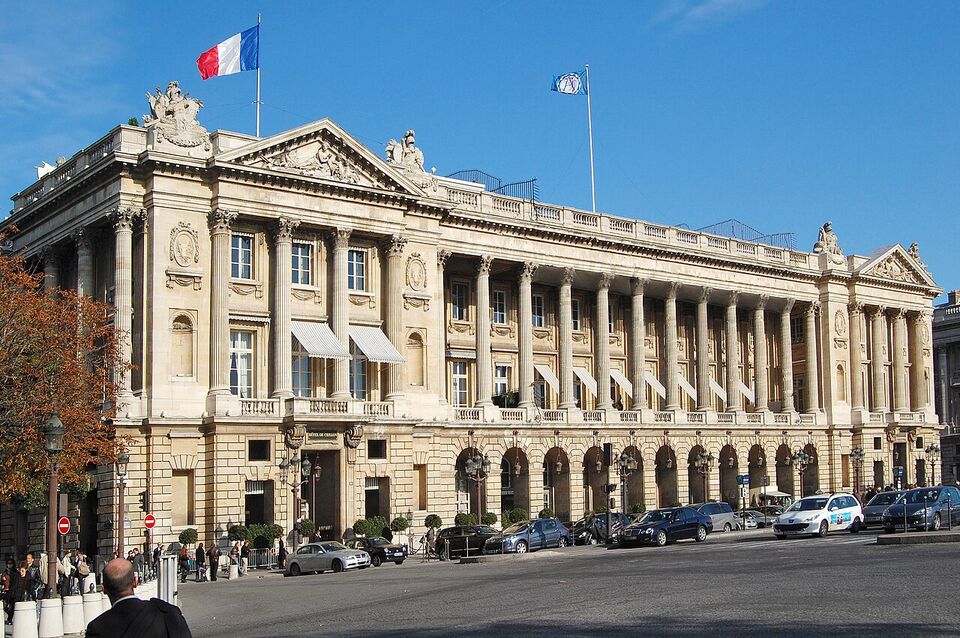
Latin Quarter and Saint-Germain (5th and 6th)
The Left Bank pair is the easiest base for a first trip with a busy sightseeing plan. The Latin Quarter (5th) has the Sorbonne, the Panthéon, the Musée de Cluny, the market street Rue Mouffetard and the Jardin des Plantes, and its hotels run a notch cheaper than Saint-Germain's. Saint-Germain-des-Prés (6th) has the Luxembourg Gardens, the literary cafés, chocolate shops and galleries, and some of the city's most expensive streets.
Pros: Notre-Dame, Sainte-Chapelle and the Musée d'Orsay are a walk away, and the RER B from Charles de Gaulle airport stops at Saint-Michel–Notre-Dame and Luxembourg with no change. Cons: the lanes around Rue de la Huchette are full of photo-menu restaurants, and Saint-Germain is quieter at night than its reputation.
Hôtel des Grands Hommes
A 30-room three-star in an 18th-century building facing the Panthéon, decorated in Empire style. Ask for a room with a dome view.
Mandarin Oriental Lutetia
The Left Bank's grand hotel since 1910, an Art Deco landmark across from the Bon Marché department store, now run by Mandarin Oriental. Spa, bar and five-star service.
Eiffel Tower and the 7th
The 7th is grand, leafy and residential: the Eiffel Tower and the Champ de Mars, the Invalides and Napoleon's tomb, the Musée Rodin and the Musée d'Orsay, plus the food shops of Rue Cler for picnic supplies. It is the calmest central area, which is why families and light sleepers like it.
Pros: safe, quiet evenings, tower views from some rooms, parks for kids, RER C to Versailles. Cons: little nightlife, ministries that take up whole blocks, and Métro rides of 30 minutes or more to the Marais and Montmartre.
Hôtel du Champ de Mars
A small 25-room hotel steps from Rue Cler and a short walk from the tower. Compact rooms, a long following among American visitors, and early sellouts.
The Louvre, the 2nd and Opéra
Around the Louvre (1st), you are as central as Paris gets: the Tuileries, the Palais-Royal and Place Vendôme are on your doorstep. Hotels next to the museum are quiet at night and pricey. A few minutes north, the 2nd is livelier and better value, with the covered passages (Galerie Vivienne, Passage des Panoramas), the pedestrian market street Rue Montorgueil and plenty of cocktail bars. The southern 9th around the Opéra adds the Palais Garnier and the big department stores.
Pros: the best transit hub in the city, including line 14 to Orly airport and RER lines at Châtelet; walkable to the Louvre and the Marais. Cons: department-store crowds around Opéra, a scruffy feel around Les Halles late at night, and a short seedy stretch of Rue Saint-Denis near the boulevards.
The Hoxton, Paris
A 172-room design hotel in an 18th-century mansion, with original staircases, a busy lobby bar and restaurants. Good for nightlife lovers who want a central address.
Champs-Élysées and the 8th
The 8th is where many of the palace hotels are: along the Champs-Élysées, the luxury Golden Triangle of Avenue Montaigne and the Rue du Faubourg Saint-Honoré. You get the Arc de Triomphe, the Grand Palais and Petit Palais, Parc Monceau and the Musée Jacquemart-André. Rooms are bigger than elsewhere in Paris, and service is formal.
Pros: luxury hotels, designer shopping, wide avenues, Métro line 1 straight to the Louvre and the Marais. Cons: it is a business district, with chain stores and little neighborhood life, and side streets feel empty on weekend evenings.
Le Bristol
A classic French palace hotel near the Élysée Palace, the first in France to receive the Palace distinction, with a large private garden.
Montmartre and South Pigalle
Montmartre (18th) is the hilltop village: Sacré-Cœur, steep stairways, vineyards and the lanes west of Place du Tertre. South Pigalle, or SoPi (the northern 9th), sits at the foot of the hill, with Rue des Martyrs, wine bars and cocktail spots. Both give you character and views for less money than the center.
Pros: romantic, good value, lively evenings around Abbesses and Rue des Martyrs, and line 12 runs from Abbesses to Concorde and the Left Bank without a change. Cons: hills and stairs with luggage, the Sacré-Cœur crowds and bracelet hustlers, the sex shops along Boulevard de Clichy at Pigalle itself, and the Barbès and La Chapelle areas to the east, which can feel uncomfortable at night. Stay on the western and southern slopes, around Abbesses, Lamarck–Caulaincourt or Rue des Martyrs.
Terrass" Hôtel
A long-running hotel on the western slope of the hill near Montmartre Cemetery, known for the panoramic rooftop bar above its rooms.
Canal Saint-Martin, Oberkampf and Bastille
The east side is where Parisians in their twenties and thirties go out. Around the Canal Saint-Martin (10th), iron footbridges, canal-side apéritifs and the restaurants of Rue du Faubourg Saint-Denis; in the 11th, Rue Oberkampf, Rue de Charonne and many of the city's most talked-about bistros and natural wine bars. Farther south, the 12th has the Marché d'Aligre, the Coulée Verte elevated park and Gare de Lyon for TGVs to the south.
Pros: the best value inside the city, the best food and bars for the money, and real neighborhood life. Cons: almost no classic sights, noisy streets until late, and a Métro ride to the Louvre or the Eiffel Tower. Near the 10th's big stations, the blocks around Gare du Nord and Stalingrad feel rough at night, so choose a hotel by the canal or in the 11th instead.
Generator Paris
A large modern hostel near the canal with private doubles and family rooms as well as dorms, plus a bar and a rooftop terrace open from April to September.
Areas to think twice about
Paris is generally safe, and the US State Department rates France at Level 2 (Exercise Increased Caution), mainly for terrorism and civil unrest, not street crime. Pickpockets are the main risk for visitors everywhere. But a few areas make a poor base for a short trip.
- Right by Gare du Nord, Stalingrad and La Chapelle. Convenient for the Eurostar and the RER B, but the streets around them feel rough after dark. Fine for one night before an early train; not ideal for a week.
- Outside the Périphérique ring road. Cheap hotels in Saint-Denis, near Porte de la Chapelle or by the airports save money and cost you an hour or more a day. In Paris, the suburbs (banlieue) are not the leafy, safe option they are in many US cities.
- La Défense. A business district west of the city, busy on weekdays and empty at night and on weekends.
- Directly above nightlife. In the Marais, the 11th, South Pigalle and around Les Halles, ask for a courtyard room or expect noise until 2 a.m.
Different from home
A standard double in a Paris three-star is often 130 to 160 sq ft (12 to 15 m²), about half a typical US chain room. A "double bed" in an older hotel can be 55 inches (140 cm) wide, close to a US full. Floors start at 0, so the "4th floor" is the American fifth, and elevators in old buildings may fit one person and a suitcase.
Apartments and rental rules
An apartment gives you a kitchen, a washing machine and more space, which suits families and stays of a week or more. Paris has some of the strictest short-term rental rules in Europe, and the rules protect you too:
- Look for the registration number. Since May 2026, every tourist rental in France must show a 13-character registration number on its listing. A whole-apartment listing in Paris without one is a red flag.
- Expect limits late in the year. Owners renting out their own home in Paris are capped at 90 nights a year, so some legal listings stop taking bookings in November and December.
- Full-time rentals are rare. Renting out a second home to tourists needs a costly change-of-use permit, so most legal year-round rentals are run by professionals.
- Pay only on the platform. Never pay by wire, gift card or crypto, and never move a conversation off the platform. Fake listings with stolen photos are common.
- Check the floor and the elevator. A fifth-floor walk-up is normal in Paris.
Unrated rentals, including most Airbnbs, also pay tourist tax: about 16 percent of the per-person nightly price before VAT, capped at €15.93 per adult per night. Platforms usually add it to your total. More on leases and longer stays on long stays.
Booking tips
| Room type | Paris, low season | Paris, high season |
|---|---|---|
| Hostel private room or budget chain | €80–120 ($90–135) | €100–170 ($110–190) |
| 2-star hotel | €110–170 ($125–190) | €150–230 ($170–260) |
| 3-star hotel | €150–250 ($170–280) | €220–350 ($245–390) |
| 4-star or boutique | €250–450 ($280–505) | €350–650 ($390–730) |
| 5-star | €600–1,200 ($670–1,345) | €900–2,000 ($1,010–2,240) |
Typical nightly rates for a double, before tourist tax and breakfast. Low season is roughly November to March outside the holidays; high season is late spring, summer and early fall. Fashion weeks, big trade fairs and New Year's Eve push prices well above these ranges.
- Tourist tax is extra. In 2026 Paris charges, per adult per night, €2.60 at one-star hotels and hostels, €3.25 at two-star, €5.53 at three-star, €8.45 at four-star, €11.70 at five-star and €15.93 at Palace hotels. Under-18s are exempt. Hotels add it at checkout.
- Read the cancellation deadline. "Free cancellation" often ends several days before arrival, on French time. Non-refundable rates are usually 10 to 20 percent cheaper.
- Ask for air conditioning in summer. Many older hotels have none, and Paris heat waves now arrive most summers.
- Ask for a courtyard room (côté cour). Deliveries and street cleaning start early.
- Ignore payment links in booking-app messages. Criminals take over real hotel accounts and ask guests to "re-verify" a card. Call the hotel on the number from its own website.
Save money
November (outside trade fairs), January, February and early March are the cheapest months for Paris hotels, and Sunday is often the cheapest night of the week. Between Christmas and New Year's Eve, Paris rates often ease while the Alps peak. See November, January and when to go.
Bottom line
First trip: the Marais or the Latin Quarter, with Saint-Germain if your budget stretches. With kids: the 7th or the 5th. For nightlife and value: the 11th or Canal Saint-Martin. For a splurge: the 8th or the 1st. Whatever you pick, prioritize a short walk to a Métro station with several lines, a courtyard room, and a clear cancellation policy, and budget the tourist tax on top.
Now build your days around your base with our 3 days in Paris plan, check getting around Paris for the airport ride, and price the trip with the budget calculator. Comparing with London? See where to stay in London. Want this planned for you? Tell us your dates.
Add it to a route in the trip builder, or ask us to plan the hotels, trains and guides for you.