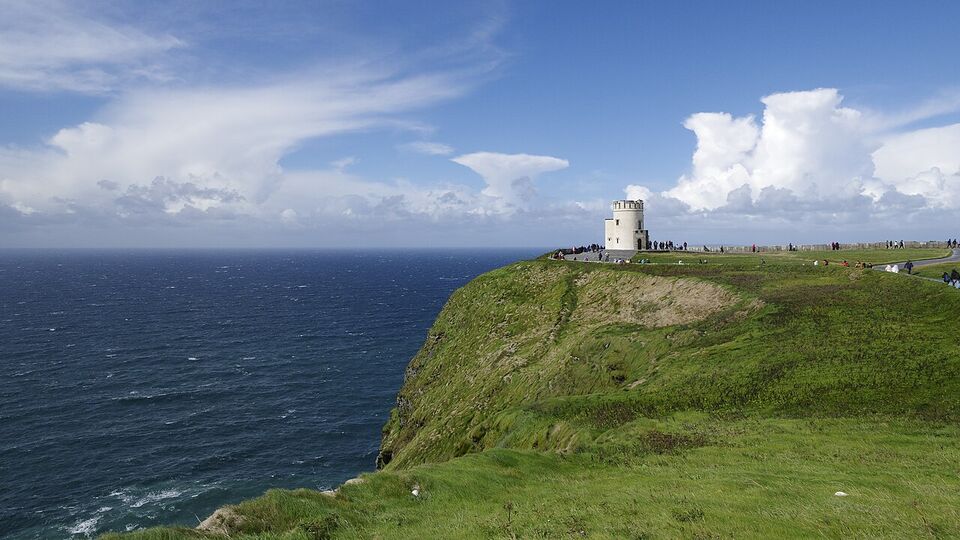
Pick Ireland if you want the easiest paperwork, pubs and music, Irish roots to chase and an Atlantic coast within reach of a Dublin or Shannon landing. Pick Scotland if castles, whisky, Highland scenery and St Andrews come first, and you can handle one extra online form and longer drives between sights. Dublin is the more compact city and Edinburgh the hillier one; whisky fans and Highland hikers lean Scotland, and golfers can go either way.
Better still, do both. Dublin and Edinburgh are linked by short flights, and the Irish Sea ferries run from Scotland's southwest to Belfast. Just remember that the two countries run on different currencies and different entry rules, and that Northern Ireland, though on the island of Ireland, counts as the United Kingdom.
| Ireland | Scotland | |
|---|---|---|
| Best for | Pubs and music, Irish roots, Atlantic cliffs, easy first trip | Castles, whisky, Highland scenery, golf, big festivals |
| Entry for Americans | No visa; stay of less than 90 days; no ETA or online form | UK ETA, £20 (about $27), valid 2 years or until your passport expires; stays up to 6 months |
| Nonstops from the US | Dublin from 20-plus US cities in recent winters; Shannon has Boston and New York year-round | Edinburgh has the best US links outside London; Glasgow too |
| Flying home | US preclearance at Dublin Terminal 2 and Shannon on most flights | No preclearance anywhere in the UK; arrive 3 hours early |
| Currency | Euro (€1 = about $1.12); pounds in Northern Ireland | Pound (£1 = about $1.33); Scottish banks print their own notes |
| Famous road trip | Wild Atlantic Way, about 2,500 km (1,553 miles) | North Coast 500, 516 miles (830 km) |
| Ancestry | Free census and civil records; citizenship by descent possible | ScotlandsPeople records from 1855; Edinburgh research centre |
Flights from the US
Both are an overnight hop. Nonstops from the US East Coast take about 6 to 8 hours to Ireland and about 6 hours 30 minutes to 7 hours to the UK; from California the UK takes 10 to 11 hours.
Ireland. Dublin has the widest choice. Its winter 2025/26 list, the latest full one we could confirm, had nonstops from 20-plus US cities, including Atlanta, Boston, Charlotte, Chicago, Dallas, Detroit, Miami, New York, Philadelphia, San Francisco and Washington, on Aer Lingus, American, Delta, JetBlue and United. Aer Lingus has since cut capacity by about 6% and ended Denver, Minneapolis and Las Vegas for winter. Check current schedules. Shannon, near Clare, Galway and Kerry, has Boston and New York year-round. Details are in our Ireland flights guide and Dublin Airport guide.
Scotland. Edinburgh now has the best US connections of any British airport outside London: United from Newark, Washington Dulles and Chicago O'Hare, Delta from New York JFK (now year-round), Atlanta and Boston, American from JFK and Philadelphia, JetBlue from Boston and JFK, and Virgin Atlantic from Orlando. See flights to the UK.
Insider tip
The trip home favors Ireland. On most flights from Dublin Terminal 2 and Shannon you clear US immigration, customs and agriculture before boarding and land as a domestic passenger; confirm with your airline. There is no preclearance in the UK, so arrive at least 3 hours before a US-bound flight from Edinburgh. See preclearance.
Entry rules: no form for Ireland, an ETA for Scotland
The two countries use separate border systems, and Americans often assume one covers the other. It does not.
For Ireland, bring a valid US passport and answer a few questions at the immigration desk. The Irish immigration service says visitors who need no visa can stay for less than 90 days, which is the figure to plan around. Ireland is outside Schengen and the EU Entry/Exit System, and ETIAS is not running as of November 2026. See our Ireland entry guide and entry requirements by country.
For Scotland, the UK ETA is required for every US citizen, and one covers England, Scotland, Wales and Northern Ireland. Apply in the free official UK ETA app or on GOV.UK, never on a lookalike site that adds fees. Airlines and ferries check it at boarding, and strict checks began on February 25, 2026. Full steps: UK ETA for US citizens.
Northern Ireland and the Common Travel Area
Ireland and the UK share the Common Travel Area, which lets British and Irish citizens move freely. It does not exempt you. A US visitor arriving in Belfast, or driving north from Dublin, enters the UK and legally needs an ETA, even though there is no border post and no one asks for it on the road. Aer Lingus asks for passports on flights to Britain. If your Ireland trip includes the Giant's Causeway or Belfast, apply for the ETA before you leave; our Northern Ireland and Belfast pages cover the rest.
Money: euro vs pound
The Republic of Ireland uses the euro; Scotland and Northern Ireland use the pound. We use €1 = US$1.12 and £1 = US$1.33 throughout, so €21 is about $24 and £20 is about $27. Card is king in both: contactless works on buses, in pubs and at most small shops, and Visa and Mastercard are accepted more widely than American Express or Discover.
Three details trip people up. First, always pay in the local currency when a card machine offers to convert to dollars; the rate is usually worse. Second, Scottish banks print their own pound notes, which are legal currency across the UK, but a shop in England may hesitate, so spend them before you leave Scotland. Third, if your Ireland trip crosses into Belfast, switch to pounds at the line: Titanic Belfast, for example, accepts only sterling notes in cash. See the Ireland and UK money guides.
Costs
Neither country is cheap, and neither has a clear winner. Rooms drive the bill, and our Ireland guide gives no single daily figure. For comparison, the UK guide puts a mid-range day outside London at £150–220 (about $200–293) per person for two sharing, and a budget day at £70–100 (about $93–133), before flights and a car; these are UK-wide figures, not Scotland-only.
| Item | Ireland | Scotland |
|---|---|---|
| Hotels | National average €174 (about $195) in 2025, peaking near €202 (about $226) in August; Dublin higher; B&B double often roughly €60–150 (about $67–168) | Edinburgh rooms two to three times normal in August; 5% visitor levy on the first five nights |
| Pint | €6.08 (about $7) national average for a pint of stout, November 2025 | £5.34 (about $7.10) UK average draft pint, April 2026 |
| Airport to city | Aircoach about €9 (about $10); taxi roughly €30–45 | Tram from £7.90 (about $11); Airlink 100 bus £6 (about $8) |
| Top castle or sight | Guinness Storehouse from €26 (about $29); Book of Kells from €25 (about $28) | Edinburgh Castle £23.50 (about $31); Holyrood £22 (about $29) |
Edinburgh's visitor levy took effect on July 24, 2026: 5% of the room rate for the first five nights, so a £200 (about $266) room adds roughly £8–10 (about $11–13) a night. The Ireland guide mentions no equivalent charge. Dublin city transit is capped at €6.00 (about $7) a day on a Leap card, with fares due to rise in January 2027.
Save money
In Scotland, a table-service bill may include a 10–12.5% service charge, so check before you tip. In Ireland, tipping is not required at the bar, and a service charge must be shown on the menu. In Ireland, VAT on food served in pubs and restaurants returned to 9% on July 1, 2026, according to one news report; the pub trade says that does not make drinks cheaper. If you plan several Historic Environment Scotland castles, the 14-day Explorer Pass is £48 (about $64) through October and £38 (about $51) from November; see heritage passes.
Dublin vs Edinburgh
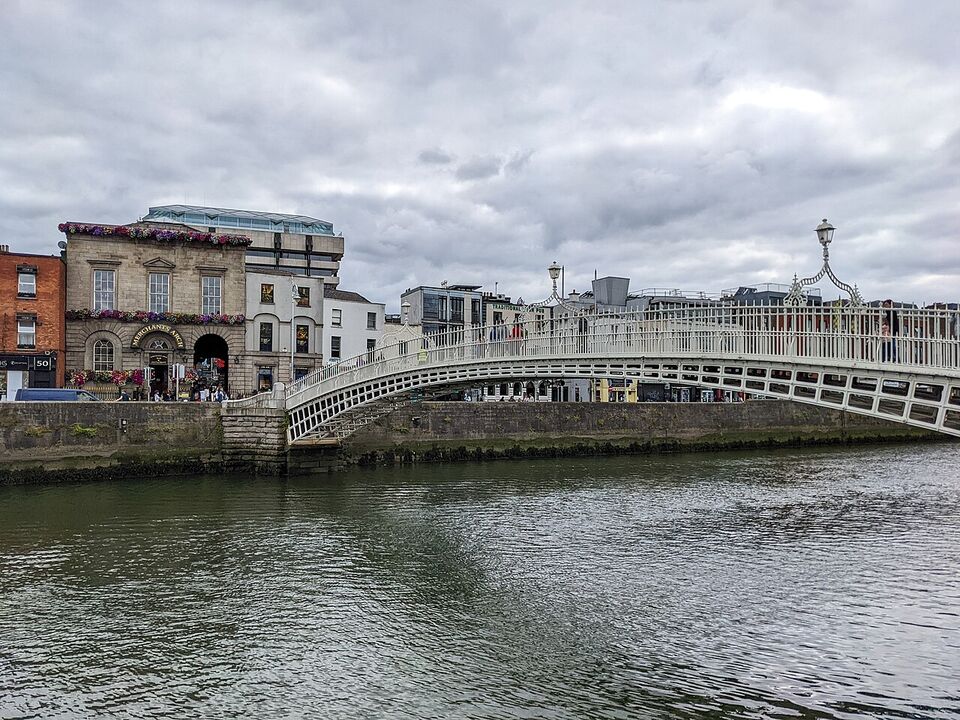
Dublin is a friendly, walkable city of Georgian squares and pubs. The grid south of Trinity College is the best base. Headline sights are the Book of Kells Experience, the Guinness Storehouse, Kilmainham Gaol (€8, about $9, book ahead) and the cathedrals. Dublin Castle is closed in 2026, with reopening expected in January 2027. See Dublin, Dublin sights and day trips from Dublin.
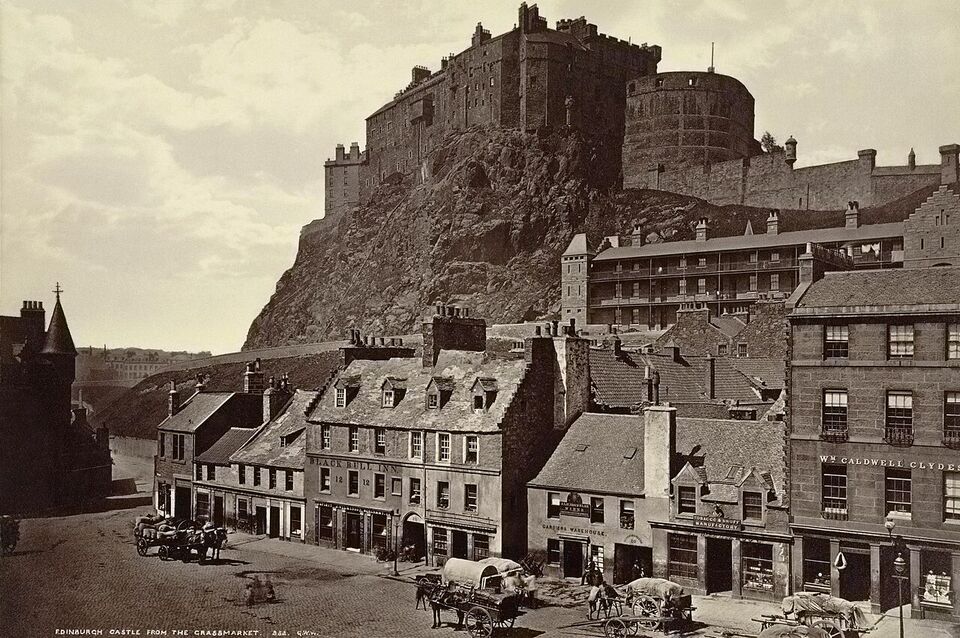
Edinburgh is built on hills: a castle on an extinct volcano, a medieval Royal Mile running downhill to Holyrood Palace, Arthur's Seat for a free hill walk and a Georgian New Town across the valley. Plan about three full days, or four to five with day trips to Stirling or St Andrews. Edinburgh also hosts the Fringe, scheduled for August 6–30, 2027. See our Edinburgh guide.
Driving on the left
Both countries drive on the left, with the driver on the right, and you go clockwise around roundabouts. Mistakes peak in the first hours, so rent an automatic and do not drive straight off an overnight flight.
The differences are in the details. In the Republic, signs and limits are in kilometers: 120 km/h on motorways, and 60 km/h on rural local roads since February 7, 2025. Scotland uses miles and mph, with 60 on single carriageways and 70 on motorways. Your US license is valid in the UK for visits of up to 12 months with no International Driving Permit. For Ireland, a secondary source says a permit is not usually needed, but confirm with your rental company.
Both countries have single-track lanes with passing places: if the place is on your left, pull in; if it is on your right, stop opposite it. Never park in one for a photo. Read driving in Ireland, renting a car in Ireland and driving in the UK.
Watch out
Tell your rental company before taking a Republic car into Northern Ireland: some firms require written permission and a fee, and driving across without it can void your cover. Taking an Irish rental to Britain is usually restricted or costly. Ask before you book.
Road trips: Wild Atlantic Way vs the Highlands
The Wild Atlantic Way is a signposted route of about 2,500 km (1,553 miles) from the Inishowen Peninsula in Donegal to Kinsale in Cork, launched in 2014 and passing through nine counties. At an average of 60 km/h it is about 40 hours behind the wheel, by our arithmetic, so choose a section: the Cliffs of Moher and the Burren, Connemara, the Dingle Peninsula or the Ring of Kerry. See the Wild Atlantic Way, Cliffs of Moher and Ring of Kerry.
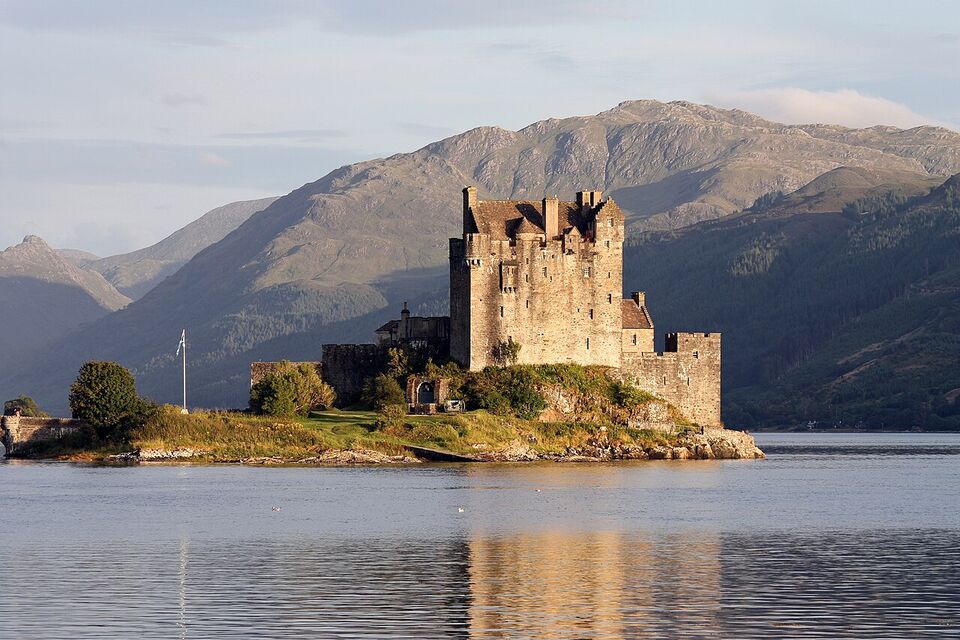
The North Coast 500 is a 516-mile (830 km) loop from Inverness around the north of the mainland, launched in 2015. It runs west to Applecross, up the Atlantic coast through Ullapool and Assynt, along the north coast to John o' Groats and back down the east coast. Five days is the bare minimum; seven to ten is better. Rooms are scarce and small, so book several months ahead for summer; a village shop may be the only fuel for 30 miles. The Bealach na Bà pass climbs to 2,054 ft (626 m) with gradients up to 20%, and a longer coastal road avoids it.
For a shorter option, the Highland highlights (Loch Ness, Glencoe, Fort William) need about five days; a 100-mile drive easily takes three hours. See the Highlands guide and Scottish islands.
Which is better? The Wild Atlantic Way works best as a section or two, since the whole route is about 40 hours of driving. The North Coast 500 is one committed loop; its popularity has brought traffic and campervans on narrow roads, and midges are worst from June to August, so shoulder season suits it best.
Weather and seasons
Neither country has a dry season. Dublin has rain on about 137 days a year, Galway about 170 and the Kerry coast about 203. Dublin's highs average 46°F (8°C) in January and near 67°F (19°C) in July. Edinburgh and the east coast of Scotland are surprisingly dry, closer to London's rainfall than to Glasgow's, with summer highs in the mid-60s°F (about 19°C). The west Highlands get several times as much rain.
Daylight decides more than temperature. Edinburgh sits at about the latitude of Moscow: in late June the sun rises at 4:25 a.m. and sets at 10:05 p.m., about 17 hr 35 min of daylight; in late December it sets at 3:40 p.m., about 7 hours of daylight.
For both, go in May, June or September: long days, almost everything open and lower prices than July and August. In the western Scottish Highlands and islands, midges are a nuisance from roughly late May to September, worst June to August; bring repellent and a fine-mesh head net. See when to go to Ireland and when to go to the UK.
Castles
Scotland has the bigger-name castles. Edinburgh Castle sits on a volcanic crag, holds the Honours of Scotland and opens 9:30 a.m. to 6 p.m. April to September and to 5 p.m. October to March. Adults pay £23.50 (about $31) online and £26 (about $35) at the gate, and when online tickets sell out the castle sells none at the gate, so book early. Add Urquhart Castle on Loch Ness, £14 (about $19) online, plus Stirling and Doune.
Ireland has thousands of castles, but few open all year. Good choices are Kilkenny Castle (€8, about $9), the Rock of Cashel (€8, about $9) and Blarney Castle (€24, about $27). Dublin Castle and Ross Castle are both closed for 2026, so do not plan around them. See our Ireland castles guide and the UK heritage guide.
Whisky, whiskey and pubs
The spelling tells you the country: Scotch is whisky, Irish is whiskey. Scotland has around 150 distilleries, and Speyside, northeast of Aviemore, holds more than 50 malt distilleries, with the Malt Whisky Trail linking the best-known visitor centers. In Edinburgh, the Scotch Whisky Experience offers a Silver Tour at £25 (about $33) and a Gold Tour of five whiskies at £39.75 (about $53). Ireland's big names are Jameson, with a Midleton Distillery Experience from €28 (about $31) in County Cork, plus Teeling in Dublin and Dingle Distillery in Kerry. See Irish drinks and UK pubs.
Pubs work similarly: order and pay at the bar, and in both countries people take turns buying rounds. A British pint is about 568 ml, roughly a fifth bigger than a US pint. Traditional music sessions are a highlight in both. The drinking age is 18 in both.
Watch out
Do not drive after tasting. Scotland's drink-drive limit is 50 mg per 100 ml, lower than the 80 in England, Wales and Northern Ireland, and a secondary source lists the same 50 mg for the Republic of Ireland; the safest rule is none. Nominate a driver or ask for a "driver's dram" to take away.
Ancestry
Ireland is the stronger draw for most Irish Americans, and the paperwork is friendlier. The 1901, 1911 and 1926 censuses are free to browse, the 1926 one having been released online in April 2026. Civil records at irishgenealogy.ie are free to search. Better, if a grandparent was born on the island of Ireland, you may be eligible for citizenship through the Foreign Births Register: €278 (about $311) for an adult as of November 2026, with processing of about 12 months. See Irish ancestry.
Scottish records are strong too. Civil registration began in 1855, and searching ScotlandsPeople is free; viewing a register image costs 6 credits, or £1.50 (about $2). A day seat at the ScotlandsPeople Centre in Edinburgh costs £15 (about $20), with no per-image charges. Our UK guide covers records, not a citizenship route. See UK ancestry.
Golf
Both are links-golf heaven, with firm ground, wind and pot bunkers. Scotland is the home of the game, and the Old Course at St Andrews is a public course run by the St Andrews Links Trust. It closes on Sundays, and you need a recognized handicap. The 2026 ballot green fee was £355 (about $470). Expect very limited availability in 2027: the 155th Open is at St Andrews from July 11 to 18, 2027, and visitors lose the course for several weeks around it. See British sports and golf.
Ireland's published peak-summer 2026 fees include Ballybunion Old €450 (about $504), Lahinch Old €450 (caddie compulsory), Portmarnock €475 (about $532), Royal Portrush £420 (about $559) and Royal County Down £450 (about $599). Fees change every year, so confirm with the club; see golf in Ireland.
Doing both: ferries and flights
The best order is to fly into one country and home from the other. Fly into Edinburgh, tour Scotland, cross to Ireland and fly home from Dublin, where US preclearance saves time at the other end. An open-jaw ticket ("multi-city" on airline sites) often costs about the same as a round trip. Get your UK ETA for every traveler before you leave, because it is checked at boarding.
By air. Several airlines fly from Dublin to Edinburgh and other British airports, and the flights are short hops. We could not confirm 2027 schedules, fares or flight times, so compare on the airline sites.
By sea. Stena Line sails Cairnryan (southwest Scotland) to Belfast in about 2 hr 15 min, and P&O sails Cairnryan to Larne in about 2 hours. The Enterprise train between Dublin and Belfast takes roughly two hours, with up to 15 trains a day. A rail-and-sail ticket also links Great Britain to Dublin via Holyhead, which takes about 3 hr 15 min by ferry. Irish Sea sailings can be cancelled in severe weather, mostly in winter, so do not cut a same-day flight home fine.
One workable 10-day outline, our suggestion rather than a guide itinerary: 4 nights in Edinburgh, 2 to 3 in the Highlands, then a flight to Dublin and the west coast. See adding Ireland to a UK trip, Ireland and beyond, and our London vs Paris comparison for adding England.
Choose Ireland if… / Choose Scotland if…
Choose Ireland if…
- You want no entry form, or you are only visiting the Republic.
- You want US preclearance on the flight home.
- You are chasing Irish roots, or may qualify for citizenship by descent.
- You love pubs and music sessions, and want the Atlantic coast and Dublin in one trip.
Choose Scotland if…
- You want big castles and Highland mountain scenery.
- You are a whisky fan, or a golfer who wants the Old Course at St Andrews.
- You will rent a car, and you can plan around single-track roads and midges.
- You are happy to file a UK ETA and use miles, as at home.