Overview
You can combine Ireland with Britain and Europe on one trip, and many Americans do. The practical questions are not about whether it is possible, but about the rules at each border, how to cross the water, and how many places a week can hold. The short answer is that Northern Ireland and Britain are one entry system (the UK), the Republic of Ireland is a second, and mainland Europe's Schengen area is a third.
Three things to settle before you book a second country: whether you need a travel authorization, how you will get there (ferry, rail-and-sail or flight), and what you will do with a rental car at the crossing. This guide covers each, then gives realistic sample plans. If you only want the Republic and Belfast, you need our Belfast guide and our entry requirements guide instead.
All prices here that are not in dollars are in the currency of the country named. Northern Ireland and Britain use pounds sterling (£1 = US$1.33 in this guide), while the Republic and most of mainland Europe use euros (€1 = US$1.12).
What an American needs at each border
| Place | Entry rule for US citizens | Notes |
|---|---|---|
| Republic of Ireland | No visa for a holiday; stay of less than 90 days | Check passport validity on travel.state.gov and irishimmigration.ie |
| Northern Ireland | UK ETA, £20 (about $27) | No check on the road from the Republic; checked at flights and ferries |
| England, Scotland, Wales | UK ETA, £20 (about $27) | One ETA covers all four nations, for up to 6 months per stay |
| France, Spain, Italy and other Schengen countries | Visa-free for short stays; ETIAS expected in 2027 | Entry/Exit System in use since October 2025; check europa.eu |
| Flight home to the US | US citizens: a valid US passport. Non-US companions: an approved ESTA or visa | Dublin and Shannon offer US preclearance |
The Ireland rule comes from the Irish immigration service, which says visitors may stay "for less than 90 days." We could not confirm from a fetched official page the details of stamps and extensions, so check irishimmigration.ie if you plan a long stay. The State Department advises a passport valid for your whole stay; check travel.state.gov for the current wording.
Different from home
In the US, crossing between two states needs nothing. Here, crossing between two parts of one island can mean a different country, currency and entry rule. The road from Dublin to Belfast has no border post, but Belfast is in the UK. Plan paperwork by country, not by island.
The UK ETA for Northern Ireland and Britain
The UK electronic travel authorisation (ETA) is a digital permit that US citizens normally need before traveling to the UK. According to gov.uk, it costs £20 (about $27), lasts up to 6 months per stay, and covers Jersey, Guernsey and the Isle of Man as well. Every traveler needs their own, including babies and children, and British and Irish passport holders do not need one. Apply only on the official gov.uk service: other sites imitate it and may charge more.
The Irish Times reported in February 2026 that the ETA had been in place in Northern Ireland for about a year without being enforced on the land border, but that strict checks at boarding for flights and ferries to Britain began on February 25, 2026. That is why Aer Lingus asks for passports on flights to Britain. If you fly or sail between Ireland and Britain, you will be checked. We could not confirm from an official page that an ETA stays valid for two years across many trips, so check the current terms when you apply, and allow a few working days.
Passports and the Common Travel Area
Ireland and the UK share the Common Travel Area, which lets British and Irish citizens move between the two without passport control. It does not exempt a US visitor from the UK's entry rules. Carry your passport on every cross-border journey, including the drive from the Republic to Belfast.
Schengen, EES and ETIAS
Ireland is not part of the Schengen area. The EU Entry/Exit System (EES), which registers non-EU travelers with a photo and fingerprints at Schengen external borders, began operating on October 12, 2025. Irish news reports at the time said Ireland is not taking part, so travelers arriving directly in Ireland are not affected. EES matters only when you add France, Spain, Italy or another Schengen country.
ETIAS is the planned EU travel authorization for visa-free visitors. As of mid-November 2026 it is not running. Afar reported on July 13, 2026, citing the Financial Times, that the launch is now expected in 2027 with a fee of €20 (about $22); the ETIAS website had still shown the fourth quarter of 2026 at that time. The report did not say whether Ireland would be covered, but because Ireland is outside Schengen, a trip to Ireland alone should not need it. Check europa.eu close to your travel date.
The usual Schengen rule lets visitors stay up to 90 days in any 180-day period, and our understanding is that days spent in Ireland or the UK do not count toward it; confirm on the EU site if you plan a long trip. Americans on a two-week or one-month trip should not come near the limit.
Watch out
Rules for the EU and the UK are changing quickly. ETIAS has slipped before, and the ETA has been enforced in stages. Check gov.uk, europa.eu and travel.state.gov in the month before you travel, not just when you book.
Ferries from Ireland to Britain and France
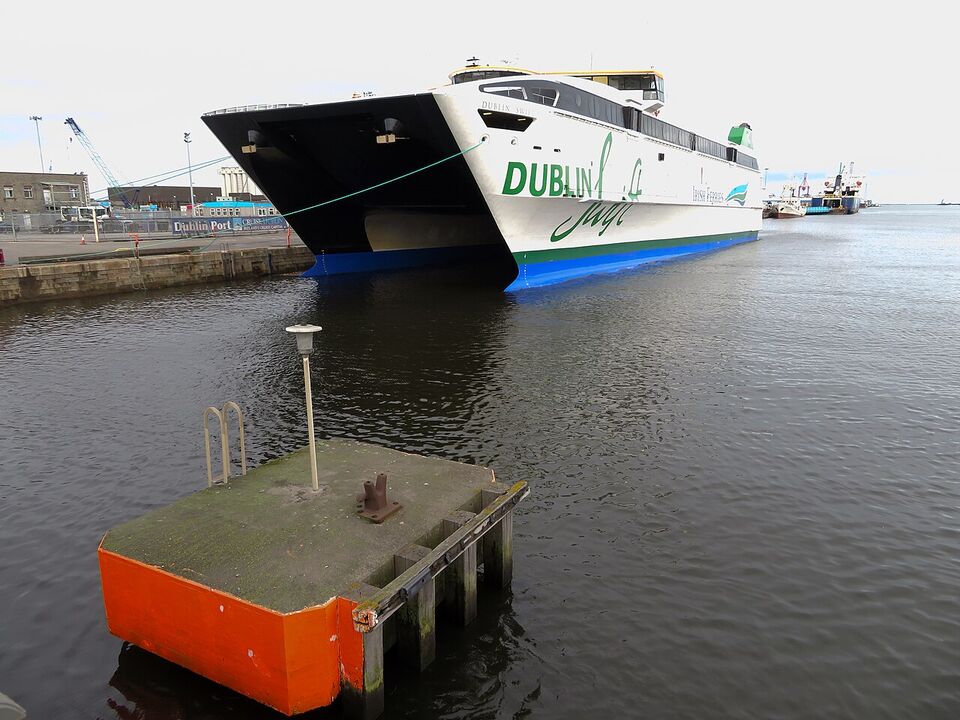
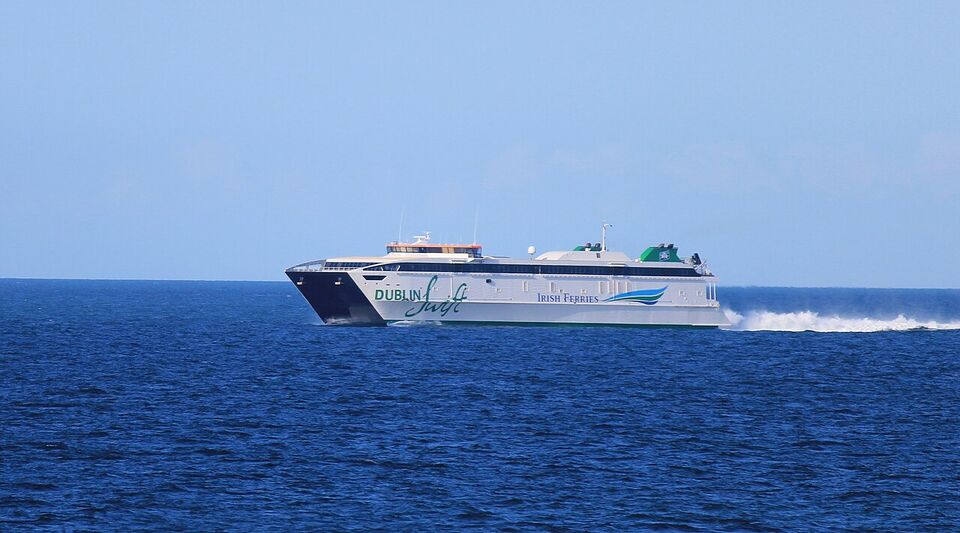
Ferries link the Republic and Northern Ireland with Britain and, from several ports, with France and Spain. Wikipedia lists the operators as Irish Ferries, Stena Line, P&O Ferries and Brittany Ferries. The routes to know are below. We did not confirm current timetables, sailing times or winter schedules, so check each operator before you plan.
| Route | Operators to check | Notes |
|---|---|---|
| Dublin to Holyhead (Wales) | Irish Ferries, Stena Line | Connects with trains toward Chester, Crewe and London Euston |
| Rosslare to Pembroke or Fishguard (Wales) | Irish Ferries, Stena Line | Check which operator runs which port |
| Belfast or Larne to Cairnryan (Scotland) | Check the operators' sites | Short crossings; Cairnryan is a rural ferry terminal |
| Dublin or Rosslare to Cherbourg (France) | Irish Ferries | Long, overnight sailings; cabin or seat needed |
| Roscoff (France) | Brittany Ferries | Check departure ports and whether sailings are seasonal |
Fares depend on whether you travel as a foot passenger or with a car, and whether you book a cabin. Booking early is cheaper. Check these before you book:
- Passport and ETA: operators check them at boarding.
- Rental car rules: most Irish rental cars cannot be taken on a ferry to Britain without the company's written permission, and some firms refuse. A rental guide says a one-way drop-off between countries can cost hundreds of euros.
- Terminal: ferry ports are outside the city centers (Dublin Port is a bus or taxi ride from the center); allow time to get there and check in.
- Weather: rough winter crossings can cancel or delay sailings.
- Cabin or seat: overnight sailings to France need a cabin or a reclining seat.
Rail-and-sail
SailRail sells a single discounted ticket from any station in Great Britain to any station in Ireland, using Irish Ferries or Stena Line for the crossing. Dublin Connolly station links by bus to Dublin Port, and the ferry to Holyhead connects with trains on the North Wales line toward Chester, Crewe and London Euston. For a car-free trip, this is the lowest-stress way to reach Wales or England from Dublin. Check fares and times at irishrail.ie and the operators.
Flights to Scotland, London and Europe
Short flights are often the simplest way to reach Britain and Europe from Dublin, Belfast or Cork. Several airlines fly from Dublin to London, Edinburgh, Glasgow, Manchester, Paris and Amsterdam, and the flights are short hops. We could not confirm 2026-27 schedules or fares, so check the airlines directly. The things Americans overlook:
- Passports. Aer Lingus asks for passports on flights to Britain, and the UK ETA is checked at boarding.
- Baggage. Budget airlines charge for carry-on and checked bags; compare the total, not the headline fare.
- Dublin Airport. Allow time for security; Dublin advises arriving 3 hours before a long-haul flight and Terminal 2 is busiest 5 a.m. to noon. See our Dublin Airport guide.
- Flying home. US-bound flights from Dublin Terminal 2 normally include US preclearance, so you clear US immigration in Ireland. A flight home from London or Paris does not.
- Open-jaw tickets. Flying into Dublin and out of London or Edinburgh avoids backtracking. See our guide to flights.
Insider tip
US citizens do not need an ESTA, but a spouse, friend or child traveling on another passport usually does. Dublin Airport says it must be approved at least 72 hours before departure, that real-time approvals no longer exist, and that without one a passenger cannot board, even with preclearance. Tell any non-US companions early.
Money, phones and plugs when you cross
- Money. Euros in the Republic, pounds in Northern Ireland and Britain, euros in most of mainland Europe. Pay by card where you can, and carry a little cash for the currency you are in. See our money guide.
- Phones. Check how your US carrier treats the UK, Ireland and the EU; some plans group them, some do not. See our phones and power guide.
- Plugs. Ireland and the UK use Type G sockets at 230 V. Mainland Europe mostly uses different plugs, so carry a second adapter.
- Time. Ireland and the UK are on the same clock; continental Europe is an hour ahead.
- Driving. You drive on the left in Ireland and the UK, and on the right in France and the rest of Europe. Think twice before taking a car across the sea.
Ferry or flight: how to choose
The honest comparison is door-to-door time and luggage, not the headline crossing. A flight from Dublin to London is short in the air, but the trip to the airport, security and a transfer at the other end add hours to the day. A ferry plus a train or drive to the same area usually takes longer but starts and ends closer to town centers, and it is the better choice when you carry a lot, travel with children or have a car.
- Choose a flight if you are going to a big city (London, Edinburgh, Paris), have limited days, or are flying home from there.
- Choose a ferry or rail-and-sail if you want Wales or the north of England, dislike airports, or are bringing a car and have checked the rental terms.
- Choose the Belfast to Scotland ferry if you are already in the north and want Glasgow, Edinburgh or the Scottish borders without a flight.
Whichever you choose, avoid tight connections. Winter weather can delay sailings, and a missed ferry usually means a missed night in a prepaid hotel. Leave a buffer day before any flight home.
Save money
Compare the full cost, not the ticket price. A cheap fare with paid bags, an airport train and a late-night taxi can cost more than a ferry-and-train ticket. Book ferries and rail-and-sail early for the best fares, and check the cancellation terms.
Adding Britain from Belfast and the north
If your Ireland trip includes Belfast, the Scottish ferries are the easiest add-on, because you are already in the UK for entry purposes and your ETA covers the rest of the country. From Belfast and Larne, ferries cross to Cairnryan in southwest Scotland, from where roads and trains lead on to Glasgow and the Scottish borders. From Dublin and Rosslare, the Welsh ports of Holyhead, Pembroke and Fishguard lead to Snowdonia, the Welsh coast and the main rail line to London.
Keep a few details in mind. Cairnryan is a ferry terminal in a rural area, not a city, so you will need a bus, train, taxi or car to go on. Public transport at the Scottish end may not match ferry times, especially on Sundays and in winter. If you plan to rent a car on the British side, pick it up there and do not take an Irish rental across the sea: most companies restrict it, and a one-way fee between countries can cost hundreds of euros. Our car rental guide explains the insurance and cross-border rules.
A planning checklist
- Apply for the UK ETA on gov.uk if your route touches Northern Ireland or Britain.
- Check ETIAS and the Entry/Exit System on europa.eu if you add a Schengen country.
- Confirm that your passport is valid for the whole trip and check any extra requirement on travel.state.gov.
- Book ferries, rail-and-sail and flights with the operator or the airline, and read the baggage and cancellation terms.
- Ask your rental company in writing whether you may drive into Northern Ireland or onto a ferry.
- Arrange phone and card use for each country, and carry a little cash in each currency.
- Check that any non-US travelers in your party have their own ESTA or visa for the flight home.
- Buy travel insurance that covers every country on your route; emergency care in Ireland is given regardless of insurance, but bills follow.
What is realistic in a week
A week is short. Allow a day for arrival and jet lag, and a day for the flight home. That leaves five days, and every border crossing costs half a day. Our rule of thumb is that one week supports one extra region, not two.
- Same island, two countries. Dublin and Belfast, by train, work well in a week, with a day for the Causeway Coast.
- Ireland plus one city. Pair Dublin with London, Edinburgh or Paris by air, with a short flight and no ferry time.
- Slow travel. If you take the ferry, you are choosing a longer trip, not a faster one.
With 10 days or more, you can add a second base with less rush. Winter trips make this harder because daylight is short and some ferry schedules are reduced; see our when-to-go guide.
Sample combinations
Dublin and Belfast
Start in Dublin, take the Enterprise train to Belfast, and add a day on the Causeway Coast. You cross into the UK, so you need an ETA. See our Causeway Coast guide.
Dublin and London
Fly or take rail-and-sail from Dublin to London. Both are in the UK for the second leg, so an ETA is needed. Fly home from London; there is no US preclearance there.
Belfast and Scotland
Cross from Belfast to Cairnryan, then continue by bus, train or car toward Glasgow and Edinburgh. One ETA covers both, since Scotland and Northern Ireland are both in the UK.
Dublin and Wales
Sail to Holyhead and travel on by train or car. A good choice for a slower trip without a flight, if the crossing times suit you.
Ireland and Paris
Fly from Dublin or Cork to Paris. You enter the Schengen area, so EES applies; ETIAS is not yet running. Keep Ireland in the first half and fly home from Paris.
For where to base yourself in Ireland first, read our regions guide. If your trip includes a cruise, see our cruises guide for UK and Irish port rules.
Add it to a route in the trip builder, or ask us to plan the hotels, trains and guides for you.