Dublin in brief
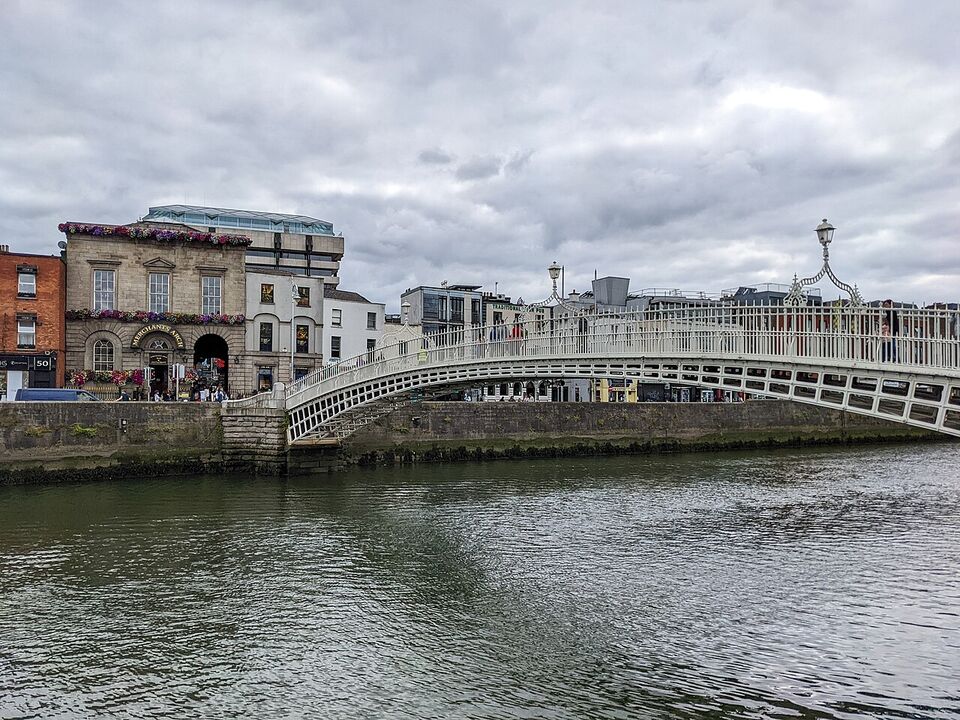
Dublin (Baile Átha Cliath, "the town at the ford of the hurdles") is a compact capital on the River Liffey, where Dublin Bay meets the Dublin Mountains. The city itself has about 593,000 people, and with the suburbs the figure passes 1.2 million. Most of what visitors want sits inside a walkable area of about two miles (3 km) across, which is why it works well for a first trip to Ireland.
We suggest two full days in the center and a third for a day trip. That is enough for Trinity College, a pub or two, one big paid sight such as the Guinness Storehouse or Kilmainham Gaol, and an afternoon in a museum or park. Four days lets you add Newgrange or Belfast without spending every day on a coach. This guide covers the city as a whole; the detail on individual sights is in things to do in Dublin, and the practical page for landing is Dublin Airport transportation.
Dublin is among the driest parts of Ireland, with noticeably less rain than the west coast (about 772 mm a year at Dublin Airport, against about 1,156 mm in Galway), but "driest" is relative. The Met Éireann averages for Dublin Airport (1991-2020) show about 137 days a year with at least 1 mm of rain. Plan every day with a rain option, and read on for ideas.
Different from home
Dublin is small by American standards and was laid out long before cars. Streets are narrow, many are one-way, and parking is scarce and costly. Most visitors do not need a car for the city, and we suggest picking one up only on the day you leave. See car rental and driving in Ireland for the rules if you do rent.
How many days to spend
The right length depends on how many "big" sights you want. A rough guide:
- One day: a layover or cruise stop. Do Trinity College first thing, walk through the Georgian streets to St Stephen's Green, and finish with a pub meal. Skip anything that needs a long tour.
- Two days: the core visit. One day for the south side (Trinity, museums, Georgian squares), one for the west (Kilmainham Gaol and the Guinness Storehouse).
- Three days: the two days above plus a day trip by train, such as Howth or Dalkey, or a tour to Glendalough. The options are laid out in day trips from Dublin.
- Four or five days: add Newgrange (see the Boyne Valley guide), Kilkenny (the Kilkenny guide) or a day in Belfast (the Belfast guide), plus slower time in Phoenix Park, the docklands and the north side.
Jet lag is a factor: Ireland is five hours ahead of New York for most of the year, and four hours ahead for a few weeks in spring and again in autumn, when the US and Europe change their clocks on different dates. On the first day, we suggest booking only one fixed-time activity, in the afternoon.
Dublin neighborhoods
Dublin divides roughly into the south side, south of the Liffey, where most visitors stay, and the north side, which has the main shopping streets around O'Connell Street and Henry Street and a few sights. Here are the six areas worth knowing.
Temple Bar
Temple Bar keeps a medieval street plan that escaped the Georgian rebuilding, and it is where many first-time visitors head for the evening. It is also the most tourist-priced part of the city. Visit for a walk and a music session, then eat and drink elsewhere.
Georgian Dublin
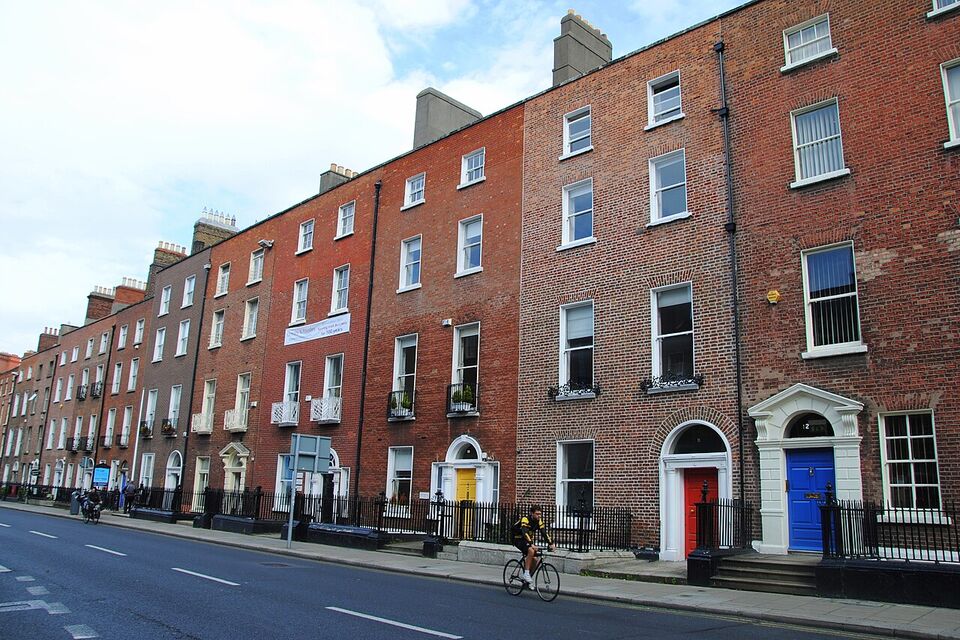
The grid of 18th-century squares and doorways south of Trinity College is the best base for a first stay. The National Museum (Archaeology), the National Gallery and the Little Museum are all within a short walk of each other, and Leinster House on Kildare Street is the seat of the Irish parliament.
The Liberties
This is the old medieval district outside the city walls, now home to the Guinness Storehouse at St James's Gate, St Patrick's Cathedral, Christ Church and several whiskey distilleries. It is a good area for sightseeing but has fewer hotels than the Georgian quarter.
Docklands
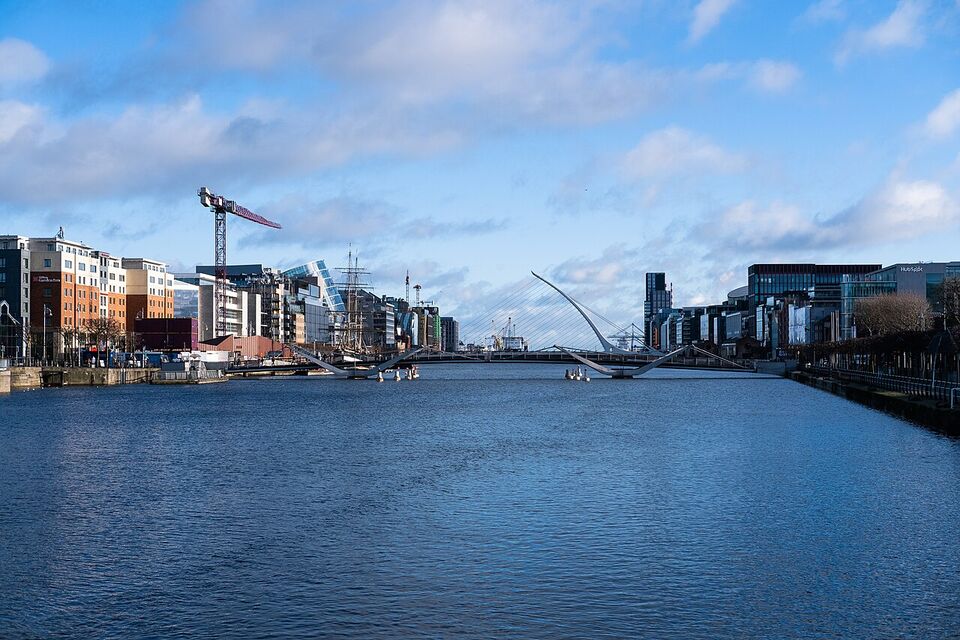
A modern district of offices, the IFSC and the Samuel Beckett Bridge, with EPIC, the emigration museum, among its few visitor sights. It is quiet at weekends and in the evening. The Luas Red Line and the Dublin Express coaches both stop here, which helps for early departures and the ferry.
Smithfield
Smithfield is a paved market square with a Luas Red Line stop and a distillery visitor center, and it is a good-value base for people who do not mind a 15-minute walk or short tram ride to the main sights. From November 20 to December 31, 2026 it also hosts the TwinkleTown Christmas attraction.
Ranelagh
A residential village with a high concentration of cafes and dinner spots, and a quicker way to eat well than the center on a busy weekend. The Luas Green Line runs from here to St Stephen's Green, and the Dublin Express airport coach lists a Ranelagh Luas stop.
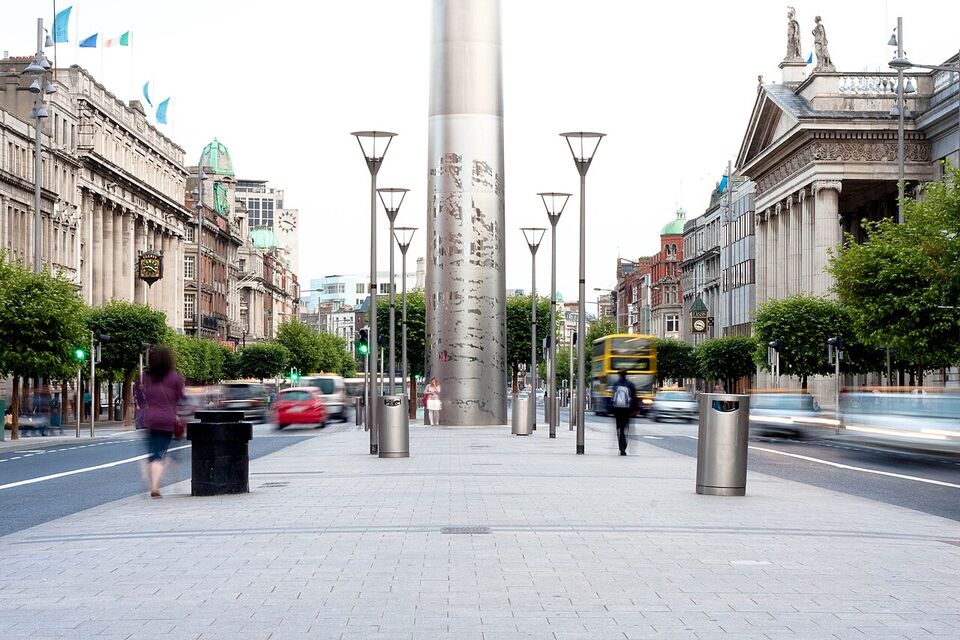
Two other areas come up often. O'Connell Street is the wide north-side avenue with the Spire (a 398 ft, 121 m steel needle) and lots of bus stops, but it is busy and mixed in character; it is more useful as a transport hub than as a place to stay. Phoenix Park, west of the center, is the largest green space and is covered in things to do in Dublin.
Where to base yourself
For a first visit we suggest Georgian Dublin (around St Stephen's Green, Merrion Square and Grafton Street). You can walk to Trinity, the museums and the pubs, and you come home to quieter streets than Temple Bar. Smithfield and the north side near Capel Street suit travelers who want to save money, while Ranelagh and nearby Rathmines suit longer stays or people who prefer a neighborhood feel.
What hotels cost
Dublin is generally the priciest place to sleep in Ireland. Fáilte Ireland data reported by the Irish Times shows the national average hotel room rate for 2025 at €174 (about $195), up 3% on the year, with occupancy at 78.4%. Central Dublin rooms usually cost more than that national figure. As a rough guide, small B&Bs and guesthouses often run roughly €60 to €150 a double (about $67 to $168), but check the actual rate for your dates.
- $ Under $120 a night for a double: hostels with private rooms, some guesthouses and rooms outside the center. Rare in the middle of the city, especially on weekends.
- $$ $120 to $300: most three- and four-star hotels and good guesthouses. This is the usual range for central Dublin outside peak dates.
- $$$ Over $300: top hotels, and many ordinary hotels on big event nights.
Prices jump on rugby weekends, around St Patrick's Festival (March 13 to 17, 2027), and from June to August. Ireland's Six Nations home games at the Aviva Stadium in 2027 are Friday, February 5 against England and Saturday, March 13 against France, both with 8:10 p.m. kickoffs. Book rooms as soon as your dates are firm.
Insider tip
If you rent a short-term apartment, look for a registration number on the listing. A register for short lets of up to 21 nights is due to open on December 1, 2026, but the law behind it had not passed as of mid-November 2026. For more on where to stay across the country, see where to stay.
Getting around Dublin
Dublin has no metro yet. MetroLink, a line from Swords to Charlemont, is planned, but as of mid-November 2026 enabling works start in 2027 and tunneling and stations are expected from 2028, so there is no opening date. Use the following for now.
Walking
Walking is the best way to see the center. Trinity College, Grafton Street, St Stephen's Green, Temple Bar, Dublin Castle and the cathedrals are all within about a 20-minute walk of each other. The Kilmainham and Guinness areas are a longer walk, and a bus or tram saves time there.
Leap card, buses, Luas and DART
Dublin Bus, Go-Ahead Ireland city buses, the Luas tram (Red and Green Lines) and the DART coastal train all work with the Leap card and the TFI 90 Minute Fare. As of November 2026 the adult 90 Minute Fare is €2 (about $2); the young adult (19-25) and student fare is €1 (about $1), and the child fare (5-18) is €0.65 (about $0.73). It covers Dublin Bus, Go-Ahead city buses, Luas and DART or commuter rail in Zone 1, but not Express or Nitelink buses, which cost €2.40 (about $3) for an adult.
- Daily and weekly caps: adult Leap travel in the Dublin area stops charging once you reach €6 in a day (about $7) or €24 for a Monday-to-Sunday week (about $27).
- Tap on, and tap off where required: tap on each time you board a bus; tap on and off for DART, commuter rail and Luas.
- Children: those aged 0 to 4 travel free, and children 5 to 8 travel free with a Child (5-8) Leap card.
- Fares rise in January 2027: the National Transport Authority has announced that adult fares rise by an average of 15% from January 2027, with the 90-minute fare going from €2 to €2.30 (about $3). The exact start day in January was not confirmed as of mid-November 2026.
The Leap Visitor Card, tourist tickets and cash fares are covered on the official TFI fares pages at transportforireland.ie, where you should check the current price before you travel. The DART runs along the coast from Malahide and Howth south to Bray and Greystones, and it is the easiest way to reach the seaside trips in day trips from Dublin.
Taxis and ride-hailing
Taxis wait at ranks in the center, and taxi and ride-hailing apps operate in the city. We could not confirm current flag-fall prices as of mid-November 2026, so use the in-app estimate and check what the meter will show. A metered taxi from Dublin Airport to the city center is roughly €30 to €45 (about $34 to $50), more in the evening and on weekends and bank holidays.
Watch out
Transport can be disrupted on big event days and over Christmas. Dublin Express and Bus Éireann both warned of changes between November 10 and 13, 2026 for EU meetings. Expect no buses or trains on December 25, and check tfi.ie in December for the 2026 holiday timetable.
Big paid sights or free ones?
Dublin's headline attractions are mostly paid and several need advance booking, but the city also has strong free options. Prices below are the ones we could confirm as of mid-November 2026; always check the operator's site before you buy.
| Sight | Price | US$ approx. | Booking |
|---|---|---|---|
| Book of Kells Experience, Trinity College | From €25 | $28 | Timed entry; book online |
| Guinness Storehouse | Adult from €26 | $29 | Book online; €2 (about $2) more at the door |
| Kilmainham Gaol | Adult €8 | $9 | Guided tour only; book ahead |
| St Patrick's Cathedral | Adult €11.50 | $13 | Walk-in; online cheaper where offered |
| Christ Church Cathedral | Adult €12 at the desk | $13 | Walk-in; cheaper online |
| National Museum of Ireland (Archaeology) | Free | $0 | None |
| Phoenix Park, St Stephen's Green, Merrion Square | Free | $0 | None |
Dublin Castle is closed (see the next section), and EPIC, the emigration museum, costs about €22 for adults (about $25) according to secondary information, so confirm the price and hours on epicchq.com. The full picture, with booking and "skip if" notes for each sight, is in things to do in Dublin.
Dublin Castle
Dublin Castle is closed to visitors. The Office of Public Works says the campus closed to the public on Monday, June 15, 2026 for the six months of Ireland's EU Presidency, and that visitors are welcome back in January 2027; its opening-times line says "closed 5 May - 31 December 2026". The Chester Beatty library inside the castle grounds was also shut for six months, and we could not confirm its reopening day. Check heritageireland.ie before you plan around either.
Save money
The big free sights are the National Museum of Ireland on Kildare Street (Tuesday to Saturday 10 a.m. to 5 p.m., Sunday and Monday 1 p.m. to 5 p.m.), the parks and the churches' grounds. Pair one paid sight a day with free ones. A Heritage Card or a city pass can save money only if you visit enough paid sites; the worked comparison is in things to do in Dublin.
Food and pubs in brief
Dublin's food scene ranges from traditional pub meals (stew, seafood chowder, fish and chips) to a wide spread of international restaurants, and it is worth reading the food guide and the pubs guide before you go. A few things to know:
- Pints cost more here than elsewhere. The national average for a pint of stout was €6.08 (about $7) in November 2025, according to the Central Statistics Office, and Guinness averages about €2 (about $2) more in Dublin than in a county such as Westmeath. On St Patrick's Day 2025, pints in Temple Bar were up to €10.45 (about $12).
- Food tax changed. The VAT rate on food served in pubs, restaurants and cafes returned to 9% from 13.5% on July 1, 2026. The pub trade says most pubs do not serve food and would not benefit, so do not expect cheaper drinks.
- Tipping is not required. Many locals round up or tip for good table service. Check the bill first for a service charge, which must be shown on the menu or signage in writing.
- Live music. Traditional sessions happen in pubs across the city, not only in Temple Bar. Ask the staff when the music starts, and see the drinks guide for what to order.
Safety in the city center after dark
Dublin's center is busy until late and is generally comfortable for visitors using normal city precautions. We could not verify any crime statistics for this page, so we keep the advice general:
- Keep bags zipped and phones out of back pockets in crowds, on the Luas and on buses.
- Do not leave bags or devices visible in parked cars.
- Late at night, stay on lit, well-used streets, and use a licensed taxi or a ride-hailing app instead of walking long distances alone.
- Expect noisy crowds around Temple Bar and Grafton Street on Friday and Saturday nights, and on match days.
The emergency number is 112 or 999; both reach the same service. The US Embassy in Dublin has an emergency line for American citizens at +353 1 668-8777. The US Embassy site shows a Level 1 travel advisory for Ireland ("Exercise normal precaution"). For more on staying safe and healthy, see safety and health and insurance.
Rainy-day backups
November has about 12.5 days with measurable rain at Dublin Airport and an average high of 51°F (10.3°C), so a plan B matters most outside summer. Good indoor options:
- The National Museum of Ireland (Archaeology) on Kildare Street, which is free and has the Treasury, Ireland's gold and Viking Ireland galleries.
- Trinity's Old Library and Long Room, with the Book of Kells (booked in a timed slot).
- The Little Museum of Dublin, on St Stephen's Green, which runs short guided tours.
- St Patrick's Cathedral and Christ Church Cathedral, each about an hour.
- The Guinness Storehouse, which takes about two hours and has a bar at the top.
- A traditional pub with a fire for lunch, and the covered shopping areas around Grafton Street.
Winter daylight is short. We suggest planning for roughly 7.5 hours of daylight in mid-December and about 17 hours in mid-June, and checking timeanddate.com for your dates. Pack a waterproof jacket in every season and read when to go and what to pack.
Winter and spring events worth planning around
Dublin runs a busy winter calendar, and booking early helps with both rooms and tickets. Dated items we could confirm:
- TwinkleTown Smithfield: November 20 to December 31, 2026. A second TwinkleTown runs in St Patrick's Park from November 27 to December 23.
- Everwinter at the RDS: November 25 to December 23, 2026, closed Mondays. Ticket prices were not confirmed.
- No Dublin Christmas Market at Dublin Castle in 2026: it has been postponed to 2027 along with the castle's reopening.
- New Year's Festival Dublin: December 30, 2026 to January 1, 2027. Some events are free and some are ticketed, and venues may change, so check nyfdublin.com.
- TradFest: January 20 to 24, 2027, traditional music across the city.
- St Patrick's Festival: March 13 to 17, 2027. The free parade is on Wednesday, March 17 at midday, going from Granby Row down O'Connell Street.
See Ireland in December, Ireland in January and festivals for more, and Ireland in November if your trip is this month.
Using Dublin as a base for day trips
Dublin is the best base in Ireland for day trips without a car. The coast is on the DART line (Howth, Malahide, Dalkey and Dún Laoghaire), Kilkenny and Belfast are direct trains, and Glendalough and Newgrange work well on a guided tour. The Cliffs of Moher can be done in a day from Dublin, but we suggest overnighting in the west instead. Our guide to day trips from Dublin has a decision table by interest and transport.
If you are also driving west afterward, collect your rental car on the day you leave Dublin, not when you arrive. See getting around Ireland for how trains and buses fit together.
Mistakes to avoid
- Eating and drinking in Temple Bar by default. Walk five minutes in any direction for better value.
- Booking too late. The Book of Kells' cheaper 45-minute ticket showed as sold out in mid-November 2026, and Kilmainham Gaol is guided-tour only with pre-booking essential. Book these before you fly.
- Planning around Dublin Castle. It is closed until January 2027, and the exact reopening day is not yet published.
- Arriving on a Sunday or Monday and expecting museums to be open all day. The National Museum opens at 1 p.m. on those days.
- Forgetting to tap on the bus. A Leap card or contactless card must be tapped on each time you board.
- Looking for an airport train. There is no rail link to Dublin Airport. See Dublin Airport transportation.
- Cramming the Cliffs of Moher into a Dublin day. It is possible, but the coach time is long. See the day-trip page for the honest comparison.
- Paying in the wrong currency. The Republic uses euros; Belfast and the rest of Northern Ireland use pounds sterling. Our rate for this guide is €1 = US$1.12. See money in Ireland.
If you have Irish ancestors, Dublin is also where the National Archives genealogy service is, with the 1901, 1911 and 1926 census returns free to browse online; see tracing Irish ancestry.
Add it to a route in the trip builder, or ask us to plan the hotels, trains and guides for you.