
Overview
Renting a car in Ireland is straightforward for an American who plans ahead. You need a valid licence, a credit card in the driver's name and a clear idea of the insurance. What surprises people is the insurance: a rental usually comes with basic cover but also a large excess, and the extras at the desk can double the daily cost.
This page covers how renting works, the choice between automatic and manual, age rules, insurance in plain terms, crossing into Northern Ireland, one-way and airport pick-ups, a checklist for pick-up and drop-off, and mistakes to avoid. For the roads themselves, read driving on the left. To decide whether you need a car at all, see getting around Ireland. For hotels with parking, see where to stay.
Prices below are typical ranges from rental guides, not quotes. Rates move with season and demand, so use them to budget and get a written quote with all fees before you pay. Always check the company's own terms; this page is general guidance, not legal or financial advice.
How renting works for an American
You book online or at the counter, show your licence, passport and a credit card, sign the agreement and collect the car. The company places a hold on your card, and you return the car with the agreed fuel level.
- Licence. Most US visitors drive on a valid US licence, and a secondary source says an International Driving Permit is not usually needed. We have not confirmed this on an official page, so confirm with your rental company when you book. Bring the plastic licence, not a photo.
- Credit card. One major company, Sixt Ireland, accepts credit cards in the driver's name only, with no debit, prepaid or Maestro cards. Other firms may allow debit cards at some branches, but plan on a credit card.
- Passport. Bring it, with your rental confirmation. See entry requirements for entry rules.
- Additional drivers. List every driver on the agreement. An unlisted driver may void the insurance.
- Phone and map. Download offline maps and bring a mount and charging cable. See phones and power.
Automatic or manual
Many cars in Ireland are manual, and rental fleets reflect that. Automatics exist but are in shorter supply, especially in summer, and they cost more. A rental guide puts the extra at about €10 to €20 (about $11 to $22) a day.
Book an automatic if you do not drive a manual every week at home. Learning to shift with your left hand while keeping left, on narrow roads, is not the place to practise. Book early: for a summer trip, reserve as soon as you know your dates. If your booked automatic is not available at pick-up, ask for an equivalent or better automatic at no extra charge, and get that in writing before you accept anything else.
Insider tip
When you search, filter for "automatic" first. If prices look too good, check that the car is the transmission you want and that the rate includes insurance. A very low headline price often leaves out cover, extras or the airport fee.
Age rules
Age rules differ by company and car group, and some are strict at both ends. Sixt Ireland, for example, lists a minimum age of 21 with the licence held for four years for most cars, a higher age (25 or 28) for some classes, a surcharge for drivers under 25, and a medical certificate dated within three months of pick-up for drivers over 75. We have not confirmed the surcharge amounts; a secondary guide suggests young-driver surcharges are common. Other companies set different limits, and some have no upper age.
If you are under 25 or a senior driver, read the company's terms before you book, not at the desk. Check the minimum licence-held period too. Ask for the age policy in writing for the exact car group you are booking.
Insurance in detail
Insurance is the part that causes the most trouble. There are several layers, and the names vary by company.
Third-party liability
Cover for injury to other people and damage to their property is required by law and is included in the rental price. It does not cover damage to the rental car or your injuries.
Collision Damage Waiver (CDW) and the excess
CDW limits what you owe if the rental car is damaged. It does not reduce what you owe to zero: you remain liable up to an amount called the excess (the deductible in US terms). CDW is often included in the rate, and the excess is large.
Sixt Ireland's published terms give examples of the basic CDW excess: €2,000, €2,700 or €3,500 (about $2,240, $3,024 or $3,920) depending on car group. A reduced-excess option brings that to €300, €500, €1,000 or €1,500 (about $336, $560, $1,120 or $1,680). Another company will have different numbers, so always read the "excess" line in your own quote.
Super CDW (excess reduction)
Super CDW, also called excess reduction or full cover, is an optional daily charge that lowers the excess, sometimes to zero. We have no confirmed daily price, so budget for it as a real cost. On a week-long rental it can add a meaningful amount. Ask what Super CDW still excludes.
What is often excluded
Even with Super CDW, many policies exclude tyres, glass, the underside of the car, the roof, lost keys and mis-fuelling. Narrow lanes, stone walls and gravel make tyre, glass and wing-mirror damage more likely in Ireland than on US roads. Ask whether a tyre and glass add-on is available and whether it is worth it for your route.
Credit-card cover: check before you rely on it
Many US credit cards include rental car damage cover. Many also exclude certain countries, and Ireland and Northern Ireland are on some exclusion lists. If you plan to decline the rental company's CDW, you need a written confirmation from your card issuer that the benefit applies in Ireland and for the type of vehicle you will rent. Without it, do not assume you are covered.
Watch out
Even if your card covers Ireland, the rental desk may insist on its own cover or ask for proof. Sixt Ireland's terms say foreign card or own-insurance cover needs a letter, an administration fee of €39.73 (about $44) and a €5,000 (about $5,600) pre-authorization on your card. Ask before you decline cover, and bring the letter.
Because the details are specific, contact your card issuer before your trip and ask these questions in writing: Does the benefit apply in the Republic of Ireland and Northern Ireland? Is the coverage primary or secondary? What vehicle types and rental lengths are excluded? What documents do I need to make a claim? Then ask the rental company what it will accept. See also money in Ireland.
Third-party excess policies from comparison sites
Booking sites may offer their own "full coverage" that reimburses the excess. These are separate insurance products. In a typical case you pay the rental company for the damage first, then claim the money back from the policy provider. Read the terms. The rental company will still hold the excess amount on your card.
Personal accident cover
This covers medical costs and injury for you and passengers. If you have travel or health insurance with accident cover, you may not need it. See health and insurance for cover for visitors, since the cost of an emergency stay can be high for non-EU visitors.

The hold on your card
The rental company holds money on your credit card as a deposit, called a pre-authorization. The size depends on the company and on the cover you buy. A rental guide says holds of €1,500 to €3,000 (about $1,680 to $3,360) are typical when you decline the company's cover. One blogger's May 2026 rental of an automatic SUV for seven days cost about €369 (about $413) with a €2,000 (about $2,240) excess but only a €250 (about $280) deposit. Holds are released after you return the car, but it may take days to clear.
Make sure your credit limit can handle the hold plus your other travel costs. A hold counts against your limit even though no money has moved. Use a credit card, not a debit card.
What it costs
Treat these as typical budget ranges, not quotes. A secondary guide gives about €40 to €80 (about $45 to $90) a day at the summer peak and about €25 to €50 (about $28 to $56) off-peak for an ordinary car, with automatics roughly €10 to €20 (about $11 to $22) a day more. Weekly rates are often cheaper per day than short rentals. Some rentals at Dublin Airport carry an airport surcharge of about €22 (about $25), which is added at the desk.
| Cost item | What to expect |
|---|---|
| Base rental | Varies by season, car and length; weekly rates are usually cheaper per day |
| Automatic | Typically €10 to €20 (about $11 to $22) a day more |
| Super CDW | A daily charge; check the quote |
| Airport surcharge | About €22 (about $25) on some Dublin Airport rentals |
| Northern Ireland fee | Often about €30 to €35 (about $34 to $39); some firms include it |
| One-way fee | Often applies; ask before booking |
| Young or senior driver fee | Varies by company |
| Fuel | Petrol about €1.97 a liter (about $8.35 a US gallon); diesel about €2.12 a liter (about $8.99 a US gallon), early November 2026 |
| Tolls | M50 and others; ask how your company handles them |
Crossing into Northern Ireland
Most Republic-registered rental cars can enter Northern Ireland, but you must tell the company, because insurance and fees can depend on it. Sixt Ireland says Northern Ireland trips need written permission and a fee, and that its protection is limited to the island of Ireland. A rental guide says cross-border fees at several companies run roughly €30 to €35 (about $34 to $39), and some companies include it. Driving across without permission can void your cover.
There is no border check on the road. Signs change from km/h to mph and prices from euros to pounds. A US citizen also needs a UK Electronic Travel Authorisation (ETA), which costs £20 (about $27); see entry requirements. Ask at the desk, in writing, whether the fee is a flat charge or per day. If your itinerary also includes Great Britain, note that taking an Irish rental to Britain is usually restricted or costly, so check with the company, and see beyond-ireland.
For the Giant's Causeway and Belfast, see the Belfast guide and the Causeway Coast guide. If you only visit Belfast for a day, a train may be easier than a rental car.
One-way rentals
Picking up in one city and dropping off in another saves backtracking, but usually adds a fee. A common itinerary is Dublin to Shannon, or Dublin to Cork. Ask for the one-way fee in the quote, not at drop-off. For short trips it may be cheaper to loop back. Some companies occasionally waive the fee off-peak, so ask. A one-way from Dublin to Belfast can add both a one-way fee and the cross-border fee.
Airport or city pick-up
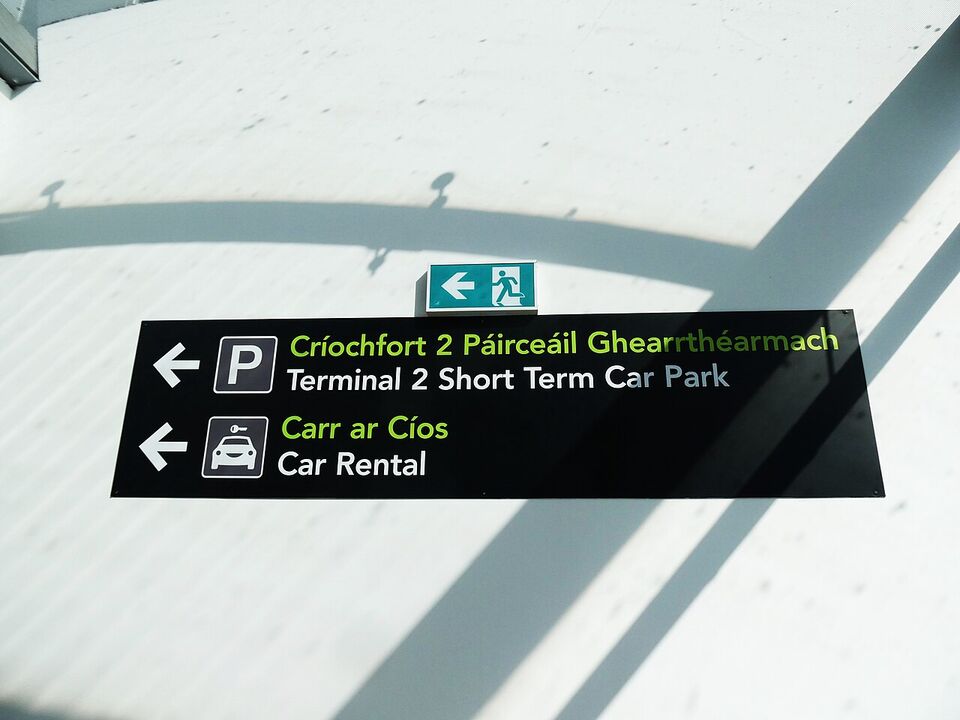
Rental desks at the main airports (Dublin, Cork and Shannon among them) are convenient, but they can add a surcharge, and you will be driving jet-lagged. A city depot is often cheaper and calmer. If you start with a few days in Dublin, wait to collect the car on the day you leave. Compare a Dublin pick-up with flying into Shannon or Cork, which can save backtracking for a west-coast route. See Dublin Airport transportation and flights to Ireland.
Save money
If you spend the first days in Dublin, skip the airport rental. Take the airport coach to the city, explore on foot and with a Leap card, then rent from a city depot when you leave for the west. You save parking charges, the airport fee and several days of rental.
Fuel policies and the right fuel
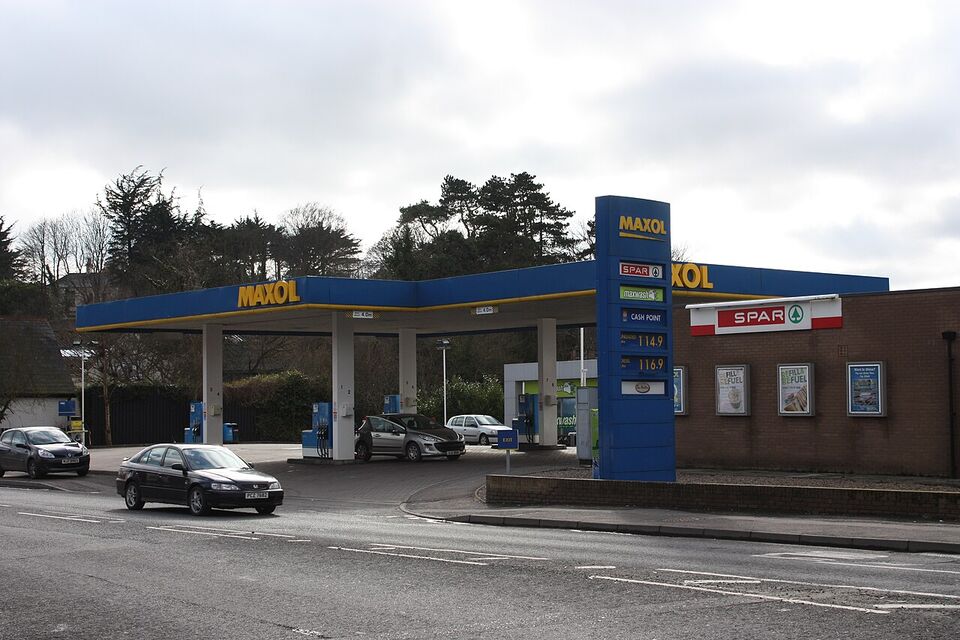
The usual policy is full to full: you collect with a full tank and return it full. Avoid "refuel on return" options, because the company charges more per liter than a pump does. Refuel near the airport, keep the receipt and photograph the fuel gauge. Check whether the car is petrol or diesel and put the right fuel in. Irish pumps use green for petrol and black for diesel. Mis-fuelling is not normally covered. See driving in Ireland.
Choosing a size
A smaller car makes narrow lanes and tight parking easier. A compact hatchback suits two travelers with two suitcases. A small estate (wagon) suits three or four. A large SUV or a seven-seat van is hard on stone-walled lanes and in small-town parking, so choose it only if you need the seats. Check the boot (trunk) size against your bags before you book. Automatics are more common in larger categories, so the size you want may be limited.
If you have a larger group, consider two cars or a tour. See getting around Ireland.
Booking tips
- Book early for summer, for automatics and for pick-ups at busy airports.
- Compare on a comparison site, but check the final terms with the actual rental company. Names include sites such as DiscoverCars or Kayak; use them for price comparison, but read the company's own terms and the insurer's terms for any add-on policy.
- Check what the quoted price includes: CDW, third-party, taxes, airport fee, one extra driver.
- Choose free cancellation if available. Rates and availability change.
- Print or save the confirmation and the terms.
- Ask for the 24-hour breakdown number.
- If possible, read recent customer comments about damage disputes at the exact branch.
Checklist: pick-up and drop-off
At pick-up
- Photograph or film every scratch, scuff, dent and wheel mark, inside and out, with the date visible.
- Photograph the fuel gauge and odometer.
- Check the damage diagram in the agreement matches the car; ask staff to note anything missing.
- Test lights, indicators and wipers.
- Check for a spare tyre or repair kit and a jack.
- Confirm the fuel type and write it on your phone.
- Confirm the toll arrangement for the M50.
- Confirm the Northern Ireland and cross-border policy in writing.
- Confirm any child seats are fitted properly.
- Get the breakdown phone number.
At drop-off
- Refuel near the return point and keep the receipt.
- Remove your belongings and rubbish.
- Take photographs of all sides, the fuel gauge and the odometer.
- Ask a staff member to inspect the car with you and sign a return slip noting no new damage.
- Do not sign anything accepting liability that you dispute.
- Keep the contract and photos for at least a few months, as charges can appear weeks later.
- Check your card statement afterward and watch for the hold to be released.
If you must drop off after hours, photograph the car in the lot, including the time, and the key drop. Ask the company what its after-hours policy says about liability.
Mistakes to avoid
- Assuming your credit card covers you. Many exclude Ireland. Get a letter.
- Ignoring the excess. A scrape could cost thousands of euros. Understand the number before you drive away.
- Not photographing the car. Damage disputes are a common complaint.
- Booking a manual by accident. Check the transmission before paying.
- Taking the car north without permission. Declare Northern Ireland.
- Choosing the biggest car. Narrow roads reward smaller cars.
- Using the wrong fuel. Check the label inside the fuel flap.
- Forgetting the M50. Ask how the company charges it.
- Collecting the car too early. Do not rent it for your city days.
Next, read driving in Ireland, check budget for trip costs and see faq for more answers.
Add it to a route in the trip builder, or ask us to plan the hotels, trains and guides for you.