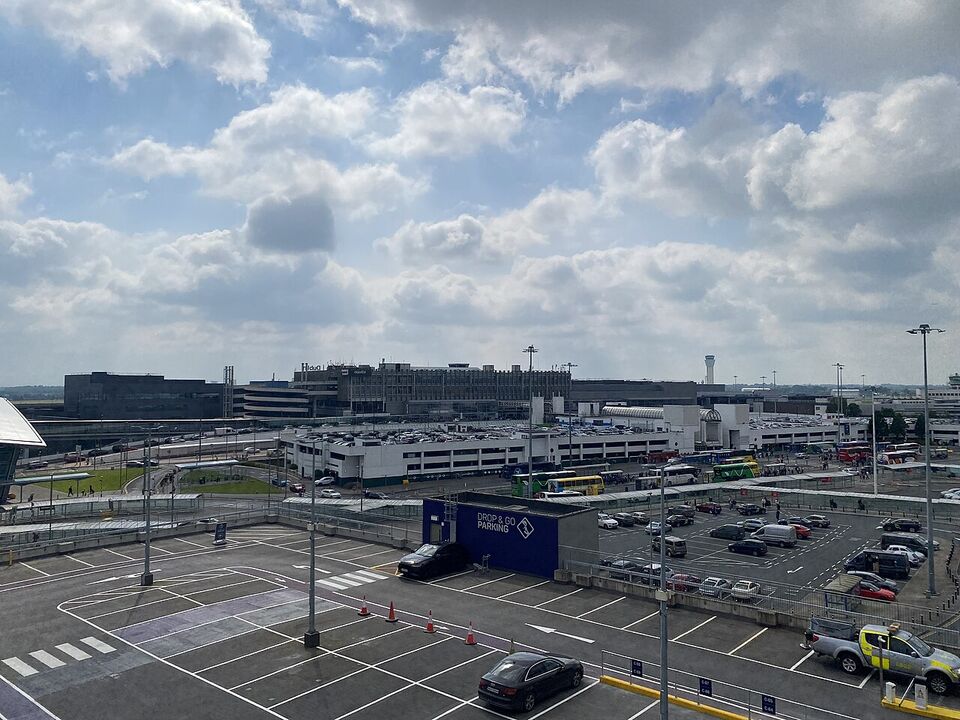
How to get from Dublin Airport to the city
Dublin Airport (DUB) sits about 6 miles (10 km) north of the city center, close to the M1 and M50 motorways. There is no train or tram to the terminals, so the choice is between a coach, a city bus, a taxi or ride-hailing car, a prebooked private transfer or a rental car. For most people arriving with luggage, the airport coaches are the easiest option: one fare, a dedicated bag area and direct drop-off in the center. This page covers each choice and what to do on departure day. For the city itself, see our Dublin guide.
| Option | Cost | Time | Where it goes |
|---|---|---|---|
| Aircoach 700/700X | About €9 one way online (about $10); return from €12 (about $13) | 20-40 minutes | City center stops including O'Connell Street, O'Connell Bridge, Kildare Street and Leeson Street Lower |
| Dublin Express coach | Check dublinexpress.ie (cheapest online) | As little as 14 minutes on the fastest service | Stops in the center include Heuston Station, Trinity College, Aston Quay and Usher's Quay |
| Dublin Bus and Airlink | Check tfi.ie | Varies with traffic | City center, Busáras and Connolly, Heuston, and suburbs |
| Metered taxi | Roughly €30-€45 (about $34-$50) | Varies with traffic | Door to door |
| Prebooked private transfer | Fixed quote; compare operators | Same as a taxi | Door to door, meeting you in arrivals |
| Rental car | Varies; see below | Varies | Anywhere, but you drive on the left |
The taxi range is an operator estimate rather than an official tariff, and we could not confirm the Dublin Express or city-bus fares as of mid-November 2026. Treat every price here as approximate and check the operator before you go.
Arriving, step by step
- Land and follow the signs. Most US flights arrive at Terminal 2 (see the next section). Follow signs for arrivals and immigration.
- Immigration. US visitors can stay in Ireland for less than 90 days for a holiday. Have your passport ready, and expect questions about where you are staying and how long. Check the State Department and irishimmigration.ie before you travel, and see entry requirements.
- Baggage and customs. Goods up to €430 (about $482) combined are duty-free for adults arriving from outside the EU, with limits of 1 litre of spirits or 2 litres of other drinks of up to 22% plus 4 litres of still wine and 16 litres of beer, and 200 cigarettes.
- Arrivals hall. Choose your transport. Coaches and taxis are marked on the signs. If you plan to use a rental car, follow the car-hire signs.
- Money and phone. You pay in euros. Ask your carrier about a daily pass or buy an eSIM; prices vary. See phones and power.
Insider tip
Transatlantic flights often land in the early morning, well before hotel check-in. Ask your hotel in advance whether you can leave your bags with them and, if you can, get an early room. Then go straight to a daylight activity rather than to bed.
Terminals 1 and 2
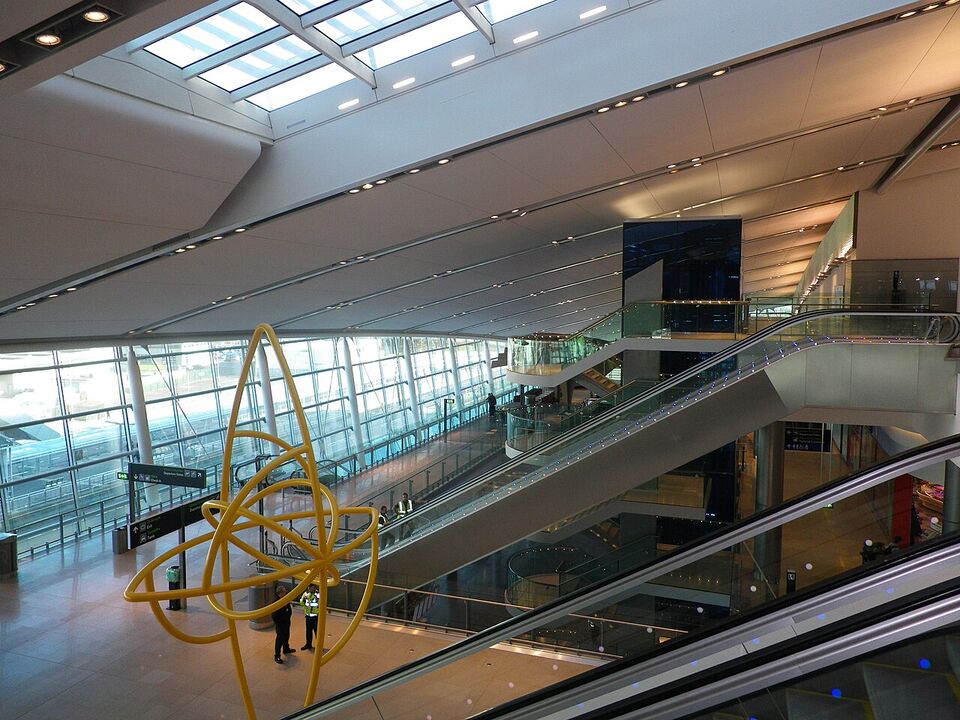
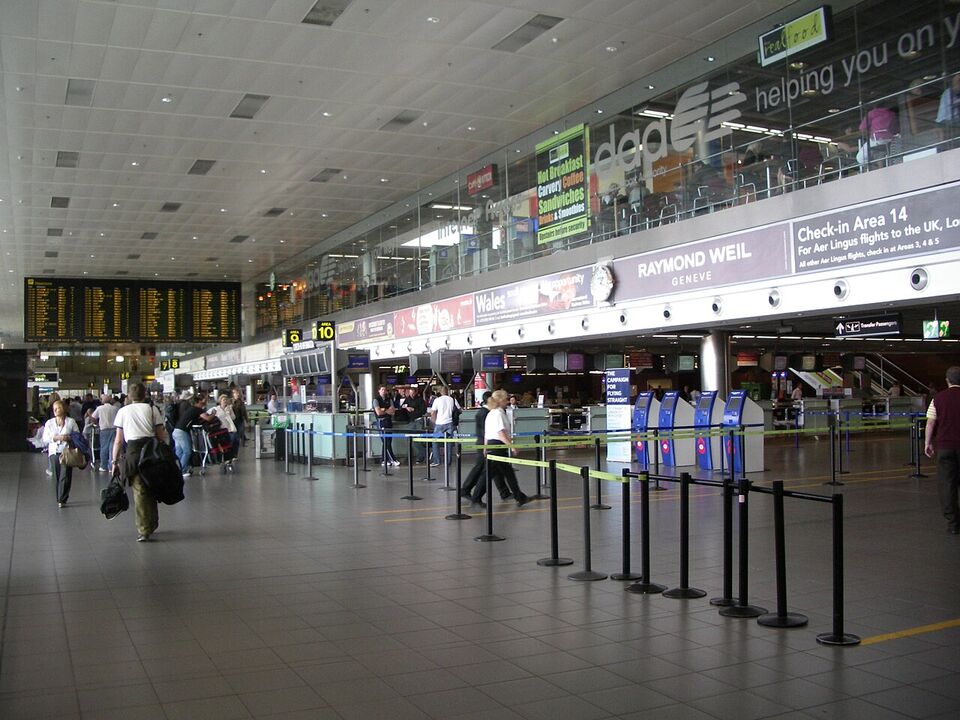
Dublin Airport has two terminals. Terminal 1 handles most airlines. Terminal 2 handles Aer Lingus, American, British Airways, Delta, Emirates, Iberia Express, JetBlue, United and Vueling. In practice that means US-bound flights depart from Terminal 2, where US Preclearance is on the ground floor beyond security. Check your boarding pass or the airline's app for the terminal before you leave your hotel, as airline arrangements change.
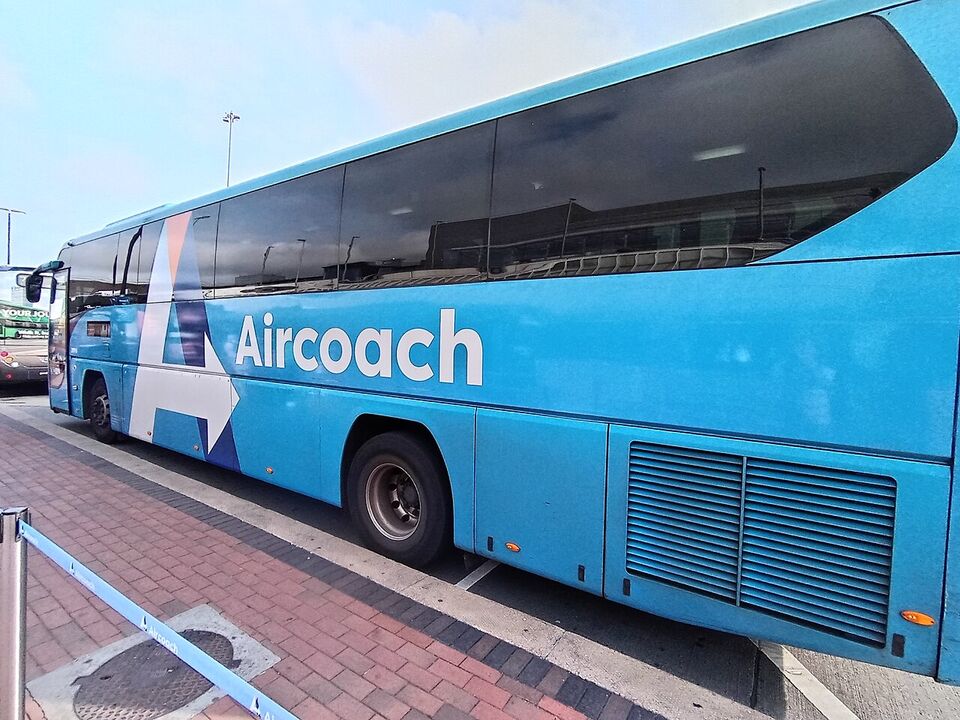
Both terminals have taxi ranks outside. Aircoach pick-up is at T1 Zone 2 and T2 Zone 20, according to the operator. The airport had 36.4 million passengers in 2025, which is above the 32 million-a-year planning cap, and the government has new powers to raise the cap. That does not change your ticket, but it is a good reason to arrive early.
Aircoach, Dublin Express and city buses
Aircoach
Aircoach routes 700 and 700X run to the city center as often as every 15 minutes, 24 hours a day, 364 days a year. The operator's page gives the journey as 20 to 40 minutes depending on traffic. Its page also shows two different one-way fares ("from €6, about $7" in a summary and €9, about $10, in the body), so we use about €9 (about $10) booked online, and a return from €12 (about $13). Check the price when you book. Aircoach also runs to southside suburbs such as Stillorgan, Blackrock, Dún Laoghaire and Dalkey, which suits a hotel outside the center.
Dublin Express
Dublin Express says its coaches run between the airport and the city every 7 and a half minutes, with the fastest service reaching the center in as little as 14 minutes. Luggage of two 20 kg bags plus one soft hand bag is included at no extra charge. Stops include Heuston Station, Trinity College, Aston Quay (near O'Connell Bridge and Temple Bar), Usher's Quay (near the Guinness Storehouse) and Christ Church. The company also offers Rail2Air coach-and-train tickets and now runs direct coaches from Dublin Airport to Belfast. We could not confirm fares, so check dublinexpress.ie.
The city-center stops were temporarily closed from November 10 to 13, 2026 for EU meetings. Those closures should have ended by the time you read this, but confirm on the website if you are traveling in the days after.
Dublin Bus and Airlink
City buses run from the airport to the center and to many suburbs. Look for Dublin Bus routes 16 and 41 and the Airlink 747, and check the route and fare on transportforireland.ie, because we could not confirm them. City buses accept the Leap card, and you should tap on each time you board. The 90 Minute Fare of €2 (about $2) applies to Dublin Bus city routes, but airport routes may carry a different fare, so check. See our Dublin guide for Leap card caps and the January 2027 fare rise.
Taxis, ride-hailing and private transfers
Licensed taxis wait at the ranks outside both terminals. The meter runs, and the cost to the center is roughly €30 to €45 (about $34 to $50), more evenings, weekends and bank holidays. For a family of three or four with luggage, that can cost little more than four coach tickets. Ride-hailing and taxi apps also operate; compare the in-app estimate with the metered range, and expect demand pricing at busy times.
A prebooked private transfer is the least stressful after a long flight: a driver meets you in arrivals and takes you to the door for a price agreed in advance. We could not verify typical prices, so ask for a written quote that includes waiting time and tolls, and use a company with a published address and licence.
Car hire from the airport
Several rental firms operate at Dublin Airport. A rental guide reports an airport surcharge of €22 (about $25) on some rentals, and typical budgets of €25 to €50 a day off-peak (about $28 to $56) and €40 to €80 a day in peak season (about $45 to $90), with automatics costing €10 to €20 (about $11 to $22) more a day. Treat these as typical, not quoted prices.
- Drive on the left. After a night flight, consider spending your first night in the city and collecting the car next day. See car rental and driving in Ireland.
- M50 toll. The barrier-free toll between junctions 6 (Blanchardstown) and 7 (Lucan) costs €2.60 (about $3) with a tag, €3.20 (about $4) if the car is registered for video billing, and €3.80 (about $4) if unregistered. If your car is unregistered, you must pay by 8 p.m. the next day at eflow.ie, by phone on 0818 50 10 50, or in cash at a Payzone shop. Late payments add charges. Ask your rental company how it handles the toll.
- Sat nav before you leave the lot. The road network around the airport is busy, and the M50 is the ring road for the west and south.
Trains, the Leap card and the road west
The airport has no rail station. Buses connect to Connolly and Heuston stations, and some city routes serve Drumcondra station. Heuston is the station for trains to Cork, Waterford, Limerick and Galway, and Connolly serves Belfast, Sligo and Rosslare. The DART coastal line is reached from the city, or by bus route 102 to Malahide or Sutton.
The Leap card works on Dublin Bus, Go-Ahead Ireland city buses, the Luas and the DART; the airport coaches have their own tickets. Details of Leap caps are in our Dublin guide.
For the road west, long-distance coaches leave from the airport for Drogheda, Navan and Kells (Bus Éireann), and Dublin Coach runs to Portlaoise and to Dundrum via the Red Cow Luas stop. For Galway, Cork, Killarney and other western places, most people take a bus to Heuston and then a train, or pick up a rental car. For Northern Ireland, Dublin Express and Ulsterbus Goldline both run coaches to Belfast; see the Belfast guide and getting around Ireland.
To the ferry port
Dublin Port, where the ferries to Britain leave, is on the east side of the city, a short taxi ride from the center. A taxi from the airport is the simplest way, and the Port Tunnel links the M1 to the port. Dublin Express stops at North Wall Quay and 3Arena, which are close to the port area. Check the ferry company's check-in time, which is usually well ahead of departure, and whether it runs a shuttle for foot passengers.
If you land early
- Aircoach runs all night, so an early landing is not a reason to wait at the airport.
- Hotels usually do not give rooms until the afternoon. Ask for bag storage or pay for an early check-in.
- Choose a low-effort start: a walk along the Liffey or in St Stephen's Green, a late breakfast, and the National Museum, which is free and opens at 10 a.m. Tuesday to Saturday and 1 p.m. on Sunday and Monday.
- Stay awake until at least early evening. Five hours of time difference with New York (four hours for a few weeks around the US and European clock changes) means an early night is the best way to adjust.
Departure day
Timing and security
Dublin Airport advises arriving about 3 hours before a long-haul flight, and more if you check bags or travel as a group. Terminal 2 security is busiest from 5 a.m. to noon. Aer Lingus's transatlantic check-in closes 75 minutes before departure in economy, but that figure comes from an older factsheet, so check with your airline. Do not rely on cutting it close.
US Preclearance
Preclearance lets you clear US immigration, customs and agriculture in Dublin, so you land as a domestic passenger. The steps are: check in with your airline, go through Dublin Airport security, wait for the allocated time shown on flight information screens, then enter Preclearance when the screens call you. US Customs and Border Protection lists Dublin's Terminal 2 facility as open from 7 a.m. to 4:30 p.m. Not every flight uses it. Aer Lingus has no Preclearance on its late flights EI109 (New York) and EI139 (Boston), where you clear immigration on arrival in the US.
- Mobile Passport Control is open to US citizens with a valid passport; you can only submit your information once you are at the airport, and you still queue for an officer. Global Entry members use the kiosks.
- Food: carry any food in your hand luggage, declare it and present it for inspection.
- Duty free: US personal exemptions are 1 litre of alcohol, 200 cigarettes and up to $800 of goods per person ($1,600 per couple). Duty-free alcohol and tobacco cannot be sold on board preclearance flights. There are only a few shops after Preclearance, and a 51st&Green Lounge for all US-bound passengers.
If you are not a US citizen and travel on the Visa Waiver Program, you need an approved ESTA at least 72 hours before departure. Without one, you cannot board.
The drop-off charge
Dublin Airport may charge for dropping passengers off at the terminal, and rules and fees change. We could not confirm any fee or time limit as of mid-November 2026. Check dublinairport.com before a friend drives you. Coaches, taxis and the long-term car-park shuttles (to Express Red and Holiday Blue) are alternatives, and the shuttles run every 10 and 15 minutes.
Early flights and overnight options
If your flight is before about 7 a.m., you will need to be at the airport by 4 a.m. Aircoach runs 24 hours, and taxis and prebooked transfers cover the rest. We could not confirm night hours for Dublin Express or the Airlink, so use Aircoach or a booked car and check tfi.ie for night buses.
Several hotels sit on or near the airport campus and offer shuttles; compare their rates with a city hotel plus a taxi. Remember that US Preclearance opens at 7 a.m., so US flights from Dublin generally leave later in the morning than many European departures. If you are returning to the US, the earliest practical plan is usually a normal night in the city and an early-morning coach or taxi, with a 3-hour margin.
If you are leaving Ireland by plane from Shannon or Cork instead, see flights to Ireland for what we know about those airports.
Add it to a route in the trip builder, or ask us to plan the hotels, trains and guides for you.