Overview
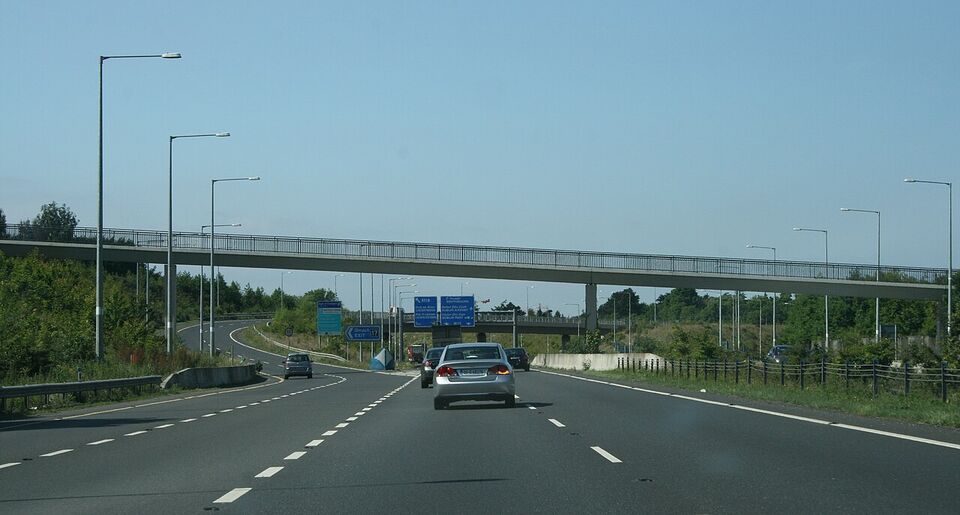
Yes, an American can drive in Ireland and Northern Ireland, and many visitors do. Both drive on the left. The driver sits on the right side of the car, you shift gears with your left hand if the car is a manual, and you go around roundabouts clockwise. After an hour or two of concentration the reflex starts to settle, but the first hours are when most mistakes happen.
This guide is the road side of a car trip: how to handle your first hour, the roads you will meet, the rules, tolls, fuel and parking, and what to do if something goes wrong. For the paperwork side (insurance, age rules, picking up the car), see renting a car. For whether you need a car at all, see getting around Ireland. If you are choosing between driving the whole Wild Atlantic Way or sampling it, see the Wild Atlantic Way.
Different from home
Four things reverse: the side of the road, the roundabout direction, the position of the driver and, in the Republic, the units on the signs (kilometers and km/h instead of miles and mph). In Northern Ireland, signs use miles and mph. The nozzle color for diesel is also different from many US pumps.
Your first hour behind the wheel
Most rental pick-ups happen at an airport after an overnight flight. This is the riskiest moment of the whole trip. If your flight arrives in the early morning, consider these steps before you drive away.
- Sit still for five minutes. Adjust the seat and mirrors, find the indicator (turn signal) stalk, which may be on the other side from what you are used to, and the wipers. In some cars these two stalks are on the opposite sides from a US car, so expect the wipers to swish on once or twice when you mean to signal.
- Set the satnav or phone before you roll. Enter the first destination while parked. Download offline maps for your whole route, because mobile coverage can be patchy on some western and rural stretches.
- Pick an easy first leg. From Dublin Airport the road network feeds quickly onto motorways. A first stop at a service area or a hotel close to the airport is safer than a long first drive. If you can, stay a night in Dublin without the car, then pick the car up the next morning from a city depot.
- Keep the driver's body near the center line. The most common beginner mistake is to drift left and scrape the curb, because you sit on the right and feel too close to the middle of the road. Your passenger can help by calling out "you're fine on the left."
- Say the mantra. "Left, left, left" at every turn. After a stop or a turn, check that you are in the left lane. This is when people go the wrong way: leaving a car park, a petrol station or a quiet side road.
- Do not drive jet-lagged. If you did not sleep on the plane, a nap or a short walk before you start is worth more than the time it costs. Drive in daylight for the first day if you can.
Watch out
The first hour is when wrong-way turns happen: pulling out of a car park, a gas station or a hotel drive, or turning right across traffic. Slow down at every junction and look right first, then left, then right again.
Roundabouts
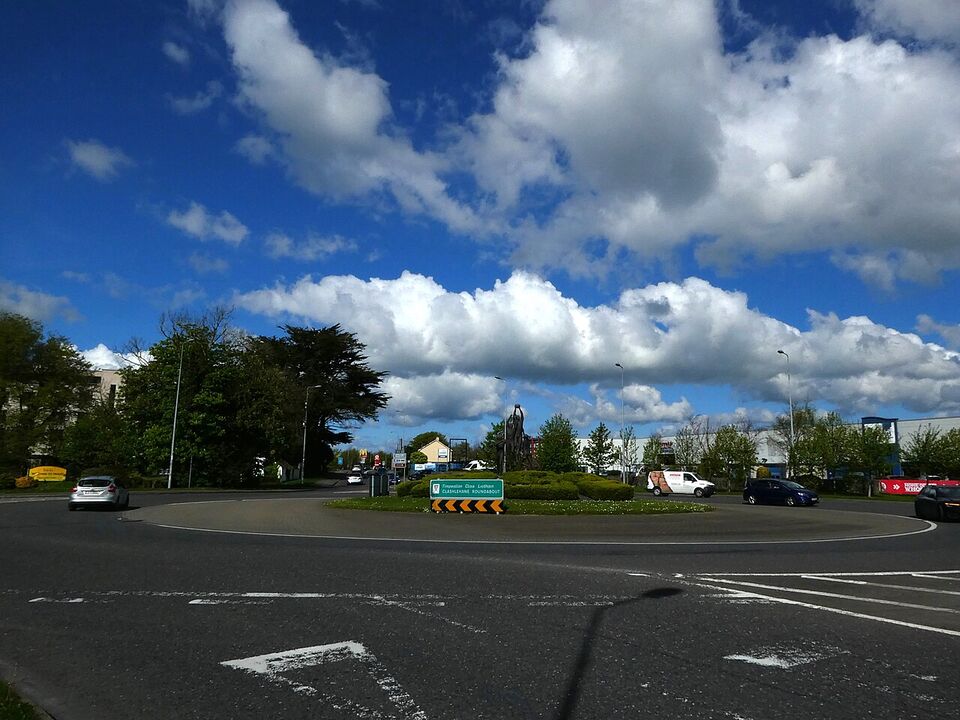
Roundabouts are everywhere, in towns and on main roads. The rules are simple once you have done a few.
- Enter clockwise. Give way to traffic already on the roundabout, which comes from your right.
- Look right, and enter when there is a safe gap.
- Signal left if you are taking the first exit. If you are going straight on, do not signal on entry, and signal left after you pass the exit before yours. If you are turning right or going all the way round, signal right on entry and left after the exit before yours.
- In your lane: use the left lane for the first exits and going straight on, and the right lane for later exits and U-turns, unless road markings say otherwise.
- If you miss your exit, go round again. This is not an emergency.
Small mini-roundabouts are painted discs in the road; drive around, not over, them where you can. Large multi-lane roundabouts on main roads have signs on the approach showing lanes by destination, so read them before you reach the roundabout.
Narrow rural roads
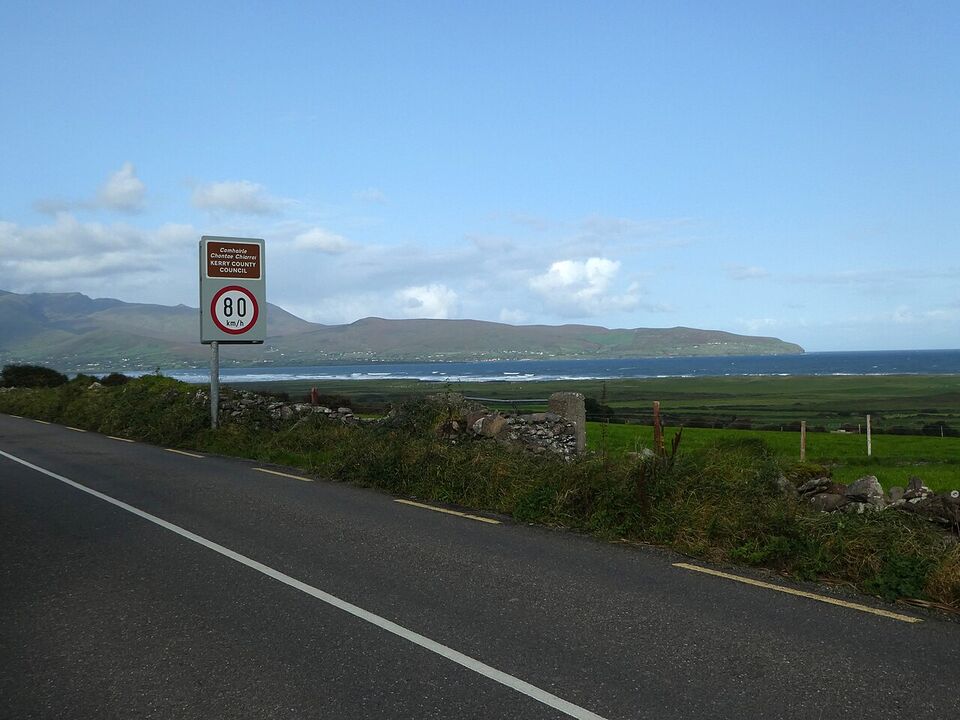
Most of the roads you want on the west coast are narrow. Expect lanes with no center line, high banks or hedges on both sides, stone walls, blind bends and a road surface that dips and cracks. The default speed limit on a rural local (L) road is now 60 km/h (about 37 mph), and many are not safe at that speed.
Passing places
On single-track lanes, passing places are short widened spots, often marked with a sign or a white post. The rule of thumb is that the car with the passing place on its left pulls in. If the passing place is on the right, stop opposite it and wait for the other vehicle to pull in. Wave or flash your headlights to say thank you. Do not park in a passing place to take photographs.
Hedges, stone walls and mirrors
Hedges and walls are close, so a car mirror can be hit, and a brush with a wall scrapes paint and alloys. Pull in the mirrors when you park on a narrow street. Keep to the middle of your own lane on a narrow road rather than hugging the left, and look ahead for the next gap. A compact car is a big advantage here, as the car rental page explains.
Sheep, cattle and tour buses
Sheep graze on open hills and near the road in Connemara, Kerry and Donegal, and can step into the road. Slow down and let them move. Farmers move cattle along roads too. Never honk at animals; wait.
Tour buses and coaches are large and slow on popular routes such as the Ring of Kerry and Slea Head Drive. Coaches normally go anti-clockwise from Killarney around the Ring of Kerry, via Killorglin, and many car drivers go the other way, via Kenmare, to avoid meeting them. Wait in a passing place for a bus rather than trying to squeeze by. See ring-of-kerry and dingle for route notes.
Insider tip
If a car comes up behind you on a narrow road and you are going slowly, pull into the next safe gap or passing place and let it by. Locals know the roads and drive them every day.
Speed limits
The Republic uses kilometers per hour on signs. Northern Ireland uses miles per hour. Limits below are the defaults that apply when no other sign is posted; a posted sign always overrides them. We took the Republic's defaults from Irish news and a secondary guide dated October 2026, not from the Road Safety Authority, so check rsa.ie.
| Road type | Republic of Ireland | Northern Ireland (UK rules) |
|---|---|---|
| Motorway (M) | 120 km/h (75 mph) | 70 mph (113 km/h) |
| Dual carriageway | 100 km/h (62 mph) | 70 mph (113 km/h) |
| National primary road (N) | 100 km/h (62 mph) | 60 mph (97 km/h) on single carriageway |
| National secondary road (N) | 100 km/h (62 mph); a cut to 80 km/h is planned but not in force | 60 mph (97 km/h) on single carriageway |
| Regional road (R) | 80 km/h (50 mph) | 60 mph (97 km/h) on single carriageway |
| Rural local road (L) | 60 km/h (37 mph) since February 7, 2025 | Not a separate category; 60 mph on most single carriageway roads unless signed |
| Towns and built-up areas | 50 km/h (31 mph); 30 km/h (19 mph) zones are being added, with a target of March 31, 2027 | 30 mph (48 km/h) in most built-up areas |
Two points matter for visitors. First, the "rural speed limit" sign, a round sign with a diagonal black bar and no number, used to mean never exceed 80 km/h and now means 60 km/h or below. Second, urban 30 km/h zones are being rolled out town by town through 2027, so read the signs. In Northern Ireland, the UK defaults are widely known but we have not checked them on a gov.uk page; check gov.uk before you drive.
Speed cameras and mobile enforcement vans are used on main and rural roads. A secondary guide says a speeding fixed charge is €160 (about $179) plus three penalty points, which is high enough to matter on a holiday. A rental company will usually pass on a fine, plus a fee, if it has your details.
The rules you need to know
Licence and age
Most US visitors drive on a valid US licence, and a secondary source says an International Driving Permit is not usually needed. We could not confirm this on an official page, so check with your rental company. Rental companies set their own minimum and maximum ages; one major company, Sixt Ireland, lists a minimum of 21 with the licence held for four years for most cars, and says drivers over 75 need a medical certificate dated within three months of pick-up. See car rental. Carry your physical licence and passport when you drive.
Seat belts and phones
Wear your seat belt, and make sure every passenger does. Children need an appropriate child seat or booster; ask your rental company what it supplies and what the current law is. Holding a phone while driving is an offence, so use a mount and hands-free, or have a passenger handle the map. Check rsa.ie and gov.uk for the current rules, as we have not confirmed fines.
Drink-driving
The Republic's limit for most drivers is 50 mg of alcohol per 100 ml of blood (22 micrograms per 100 ml of breath), which is lower than in most US states. For learner, novice (first two years) and professional drivers it is 20 mg. The maximum court fine reported by a secondary guide, dated April 2026, is €5,000 (about $5,600), with disqualification of up to six years. Garda checkpoints can stop any driver for a breath test. Northern Ireland's limit is the UK figure of 80 mg per 100 ml of blood, but the sensible rule in both places is not to drink and drive at all. A pint or two of stout may put you at the limit.
Watch out
Plan a designated driver, a taxi, or a walk-to pub. See the pubs guide for how nights out work. Never rely on "one pint" being safe.
Lanes, overtaking and lights
On a motorway or dual carriageway, keep left and overtake on the right, then move back. Some national roads have a wide hard shoulder marked with a broken yellow line, which locals sometimes use to let faster traffic pass. You do not need to do this, and a solid yellow line along the road edge means keep off. Use dipped headlights in rain, fog or dusk.
Tolls and the M50
Ireland has a handful of toll roads, plus the M50 around Dublin. Check how each toll is paid before you go (tii.ie lists the options). A few items need attention.
The M50 barrier-free toll
The M50 toll applies between Junction 6 (Blanchardstown, N3) and Junction 7 (Lucan, N4). There are no barriers and no cash booth. Cameras record your registration, and you must pay by 8 p.m. the next day. The 2026 toll for a car is €2.60 (about $3) with a tag, €3.20 (about $4) with a video account and €3.80 (about $4) unregistered.
If you are unregistered, pay at eflow.ie, by phone on 0818 50 10 50 or +353 1 461 0122 using a Visa or Mastercard credit card or Visa Debit, or in cash at a Payzone shop. If you miss the deadline, the toll plus €4.00 (about $4) becomes due, then another €51.00 (about $57), then a further €128.00 (about $143). These are the figures on the Transport Infrastructure Ireland page.
With a rental car, the rental company receives the bill. Ask at the desk how it handles the M50: some include a toll tag or an account, some bill you later with an administration fee. A secondary rental guide says that fee can be €30 to €60 (about $34 to $67), so do not leave it to chance. Find out before you leave the car park whether you have to pay yourself.
Other toll roads
Other tolls on major routes include sections of the M1, M3, M4, N6 (Galway to Ballinasloe), M7 and M8, N8, N25 (Waterford), the Dublin Port Tunnel, the Limerick Tunnel and the East Link bridge in Dublin. Prices vary, so check tii.ie for each. Keep a card or some euro coins handy. Long trips from Dublin may cross one or more tolls.
Fuel
As of November 2, 2026, the EC Weekly Oil Bulletin gave petrol at €1.97 a liter (about $8.35 a US gallon) and diesel at €2.12 a liter (about $8.99 a US gallon). AA Ireland's November 2026 pump prices were about 195.9 cents for petrol and 212.89 cents for diesel. Prices vary by station and are lower away from motorway services.
Watch out
In Ireland, pump handles are normally green for petrol (unleaded) and black for diesel. In the United States, green handles are often diesel. Many rental cars in Ireland are diesel. Look inside the fuel flap for the label, check your rental agreement, and ask the desk what the car takes. Putting the wrong fuel in can wreck the engine, and a rental guide says mis-fuelling is not covered by insurance.
Most fuel stations are self-service: fill the tank and pay inside. Rental companies usually want the car returned full, so refuel close to the airport and keep the receipt.
Parking and city driving
Do not drive in central Dublin if you can avoid it. Many streets are one-way, bus lanes limit where cars may go, Luas tram tracks run in some streets and parking can be expensive and limited. Leave the car at your hotel or a car park outside the center, or do not collect it until you are leaving the city. The same applies to Belfast, Cork and Galway center streets. See our Dublin guide, cork and the Galway guide for each city.
- Yellow lines. A double yellow line means no parking at any time. A single yellow means a time limit; read the nearby sign.
- Pay and display. Many towns use machines or a parking app. Some towns still use paper parking discs sold in shops. Read the sign at the entrance.
- Clamping and fines. Parking enforcement is active in cities. Illegal parking can lead to clamping or a fine.
- Sights. Some sights have limited or no parking. Kilmainham Gaol has no parking. The Cliffs of Moher admission includes parking. Glendalough's car park fee includes one visitor centre admission. Check each attraction's page before you go.
- Hotels. Ask your hotel whether parking is included, how much it costs and whether you can reserve it. See where to stay.
Accidents and breakdowns
Dial 112 or 999 in an emergency; both connect to the same service. The US Embassy emergency line for US citizens is +353 1 668-8777.
- If there is injury or danger, call 112 or 999 first.
- Move the car out of traffic if it is safe, turn on hazard lights and stand away from the road.
- Call the rental company's 24-hour breakdown number, which should be in your paperwork. Ask for it at pick-up if it is not.
- Exchange details with the other driver and take photographs of the scene, the vehicles and plates.
- Report the incident to the rental company as soon as you can, and to the Gardaí if there is injury or significant damage.
A flat tyre is the most common rural breakdown. Check whether the car has a spare, a space-saver or a repair kit, and whether your insurance covers tyres. Many policies exclude tyres, glass and the underside, which matters on rough lanes. See car rental and safety.
Mistakes to avoid
- Booking a manual because it is cheaper. If you do not shift with your left hand regularly, book an automatic early. Automatics are fewer, and the price gap is real but usually worth paying.
- Trusting GPS on small roads. A map app may send you down a grass-center boreen (a very narrow lane). Stay on the numbered R and N roads unless you are sure, and download offline maps.
- Driving the first day after an overnight flight. If you must, keep it short and start in daylight.
- Underestimating times. Sat-nav times assume ordinary roads. On the west coast, tour buses and narrow lanes add time. Use the table on getting around Ireland as a guide.
- Using the wrong fuel at the pump.
- Ignoring the M50 toll. Ask how your rental company handles it.
- Assuming a mph sign. In the Republic, a "100" sign means km/h, not mph. A car's speedometer may show both; check which is which.
- Leaving valuables in a parked car. Take bags with you, especially at trailheads and viewpoints.
A simple plan for day one
- Before
At home
Book an automatic, check your licence and credit card, read the rental agreement and download offline maps for Ireland. Ask your card issuer in writing about rental coverage in Ireland.
- Pick-up
At the desk
Confirm fuel type, the toll arrangement, the Northern Ireland policy and the breakdown number. Take photographs of the car.
- First hour
Slow start
Practise in the car park, then take the simplest route to your first stop. Keep to the left lane and slow down at junctions.
- First day
Short drive
Choose a drive of under two hours and a hotel with parking. Eat, sleep and begin the next day fresh.
For more planning help, see planning, trip builder and faq.
Add it to a route in the trip builder, or ask us to plan the hotels, trains and guides for you.