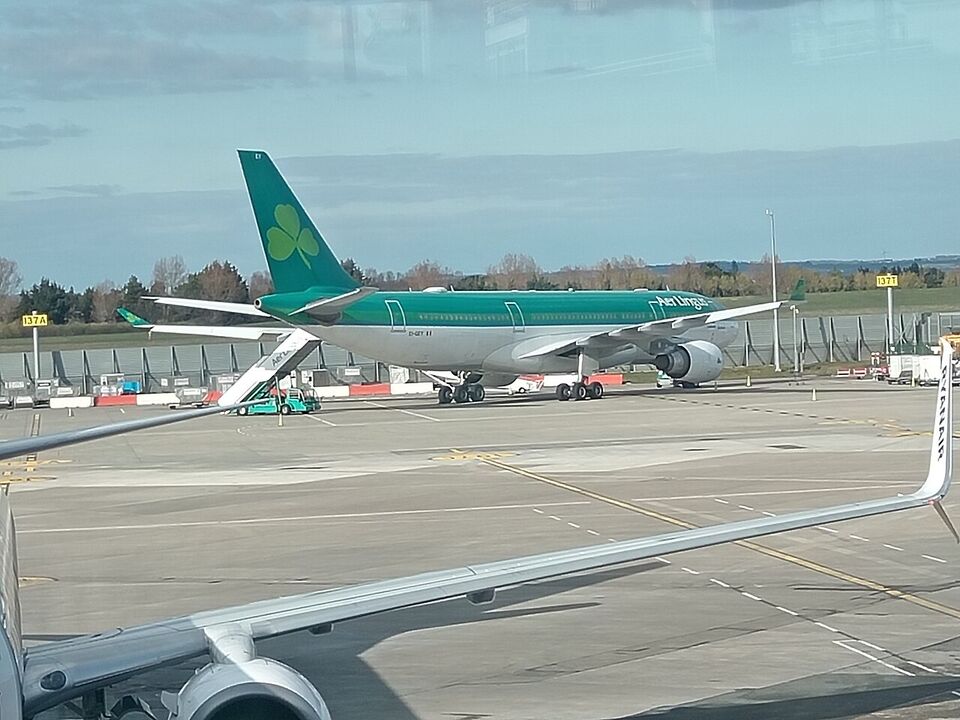
The short answer: fly to Dublin, unless your trip is in the west
Most Americans should fly into Dublin Airport (DUB). It has the most nonstop flights from the US, the most connections through Europe and the UK, and bus and taxi links to the city center that run all day. If you plan to spend your time in Galway, Clare, Kerry and the rest of the west coast, Shannon Airport (SNN) is closer and has its own US flights. If you are heading mainly to Belfast and the Antrim coast, Belfast International (BFS) is an option, though US nonstops there have been limited.
Airlines and schedules change by season, and what we describe here is the shape of the market, not a timetable. We list routes from official airport and trade announcements, and we tell you which season each one refers to. Before you book, check the airline and airport sites: dublinairport.com, shannonairport.ie and corkairport.com.
Different from home
On the way home, you clear US customs and immigration in Ireland, before you board, at both Dublin and Shannon. That adds time at the Irish airport but means you land in the US like a domestic passenger. See our entry and preclearance guide for how the process works.
The airports that matter
Dublin (DUB)
Ireland's busiest airport, with 36.4 million passengers in 2025. US flights use Terminal 2. It is the main hub for Aer Lingus, and most American airlines that serve Ireland fly here. Buses reach the city center in about 20 to 40 minutes, depending on traffic. See our Dublin Airport guide.
Shannon (SNN)
A smaller airport with a compact terminal and easy car rental. Aer Lingus and United fly year-round to Boston and New York, and in summer 2026 Delta ran daily to New York JFK and United daily to Chicago O'Hare. It has full US Preclearance and Mobile Passport Control.
Cork (ORK)
Cork has European and UK routes. We could not confirm any scheduled nonstop to the US for 2026-27, so most Americans reach Cork by connecting through Dublin, London or another European hub, or by train or bus from Dublin. Check corkairport.com.
Belfast International (BFS)
The larger of Belfast's two airports. US nonstops have been limited and seasonal, and we could not confirm a 2027 schedule. A UK electronic travel authorisation is needed for US citizens flying in, and airlines check at boarding. See our Belfast guide.
George Best Belfast City (BHD)
Serves mainly UK and nearby European routes; we found no US nonstops. It is useful if you connect via London or elsewhere in Britain. The UK ETA rule applies.
We could not confirm Belfast International's transfer times or fares to the city, so check belfastairport.com. Dublin Airport is on the north side of Dublin.
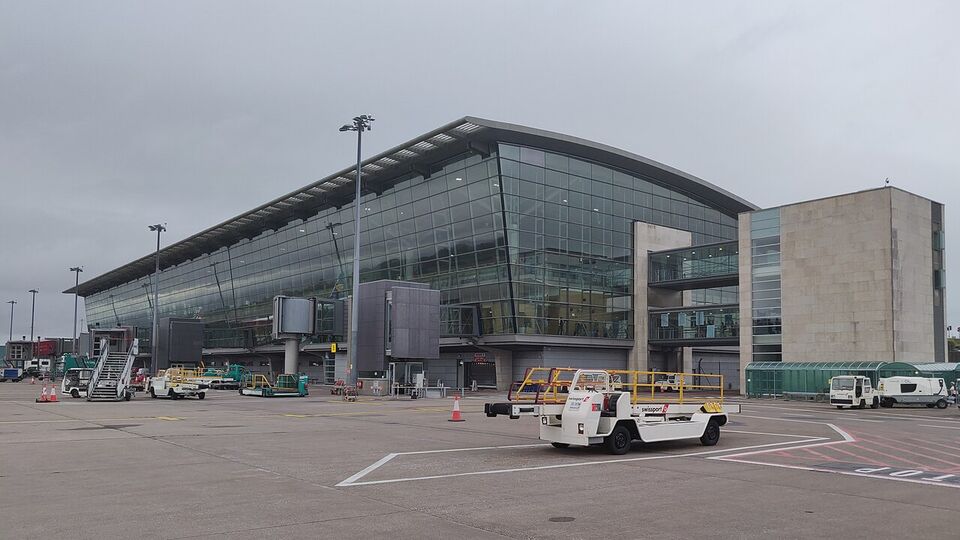
Nonstop flights from US cities
The most recent full list of nonstop flights we could confirm is Dublin's winter 2025/26 schedule, published in November 2025. It is last winter's list, not this winter's, so treat it as a guide to which cities have been served, not a promise. Aer Lingus has since announced a 6% capacity cut and the end of several routes, listed below the table.
| US city | Airlines to Dublin (winter 2025/26) |
|---|---|
| Atlanta | Delta |
| Boston | Aer Lingus, Delta, JetBlue |
| Charlotte | American |
| Chicago | Aer Lingus, American, United |
| Cleveland, Hartford, Indianapolis, Miami, Nashville, Orlando | Aer Lingus |
| Dallas | American |
| Detroit | Delta |
| Las Vegas, Los Angeles, San Francisco, Seattle | Aer Lingus |
| New York area | Aer Lingus, Delta, JetBlue |
| Philadelphia | Aer Lingus, American |
| Washington | Aer Lingus, United |
What has changed for 2026-27
- Aer Lingus ended Dublin-Denver after September 28, 2026 and Dublin-Minneapolis/St Paul after October 24, 2026. Delta's Minneapolis nonstop is the only direct option left.
- Dublin-Las Vegas is due to operate its final rotation on December 3, 2026.
- Dublin-Seattle has become summer-only; its winter service ended October 24.
- The cuts are part of a 6% overall reduction in Aer Lingus capacity, reported in September 2026.
- Los Angeles was on last winter's list; we could not confirm it for this winter.
For summer 2027, airlines are still releasing schedules. Trade reports mention new and returning routes, but we have not confirmed them, so we do not list any. The Irish Aviation Authority is due to make its next slot decision for winter 2027/28 in April 2027, according to an industry source quoted by the Irish Times in September 2026. If your city is not on the list, a connection in a major hub (Boston, New York, Chicago, Philadelphia or Washington) onto a Dublin flight is common.
Shannon from the US
The Shannon Airport Group announced in May 2026 that United's nonstop to Chicago O'Hare and Delta's to New York JFK would resume daily that month, and that Aer Lingus would add Boston flights from May 20 to July 13 (from 7 to 10 a week). Aer Lingus and United also fly year-round to Boston and New York. The group put 2026's transatlantic seats at 340,000 for the summer. Winter 2026/27 and summer 2027 schedules are not confirmed, so check the airline and airport sites.
Dublin or Shannon for a west-coast trip
The question comes up for first-time visitors who want the Cliffs of Moher, Galway, Connemara, Dingle and the Ring of Kerry. Here is the trade-off:
- Dublin has more flights, more fare choice and more connections. You spend your first day in a city, and then the west is a long drive or a train ride away. It suits a trip that includes Dublin sights, the Boyne Valley or Belfast.
- Shannon puts you much closer to Clare, Galway and Kerry (use a route planner for drive times). Its direct flights are fewer and more seasonal, and fares can be higher. It suits a trip focused on Clare, Galway, Kerry and Limerick, or travelers who prefer a small airport after an overnight flight.
- Both work well in a one-way (open-jaw) ticket: for example, Dublin in, Shannon out, with a west-coast loop between them.
Drive times between airports and destinations vary with traffic and road works. Use a route planner for current estimates, and see the Wild Atlantic Way guide, the Galway guide and the regions guide to match airport to itinerary.
Open-jaw tickets
An open-jaw ticket flies you into one airport and home from another. For Ireland, the common pattern is Dublin in and Shannon out, or the reverse, and it removes a day of driving back to your arrival city. Some airlines price multi-city tickets fairly, and others add a premium, so compare the open-jaw price with a round trip on your dates.
If you rent a car, ask about the one-way drop-off fee before you book. Rental companies often add one when you return a car to a different location. Our car rental guide has the terms to check. If you plan to go without a car, trains and buses connect Dublin with Galway, Limerick, Killarney and Cork, and an open-jaw ticket works with them, too.
Insider tip
Price three versions of the same trip: round trip to Dublin, round trip to Shannon, and Dublin in with Shannon out. Compare the total including any car drop-off fee and any extra night you would otherwise need. The cheapest ticket is not always the cheapest trip.
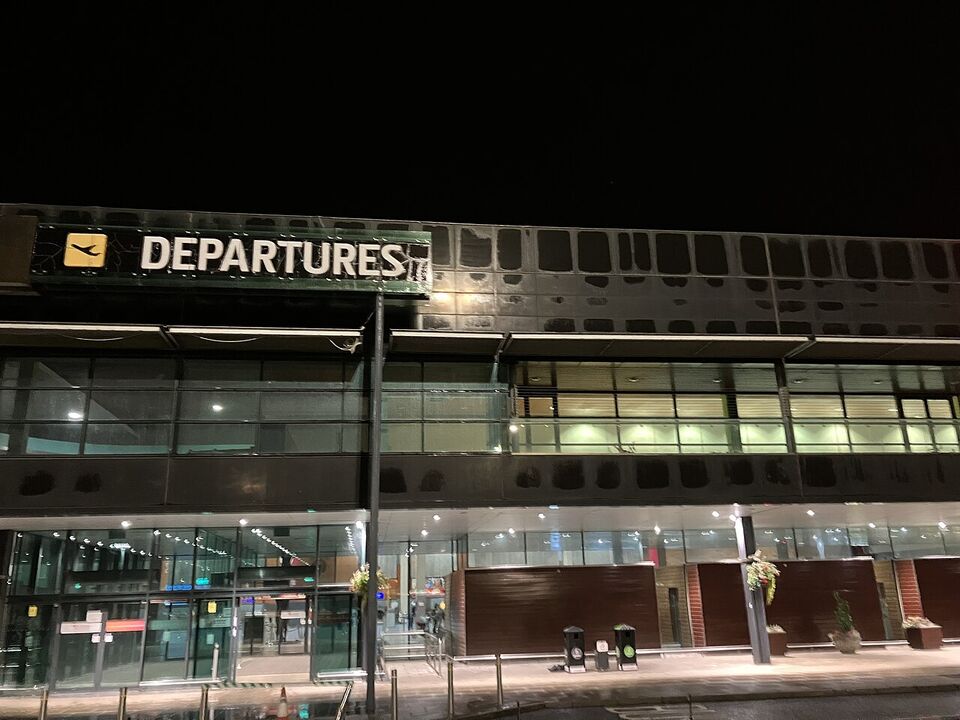
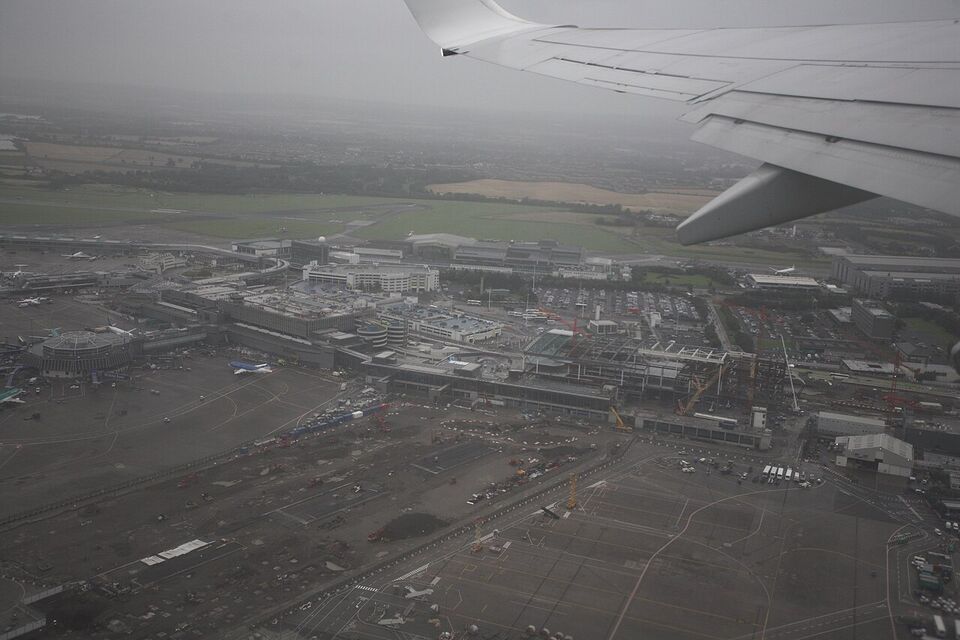
Flight times and the overnight pattern
We could not confirm current schedule times, so treat these as rough. Nonstop flights from the US East Coast and much of the Midwest take about 6 to 8 hours. From Chicago, Atlanta, Dallas and other inland cities the flight is somewhat longer, and from California and the Pacific Northwest it is longer still. Check your airline for the exact duration.
Most flights from the US to Ireland leave in the evening and arrive the next morning. You lose the night, land early, and your hotel room may not be ready until the afternoon. Ireland is five hours ahead of New York most of the year (the gap shrinks to four hours for a few weeks in spring and in autumn, because the US and Europe change clocks on different dates). That means a 7 p.m. departure from the East Coast lands the next morning.
Tips for the overnight leg:
- Sleep on the plane if you can. Eye mask, earplugs and a neck pillow help more than they cost.
- Book your first night's room from the night before, if your hotel offers it, or ask about early check-in and luggage storage.
- Do something outdoors on the first day, and aim to stay awake until a local bedtime.
- Keep your first day light: a walk, a meal and a short sight, not a long drive. If you pick up a rental car, do it when you are rested. Driving on the left after an overnight flight is a risk, as our driving guide explains.
The return flights from Ireland tend to leave in the morning or early afternoon, and you arrive in the US the same day, because you gain the hours back. See the preclearance section below, because the airport time is longer.
Connecting through Europe or the UK
Nonstops are convenient, but they are not the only way. You can fly to a hub in Europe or the UK and connect to Ireland. The reasons to do it are price, a missing nonstop from your home city, or a route that includes another country first.
- Through a US hub: the simplest connection. You fly domestically to a city with Dublin or Shannon nonstops, then cross the Atlantic.
- Through London or another UK airport: check the entry rules first. The UK government says each traveler needs an ETA if they pass through border control at a UK airport before continuing, and that you can ask your airline if you are not sure about a landside transit. The ETA is £20 (about $27).
- Through mainland Europe: you may pass Schengen border control. The EU's Entry/Exit System affects Schengen entry, not Ireland, and ETIAS is not running yet. See entry requirements and combining Ireland with Europe.
With a connection, ask whether your tickets are on one booking. If they are not, a delay on the first flight may leave you without help, and you may need to collect and re-check your bags between flights.
Preclearance, arrival times and the departure day
At Dublin and Shannon, you clear US immigration, customs and agriculture before boarding. US Customs and Border Protection lists Dublin (Terminal 2, Pier 4) as open 7:00 a.m. to 4:30 p.m. GMT and Shannon as open 9:00 a.m. to 5:00 p.m. Dublin Airport advises arriving 3 hours before a long-haul flight, more if you are checking bags or traveling in a group. Terminal 2 security is busiest from 5 a.m. to noon.
The practical effect is that you reach the airport earlier than you would for a European flight, and the Irish end of your trip finishes at the booth, not the gate. Not all flights offer preclearance, so check with your airline. For the full process, including Mobile Passport Control and the US duty-free limits, see entry requirements and preclearance.
When you arrive in Ireland, you go through Irish passport control, and you do not need a visa to stay for a holiday of less than 90 days. After an overnight flight, aim for a slow first morning. If you are collecting a rental car, check your pick-up time and desk hours before you land.
Baggage and carry-on rules
Baggage rules depend on the airline and the fare. We have not confirmed a current allowance for any airline, so check the policy for your exact ticket. These are the points to check:
- Transatlantic fares: many standard economy fares include a carry-on and a personal item. A checked bag may be included or may cost extra, and the cheapest "basic" fares often exclude it. Read the fare rules before you buy.
- Connecting on a separate ticket: the second airline's baggage rules apply to the second flight, and a low-cost airline's limits may be stricter than the transatlantic carrier's.
- Short European or UK legs: low-cost carriers often charge for carry-on bags above a small size, and weigh bags at the gate. Measure your bag against the airline's page, not a rough guess.
- Liquids and electronics: Shannon says its security technology lets passengers keep liquids and gels of 100 ml or less and electronic devices in their bags. Other airports and transit points can differ, so check each.
- Medicines, batteries and valuables: keep them in your carry-on. Power banks and spare lithium batteries go in the cabin, not checked bags.
- Food: you cannot bring most meat, dairy or plant products into the EU, and food bought before preclearance may be restricted on the way home.
An older Aer Lingus factsheet says transatlantic check-in closes 75 minutes before departure in economy and 60 in business. Confirm the cutoff for your flight, and arrive well before it. See the packing guide for what to bring.
Getting from the airport to your first night
From Dublin Airport, the usual options are a bus, a taxi or a rental car. Aircoach routes 700 and 700X run to the city center as often as every 15 minutes, 24 hours a day, and take 20 to 40 minutes depending on traffic. A one-way fare booked online is about €9 (about $10), though the operator's page shows two different figures, so check the price. Dublin Express runs to the city every few minutes (it says every 7.5 minutes) with luggage included. We could not confirm its fare. A metered taxi to the city center is roughly €30 to €45 (about $34 to $50), and more in the evening, at weekends and on bank holidays.
Dublin Express also runs direct coaches between Dublin Airport or Dublin City and Belfast; fares and times are not confirmed, so check dublinexpress.ie. City bus and Airlink fares are also unconfirmed, so check tfi.ie. Our Dublin Airport guide has terminals, stops and what to do if your flight lands before check-in time.
From Shannon, buses, taxis and car rentals connect the airport to Limerick, Galway and Ennis, and Shannon has car rental desks. From Belfast International, buses and taxis run to Belfast city center. We have not confirmed fares or timetables for Shannon, Cork or Belfast, so check each airport's website before you fly.
Watch out
Do not plan on driving straight from the airport after an overnight flight if you can avoid it, especially if you are new to driving on the left. Take a bus or taxi to your first night, and pick up the car the next day. Some Dublin Airport rentals carry an airport surcharge (one report cites €22, about $25), so compare prices at a city location.
When to book and the cheapest months
Fares to Ireland are usually highest in July and August and around the Christmas period, and usually lowest in the colder months outside the holidays. Spring and autumn often offer a balance of price and weather. We have not confirmed fare data for 2027, so treat this as a seasonal pattern. Check the price calendar on the airline's own site for your exact dates.
- Summer travel: book several months ahead, and book rooms and cars at the same time. Summer is also the busiest period for Irish hotels.
- Spring and autumn: book a couple of months ahead for decent choice.
- Winter: fares can be low, but daylight is short, and some attractions close or run reduced hours. See the when-to-go guide.
Hotel occupancy in 2025 averaged 78.4% across Ireland, and average hotel rates were €174 (about $195) a night, according to Fáilte Ireland data reported in March 2026. That is another reason to lock in flights and rooms together for peak months.
Airport news that does not change your ticket
Dublin handled 36.4 million passengers in 2025, above the 32 million-a-year planning cap that is still the legal limit. The Dublin Airport Act, signed into law in July 2026, gives the transport minister the power to raise or remove the cap, and the airport has asked for 40 million. As of mid-October 2026 the minister had not made a specific order. For travelers, the practical effect is nil: a decision to raise the cap is expected, and it does not change your ticket. Terminal queues can still be long in the morning peak.
Mistakes to avoid
- Arriving late for a US flight. Preclearance adds time. Plan on 3 hours at Dublin.
- Booking a tight connection on separate tickets. A delay means no protection.
- Forgetting the UK ETA when connecting through Britain. Check the rule for your route and pay only on gov.uk.
- Assuming a Dublin nonstop exists from your city. Routes are seasonal and some have ended. Check the current schedule.
- Booking the wrong Dublin terminal. US flights use Terminal 2, but confirm on your boarding pass.
- Booking a rental car pick-up at the airport for the same morning, without checking the desk's hours. A late landing or a long immigration line can leave you waiting.
- Ignoring bag fees on a short connecting flight. Low-cost carriers charge for cabin and checked bags.
Add it to a route in the trip builder, or ask us to plan the hotels, trains and guides for you.