Choosing a day trip
Dublin is a good base for day trips because trains and tours cover most of the best places in eastern Ireland, so you do not need a car. The simplest choices are the coastal towns of Howth, Dalkey and Malahide, reached by the DART train in about half an hour. The classic scenic day is Glendalough in the Wicklow Mountains, and the most important historic site is Newgrange. For a full day, Kilkenny and Belfast are each a train ride away, and the Cliffs of Moher are possible but demanding.
Pick by what you enjoy rather than by popularity. If you like sea air and short walks, go to Howth. If you want ancient monuments, go to Newgrange. If you want a medieval town with a castle, choose Kilkenny. For city history, the Titanic story and a different country, go to Belfast. To see how a day trip fits into the whole stay, read our Dublin guide, and for the sights inside the city, things to do in Dublin.
Different from home
Distances in Ireland are short, but roads are narrow and trains and buses are not as frequent as in big US metro areas outside the DART and Luas lines. Daylight is also short from November to January, with roughly 7.5 hours in mid-December, so plan to be back from outdoor places before dark.
Decision table: where to go
Times are rough one-way estimates from central Dublin and depend on traffic, timetables and your starting point. We could not confirm exact train or bus times and fares, so check them on irishrail.ie and transportforireland.ie.
| Trip | Best for | How to go | One way, about | Book ahead |
|---|---|---|---|---|
| Howth | Cliff walks, harbor, seafood | DART train | 30-40 minutes | Nothing, except a restaurant on weekends |
| Dún Laoghaire and Dalkey | Sea walks, villages, Killiney Hill | DART train | 25-35 minutes | Nothing |
| Malahide | Castle, gardens, village | DART or commuter train | 25-35 minutes | Castle tour, if offered |
| Glendalough | Monastic site, lakes, walks | Tour (limited public transport) | 1.5 hours | Tour seat; nothing for the site itself |
| Powerscourt | Gardens, waterfall | Tour, or local bus from Bray | 1 hour | Check powerscourt.com |
| Newgrange | Passage tomb, prehistory | Tour or car | 1 hour | Essential: timed ticket |
| Kilkenny | Castle, medieval streets | Train from Heuston | 1.5-2 hours | Nothing for the castle |
| Belfast | Titanic Belfast, city history | Enterprise train, or coach | 2-2.5 hours | Titanic Belfast tickets |
| Cliffs of Moher | Sea cliffs | Long tour, or overnight in the west | 3.5-4 hours | Tour seat |
Coast: Howth, Dalkey and Malahide
The DART is an electrified coastal railway running from Malahide and Howth south to Bray and Greystones, with 32 stations, and it is the easiest way to reach the seaside. Fares work with the Leap card; the adult daily cap in the Dublin area is €6 (about $7), but check on tfi.ie whether your stations fall inside the zones it covers. Tap on and off at the gates.
Howth
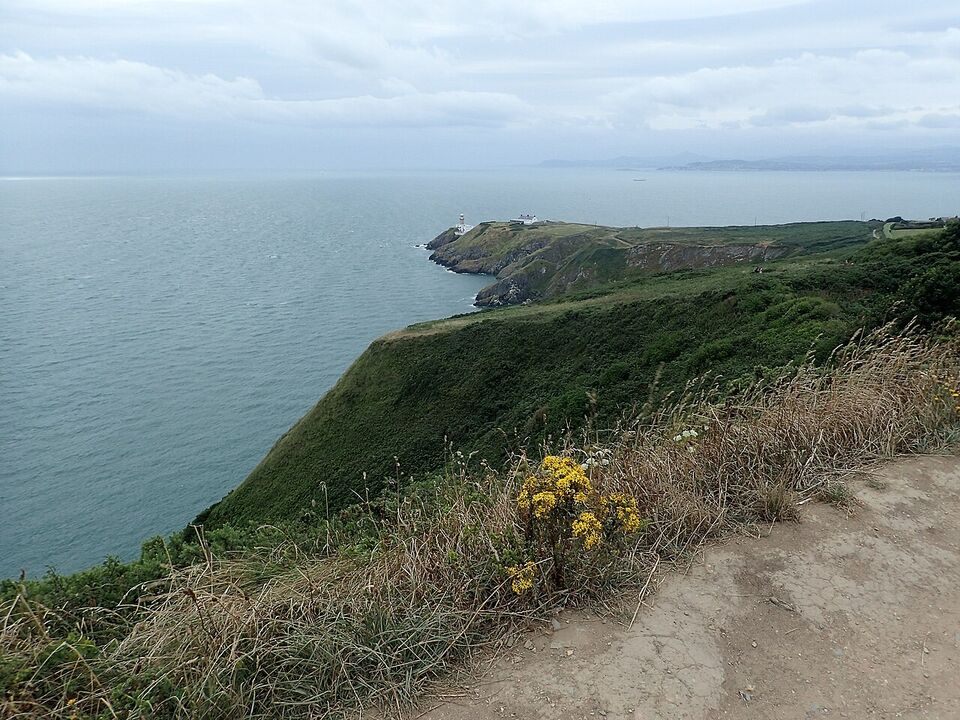
A working fishing harbor on a peninsula, with cliff walks of different lengths above the Irish Sea and seafood restaurants by the pier. Allow half a day. The paths are exposed and can be windy and slippery, so wear shoes with grip and check the forecast.
Dún Laoghaire and Dalkey
Dún Laoghaire has a long harbor pier popular for walks, and Dalkey is a small village with castles and a heritage centre. Killiney Hill above it offers views across Dublin Bay. Seasonal sites in this area, such as the Sandycove tower museum, keep reduced winter hours, so check before you go.
Malahide
Malahide is a village with a harbor and a historic castle with gardens. We could not confirm the castle's winter hours or ticket prices, so check the official site before you go. It is an easy half-day, and you can combine it with a coastal walk.
The coast is also the best place for a rainy-day "short outing", because the train runs in all weather and cafes and pubs are close to the stations. Combining Howth and Malahide on the same train line is possible in a day, but we suggest choosing one so that the walk is not rushed.
Wicklow: Glendalough and Powerscourt
The Wicklow Mountains start just south of Dublin, and the two main stops are Glendalough, a monastic site by two lakes, and Powerscourt, a large estate with gardens and a waterfall. Public transport to both is limited, so most visitors use a guided tour, and many tours combine them in one day. By car, Glendalough is about 1.5 hours from the center, depending on traffic, over mountain roads.
Glendalough
The Glendalough Visitor Centre is run by the Office of Public Works. Admission is €5 for adults (about $6), €4 for groups and seniors (about $4), €3 for children and students (about $3) and €13 for a family (about $15). From mid-March to October 14 it is open daily 9:30 a.m. to 6 p.m. (last admission 5:15 p.m.). From October 15 to mid-March it is open 9:30 a.m. to 5 p.m. (last 4:15 p.m.). It is closed December 23 to 29. Paying for parking in the visitor-centre car park includes one visitor-centre admission.
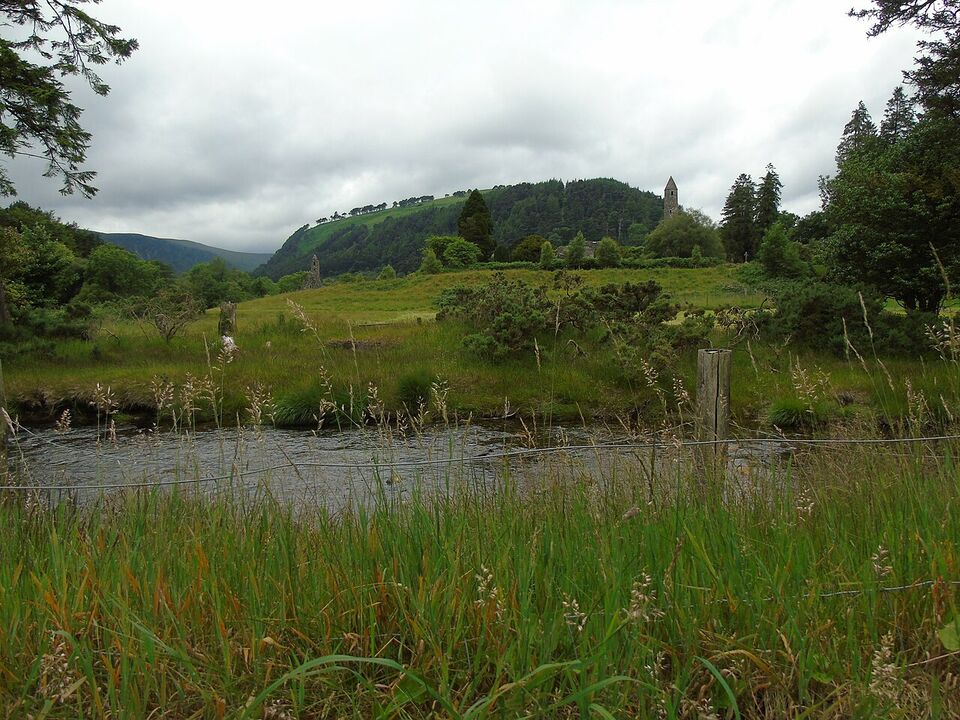
The monastic site itself, with its round tower and ruined churches, can be seen outside; the walking trails around the Upper Lake are free. In winter and wet weather the trails are muddy, so wear waterproof footwear. A tour usually leaves you three to four hours at the site.
Powerscourt
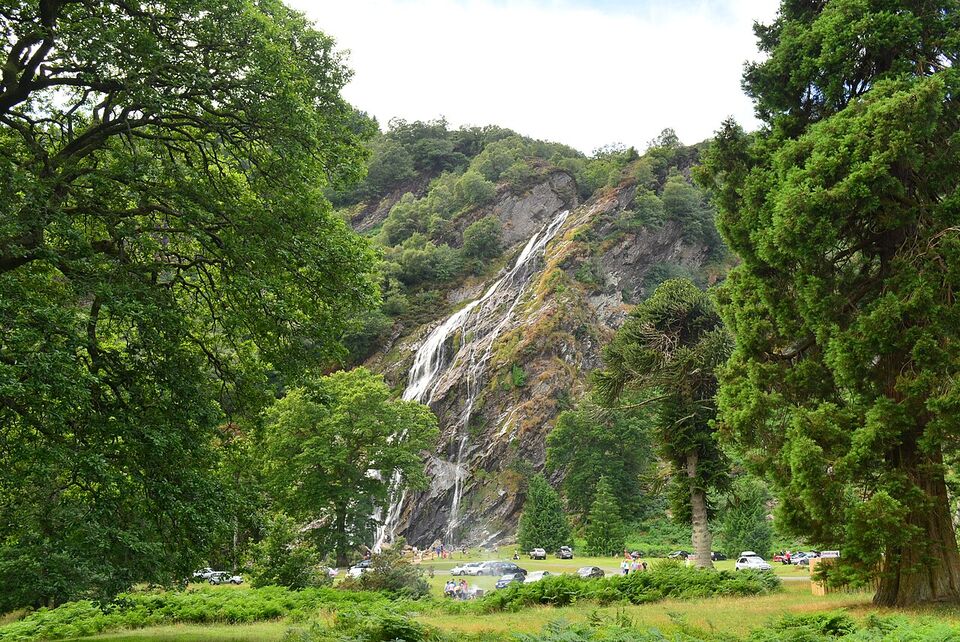
Powerscourt Estate is at Enniskerry, about an hour from the center. We could not confirm prices or winter hours from the official site. The waterfall is reportedly at a separate location several miles from the house, with its own ticket. Check powerscourt.com before you plan. Without a tour, you reach Enniskerry by local bus from Bray, which is on the DART line; check tfi.ie for the route and times.
Insider tip
A combined Glendalough and Powerscourt tour is efficient but leaves only a short time at each, especially on a winter day, when Glendalough's visitor centre closes at 5 p.m. If you want to hike, take a tour that explicitly gives you free time, or stay overnight in the area.
Newgrange and the Boyne Valley
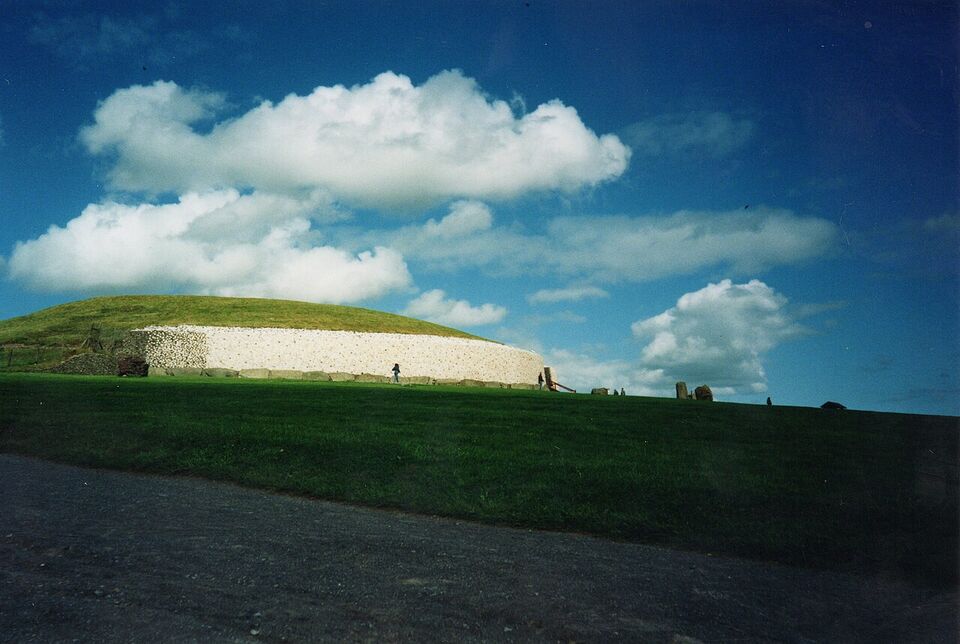
Newgrange is a passage tomb about 5,000 years old, older than Stonehenge and the pyramids of Giza, in the Brú na Bóinne complex in County Meath. It is about 30 miles (50 km) north of Dublin, roughly an hour by road. Our page on the Boyne Valley covers it in depth.
- Booking: essential. Everyone, including infants, needs a pre-booked ticket. Under-18s need an adult, and tickets for Newgrange and Knowth are sold only on the official site. Cancelled tickets are re-released online around 8:30 to 9:30 a.m. and 3 to 4 p.m.
- How you get in: access is only by guided tour from the Brú na Bóinne Visitor Centre. You can visit the centre alone without booking.
- Winter program: from November 2 to the end of February only the Newgrange tour with the exhibition runs. From March 1 to November 1 there is also a combined Brú na Bóinne tour with the Newgrange chamber and limited Newgrange-only and Knowth-only tours. There is no chamber access at Knowth.
- Visitor Centre hours: January, February, November and December 9 a.m. to 4:15 p.m.; March, April and October 9:30 a.m. to 4:45 p.m.; May to September 9 a.m. to 5:45 p.m. Closed December 23 to 27 and January 1.
- Solstice mornings: December 18 to 22, regular tours are suspended and the centre opens earlier. A normal ticket does not include sunrise access to the chamber; that is decided by a draw.
- Price: the 2026 ticket prices are only in an admission-charges PDF on the Heritage Ireland site, which we could not read, so check heritageireland.ie.
- No photography is allowed in the Newgrange passage.
There is limited public transport to the visitor centre, so most people use a tour or a car. Tour operators from Dublin typically combine Newgrange with another Boyne Valley site; check what is included before you book.
Kilkenny by train
Kilkenny is a compact medieval city with a castle, a cathedral and narrow lanes ("slips"). The train from Dublin Heuston takes roughly 1.5 to 2 hours each way, and the station is a short walk or taxi ride from the center (check the distance when you book). You can see the main sights in a full day, which makes it the best "whole day by rail" trip with no tour. See the Kilkenny guide for more.
- Kilkenny Castle (Office of Public Works): self-guided adult €8 (about $9), senior or group €6 (about $7), child or student €4 (about $4), family €20 (about $22). A new summer guided tour costs €12 (about $13). October to March, 9:30 a.m. to 5 p.m. (last admission 4:30 p.m.). The parklands are open November 9 a.m. to 5 p.m. and December 9 a.m. to 4:30 p.m.
- Book: not needed for the castle. Reserve train seats on irishrail.ie if you travel on a weekend, as intercity fares are dynamic.
- Winter: the castle, gardens and shopping streets are open, but some smaller sights close early.
Belfast: a full day by train
Belfast is in Northern Ireland, which is part of the UK. That changes three things: you pay in pounds sterling, speed limits and road signs are in miles and mph, and US citizens legally need a UK ETA. The ETA costs £20 (about $27) at £1 = US$1.33. There is no check on the road or the train between the Republic and Northern Ireland, and the Irish Times reports the ETA has gone largely unenforced at the land border, but you should apply on gov.uk before you go. It is required for flights and ferries to Britain.
Irish Rail runs up to 15 Enterprise trains a day between Dublin Connolly and Belfast, taking about two hours. Dublin Express also runs direct coaches from Dublin City and Dublin Airport to Belfast; we could not confirm fares or times. Intercity fares are dynamic, so book early for lower prices. See the Belfast guide for the city.
- Titanic Belfast: adults pay £24.95 online (about $33) or £26.95 at the door (about $36); a Seasonal Late Saver at the box office, not in July or August, is £20 (about $27). Children 5 to 15 pay £11 online (about $15), and under 5 are free. Hours in November and December 2026 are 9:50 a.m. to 5 p.m. It closes at 3 p.m. on December 6, is closed December 24 to 26 and January 12, 2027, and opens 9:45 a.m. to 6 p.m. from December 27 to 31. Entry is timed every 10 minutes.
- Christmas: the Belfast Christmas Market at City Hall runs from November 14 to December 22, 2026, and the lights switch-on is on Saturday, November 14. Check the opening hours before you go.
- Carry pounds or a card. Titanic Belfast accepts only sterling notes for cash.
Watch out
The Giant's Causeway is a long way from Belfast and is not a realistic add-on to a train day. Plan a separate trip using the Causeway Coast guide.
The Cliffs of Moher in a day: the honest view
The Cliffs of Moher are on the west coast in County Clare. A day trip from Dublin is possible, but it is long. By coach or car, expect about 3.5 to 4 hours each way, which is a day of 12 hours or more, and the Cliffs of Moher Experience ticket gives you a two-hour visit from the moment you enter. In winter, daylight is only 7.5 hours in mid-December, and you may see the cliffs mostly in fading light.
The Cliffs open 9 a.m. to 5 p.m. in November, December, January and February, and are closed December 24, 25 and 26. The 2026 gate price is €15 for adults (about $17), €12 (about $13) for students and seniors over 65, and €30 (about $34) for a family of two adults and two children under 12; booking online is cheaper. Admission includes parking, the visitor centre and 800 meters of paved paths with O'Brien's Tower. The centre follows Met Éireann warnings and evacuates in high winds, so check the weather. Parts of the coastal walk have been closed; check cliffsofmoher.ie.
The most efficient way to see the Cliffs is as part of a trip west: stay in Galway or Doolin and visit in the morning. See the Cliffs of Moher guide and the Galway guide. If you can only do it from Dublin, take a guided tour so that someone else drives, and expect a long day.
Tours or do it yourself?
Tours make sense for Glendalough, Powerscourt, Newgrange and the Cliffs, because public transport is sparse and a tour handles tickets and timing. Do it yourself for Howth, Dalkey, Malahide, Kilkenny and Belfast, because trains are frequent and you control your pace.
- Tour pros: no driving on the left, tickets and timing handled, and a guide.
- Tour cons: a fixed schedule, large groups on some tours, and shorter time at each stop.
- DIY pros: flexibility and lower cost on rail trips. DIY cons: you handle the booking and the connections.
We could not confirm current coach-tour prices, so compare operators' websites for what is included, such as entry tickets, and whether the tour has a guide or just a driver.
Save money
A Heritage Card covers Glendalough, Kilkenny Castle and Kilmainham Gaol, but it only pays off if you visit enough sites; the worked comparison is in things to do in Dublin. Trains are usually the cheapest way to see Kilkenny and Belfast, especially when booked early.
When a rental car is not worth it
A simple rule: do not rent a car just for Dublin day trips. A rental is worth it only if you plan to drive on several of the days and then continue your trip beyond Dublin. Once you add the daily rental (a rental guide puts typical rates at roughly €25 to €50 off-peak, about $28 to $56, and €40 to €80 in peak season, about $45 to $90), insurance, fuel, parking and the M50 toll, a rail ticket or a tour seat is usually cheaper for a single day. Driving in Dublin is slow, and parking is costly.
A car does make sense for linking Newgrange with another Boyne Valley site or for Wicklow villages without a tour. If you rent, collect the car on the day you leave the city. See car rental and driving in Ireland for the rules. Petrol was about €1.97 a litre (about $8.35 a US gallon) in early November 2026.
Rainy-day swaps
Dublin gets rain in every month, and mountain and coastal trips suffer most. If the forecast is wet, swap as follows:
| If the plan is | Swap to | Why |
|---|---|---|
| Howth cliff walk | Kilkenny Castle and the city | Mostly indoors, with a covered castle visit |
| Glendalough walk | Newgrange visitor centre and tour, or Titanic Belfast | The visitor centre exhibition is indoors; Titanic Belfast is fully indoors |
| Dalkey coastal path | Dublin's museums | Free museums, see things to do in Dublin |
| Powerscourt gardens | Kilkenny or Malahide Castle | Castle rooms are covered |
Severe weather can close some exposed places. Connemara National Park grounds shut during orange and red warnings, the Cliffs centre evacuates in high winds, and the Rock of Cashel can close at short notice. For a month-by-month view, see when to go.
Add it to a route in the trip builder, or ask us to plan the hotels, trains and guides for you.