Where to begin
Tracing Irish roots works backward from what you know, and the most important step happens at home, not in Ireland. Irish records are organized by place, so the key you need is a county, a parish or, best of all, a townland (the small land division where a family lived). Almost every Irish American search starts by finding that one place name in US records.
The good news for 2026 is that more Irish records are free and searchable online than ever before. The National Archives of Ireland released the 1926 census online in April 2026, and you can browse the 1901, 1911 and 1926 censuses for free. Civil and church records are free at irishgenealogy.ie. This guide shows you the order to search, what to expect to find, what was lost, and how to turn research into a trip. For the manners of talking about your roots once you are in Ireland, see Irish etiquette.
A practical warning first: Irish genealogy is not a one-click process. A common name such as John Murphy from "Ireland" is not enough. Spend time on the American side, expect gaps, and enjoy the detective work.
Step 1: Start with US and family records
Begin with relatives and papers, then move to public records. Aim to find the place of origin of the ancestor who emigrated.
- Family sources. Ask older relatives for names, dates and stories. Look for Bibles, prayer cards, funeral cards, letters, photographs with a studio name on the back, and old passports. Funeral cards and memorial cards often give a birth year and a parish.
- US death certificates. They often list the parents' names and the birthplace. "Ireland" alone is common, but sometimes a county or town appears.
- Naturalization papers. Records made after 1906 are often detailed, with a birth date, arrival date and ship. Earlier records are sparse but still useful.
- Census records. US censuses show birthplace as "Ireland" and the year of immigration, and they also reveal neighbors from the same area, who often came from the same parish.
- Passenger lists. Ship records show the port of departure, though not always the home parish. Match them with other records.
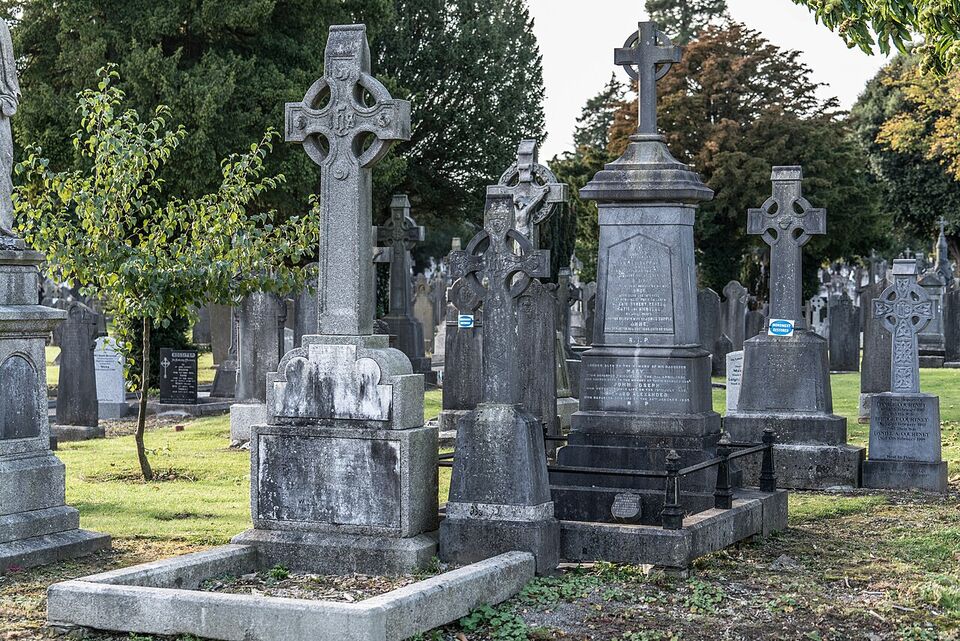
- Church and cemetery records. Catholic and Protestant baptism, marriage and burial records in American parishes sometimes mention the Irish origin. Headstones may name a county or parish.
- Local newspapers and obituaries. Many Irish American obituaries mention a county or a town in Ireland.
Free and paid US genealogy services can help with these records, and many libraries offer free access. Do not pay for a service until you know what you need; much of what you will use in Ireland is free.
Insider tip
Surnames cluster by county in Ireland, so a distinctive surname can narrow the search. Check the spelling variations too: Boyle and O'Boyle, or Maloney and Moloney, may refer to the same family, as the National Archives itself advises. Search by county or townland when a name does not turn up.

Step 2: Free Irish civil and church records
Once you have a name, a rough date and a county, move to Irish records. The two main free sites are run by the Irish government and the National Library.
| Source | What it holds | Cost |
|---|---|---|
| irishgenealogy.ie: civil records | Births 1864-1925, marriages 1845-1950, deaths 1871-1975, from the General Register Office. Non-Catholic marriages are recorded from 1845 and Catholic marriages from 1864. | Free to search |
| irishgenealogy.ie: church records | Selected baptism, marriage and burial records, including Roman Catholic registers for Dublin City, those of the Diocese of Kerry to about 1900, and surviving Church of Ireland baptism records | Free to search |
| registers.nli.ie | Images of Roman Catholic parish registers held by the National Library of Ireland, mostly from the 1800s, searched by parish | Free |
| Census 1901, 1911 and 1926 (nationalarchives.ie) | Household returns with names, ages, occupations, birthplaces and relationships. The 1926 census was released online in April 2026. | Free to browse |
Records open up over time because of data protection. According to irishgenealogy.ie, birth records are only available once they are over 100 years old, marriages over 75 years and deaths over 50 years, and the site adds a year of records annually. The site also notes that the church records on it are a large selection, not a complete set, and many predate civil registration.
Reading what you find
A civil birth record gives the date, the place, the parents' names (including the mother's maiden name) and the father's occupation. A marriage record usually shows the fathers' names and occupations and the witnesses. A death record shows age and cause of death, and the person who reported it. Church records can go back before 1864, but they vary by parish: some start in the 1700s, and some start much later.
The 1901, 1911 and 1926 censuses are the best starting point for Irish families, because they list everyone in a household on a given night. The 1926 form has 13 categories, including birthplace, occupation, marital status and Irish-language ability. A few families opted out of the 1926 release, but that is rare. The National Archives suggests gathering all you know before searching, including names, address and ages, and checking by county or townland if a name has variants.
Step 3: Use the National Archives and the National Library
If you are in Dublin, two institutions can help you in person. Hours and rules change, so check each official site before you go.
National Archives of Ireland
The National Archives is on Bishop Street, Dublin 8. Its genealogy advisory service gives free help to people starting out. The Irish Times reported in April 2026 that the service is free, open daily, and needs no appointment, and that visitors come from all over the world, including the US. Staff are genealogists who can point you to the right sources. Confirm opening days and times at nationalarchives.ie before you go. It helps to send a short outline of names, dates and places in advance if the website offers that, as the Irish Times reporter did, and to bring what you have written down.
The advice the service gives is simple. Genealogists call it "the three Cs": census, civil and church records, with land records as the fourth source. Land records such as Griffith's Valuation (a mid-19th-century survey of who held land) and the tithe books are searchable online and often place a family in a particular townland. Check the National Archives and irishgenealogy.ie for links.
National Library of Ireland
The National Library on Kildare Street, Dublin, holds the Catholic parish registers (the images online at registers.nli.ie) and a large collection of maps, newspapers and manuscripts. It has also offered genealogical advice in the past. We could not confirm the current services, reading room rules or hours, so check nli.ie before you plan a visit.
What was lost
Many families hit a wall around the Famine years. The reasons are historical. Irish civil registration of births and deaths began only in 1864, so there is no state record of an earlier birth. Most census returns before 1901 do not survive. The authorities destroyed those for 1861 to 1891, and the returns for 1821 to 1851 were largely lost in 1922, when a fire at the Public Record Office in Dublin during the Civil War destroyed many records (only fragments survive). Church records fill part of the gap, but many Catholic parish registers begin only in the early 1800s, and some are missing. Many poor families left no record at all.
That does not mean the trail stops. Land and valuation records, wills, local newspapers, estate papers and emigration records survive for some places. A local historian or a professional genealogist may know sources that are not online.
Step 4: Find the townland and county
A townland (in Irish, baile fearainn) is the smallest official land division in Ireland, and a family's address in the 1901 or 1911 census is usually a townland, not a street. Many townlands are tiny, with a few households, and several share names across counties, so you must know the county as well.
- Use the county. If your US records say "County Cork" or a parish, search that first. If they give only a town name, check which counties have a town of that name; some do not exist in more than one county, and some exist in several.
- Search place names. logainm.ie, the official database of Irish place names, shows Irish and English forms and the administrative divisions of a place. townlands.ie is a free map-based tool that is widely used by researchers. Both are useful for checking spelling and location.
- Know the jargon. A civil parish and a Catholic parish are different things, and a Poor Law Union is the district used in civil registration. If you find your family in a Poor Law Union, the civil records are filed under that name.
- Allow for spelling. Names were often written as they sounded. Search for variants, and use the "exact name matches only" option on irishgenealogy.ie sparingly.
- Look at neighbors. Families who emigrated together often came from the same area. A witness at a marriage in the US may have come from the same parish.
If you have only a county, work with it. The census lets you search by county and townland, and church records are organized by parish, so a county can be enough to find a likely family.
Northern Ireland records
If your ancestors came from the six counties of Northern Ireland, which is part of the UK, the records are held in Belfast, not Dublin, and the rules are different. The Public Record Office of Northern Ireland (PRONI) holds church records, wills, estate papers, valuation books, school records and many other collections for the six counties of Northern Ireland. The General Register Office of Northern Ireland holds civil records for birth, marriage and death from 1864 (and non-Catholic marriages from 1845).
The government site nidirect.gov.uk gives current information on PRONI's location, opening times, how to book and what is online. We did not fetch those pages, so check them before you go. Prices at PRONI and the General Register Office are in pounds sterling, and any fees are set by the offices, so we do not quote them here.
Records for the three Ulster counties in the Republic (Cavan, Donegal and Monaghan) are in the Irish sources above. Ulster Scots families, Presbyterian and Church of Ireland records and Catholic records each follow different patterns, so check which church your ancestors attended. For the city itself, see our Belfast guide.
Heritage centres and emigration museums
A visit to a museum or a heritage center will not replace research, but it gives your family story a setting. The best known for American visitors are these.
EPIC The Irish Emigration Museum
A museum on the Irish who left and what they did around the world. Admission is about €22 (about $25), but we could not confirm current prices or hours, so check epicchq.com. See Dublin sights.
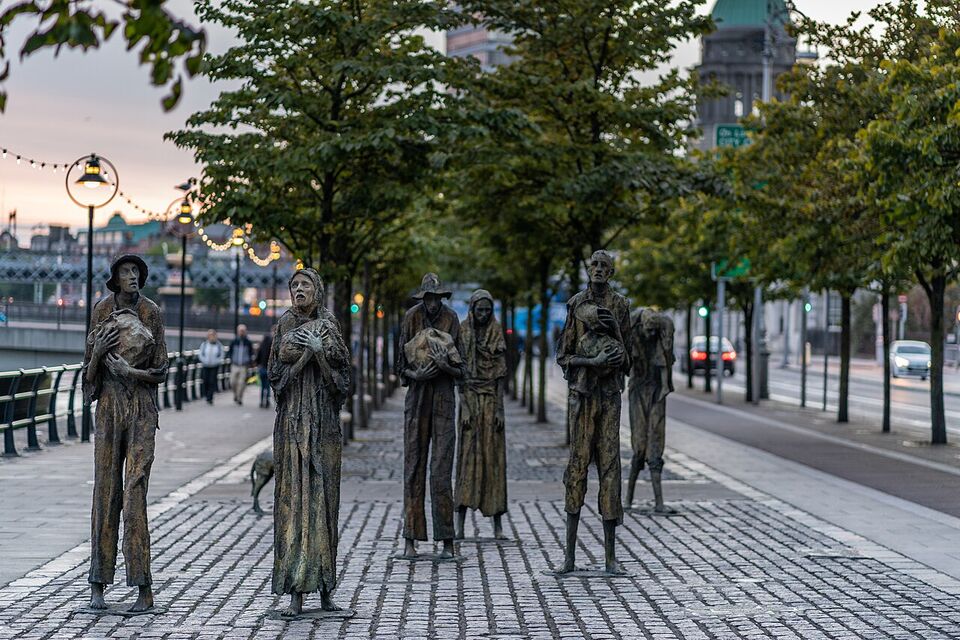
Dunbrody Famine Ship
A replica of a ship that carried emigrants in the Famine years, with guided visits that tell the story of the voyage. It is in the southeast, so it fits a trip through Waterford, Wexford or Kilkenny. Check opening times and tickets with the attraction before you go.
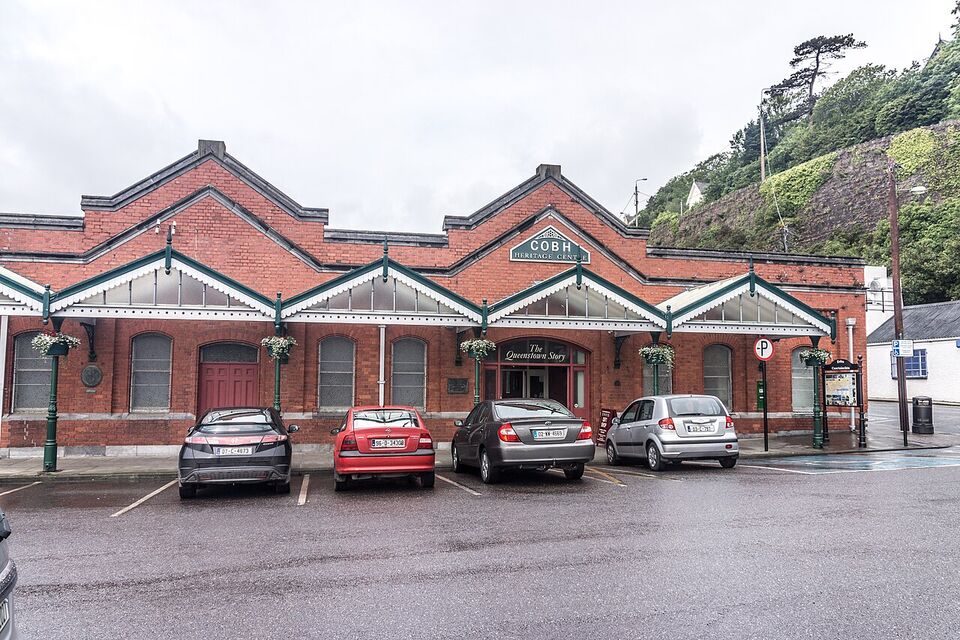
Cobh Heritage Centre
Cobh (pronounced "cove") was a major departure port for emigrants and the Titanic's last port of call. Its heritage center tells that story. Opening hours change with the season, so check before you go. Cobh is an easy trip from Cork.
County heritage and genealogy centers
Many counties have a local heritage center, library local-studies room or family history society that can search parish or estate records. Some charge a fee, some have changed or closed, and quality varies. Email first, and confirm what they hold and what they charge.
One caution is worth giving. Some centers sell "research packages" with a printed certificate or a family history book. Ask exactly what they will search and what you will receive before you pay, and compare the price against what you can find free online.
Hiring a professional genealogist
A professional is worth considering if you have a name and a county but hit a wall, or if your trip is short and you want a lead before you go. Look for a genealogist accredited by a recognized body such as Accredited Genealogists Ireland, and ask for a sample report and references.
- Agree the scope in writing. What question will they answer, which records will they search, and for how many hours?
- Ask for a fee or a cap. Hourly rates and totals vary, so get a quote before work begins. We do not quote a price because we could not verify one.
- Share what you have. Give them every name, date and place from your US research, including uncertain ones, so they do not repeat your work.
- Expect honest answers. A good genealogist will tell you when the record does not exist rather than promise results.
- Check before paying a large deposit. Be wary of anyone who guarantees a "noble" or "clan chief" ancestor.
DNA tests and their limits
Consumer DNA tests can help, but they have limits. A test compares your DNA with other users in a database, finds relatives, and estimates the regions your ancestors may have come from. It can introduce you to a cousin who has done the research, and it can confirm a family connection that paper records suggest.
It cannot tell you which townland your family came from. Ethnicity estimates are based on reference populations, differ between companies, and change when companies update them. The Irish, Scottish, Welsh and English populations overlap, so a result of "Irish" does not pinpoint a place. Smaller counties and regions cannot be separated reliably. A match with a third cousin on the island may help, but it needs a family tree behind it.
- Use DNA as a lead, then check it against records.
- Read the privacy terms before you test, and consider who else in your family will be affected by what you share.
- Be ready for surprises, including unknown relatives or a different story from the one you were told.
- Do not buy a "clan" DNA package that promises to name your chief or sell you a crest.
Irish citizenship by descent
Many Americans with Irish roots ask whether they can become citizens. The Irish Department of Foreign Affairs explains the rule on its Foreign Births Register page. In short, you are automatically an Irish citizen if one of your parents was an Irish citizen and was born on the island of Ireland. If instead one of your grandparents was born on the island of Ireland, or a parent was an Irish citizen at your birth without having been born there, you can apply to join the Foreign Births Register. Once you are entered on the register, you are an Irish citizen and can apply for an Irish passport. A great-grandparent alone does not qualify you. If your parent was entered on the register before you were born, though, you may be able to register through them, so ask the department.
Cost and time
As of November 2026, the department lists the fee for an adult as €270, plus a non-refundable postage and handling charge of €8, for a total of €278 (about $311). For applicants under 18, the fee is €145 plus €8, a total of €153 (about $171). Payment is made online when you enter your application. The department says it takes about 12 months to process a completed application, in strict date order. Fees, rules and processing times change, so confirm everything on dfa.ie before you apply.
What you will need
- Your birth certificate, and your parent's and grandparent's, including the Irish-born grandparent's civil birth certificate and, where they apply, marriage and death certificates.
- Photo ID and passport photographs witnessed by an approved person. The department lists people who can certify documents, such as a notary, a lawyer or a teacher.
- If the grandparent was born before civil registration began in 1864, the department says it can accept a baptismal certificate.
The application is made online, but you send documents by recorded delivery, because the department says it does not acknowledge receipt of post. Incomplete applications are returned. The Customer Service Hub phone line is +353 1 568 3331 (Monday to Friday, 9 a.m. to 4:30 p.m., Irish time), and it also has a webchat. For expectant parents, the department says to mark that clearly: a child born before the parent is on the register is not entitled to citizenship through them.
Watch out
Do not rely on a blog or an agent for the rules. Read the Department of Foreign Affairs page, gather every document, and never send your only original certificate without checking what the page says to send. Do not pay a third party for a form that you can submit directly for the official fee.
A citizenship application does not change how you enter Ireland on a visit. Until you are registered and hold an Irish passport, you travel as a US citizen. See our entry guide for the rules for US visitors.
A heritage-trip itinerary
This sample plan gives roots research a week in Ireland. It leaves room for the region your family came from. Adjust it to your county, and book accommodation early in summer. For route planning, see the regions guide and getting around.
- Before you go
Do the paper work
Collect US records, search irishgenealogy.ie and the censuses, and identify a county, parish or townland. Email any local heritage center or parish office you hope to visit. Put your notes into a single family tree rather than loose pages, and print a copy to carry.
- Day 1
Arrive in Dublin
Rest after the flight. See our Dublin guide for the city and Dublin Airport for transfers. Spend the evening looking over your research.
- Day 2
National Archives and EPIC
Visit the National Archives genealogy advisory service on Bishop Street (confirm hours first) with your family tree and notes. In the afternoon, visit EPIC for the wider story of emigration.
- Day 3
Travel to your family's county
Drive or take a train. Check local roads and speed limits in the driving guide. Stop at the county library or local-studies room if it has one.
- Days 4-5
Parish, graveyard and townland
Visit the parish church and the graveyard, ask the parish office what records exist, and look for the townland on a map. Talk to people, and ask local historians or older residents. Be polite, bring a printed tree, and do not knock on doors unannounced.
- Day 6
Cobh or New Ross
If your family emigrated through Cork, spend a day in Cobh. For the Famine story, visit the Dunbrody at New Ross. Check hours first. See Cork for the region.
- Day 7
Belfast (optional) or return
If your family came from Northern Ireland, spend time at PRONI in Belfast. Otherwise, return to Dublin, and allow time to fly home; see the airport guide.
Mistakes to avoid
- Do not start in Ireland without a county or parish. Do the US research first.
- Do not buy a coat of arms, a "family crest" plaque or a clan scroll. Arms in Ireland are granted to individuals by the Office of the Chief Herald, not to surnames, and shops that sell a crest by surname are selling decoration. The same goes for "surname histories" printed from a database.
- Do not pay for records that are free. irishgenealogy.ie, registers.nli.ie and the National Archives census site cost nothing.
- Do not trust a single family story. Historians generally say that officials at Ellis Island did not rewrite names, because they worked from ship lists prepared at the port of departure; name changes usually happened later, by choice.
- Do not assume the spelling is fixed. Search variants, and try the Irish form of the name.
- Do not turn up at a parish office or a stranger's door unannounced. Email or write first.
- Do not tell people in Ireland that you are "Irish". Say you are Irish American or that your family came from their county. See Irish etiquette.
- Do not expect every record to exist. Some families will remain mysteries, and that is part of the story.
If you find your family's place, a short visit can be the highlight of the trip. For other ideas on what to see in the area, see Ireland by interest.
Add it to a route in the trip builder, or ask us to plan the hotels, trains and guides for you.