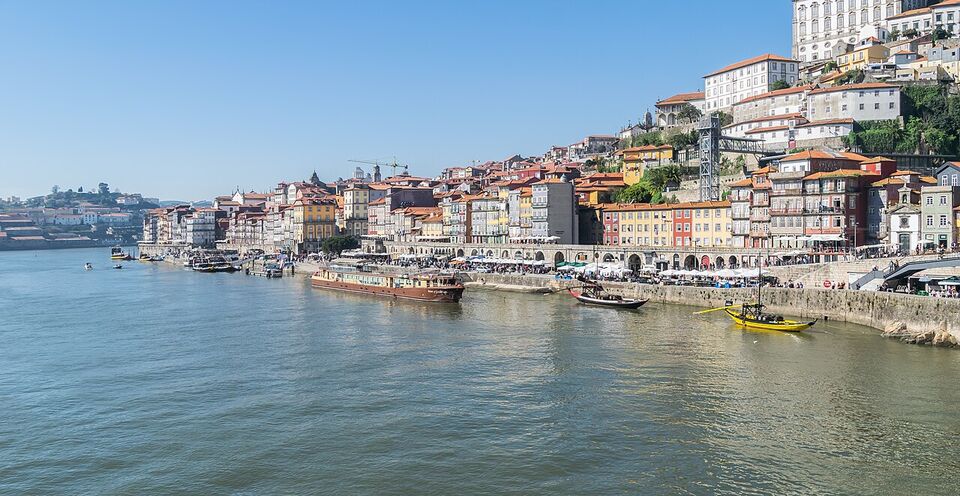
Pick Spain if you want variety and scale: great art museums, Gaudí, flamenco, tapas, a dozen wine regions, big-city nightlife, and the Moorish south. Pick Portugal if you want a smaller, calmer trip: Lisbon's hills and river light, Porto's port cellars, easy fast rail between Lisbon and Porto, and an Atlantic coast. First-timers who want museums and big sights lean Spain; couples, slow travelers and anyone who dislikes rushing lean Portugal. Beach lovers should look at the water, not the sand: both guides warn that the water is cooler than many Americans expect.
With ten days or more, do both. Flying between Madrid and Lisbon takes about 1 hour 15 minutes, but there is no fast train, so plan the crossing as a travel day.
| Spain | Portugal | |
|---|---|---|
| Best for | Art, Gaudí, flamenco, tapas, wine regions, variety, Andalusia | Compact first trip, Lisbon and Porto, port wine, Atlantic coast, slower pace |
| Nonstops from the US | Madrid about 7 hr from New York; Seville and Granada have none | Lisbon and Porto in roughly 6–8 hr from the East Coast; Faro and the islands limited and seasonal |
| Cost guide | Per person per day: budget €80–120, mid-range €150–250, comfort €300 and up | No daily average in our guide; national hotel average about €130 (about $146) per occupied room |
| City tourist tax | Madrid none; Barcelona €7–12 (about $8–13); Andalusia none (as of November 2026) | Lisbon €4 (about $4.50); Porto €3 (about $3.40) |
| Big sights | Prado €15, Royal Palace €18, Sagrada Família €26, Alhambra €22.27 online | Jerónimos €18, Belém Tower €15, São Jorge Castle €17, Pena Palace €20 |
| Beaches | Costa del Sol, the Cadiz Atlantic coast, Balearics, Canaries | Algarve cliffs and islands, the Silver Coast; Madeira is not a beach island |
| Summer heat | Seville and Córdoba average highs near 96°F (36°C) in July and August; Madrid about 90°F (32°C) | Lisbon 83–84°F (28–29°C) in July and August; Faro about 85°F (29°C) |
| Fast rail | Madrid to Barcelona about 2 hr 30 min; Madrid–Andalusia high-speed trains suspended after the October 28, 2026 collision | Lisbon to Porto about 2 hr 45 min on the Alfa Pendular |
Madrid and Barcelona vs Lisbon and Porto
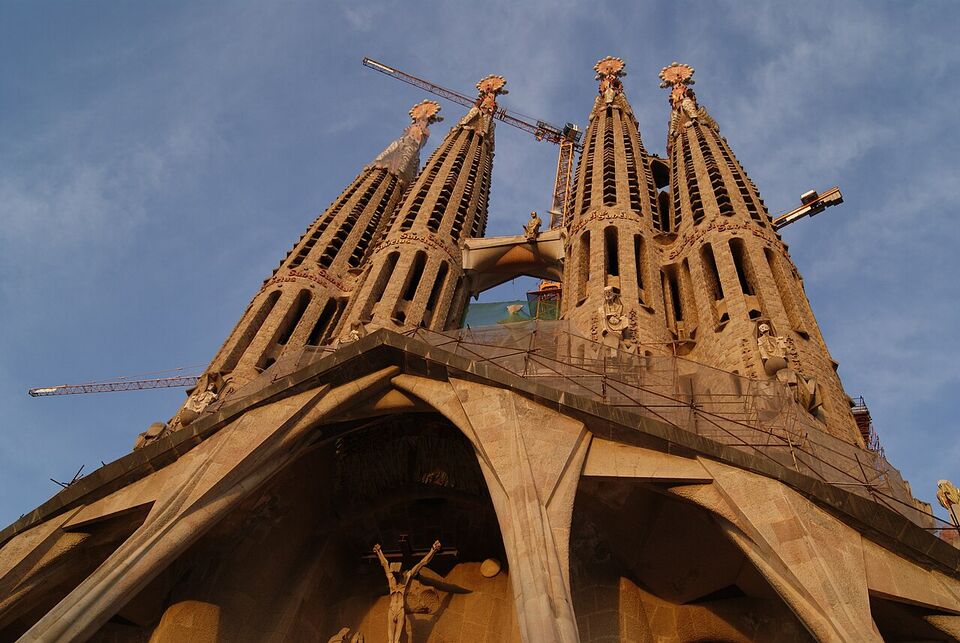
Spain's two big cities are built for sightseeing. Madrid is the art capital: the Prado is €15 (about $17) and free for its last two hours every day, the Royal Palace is €18 (about $20), and the Reina Sofía is €12 (about $13) and free most evenings. It has no tourist tax. Barcelona is Gaudí and the sea: Sagrada Família €26, Park Güell €18, Casa Batlló from €29, with timed tickets worth booking days to weeks ahead. Pickpockets are worst in Barcelona and Madrid. See Madrid, Barcelona and Madrid vs Barcelona.
Lisbon is hilly and river-facing, rewarding slow walking and viewpoints, with three full days enough for most first-timers. Jerónimos Monastery (€18, about $20) and Belém Tower (€15, about $17) are closed Mondays; São Jorge Castle is €17 (about $19); Pena Palace in Sintra needs a booked slot at €20 (about $22). One catch for 2026: as of November the Glória, Bica and Lavra funiculars and the Santa Justa Lift have carried no passengers since September 2025. Porto is a river city of tiled churches and port cellars across the bridge in Vila Nova de Gaia. See Lisbon, Lisbon sights, Porto and Sintra.
Costs
Spain gives a clear daily budget; Portugal's guide does not, and we will not invent one. Spain's figures include lodging, food, local transport, one or two paid sights and tourist taxes, sharing a double room.
| Per person per day, before flights | Spain | Portugal |
|---|---|---|
| Daily total | Budget about €80–120 (about $90–135); mid-range €150–250; comfort €300 and up | Not given in our guide |
| Hotel | About €200 a night for a mid-range room in Madrid or Barcelona; about €130 elsewhere | National average about €130 (about $146) per occupied room, all of Portugal, not a Lisbon price |
| City transit | Barcelona single €2.90; Madrid 10-trip ticket €7.30 | Lisbon Metro €1.72 (about $1.93) by card; 24-hour Carris and Metro ticket €7.25 (about $8) |
Spain's big-city hotels run higher than its countryside, while Portugal's national hotel figure blends cities, beaches and the interior, so treat both as guides. Tourist taxes differ: Barcelona charges €12 (about $13.45) at five-star hotels, €8.40 at four-star and €7 at other hotels, for up to seven nights; Lisbon €4 and Porto €3; Madrid and Andalusia charged none as of November 2026.
Tipping is smaller in both than in the US. In Spain, round up or leave coins at a bar; at a sit-down table, about 5–10% for good service. In Portugal tipping is optional, so rounding up is enough. Pay in euros whenever a machine offers dollars. Budget details are in Spain money, the Spain budget calculator and Portugal money.
Save money
In Spain, make the weekday menú del día (€13–20, about $15–22) your main meal. In Portugal, skip the couvert (the bread, olives and cheese brought to the table) unless you want it, since it is charged only if you eat it. Seafood is often priced by the kilo, so ask the total first.
Food and wine
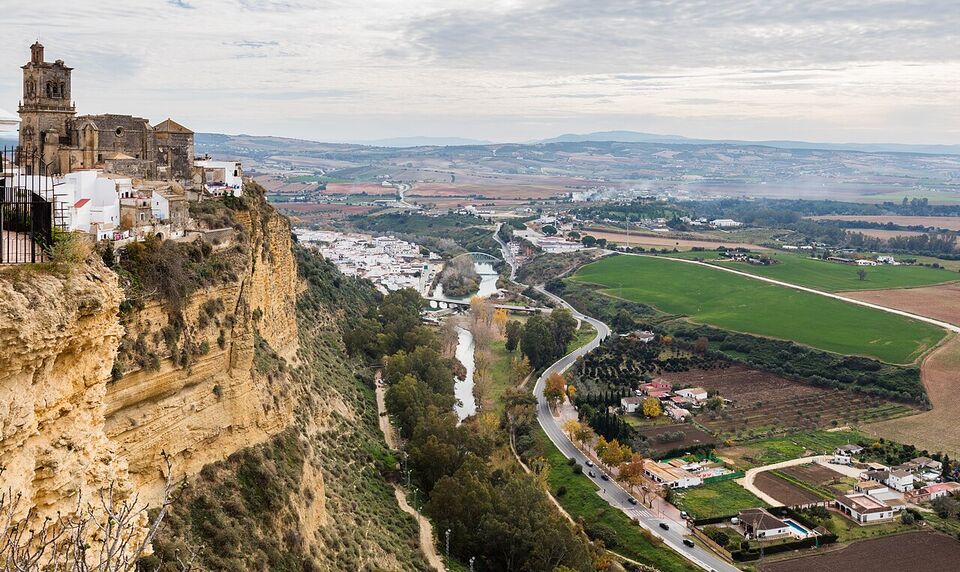
Spain eats late and in small plates. Lunch is the main meal, about 2 to 4 p.m.; dinner starts from 9 p.m. Tapas run €2–5 (about $2.25–5.60), and in Granada, Jáen, Almería and León a drink comes with a free tapa. Portugal eats earlier and simpler: lunch around 1 p.m., dinner around 8, usually with soup, grilled fish and bacalhau (salted cod), and a two-hour dinner is normal. Grilled sardines are best from about June to September. See Spanish food and Portuguese food.
On wine, Spain is the bigger menu: Rioja and Ribera del Duero reds, Priorat, Albariño from Rías Baixas, cava from Sant Sadurní d'Anoia (about 45 minutes from Barcelona by train), and sherry from the Jerez triangle. Portugal's signatures are port, aged in lodges at Vila Nova de Gaia (a visit takes roughly 30 to 60 minutes), crisp, slightly fizzy Vinho Verde, deep Douro reds, and fortified Madeira. See Spanish wine, Portuguese wine and the Douro Valley.
Beaches: Andalusia and the islands vs the Algarve and Madeira
Spain. The Costa del Sol around Málaga has dependable, easy beaches with coarse gray-brown sand or pebbles, calm water, lifeguards in summer and a beach bar every few hundred yards. The water is cooler than Americans expect: roughly 59–61°F (15–16°C) in winter and the mid-70s°F (23–24°C) by August, with swimming from June to October. For white sand and turquoise water, our guide points to the Balearics or the Atlantic beaches of Cádiz. The Canary Islands are the winter-sun option, with coastal highs around 70–82°F (21–28°C) and volcanic landscapes, though only one US nonstop has run there. See Málaga and the Costa del Sol, Andalusia, Mallorca and the Balearics and the Canary Islands.
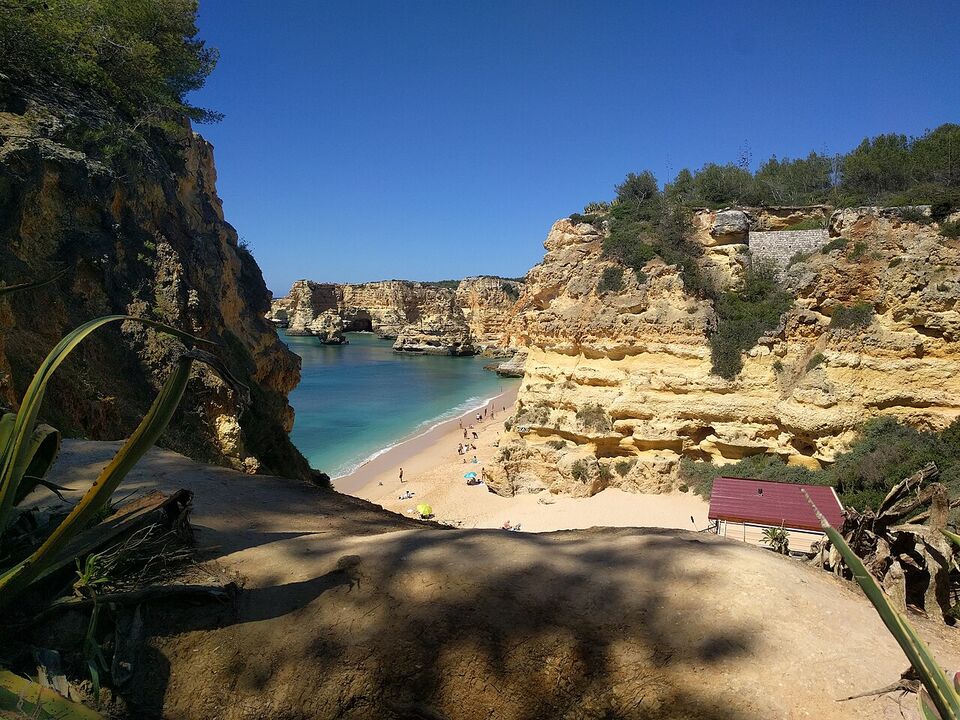
Portugal. The Algarve is the beach region: sandstone cliffs, small coves, barrier islands and golf, in three parts, the calm east around Tavira and the Ria Formosa, the busy center around Albufeira, and the rugged, windier west around Lagos and Sagres. Water at Faro runs about 61–63°F (16–17°C) in January and 72–75°F (22–24°C) in August and September; near Lisbon it reaches only about 68°F (20°C). Expect currents and wind, and keep clear of cliff edges and sea caves. Madeira is for hikers and garden lovers and, in our guide's words, not a beach destination in the way the Algarve is, though the sea reaches about 75°F (24°C) in late summer. See the Algarve, Lagos, Portugal's beaches and Madeira.
Watch out
Atlantic beaches in Portugal can have rip currents, and the best swimming months are July to September. At Benagil cave, local rules ban swimming in, landing on the beach inside and renting a kayak without a guide, with operator fines from €300 to €216,000. Check the rules with a licensed boat operator.
Heat and crowds
Spain is the hotter country. Seville and Córdoba average highs near 96°F (36°C) in July and August, and heat waves pass 104°F (40°C); locals stay inside from about 2 to 8 p.m. Madrid is dry and about 90°F (32°C); Barcelona about 84°F (29°C) and humid. Lisbon averages 83°F in July and 84°F in August (28–29°C), and its record high is 111°F (44°C); Faro's record is 111.7°F (44.3°C). Both have wildfire seasons; plan sightseeing for mornings and evenings.
Crowds follow the same shape. In Spain, August is vacation month: the coasts, islands and northern beach towns are at their most crowded and expensive, while Madrid half empties and many family-run restaurants close for two to four weeks. In Portugal, July and August are peak for crowds and prices, August 15 is a holiday and the coast is full. At the beach, arrive before 10 a.m. in August.
Seasons
Both countries are best in the same windows. For Spain, aim for mid-April to mid-June and mid-September to October; for Portugal, April to June and September to October. Winter splits them. Madrid reaches about 50°F (10°C) with frosty nights, while Seville's January highs are about 61°F (16°C) and the Canaries stay near 70°F (21°C). Lisbon's winter highs are near 59°F (15°C) with rain, since it gets about 794 mm (31 in) a year, mostly from October to March; the Algarve is the driest and sunniest region. Easter falls in late March 2027, and Holy Week in Spain and Easter in Portugal fill hotels, so book early. See when to go in Spain and Portugal.
Trains and driving
Spain has Europe's largest high-speed rail network, with Renfe's AVE and Avlo, Iryo and Ouigo competing. Madrid to Barcelona takes about 2 hours 30 minutes on the fastest trains, and advance fares on Avlo, Iryo and Ouigo can be under €20 (about $22), while the same trip the day before can cost €100 (about $112) or more. One big exception for late 2026: after a fatal collision near Urda on October 28, 2026, high-speed trains between Madrid and Andalusia (Córdoba, Seville, Málaga, Granada) were suspended, and Renfe stopped selling tickets until December 13, 2026, though service may return sooner. Check Renfe, Iryo and Ouigo, or fly or take a bus. Málaga to Seville was reported running normally.
Portugal's rail is simpler. The Alfa Pendular links Porto, Coimbra and Lisbon (about 2 hours 45 minutes between the two cities) and runs on to Faro in roughly 3 hours (an approximate figure; check cp.pt).
For driving, you need a US license plus an International Driving Permit in Spain (about $20 from AAA); for Portugal our guide says rental companies generally accept a valid US license and an IDP is a low-cost backup, so check with your rental company. Both drive on the right, with 120 km/h (75 mph) motorway limits. Spain's motorways are now mostly toll-free. In Portugal, rentals carry a Via Verde toll device, with Hertz charging €2.21 a day (about $2.48), up to €22.14 (about $25) a rental, plus tolls; the A22 along the Algarve and the A25 to the Spanish border have been toll-free since January 1, 2025. In both countries, skip the car in the big cities and rent only for the countryside. See Spain getting around, driving in Spain, trains and buses in Portugal and driving in Portugal.
Flights and entry
Spain has more nonstops. Madrid has nonstops from more than a dozen US cities on Iberia, American, Delta, United, Air Europa and JetBlue, and Barcelona has a similar spread, including low-cost Level. Seville, Granada, Valencia and the Canary Islands have no US nonstops, and United's seasonal Newark flights serve Málaga, Palma, Bilbao and Santiago de Compostela. Portugal's Lisbon has TAP from Boston, Chicago, Miami, Newark, New York, San Francisco and Washington, plus Delta, United and American; Porto has TAP, United and Delta, with American from Philadelphia listed from March 29, 2027. Faro and the islands are mostly reached through Lisbon or Porto. See flights to Spain and flights to Portugal.
Entry is identical, because both are in Schengen. You need a passport valid at least three months past your departure and issued within the last 10 years, and you can stay up to 90 days in any 180 across all of Schengen. The Entry/Exit System has been fully running since April 10, 2026, taking fingerprints and a photo on first entry; queues have been long at times at Lisbon. ETIAS is not operating, so ignore sites that sell one. See Spain entry rules, Portugal entry rules and our ETIAS guide.
Language
You can get through Madrid, Barcelona or Seville on English alone, especially in hotels and big museums, but English thins out fast in neighborhood bars, markets and with people over 50. Learn hola, por favor and gracias; Catalan, Basque and Galician are co-official in their regions. In Portugal, staff in hotels, tourist restaurants and shops in Lisbon, Porto and the Algarve usually reply in English, but start with bom dia and obrigado (or obrigada if you are a woman).
Portuguese is not Spanish: it has nasal vowels and a "sh" sound, and many Spanish speakers find it hard to follow, so do not greet people in Portugal in Spanish. See the Spanish phrasebook and the Portuguese phrasebook.
Culture and safety
Spain's signature evenings are flamenco (about €15–30, or $17–34, in Granada's small venues; Madrid's top tablao lists seats at €95.90, about $107), tapas crawls and football. Portugal's is fado, a living tradition that UNESCO lists. In a fado house the rule is silence when the singing starts, and many ask you not to film. Book a dinner at a small house in the Alfama or Mouraria a few days ahead, and further ahead in summer and on weekends. See flamenco and fado.
On safety, the State Department rates Spain Level 2, Exercise Increased Caution (terrorism, civil unrest), and Portugal Level 1, Exercise normal precaution, as of November 2026. Day to day the risk is the same: pickpockets. They are worst in Barcelona and Madrid, and in Lisbon on the trams and buses, in the Metro and in the Alfama and Baixa. See safety in Spain and safety in Portugal.
Families
Both are easy with children. Spain's guide calls it one of the easiest countries in Europe for children: kids are welcome in bars and at late dinners, under-4s ride Renfe trains free on a lap, and Barcelona has city beaches, an aquarium and Park Güell, while Valencia is probably Spain's best city for kids.
Portugal's challenge is physical: Lisbon, Porto and Sintra are hilly and cobbled, so bring a compact stroller with large wheels or a soft carrier. The flat Oceanarium district and the calmer south-coast bays of the Algarve suit young children. On Atlantic beaches keep children within arm's reach even in shallow water. See Spain by interest and Portugal with children.
Combining both
Madrid to Lisbon. Fly. TAP, Iberia and budget airlines link the two many times a day in about 1 hour 15 minutes. By train there is no direct service since the Lusitania night train was discontinued: you need three trains (Madrid to Badajoz, Badajoz to Entroncamento, then Lisbon), two bookings and roughly 9 to 12 hours. Buses take about 8 to 9 hours with ALSA and FlixBus. A faster direct rail link is not expected before about 2030. An open-jaw ticket (into Lisbon, out of Madrid) saves backtracking.
Seville to the Algarve. This is the easy pairing. From Seville, buses reach Faro and the Algarve beach towns in about 3 hours, and Lisbon in about 7; there is no train across this border. Driving is the most flexible: Faro to Seville is about 130 miles (210 km), roughly three hours, and the A-49 becomes Portugal's A22 across the Guadiana bridge at Ayamonte. Rental companies charge steep fees to drop a car in the other country, so it can be cheaper to return it, take a bus, and rent again.
Our rule: add the second country only with more than about eight days, give each stop at least two nights, and treat each crossing as a travel day. Your 90 Schengen days are shared, there are no routine checks at the land border, and you register for EES once, at your first entry. Carry your passport anyway. A sample week:
- Day 1
Arrive in Lisbon
Metro from the airport, a Baixa and Alfama walk, and an early night.
- Day 2
Belém
Jerónimos and Belém Tower (not Monday), then a sunset viewpoint.
- Day 3
Sintra
Pena Palace with a booked timed ticket; take the train and bus rather than a car.
- Day 4
Lisbon and fado
Neighborhood wandering, then a booked dinner at a small fado house.
- Day 5
Fly to Madrid
About 1 hour 15 minutes in the air; Spain is one hour ahead. Evening tapas.
- Day 6
The Prado and the Palace
The Prado, then the Royal Palace, with the Prado's free last two hours as a fallback.
- Day 7
Toledo or Segovia
A day trip by train, then a farewell dinner. Fly home on day 8.
For the full guides, see Spain and its neighbors, Portugal beyond its borders, Seville and planning a Spain trip.
Choose Spain if… / Choose Portugal if…
Choose Spain if…
- You want great art, Gaudí, flamenco and big-city nightlife.
- You love tapas and want a dozen wine regions to explore.
- You have ten days or more and want variety, from Madrid to Andalusia.
- You want the most nonstop flights from your city.
- You are traveling with children and want a country where kids are welcome at late dinners.
Choose Portugal if…
- You want a compact first trip with Lisbon, Sintra and Porto in seven to ten days.
- You prefer a calmer pace, earlier dinners and a smaller scale.
- Port wine, grilled fish and Atlantic coastline are your reasons to go.
- You want an easy train between the two main cities.
- You want a beach stay on the Algarve, or a hiking trip to Madeira.