Overview
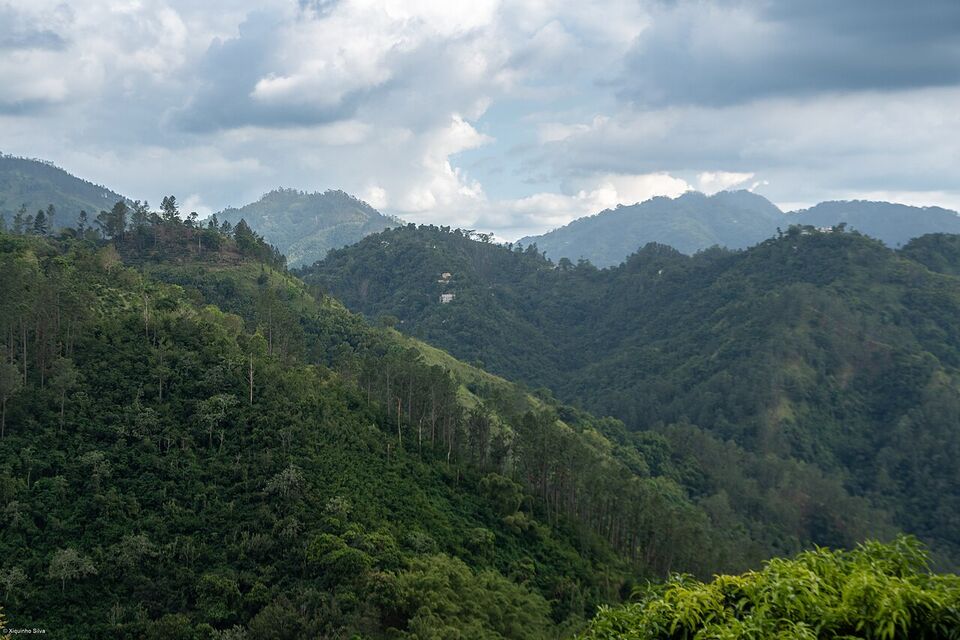
The Blue Mountains are the high ridge behind Kingston, rising to Blue Mountain Peak at 7,402 ft (2,256 m). They are Jamaica's best place for cool air, forest walks, birdsong and some of the most famous coffee in the world. They are also a good reason to spend a night or two outside the beach resorts. A morning coffee-farm tour is an easy half day from Kingston, and the pre-dawn hike to the peak is one of the island's best-known physical challenges.
The hills are not a casual drive-through, though. Roads are steep, narrow and often wet, services are limited and the weather changes quickly. Hurricane Melissa also damaged the park in October 2025, with landslides, harm to trails and roads, and damage to cabins at Holywell. The park's recreational facilities were closed after the storm and repairs were still being funded in October 2026, so treat the hiking and cabin sections below as the normal picture, not a current offer. Check with the park office (876-619-9807) before you plan anything.
Blue and John Crow Mountains National Park
The Blue and John Crow Mountains National Park covers about 26,000 hectares (more than 64,000 acres) of montane forest across Portland, St. Thomas, St. Andrew and St. Mary. In 2015 UNESCO inscribed it as a mixed World Heritage Site, recognized both for its nature and its culture. The forests hold many plants found nowhere else, and they sheltered the Taino and later the Maroons, who escaped slavery and built hidden settlements and trails here. That history is part of the listing.
The park is run by the Jamaica Conservation and Development Trust (JCDT), at 25 Eastwood Park Road, Kingston 10. Its phone number is 876-619-9807, and its WhatsApp line is 876-357-9565. Its website, blueandjohncrowmountains.org, lists the peak hike, Holywell nature walks, camping, bird watching, community tours, and two places to stay: the Holywell cabins and the Portland Gap cabins.
On the park's reservations page, the JCDT recommends booking at least a month ahead and says fees are subject to change without notice. That page was last updated in January 2018, so use its numbers as a guide only.
After Hurricane Melissa: check before you go
A Jamaican government release dated October 3, 2026 described the storm's damage to the park. The Permanent Secretary reported extensive land slippage and damage to light poles and cabins at Holywell, and the Minister said the storm affected habitats, roads, trails and infrastructure across the roughly 26,000-hectare property. The park's recreational facilities were closed after the storm, and the closure cost the park's managers income.
A contract signed on September 30, 2026 between the ministry, UNESCO and the JCDT provides emergency help, including US$61,000 from the UNESCO World Heritage Fund. It pays for limited repairs at Holywell and Portland Gap, work on affected trails, ecological assessments, rebuilding the plant nursery, debris clearance with local communities, and reforestation. The release gave no reopening dates.
So the summary is this: the park was closed after Melissa and still under repair in October 2026, and we cannot tell you the Peak hike or Holywell is open. Check with the park (876-619-9807) before you plan it, and ask three questions: Is the peak trail open? Are the Holywell and Portland Gap cabins taking guests? Is the road to the trailhead passable for my vehicle? For island-wide context see Jamaica after Hurricane Melissa.
Watch out
Do not rely on a tour company's website or an old blog post to tell you the peak trail is open. Call or message the JCDT, and get the answer in writing if you can. Landslides can close a section even after the main route reopens, and heavy rain can turn upper roads into streams.
Hiking Blue Mountain Peak
Blue Mountain Peak, at 7,402 ft (2,256 m), is the highest point in Jamaica. On a clear morning the summit gives wide views over the ridges and out to the coast, but cloud often covers the top by mid-morning. It is not a technical climb, but it is steep and long, it is done largely in the dark, and it is cold and wet for much of the year. Most people hike it for sunrise, so the usual plan is to start in the middle of the night.
The classic route
The classic route leaves around midnight to reach the summit before dawn. Hikers who overnight at the Portland Gap cabins can begin their final push at about 3:30 a.m. From Portland Gap the last stretch is about 5.6 km (3.5 miles) and takes about two to three hours. Distances and times for the full route differ between sources (the park's own page gives conflicting figures), so ask your guide for the plan for your chosen starting point.
The trail can be started from Mavis Bank or from Jacob's Ladder, depending on which route your guide uses. A longer walk from Mavis Bank is a full overnight effort; a shorter approach from the upper road is quicker but needs a vehicle that can reach the start.
Fees and guides
The park listed a trail fee of US$20 per visitor for the peak trail (residents pay J$300 for adults and J$100 for children under 12). The fee can be paid in the Jamaican dollar equivalent. Those figures come from the park's website, with pages last updated in 2018 and 2023, so confirm them. Transport, accommodation, meals and a trail guide are extra.
The reservations page listed guided hikes at J$15,000 from Mavis Bank (about US$94) and J$8,000 from Jacob's Ladder (about US$50) for one to ten people, on the 2018 price list. Treat these as old. We recommend using a guide: the trail is dark, junctions are easy to miss, and a guide knows the current condition of the route after Melissa.
What to bring
- A headlamp with spare batteries (not just a phone light).
- Warm layers: it is cold and damp near the summit before dawn, even when Kingston is hot.
- A waterproof jacket, and sturdy shoes with good grip.
- Water, snacks and a charged phone with offline maps.
- A small first-aid kit, and any medications.
- Cash in J$ for fees, small purchases and tips.
Insider tip
Sleeping at Portland Gap shortens the final climb to a pre-dawn walk and lets you start at about 3:30 a.m. instead of at midnight. The cabins are rustic, so bring a sleeping bag and warm clothes, and confirm that they are open and bookable.
Holywell
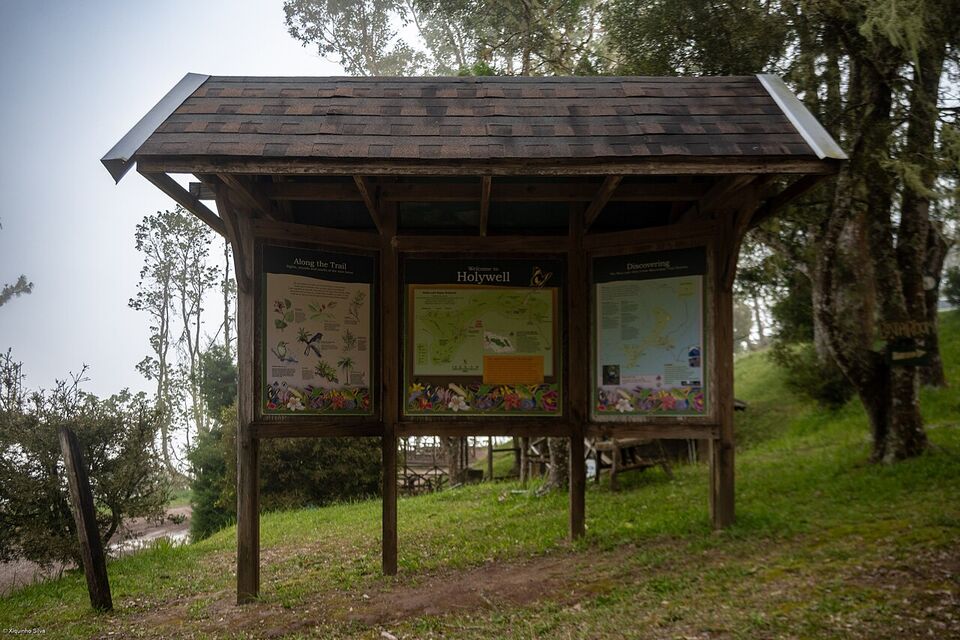
Holywell is the park's largest recreation area, at more than 900 m (3,000 ft), about an hour from New Kingston. It has forest trails, picnic areas and good birding, and it is the easiest way to get a taste of the cloud forest without a pre-dawn start. Nature walks are included in the admission price.
On the park's older fee page, admission for visitors was US$10 for adults and US$5 for children under 12 (residents J$400 and J$100). Camping was J$300 per person per night plus admission, tent rental ran from J$2,000 for a two-person tent, and the Holywell cabins were listed at US$90 to US$125 a night. Those rates date from 2018. Holywell's cabins and facilities were damaged by the storm and the park's recreational facilities were closed, so do not plan to sleep or walk there until the park confirms it has reopened.
Guided walks, coffee tours, bird watching and educational tours at Holywell are priced on request; contact the office. Mornings are best, before mist and rain build up in the afternoon. Bring a layer even in daytime.
Blue Mountain coffee
Jamaica Blue Mountain is a protected designation of origin, managed by the Coffee Industry Board of Jamaica. Only coffee grown in the designated area in the Blue Mountains of St. Andrew, St. Thomas, Portland and St. Mary, and certified by the Board, can carry the name. The high altitude, cool temperatures and rainfall give the beans slow growth and the mild, balanced flavor that supports the high prices. Many shops and websites sell "Blue Mountain style" or blends that include only a small share of real Blue Mountain beans, so read labels.
Farm and estate tours let you see the whole process: the cherries, the washing and drying, the roasting. Craighton Estate, in the hills above Kingston, was listed as open by the Jamaica Tourist Board in November 2026, but you should confirm that tours are running and what they cost. Other estates sell tours as well, often through hotels and Kingston operators. Prices are not posted on a single official list; ask for the cost, what it includes and the duration before you book.
Coffee makes a good gift. Check the roast date, buy from the farm shop or a roaster you trust, and carry coffee home in your carry-on. If you are in Kingston in March, the Jamaica Blue Mountain Coffee Festival was held on March 7, 2026, at Hope Gardens as part of the Jamaica Food and Drink Festival; its 2027 date is not yet announced. See our drinks guide for more on coffee and rum, and shopping and taking things home for customs rules.
Maroon history in the hills
The mountains are part of Jamaica's story of resistance. Maroon communities, made up of people who escaped slavery, used the steep forest as a refuge and a defense against colonial troops, and UNESCO describes the Nanny Town Heritage Route as part of what makes the site significant. Nanny of the Maroons is a national hero, and her name is attached to places across Portland. Maroon communities are still living communities today, with their own leaders and customs.
If you want to learn more, go through a guide or community tour that is arranged with the community, rather than turning up at a settlement. Ask before you take photographs, listen more than you talk, and do not treat the visit as a performance. Our etiquette guide covers the basics. Charles Town in Portland has a Maroon museum, and the Tourist Board listed the Charles Town Maroon Museum and Asafu Yard as open in November 2026.
Irish Town, Newcastle and the road up
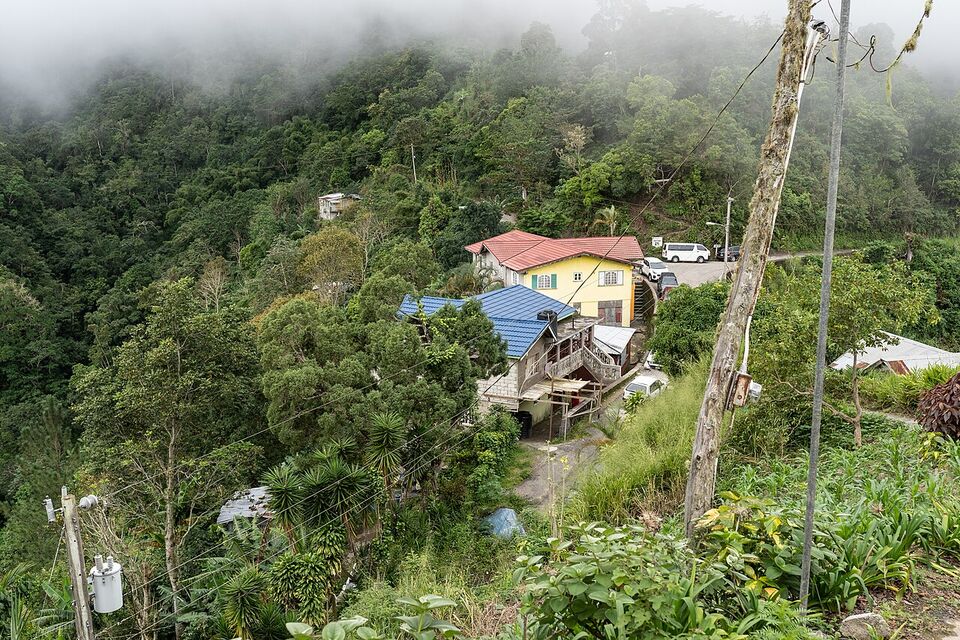
The road from Kingston climbs through Gordon Town and Irish Town to Newcastle, a hill station well above 3,000 ft. Along the way the air cools, the views open up and small restaurants, coffee shops and guesthouses appear. This is the easiest way to see the mountains in a day: a drive up, a coffee stop, a short walk and a drive back down.
Newcastle is also home to a military training camp, so you may see soldiers on the road. It is normal. Photograph the views, not the military installations, and follow any signs. Road conditions can change after heavy rain, and some stretches are single lane, so honk on blind bends and give way to uphill traffic where the road is narrow.
Getting there
There is no public transport that suits visitors. The simplest ways to reach the hills are with a licensed driver or a guided tour from Kingston, or by rental car. Holywell is about an hour from New Kingston, and the trailhead villages such as Mavis Bank are a little farther. A 4x4 helps on the upper roads, especially after rain, and is needed on rougher stretches.
From Port Antonio, the mountains are reached via the east side of the range, and the route can be long and slow. See our Port Antonio guide for that side of the island. From Montego Bay it is a long day (2.5 to 3 hours to Kingston, then an hour more into the hills), so we suggest sleeping in Kingston first. Our driving guide covers left-side driving, and our getting around guide covers drivers and coaches.
For the pre-dawn hike, arrange transport in advance: a driver who agrees to the hour, the vehicle and the price. Do not rely on finding a taxi at midnight. The road at night is dark and without street lighting in places, and we do not recommend driving it yourself unless you know it.
Weather in the hills
The mountains are much cooler than Kingston, where highs are around 90°F (32°C). Mornings are often clear, and cloud and mist build by midday. Rain falls throughout the year and is heaviest in the autumn: October is the wettest month in Kingston, and the hills see more. Dry months are generally December to March, although winter cold fronts bring cooler, windier and wetter spells.
Pack layers, a rain jacket and a warm top. Slippery trails, mud and fog are normal. Hurricane season runs June 1 to November 30, and landslides are a risk after any heavy rain. See our when to go guide and hurricane season guide for planning.
Where to stay
You have three kinds of choice. First, stay in Kingston and go up for the day, which is simple and keeps your options open if the weather turns. Second, stay at one of the park's own cabins, at Holywell or Portland Gap, once they reopen (see above for rates from the older page; the Holywell cabins were damaged and the facilities were closed as of October 2026). Third, stay in a lodge or guesthouse in the hills. Several small properties operate around Irish Town, Newcastle and the Mavis Bank area. We do not name them because their status after the storm changes, and many are small family-run places with limited booking options. Ask your hotel or the JCDT for current suggestions, and confirm the road access before you book.
Expect basic comforts: limited hot water, patchy mobile signal and electricity that may drop. Rates range from $ for park cabins and simple guesthouses to $$ for better-equipped lodges. Bring cash in J$, since many small places do not take cards. For island-wide advice see where to stay.
Safety and practical tips
- Go with a guide for the peak and for any long hike. Do not hike alone at night.
- Tell someone your plan and your expected return time.
- Mobile signal is patchy. Download maps and your booking details beforehand.
- Insurance. Rescue in remote areas is limited and private hospitals want payment up front, so buy travel insurance with medical evacuation. See our health guide.
- Mosquitoes. Use repellent: dengue and chikungunya occur in Jamaica, and the risk rises in the wet season.
- Fresh water. Avoid swimming or wading in streams after heavy rain; leptospirosis is a risk, and an outbreak was declared after Melissa in November 2025.
Different from home
There is no ranger station every few miles and no marked, graded trail system like a US national park. Trails are rough, junctions may be unsigned, and guides are the norm rather than the exception. Plan for self-sufficiency, and budget for guide and transport costs.
A sample plan
- Half day
Coffee and views
Leave New Kingston by 8 a.m. with a driver. Take a coffee tour (confirm the estate is open), walk a short trail, have lunch in the hills and return before the afternoon rain.
- Full day
Holywell
Drive to Holywell for a morning nature walk, a picnic and birding. Return by mid-afternoon. Holywell was closed after Melissa and still under repair in October 2026, so keep this day for when the park confirms it has reopened.
- Overnight
Sunrise on the peak
Only with a guide, and only once the park confirms the trail has reopened (it was closed after Melissa). Rest in the afternoon, start around midnight (or from Portland Gap at about 3:30 a.m.), summit at sunrise, descend by late morning and sleep.
Pair the hills with a stay in Kingston and a day of city sights, or see our outdoors guide for other hikes and waterfalls. Prices and status in this guide are as of November 2026, and most should be confirmed with the park before you go.
Add it to a route in the trip builder, or ask us to plan the hotels, trains and guides for you.