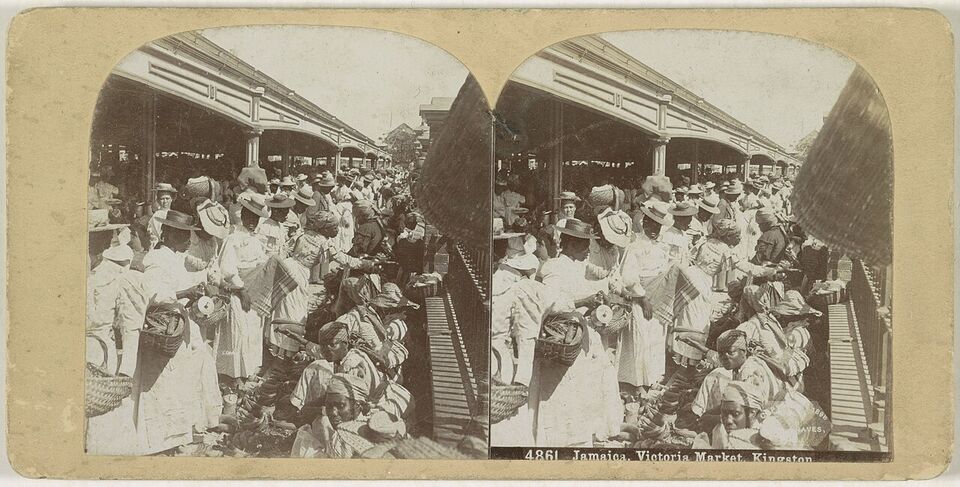
Overview: listen first
You do not need Patois to travel in Jamaica. English is the official language, and staff in hotels, shops, airports and tour companies use it every day. But on a bus, in a market or at a cookshop you will hear Jamaican Patois (also called Patwa), and understanding a few phrases makes the island feel warmer and clearer. The best approach is to listen, greet people in English, learn the phrases in this guide and try a few of them in friendly moments.
This page explains what Patois is, how to follow it, about 60 phrases you will hear, how to pronounce them and the things visitors should leave alone. It is a short guide, not a language course. For wider manners, see Jamaican Etiquette, and for food words, see Jamaican Food.
What Patois is, and where it came from
Jamaican Patois (Patwa) is a creole language. It formed in Jamaica from the contact of English-speaking colonizers and enslaved people who came from West and Central Africa and spoke many different languages. The vocabulary is mostly English in origin, but the grammar, rhythm and many words come from African languages, and others come from Spanish, Portuguese, Hindi, Chinese and Indigenous Taino roots. Over centuries of use it became a distinct language with its own rules.
That is why it is wrong to call it “broken English.” Patois has its own grammar: for example, it marks tense with small words in front of a verb rather than by changing the verb, and it uses “mi” for I, me and my. Linguists have studied it for decades. A spelling system called the Cassidy/JLU orthography was first proposed by the linguist Frederic Cassidy in 1961 and later adapted by the Jamaican Language Unit at the University of the West Indies, Mona. Many Jamaicans write the language informally in their own spelling on social media, so you will see several versions of the same word.
Patois is also the language of reggae and dancehall, and a large part of Jamaican humor, proverbs and storytelling. Many Jamaicans speak both English and Patois, and move between them depending on who they are talking to. A person who is talking to you in English may switch to Patois with friends in the next breath. That is normal, not rude.
Different from home
In the US, switching languages in front of a visitor can feel like leaving someone out. In Jamaica it is a natural part of daily speech. If you do not understand, smile and ask “Sorry, can you say that again?” Most people will happily repeat it in English.
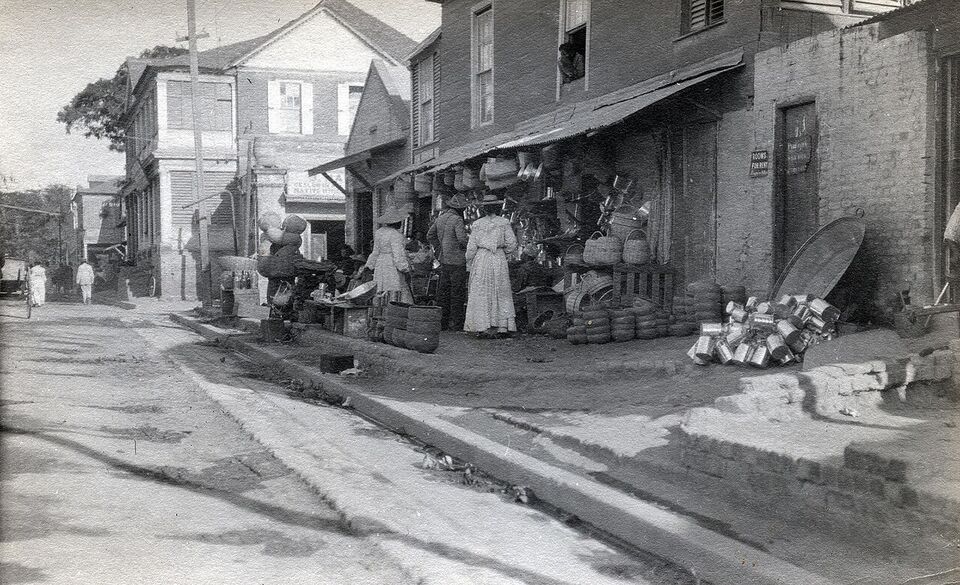
How to listen and keep up
Patois can sound fast at first, because words run together and many sounds are shortened. A few tricks help:
- Listen for the English underneath. Many words are English with a different sound. “Mi nuh know” is “I don’t know,” and “di food ready” is “the food is ready.”
- Notice small words. “A” or “a” before a verb often marks an ongoing action: “mi a go” means “I am going.” “Did” before a verb can mark the past. “Nuh” means no, not or don’t.
- Follow the tone. A rising tone is often a question, even without the word order changing. A loud, animated exchange is often friendly.
- Ask to slow down. “Talk likkle slow, please” works and usually draws a smile.
- Use context. At a food stall, the words are almost always about the food, the price or the pepper.
Radio, music and Jamaican TV are good ways to tune your ear before a trip. If you plan to travel to Kingston, rural parishes or the south coast, you may hear a broader, more traditional Patois in countryside speech and a more English-like version in towns and tourist areas.
Greetings and goodbyes
Greetings come first in every interaction. Use English greetings (“good morning”) with anyone you do not know, then try one of the friendlier phrases below once the conversation is relaxed.
| Patois | Meaning | When to use |
|---|---|---|
| Mawnin / Good mawnin | Good morning | Until noon, to everyone; say it before you ask anything |
| Good evenin | Good evening | From late afternoon on; fine for shop staff and drivers |
| Wah gwaan? | What’s going on? Hello | Informal hello with people your age or friends; you will hear it a lot |
| How yuh do? | How are you? | Polite greeting; reply with “mi good” or “mi aright” |
| Mi deh yah | I’m here, I’m doing fine | A common answer to “wah gwaan?” |
| Mi good / Mi aright | I’m good / I’m alright | Reply to “how yuh do?” |
| Wah happen? | What’s happening? Sometimes: what’s wrong? | Hear it more than say it; tone decides whether it is friendly or concerned |
| Respect | Hello, thanks, I acknowledge you | A nod and a quiet “respect” is a friendly greeting or goodbye |
| Everyting criss | Everything is fine | Reply when someone asks how things are going |
| Walk good | Go well, goodbye | A warm goodbye to someone leaving, such as a driver or host |
| Likkle more | See you later | Friendly goodbye with people you have been chatting with |
| Blessed | Thank you; I’m doing well | Often said in reply to “how yuh do?”; it carries a spiritual feel, so use it sincerely |
| Easy | Take it easy, goodbye | An informal, relaxed way to part |
Polite expressions
Politeness opens doors. Many of the most useful phrases are English words in Jamaican spelling and sound.
| Patois | Meaning | When to use |
|---|---|---|
| Tank yuh / Tanks | Thank you | Anytime; Jamaican “tank” is friendly and quick |
| Nuff tanks | Many thanks | When someone has gone out of their way |
| Yuh welcome | You’re welcome | In reply to thanks; you will hear it often |
| Excuse mi | Excuse me | Squeezing past in a shop or minibus; getting someone’s attention |
| Mi sorry | I’m sorry | Apologizing for a bump, a mistake or a late arrival |
| Please | Please | Same as English; add it to requests |
| Mi nuh understand | I don’t understand | When you lose the thread; follow with “talk likkle slow, please” |
| Talk likkle slow | Speak a little slower | When a conversation is too fast |
| Seen | I see, understood, agreed | A short reply showing you follow; you will hear it often |
| Nuh worry yuhself | Don’t worry about it | Reassuring someone; you will hear it too |
| Mi name ___ | My name is ___ | Introductions; ask “wah yuh name?” in return |
| Weh yuh from? | Where are you from? | Hear it often; answer “mi from…” with your state or city |
Getting around and shopping
Taxi and bus drivers, shop staff and hotel desk clerks usually speak English with visitors. These Patois phrases are useful to understand and sometimes to use.
| Patois | Meaning | When to use |
|---|---|---|
| Weh yuh a go? | Where are you going? | What a driver or route-taxi conductor asks |
| Mi a go a ___ | I’m going to ___ | Answer with the name of the town or hotel |
| Weh ___ deh? | Where is ___? | Asking directions: “weh di bus stop deh?” |
| Yah / Deh | Here / there | Pointing out a spot; “stop yah, please” means stop here |
| Wi deh yah | We’re here | Hearing a driver say you have arrived |
| A how much? | How much is it? | Asking a price at a stall or shop |
| Dat too dear | That’s too expensive | Gentle price response; say it with a smile before you counter |
| Mi soon come | I’ll be back soon | Said by someone stepping away; the time can vary |
| Mi jus a look | I’m just looking | Politely declining a seller’s offer |
| Nuh, tank yuh | No, thank you | The polite, firm refusal from the etiquette guide |
| Mi cyaan | I can’t | Hearing it as a refusal or “I’m unable to” |
| Big up | Praise, give credit to | Said when thanking or praising someone, such as a guide |
Food and drink
| Patois | Meaning | When to use |
|---|---|---|
| Mi waan ___ | I want ___ | Ordering: “mi waan di jerk chicken”; add “please” |
| Nyam | To eat; also food | You will hear “mi a go nyam” (I’m going to eat) |
| Mi hungry | I’m hungry | Friendly small talk, or when asking what is ready |
| A likkle pepper | A little pepper | When you want some heat but not too much |
| No pepper | No pepper | When you want none; scotch bonnet is very hot |
| Di food sweet | The food is delicious | A compliment to the cook; “sweet” here means tasty |
| Mi full | I’m full | Turning down more food politely |
| Wata | Water | Asking for water or bottled water |
| Pass di ___ | Pass the ___ | At the table: “pass di pepper sauce” |
Words you will hear everywhere
| Patois | Meaning | When to use |
|---|---|---|
| Mi / yuh / im / wi / unu / dem | I, you, he or she, we, you (all), they | The basic pronouns; “unu” is the plural you |
| Nuh | No, not, don’t | “Nuh worry” (don’t worry), “mi nuh know” (I don’t know) |
| Cyaan | Can’t | “Mi cyaan eat any more” |
| Likkle | Little | “A likkle bit,” “likkle more” |
| Nuff | A lot, many, much | “Nuff respect,” “nuff people” |
| Yaad | Home, yard | “A yaad” means at home; a Jamaican abroad may say “back a yaad” |
| Pickney | Child, children | You will hear it in families and songs |
| Bredda / Sistah | Brother / sister | Friendly address among friends; let local speakers use it first |
| Wah mek? | Why? | A common question word |
| A true? | Is that true? Really? | Reacting to a story |
| Lawd | Lord, an exclamation of surprise | Hear it often; some people find casual use disrespectful |
| Duppy | Ghost, spirit | Jamaican folklore and ghost stories |
Pronunciation tips
Spelling for Patois varies by writer, so treat the forms on this page as common versions. The sounds matter more than the spelling. These patterns will take you far:
- “th” becomes “d” or “t.” “The” becomes “di,” “that” becomes “dat,” “thank” becomes “tank” and “think” becomes “tink.”
- The “a” sounds like “ah.” “Wah gwaan” is roughly “wah GWAHN.”
- “Mi” sounds like “mee.” “Yuh” is “yuh,” not “you.”
- Final consonants are often dropped. “Hand” becomes “han” and “next” becomes “nex.”
- “Likkle” rhymes with “pickle.”
- Rhythm is syllable-timed. Each syllable gets a similar beat, which is part of why it sounds musical.
Do not worry about getting it perfect. A gentle, clear attempt at one short phrase, with a smile, is welcome. Do not try to speak quickly, and do not try to imitate a deep accent.
What visitors should not try to say
There are a few things worth leaving to Jamaicans:
- Do not imitate the accent. A fake Jamaican accent in English sentences sounds like mockery, even when it is meant as friendly. If you like the music, quote the song, not the voice.
- Do not say “mon” or “ya mon.” It is a stereotype that Jamaicans rarely use among themselves and visitors often overuse.
- Do not use the island as a slogan. Phrases like “no problem” or “irie vibes” are tourist branding, not a way to start a conversation.
- Do not repeat swear words. The strongest curse words in Patois are serious insults, and many involve religious or bodily terms. If you hear them in music or on the street, do not copy them, even as a joke.
- Do not use Rastafari phrases as slang. Terms such as “I and I” and “Jah” carry religious meaning. See our etiquette guide for how to speak about the faith.
- Do not use “bredda” and “sistah” with strangers unless they use it first. It signals familiarity.
Respect and a small practice plan
Treat Patois as what it is: the everyday language of most Jamaicans, with deep roots in the island’s history. Do not ask people to translate it as if it were a performance. If someone enjoys teaching you a phrase, thank them and learn it properly. A short practice plan before you go:
- Learn the greeting routine: “good morning,” then “how yuh do?” and “mi good.”
- Learn three polite phrases: “tank yuh,” “excuse mi” and “nuh, tank yuh.”
- Learn three listening phrases: “mi nuh understand,” “talk likkle slow” and “a how much?”
- Learn “walk good” for goodbyes.
Insider tip
When you hear a phrase you do not know, ask what it means. Most people enjoy explaining a word, especially one linked to food, music or family. Reggae and dancehall lyrics are full of Patois, so a listen to our music guide picks can double as a language lesson.
For where to put these phrases to use, browse Montego Bay, Kingston and Negril, and for tips on getting around, read Getting Around Jamaica.
Add it to a route in the trip builder, or ask us to plan the hotels, trains and guides for you.