The honest short answer
Yes, for most visitors, with some conditions. Millions of people visit Jamaica each year and most have no problems. But Jamaica also has a serious violent crime problem, and the US State Department asks Americans to exercise increased caution. The risk is concentrated in particular neighborhoods and situations, and a visitor who stays in resort areas, uses licensed transport and avoids walking alone at night is far less exposed than the headline numbers suggest.
If you want the long version with the full list of precautions, read our complete Safety in Jamaica guide. This page gives you the quick answer.
What the advisory says
The State Department rates Jamaica at Level 2, "Exercise Increased Caution," because of crime, health and natural disaster risks. It was reissued on January 17, 2026. After Hurricane Melissa in late 2025 the rating had been raised to Level 3, "Reconsider Travel," so the January update moved it back down. Advisories change, so read the live page at travel.state.gov before you book and again before you fly.
The advisory names some neighborhoods and areas where US government staff may not go, including parts of Kingston and Spanish Town and the inland side of Montego Bay. It also says the US Embassy regularly receives reports of sexual assault, including from American tourists at resorts. Read the current area list before you go; we do not copy it here because it changes.
The numbers
Jamaica recorded 673 murders in 2025, the lowest annual total in about 30 years, and early 2026 reports showed a further fall. That is still a high rate for a country of under 3 million people, which is why the advisory is cautious. The important detail is the pattern: most violent crime is concentrated in specific urban neighborhoods and is tied to local disputes and gangs, and tourist areas are generally lower risk. We could not confirm full-year 2026 totals as of November 2026.
For visitors, the more likely problems are theft from rooms, beaches and cars, robbery after dark, scams and traffic accidents. Those are reduced by the simple habits below.
Where most visitors go, and the risk there
| Area | What it is | Risk in practice |
|---|---|---|
| Resorts (Montego Bay, Negril, Ocho Rios, Rose Hall, Runaway Bay) | Gated all-inclusives and hotels | Lowest risk. Watch for petty theft and, rarely, serious incidents; take the drink and room precautions |
| Tourist strips and beaches | The Hip Strip in Montego Bay, Seven Mile Beach in Negril | Hustlers, petty theft, and unsafe areas after dark; go by day or take a licensed taxi at night |
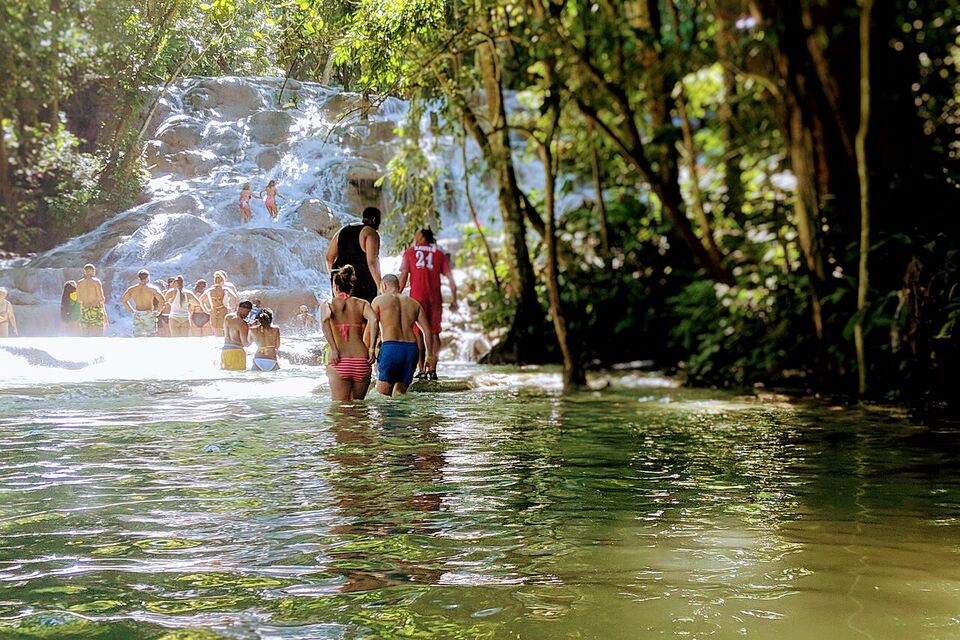
| Attractions and tours | Waterfalls, rafting, great houses | Usually fine with a licensed operator; slippery rocks and river currents are the main hazards |
| Kingston | The capital, with the Bob Marley Museum and New Kingston hotels | Higher crime city; stay in New Kingston, use taxis or a driver, and avoid the restricted areas |
| Rural roads and remote beaches | Between towns, the south coast, Portland | Road conditions and isolation are the main risks; avoid driving at night and going alone |
For area-specific advice, see Montego Bay, Negril and Kingston. For how resorts work, see All-Inclusive Resorts in Jamaica.
What to avoid
- The restricted neighborhoods. Check the current list on travel.state.gov and compare it with your route and your lodging.
- Walking around at night outside resort areas. Take a licensed taxi, even for short distances.
- Unlicensed taxis. Look for red PPV plates, a marked taxi and a driver with a Transport Authority ID, or use the authorized JUTA and JCAL desks at Sangster airport.
- Driving at night between towns. Roads are narrow and winding with potholes. See Driving in Jamaica.
- Remote beaches and waterfalls alone. Go with a group, a guide or a licensed operator.
- Anything involving firearms or ammunition. Even one bullet in luggage is a firearms offense that can carry a mandatory life sentence with at least 15 years before parole. An American tourist was arrested at Sangster airport in July 2026 over ammunition in luggage. Empty every bag before you pack.
Watch out
Do not carry cannabis home. Possessing 2 ounces or less in Jamaica brings a J$500 (about US$3) ticket, not an arrest, but it is illegal under US federal law and US Customs will treat it as a drug offense. Smoking in public is banned.
Practical rules that work
- Use licensed transport: red PPV plates, resort cars, JUTA or JCAL taxis from the airport. Agree the fare before you get in.
- Keep valuables out of sight, use the room safe and lock doors, including balcony doors.
- Watch your drink and do not accept drinks from strangers.
- Decline persistent hustlers politely and firmly. Do not accept anything you did not ask for.
- Book tours through your hotel or a licensed operator, and agree prices in advance.
- Do not swim after heavy rain in rivers or pools, and be careful at beaches without lifeguards.
- Enroll in STEP at step.state.gov and buy travel insurance with medical evacuation.
- Save 119 (police) and 110 (fire and ambulance), the hotel's front desk number and the US Embassy number (+1 876-702-6000).
Read more on tours in Tours and Excursions and on health and insurance in Health and Medical Care.
Solo women and LGBTQ+ travelers
Women traveling alone
Many women travel in Jamaica alone or in groups without trouble. You may get more attention than at home in tourist areas, including calls and invitations on the street. Ignore it or answer briefly and keep moving. Stay in a place with secure access, arrange transport in advance for arrivals after dark, and share your plans with someone at home. Do not leave your drink unattended and do not invite people you have just met to your room.
LGBTQ+ travelers
Jamaican law criminalizes sex between men. It is rarely enforced against visitors, but attitudes in much of the country are conservative, and public affection between same-sex couples can draw hostility. Many resorts welcome all couples, and policies vary, so check with the property before you book. Discretion in public, in taxis and in smaller towns is the practical advice.
Insider tip
If you are unsure about a place or an offer, ask your hotel's front desk or concierge. They know which routes, taxi drivers and tours are reliable, and a call from them often works better than a negotiation on the street.
Leaving the resort
Many first-time visitors wonder whether they should stay inside the gates. We do not think you need to, and a trip that never leaves the resort misses most of what the island offers. The safer way to do it is to leave with a plan. Book an excursion through the hotel's tour desk or a licensed operator, go in the daytime, travel in a licensed vehicle and be back before dark. Carry only what you need: a card or some cash, a phone and a copy of your passport.
Markets, craft stalls and small restaurants are part of the experience, and they are generally fine by day. Pay in the currency you agreed (US$ or J$), keep small notes handy so that you do not pull out a full wallet, and keep a bag zipped in front of you in crowded spots. Our Money in Jamaica page explains when to pay in J$ and when US$ is accepted.
If something goes wrong
If you are robbed, hurt or threatened, get to a safe place and call 119 for the police or 110 for an ambulance. Tell your hotel, which can bring security and a doctor. If you lose your passport or need consular help, call the US Embassy in Kingston at +1 876-702-6000, which is answered after hours, or the consular agency in Montego Bay at +1 876-953-0620 during office hours. The agency is closed on Jamaican and US holidays.
Keep your insurance company's emergency line in your phone too. Private hospitals in Jamaica usually want payment up front, and an air ambulance to the US can cost tens of thousands of dollars, often US$30,000 or more. Insurance that includes medical evacuation turns a crisis into an inconvenience.
Different from home
Police and ambulance response can be slower than you are used to, especially outside Kingston and the main resort areas. Do not count on an ambulance arriving quickly in a rural spot. Plan around that by traveling with a charged phone, knowing your location and choosing activities with trained staff.
After Hurricane Melissa
Hurricane Melissa hit western Jamaica as a Category 5 storm on October 28, 2025. A year later, most resort areas are operating, the three international airports have full operations, and tourism reopened on December 15, 2025. About 80 percent of hotel rooms were operating in early November 2026, and the Tourist Board expects about 90 percent for the winter season. Recovery continues in the southwest, and some roads in the west are still being repaired. See Jamaica After Hurricane Melissa for what is open, and Hurricane Season in Jamaica if you travel between June and November.
Bottom line
Jamaica is not a place to switch off your judgment, and it is not a place to avoid. Most visitors who use a resort or a reputable hotel, travel by licensed transport, go out by day and follow the rules above have a safe trip. If you have a specific concern, such as traveling with children, driving yourself or visiting Kingston, read the relevant guide, and check the State Department advisory the week you leave. For other common questions, see the Jamaica FAQ for Americans.
Add it to a route in the trip builder, or ask us to plan the hotels, trains and guides for you.