Overview
Kingston is Jamaica's capital, its largest city and the birthplace of ska, rocksteady, reggae and dancehall. It is not a beach resort. It is a busy, loud, sometimes difficult city with excellent food, a serious art and music scene, and an easier-to-reach mountain range behind it. If you want to understand Jamaica beyond the resort strips, a night or two here is the best way to do it.
It also takes more planning than a resort stay. Kingston has areas that are pleasant and areas that the US government tells its own staff to avoid. Taxis are regulated but not always easy to flag. Sights are spread out across the city rather than clustered. The good news is that the parts most visitors want, around New Kingston, Hope Road and the waterfront, are manageable with a driver or licensed taxis.
Kingston came through Hurricane Melissa in October 2025 with far less damage than western Jamaica. As of November 2026, the Tourist Board's hotel reopenings list showed all 15 Kingston hotels it tracks as open, and its attractions list showed the Bob Marley Museum, Devon House, Trench Town Culture Yard and Hope Zoo as open. Both lists change, so check them before you book: hotel reopenings and attractions. For the island-wide picture, see our guide to Jamaica after Hurricane Melissa.
How the city is laid out
Kingston sits on a flat plain between the harbor to the south and the foothills of the Blue Mountains to the north. Distances look short on a map but traffic is heavy at rush hours (roughly 7 to 9 a.m. and 4 to 7 p.m.), so a 4-mile (6 km) trip can take 40 minutes. Plan one or two areas per day rather than crossing the city repeatedly.
New Kingston
The modern center, with most visitor hotels, banks, restaurants and Emancipation Park. This is the usual base because taxis are easy to arrange and the area is busy and lit in the evening.
Half-Way Tree
The main crossroads, with the clock tower, malls and the hub for JUTC buses and route taxis. It is crowded and loud by day. Go for a purpose (shopping, a bus) rather than to wander, and be careful with phones and bags.
Hope Road and Liguanea
A leafy corridor running north-east from New Kingston. The Bob Marley Museum is at 56 Hope Road, and the US Embassy is at 142 Old Hope Road. Hope Gardens and the zoo lie farther out.
Downtown and the waterfront
The old city center, with the National Gallery, the harbor front and Parade. It has the city's oldest buildings and also some of its highest crime areas. Go by day with a guide or driver.
Palisadoes and Port Royal
A long sandy strip leads to Port Royal, the old pirate port, and the boats to Lime Cay. Norman Manley Airport is on the same road.
Getting there
By air
Norman Manley International Airport (KIN) is the second gateway after Montego Bay. As of November 2026, the airport listings we checked showed American Airlines from Miami, Delta from Atlanta, and JetBlue from Fort Lauderdale and New York JFK (some routes are seasonal, so confirm on the airline's site). Full operations were restored here soon after Melissa, since the airport had little damage. See our flights guide for routes and booking.
The airport is on the Palisadoes strip, about 12 miles (19 km) from New Kingston by road. Allow 30 to 45 minutes in normal traffic. Use the licensed airport taxi desk and confirm the fare before you get in (we could not find a published fare sheet). Do not accept rides from people who approach you in the arrivals hall.
From Montego Bay and the north coast
By car, Kingston is about 2.5 to 3 hours from Montego Bay airport via the toll highways, and about 1.5 hours from Ocho Rios on the toll highway. The North-South Highway from Ocho Rios has proposed tolls of about J$2,000-2,600 (about US$13-16) one way; they were announced but we could not confirm them in force, so check before you travel. Highway 2000 toll plazas near Kingston charge from J$290 to J$850 (about US$2 to US$5) for a car, depending on the section.
The Knutsford Express coach network links Montego Bay (including a desk at Sangster airport), Ocho Rios, Port Antonio, Negril and Kingston. Popular routes take about 2 to 4 hours. Luggage is one piece up to 50 lb plus one carry-on, tickets are non-refundable and a date change costs J$300 (about US$2). We could not confirm current fares, so check the website. The JUTC also runs a Rural Express (route 620Ex) between Half-Way Tree and Montego Bay; its fare was J$2,000 (about US$13) at launch, so confirm today's.
Different from home
Jamaica drives on the left, and Kingston traffic is dense, fast and full of route taxis that stop without warning. Most first-time visitors are better off with a driver or the coach than with a rental car. Our driving guide covers the rules if you do rent.
Getting around Kingston
Use licensed transport. Licensed taxis carry red PPV plates (some use white P plates), are marked TAXI and should have a Transport Authority ID on display. Hotels can call a driver and quote a fare. Agree the price before you set off, since many cars have no meter. A day with a driver is the simplest way to cover several sights.
JUTC buses (yellow) and route taxis (shared cars on fixed routes, paid in cash in J$) are cheap and used by Kingstonians every day, but they are crowded and the routes are hard to follow without local knowledge. Route taxi fares rose in two 8% steps in June and July 2026 and no fare table was published, so ask other passengers before you pay. We suggest visitors skip both after dark.
Uber and inDrive operate in Kingston, but as of October 2026 the Transport Authority had not licensed them and taxi unions oppose them. If you use an app, confirm the driver and car match before you get in. A licensed taxi or hotel driver is the safer bet. More in our getting around guide.
Where to stay
New Kingston is the practical choice: it has the main group of hotels (from business towers to small guesthouses), plenty of restaurants within a short drive, and a regular flow of taxis. The Tourist Board's hotel list showed all 15 Kingston properties as open in November 2026. We do not name individual hotels here because the list changes; use the Tourist Board's hotel page, then compare current rates on the hotel's own site.
Prices follow business travel rather than holiday seasons: weekdays can cost more than weekends. As a guide, a double room is $ (under US$120) in smaller guesthouses, $$ (US$120-300) in the main New Kingston hotels, and $$$ (over US$300) only at the top end. Hotels and licensed tourism businesses pay a reduced 10% GCT until March 31, 2027, rising to 15% from April 1, 2027. A small per-room nightly tax of US$1-4 (by hotel size) has applied as of 2026; check your booking.
Short-term rentals exist across New Kingston and the hills. They become liable for GCT from April 1, 2027. If you book one, check the neighborhood on a map and ask the host about transport and after-dark safety. Our where to stay guide explains the types of lodging island-wide.
Things to do
The detailed list, with prices and hours, is on our things to do in Kingston page. Here is the short version.
Devon House
Devon House, built in the 1880s for Jamaica's first Black millionaire, George Stiebel, is a restored mansion with gardens, craft shops and restaurants on Hope Road. The Tourist Board listed it as open in November 2026. House tours are sold separately from the grounds, and times and prices change, so check before you go. The Devon House I-Scream shop is a popular stop; its menu and hours are worth confirming before you plan around it.
Emancipation Park
Emancipation Park is a landscaped public park in New Kingston, good for a walk or a break from the traffic. It hosts concerts, including the Bob Marley Tribute Concert in February 2026 during Reggae Month. It is the one place in New Kingston we suggest for a stroll in daylight.
Hope Gardens and Hope Zoo
Hope Gardens (the Royal Botanic Gardens) is a large park at the foot of the hills, and it hosted the Blue Mountain Coffee Festival in March 2026. Hope Zoo is next door and was listed open in November 2026. Both suit families who want a few hours outdoors. Confirm hours and entry fees locally.
The National Gallery of Jamaica
The National Gallery sits on the downtown waterfront and holds the main public collection of Jamaican art, from the colonial period to contemporary work. We could not reach its website for current hours or admission, so call or check its website before you go, and combine it with a driver rather than walking the streets around it.
Downtown and the waterfront
Downtown has the Parade, the old Georgian buildings and markets, but much of it is hard going for visitors. Go by day, with a local guide or driver, keep your phone and camera in a bag, and stay out of the neighborhoods your guide advises against. Do not walk around alone.
Port Royal and Lime Cay
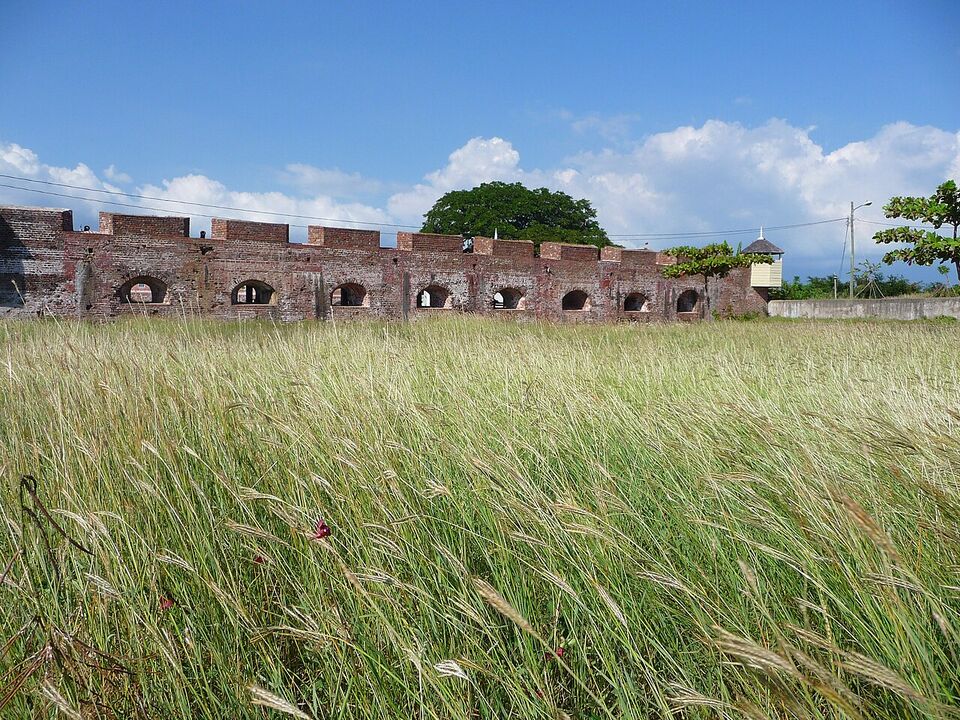
Port Royal is at the end of the Palisadoes strip, about 40 to 60 minutes by road from New Kingston, depending on traffic. In the 1600s it was a wealthy and notorious port; most of it sank in the earthquake of 1692. In July 2025 UNESCO inscribed The Archaeological Ensemble of 17th Century Port Royal on the World Heritage List, covering the town on land and underwater.
Fort Charles, which survived the earthquake, is the main sight on land, and Port Royal is also known for fried fish and seafood. Port Royal is also Kingston's cruise port and it reopened after Melissa. We could not confirm current opening hours or entry fees for the fort, so check with the Jamaica National Heritage Trust (jnht.com) or ask your driver to call ahead.
From Port Royal, small boats run to the cays offshore, the best known being Lime Cay, a small sandy island with shallow water and a few beach vendors. Boat operators set their own prices, so agree the round-trip fare and the pick-up time before you board, and ask about life jackets. Go midweek if you can, as weekends are busy with Kingston families. Take sun protection and water, as shade is limited.
Watch out
Agree your return boat time and the price before you leave Port Royal for Lime Cay. Do not leave bags unattended on the sand, and do not swim alone. Check that your boat operator is licensed and has life jackets.
Hellshire Beach
Hellshire Beach, on the coast west of Kingston near Portmore, is where many Kingston residents go on weekends for fried fish, bammy (a flat cassava bread) and a drink at beachside stalls. It is a local scene rather than a resort beach, with music, crowds and little shade on a Sunday. We could not confirm current post-hurricane facilities or fees, so ask your hotel or driver before you go.
Go with a driver you trust, go early, agree a price with the stall before you order whole fish, and do not take valuables. The roads out there are busy and confusing, so a local driver who knows the route is worth having. See our beaches guide for swimming safety tips.
Food and drink
Kingston is the best place in Jamaica to eat widely. Jerk, curry goat, oxtail, escovitch fish and Ital food (plant-based Rastafari cooking, usually without salt-heavy seasonings) are all available from cookshops to upscale restaurants. New Kingston and Hope Road have the most variety, and there is a strong coffee and brunch scene around the Hope Road corridor.
Local cookshops and patty shops price in J$ and often prefer cash; a patty and a drink is a few hundred J$ (a few US dollars). Card payment is common in malls and larger restaurants, so keep small J$ notes for everything else. Our Jamaican food guide goes dish by dish.
Save money
Kingston is not priced for tourists the way resort areas are. Eating where office workers have lunch (soup, stew peas, curry goat with rice and peas) is cheaper than hotel restaurants, and you pay in J$. Use bank ATMs inside banks and malls, and keep small J$ notes. Our money guide has the details.
The Devon House I-Scream parlor is a popular dessert stop in the city (hours and flavors should be confirmed). Drinks-wise, Red Stripe is everywhere, Blue Mountain coffee is on most menus, and the drinks guide covers rum and the rest.
Nightlife and live music
Kingston's nightlife is lively and late. New Kingston has bars and lounges, and music venues, dance parties and weekly events change frequently. We suggest checking local listings and your hotel's advice on the day, because venues open and close and a good party can be in a weak area. Go with a group, arrange your own taxi back, and keep valuables to a minimum.
Street dances (passa passa) and sound system events are part of the culture but are not casual tourist activities; see our Reggae and Bob Marley page for how to approach them safely. In February, Reggae Month fills the city with concerts, talks and exhibitions.
Safety in Kingston
Jamaica ended 2025 with 673 murders, the lowest total in about 30 years, but crime is concentrated in specific urban neighborhoods, many of them in and around Kingston. The US State Department advisory was Level 2, "Exercise Increased Caution" (crime, health, natural disaster), after being reissued on January 17, 2026; it had been Level 3 after Melissa. The advisory names areas of Kingston and Spanish Town that US government staff may not enter. We do not list those neighborhoods because the list changes: read the current version on travel.state.gov before you go and share it with your driver or hotel.
- Stay in New Kingston or another area your hotel recommends, and ask the hotel which neighborhoods to avoid.
- Use licensed taxis or a driver, and agree the fare first.
- Visit downtown only by day, with a guide or driver.
- Avoid walking after dark, including in New Kingston.
- Keep phones, cameras and jewelry out of sight, and carry only the cash you need.
- Avoid driving between cities at night, as the State Department advises its own staff.
- Do not use public buses after dark.
Emergency numbers are 119 for the police and 110 for the fire service and ambulance. The US Embassy is at 142 Old Hope Road, Kingston 6, +1 876-702-6000 (also after hours). For the wider picture read Safety in Jamaica and Is Jamaica safe?, and check with our health guide about insurance, since private hospitals usually want payment up front.
How many days, and how to fit it into a beach trip
Kingston works best as a two-night stop. Most visitors are on a beach trip and add Kingston as a side trip rather than the base. Two broad plans:
- Day 1
Music and Devon House
Book a morning tour at the Bob Marley Museum (tours Monday to Saturday, 10 a.m. to 4 p.m.; book ahead). Lunch on Hope Road, an afternoon at Devon House, then dinner in New Kingston.
- Day 2
Port Royal and Lime Cay
Drive the Palisadoes strip, tour Fort Charles, and take a boat to Lime Cay if the weather is calm. Return for an evening out with a pre-arranged taxi.
- Optional day
The Blue Mountains
Take a coffee tour or a walk up in the hills, a day trip or a night away. See our Blue Mountains guide.
If you are splitting a trip between Montego Bay, Ocho Rios, Port Antonio and Kingston, our destinations page has drive times and the trip builder will lay out a plan. Kingston is warm all year: the driest months are January and February, October is the wettest. Rain is usually short and heavy, and the hurricane season runs June 1 to November 30. Details are in our when to go guide.
What to bring and what to check
- Passport and the online C5 immigration and customs form at enterjamaica.gov.jm (free; see entry requirements).
- Small J$ notes for cookshops, taxis and tips.
- Insect repellent: dengue and chikungunya are spread by mosquitoes.
- A light layer for evenings, and a rain jacket if you head to the hills.
- Confirmation numbers for museum tours, which sell out on busy days.
- The current State Department advisory, saved on your phone.
Prices and hours in this guide are as of November 2026, and several could not be confirmed with the operators. Check before you go.
Add it to a route in the trip builder, or ask us to plan the hotels, trains and guides for you.