The short answer
An American citizen needs a valid passport, a free online immigration and customs form, and a plan to leave. That is it for a vacation of up to 90 days. There is no visa, no paid travel authorization and no fee to pay at the airport. The steps below take about 15 minutes at home and save a lot of confusion at the Montego Bay airport.
The details that catch people out are small: a passport that expires too soon, a lookalike website that charges for the free form, a forgotten bullet in a jacket pocket, and a kid traveling with only one parent. This page covers each of them, then walks through the arrival at Sangster International Airport (MBJ) and what you may bring home. All of it was checked in November 2026.
If you are still choosing where to go, start with our trip planning guide. If you are booking flights, see flights to Jamaica.
Passport and visa
The State Department says your US passport must be valid when you enter and when you leave. It does not state a six-month rule for entry. The simple approach is to check that your passport expires well after your return date, and to carry one blank page. Airlines apply their own checks at the counter, so a passport that expires within a few weeks of your trip is a risk worth avoiding. Renewing takes weeks, so look at the date when you book.
Tourists from the US do not need a visa for stays of up to 90 days. The immigration officer decides how long you may stay and stamps that into your passport, so look at the stamp. A longer stay needs a visa or an extension from the immigration authority (PICA). We cover that in long stays in Jamaica.
A US driver's license, a birth certificate or a REAL ID does not replace a passport for flying to Jamaica. REAL ID matters only for US domestic flights. Bring a regular passport book. Cruise passengers may be able to use other WHTI-compliant documents, but a passport is strongly recommended even then, because it is the only document that works if you must fly home from a port.
Proof of onward travel
The State Department says you must show proof of your planned departure. In practice, this means a return flight or a cruise itinerary. Airlines check it before you board, and an officer may ask for it at immigration. Keep your return confirmation on your phone, and have a paper copy in your bag if you can. If you are planning a one-way trip to a long stay, talk to the airline before you buy.
Yellow fever
A yellow fever certificate is needed only if you arrive from a country with yellow fever risk. Flying nonstop from the US does not trigger it. For other vaccines, see our health guide.
The C5 online form, step by step
Everyone who arrives by air or cruise ship must complete the C5, Jamaica's combined immigration and customs declaration. Children need their own. The official site is enterjamaica.gov.jm, run by the immigration authority and Jamaica Customs Agency. The form is free.
Watch out
The official form costs nothing. Search results show paid lookalike sites that charge a fee for "processing" the same free form. Type enterjamaica.gov.jm yourself, or use the link from the Jamaica Tourist Board's website. If a site asks for a card number, you are on the wrong one.
- Open the site and verify your email. You enter an email address and a code is sent to it. If nothing arrives, check your spam folder.
- Enter your personal and passport details. Type your name exactly as it appears on your passport. Because you cannot edit a form after you submit it, double-check the passport number.
- Add your trip details. This includes your flight or ship, your arrival date and the address where you will stay. A hotel name and its town is enough for most visitors.
- Answer the customs questions. They are yes or no questions about things like fruit and meat, drugs, weapons, cash over US$10,000, and goods above your allowance or meant for resale.
- Review, accept the declaration and submit. The form is processed immediately and a confirmation goes to your email. Screenshot it and keep it on your phone.
You can submit up to 30 days before you land. Families can add accompanying members to link their party, and using one email address for everyone sends all the confirmations to one inbox. Each trip needs a new form. Parents or guardians complete a separate form for each child.
If you made a mistake after submitting, you cannot fix it: file a new form with the correct details. If you skip the form at home, you can still complete it on arrival at airport kiosks or with a desk agent, but expect delays at a busy time. The site itself says all passengers must complete it before traveling, so do not plan to skip it.
Arriving at Montego Bay (MBJ)
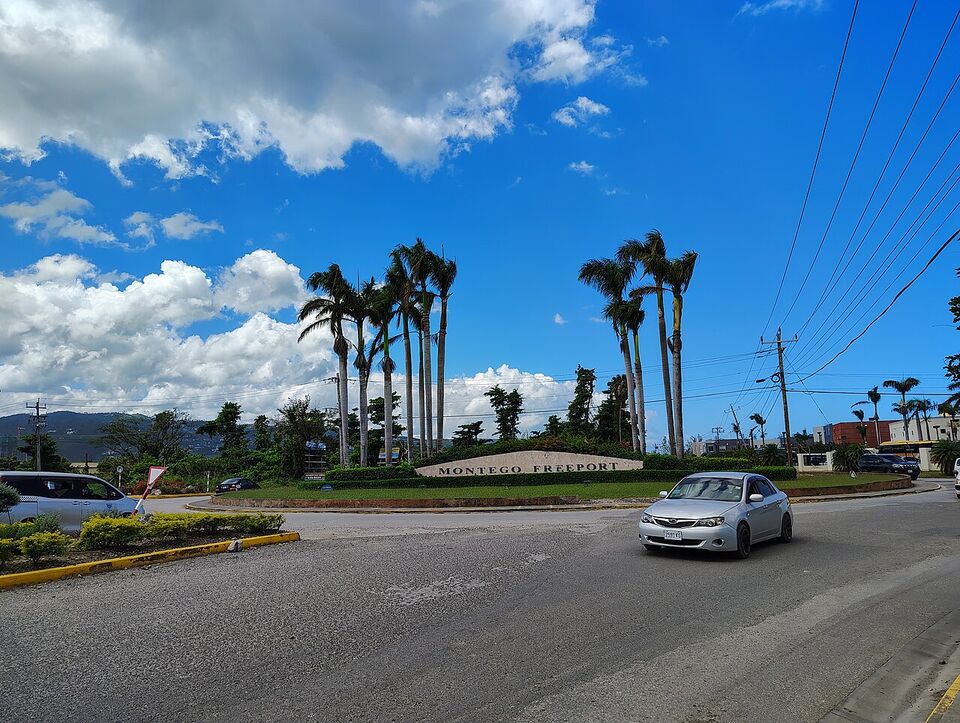
Most American visitors land at Sangster International Airport in Montego Bay. The sequence is the same at Norman Manley International Airport (KIN) in Kingston and the smaller Ian Fleming airport near Ocho Rios. For a longer look at the airports, see our flights guide and Montego Bay airport transportation.
- Immigration. You walk to the immigration hall and join the line for visitors. Show your passport and your C5 confirmation. The officer may ask where you are staying and how long.
- Fingerprints and a photo. Expect a scan of your fingers and a photo at the desk.
- Baggage claim. Collect your bags from the carousel. Carts are available.
- Customs. You hand over any paperwork, and officers may X-ray or open some bags. Follow the signs for the lane that matches your C5 answers.
- Out to the arrivals hall. The licensed taxi desk is just outside the customs exit (more in the airport guide).
At busy times, such as winter weekends and the days around Christmas and Easter, immigration queues of 30 to 60 minutes are normal. Several flights landing together can make it longer. The airport is also being repaired and expanded after Hurricane Melissa, with the immigration and security halls being doubled in size as of July 2026. Do not book a tight onward connection or a prepaid transfer pickup for 30 minutes after landing. Ask your driver to track your flight and wait.
Insider tip
Complete the C5 before you leave home and put the confirmation in your phone's favorites. Have your passport, the confirmation and your hotel address ready before you reach the immigration desk, so you are not digging through a bag in the line.
What you can bring in
Duty-free allowances
According to the Jamaica Customs Agency's declaration form, adult visitors may bring in the following without paying duty. These were last updated by the agency on a 2020 form, so check jacustoms.gov.jm if you are near the limit.
| Item | Allowance |
|---|---|
| Tobacco | 200 cigarettes, or 50 cigars, or 230 grams of tobacco |
| Spirits | 1 liter |
| Wine | 1 liter |
| Personal goods | Up to US$1,000 in total, for personal use and not for sale (age 18 and over) |
| Cash | Declare anything over US$10,000 (or the equivalent) |
Most visitors bring nothing near these limits. The one that matters is anything you intend to give away or sell, such as gifts for a family or a large amount of goods, which you should declare.
Firearms, ammunition and other prohibited items
Watch out
Do not bring any ammunition, magazines or gun parts, even by accident. Jamaica prohibits firearms, components, parts and ammunition without prior authorization, and the State Department says this includes even one bullet. The offense carries a mandatory life sentence with at least 15 years before parole. A US concealed carry permit is not valid. Americans have been arrested for rounds and magazines left in luggage, including a case at Sangster airport in July 2026. Empty every bag, pocket and pouch (hunting gear, range bags and carry-ons especially) before you pack.
The customs agency's prohibited and restricted list is long and says it is not exhaustive. Items that need a permit include pepper spray, tasers and stun guns, tactical flashlights, night-vision goggles, handcuffs, body armor, camouflage clothing and toy guns. The State Department also lists knives and mace as prohibited without authorization. Leave them at home.
Agricultural items are restricted too. All meat imports need a permit, and fresh fruit, vegetables, plants, ground provisions, live animals and some dairy and processed meat products are controlled. Honey is on the prohibited list. A packed sandwich is not worth the hassle: eat it on the plane. Declare anything in doubt on the C5.
Medicines
Carry prescription medicines in their original labeled containers, with a copy of the prescription, in your carry-on bag. The State Department warns that EpiPens are not sold on the island, so bring your own if you need one. We found no official rule on personal-use quantities, so bring only what you need plus a small buffer, and ask the airline and your doctor about anything controlled, such as strong painkillers or ADHD medication. More on bringing medicine and what care to expect is in our health guide.
Drones
The Jamaica Civil Aviation Authority says recreational drone operators do not need a permit but must follow its operating guidelines. Commercial and professional use needs a Special Aerial Work Permit. The authority's page does not address visitors or what happens to a drone at the border, so contact info@jcaa.gov.jm before you fly, and never fly near airports, crowds or hotel guests who have not agreed.
Cannabis and Jamaican law
Jamaica decriminalized small amounts in 2015: carrying 2 ounces or less is not an arrestable offense and does not create a criminal record, but the police can issue a J$500 (about US$3) ticket. Smoking in public places is banned and also draws a J$500 (about US$3) ticket. Larger amounts remain a criminal offense. Non-residents can apply to the Ministry of Health for a medical permit. Rastafari sacramental use at registered sites is exempt.
That is the law. We do not give tips on buying it. What matters for your trip: do not bring any in from anywhere, do not take it out, and do not carry it back to the US. It is illegal under US federal law, and customs treats it as a drug offense. Customs in Jamaica also warns against importing or exporting it.
Children and family travel
Every child needs a passport and their own C5. A parent or guardian files it for them. The form lets you link a family under one email address.
The rules for a child who travels with only one parent, or with grandparents, a school group or a friend, are less clear. We found no Jamaican government page that states a consent-letter requirement for entry. Airlines, immigration officers and cruise lines can still ask for proof of permission, and US parents often face this question when leaving the US too. The cautious approach is a notarized letter from the absent parent (or both parents) that names the child, the traveler and the dates, along with a copy of that parent's ID and the child's birth certificate. Check with your airline before you fly. This is a hedge rather than a rule.
Different from home
You do not need a visa, but the form is not optional. A US-style "show up and be waved through" will leave you at a kiosk filling out the form while the line moves on. Do it at home, on a laptop, with your passport in your hand.
Fees and taxes on arrival and departure
There is no departure tax to pay at the airport. The State Department says any such charge is usually included in your airfare and that no exit tax is charged. The Tourism Enhancement Fee for air passengers is US$20, built into your ticket. It applies to one-way tickets too. We could not confirm a 2026 change, so if your fare breakdown shows a different amount, believe the breakdown. A cruise passenger fee exists in some form but we could not confirm the amount.
There are no separate entry fees for tourists at immigration. Once in the country, you will see taxes on your hotel bill and on purchases. Those are covered in money in Jamaica.
Coming home to the US
US Customs and Border Protection gives returning residents a personal exemption of US$800, which can be used again after 31 days. That includes up to 1 liter of alcohol if you are 21 or older, and up to 200 cigarettes and 100 cigars. A second bottle of rum is dutiable, and some states set stricter limits. Pack bottles in checked bags, wrapped well, or buy them at the duty-free shop after security.
- Ackee. Fresh ackee should not come home with you. Unripe ackee is toxic, and the FDA restricts ackee imports. Commercially canned ackee from approved Jamaican firms is the practical choice.
- Fruit and plants. Fresh fruit, vegetables and plants are restricted. Declare anything you have.
- Cannabis. Illegal to bring into the US. Leave it behind.
- Cash. Report US$10,000 or more to CBP when you return.
Our shopping and taking things home guide has more on what to buy and what clears customs.
Cruise passengers and other ways in
Cruise passengers also complete the C5 before the ship docks, and the cruise line will usually remind you. Cruise travelers may be able to use another WHTI-compliant document, but a passport is strongly recommended, because it is the only document that gets you home if you miss the ship or need to fly from Jamaica. Port-day rules, walkable areas and shore excursions are in our cruise guide. All four cruise ports reopened after Hurricane Melissa by December 2025.
Private boats and yachts have their own entry procedures. We found no official page covering them, so contact Jamaica's immigration and customs agencies before you sail in, and do not assume that a marina will handle it for you.
Common mistakes
- Paying for the form. The only official site ends in .gov.jm. Anything that asks for payment is a third party.
- Typing the wrong passport number. The form cannot be edited. File a fresh one if you notice an error.
- Packing leftover ammunition. Check hunting jackets, range bags, car consoles and the bottoms of backpacks.
- Booking a tight connection. Allow time for the immigration line on the way in, and for the airline's own check-in deadlines on the way out.
- Assuming a child's travel is simple. If a child is not traveling with both parents, sort out the permission letter early.
- Treating the 90 days as a guarantee. The officer sets your permitted stay. Look at the stamp and stay within it.
If something goes wrong with your documents while you are in Jamaica, the US Embassy in Kingston (142 Old Hope Road, +1 876-702-6000, also after hours) and the US Consular Agency in Montego Bay (Whitter Village, Ironshore, +1 876-953-0620) help US citizens. The Montego Bay office closes on Jamaican and US holidays.
Before you go: a checklist
- Passport valid for your whole stay, with a blank page
- C5 submitted at enterjamaica.gov.jm (screenshot saved)
- Return or onward ticket saved on your phone
- Every bag emptied of ammunition, magazines, knives and pepper spray
- Prescriptions in labeled containers, plus a copy of the prescription
- Consent letter ready if a child travels with one parent or a non-parent
- Hotel address saved for the C5 and the immigration officer
- Travel insurance with medical evacuation (see our health guide)
For staying safe once you arrive, read safety in Jamaica, and for how to pay for things, money in Jamaica. For the state of the island after the hurricane, see Jamaica after Hurricane Melissa.
Add it to a route in the trip builder, or ask us to plan the hotels, trains and guides for you.