Should you drive in Jamaica?
You can, and many visitors do, but it is not like driving at home. Traffic keeps to the left, roads are often narrow with sharp bends, potholes are common, and drivers overtake in ways that surprise Americans. The main highways are good. Everything else needs full attention, in daylight, with a map you trust.
We suggest renting only if you have driven on the left before, or are happy to build confidence on quiet roads first. If not, a licensed taxi or private driver costs more per day, yet removes the stress. Our getting around Jamaica guide compares the options, and this page covers what you need to know if you do get behind the wheel.
Driving on the left
Jamaica drives on the left side of the road, and most vehicles are right-hand drive. If your rental is an automatic, your right foot handles the pedals as usual, but the turn signal and wiper stalks may be on the opposite sides from what you are used to, so expect to switch on the wipers by mistake once or twice. Manual cars are common on rental lots, so request an automatic when you book.
Roundabouts are common and run clockwise, with traffic from the right having priority. Turn into the nearest lane when you turn left, and into the far lane when you turn right across traffic. At the start of each trip, say it aloud: "stay left." The most dangerous moments are leaving a parking lot or gas station and turning onto an empty road, when you may drift into the right lane.
The front seat passenger sits on the left, next to the curb. Seat belts are required for the driver and all passengers, children under three must be in infant carriers, and using a phone without hands-free equipment is illegal. Speed limits are shown in kilometers per hour, so check the dial of your rental car for km/h.
Different from home
Speed limits and distances are in kilometers, fuel is sold by the liter, gas stations are staffed and you tell the attendant how much you want, and "right turn on red" does not exist. Jamaican drivers often pull to the left to let faster cars pass on two-lane roads: you may be expected to do the same.
License rules
Visitors may drive on a valid foreign license. According to the Tourist Board, North Americans can drive for up to three months per visit, and you must carry the physical license: photocopies and phone photos are not accepted. An International Driving Permit is generally not needed when your license is in English, though you can carry one as a backup if you want. If you plan to stay more than three months, ask about local license rules before the period ends. See the long stays guide for what changes if you stay longer.
The page we consulted does not give a blood alcohol limit, so we do not quote one. The rule to follow is simple: do not drink and drive. An accident while impaired costs far more than a taxi fare home.
Renting a car
Age, license and booking
Rental policies vary by company. The Tourist Board gives two ages: "at least 25" in one place and an average minimum of 23 in another. In practice, most companies accept drivers from 23 to 25, often with a surcharge for under 25s, and want you to have held your license for at least a year. Ask about the age rule, the young-driver fee and any maximum age when you book, and carry the credit card of the main driver, because a deposit hold is standard.
Book ahead in the winter season (mid-December to mid-April), when demand is high and automatics sell out. Rental cars are available at Sangster airport and Norman Manley airport and in the main towns. Compare the total price rather than the headline rate, since airport fees, insurance and the General Consumption Tax (GCT, Jamaica's sales tax, generally 15%) can add up.
Insurance and credit card coverage
Local rentals usually include basic liability, and you will be offered a collision damage waiver (CDW) for the car. Some US credit cards cover rental cars abroad, but coverage varies by card, by country and by vehicle type, and some policies exclude certain countries or require you to decline the rental company's waiver entirely. Call your card issuer before you leave, ask whether Jamaica is covered, and get the answer in writing. Some rental companies in Jamaica will not accept card coverage in place of their own waiver, or will place a larger deposit hold on your card if you decline theirs. Policies differ, so check each company's terms.
Read the contract for the excess (deductible), what happens in an accident, and whether tires, glass and the underside are covered, because potholes cause exactly those claims. Photograph the car before you leave the lot, including the wheels and windshield, and note every scratch.
Insider tip
Pick up the car at the airport only if you are comfortable driving at once. A calmer plan is to take a transfer to your first hotel, rest, and collect the car in town the next morning, in daylight, after you have seen how local traffic behaves.
Road conditions and potholes
Jamaica's toll highways (Highway 2000 and the North-South Highway) are smooth and modern. Rural and mountain roads can be winding, bumpy and narrow, with limited lighting. Town centers are wider but busier, with pedestrians, minibuses and motorbikes. Roads are often shared with people walking along the edge, so slow down when you see them.
Hurricane Melissa made things worse in the west and south. Repairs have been under way since the storm, but in October 2026 the Observer quoted the Jamaica Hotel and Tourist Association's president as saying a few critical roads serving tourism businesses still needed urgent attention. Expect patched sections, rough shoulders, temporary diversions and slow stretches in Westmoreland, St. Elizabeth, Hanover and St. James. Ask your hotel about the current state of the road you plan to use before you leave.
Potholes are the main hazard on ordinary roads. Locals swerve around them, so a car ahead may veer without warning. Leave extra distance, avoid driving fast through puddles that may hide a hole, and after heavy rain take extra care on hill roads, where debris and washouts are possible.
Horn etiquette and other habits
The horn is a tool, not an insult. A short double tap on a blind bend means "I am here," a quick tap says hello or thank you, and a tap before overtaking warns the car ahead. Do the same on narrow mountain bends. A long, hard blast is still aggressive, as at home.
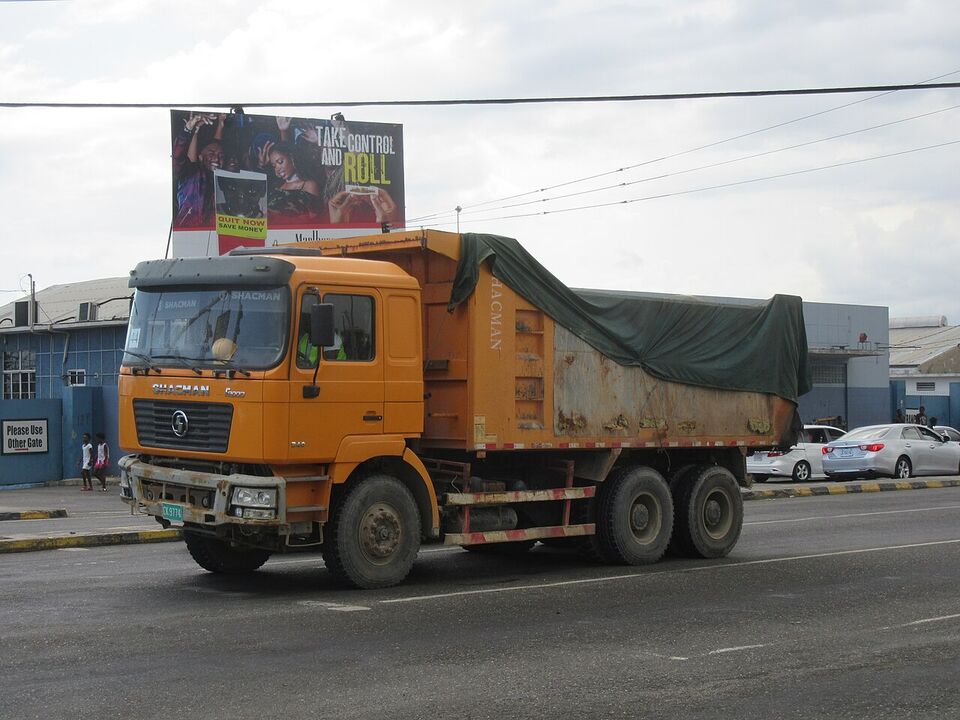
Expect minibuses and route taxis to stop suddenly to pick up passengers, motorbikes to weave through traffic, and drivers to overtake on straight sections of two-lane roads with oncoming traffic. Do not copy them. Keep a safe gap, use your mirrors often and let impatient drivers pass.
Speed limits and rules
The posted limits are 50 km/h (30 mph) in built-up areas and 80 km/h (50 mph) on highways and main roads, unless signs say otherwise. Many drivers exceed them, but the winding roads make a lower speed wise anyway. Signs are in kilometers per hour, so read your dial carefully.
Seat belts apply to all occupants, and handheld phone use is illegal. Use hands-free navigation or have a passenger read the map. Do not stop on the road to take photos, and park fully off the road if you pull over.
Tolls: Highway 2000 and the North-South Highway
Jamaica has two main toll roads. Highway 2000 East-West links Kingston, Portmore, Spanish Town and May Pen. The North-South Highway links Kingston, via Caymanas, with Ocho Rios, cutting the trip to roughly 1.5 hours. Pay in cash in J$ or, if you have one, with a T-Tag (the electronic toll tag), which carries a small discount.
Highway 2000 East-West toll plazas
These are standard class 1 rates for private cars, in force from August 1, 2026, from reports in the Gleaner. T-Tag rates from October 31, 2026 are a little lower (Portmore J$380, Spanish Town J$280, Vineyards J$840, May Pen J$285, Toll Gate main line J$520, Toll Gate ramp J$260).
| Toll plaza | Cash fare (J$) | US$ (about) |
|---|---|---|
| Portmore | J$400 | US$2.50 |
| Spanish Town | J$290 | US$1.80 |
| Vineyards | J$850 | US$5.35 |
| May Pen | J$295 | US$1.85 |
| Toll Gate main line | J$530 | US$3.35 |
| Toll Gate ramp | J$270 | US$1.70 |
Tolls on the extension between May Pen and Williamsfield were proposed in late 2025; check whether they are being collected by asking your rental company or check the toll operator's site.
North-South Highway
New tolls for the North-South Highway (Caymanas to Ocho Rios) were proposed in July 2026, with a maximum class 1 rate of J$2,610 (about US$16) one way and J$5,220 (about US$33) for a round trip, and lower amounts for shorter sections. The Observer described the rate introduced in 2025 as J$2,495 one way, and said the new figures were proposed maximums. Check whether the increase is in force. Budget about J$2,000 to J$2,600 (about US$13 to US$16) one way for the full run, and confirm with your rental company before you go. Carry cash in J$ in case a toll booth does not take cards.
Save money
Tolls are small compared with the time they save. On the Kingston to Ocho Rios run, the highway is far faster than the older roads through the hills, so it is usually worth the fare.
Fuel
Fuel is sold by the liter, and an attendant pumps it. Tell the attendant the grade and how much you want, in J$ or "fill it up", and pay at the pump or the booth. Cards are widely accepted, though carrying cash is a good idea in rural areas. Stations are plentiful in towns, but spaced out in the hills, so fill the tank before a long mountain drive.
Ex-refinery prices set by Petrojam for the week starting November 5, 2026 were J$195.81 per liter (about US$1.23) for 87 octane and J$204.57 (about US$1.29) for 90 octane. Pump prices are higher because retailers add their margin, so a little over J$200 a liter (about US$1.30) is a fair planning figure. That is roughly US$4.75 to US$5 a US gallon, as of November 2026. Prices change weekly, usually on Thursdays, so treat these as a guide.
Most rental cars use 87 octane, and the rental agreement tells you the right grade. Diesel is cheaper to buy, but make sure you are not putting it in a gasoline car.
Night driving
We recommend not driving between towns after dark. Roads are narrow and poorly lit, pedestrians walk in dark clothing along the edge, animals cross, and unlit potholes and broken edges are hard to see. US government staff are advised not to drive between cities at night, and it is sensible advice for visitors. Safety is also a concern in some isolated areas, as the State Department advisory explains.
If you must drive at night, stay on main roads, keep doors locked and windows up in slow traffic, and do not stop for strangers. Plan flights and onward travel so that you reach your destination in daylight, using the typical times table. Read safety in Jamaica for the wider picture.
Police checkpoints
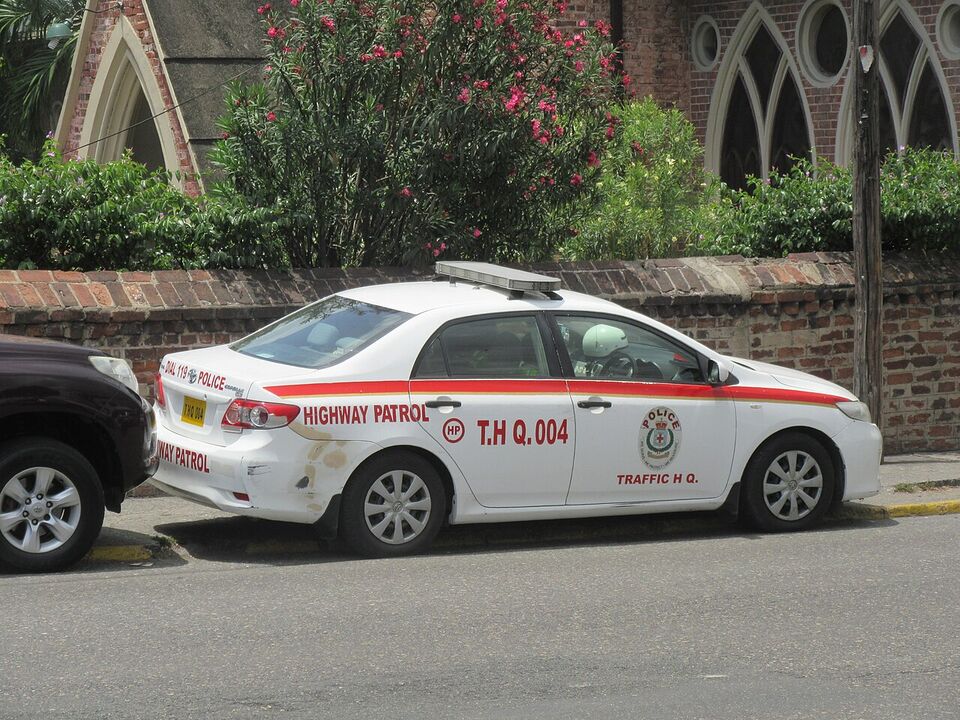
You may meet police checkpoints or roadside stops, especially on main roads and at the edges of towns. Slow down, follow the officer's signal and stop where told. Keep your hands visible, roll down the window, and have your driver's license, passport copy and rental papers ready. Be polite and calm. Officers may ask where you are going and look in the car.
If anything seems wrong, such as a request for money on the spot, stay calm, stay polite and ask to see a ticket and to be taken to the station. Call your rental company if you are unsure. Do not offer cash to resolve a stop. Record the officer's name and badge number if you can.
Montego Bay and the bypass
Montego Bay traffic is heavy, particularly along Gloucester Avenue (the Hip Strip) and through the center. The new Montego Bay Bypass, part of the Perimeter Road project, was about 90% complete in November 2026. Works Minister Morgan said in early November that it would be ready before the winter season, with no firm opening date. Until it opens, expect the usual congestion and detours, and check with your hotel or rental company whether the bypass is open before you rely on it. Our Montego Bay guide covers the town itself.
The airport is also being expanded, with a new western access road planned, so signs and pickup points may change. Allow extra time around the airport.
Parking, GPS and apps
Parking
Resorts and malls have parking. In towns, look for official parking lots or attended parking, and avoid blocking driveways or double parking, which can lead to a ticket or a tow. At beaches and attractions, informal attendants sometimes offer to "watch" your car for a tip. Park in a staffed lot where you can, never leave valuables visible in the car, and carry the rental key with you.
GPS and navigation
Google Maps and Waze work in Jamaica, and phone service is good along the coast but patchy in the hills. Download offline maps before you set out. GPS sometimes sends you down tracks that are not suitable for a rental car, so favor main roads when you have a choice. See phones, data and power for options for mobile data.
Addresses are not always precise, and local directions rely on landmarks. Save your hotel's pin and phone number, and ask for a landmark when you ask directions.
Accidents and breakdowns
If you have a crash, stop, switch on the hazard lights and check for injuries. Call 119 for the police and 110 for an ambulance or fire service. Contact your rental company straight away, as most contracts require a police report to process a claim. Take photos of the scene, the cars and the damage, get the other driver's details, and do not admit fault or sign anything you do not understand.
For a breakdown, pull off the road if you can, put hazard lights on, and call the rental company's roadside number, which should be in the paperwork. Keep your doors locked until help arrives. Many roads have little traffic at night, so having a charged phone and a full tank is the best insurance. Read health and medical care for hospitals and travel insurance.
- Check that your US license is a physical card and valid for your whole trip
- Ask your card issuer in writing whether rental coverage applies in Jamaica
- Reserve an automatic and confirm the total price, deposit and age rules
- Photograph the car, wheels and windshield before leaving the lot
- Carry J$ cash for tolls and fuel
- Download offline maps and save your hotel's pin
- Plan to be off the road before dark
Add it to a route in the trip builder, or ask us to plan the hotels, trains and guides for you.