Overview: what to expect at a Jamaican table
Jamaican food is bold, generous and built around a few ideas: slow seasoning, pimento (allspice) smoke, scotch bonnet heat, coconut milk and starchy sides that soak up gravy. The short answer for a first-timer is to eat jerk at least once, try ackee and saltfish for breakfast, order a curry goat or brown stew chicken lunch at a local cookshop, and carry a beef patty for the road.
The cooking reflects the island's history. West African techniques, Indian curries, Chinese-Jamaican shops and bakeries, Spanish and English influences, and the Indigenous Taino method of cooking meat over pimento wood all show up on one plate. You will hear Jamaicans say “food” where Americans might say “dinner”: a proper Sunday meal is rice and peas, chicken, and a few sides.
If you stay at an all-inclusive resort, much of what follows will appear on a buffet or at a themed restaurant, usually toned down for international guests. The real difference comes from leaving the resort for a meal or two. We cover how to do that safely in our all-inclusive guide and in Safety in Jamaica, and this page covers what to order when you get there.
Different from home
Jamaican menus often list a meat and a “side” or “ground provisions” (starchy root vegetables and plantain), and a plate usually arrives heaped. Portions are large compared with most American lunch specials. Many people split a plate or take half home if their hotel has a fridge.
The dishes to know
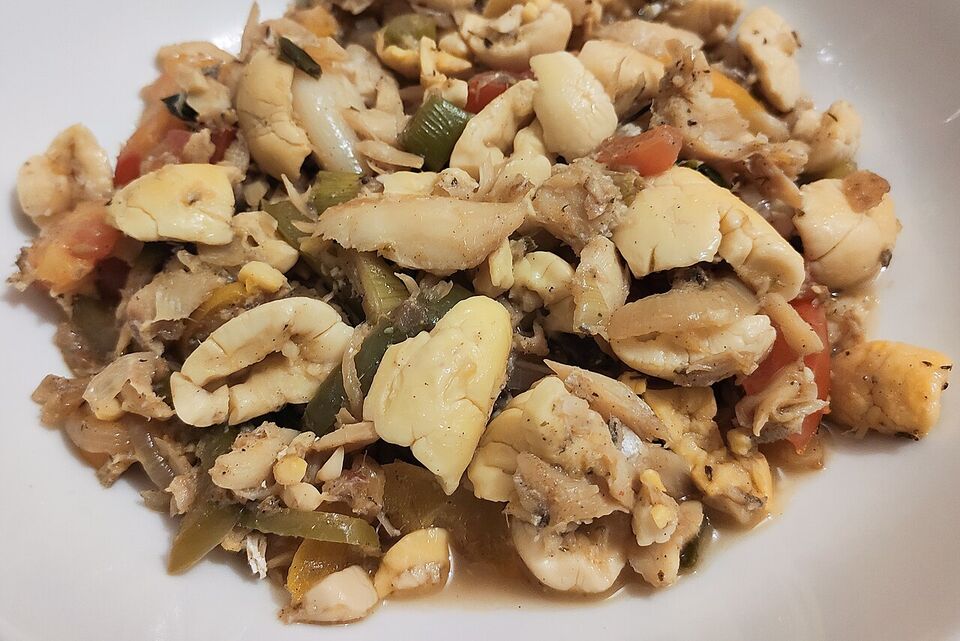
Ackee and saltfish
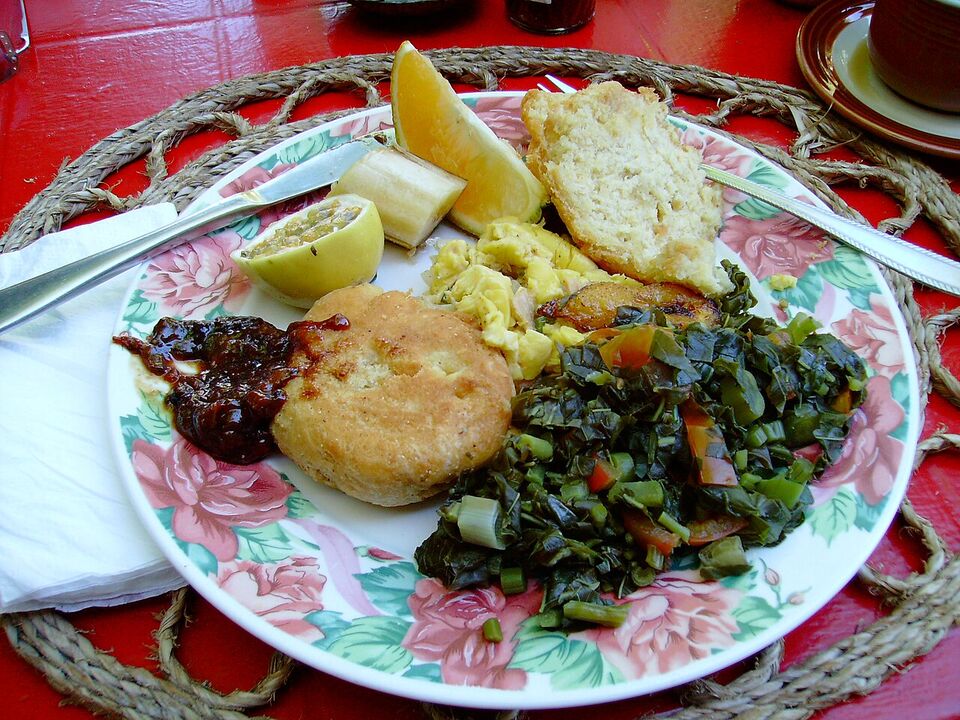
Ackee is the national fruit. When it ripens the pods split open to show cream-colored flesh around black seeds, and once cooked the flesh looks and feels like soft scrambled eggs. It is sauteed with boiled, flaked salted cod, onion, tomato, thyme and scotch bonnet. It is a breakfast and brunch dish, usually served with boiled green banana, dumplings, fried plantain or roasted breadfruit. Ackee is in season for part of the year, mostly in the first months of the year and again in summer, though canned ackee is available all year. Seasons vary, so ask rather than count on it.
Jerk
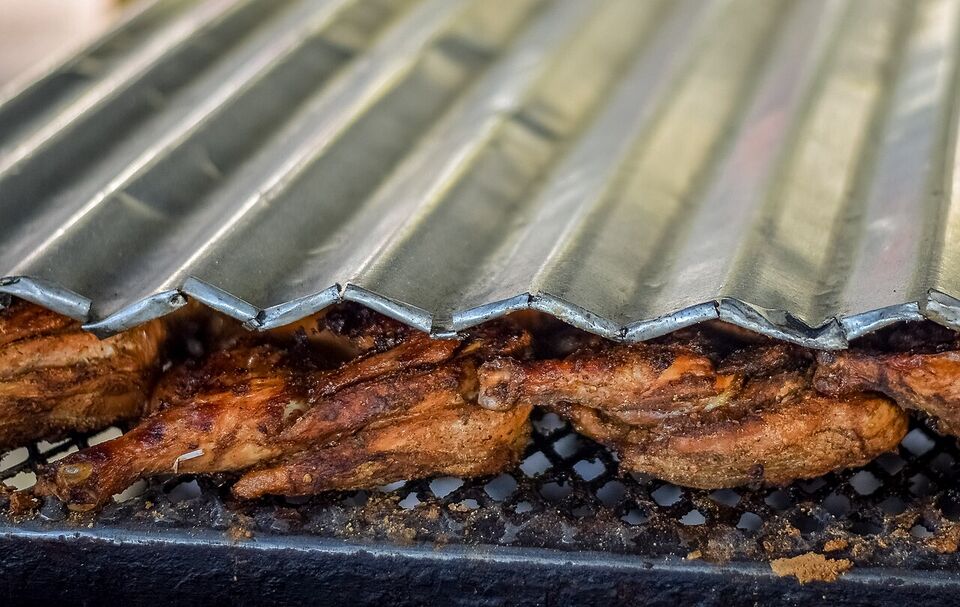
Jerk is a seasoning and a way of cooking, not a single sauce. Chicken and pork are the classics, but you will also find jerk fish, sausage and lobster. The marinade usually involves scotch bonnet, pimento berries, thyme, scallion, ginger and garlic. Traditionally the meat is cooked slowly over pimento wood or on a drum grill, which gives the smoke. It is chopped with a cleaver and served in foil or paper with festival or bread. We say more about where to eat it below.
Curry goat
Goat is cut on the bone and simmered in a Jamaican-style curry, with turmeric and allspice in the mix. It comes with white rice or rice and peas, and the bones are part of the experience, so go slowly. If you do not know whether you like goat, ask for a small taste at a cookshop; most cooks are happy to oblige.
Brown stew chicken and oxtail
Brown stew chicken is chicken browned in sugar or browning sauce, then simmered with onion, tomato, pepper and herbs until the gravy is dark and thick. Oxtail is slow-cooked the same way, often with butter beans. Both are everyday lunch plates and are not spicy unless you add pepper sauce.
Escovitch fish
A whole fried fish, often snapper, topped with a hot, vinegary pickle of onion, carrot, chayote and scotch bonnet. It is most common near the coast, and it is usually served with bammy or festival. Mind the bones, and mind the pepper slices in the pickle.
Rice and peas
The “peas” are red kidney beans. They are cooked with coconut milk, thyme, scallion and pimento, which gives the rice a pink tone and a rich flavor. It is the default side for Sunday meals and for most meat plates.
Patties
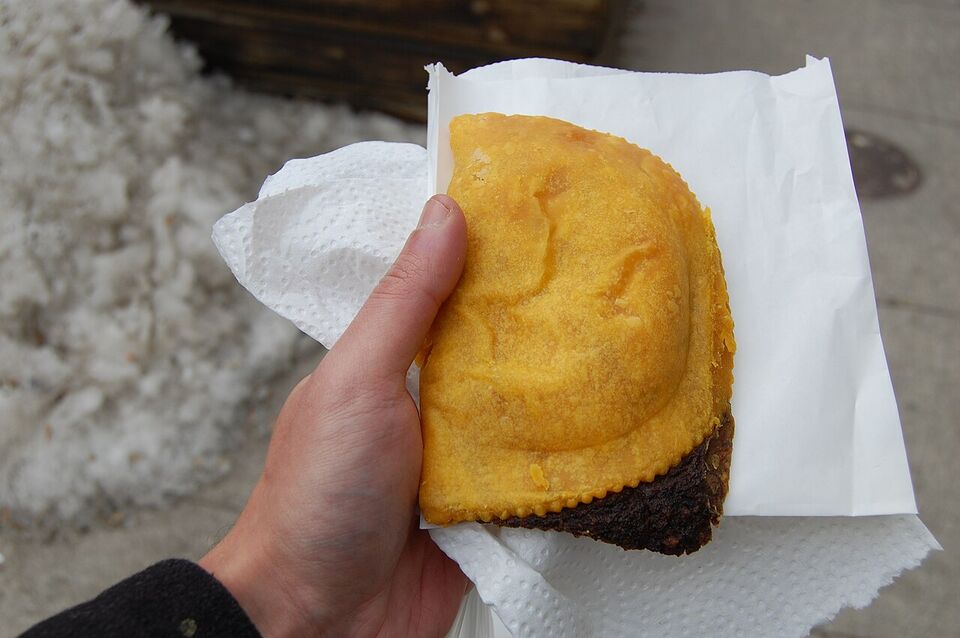
A patty is a flaky, golden-yellow pastry stuffed with spiced beef, chicken, vegetables or cheese. It is the island's grab-and-go snack. Locals often eat one inside a soft bread called coco bread, which is a good way to turn a snack into a lunch. Patty shops price in Jamaican dollars. Expect roughly J$300-500 (about US$2-3) for a patty in late 2026, with the bread extra; check the board because prices have moved with food costs.
Bammy and festival
Bammy is a flat round of grated cassava, a legacy of the Taino, usually fried or steamed, then soaked briefly in coconut milk. It goes with escovitch fish. Festival is a slightly sweet fried cornmeal dumpling shaped like a finger, and it is the standard partner for jerk.
Callaloo
Callaloo is a leafy green similar to spinach, cooked with onion, tomato, thyme and sometimes a little salted meat. It shows up at breakfast with saltfish, and it is also a side with dinner. It is a good vegetable option for travelers who want something green.
Run down
Run down is mackerel (or sometimes another fish) simmered in coconut milk until the sauce “runs down” to a thick, oily stew with tomato, onion and pepper. It is heavy, savory and best with boiled dumplings, green banana or breadfruit. It is more common at breakfast in rural areas and in Portland than on a hotel menu.
Mannish water
Mannish water is a goat soup made with the head, feet and organs, plus green banana, yam and dumplings, and a good amount of pepper. It is served at celebrations, at street dances and late at night. Locals sometimes call it a pick-me-up. If you try it, treat it like any adventurous dish: go to a busy place where the pot is hot and ask what is in it.
Ital food
Ital is the plant-based cooking of Rastafari (see our etiquette guide for how to speak about the faith). It avoids meat, preservatives, additives and, traditionally, salt, so the flavor comes from herbs, coconut and fresh vegetables. A typical Ital plate might include stewed pumpkin, steamed vegetables, callaloo, ground provisions, rice and beans, and juices. We cover it for vegetarians below.
Where to eat
Jerk centers
A jerk center is a casual open-air restaurant built around jerk pits or drum grills. You order by weight or portion, the meat is chopped to order, and you eat at picnic tables with a cold drink. Businesses in this style operate in most tourist areas, with a few of the larger chains having several branches (Scotchies is one name you will hear). We do not recommend any one place as the best, because quality shifts and some businesses in the west of the island were disrupted by Hurricane Melissa. Check that a place is open, and what the price is, before you go.
Roadside stalls
Smoke rising from an oil drum with a hand-lettered sign usually means jerk. Roadside vendors also sell roasted corn, boiled corn, peppered shrimp (a famous snack around Middle Quarters on the south coast), roasted fish, fruit and coconut. Prices are in J$ and often the first number is not negotiable for food. Carry small notes; vendors rarely have change for large bills. For safety, buy where there are customers, and avoid isolated stands after dark.
Cookshops
A cookshop is a small local restaurant that serves a daily plate of stew, curry, fried fish or soup with sides, often from a steam table or a pot. This is where many Jamaicans eat lunch. Typical plates are roughly J$1,200-2,500 (about US$8-16) in late 2026, though tourist areas cost more. The menu may be on a chalkboard or just spoken. Ask what is ready.
Boston Bay and Portland
Boston Bay, near Port Antonio in the parish of Portland, is widely described as the place where jerk took shape as a roadside food, and it has a cluster of jerk huts and pits near a beach. The area is on the east side of the island, which came through Melissa with far less damage than the west, but check ahead because individual stalls open and close. The drive and the area are described in our Port Antonio guide.
Faith’s Pen and rest stops
Faith’s Pen is a well-known row of food stalls and cookshops at a stopping point on the hill road between Ocho Rios and Kingston. Travelers use it as a rest stop for jerk, soup and fried fish. Check before you go rather than plan around it. Rest stops like it can be busy on weekends.
Resort and tourist-area restaurants
Restaurants in Montego Bay, Negril and Ocho Rios that cater to visitors often quote prices in US dollars and may add a service charge. Read the bill before you tip (see Money in Jamaica). A casual lunch for two can run US$30-60, and dinners with drinks cost more. Cards work at larger places, while cookshops and stalls are cash only. We cover Montego Bay and Negril dining in our Montego Bay guide and our Negril guide.
Fish on the beach
On beaches like Treasure Beach and Negril you can order fish cooked on the sand or in a small beach restaurant: fried, steamed or in a “bammy and fish” plate. Ask the price per fish before it is cooked. A fisherman’s catch is priced by size, so agree on the total first. The south coast is still recovering from the storm, so see our south coast guide for what is open.
What things cost
There is no official price list, so the numbers below are typical ranges for late 2026. Use them to budget and expect variation by area. Conversions use US$1 = J$159.
| Item | Typical price (J$) | About (US$) |
|---|---|---|
| Beef patty | J$300-500 | US$2-3 |
| Cookshop lunch plate | J$1,200-2,500 | US$8-16 |
| Jerk chicken, quarter, with festival or bread | J$1,500-3,000 | US$9-19 |
| Fresh coconut water | J$300-600 | US$2-4 |
| Escovitch or fried fish plate | J$2,000-4,000 | US$13-25 |
| Tourist-area restaurant main course | Often priced in US dollars | US$15-35 |
Prices at resorts and cruise-port restaurants are higher than elsewhere. A meal that costs J$2,000 (about US$13) at a cookshop may be US$25 or more at a beachfront restaurant. Both can be good value for different reasons.
Save money
Lunch is where Jamaica is cheapest. Eat your biggest meal at a cookshop or jerk center around midday, and keep dinner light or at your hotel. Carry small J$ notes, and ask for the price before you order if a menu is not posted.
Breakfast, snacks and sweet things
A Jamaican breakfast can be ackee and saltfish, callaloo, fried dumplings, boiled banana, liver, or porridge made of cornmeal, plantain or oats with condensed milk and nutmeg. Hotels often serve both American and Jamaican options.
Snacks are everywhere. Look for roasted or boiled peanuts, plantain chips, sweet potato pudding, gizzada (a small tart with a spiced coconut filling), grater cake, toto (a coconut cake), bulla (a flat spiced cake) and spice bun, a dense fruit-and-spice loaf eaten with cheese at Easter. Jackfruit, mango, sweetsop, otaheite apple, star apple and June plum are seasonal fruits you will meet at roadside stalls. Buy fruit that is cut in front of you.
Food safety
Jamaica has a long tradition of street and market food, and most visitors eat it without trouble. A few habits help:
- Choose busy stalls where food is cooked to order and served piping hot.
- Avoid cold salads, cut fruit and anything that has been sitting at room temperature for hours.
- Peel fruit you buy whole. Wash or sanitize your hands before eating.
- Be careful with shellfish, especially far from the coast or when it is not on ice.
- Drink bottled or purified water if your stomach is sensitive. The CDC says tap water is safe to drink where hotels use filtration, and many visitors still prefer bottled. For more, see Health and Medical Care.
- Use caution with ice outside hotels and restaurants where you do not know the source.
Watch out
Scotch bonnet is much hotter than the jalapeno most Americans know. Tell the cook “a little pepper” or “no pepper” (see our Patois guide), and keep milk, bread or fried dumplings near, because water does not cool the burn. Wash your hands before you touch your eyes after handling pepper.
Unripe ackee is toxic
Ackee needs special care. The fruit contains a natural toxin called hypoglycin A, which is highest in unripe fruit, the seeds and the membrane. Eating unripe ackee can cause severe low blood sugar and has caused deaths in the past. The FDA says the toxin drops to negligible levels in the ripe flesh, while the seeds and the ripe skin remain unsafe.
The practical rule for visitors is simple. Eat ackee only in restaurants, cookshops and resorts, where cooks know to use pods that opened naturally on the tree. Never pick, prepare or eat ackee yourself, and do not accept a pod that has been forced open. Commercially canned ackee from licensed processors is processed under controls.
Taking ackee home
Canned ackee is the only practical souvenir. The FDA keeps an import alert (revised April 25, 2025) that allows it to detain all ackee products except those from firms on its approved “Green List”; most of those firms are in Jamaica. For a traveler, that means: buy sealed cans from a supermarket or duty-free shop, not from a roadside vendor, and expect questions at the border. We could not find a traveler-specific CBP rule, so check the FDA and CBP sites before you pack it. Fresh ackee should not be packed. See our shopping and customs guide for what else you can take.
Vegetarian, vegan and Ital food
Jamaica is easier for vegetarians than many visitors expect, because Ital cooking is an established tradition. Ital restaurants and stalls are found across the island and in Kingston, with a small choice in tourist areas. You will see stewed vegetables, callaloo, beans, tofu or soy dishes, plantain, steamed cabbage, pumpkin rice, roasted breadfruit and fresh juices.
When you order, a few tips apply:
- Ask for “Ital” and confirm what is in it. Strict Ital cooking has no meat, no processed foods and often no salt, while some restaurants adapt it.
- Vegetarians should ask whether a dish is cooked with meat stock, salted meat or “seasoning” (many stews and callaloo dishes start with meat).
- Vegans should check for dairy, butter and eggs in baked goods and ask whether coconut milk is the only fat.
- Rice and peas, bammy, festival, fried plantain, ground provisions and steamed vegetables are usually meatless; fried food may share oil with fish or chicken.
- Resorts generally handle vegetarian and vegan guests well if you tell them ahead.
Take care how you talk about Ital food. It is part of a faith, not a trend, and Rastafari restaurants are run by people who take it seriously. Ask politely about ingredients, and do not treat it as a novelty.
Food allergies and special diets
Allergy labeling is not like the US. Menus rarely list allergens, and cooks may not know which ingredients are in a sauce. Coconut milk, peanuts, shellfish, fish, wheat and egg appear in many dishes, and fried foods can share oil. Cross-contact is hard to rule out at stalls.
If you have a serious allergy, take these steps:
- Bring your own epinephrine auto-injectors. The State Department notes that EpiPens are not sold on the island, and medical care is limited outside the main cities.
- Carry a card in English that lists your allergy and what to avoid. Tell hotel and resort staff on arrival, and ask the chef to confirm in person.
- Stay at a place with a kitchen if your allergy is severe.
- Buy travel insurance that includes medical evacuation (see Health and Medical Care).
For gluten, patties, dumplings, festival and many gravies use wheat flour. Rice, ground provisions, plantain, roasted fish and many fruit-based dishes are naturally gluten-free, though cross-contact is common.
Tipping and paying
At sit-down restaurants, check whether a service charge is already on the bill; if it is, a small extra tip is optional. If it is not, 10-15% is typical for good service, though there is no official rate. At cookshops and jerk centers tipping is not expected, and rounding up is a kind gesture. All-inclusive resorts differ on policy; some say no tipping, others accept it. More in Money in Jamaica.
Cash is king outside resorts. ATMs give J$, and US dollars are often accepted in tourist areas, but change will usually come back in J$ at a poor rate. A 15% general consumption tax (GCT) applies to most restaurant bills; hotels and licensed tourism businesses pay a reduced 10% rate until March 31, 2027, so the total on a tourist-area bill may differ by place.
Ordering tips and a simple plan
Americans often wonder how to order without a guide. Here is a simple approach:
- Say “good morning” or “good afternoon” first. It matters in Jamaica and often gets you a better meal (see Jamaican Etiquette).
- Ask what is ready, then ask for a small portion if you are unsure. Many cooks will let you taste.
- Say whether you want pepper. Jerk is usually served with sauce on the side.
- Ask the price before ordering if it is not posted, especially for fish or lobster, which are sold by weight.
- Pay in J$ if you can, and keep small notes.
Insider tip
Try one breakfast, one jerk lunch and one cookshop plate in three different places. That gives you range without the pressure of planning every meal. Pair Sunday lunch with a drink from the list in Rum, Coffee and Drinks.
Recovery after Hurricane Melissa
Hurricane Melissa damaged farms, fishing fleets and restaurants in the west and southwest in October 2025, and recovery is still underway. Some local places reopened with limited menus, and ingredients such as fish, ackee and ground provisions have been affected by storm damage in some areas. Eating at local restaurants helps families who rebuilt after the storm. Where a specific restaurant or stall matters to your plans, call or ask your hotel to confirm it is open before you go. Our After Melissa guide has the area-by-area picture.
Add it to a route in the trip builder, or ask us to plan the hotels, trains and guides for you.