Overview: what "all-inclusive" means here
An all-inclusive resort in the Bahamas charges one price that covers your room, most meals and drinks, and some activities. The idea is simple, but the details are not: every resort draws the line differently, and the cheapest advertised package is rarely the one that includes what you want. The question is not "is all-inclusive good?" but "does this package match how I will spend the week?"
This page explains where to find all-inclusive resorts, what is usually included and what is not, who they suit, how to compare one with a regular room plus meals, and what to ask before you book. We do not rank brands. Resorts open, close, reopen and change names, so we avoid naming specific properties unless we can confirm that they are open and what they offer. Check each resort's official website for current information.
For the full range of lodging, from big resorts to small inns and rentals, see where to stay in the Bahamas.
Where all-inclusives are found
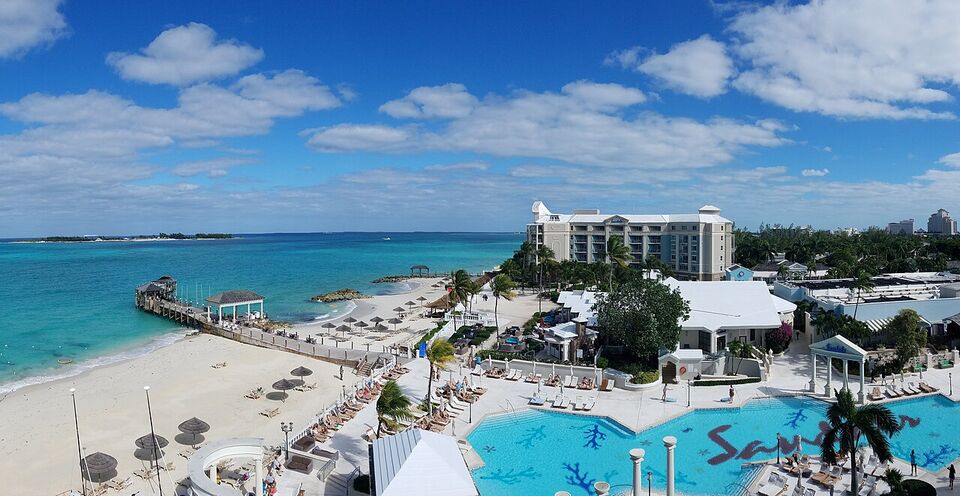
All-inclusive resorts in the Bahamas are concentrated in the Nassau area, where the volume of visitors supports large resorts with several restaurants, bars and pools. The hotel strip on Cable Beach has long included all-inclusive properties alongside other resorts: one public reference says that of five hotels on the strip, two were all-inclusive, though that figure is undated and brands change. Paradise Island has large resorts too, but we have not confirmed which of them sell all-inclusive plans, so ask. See Cable Beach and Paradise Island.
Beyond Nassau, the picture is more varied. Grand Bahama has had large resorts in the Freeport and Lucaya areas, and its recovery since Hurricane Dorian in 2019 has been uneven by area, so check what is open. See Grand Bahama. On the Out Islands, a few lodges and small resorts sell packages that include meals, drinks and activities such as bonefishing or boat trips, but full-scale all-inclusive resorts of the Nassau kind are rare. The Ministry of Tourism's booking tool lists "All Inclusive Resort" as a lodging type, and you can use it to see what the Ministry lists now; always confirm on the resort's own site.
Watch out
Ownership, brand names and reopening dates change. Before you book, confirm on the resort's official site that it is open, who runs it now, and whether the all-inclusive plan is still offered. A review or a blog post from a few years ago may describe a resort that has been rebranded, renovated or closed.
What is usually included
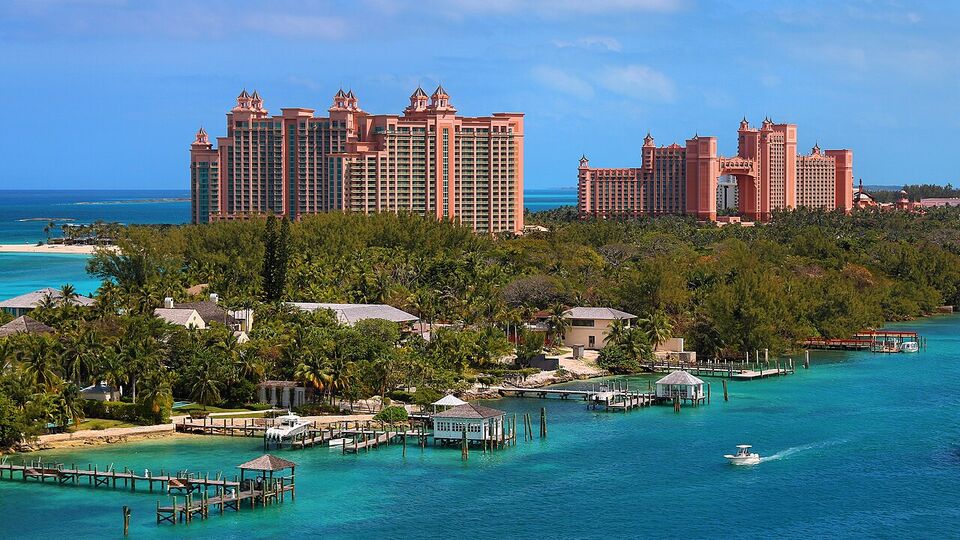
Packages differ, but most all-inclusive plans in the Caribbean cover a similar core. Treat this list as a starting point for questions, not as a promise from any resort.
- Accommodation: the room, with some resorts offering tiers (standard, club or suite) that add perks.
- Meals: breakfast, lunch and dinner at the main restaurants, and often snacks or room service at set hours.
- Drinks: house-brand cocktails, beer, wine and soft drinks, usually at the bars and sometimes by the pool or on the beach.
- Activities: non-motorized water sports (kayaks, paddleboards, snorkel gear), fitness classes, entertainment and sometimes a kids' club.
- Sometimes: a la carte dinners with a reservation limit, a tennis court, a gym and Wi-Fi.
A few resorts also include airport transfers, a night of dining at a partner restaurant or one excursion. If a feature matters to you, such as scuba lessons or a spa credit, get it in writing.
What is usually not included
The extras are where the real price often shows up.
- Premium drinks and restaurants: top-shelf liquor, imported wines and specialty restaurants often cost extra or carry a surcharge.
- Excursions: boat tours, snorkeling trips, fishing charters, island visits and off-site attractions are normally paid separately, whether you book through the resort or elsewhere.
- Motorized water sports: jet skis, parasailing and similar are usually extra. The State Department notes that boating is poorly regulated and that sexual assaults by jet-ski operators have been reported, so choose operators with care; see safety.
- Spa treatments, salon and shops.
- Airport transfers: a taxi from the airport to Cable Beach was about $30 for two riders, and to Paradise Island about $45 plus a bridge toll, according to undated tourism-office guidance; confirm the fare before you get in.
- Taxes, service charges and resort fees: VAT is 10% on most goods and services in the Bahamas, and many hotels also add a service charge, resort fee or gratuity, often 15% for the latter. How these appear varies, so check whether the package price is before or after them.
- Gratuities: some resorts include them and some do not. Check before you tip again; see money.
Watch out
The most common mistake is to assume that everything is free, including excursions and the best restaurants. "All-inclusive" is a marketing term, not a legal one, and the fine print decides what is covered. If the resort's best restaurant or the boat trip you want costs extra, add it to your budget before you compare prices.
Who all-inclusives suit, and who they do not
They tend to suit
- Families with children: a fixed price and a kids' club mean fewer arguments about the bill, and children can eat at any hour.
- Groups and weddings: a single package simplifies splitting costs. See weddings.
- Travelers who want a predictable budget and prefer to pay up front.
- People who plan to stay on the property and eat and drink most meals there.
- Anyone who dislikes handling cash and tipping each day, though check how gratuities work.
They tend to suit less well
- Food-driven travelers who want to eat at local places such as the Fish Fry at Arawak Cay or small Out Island restaurants. See food.
- Explorers who plan to spend most days off the property, on other islands, on boats or diving.
- Light eaters and light drinkers, who pay for food and drink they do not use.
- Travelers on a tight budget who can eat cheaply in town. Local markets and takeout can cost much less than a resort package.
Be honest about your habits. A couple who have a late breakfast, a beach lunch and one drink at dinner may save by paying for each meal. A group of adults who will order cocktails all day will almost certainly gain from the package.
Adults-only versus family resorts
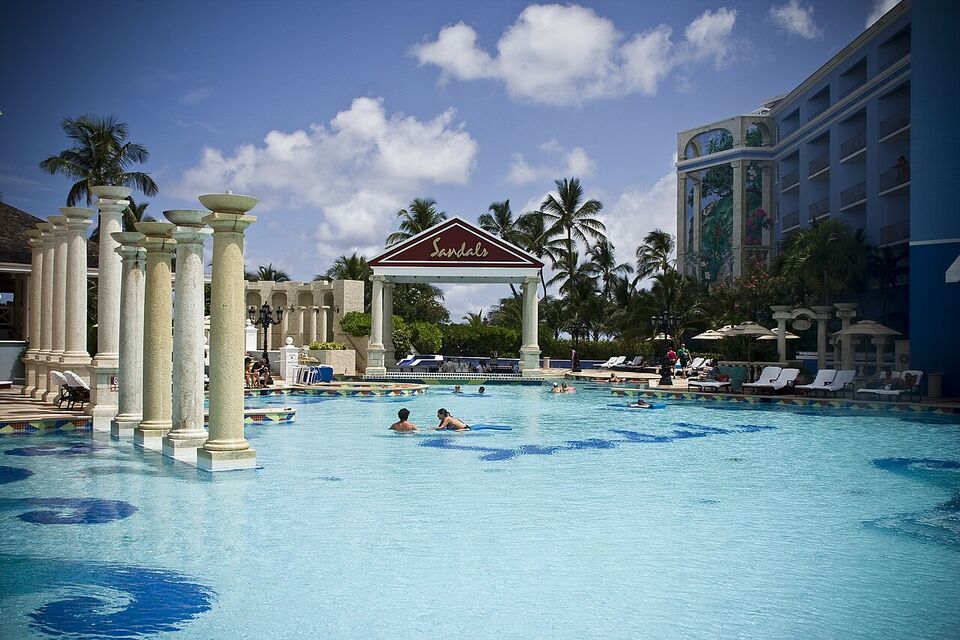
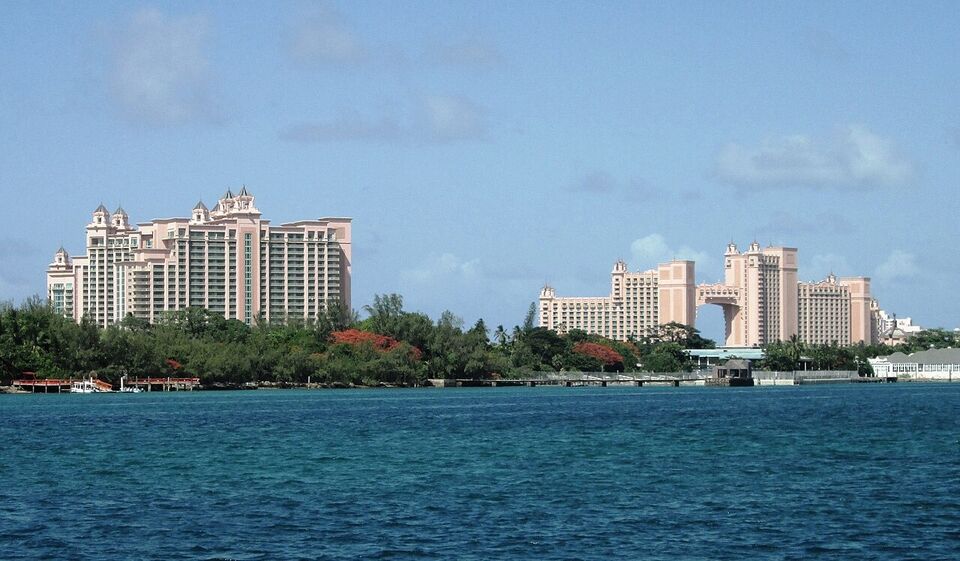
Many all-inclusive resorts target one of two groups. Adults-only resorts (often limited to guests aged 18 or older, but check the policy) offer a quieter setting, couples' dining and no children's pool. Family resorts provide kids' clubs, a children's pool, family rooms and activities for ages from toddler to teen, and they can be loud in school holidays.
- Ask about age rules. Some adults-only resorts require guests to be 18, others 21, and some are adults-only in one section only.
- Check the kids' club: ages, hours and cost. Some clubs are free and some charge for evening care.
- Look at room layouts. Family rooms and connecting rooms are limited, so book early for holiday weeks.
- Weddings and honeymoons: couples may prefer adults-only, but check the wedding package rules and local marriage requirements.
See families for planning with children.
Comparing the price with a regular room plus meals
The easiest way to decide is to do the sums for your own trip. Do not trust a headline price or a general rule; resorts differ, and so do eating habits. We cannot give a confirmed nightly price for any Bahamas resort, so use this worksheet with real quotes.
| Line | All-inclusive | Regular room |
|---|---|---|
| Room, per night, quoted | Package price per person | Room rate for the room |
| Taxes, service charge, resort fee | Add if not in the package | Add all-in total |
| Breakfast, lunch and dinner | Included | Estimate per person per day |
| Drinks | Included (check limits) | Estimate per person per day |
| Gratuity | Check if included | Often about 15% on bills |
| Excursions | Usually extra | Extra |
| Transfers | Check | Taxi fare |
| Total per person per day | Package + extras | Room + meals + drinks + tips |
Fill in the right-hand column with prices from restaurants and bars where you plan to eat. On Paradise Island and Cable Beach, resort restaurants can be expensive, while the Fish Fry and local cafés cost less. A resort that lets you eat outside the package at lower prices may cost less than an all-inclusive.
Save money
Ask the resort whether the package price changes by day of the week or season, and whether there are credits for kids, long stays or paying in full. Compare the same dates across several resorts, and look at the total after taxes and fees, not the headline rate. If you are traveling in the quieter late summer and fall, check the cancellation and hurricane terms; see hurricanes.
Off-site excursions and day trips
Many travelers choose an all-inclusive for the pool and a few days of rest, then add one or two trips: a boat to the Exumas, a day at a beach club or an evening in Nassau. These cost extra, so build them into the budget. Resort tour desks can be convenient, but their prices may be higher than booking directly with an operator; compare, and check the operator's safety record, license and insurance. Boating is not consistently regulated in the Bahamas, as the State Department notes.
If you plan to see the pigs at Big Major Cay, read swimming pigs: the cay is far from Nassau, with tours leaving from the Exumas. For ideas closer to the resort, see Nassau sights and things to do by interest. Remember that when you leave the property for lunch or dinner you have usually paid for a meal you did not eat.
Also check whether your resort offers day passes to non-guests. Some resorts sell day passes with food and drinks, which can be an alternative to a full stay if you only want a taste of the all-inclusive model.
Meal plans compared
All-inclusive is only one of several ways a hotel can bundle food. Booking sites use shorthand, and the differences matter when you compare prices.
| Plan | Usually covers | Good for |
|---|---|---|
| Room only | The room; every meal and drink is paid separately | Travelers who eat out or cook |
| Breakfast included | The room and a morning meal | Explorers who eat lunch and dinner elsewhere |
| Half board | Breakfast and dinner, often at one restaurant | Remote lodges with few other places to eat |
| Full board | Three meals, sometimes without drinks | Guests who rarely leave the property |
| All-inclusive | Meals, drinks and some activities | Heavy eaters and drinkers, families, groups |
The labels are not standardized, so ask what each one means at the resort you are considering. On a small Out Island, half board or full board may be the sensible choice simply because there are few restaurants, and a lodge may call it "all-inclusive" even though it means three meals and a boat trip, not unlimited drinks.
Practical notes for the stay
A few habits make an all-inclusive stay smoother and cheaper.
- Reserve the popular restaurants early. Specialty restaurants often need a reservation and may limit you to one or two visits per stay. Ask at check-in or before you arrive.
- Know the drink rules. Ask whether drinks are poured at the beach and pool, what the brand tiers are and whether there are age limits. Do not assume the legal drinking age or rules from home; ask the resort.
- Carry a little cash. Even on a package, you may want cash for taxis, small shops and tips for staff. Change often comes back in Bahamian dollars; the one-to-one peg is explained in money.
- Protect against the sun. Beach and pool days are long, and heat and rum together catch many visitors out. Drink water and take shade breaks.
- Watch the surf. Never swim alone, watch for boats near the shore, and heed flags and lifeguard advice.
- Keep valuables secure. Use the room safe. The State Department's Level 2 advisory (as of November 2026) says violent crime can occur anywhere, so be as careful as you would in a US city.
If you are coming for a wedding or a group event, ask the resort about group rates, whether the package includes the ceremony and what the local licence requires; see weddings.
Reading the fine print on offers
Special offers can be good, but read them as carefully as the base price. "Free" nights, resort credits and "kids stay free" deals usually come with conditions: a minimum stay, specific dates, a room category, a limit on the number of children or credit that can only be used on certain services. A credit that can only be spent on spa treatments is worth nothing to a guest who does not want them.
- Blackout dates: holiday weeks are often excluded from promotions.
- Non-refundable rates: a lower price may mean no refund if a storm or illness changes your plan. Hurricane season runs from June 1 to November 30.
- Resort credits: check what they can be used for, whether they expire and whether unused credit is lost.
- Package flights: if you book a flight and hotel together, confirm who is responsible if one part is cancelled.
- Currency: prices on US sites are quoted in dollars. Where a resort lists a price in Bahamian dollars, the rate is B$1 = US$1, so the figures are the same.
Finally, keep the confirmation email, the list of inclusions and any chat or phone notes. If the resort changes the package, you will want to show what you were promised.
Questions to ask before you book
Send the resort or a travel agent these questions, and keep the answers in writing.
- Is the resort open now, and who operates it? Have there been recent name or ownership changes?
- What is the total price for my dates and room, including VAT, service charges, resort fees and gratuities?
- Which restaurants and bars are included, and which cost extra? Are there reservation limits or time limits?
- Which brands of drinks are included, and are premium drinks extra?
- Which activities are included, and which are extra or motorized?
- Are airport transfers, Wi-Fi, beach chairs and the kids' club included?
- What are the age rules, and is the resort adults-only or family?
- What is the cancellation policy, and what is the plan if a hurricane threatens?
- Are there blackout dates, minimum stays or construction work on the property?
The answers let you compare resorts on the same terms, and the written list protects you at checkout. For dates and weather, see when to go, and for other lodging types, where to stay.
Checking current status
The all-inclusive market in the Bahamas is changing. Some resorts have closed for renovation or storm repair and reopened under new brands, and new properties have opened. We list no brands here because we cannot confirm which are running as all-inclusives today, and we do not rank them. Use the Ministry of Tourism site and each resort's official page, and read recent traveler information with care. If you find a resort listed on a booking site but not on its own website, call the property before paying a deposit.
Cruise passengers may also see "all-inclusive" beach clubs advertised on private islands and in Nassau; those are day-visit products and work differently from a resort stay. See cruises and private islands.
Add it to a route in the trip builder, or ask us to plan the hotels, trains and guides for you.