The short answer for Americans
For a normal vacation by air, you need a valid US passport book, a return or onward ticket, proof you can pay your way, and the paper immigration card you fill in on the plane or at the airport. You do not need a visa. The immigration officer decides how long you may stay when you arrive, and the official page says the maximum is eight months depending on nationality. Americans are in that group, so plan on "usually up to eight months, set by the officer". You cannot work on a visitor's stay.
The part that surprises many Americans is the trip home. At Nassau airport you go through US customs and immigration in the Bahamas, before you board. You arrive in the US as if on a domestic flight. That is convenient, but it changes your departure day (see below).
These rules come from the Bahamas Department of Immigration (page updated November 5, 2026), Bahamas Customs, US Customs and Border Protection (CBP) and the State Department. Rules can change without notice. Check the official sites before you go and again a week before departure. For the bigger picture, see planning your trip.
Different from home
The Bahamas is an independent country, not a US territory, even though it is close to Florida and most visitors are American. You need a passport, you go through immigration and customs, and you leave through US customs on the way back. Nothing here works like a domestic trip to Puerto Rico or the US Virgin Islands.
Passport rules
For air travel, you need a passport book. The official Immigration page says the passport must be valid at least six months from the date you arrive, and says passport cards are not accepted. We suggest you treat six months of remaining validity as your rule, even if you think your airline will let you board with less. The airline can refuse to carry you, and then it is your problem to solve at the check-in desk.
Check these before you book, not after:
- Expiry date. Count six months from the day you land, not from the day you book. A passport that expires in the spring is a problem for a December trip.
- Blank pages and condition. A torn or water-damaged passport can be refused.
- Names. The name on your ticket must match your passport exactly.
- Children. Every traveler needs their own passport, including babies. The Immigration site has a page on entry requirements for minors; if a child travels without both parents, check that page and carry any consent letters it asks for.
If your passport is close to the limit, renew first. Allow plenty of time, and check travel.state.gov for current processing times and expedited options. Our FAQ has other quick answers.
Watch out
The most common mistake is an expired or soon-to-expire passport. Check the date before you book. Bring the original passport on every leg, including short island flights, because airlines may ask to see it.
What else you must show on arrival
The Immigration site lists these for visitors:
- A return or onward ticket, or other proof that you will leave. Have it on your phone or printed.
- Proof of funds (or a local sponsor). The site does not give a dollar amount. Carry a credit card and a booking for your first night, and be ready to say where you are staying.
- A completed immigration card. The paper card is usually handed out on the plane or at the airport. Write your first night's address; a hotel name is fine. Keep the departure half if you are given one.
Online arrival form and health visa
We checked two questions that travelers ask often.
Is there an online arrival form? The official entry page lists no online form for US visitors. A Bahamas Digital Arrival Card began as a pilot in early May 2026 for selected visitors on participating flights, and news reports say the paper process stays in place during the pilot. We found no official web address, fee or rule for US citizens. If your airline sends you a link, follow it. If not, expect the paper card.
Is there a health visa? The official entry page in November 2026 lists no health visa and no vaccine requirement for US citizens. A Bahamas Travel Health Visa existed in the past; we did not find it listed in November 2026. Check immigration.gov.bs before you go, because rules for health entry can return quickly.
How long you can stay and how to extend
The officer at the port of entry sets the length of your stay and may give less than you ask for. The official page says three months is common and eight is the maximum, depending on nationality. If you want longer, apply to the Department of Immigration before your authorized stay ends, because extensions are at its discretion. Overstaying can bring penalties. For stays of months, see long stays. The Immigration office phone numbers are (242) 225-5337 and (242) 322-7530-5.
Cruise passengers
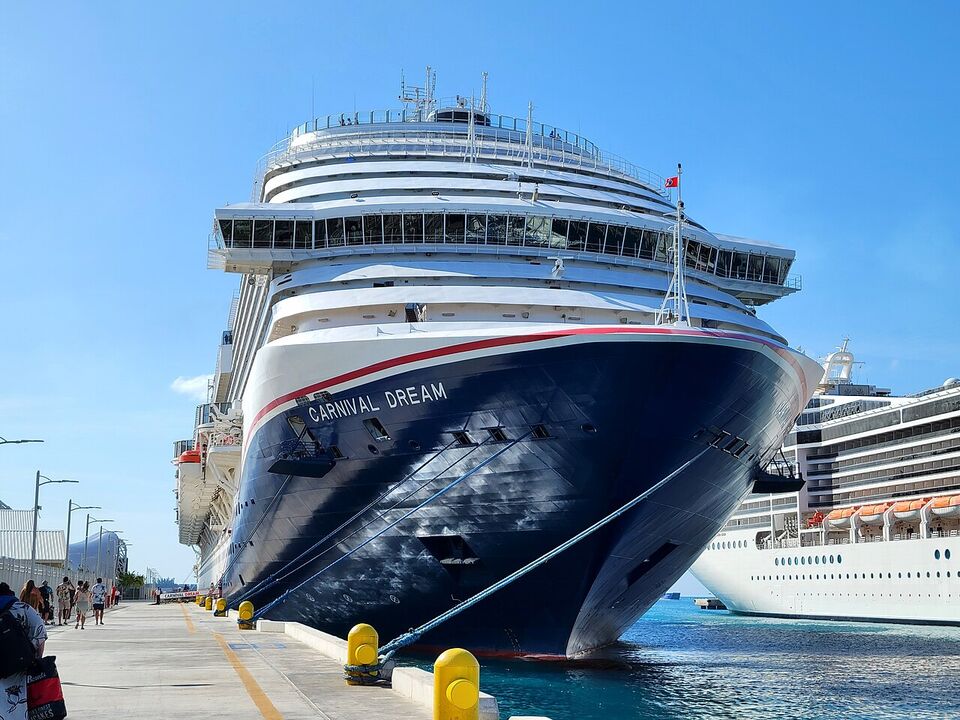
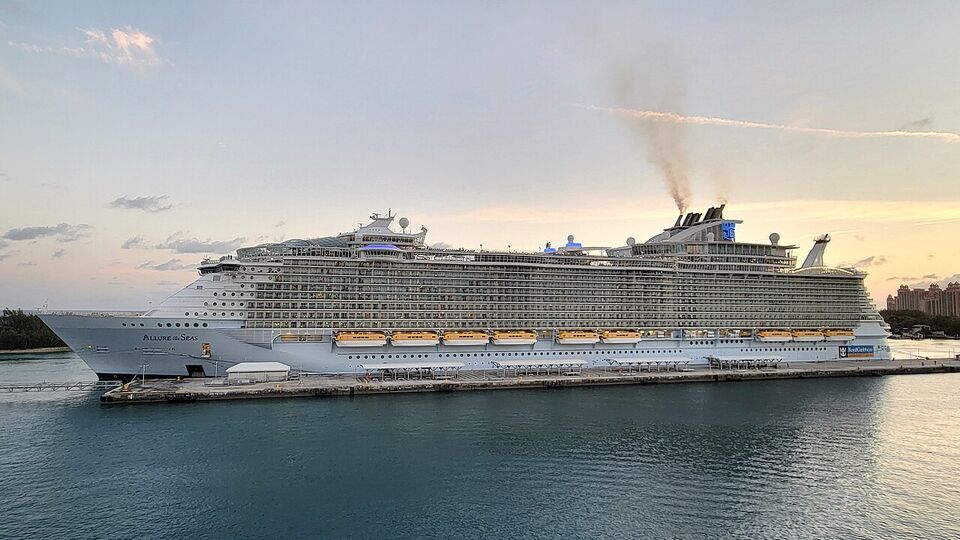
Cruises that start and end at the same US port (called closed-loop cruises) may allow other proof of citizenship besides a passport. We could not confirm the current document rules for the Bahamas on an official page, so our advice is to bring a passport book anyway. If you miss the ship or have to fly home from a Bahamian port because of illness or a storm, you will need a passport to board a flight, and without one the trip home is much harder.
If your cruise visits a private island such as Half Moon Cay, Castaway Cay or Celebration Key, the rules are set by your cruise line, not by this page. The line also tells you what you may bring ashore. Cruise passengers leaving by sea pay a departure tax. Customs lists these amounts for sea departures (ask your cruise line whether they are already in your fare):
- $23 for cruise passengers leaving by sea from any Bahamian harbor.
- $25 for cruise passengers leaving from a private destination that visits no other Bahamian port.
- $30 for non-resident passengers aged 6 and over on pleasure vessels carrying more than three passengers.
Customs also lists a tourism sustainability levy of $5 per cruise passenger arriving or leaving, and a $2 tourism enhancement levy per departing passenger. These are on the Customs page without effective dates, so confirm your cruise line's charges. See the cruises guide for ports and days ashore.
Departure tax for air travelers
For commercial flights, Bahamas Customs says the passenger tax is charged to the airline and included in the ticket price. We found no amount on the official pages, so we do not quote one. Look at the tax lines on your ticket's fare breakdown. You normally pay nothing extra at the airport for a flight.
If you buy a very cheap fare or a package, ask whether departure tax is included. If an agent asks you to pay at the airport, ask them to show you the official notice. Private aircraft and boats follow different rules (see Florida and beyond for boat arrivals).
Customs: what you may bring in
Bahamas Customs gives these allowances for adult visitors:
- One quart of spirits and one quart of wine.
- Tobacco: up to one pound, or 200 cigarettes, or 50 cigars.
- An exemption of $100 on any dutiable article.
If you carry only used personal belongings, an oral declaration is enough. If you carry more, you complete a Baggage Declaration (form C17), which Customs now offers through its "Exempt" app. Keep your receipts. The Customs office number is (242) 604-3124.
Things you must not bring
Firearms and ammunition are illegal in the Bahamas, including a single bullet in a carry-on or checked bag. The State Department and news reports say police enforce this at the airport, and US citizens have been detained for days. Check your bags, your jacket pockets and any gear bag you have used for hunting or a range, then check them again. We do not list penalties here because we did not confirm them on an official page; do not bring any firearm or ammunition. Bahamas Customs publishes a Prohibited and Restricted Imports and Exports page; read it if you are bringing anything unusual.
Cash on departure
If you leave carrying cash, negotiable instruments, or precious metals or stones worth B$10,000 (US$10,000) or more, you must declare them. The penalty can include forfeiture and a fine up to $2,000. Most visitors never reach the limit, but a person paying for a boat or a wedding in cash might.
US preclearance: how the trip home works
Preclearance means US Customs and Border Protection officers work inside the Bahamian airport. You go through US immigration, customs and security in the Bahamas, then board a flight that arrives at a domestic gate in the US. CBP lists Nassau as one of 16 preclearance locations in six countries. The Nassau office is at Lynden Pindling International Airport (1 Windsor Field Road), open 6:00 a.m. to 7:00 p.m., with the phone number (242) 377-7125. CBP's page was updated on November 4, 2026.
The benefits are real: you skip customs and TSA lines in the US, so a late arrival at Miami or Atlanta is easier, and your connection in the US is simpler. The costs are also real: you must be at the airport earlier, and you must finish shopping and eating before the checkpoint.
Freeport and other airports
The Bahamas Customs site says departures to the US from New Providence and Grand Bahama go through preclearance. CBP's own list of 16 sites names only Nassau for the Bahamas. These two do not agree, and CBP is the source for a US agency's own operations, so we cannot confirm Freeport. Before you fly home from Grand Bahama, ask your airline whether you clear US customs in Freeport or on arrival in the US. For other islands (Exuma, Eleuthera, the Abacos), you have no US preclearance; you clear on arrival in the US, and a connection through Nassau is where preclearance usually happens. See Grand Bahama.
How to do the return trip, step by step
- Check in early. Follow your airline's advice for check-in time. We do not have an official figure for how early to arrive for preclearance flights, so do not use a rule of thumb from a blog.
- Finish your shopping and tax refund before security. If you want a VAT refund through the Global Blue scheme, check the scheme's rules before you shop; we have not confirmed them.
- Complete your customs declaration the way your airline or CBP tells you. We have not confirmed which form or app applies in Nassau, so follow the instructions you receive.
- Pass through security and the US CBP checkpoint in the Nassau terminal. Have your passport, boarding pass and declaration ready. Declare everything you bought or were given abroad, including gifts.
- Dispose of banned items. Fruit, plants and meat are not allowed through; eat them or leave them behind.
- Go to your gate. You are now through clearance. Anything you buy in duty-free shops still counts against your $800 exemption.
- Land in the US as a domestic passenger. You walk off the plane with no further customs lines, and connect to your next flight.
Insider tip
Because Nassau preclearance closes in the evening (the published hours are 6:00 a.m. to 7:00 p.m.), ask your airline about your own flight's check-in and clearance times, especially for very early or very late flights. Do not rely on a printed itinerary alone.
See also the Nassau airport guide.
What you can bring home to the US
CBP gives returning US residents an $800 duty-free personal exemption, once every 31 days, if you have been outside the US at least 48 hours. It includes up to 200 cigarettes and 100 cigars for adults 21 and over. Goods from airport duty-free shops count against the exemption. Beyond that, goods are dutiable at a flat rate (CBP's example uses 3%), and family members in one household can make a joint declaration. You must declare everything you acquired abroad, including gifts.
One American liter (33.8 fluid ounces) of alcohol is duty-free for adults 21 and over for personal use. The Bahamian allowance is a quart of spirits, so check the bottle size when you buy. Additional liters are dutiable.
Food, fruit and meat
US rules restrict certain fruits and vegetables, animal products and some animals, and wildlife products (tortoiseshell, skins, ivory) need US Fish and Wildlife checks. Do not pack fresh fruit, meat or plants in your bags. Declare any food you carry, and when in doubt, leave it. Bottled sauces and packaged snacks are usually fine, but the officer decides.
Shells and souvenirs
Buying queen conch shells or coral can be restricted. We have not confirmed the current US rule, so check CBP and the US Fish and Wildlife Service before you buy, and ask the seller about the paperwork. Straw work and wood carvings are the safer gifts. See money for shopping and VAT.
Common mistakes and how to avoid them
An expired or short-validity passport
Check it before you book. Airlines may enforce the six-month guidance.
A tight connection after preclearance
If you clear US customs in Nassau, your flight lands in the US as a domestic arrival, so people book short connections at their US airport. The risk is on the Bahamian side: you must finish check-in and clearance before the flight, and an Out Island flight that runs late can make you miss your Nassau flight home. If you connect in Nassau from another island, give yourself more time than the airline's minimum, or sleep in Nassau the night before. Missing a connection can mean an extra night in the Bahamas.
Forgetting to declare purchases and gifts
Everything you acquired abroad, including gifts, must be declared to CBP. Declare it: the duty on an item above your exemption is a flat rate (3% in CBP's example), which is usually less trouble than a penalty.
Arriving on a Sunday or a holiday
Expect banks and many shops to close, and check with your airline, because island flights can change. Check the schedule in when to go for holiday weeks, and keep your travel dates flexible around Junkanoo (Boxing Day and New Year's Day) and Easter.
Safety and health notes before you fly
The State Department rates the Bahamas Level 2: Exercise Increased Caution (as of November 2026) because of crime. Enroll in the Smart Traveler Enrollment Program (STEP) so the US Embassy can reach you. The US Embassy in Nassau is at 235 Shirley Street; the phone is 242-461-5025 (press 1 for US citizen emergencies, also after hours). From abroad, the State Department's 24-hour line for Americans is +1-202-501-4444. For police, fire and ambulance, dial 911 or 919.
For health, check the CDC's travel page for the Bahamas before you go, and buy travel medical insurance. Our health page and safety page cover more. Traveling with a pet is a separate process; see pets.
Add it to a route in the trip builder, or ask us to plan the hotels, trains and guides for you.