Overview
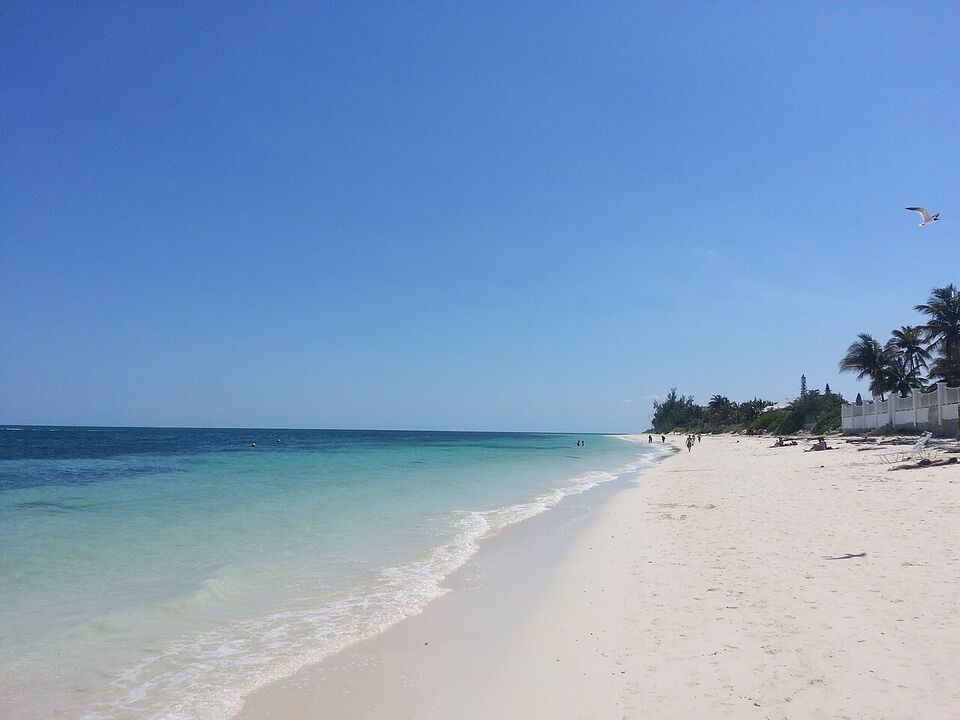
Grand Bahama is the northernmost island in the Bahamas and the closest big island to Florida: Freeport sits about 67 miles (108 km) off Palm Beach. That makes it an easy, short trip for a long weekend, with a main resort area at Lucaya, a marketplace at Port Lucaya, beaches, a national park with a cave system, and quiet settlements along a long, flat coast. It is a good choice if you want sun and water without the crowds and scale of Nassau.
The island is about 95 miles (153 km) long and up to 15 miles (24 km) wide, with roughly 47,000 residents. The size matters: unlike compact New Providence, Grand Bahama is spread out, and the main sights are many miles apart. Most visitors base themselves in Freeport and Lucaya and take taxis, tours or a rental car to the parks and beaches.
Hurricane Dorian hit the island as a Category 5 in 2019. We describe what the sources say about that later on this page. For choosing among islands, see the Bahamas' islands; for the other Florida-friendly option, read about Nassau.
Freeport and Lucaya: where visitors stay
Freeport is both a city and a free-trade zone, created in 1955 under the Hawksbill Creek Agreement, and it grew from pine forest and scrub into the second most populous city in the Bahamas. Most of the island's tourist hotels sit along the south shore in Lucaya, a suburb of Freeport, and the area is often promoted together as Freeport/Lucaya. Lucaya takes its name from the Lucayan people, the island's original inhabitants.
The practical picture is two zones. Freeport is the business and residential city, with the airport, the harbor, supermarkets and the services you need. Lucaya is the resort side, with hotels, beach access, the marina and Port Lucaya. They run into each other, and a taxi between them is short. A reference guide lists the resort complex at Our Lucaya (with Radisson and Reef Village properties) and a dive operation at Port Lucaya, though you should confirm any property's current status before you book. For help choosing where to sleep, see where to stay; we give no nightly rates here because we could not confirm current ones.
Port Lucaya Marketplace
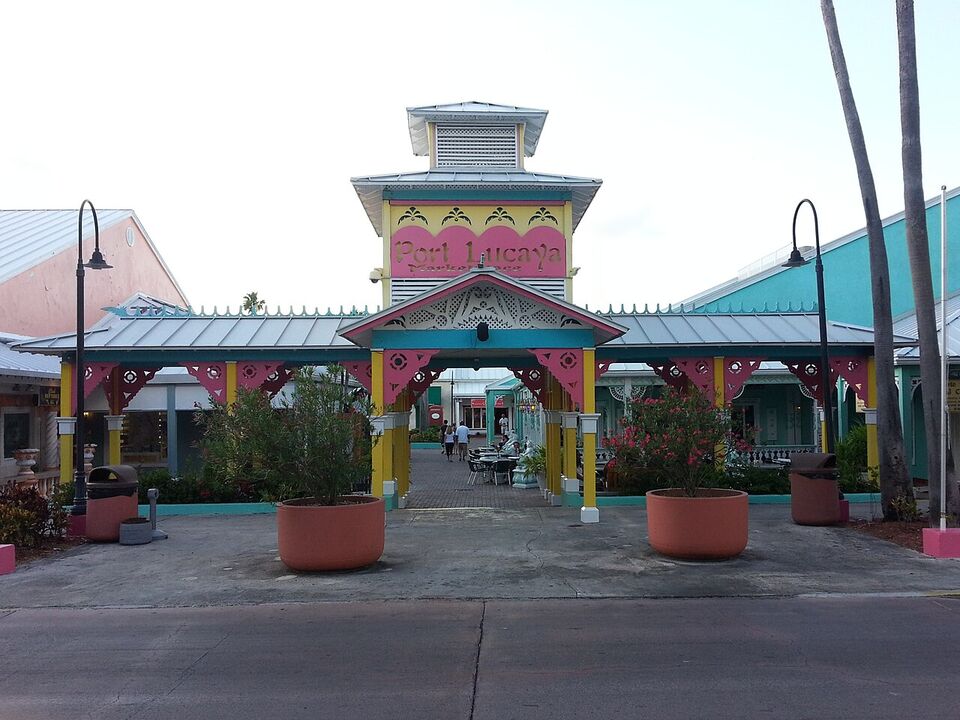
Port Lucaya Marketplace is the main place for shopping, eating and an evening walk. It sits beside a marina, with a central square, Count Basie Square, that has long been the social center of the resort area and is a popular spring-break gathering point. Expect gift shops, restaurants and bars, with a pleasant harbor view. Opening hours and which businesses are open vary, so check before you go and especially off-season.
The older International Bazaar in Freeport, which once drew shoppers, was affected by the 2004 hurricanes and its neighbor, the Bahamas Princess Resort and Casino, closed. Do not plan around them. Shop at Port Lucaya instead.
Different from home
Freeport is a free-trade zone with a long history of Bahamian-American ties, but you are still in the Bahamas. Bring your passport, expect VAT of 10 percent on most goods and services, and note that US residents may bring home up to $800 of goods duty-free after at least 48 hours abroad. Our money page explains the peg between the Bahamian and US dollars.
Beaches and Lucayan National Park
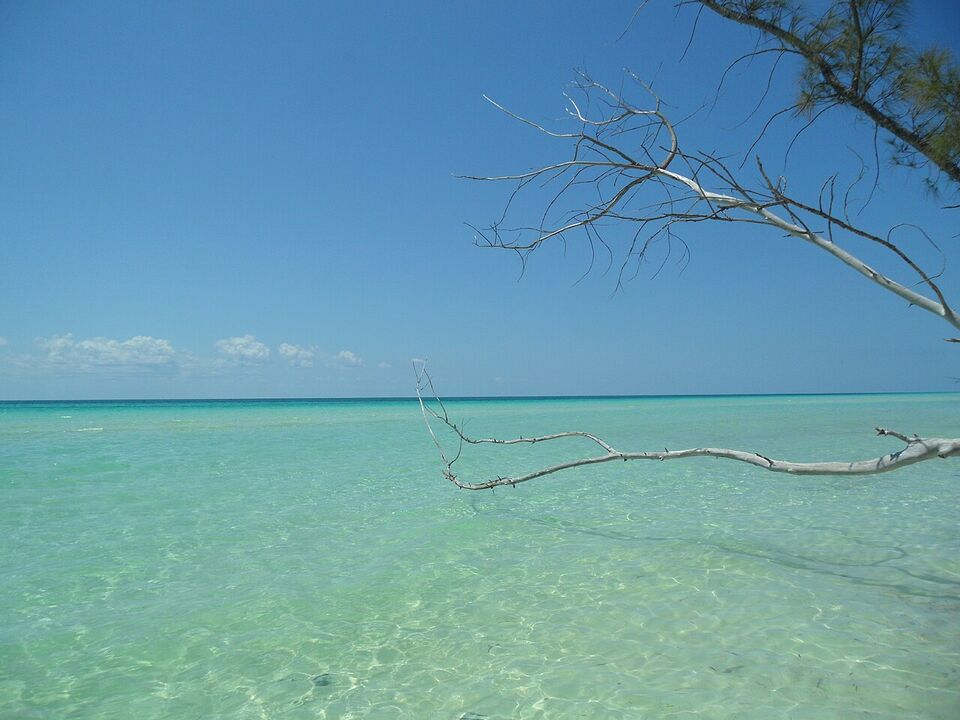
Grand Bahama's best-known natural attraction is Lucayan National Park, run by the Bahamas National Trust. It was established in March 1982 and covers about 40 acres (16 ha) of land, within 1,937 acres in total including its waters. The park protects five ecological zones that run from the south shore into the pine forest and contains 6.4 miles (10.3 km) of charted underwater cave tunnels, one of the longer known cave systems. The park is also listed as an Important Bird Area, with species such as the thick-billed vireo.
For visitors, the most important point is that one cave entrance is reachable by stairs, so you can see part of the system from above ground without any dive training. The other entrances are for certified cave divers only. A boardwalk and trails lead through the mangroves and woodland. The entry fee and opening hours were not confirmed for 2026, so check the Bahamas National Trust (bnt.bs) before you go, and bring water, insect repellent and sturdy shoes.
Gold Rock Beach and Taino Beach
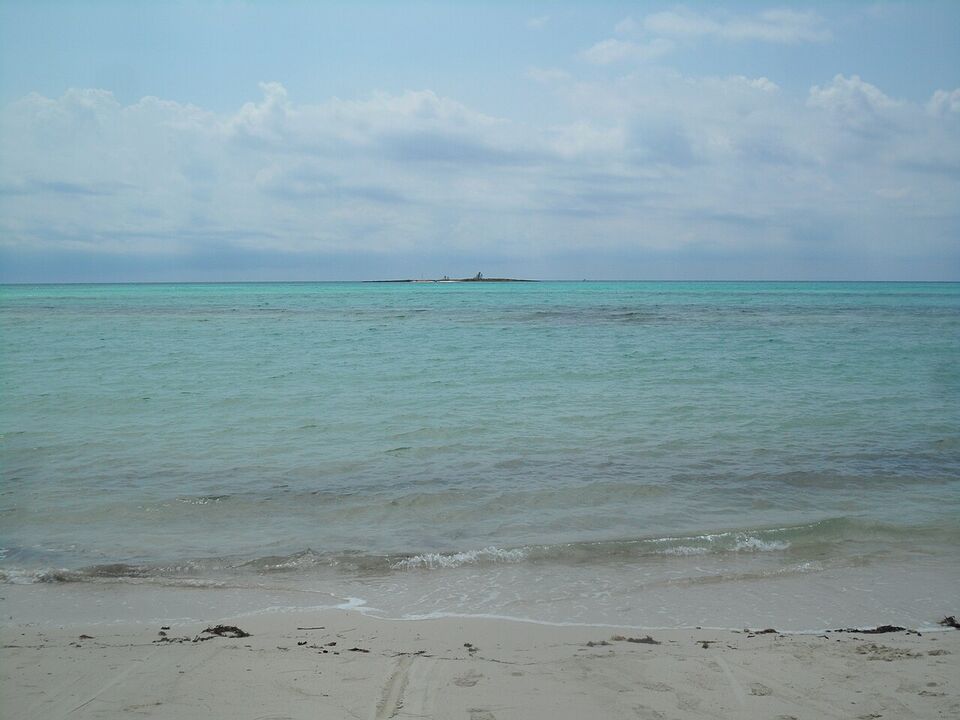
Gold Rock Beach is a beach near the park; we could not confirm how to reach it, or current facilities, so ask the Trust or your tour operator. Taino Beach is another beach near Freeport and Lucaya; ask your hotel about access and facilities. On both, take the usual precautions the State Department advises: never swim alone, watch for boats near shore, and avoid leaving valuables unattended. See our beaches guide to compare the options across the country.
Insider tip
Start early and carry water, snacks and cash: services can be thin away from Freeport and Lucaya.
Snorkeling, diving, caves, kayaking and dolphin tours
Most water activities leave from Port Lucaya and the south shore. Check each operator's current schedule, safety record and license before you book, because boat operators vary in quality. The State Department's advisory warns that boating and water-sports operators are not consistently regulated, that some watercraft are unsafe or uninsured, and that sexual assaults by jet-ski operators have been reported. Use well-established operators, ask what safety gear and insurance they carry, and avoid unlicensed jet-ski rentals.
Snorkeling and diving
Coral reefs ring the island, and boat trips run for snorkelers and certified divers. A reference guide lists a long-established dive center at Port Lucaya that offers charters, including shark-feeding dives, which are a separate decision for nervous swimmers. Prices vary and we have no 2026 prices, so ask each operator for what is included. Our diving and snorkeling page covers choosing an operator and what to check on safety.
Underwater caves
The cave systems around Lucayan National Park are famous among cave divers, and guided cave dives require specific certification. If you are not a cave diver, the stairs into the park cave and the surface trails give a real look at the geology. Do not attempt to enter any cave without training and a guide.
Kayaking
Guided kayak trips through the island's mangrove creeks run from local operators. We could not confirm the current operators or prices, so ask your hotel for names and check recent reviews. The calm water inside the mangroves suits beginners, but tides and wind change conditions quickly.
Dolphin and wildlife tours
The island has long offered dolphin encounters. We could not verify the current operators, and views on captive-dolphin attractions differ, so research the operator's animal-care practices before you book. If you want wildlife on your own terms, the national park and its birds are a free-range alternative.
The East End and quieter settlements
Beyond Freeport and Lucaya, the island is mostly open road, pine forest and small settlements. Reference lists include West End, Russell Town, Williams Town, Smith's Point, Mather Town, Pinder's Point, Lewis Yard, Hunter's and Mack Town. West End, at the island's western tip about 56 nautical miles (64 miles) east of Palm Beach, was a rum-running waystation during US Prohibition and the site of an early resort in the 1940s; its small airport takes private planes only, and only sporadically.
The east side is the least developed, and reports from Dorian describe it as one of the harder-hit areas. Services there are thin: fuel, food and cell coverage may be limited, and not every beach has a restaurant. If you go, take a full tank, cash, water and a plan for returning before dark. A guided trip is easier than driving alone for a first visit.
These settlements are working Bahamian communities, not attractions. Visit with respect, ask before photographing people, and buy a meal or a drink where you stop.
Getting there from Florida
Grand Bahama International Airport (code FPO) is in Freeport. The government bought it in 2021 after Dorian left it almost completely destroyed. According to a reference list, American Eagle flies from Miami (with seasonal service from Charlotte), Bahamasair from Fort Lauderdale and Nassau (seasonally from Orlando), Western Air from Fort Lauderdale and Nassau, and WestJet seasonally from Toronto and Montreal. Flamingo Air links the island to Marsh Harbour and South Bimini. Airlines change routes often, so check schedules. The flight from Florida is short, about an hour; check airlines for current schedules and fares.
By sea, the Spanish-owned operator Baleària has been reported on Fort Lauderdale to Freeport and Fort Lauderdale to Bimini routes. We could not confirm the 2026 schedule or fares, so check the operator's site before you plan around it. Freight runs between Freeport and Marsh Harbour, but we have no passenger service listed. See Florida links for crossings and flights for airlines.
US preclearance and your trip home
Nassau has US preclearance, which CBP confirms. For Freeport, the answer is less clear: CBP's list names only Nassau for the Bahamas, while a Bahamian government page says departures to the US from Grand Bahama also pass through preclearance. Ask your airline before you fly, and follow its check-in advice. Our entry rules page covers documents, and the airport page for Nassau explains how preclearance works in general at Nassau airport transfers.
Getting around the island
Ask your hotel for the taxi fare from the airport before you arrive; we have no confirmed fare. A rental car gives the most freedom, but the Bahamas drives on the left, many rental cars are right-hand drive and some are left-hand drive imports (check which you are given), and roads can be quiet and dark at night. See driving for the rules.
Cruise ships and Celebration Key
Several cruise ships stop at Freeport each week, and the harbor has its own cruise terminal. Cruise days make Port Lucaya busy at midday and quiet after the ships leave. If you sail from the US, see cruises for how port days work, including the departure charges on cruise passengers.
Celebration Key is Carnival Cruise Line's destination on Grand Bahama, built for cruise guests. News reports say it opened to Carnival passengers in July 2025 after a major build, and that its capacity has since expanded, but we could not read a Carnival page on it, so treat that as reported, not confirmed. It is generally designed for Carnival guests arriving by ship, not for independent visitors, so check Carnival's site for what is open and who can enter. If you are staying on land, do not plan a visit around it.
Cruise-line private destinations in the Bahamas change as lines build and expand, so check the line's own page before you book a cruise for one.
Recovery after Hurricane Dorian
Hurricane Dorian hit Grand Bahama and Abaco as a Category 5 storm on September 1-3, 2019, with winds of 185 mph (295 km/h). It stalled over Grand Bahama for about 12 hours, with storm surge reported at 12 to 18 feet above normal. Damage across the country was about $3.4 billion, with at least 74 confirmed deaths. About 13,000 homes, 45 percent of the homes on the Abacos and Grand Bahama combined, were severely damaged or destroyed, and at least 70,000 people were left homeless. Nearly half the homes on Grand Bahama were damaged or destroyed. The airport was nearly destroyed, and Freeport's main hospital was contaminated by floodwater.
What has been rebuilt, according to the sources we could confirm? Visitor numbers recovered. The Ministry of Tourism reported that Grand Bahama passed 1 million total arrivals in 2025 (about 1.1 million), the first time in more than 22 years, and that air arrivals rose 20 percent from 2024 and were more than 30 percent above 2019. The airport is back in government hands and serves several US routes. Beyond that, we could not confirm project-by-project what has been repaired, and we do not describe the island as fully rebuilt or as still devastated.
Watch out
Do not assume that Dorian damage has been fully repaired. Photos on booking sites may be older or newer than the repairs, so ask your hotel directly what is open and what is under construction.
Grand Bahama or Nassau for a short trip?
Both are easy from Florida, and the choice comes down to the kind of trip.
| Factor | Grand Bahama | Nassau |
|---|---|---|
| Feel | Quieter, flatter, spread out | Busier, compact, more to see |
| Best for | Beaches, snorkeling, a national park, relaxed days | History, large resorts, shopping, nightlife |
| Getting around | You need a car, taxis or tours; distances are long | Many sights are walkable from downtown; taxis and buses are short rides |
| Flights from Florida | Short flights from Miami and Fort Lauderdale | Many more flights from many US cities |
| Crowds | Cruise days bring crowds to Port Lucaya | Cruise ships bring large crowds downtown |
| Hurricane Dorian (2019) | Hit as a Category 5 | Dorian hit Abaco and Grand Bahama hardest |
If you have a weekend, pick Grand Bahama for a slow trip built around a beach and a short tour. If you want sights, big resorts and more choice, see Nassau, and for a lighter-touch island with similar flying distance, look at Bimini. A longer trip might start in Nassau and add an Out Island; see the Out Islands.
A relaxed long weekend
This sample plan assumes a Friday arrival from Florida and a Monday departure, with a base in Lucaya. Times for tours, park opening hours and boat trips change, so confirm each one before you book.
- Day 1
Arrive and walk Port Lucaya
Take a taxi from the airport (agree the fare first), check in, and spend the evening at Port Lucaya Marketplace. It is easy to walk, and dinner beside the marina is a gentle start.
- Day 2
Beach and water
Choose one: a snorkeling or boat trip from Port Lucaya, or a beach day at Taino Beach. Book boat trips a day or two ahead, and ask what safety gear and insurance the operator carries.
- Day 3
Lucayan National Park and Gold Rock Beach
Go in the morning, when it is cooler. See the cave entrance by the stairs, walk the park trails, then ask about the beach access. Carry water and cash, and plan your return before dark.
- Day 4
Slow morning and home
Leave for the airport earlier than you think you need to, and check with your airline about preclearance and how early to arrive.
If you have an extra day, choose a guided trip toward the east end or West End rather than driving alone, and pick one at least a day ahead.
When to go and what to know
The weather follows the Bahamas pattern: the dry season runs about November to April, and the wet, hot season from May to October. Freeport runs a few degrees cooler than Nassau in winter: older normals put January highs near 76°F (24°C) and lows near 61°F (16°C), and cold fronts can bring a few chilly, windy days between December and March. Hurricane season runs June 1 to November 30, with the peak from late August to September; check the National Hurricane Center (nhc.noaa.gov) and the Bahamas Department of Meteorology for named storms. See when to go and hurricanes.
On safety, the State Department's advisory for the Bahamas is Level 2: Exercise Increased Caution (as of November 2026), because of crime, and its summary names Nassau and Freeport. Check travel.state.gov for the current text, keep valuables out of sight, and use licensed taxis. See safety. Time is Eastern, the same as New York all year, so there is no jet lag from the East Coast.
Add it to a route in the trip builder, or ask us to plan the hotels, trains and guides for you.