Overview
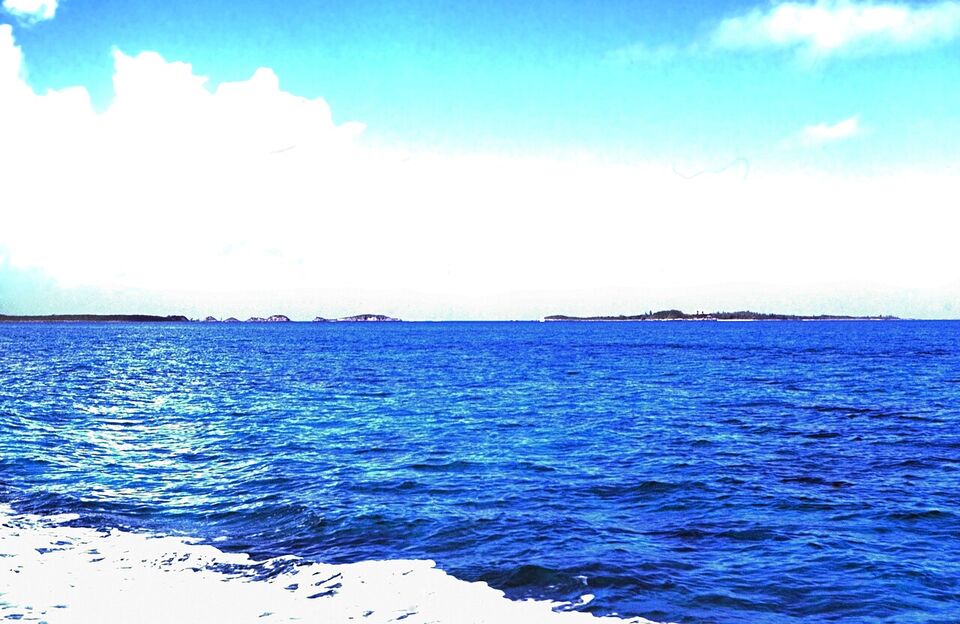
The Bahamas is one of the best places in the Atlantic to fish and to be on a boat: shallow flats for bonefish, deep water close to shore for marlin and tuna, sheltered cays for sailing and a chain of marinas from Bimini to the Abacos. It is also a place where the paperwork matters. Visitors fishing from a foreign boat need a permit, boat arrivals need clearance, and there are size, season and gear rules that police actually enforce.
This guide covers the types of fishing and where they are best, the permit and license rules we could confirm, what to know about renting or chartering a boat, sailing the Exumas and the Abacos, anchoring and moorings, crossing from Florida, customs clearance and safety gear. Where we could not confirm a fee, date or rule, we say so and name the office to check. Rules change, so read the Ministry of Tourism's fishing FAQ and the Customs pleasure-vessel page the week you travel.
Related guides: Bimini, the Exumas, Abaco, Andros, the far Out Islands and diving and snorkeling.
Types of fishing
Bonefishing on the flats
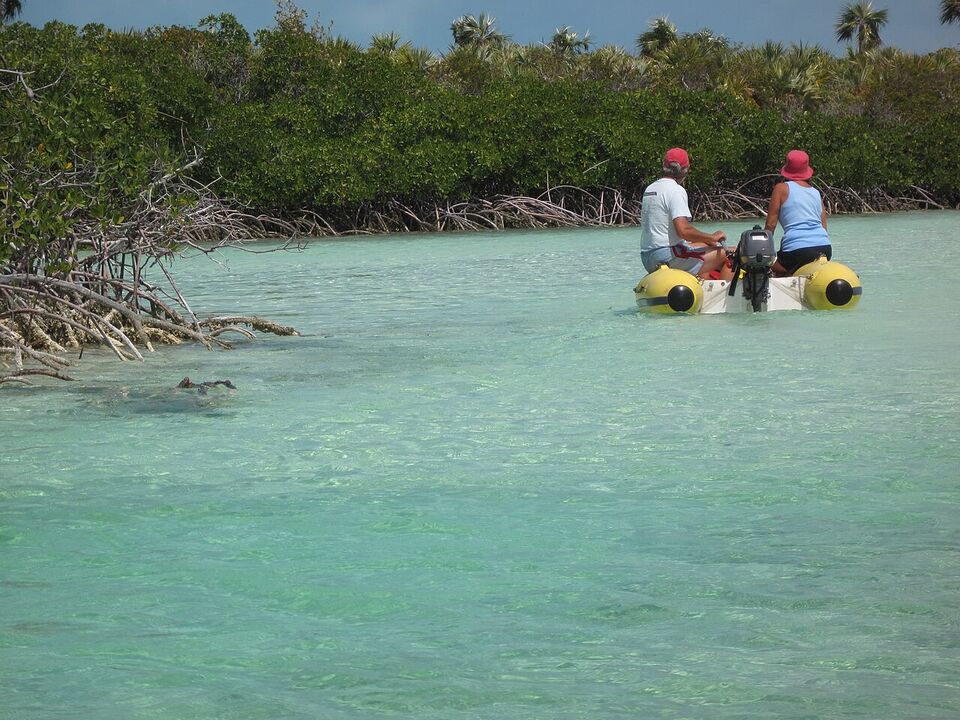
Bonefish feed on shallow sand and grass flats on the incoming tide, and they are famously wary, which is why they are called "grey ghosts". They reach about 17 lb (7.7 kg) at most, and most anglers release them. The Bahamas has no catch limit on bonefish, and catch and release is strongly encouraged. The flats rules below apply to bonefish, tarpon, cobia and permit. Bonefishing is the main draw on Andros, Long Island, Crooked and Acklins, the Abacos, Grand Bahama and Eleuthera. Most visitors hire a guide, which the rules effectively require for groups, and book weeks or months ahead in peak season.
Deep-sea fishing
Trolling for blue marlin, tuna, mahi-mahi (also called dolphin fish), wahoo and kingfish is a boat day with a charter captain. Bimini and the Gulf Stream are the classic area; the Berry Islands (Chub Cay is known as the billfish capital of the Bahamas) and Ragged Island are also known for deep-water fishing. Billfish must be released unharmed unless caught in an approved tournament.
Reef, bottom and spearfishing
Bottom fishing for snapper and grouper happens on reefs and banks. Sharks are protected, and the limits for visitors cover only fish and shellfish listed below. Spearfishing has its own rules, covered in the next section.
Comparison by island and season
Seasons below are general patterns, not guarantees, and they vary with weather and the year. A captain will tell you what is biting the week you are there.
| Fishing type | Where it is best known | Typical season (general pattern; confirm) | Notes |
|---|---|---|---|
| Bonefish (flats) | Andros, Long Island, Crooked and Acklins, Abaco, Grand Bahama, Eleuthera | Year-round; many guides prefer spring and fall | Flats licence, guide, catch and release |
| Blue marlin and billfish | Bimini, Berry Islands (Chub Cay) | Spring and early summer is the usual peak | Release required unless in a tournament |
| Tuna and wahoo | Bimini, Berry Islands, Exuma Sound edges | Wahoo often winter; tuna varies by species | Counted in the 18-fish pelagic limit |
| Mahi-mahi (dolphin fish) | Gulf Stream off Bimini, Nassau, Abaco | Spring and early summer | Counted in the pelagic limit |
| Bottom fishing (snapper, grouper) | All islands over reefs and banks | Year-round, with grouper closures | 20 fish or 60 lb per vessel |
| Deep-water trolling | Ragged Island, Berry Islands | Varies | Few operators; book ahead |
The Ministry of Tourism's descriptions name bonefishing and birdwatching around Acklins and Crooked Island, bonefishing off Long Island and deep-sea fishing around Ragged Island. Great Harbour Cay in the Berry Islands is reported to hold an annual fishing tournament in May, and Bimini is reported to run a native fishing tournament; confirm dates with the organizers.
Permits and licenses
These rules come from the Ministry of Tourism's fishing FAQ, which we read in November 2026. They are the most important page of this guide.
- Sport fishing permit. Non-Bahamian anglers need one to fish from a vessel that is not Bahamian-owned. You can fish from shore or a dock without one, and renting a Bahamian-owned boat does not require it. Register online (preferred) or at Customs and Immigration on arrival. Online registration still requires a visit to Customs at the port of entry. The official page says not to fish until this is done.
- Fee. The fee was not shown on the page. Check the current amount on the Ministry's site before you go.
- Rods. Up to six rods in use at once. More than six moves you into another category with a much larger annual fee.
- Flats licence. Anglers over 12 need a flats fishing licence for bonefish, tarpon, cobia and permit. Only Bahamian-registered vessels may be used on the flats, and a Bahamian-certified guide is required when two or more anglers fish from a vessel. Its fee was not shown, and online pre-registration was listed as not yet available.
- Charter licensing. A captain may not run paid fishing trips in Bahamian waters without a Bahamas Port Department license. News reports of the State Department's advisory say fishing for hire without one can bring detention, seizure of the vessel, fines up to $100,000 and up to three years in prison. Ask any charter captain to show the license.
- No scuba for fishing. Scuba gear and air compressors are not allowed for fishing. Cast nets need authorization written on the permit.
- Selling. Selling or trading fish is prohibited.
Watch out
Fishing without a permit is the mistake that costs the most. The risk is highest for anglers on their own boats from Florida. Register before you wet a line, keep the paperwork aboard and ask the Department of Marine Resources if anything is unclear. The department's office phone, as given by a fisheries poster, is (242) 393-1777; confirm it before you call.
What you can keep, and the closed seasons
For visitors, the per-vessel limits are listed by the fishing FAQ. They apply to the whole boat, not each angler.
| Catch | Per-vessel limit | Notes |
|---|---|---|
| Pelagic fish (kingfish, tuna, mahi-mahi, wahoo combined) | 18 | Combined total |
| Spiny lobster (crawfish) | 10 in season | Closed season April 1 to July 31 per a fisheries poster; check; minimum tail size applies |
| Queen conch | 6 | Must have a well-formed, flared lip; check for any conch ban or closed season |
| Bottom fish (snapper, grouper) | 20 fish or 60 lb, whichever is less | Nassau grouper has a winter closed season, reported as December 1 to February 28 |
| Billfish | Release unharmed | Tournaments with approval are an exception |
| Sharks | Release unharmed | Protected since a 2011 amendment |
Two caveats. First, the lobster and grouper dates come from a 2020 poster by a Bahamian conservation group (BREEF), not from the government, and a national conversation about conch limits or a ban was reported. We could not confirm the current seasons or sizes on an official page, so check with the Department of Marine Resources and your charter captain. Second, the Exuma Cays Land and Sea Park is a replenishment zone, and all fishing is prohibited inside its boundaries, along with other marine reserves.
Egg-bearing lobsters are protected, and the Bahamian rules cover undersized fish and shellfish as well. If you are not sure whether a fish is legal, release it. Taking undersized or out-of-season catch is the second most common mistake after fishing without a permit, and fines can follow. Shell collecting is a related trap, since US rules on bringing shells home can restrict some species, so see the bringing-things-home guide.
Spearfishing
Spearfishing needs authorization on your permit, and only a Hawaiian sling or a pole spear may be used, not a speargun. It is banned within 1 mile of the New Providence coast and the southern coast of Freeport, and within 200 yards of any Out Island coast. Scuba tanks cannot be used for fishing. Many visitors skip spearfishing entirely, and the national parks and marine reserves forbid it.
Charters and boat rentals
A fishing charter is a licensed captain, a boat, tackle, bait, ice and usually a mate, booked by the half day or full day. Prices depend on the boat, the island and the season, and we have not confirmed current rates, so ask for the all-in price including fuel, tackle, taxes and gratuity, and who holds the permit. For a first trip, book through a marina, a lodge or a hotel concierge rather than a stranger on the dock.
For bonefishing, the guide supplies a skiff and local knowledge; you bring or rent a rod, flies or lures, polarized sunglasses, a hat and sun protection. Book a day or two early in your stay in case the weather moves you.
Renting a boat to drive yourself is common on Abaco, Eleuthera and the Exumas. Ask four things before you sign: whether the boat is Bahamian-owned (which affects the fishing permit), what the insurance covers, whether the rental company will give a briefing and a chart, and what the weather rule is for returning early. Do not take a rental across open water in rough weather. The State Department's advisory says boating is poorly regulated, and some watercraft are unsafe or uninsured, so use operators that show licenses and insurance, and see the safety guide. Jet skis deserve extra care: the advisory reports sexual assaults by jet-ski operators, and US government employees may not use independently operated jet skis on New Providence and Paradise Island.
Different from home
Boating oversight is lighter than at home: the State Department advisory calls it poorly regulated. A rental may come with a short briefing and no life jackets in your size. Ask for what you need, and carry your own life jackets for children. Ask how fuel is priced and which unit the dock uses.
Sailing the Exumas and the Abacos
The Exumas
The Exumas are a long chain of cays with clear water and many sheltered anchorages. The Exuma Cays Land and Sea Park, run by the Bahamas National Trust, was established in 1958 and covers about 455 sq km (about 176 sq miles). Its headquarters is on Warderick Wells, which has three anchorages and a tradition of leaving a driftwood sign with your boat's name on Boo Boo Hill. Services in the park are very limited: a small store, no public restrooms, trash cans or Wi-Fi. Staniel Cay and George Town on Great Exuma are the main supply points, and Big Major Cay, home of Pig Beach, is nearby (see the swimming pigs guide). See the Exumas guide.
The Bahamas National Trust sets the park fees, which include 10 percent VAT, with no reservations; you moor first, then pay, using the ParkPay app. A daily mooring for a boat up to 39 ft 11 in costs B$27.27 (US$27.27); 40 to 49 ft 11 in is $36.36 and 50 to 59 ft 11 in is $45.45. The page lists an anchorage rate of $0.45 for vessels under 90 feet, which we read as a per-foot rate; confirm on the page. A charter vessel also pays a per-person daily charge and tour landing fees, and a dive fee of $14 per person applies. Confirm all figures on bnt.bs, since these were read from the page and may change.
The Abacos
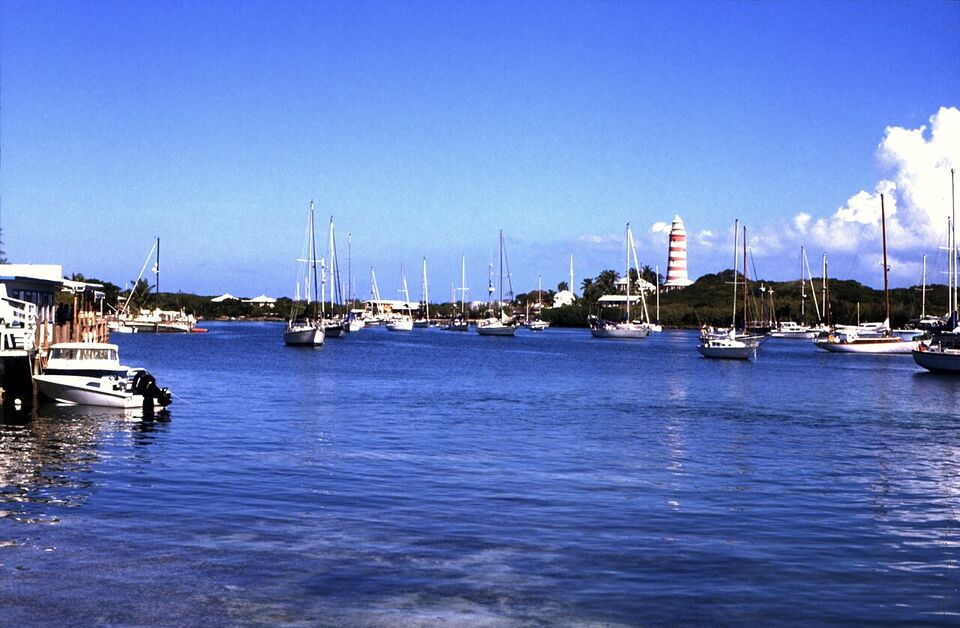
The Abacos are called the boating capital of the Bahamas by the tourism site, with sailing, fishing and old colonial towns around the Sea of Abaco. Marsh Harbour is the commercial hub, and Hope Town on Elbow Cay has its red-and-white lighthouse. Man-O-War Cay and Tahiti Beach are also named by the tourism site. Hurricane Dorian struck Abaco in 2019 and the area recorded a record number of visitors in 2025, but we cannot say how fully every marina and anchorage has recovered, so check marina and anchorage status before you go (see the Abaco guide).
Moorings, marina slips and anchorages all have costs and limits. In many harbors a mooring field is cheaper and safer than anchoring in a crowded bay. Use two anchors in a storm-prone season, never anchor on coral, and check that your mooring ball is maintained.
Crossing from Florida by private boat
The Bahamas is only about 50 miles (80 km) from the Florida coast, and Bimini is the closest island. West End on Grand Bahama is about 56 nautical miles (64 miles) east of Palm Beach. The distance is small, and the stretch is dangerous. The Gulf Stream flows north through the Straits of Florida at several knots, and a north or northeast wind against it makes steep, close waves that can swamp a small boat. Winter cold fronts (usually December to March) are the classic hazard.
- Plan the weather window. Check a marine forecast for several days, and cross only on a settled outlook. Do not set a date and then push through to make it.
- Leave early, in good light, and pick a destination with a protected harbor.
- Cross with a plan B. Know where you will turn back, who knows your route and who has your float plan.
- Carry the gear listed under safety below.
- Arrive and clear in at a port of entry before you fish, dive or go ashore.
In hurricane season (June 1 to November 30), check the National Hurricane Center (nhc.noaa.gov) and the Bahamas Department of Meteorology every day. See the hurricanes guide and the Florida links guide. If you would rather not cross yourself, see the Bimini guide for air and ferry options.
Customs and clearance for private boats
Every foreign pleasure vessel has to be cleared in. The Bahamas Customs Department posted "Pleasure Vessel Clearance (Recent Changes Summary 2026)" on August 25, 2026, and its site lists a cruising permit module in its Click2Clear online system, a Frequent Digital Cruising Card tutorial from February 2026, and tutorials for inward declarations, payments, clearing outbound and refunds. We could not read the details, so the steps below are the outline, and the rules and fees may have changed.
- Register in Click2Clear (the Customs online system) and request your cruising permit as the Customs pleasure vessel pages direct.
- Arrive first at a Customs and Immigration port of entry. Customs lists its ports of entry on its site. Do not go ashore, fish or dive before clearing.
- Every person aboard needs a passport, and you complete the immigration card. See the entry guide for what to carry.
- Pay any fees. For sea departures, Customs lists a $30 passenger tax for non-resident passengers aged 6 and over on pleasure vessels with more than three passengers, exempt if you show the passenger-tax receipt from your entry. Other fees may apply.
- Cash, negotiable instruments, precious metals or stones of B$10,000 (US$10,000) or more must be declared on departure.
- Do not bring any firearm or ammunition. Firearms are illegal, including small amounts, and US citizens have been detained for days. Treat this as applying to boats too, and ask Customs before you leave Florida if you have flare guns or other items you are unsure about.
- On return, US Customs and Border Protection has rules for small vessels, including reporting options. Check cbp.gov before you leave.
Customs phone numbers are (242) 604-3124 and 604-3125. Customs also runs an Exempt app for baggage declarations for travelers.
Anchoring, moorings and marinas
- Protected areas. National parks and reserves have rules on anchoring, fishing and landing. In the Exuma park, pay the fees through the ParkPay app and follow the rules the Bahamas National Trust posts.
- Anchoring. Anchor in sand, not on coral or in seagrass. Make sure you can swing with the tide and wind, and do not anchor in a channel.
- Moorings. Moorings are safer than anchors in a blow. Ask who owns the ball and when it was last serviced.
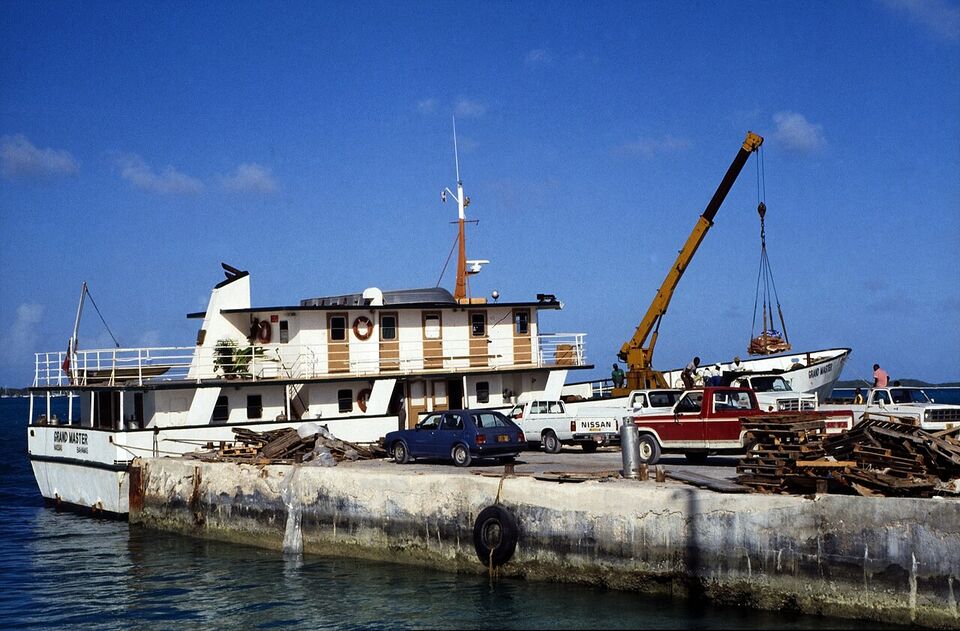
- Marinas. Reserve in advance in winter, especially at Bimini, Marsh Harbour and Staniel Cay. Fuel and water may be limited on remote cays.
- Waste. Do not dump trash or sewage in anchorages. Take trash back to a dock that accepts it.
Safety gear and weather
Carry at least the following, and check it before you leave the dock. The list is standard good seamanship, not an official Bahamian requirement, so ask the Royal Bahamas Defence Force or the Customs department if you need to know what the law requires.
- A life jacket for every person aboard, including children's sizes
- A VHF marine radio, charts and a backup GPS or a phone in a waterproof case
- Flares and a signaling device, a first-aid kit and a fire extinguisher
- An emergency position-indicating radio beacon (EPIRB) for any offshore trip
- Enough fuel, plus a reserve; fuel is not available on every cay
- Anchors, rope and a spare anchor line, plus tools and spare parts
- Water, food, sun protection and a plan for a night at sea if the engine fails
Use VHF channel 16 for distress, and tell someone onshore your route and arrival time. The Bahamas Air Sea Rescue Association (BASRA) is a volunteer sea-rescue group, but help can be hours away on the far islands. Check weather every morning, avoid offshore trips on a falling barometer, and stay home when a front is forecast. See the safety guide and the health guide for emergency numbers and medical care. For an emergency ashore, dial 911 or 919.
Mistakes to avoid
- Fishing without a permit. Register first, and carry the paperwork.
- Taking undersized or out-of-season catch. Release anything you cannot identify.
- Hiring an unlicensed captain. Ask to see the license, insurance and safety gear.
- Crossing the Gulf Stream on a schedule. The forecast decides, not the calendar.
- Anchoring on coral. It does permanent damage and can carry fines.
- Skipping clearance. Do not go ashore or fish until you have cleared in.
- Bringing a firearm. Do not bring any firearm or ammunition.
Save money
Split a charter among four to six anglers, fish a shoulder season for lower rates, book half days instead of full days and ask what is included before you pay. Bring cash for tips and for small-island marinas, where card machines can fail and change is often given in Bahamian money.
For more on choosing islands by activity, see the by-interest guide, and for a wider view of the islands see the islands overview.
Add it to a route in the trip builder, or ask us to plan the hotels, trains and guides for you.