Overview: what to eat and how to order it
Bahamian food is built on the sea, with conch at the center. You will eat it raw with lime and peppers, fried into fritters, pounded and fried as cracked conch, or stewed and spooned over rice. Around that sit fresh fish, spiny lobster, peas and rice, baked macaroni and johnnycake, a sweet bread that comes with almost everything. This page covers the dishes, where to eat in each part of the country, how the money works at a restaurant, and the mistakes that cost visitors the most.
If you only have one local meal, make it lunch at a fish fry or a small settlement kitchen rather than a hotel restaurant. Resorts cook well, but the food you will remember is usually simple, hot, salty, spicy with a little pepper sauce, and cooked to order. For drinks to go with it, see rum, Kalik and drinks, and for the words on menus and chalkboards see Bahamian words and phrases.
A word on prices: we have not confirmed 2026 menu prices, so we give none. As a general rule, shacks and small family places cost less than resort dining, and food on small islands costs more than in Nassau because so much of it is imported. Look at the menu before you sit down, and ask whether VAT and a gratuity are already included.
Conch in all its forms
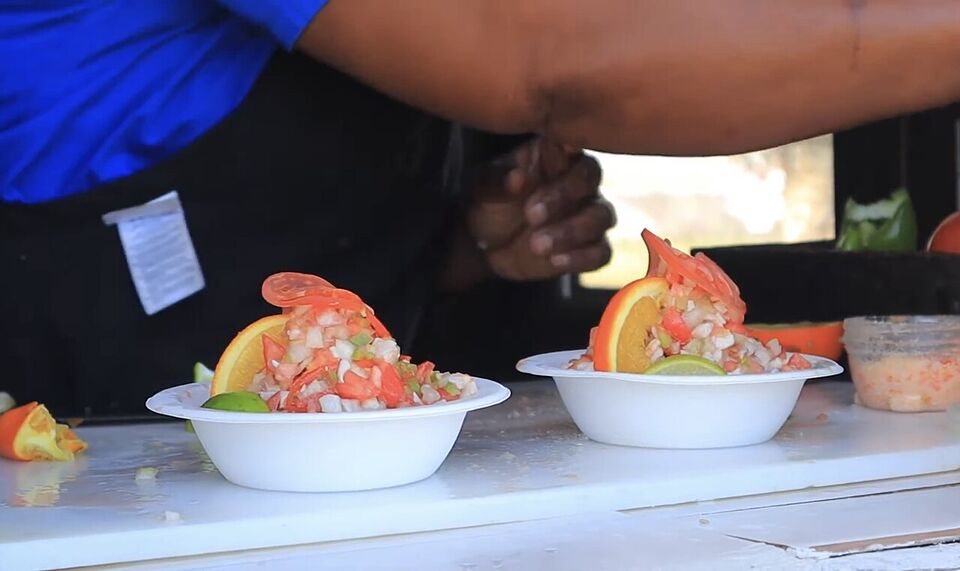
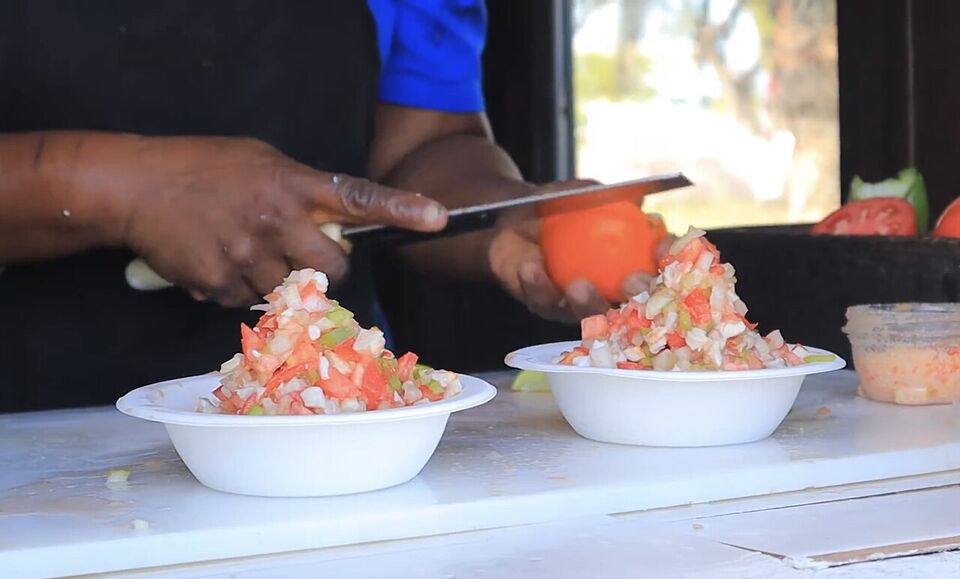
Conch (say "konk") is the Bahamas' national dish. It is a large tropical sea snail, and the meat is firm, white and slightly chewy, so cooks tenderize it by mincing, pounding or marinating. You will see it prepared in a handful of ways, and trying two or three in one trip is the easiest way to understand the cooking.
| Dish | What it is | Good to know |
|---|---|---|
| Conch salad | Raw conch chopped with lime or sour orange juice, onion, tomato and hot pepper | Often made in front of you at a stand; ask for mild pepper if you are unsure |
| Conch fritters | Minced conch in a seasoned cornmeal-style batter with onion, pepper and celery, deep-fried | Served hot with a dipping sauce; a good first taste |
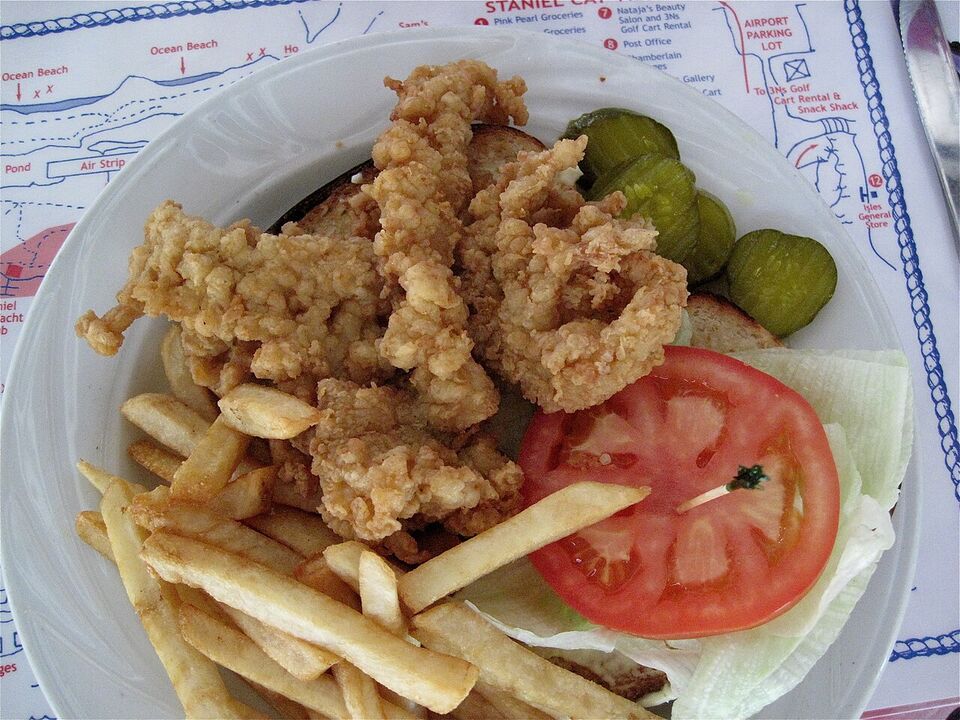
| Cracked conch | Conch pounded thin, breaded and fried | Often served with peas and rice or fries |
| Stewed conch | Conch cooked slowly in a gravy with vegetables and spices | Usually served over rice or with johnnycake |
| Conch chowder | A tomato or broth-based soup with conch and vegetables | A common starter at sit-down restaurants |
Raw conch salad is eaten widely by Bahamians, but raw shellfish carries a risk anywhere in the world. If you have a medical reason to avoid raw seafood, choose cooked conch. If you eat it raw, pick a stand that is busy and makes it fresh, which is also how you get the best salad.
Conch and conservation
Queen conch has been harvested in the Bahamas for centuries, and overfishing of young conch has hurt the population, which is why a 2020 fisheries poster from the Bahamian group BREEF says harvested conch must have a well-formed, flared lip on the shell. We did not find an official current conch season or size rule in the sources we checked, so we do not state one. Visiting anglers may take only a limited number of conch per vessel under the visitor fishing rules, covered on our fishing and boating page.
Conch shells are sold to tourists as souvenirs, but buying them can be restricted when you take them home. The CITES treaty has asked some countries to limit trade in queen conch shells. Check CBP and the US Fish and Wildlife Service before you buy a shell, and see what to buy and bring home for the general rules.
Fish, lobster and other seafood
Fish is the second pillar of the kitchen. Grouper is the best known and is served fried, grilled, sauteed or, in the traditional way, boiled. Snapper is common, and you may also see mahi-mahi (often called dolphin on menus, which is the fish and not the mammal), wahoo, tuna and bonefish, which is mostly an angler's fish and is not commonly served. Stewed fish uses celery, onion, potato, tomato and spices, and "boiled fish" is a light, peppery broth.
Spiny lobster
The Bahamas has spiny (clawless) lobster, locally called crawfish or rock lobster. It is a seasonal fishery with a closed season: a fisheries poster from the Bahamian environmental group BREEF lists April 1 to July 31, with a minimum tail size of 5.5 inches and a ban on taking egg-bearing females. That poster is from 2020 and is not a government page, so treat the dates as a guide and check with the Department of Marine Resources (phone (242) 393-1777) before you plan a lobster meal in spring or early summer. Menus in the closed season may use stored or frozen lobster, so ask.
Grouper and other closed seasons
The same poster lists a December 1 to February 28 closed season for Nassau grouper, which falls in the busiest tourist months. We could not confirm it on an official page, so ask your server what is in season and where the fish came from. Fish names on menus can be loose, so ask what the catch of the day is.
Other seafood and local oddities
Crab is cooked into dishes such as crab and rice, and crab fat and dough is a traditional dish. Turtle soup was once a mainstay but turtles are now endangered, so do not order it. Iguana is still hunted and eaten on some outlying islands, and some species are protected. If a menu item is a protected animal, skip it.
Sides, breakfast and sweets
Most Bahamian plates come with starch on the side. Peas and rice is cooked with pigeon peas, onion and seasoning. Baked macaroni, similar to Southern macaroni and cheese, is served with most meals, often as a plate component rather than a main dish. Coleslaw, potato salad, boiled vegetables, fried plantain and cassava bread appear in different places.
Johnnycake is a dense, slightly sweet bread baked or fried, and it goes with boiled fish, souse and stew. Grits turn up at breakfast, a habit shared with the American South. A traditional morning bowl is souse, a soup made with chicken (or fish, in which case it is boiled fish), lime, potato and pepper. It is also a popular post-night-out meal, which tells you how it tastes: sharp, hot and restorative. Fire engine is a cheap local dish of steamed corned beef served with grits or rice.
For sweets, look for guava duff, a boiled pudding made with guava and served with a sauce. It is a traditional dish for Independence Day on July 10. Coconut and pineapple tarts, bread pudding, cornmeal pudding, sapodilla pudding and rum cake are all common. Fruit cake appears around Christmas. Papaya, called pawpaw, is eaten fresh at breakfast and used in jams and drinks, and ice cream flavors can include soursop.
Insider tip
Ask what the "local plate" is. Many small places cook one or two daily specials, such as stewed fish, chicken, pork chop or cracked conch, with peas and rice and macaroni. It is often the freshest and best-value meal on the menu and may not be written anywhere.
The Arawak Cay Fish Fry
The Fish Fry at Arawak Cay is Nassau's best-known local meal. Arawak Cay is a 100-acre man-made island built in 1969 along West Bay Street, about 15 minutes from downtown by road and about 25 minutes from Atlantis on Paradise Island. It holds a row of small colorful eateries and shacks serving conch, fish and sides, and it is a good place for lunch, early supper or a weekend crowd. Cruise visitors and hotel guests come, and so do Nassau residents.
How to order at a fish fry
- Walk the row first. Look at what is being cooked, which stalls have people waiting, and what the daily specials are.
- Order at the counter or window, then wait for your name or number. Service is not fast food, and conch salad is made to order.
- Ask for pepper sauce on the side if you are cautious with heat.
- Share a few dishes: a conch salad, fritters or cracked conch, and a plate of fish with peas and rice.
- Bring small bills. Many stalls take cards, but some prefer cash, and your change may come back in Bahamian money. See money, cards and tipping.
We could not confirm current hours, prices or which stalls are open in 2026, so check before you go, especially on Sundays and holidays. Taxi drivers and the Nassau pages of the Ministry of Tourism can point you to what is open. For the rest of the town see Nassau and what to see in Nassau.
Local restaurants versus resort dining
There are two food worlds in the Bahamas. Resort restaurants on Paradise Island, Cable Beach and in Freeport offer international menus, a lot of American-style food and a few polished Bahamian dishes. Local restaurants, snack bars and fish fry stalls cook Bahamian staples, usually more simply and at lower cost. Neither is better, and a good trip includes both.
| Type of place | What you get | Watch for |
|---|---|---|
| Resort restaurant | Wide menus, reservations, cards accepted, vegetarian options more likely | Service charge, VAT and resort extras on the bill; high prices |
| Fish fry stall or shack | Conch and fish cooked to order, casual seating | Cash preference, short hours, slow service at peak times |
| Settlement restaurant or bar | Daily special, peas and rice, macaroni, local conversation | May close on Sundays or at odd hours; ask a local |
| Dockside or beach bar | Conch, grilled fish and drinks with a view | Boat-access sites may run on island time |
| Supermarket or bakery | Self-catering supplies, bread, fruit, prepared plates | Imported goods cost more on small islands |
If you are staying at an all-inclusive, you may eat most meals on property, so build one or two outside meals into the trip. A shared taxi to the fish fry or a settlement lunch on an Out Island is easy to fit in and does not require a big plan.
Where to eat by region
We do not name individual restaurants in this guide unless we can confirm they are open in 2026. These notes describe the kinds of food and how to find it in each area.
Nassau and Paradise Island
Arawak Cay for local food, downtown for lunch spots near Bay Street, and resorts for the widest menus. Local restaurants serving Bahamian staples exist in the city, and your hotel or a taxi driver can point you to the current favorites.
Cable Beach
Mostly resort restaurants and beach bars. A short taxi ride reaches the local places in town. See Cable Beach.
Grand Bahama
Resort and marina dining in Lucaya, plus local places in and around Freeport. Ask your hotel for local recommendations. See Grand Bahama.
The Exumas
Dining on the Exumas often means a small restaurant, a marina bar or a boat-day lunch of grilled fish and conch. Plan meals and cash ahead on small cays. See the Exumas.
Eleuthera and Harbour Island
Pineapples are the local crop, and Gregory Town holds an annual Pineapple Fest, usually in June (check the date). Harbour Island has more polished dining. See Eleuthera.
The Abacos
Boating towns with marina restaurants and local kitchens. Sandy Point holds a Homecoming and Conch Fest around Labour Day (first Friday in June). See the Abacos.
Andros and Bimini
Fishing lodges and small restaurants. Andros has crab, seafood and conch festivals through the year. See Andros and Bimini.
Groceries, self-catering and costs on small islands
A large share of Bahamian food is imported, so groceries cost more than at home, and the further you go from Nassau and Freeport the higher prices and the smaller the selection are likely to be. VAT is 10% on most goods and services, with a reduced 5% rate on unprepared food since April 1, 2025, so groceries are taxed less than restaurant meals. We have not confirmed 2026 grocery prices and give none.
- Do a big shop in Nassau, Freeport or on the largest island on your route, then top up on small islands.
- Shops on small cays may close early, on Sundays or between deliveries. Fresh produce arrives with the mailboat or supply boat and can run out.
- Bring snacks, spices and anything you cannot do without. Specialty and dietary items are limited on small islands.
- Fish and conch are often cheaper bought direct from fishermen at the dock, if you have a kitchen. Ask a local what is fresh.
Save money
Eat your biggest meal at lunch, when many local places serve a plate special, and stock your room or boat with breakfast and snacks from a supermarket. Carry small US bills and watch how change is returned.
Dietary needs, water and ice
Vegetarian, vegan and allergies
Vegetarian eating is limited outside resorts and larger Nassau restaurants. Seafood and meat dominate local menus, and sides such as peas and rice, soups and macaroni may be cooked with meat, stock or pork. Ask about ingredients, and expect sides, salads and fruit to be your fallback on small islands. Resorts and tour-boat lunches can often accommodate dietary needs if you tell them ahead. Allergies need care: many dishes are fried in shared oil, and shellfish is everywhere, so tell your server clearly and carry any medication you use.
Water and ice
Many visitors drink bottled or filtered water, especially on the Out Islands, so ask your hotel what it advises. Ask whether the ice is made from filtered or bottled water, especially on small islands and at beach bars, if you have a sensitive stomach. Bottled water is widely sold.
Ciguatera
Ciguatera is a type of food poisoning from certain reef fish in warm tropical waters. It cannot be seen, smelled or removed by cooking. It is commonly associated with large reef predators such as barracuda, and local advice about which fish to avoid can vary by area and over time. We did not find official 2026 advice in the sources we checked. Ask restaurants and local fishermen what they serve, avoid eating large barracuda, and check the CDC travel pages and the Bahamas Ministry of Health before you go. If you develop tingling, vomiting or odd temperature sensations after a seafood meal, seek medical care and mention what you ate. For general health advice see health, water and medical care.
Tipping, VAT and service charges
Many restaurants and hotels add a gratuity, often 15%, to the bill. Check the bill before you tip again, and look for words such as "gratuity," "service charge" or "service" near the total. If a gratuity is already included, an extra tip is optional and is usually a small amount for exceptional service. If none is added, tip as you would at home. About 15% of the fare is customary for taxis.
VAT is 10% on most goods and services, and a restaurant meal may show VAT on the receipt. A resort restaurant may add VAT, a service charge and a resort or room-service fee on top of menu prices. Ask for the all-in cost when it matters. More detail is on our money page, and tipping habits and manners are in Bahamian etiquette.
Common mistakes
- Tipping twice. Check the bill for a gratuity before you add one.
- Ordering lobster in the closed season without asking. Spiny lobster is reported as closed April 1 to July 31, so ask about the source.
- Eating only at the resort. The local places are where conch, boiled fish and johnnycake taste best.
- Skipping lunch plans on small islands. Restaurants may close early, on Sundays or between boat deliveries. Ask your host the day before.
- Not carrying cash. Fish fry stalls and Out Island kitchens may take cash only, and cards can be down.
- Assuming all conch is raw. If you want it cooked, ask for fritters, cracked or stewed.
- Ignoring ciguatera advice. Ask locals what fish they serve and avoid large barracuda.
- Buying conch shells to take home without checking. Rules apply to some shells and wildlife products.
Watch out
Do not order turtle or any protected animal, and do not take wildlife home. Check CBP and US Fish and Wildlife rules before you pack shells, coral or anything made from wildlife.
Plan your meals
For a first trip, a good mix is one fish fry lunch, one local breakfast of boiled fish or souse with johnnycake, one conch dish you have not tried, and one dinner at a restaurant with a view. Add guava duff or rum cake as a souvenir treat, and pair meals with a Kalik or a Goombay Smash from our drinks guide. For timing around holidays and festivals, when local kitchens may close, see Junkanoo and festivals.
Ask people where they eat. Bahamians are happy to share a favorite kitchen, and a shared taxi ride or a chat at the dock often leads to the best lunch of your trip.
Add it to a route in the trip builder, or ask us to plan the hotels, trains and guides for you.