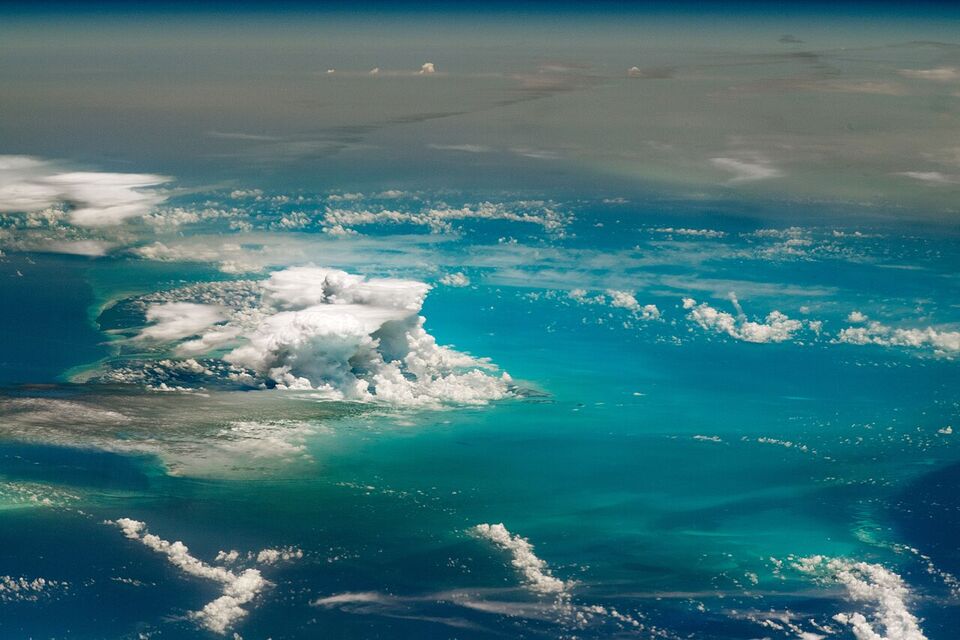
Overview: the big, quiet island next door
Andros is the largest island in the Bahamas, and its land area is greater than all the other Bahamian islands combined. Yet it has about 8,000 people (7,695 at the 2022 census), small settlements strung along the coast and no resort strip. It lies about 31 miles (50 km) west of Nassau, across a deep channel known as the Tongue of the Ocean, which is why the reef on its east side drops off into water about 6,600 feet (2,000 m) deep.
Andros is a place to dive, fish and paddle, not to lie beside a pool. Its draws are the blue holes, the barrier reef, the bonefish flats on the west side, bird-watching and a feeling of being far from the cruise crowds. If you want a gentle, low-key stay, it is a short hop from Nassau. If you want a resort, a spa and a swim-up bar, choose another island, such as Paradise Island or Eleuthera.
The island is not one place but three main islands (North Andros, Mangrove Cay and South Andros), separated by channels called bights and joined by water and mangroves. Distances are long, so choosing where to stay on the island matters. For a wider view, see our Out Islands overview.
Different from home
Andros is part of the Out Islands (also called the Family Islands), where shops, banks, fuel and restaurants are far fewer than in Nassau. Bring cash. Change is often given in Bahamian money, which is hard to exchange back home, but US dollars are accepted and the Bahamian dollar is pegged at B$1 = US$1.
The blue holes
A blue hole is a water-filled opening to an underwater cave system, found inland, in creeks and shallow banks, or at sea. One source says Andros has about 178 blue holes on land and at least 50 in the sea, and calls it the world's largest collection. The best known to explorers include inland holes called Uncle Charlie's, Church's and the Guardian, which Jacques Cousteau visited and filmed in 1970.
The holes vary in size, depth and danger. Many are for experienced cave and technical divers with specialized training. Others can be seen or snorkeled in the calm shallows with a local guide. Currents, tidal flows and depth change fast, and some holes are on private land or in protected areas.
We could not confirm any official public-access rules, fees or permits for blue holes on Andros, so ask your lodge or dive operator which sites are open to visitors, who guides them and what conditions to expect. Do not enter a blue hole alone, and do not go beyond your training. For a comparison with a famous deep hole elsewhere, Dean's Blue Hole on Long Island is about 663 feet (202 m) deep. See our diving and snorkeling guide for general safety.
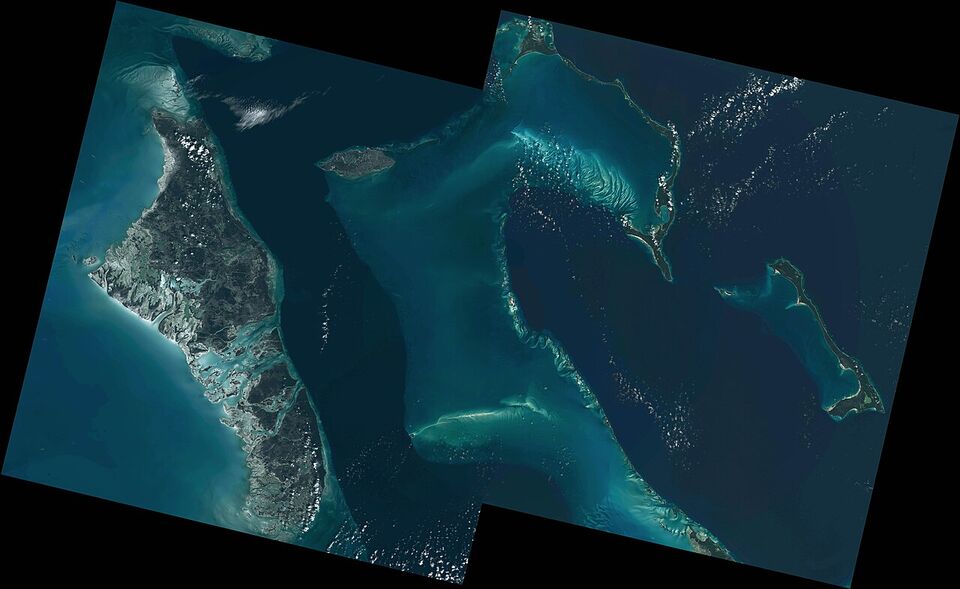
The barrier reef
The Andros Barrier Reef runs along the east side of the island for about 140 miles (225 km), roughly 1 to 2 miles (2 to 3 km) from shore. Wikipedia calls it the sixth-longest reef in the world, but its own text gives a different rank in another place, so we say only that it is one of the longest barrier reefs in the world and encourage readers to treat any single ranking cautiously.
Inside the reef are shallow coral gardens, in places only 10 to 20 feet (3 to 6 m) deep, with staghorn and elkhorn coral. Farther out, the sea floor slopes to a drop-off known as The Wall, which plunges into the Tongue of the Ocean. Divers and snorkelers see reef fish, turtles (four species are found in Andros waters), and sometimes larger animals in deeper water. One source says the Bahamas' first dive resort opened in 1960 near Fresh Creek, and diving remains a main reason to visit.
Diving depends on a licensed operator with good equipment and local knowledge. Ask for certification checks, boat safety and insurance, and be honest about your level. Never dive without a buddy and a guide at depth, and follow your dive operator's advice on waiting before you fly.
Bonefishing and other things to do
Andros is known for bonefishing. The shallow flats on the west and south of the island hold bonefish, which anglers hunt on foot or from small boats. Bonefish have no catch limit in the Bahamas, but catch and release is strongly encouraged. The Ministry of Tourism says anglers over 12 need a flats fishing licence for bonefish, tarpon and similar fish, that only Bahamian-registered vessels may fish the flats, and that Bahamian-certified guides are required when two or more anglers fish from a vessel. Fishing from a non-Bahamian boat also needs a sport fishing permit. We did not find the fees. See our fishing and boating guide for the permit rules, and book a local guide through your lodge.
Diving and snorkeling
Dive the reef and the drop-off with a licensed operator. Beginners can snorkel the shallow coral inside the reef.
Bonefishing
Wade or skiff fishing with a local guide. Check the flats licence and permit rules before you arrive.
Kayaking and paddleboarding
Quiet water in creeks and bights, good for wildlife. Go with a guide, watch the tide and take insect repellent.
Bird-watching
About 225 bird species are known across the Bahamas, and Andros has many. The Bahama oriole is found only on Andros and is critically endangered; local guides can help you look.
Androsia batik
A batik factory founded in 1972 makes fabric that has become part of Bahamian dress. Check opening hours before you go.
Local culture
Andros has a Crabfest at Fresh Creek, usually in June, and a regatta at Morgan's Bluff. Dates are not confirmed, so check with the Ministry of Tourism.
Local lore adds a touch of mystery: the Chickcharnie, a one-eyed, three-toed creature of the pine forests, and the Lusca, a giant sea monster said to live in blue holes. You may hear both stories from guides.
The settlements and where to stay
Andros has settlements along the coast from Morgan's Bluff and Nicholls Town in the north, through Lowe Sound, Fresh Creek and Andros Town in the center, to Mangrove Cay and, in the south, Congo Town and Kemps Bay. It has no big resorts. One source counts 35 to 40 hotels, guesthouses and lodges with roughly 400 rooms across the island, but this count is not recent, so treat it as a guide and check what is open.
We do not name hotels or lodges because we could not confirm which are open and priced for 2026. Choose by area and type:
- North Andros (Nicholls Town, Morgan's Bluff). Closest to Nassau by sea, with a small airport at San Andros. Suits a short stay and fishing.
- Central Andros (Fresh Creek, Andros Town). Near the reef and its dive operators and Androsia. Suits divers.
- Mangrove Cay. A quiet, separate settlement with its own airport and a long reach of flats and creeks nearby.
- South Andros (Congo Town, Kemps Bay). The most remote, with a long reef and a small airport. Suits fishing and quiet stays.
Rooms are plain, often with a kitchen or meals provided by the lodge. Many lodges offer packages that include meals, boats or guides. Ask what is included and about VAT, service charges and gratuities, which can add to the bill. Our where to stay guide compares options across the Bahamas.
How to get there
Andros has four airports with paved runways: San Andros (Nicholls Town), Andros Town (Fresh Creek), Mangrove Cay and Congo Town (South Andros). As of November 2026, the Nassau airport listing names Bahamasair and Western Air among the carriers flying inter-island, with LeAir serving Andros Town and Mangrove Cay and Flamingo Air serving Mangrove Cay. One older source puts the flight at 15 to 25 minutes. Check the airline schedules, because flights change by season.
By sea, an older source says a ferry from Nassau serves Morgan's Bluff and Fresh Creek, and that mailboats from Potter's Cay stop at settlements along the coast. Bahamas Ferries, which serves eight Bahamian destinations from Potter's Cay, did not list Andros fares or times on the pages we could read, so check bahamasferries.com and ask at Potter's Cay before you plan on a boat. Mailboat schedules change, and a trip may take much longer than a flight.
The airline contacts are Bahamasair reservations at 1-242-702-4140 or, from the US, 1-800-222-4262. The getting around guide explains inter-island options, and Nassau's airport is covered in our Nassau airport guide.
Getting around on Andros
There is no public transport on Andros. One source reports a private shuttle bus on North Andros between Nicholls Town and Behring Point, and taxis at the four airports. Distances between settlements are long, and roads are basic. Arrange airport transfers with your lodge before you arrive, and ask about rental cars. Driving is on the left; see our driving guide. Fuel and groceries are limited, so fill up and stock up when you can. Cell coverage can be patchy.
A short trip from Nassau: how to plan it
- Day 1
Fly or sail over
Take a morning flight from Nassau to the airport nearest your lodge, or confirm the boat times if you go by sea. Check in, sort bug spray and sun protection, and walk the settlement.
- Day 2
Reef or flats
Book a half-day dive, snorkel or fishing trip with a licensed local operator. Keep the afternoon free for weather or a paddle in the creeks.
- Day 3
Local sights and return
Visit a blue hole with a guide if one is open, stop at a craft shop, and leave in good time for your flight back to Nassau.
If you only have a day, remember that a day trip leaves little time in the water after the flight and transfers. Two nights is better. Add a night in Nassau on either side if you connect from a US flight: see our Nassau guide.
Mosquitoes, bugs and weather
Andros is covered by pine forest, mangroves and creeks, and biting insects are part of the experience. Mosquitoes and sand flies (often called no-see-ums) are most active near mangroves, in wet weather, at dawn and dusk and on still, humid days. We found no source that pins down bug season, so ask your lodge when bugs are worst. Bring repellent, long sleeves and trousers for evenings, and check the CDC travel page for the Bahamas before you go for current advice on mosquito-borne illnesses.
Watch out
Do not ignore bug season. A trip in the warmest and wettest months can mean lots of bites, especially if you plan to kayak, fish or walk in the mangroves. Ask your lodge what conditions are like for your dates, and pack repellent and a light long-sleeve shirt.
Hurricane season runs June 1 to November 30. For any named storm, check the National Hurricane Center (nhc.noaa.gov) and the Bahamas Department of Meteorology. Andros has been hit in the past, including by Hurricane Matthew in 2016, which caused flooding in the north around Morgan's Bluff and Nicholls Town. See our hurricanes guide. The State Department rates the Bahamas Level 2: Exercise Increased Caution (as of November 2026), mainly because of crime in Nassau and Freeport; see our safety guide. For emergencies, dial 911 or 919. Medical care is limited, so buy travel medical insurance.
Who Andros suits, and mistakes to avoid
Andros suits divers, anglers, bird-watchers, kayakers and travelers who like quiet and do not mind simple rooms. It suits families with older children who like nature more than pools. It is a poor fit for anyone who wants a resort, nightlife, shopping or easy access to restaurants.
- Expecting resort amenities. Rooms are simple and dining options are few. Ask what meals and transfers are included.
- Ignoring bug season. Pack repellent and ask when bugs are worst.
- Booking the wrong end of the island. Pick a lodge near your airport and your activity.
- Entering a blue hole without a guide. They can be deep, dangerous and on private land.
- Skipping a fishing licence or permit. Check the rules before you cast.
- Assuming a ferry or mailboat will fit your schedule. Check the times, and have a backup flight.
Add it to a route in the trip builder, or ask us to plan the hotels, trains and guides for you.