Overview
Nassau is the capital of the Bahamas and the main gateway for visitors: it has the largest airport, the biggest cruise port and most of the country's big resorts. It sits on the north coast of New Providence, an island of about 297,000 people (about three quarters of the country's population). It is worth a visit on its own terms, not only as a place to catch a plane or a ship, because the old center, the beaches and the food are all within a short ride of each other.
This guide treats Nassau as a destination hub. It explains how the city, Paradise Island and Cable Beach fit together, what the colonial center offers, how cruise days change the feel of downtown, where to stay, how to get around and what a good first day looks like. For a list of sights with times and costs, see things to do in Nassau.
Nassau is not the only way to see the Bahamas, and it is not for everyone. It is busy, traffic can be slow, and the cruise-day crowds are large. If you want empty beaches and small settlements, the Out Islands are a better fit. If you want variety, easy flights and a mix of history, beaches and restaurants, Nassau is a sensible base for two to four nights.
Different from home
The Bahamas is on Eastern Time all year, the same as New York, and changes its clocks on the same dates as the US. Driving is on the left. Prices are in dollars: the Bahamian dollar is pegged one to one to the US dollar, and US dollars are accepted everywhere, though change may come back in Bahamian money. See money in the Bahamas.
How the city, Paradise Island and Cable Beach fit together
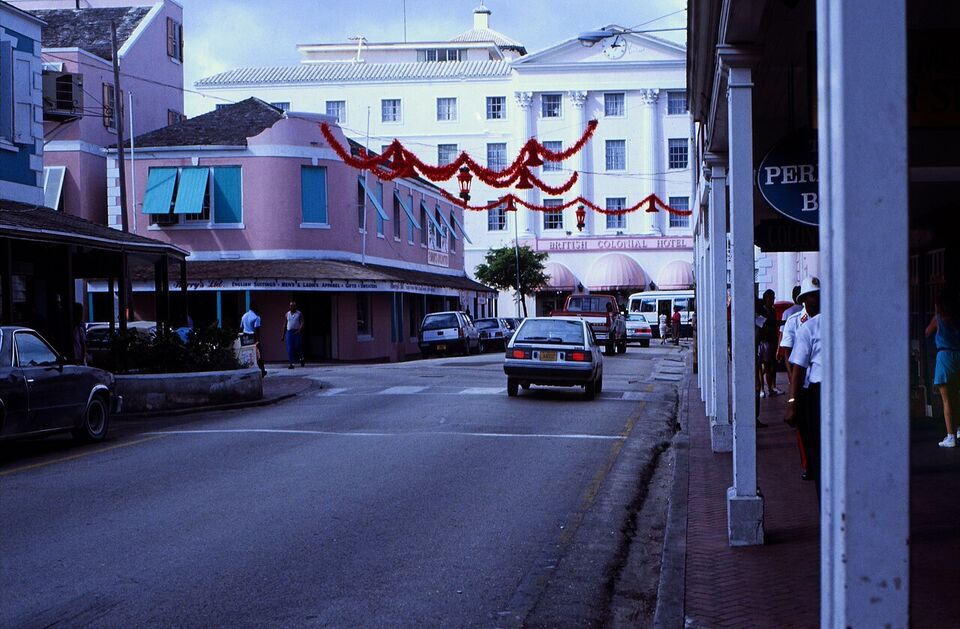
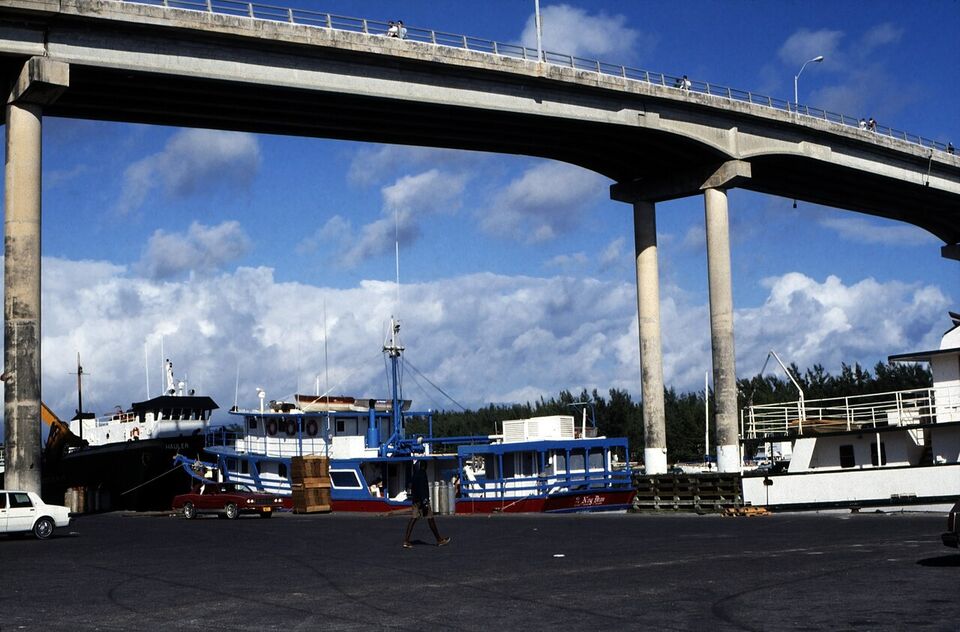
Most visitors think of three places, and they are all on or beside one small island. Downtown Nassau is the old harbor town. Paradise Island lies just across the harbor to the north and is linked to downtown by two bridges (the first opened in 1966 and the second in the late 1990s). Cable Beach is a long beach and resort strip on the west side of the city, a taxi ride from downtown. The airport is farther west again, about 10 miles (16 km) from the city center.
| Area | What it is | Good for | Trade-off |
|---|---|---|---|
| Downtown and Bay Street | Historic center, cruise port, shops, forts, museums | Sightseeing, walking, food, a short stay or a cruise day | Crowded when ships are in; quiet and less lively in the evening |
| Paradise Island | Resort island with a large water-park resort, a marina, golf and the Cloisters | Families, big-resort days, a short ride to downtown | Resort pricing, resort rules and many day-visitor limits |
| Cable Beach | Beach strip and resort area on the west side | A long beach, a resort and casino complex, restaurants close by | Not walkable to downtown; you need taxis or a bus |
| West Bay and Arawak Cay | Fish fry stalls and local restaurants on the shore road | Local food and a casual evening | Spread out; best reached by taxi |
The distances are short but the traffic can be slow, so think in time rather than miles. Downtown to Paradise Island is a few minutes by taxi or about 10 minutes by water taxi. Downtown to Arawak Cay takes about 15 minutes by road, and from Paradise Island it takes about 25 minutes. Cable Beach is a longer ride west. Ask your hotel for a realistic time at the hour you plan to travel.
The colonial center around Bay Street
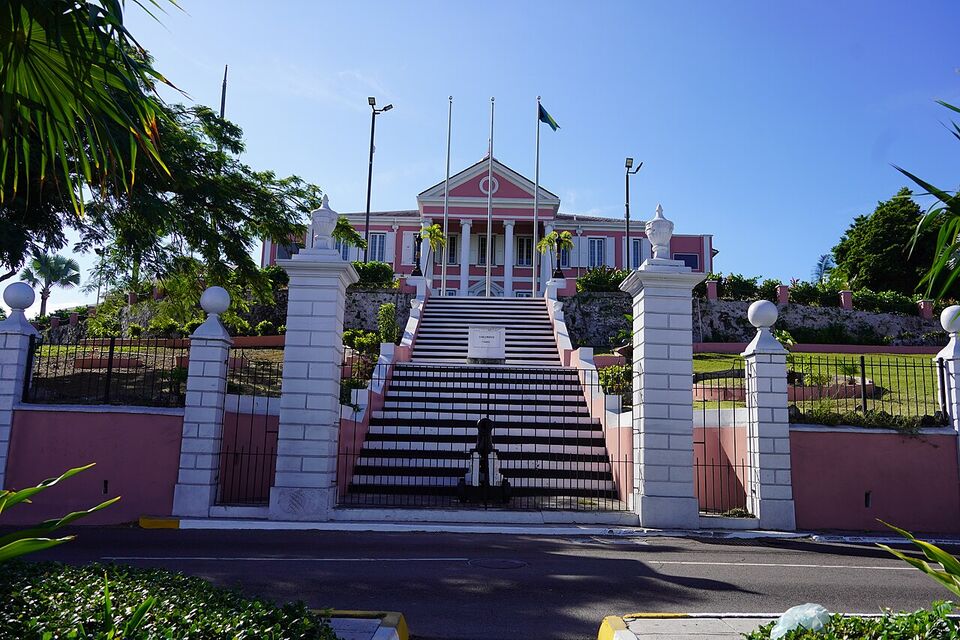
Bay Street is the spine of old Nassau and the street most visitors see first. It runs along the harbor, across from the cruise port and Woodes Rogers Walk, and for a few blocks it is lined with shops, restaurants and bars. Several historic buildings sit close by: the pastel government buildings around Parliament Square, Christ Church Cathedral, the Nassau Public Library and Vendue House (check whether it is open to visitors and when). Government House, the official residence of the governor-general, stands on the hill above Bay Street.
Behind Bay Street the ground rises to Bennet's Hill, the highest point in town. The Queen's Staircase, a flight of 65 steps cut by hand from solid limestone in 1793 and 1794, climbs through a shaded gap in the rock toward Fort Fincastle at the top. The staircase and the fort are the best-known sights in the old town and are described in things to do in Nassau, along with Fort Charlotte, the National Art Gallery and the museums.
Walking is the best way to see this area. Allow a half day to see Bay Street, the Staircase and one museum at an easy pace. The tourist part of Bay Street runs for about seven blocks. Past that, the street gets quieter and more local, with smaller shops.
Insider tip
Do the hill first and Bay Street second. The Queen's Staircase and Fort Fincastle are exposed to sun, and the walk up is easier in the morning. Shops and the waterfront are better after midday, when you want shade, a cold drink and somewhere to sit.
The waterfront and the cruise port
Prince George Wharf is the main cruise port, right beside downtown, so passengers step off and are on Bay Street within minutes. The Bahamas set a record of about 12.5 million visitors in 2025, and more than 10.6 million of them (86.5 percent) arrived by sea, according to the Ministry of Tourism. Nassau gets a large share of those cruise passengers. Reference sources put the figure at roughly 3.7 million cruise passengers a year in earlier counts, so check the port's own numbers if you need a current figure.
What matters for a traveler is the daily pattern. On a day when several large ships are in port, thousands of passengers come ashore at once, usually from mid-morning, and the Straw Market, Bay Street shops, the Queen's Staircase and the main tour desks fill up. Many ships leave by late afternoon, and downtown empties out. Early morning and the late afternoon are the quieter times for sightseeing, and a hotel guest can plan around ship times.
A port redevelopment, including a beach club area, was reported in 2026. We could not confirm from official sources which parts have opened, so check the Nassau Cruise Port website at nassaucruiseport.com or ask your cruise line before you plan around a specific facility. The ship schedule is the most useful thing to look at: it tells you which days to expect crowds.
Watch out
Seeing Nassau only on a cruise day is the most common mistake. You get a few hours, at the busiest time, with tours and shops tuned to ship schedules. If you can, add one night before or after your cruise. The cruise guide covers port days in more detail, and things to do in Nassau has a plan for a cruise-day visit.
How long to stay
We suggest the following as a starting point. It depends on your interests and on whether you are using Nassau as a base for the Out Islands.
- One day (cruise or layover): the Queen's Staircase, Fort Fincastle, Bay Street, lunch and a short beach stop. It is enough to get the shape of the city.
- Two nights: add either a day on Paradise Island or a beach day on Cable Beach, plus an evening at Arawak Cay.
- Three to four nights: add a boat or snorkeling trip, a museum, a rum tour, and slack time. This is a comfortable first trip.
- Five nights or more: use Nassau for part of the trip and head to the Exumas, Eleuthera or Harbour Island for the rest. See planning your trip for sample routes.
If you are flying through Nassau to another island, a night here on the way in or out is worth considering. Out Island flights and ferries can be disrupted by weather, and a spare day near the airport is useful. Details of the airport and fares are on airport transfers.
Where to stay by area
Choose the area before the hotel. Each area gives a different kind of trip, and the all-in price (room, taxes and any resort fee) is what you will actually pay. Resort fees, a service charge, VAT and a gratuity can all be added to the room rate, so ask for the all-in total before you book. Hotel prices change by season and date, so we use price tiers rather than rates: $ under $120 a night for a double, $$ $120 to $300, and $$$ over $300. More hotel advice is on where to stay.
Downtown
Best for history, short stays and early starts at the Queen's Staircase. Smaller hotels and guesthouses are common. Evenings are calm once cruise passengers leave, so plan how you will get to dinner.
Paradise Island
Best if you want a large resort with pools, a water park and many restaurants in one place. It is a short taxi ride from downtown. See Paradise Island.
Cable Beach
Best for a long beach and a resort stay close to the airport. Downtown is a ride away. See Cable Beach.
West Bay and the west end
Quieter stretches along the west shore, with rentals and small hotels. Useful if you want space and a kitchen, but you will need a car or regular taxis.
Near the airport
Fine for a single night before an early flight. Not a place to base a stay: there is little to walk to.
If you rent a villa or apartment, the State Department's July 2026 advisory summary specifically asks travelers to stay alert in vacation rentals, especially those without private security. Read recent guest reports on location, lighting and access, and ask the host about security.
Getting around Nassau
On foot
The cruise port, Bay Street, Parliament Square and the lower part of the Queen's Staircase are all within a short walk of each other. Bring sun protection and water. Sidewalks can be narrow or broken in places, and the streets are shared with cars that drive on the left, so look right first when you cross.
Jitney buses
Jitneys are the local minibuses. The fare is about $1.50 per person one way, exact change, paid as you get off. They are cheap and run on set routes, but routes and stops are not always obvious to visitors. Ask your hotel or a driver which jitney goes where, and keep small bills handy.
Taxis
Taxis are the main way visitors get around. Airport taxis charge set zone fares. For two passengers, the Nassau Paradise Island tourism site gives about $36 to downtown, about $30 to Cable Beach and about $45 to Paradise Island plus a bridge toll. These figures are undated and approximate, so confirm the fare before you get in. Extra passengers and bags can cost more. A tip of about 15 percent of the fare is customary.
Water taxi
A water taxi links Nassau to Paradise Island for about $7 per person, in roughly 10 minutes each way. Sources give different departure points (Woodes Rogers Wharf or Prince George Wharf), so confirm the dock and the price when you go.
Rental cars
Cars can be rented at the airport and in the city. Driving is on the left. Many rental cars are right-hand drive, and some are left-hand drive imports, so check which you are given. Traffic around downtown can be heavy, and the visitor areas are easy to reach by taxi, so most short stays do not need a car. See driving in the Bahamas and getting around for rules and Out Island options.
Save money
A taxi fare is per ride, not per person, so sharing with another couple or family cuts the cost. Agree the fare, and what it includes, before you set off. Carry small bills: change is often given in Bahamian money, which is hard to exchange back home.
Safety sense in town
The State Department's advisory for the Bahamas is Level 2: Exercise Increased Caution (as of November 2026; it was renewed on July 28, 2026). It cites crime. The summary warns that violent crime, including armed robbery, can occur anywhere, mostly in Nassau and Freeport, and asks visitors to stay alert in the area known as Over the Hill, south of Shirley Street. Check the current text at travel.state.gov before you travel, and see our safety guide for more.
In practice, ordinary sense goes a long way. Stay in busy, well-lit areas, keep valuables out of sight, and do not walk alone at night in quiet areas, including quiet downtown streets after the ships have left. Use a taxi for evening trips, even for short distances, and ask the restaurant to call one. Do not leave belongings on the beach while you swim.
- Never swim alone, and watch for boats near the shore.
- Be alert in public restrooms near downtown beaches.
- Use licensed taxis and book water activities with a licensed, insured operator. The advisory notes that watercraft rules are loosely enforced and that some are unsafe or uninsured.
- Do not bring firearms or ammunition, even a single round in a bag. Police enforce this at the airport.
- Save the numbers: police, fire and ambulance 911 or 919, and the US Embassy in Nassau at 242-461-5025 (US citizen emergencies: extension 1).
Food: Arawak Cay and Potter's Cay
Nassau's best-known local meal is at the fish fry on Arawak Cay, a 100-acre man-made island built in 1969 from harbor dredging. Small stalls and restaurants line the road on West Bay Street, about 15 minutes from downtown by road and about 25 minutes from Paradise Island. The classic order is conch, the national dish: cracked conch (battered and fried), conch fritters, or conch salad (raw, chopped, with lime, onion and pepper). You will also see fried fish, boiled fish with grits or johnnycake, rock lobster and sky juice (gin, coconut water and condensed milk). Hours and prices vary by stall, so check before you plan a meal around it, and expect evenings and weekends to be livelier.
Potter's Cay is a working dock on the Nassau waterfront. It is the base for mailboats and the Bahamas Ferries terminal. It is useful if you are catching a ferry, and interesting to see if you are curious about how the islands are supplied. It is a working dock, not a polished attraction, so go in daylight and keep an eye on traffic.
On Bay Street and in the hotels, menus run from Bahamian to international. Many restaurants and hotels add a gratuity, often 15 percent, to the bill, so check before you tip again. More dishes and tips are in our Bahamian food guide.
Nassau or the Out Islands as a base
Many first-time visitors wonder whether to stay in Nassau or fly straight to an Out Island. The two give very different trips.
| Question | Nassau | Out Islands (Family Islands) |
|---|---|---|
| Getting there | Nonstops from many US cities; the main hub | Usually a connection through Nassau or Florida on a small plane, or a boat |
| Things to do | History, museums, markets, restaurants, resorts, beaches | Beaches, boats, snorkeling, fishing, quiet |
| Pace | Busy; traffic and cruise-day crowds | Slow; fewer shops, restaurants and taxis |
| Cash and cards | Cards widely accepted | Bring cash for small places and boats |
| Weather risk | Flights and ships are less often a problem | Small planes and boats change with weather |
A reasonable compromise is two or three nights in Nassau and the rest on an island such as Eleuthera, the Exumas or the Abacos. Nassau is also a good place to arrange a day trip to the Exumas or the swimming pigs, though that is a long day: Pig Beach on Big Major Cay is about 89 miles (143 km) from Nassau, around two hours by speedboat. Many visitors prefer to spend a night or two in the Exumas.
A sample day
- 8:30 a.m.
Queen's Staircase and Fort Fincastle
Take a taxi up toward Bennet's Hill, or walk from Bay Street. Climb the 65 steps and see the fort while it is cooler. Check opening hours and any entry fee in advance, since we could not confirm them.
- 11 a.m.
Bay Street, Parliament Square and a museum
Walk down to the government buildings and Christ Church Cathedral. Visit one museum, and keep out of the sun in the middle of the day.
- 1 p.m.
Lunch and a swim
Eat on Bay Street or take a taxi to Arawak Cay. In the afternoon, go to a beach or hotel pool. Junkanoo Beach, near the port, is the closest option.
- 5 p.m.
Water taxi and dinner
Cross to Paradise Island for a walk and dinner, or eat on the harbor. Take a taxi back to your hotel after dark.
Common mistakes
- Seeing Nassau only on a cruise day. You see the busiest version in a few hours. Add a night if you can.
- Walking alone at night in quiet areas. Use a taxi, even for short trips.
- Visiting the forts at the hottest hour. Go early or late.
- Booking tours on the street. Use a licensed operator and ask about insurance and safety equipment.
- Assuming everything is within walking distance. Paradise Island, Cable Beach and Arawak Cay need a ride.
- Forgetting cash. Carry small bills for jitneys, taxis and stalls.
- Cutting the airport too close. Nassau has US preclearance, so you clear US customs and immigration before you fly. The CBP listing gives hours of 6 a.m. to 7 p.m.; follow your airline's check-in advice and see airport transfers.
Hurricane season runs from June 1 to November 30. For named storms, check the National Hurricane Center (nhc.noaa.gov) and the Bahamas Department of Meteorology. See hurricanes and when to go for timing.
Add it to a route in the trip builder, or ask us to plan the hotels, trains and guides for you.