Overview: English with a Bahamian voice
English is the official language of the Bahamas, so you will not need a phrasebook to order, ask directions or check in at your hotel. What you will meet is Bahamian dialect, an English-based creole language that many Bahamians speak with family and friends and that varies from island to island. This page is a short guide for American visitors: the polite words to use, the local terms you will see on menus and signs, how place and island names are pronounced, and the words around Junkanoo.
The aim is to help you listen and understand, not to perform. Dialect is part of Bahamian identity and history, and the way to show respect for it is to listen, to ask politely if you do not understand, and to use your own voice. For manners beyond language, see Bahamian etiquette, and for the food words on menus see Bahamian food.
Dialect is a language, not a mistake
Bahamian dialect has been called many things by outsiders, and some of them were unkind. Linguists describe it as a continuum, from forms close to standard English to a full English-based creole. It shares features with other Caribbean creoles and has a strong link to Gullah, the language of the coast of South Carolina and Georgia, because many Bahamians descend from people brought from that region after the American Revolution. A dictionary of Bahamian English published in 1982 lists more than 5,000 words, and some came from West African languages and Spanish as well as English.
Speakers often move between forms, using standard English at work and dialect with friends and family. Islands settled earlier, or with a large Black Bahamian population, tend to have more creole speech, while Nassau has a wider mix. None of this is bad grammar. It is a system with its own rules, and it carries humor, history and belonging.
Different from home
You may hear a sound shift that looks odd in writing: "this" becomes "dis," "think" becomes "tink," and an "r" after a vowel can drop. Do not correct it, repeat it back or write it phonetically in a joking way. Treat it as you would any accent that is not yours.
Greetings and manners
The most useful Bahamian phrase for a visitor is plain English said with warmth. Greet people when you enter a shop, a taxi, a bar or an office, and say thank you when you leave. Rushing straight to a question can sound abrupt.
| Say this | When | Notes |
|---|---|---|
| Good morning | Until about noon | Say it first, then ask your question |
| Good afternoon | From noon to evening | Used in shops, taxis, banks and restaurants |
| Good evening | After dark | Polite in hotels and restaurants |
| How are you? | After the greeting | Wait for the answer; it is a real question |
| Thank you | Always | Add "very much" when someone has gone out of their way |
| Please / excuse me | When asking | Used the same as at home |
| Yes / no | In conversation | Spoken as in English; dialect forms vary and are best left to locals |
Common phrases and sounds
You do not need to use any of these, and a few vary by island and by generation. They are here so that you can follow conversations. Spelling is not fixed, because dialect is mostly spoken, and the forms below are common ways of writing what people say.
| You may hear | It means | Notes |
|---|---|---|
| Yinna | You (more than one), like "y'all" | Also written "y'all" or "all a ya" |
| Pickney | A small child | Warm and ordinary, not rude |
| Ya | Your | "Das ya book?" means "Is that your book?" |
| Dey own | Theirs | Possessive forms differ from standard English |
| Een | Isn't or ain't | "I een gern" means "I am not going" |
| Gern | Going | Seen in "I een gern" above |
A sample line shows how the grammar differs. "I does eat conch erry day" means "I eat conch every day." The word "does" marks a habit, and "erry" is a short form of "every." You do not need to learn rules like these. Hearing them is part of the pleasure of a bus ride or a dock conversation.
We have not confirmed the spelling or the exact range of some terms with an official source, and usage changes with age and island. If you are not sure what a word means, ask, and expect a friendly explanation.
Food and drink words
Menus are in English, but several words will be new. Our food guide and drinks guide go further.
| Word | Say it | What it is |
|---|---|---|
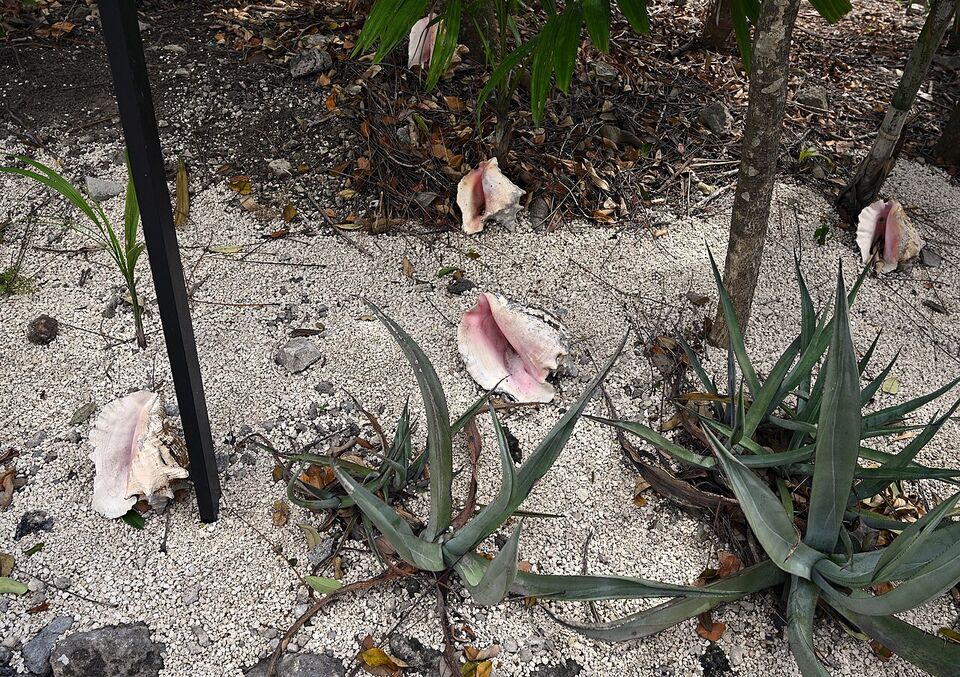
| Conch | "konk" | A sea snail; the national dish, eaten raw, fried or stewed |
| Cracked conch | "krakt konk" | Conch pounded thin, breaded and fried |
| Souse | "sowss" | A soup usually made with chicken, lime, potato and pepper |
| Boiled fish | As written | The fish version of the soup, often eaten at breakfast with johnnycake or grits |
| Johnnycake | "JAH-nee-kake" | A dense, slightly sweet bread |
| Fire engine | As written | Steamed corned beef with grits or rice |
| Guava duff | "guava duff" | A boiled pudding made with guava, served with a sauce |
| Pawpaw | "PAW-paw" | Papaya |
| Switcha | "SWITCH-uh" | Limeade made with native limes |
| Sky juice | As written | Coconut water, condensed milk and gin |
| Kalik | "KAH-lick" | A Bahamian beer, named (per its bottle label) for the cowbells of Junkanoo |
| Goombay Smash | As written | A rum cocktail; not the same as Goombay Punch, a soft drink |
Insider tip
If a menu word puzzles you, ask what is in it. Bahamian cooks like to explain, and the answer often helps you pick the right dish and the right heat level.
Place words and island names
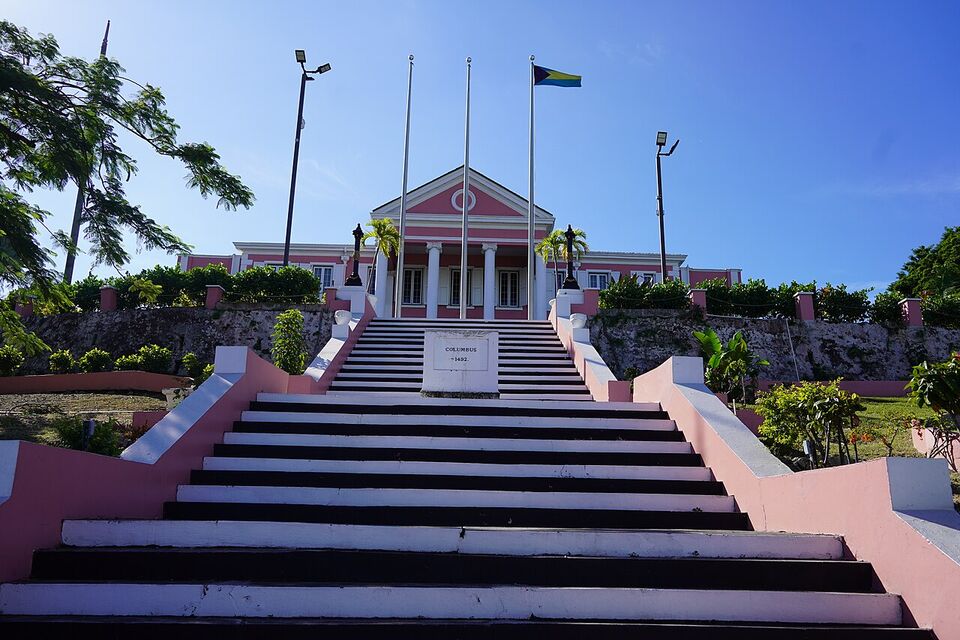
Bahamian place terms appear on maps, signs and in conversation. Learning a few helps you follow directions and read the country.
| Term | Meaning | How to use it |
|---|---|---|
| Out Islands / Family Islands | Islands other than New Providence (Nassau) and Grand Bahama | Both names are used for the same group of islands |
| Settlement | A village or small community, common on the Out Islands | "The settlement" is how people name the main village on an island |
| Cay | A small low island, pronounced "key" | Staniel Cay, Arawak Cay, Big Major Cay |
| Over the Hill | The area of Nassau south of Shirley Street | Local usage; the State Department advisory tells visitors to be alert there |
| Bay Street | Nassau's main downtown street along the harbor | The route of the main Junkanoo parades |
| Potter's Cay | The dock in Nassau where mailboats and the ferry terminal are based | Where Out Island mailboats leave from |
How island names are said
Island names are pronounced in ways that surprise visitors. These are approximate English spellings of the sounds.
- Nassau: "NASS-aw"
- Bahamas: "buh-HAH-muz"
- Exuma: "ex-OO-ma"
- Abaco: "AB-uh-ko"
- Eleuthera: "eh-LOO-thuh-ruh"
- Bimini: "BIM-uh-nee"
- Andros: "AN-dross"
- Inagua: "in-AH-gwa"
- Lyford Cay: "LIE-ford key"
Locals will understand your normal pronunciation, and they are used to visitors. If you want to say a name the local way, listen to how your taxi driver or host says it, then repeat it once. See the regions guide for the islands themselves.
Junkanoo words
Junkanoo is the national street festival, and its vocabulary shows up on signs and in news at the end of the year. Our festivals guide explains it fully.
| Term | Meaning |
|---|---|
| Junkanoo | The festival of masked and costumed street parades, music and dance; also spelled "John Canoe" in some sources |
| Goombay | A drum and a style of Bahamian music; also the name of festivals |
| Cowbell | The shaken or struck bell that gives Junkanoo its sound and gave the beer Kalik its name |
| Rush out | A group's entrance into the parade; the groups "rush" along the route in a driving, dancing step |
| Rake and scrape | The traditional music of the Bahamas, played with accordion, saw and drum |
Listening in the wild: taxis, docks and shops
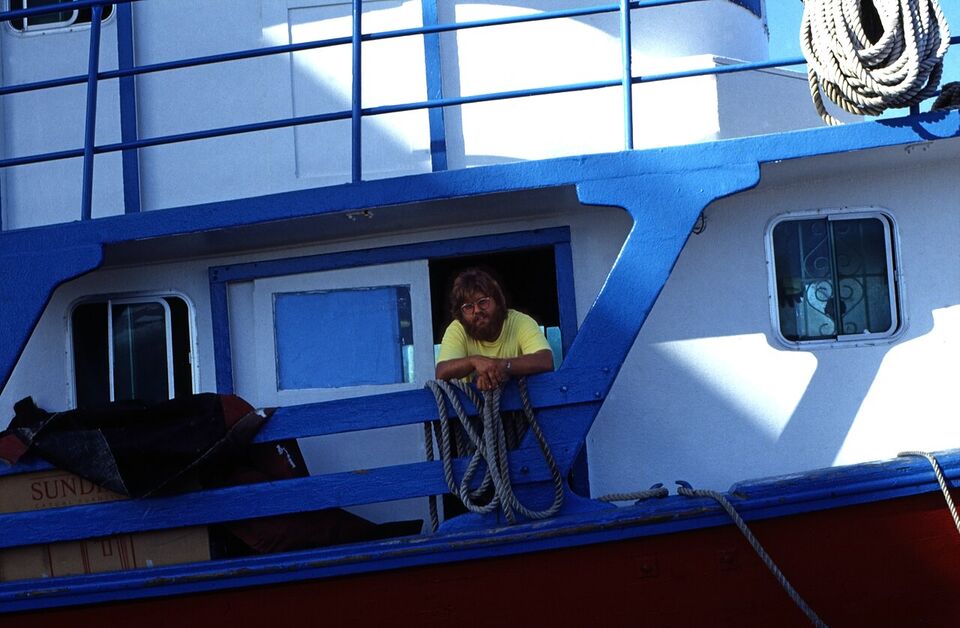
Most of your contact with Bahamian speech will be short and practical. A taxi driver in Nassau may mix standard English and dialect as you talk. A person on a dock or in a small settlement may speak in a stronger dialect. A shop clerk will often greet you first and expect the same back.
If you miss a word, do not nod and guess. Say, "Sorry, I did not catch that," and ask again. Bahamians are used to visitors, and most will happily repeat or rephrase. If you are in a group, lower your voice on the street and in small shops, where private conversations can be heard across the room.
Signs and menus are in English, but the place names can look different from how they sound, and "Fish Fry" and "settlement" are local terms rather than dictionary ones. The country drives on the left, as covered on our driving page.
Why this matters to visitors
Language shapes the way you are welcomed. Visitors who greet first, listen well and ask questions get better directions, better tips and, often, a better lunch recommendation. It also protects the people you meet from being treated as a performance. The Ministry of Tourism runs a People-to-People program that connects visitors with Bahamians who share their island and their culture, and it is a good way to hear the language in a friendly setting. Check bahamas.com for how to join.
How to be polite
- Greet people first, in plain English, with a smile.
- Say please and thank you, and wait to be served or answered before moving on.
- Ask permission before you photograph a person. See etiquette for more.
- Do not ask people to "say something in Bahamian" for fun or to perform for your phone.
- If you do not understand a word or a speaker, say "Sorry, could you say that again?" and listen.
- Use "Mr." or "Ms." with older people until they invite you to use a first name.
Mistakes to avoid
- Imitating the accent. Even with good intentions it can sound like mockery. Speak your own English and let the conversation carry the warmth.
- Using dialect as a joke. Words such as "yinna" and "pickney" are ordinary speech, not punchlines. Do not use them to amuse your friends or on social media.
- Skipping the greeting. Jumping to your question before saying good morning is the most common rudeness.
- Mispronouncing "cay." It is "key," not "kay."
- Treating dialect as bad English. Do not correct it, and do not assume a speaker is less educated.
- Leaving out "the." Say "the Bahamas" for the country, and "Bahamian" for the people and things.
Add it to a route in the trip builder, or ask us to plan the hotels, trains and guides for you.