Overview
Americans can stay in the Bahamas for months as visitors, without a visa, but the length of stay is set by the immigration officer who admits you, not by a fixed number you can count on. Official information says up to three months is common and the maximum is eight months depending on nationality, with Americans usually listed in the eight-month group. You can apply to extend before your stay runs out, and you cannot work. Anything longer, or any work, needs a permit from the Department of Immigration.
A long stay is a different trip from a vacation. You will live in a rental or a house, shop in local stores, get groceries delivered by boat or plane, and deal with a health system that is smaller than you are used to. This page covers the stay and extension rules, work and residency, what we can say about remote-work programs, costs, housing, utilities, internet, insurance, banking, bringing a car or pet, and which islands suit a winter stay.
Rules and fees change, and we could not confirm several of them for November 2026. Where we could not, we say so and name the office to ask. The authority is the Bahamas Department of Immigration (immigration.gov.bs).
Watch out
The two big mistakes are working without a permit and overstaying. Both can bring penalties and may affect future entry. Know your authorized date, keep your immigration card record and apply to extend well before it.
How long Americans may stay
US citizens do not need a visa for tourism. When you arrive, the immigration officer sets the length of your stay, and you should check the date when you get your stamp and keep the arrival record. The standard entry requirements are a valid passport (plan on at least six months' validity; passport cards are not accepted for air arrival), a return or onward ticket, proof of funds or a local sponsor, and a completed immigration card. See Entry Rules for Americans for the full list.
Officers use discretion. If you tell them you plan to stay for several months, expect questions about where you will live, how you will pay and when you will leave. A booked rental, a return flight and proof of funds make the conversation easier. A digital arrival card is being piloted on some flights, with paper cards remaining, so follow your airline's email.
Extending your stay
You can apply to the Department of Immigration to extend your visit before your authorized stay ends. The department lists an "Extend Your Visit" page, a "Special Permit" page and an "Immigration Fee Scale", and an FAQ on extensions. Extensions are at the department's discretion, and we could not confirm the current fee, so check the fee scale on immigration.gov.bs.
- Apply well before the date on your stamp, not on the last day
- Bring your passport, your arrival record and proof of where you are staying
- Ask what the fee is and how it is paid (cash, card or at a specific office)
- Keep the receipt, because it is your proof that you applied
- If you arrive by boat, ask the department how its extension process works for boaters; the site has an FAQ on it
The department's phone numbers are (242) 225-5337 and (242) 322-7530-5. We cannot confirm how officers treat a stay that ends and then restarts soon after, so do not plan on leaving and returning to reset the clock. Ask the department rather than guessing.
Different from home
Your stay is not a fixed 90 or 180 days printed in a guide. It is whatever the officer writes, and the date can be shorter than you hoped. Check it before you leave the desk.
Work and residency rules
Visitors may not work in the Bahamas. That includes paid work for a Bahamian employer or clients and, to be safe, any activity that looks like a local job. The department lists several permits: a Permit to Reside, a Home Owner Resident Permit, a Resident Spouse Permit, a Short Term Work Permit and a Special Permit, along with work permits and permanent residence. We could not confirm conditions or costs for any of them.
Permit to Reside
A permit for people who want to live in the Bahamas for a longer period without working. Ask the department about eligibility, financial proof and cost.
Home Owner Resident Permit
For people who own a home in the Bahamas. Whether and how it applies to you depends on the property and rules we could not confirm, so ask Immigration.
Short Term Work Permit
For temporary work arranged with a Bahamian employer. Do not start work before a permit is in place.
Special Permit
A special permit category listed on the Immigration site. Ask what it covers and who can apply.
If you plan to buy property, talk to a Bahamian lawyer and the Department of Immigration before you sign. We could not confirm the rules for foreign buyers.
Remote-work and long-stay programs
You may see references to a Bahamas remote-work or long-stay program, sometimes called BEATS. We could not confirm that one is available now or what it requires, so do not plan around it. Ask the Department of Immigration directly, in writing, and keep the reply. Until you have a written answer, assume that working while on a visitor stay, even for a foreign employer, is not permitted.
The tax side is separate from the permit side. US citizens normally owe US tax on worldwide income wherever they live, so ask a tax professional about foreign income and reporting before a long stay.
Cost of living and groceries
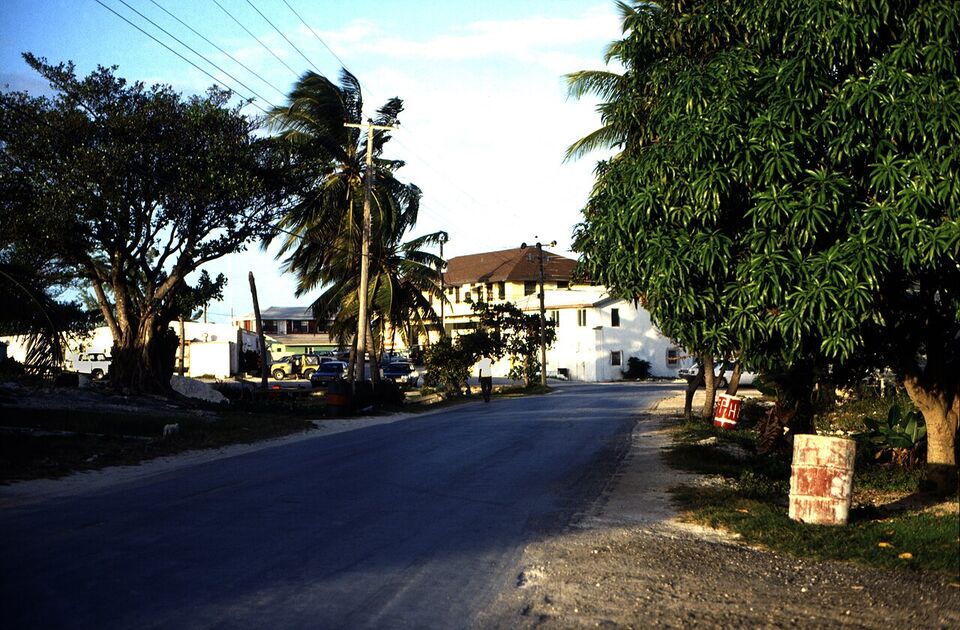
We do not give price figures for groceries, rent or utilities because we could not confirm current ones. What we can say is how costs work. Much of the food is imported, and costs tend to rise the farther you are from Nassau and Freeport, where goods arrive by container ship and then by mailboat or small plane to the Out Islands. Out Island shops stock fewer items, and fresh produce can be limited or arrive on a delivery schedule.
VAT is 10% on most goods and services, and 5% on unprepared food items since April 1, 2025. Look for the Global Blue "VAT-free" signs if you are shopping as a tourist, and check the rules for refunds. Restaurant and hotel bills often add a gratuity, often 15%, so check before you tip again.
Money is simple: B$1 = US$1, and US dollars are accepted. Change is often given in Bahamian money, which is hard to exchange back home, so spend it before you leave. See Money in the Bahamas and the Budget page for a spending plan.
Save money
Ask any landlord whether the monthly price includes electricity, water, internet and cleaning, and whether VAT or a service charge is added. Compare the all-in monthly total, not the headline rate.
Housing: monthly rentals and where to look
Housing choices range from hotel and condo-hotel stays to private houses and apartments. The busiest months are mid-December to April, so book a winter home early (see When to Go to the Bahamas). Summer is cheaper but hot and humid and inside hurricane season.
- Hotels and condo-hotels: good for the first weeks, with weekly or monthly rates. Ask for a long-stay discount and what is included.
- Private rentals and apartments: need more checking. Get a written lease or agreement, deposit terms and the contact for repairs.
- Short-term rentals: the Inland Revenue department has a notice about short-term rental owners registering, so ask your host whether the rental is registered.
The State Department advises staying alert in vacation rentals, especially without private security, so ask about locks, lighting and security before you commit. Inspect the place on arrival, photograph its condition and keep your deposit receipt. For hotels and areas, see Where to Stay in the Bahamas.
Utilities and internet
Electricity in the Bahamas is 120 V and 60 Hz with US-style plugs, so US appliances work. Power outages happen: an island-wide outage on New Providence in July 2026 affected the Nassau airport, and Hurricane Melissa badly damaged a power station on Long Island in October 2025. Ask whether your rental has a generator and what it covers. Many visitors drink bottled or filtered water, especially on the Out Islands, so ask your landlord about water.
Internet speeds and reliability vary by island and provider. We could not confirm providers or prices, so ask the landlord what service the home has and test it during a short stay first. Check your US carrier's Bahamas rates before you go: Verizon, for example, says its TravelPass covers 210+ countries and lists a $100 international monthly plan for trips of nine days or longer, but check that the Bahamas is included. A local SIM can be cheaper, but we could not confirm local prices. See Staying Connected.
Health insurance and evacuation cover
Do not rely on your US health plan abroad. Many US plans cover little outside the country, so check whether your own plan and Medicare cover care abroad. Buy travel medical insurance for the whole length of your stay, and make sure it includes medical evacuation, because serious cases may need to be flown to Florida or another mainland hospital. Read what it excludes, such as pre-existing conditions, and whether it covers a stay of several months.
Nassau has public and private hospitals, including Princess Margaret Hospital and Doctors Hospital. Out Islands have clinics and limited facilities, so a stay on a small island with a chronic condition needs planning. We could not confirm hospital fees. For emergencies, dial 911 or 919, and for US citizen emergencies call the US Embassy in Nassau at 242-461-5025, extension 1. See Health for more.
- Medical evacuation cover that you have read in full
- Your prescriptions, in their original containers, with a letter if needed
- A list of the nearest clinic and hospital for your island
- Enrollment in the State Department STEP program, so the embassy can reach you in a storm
Banking and money
Most visitors manage with US cards and an ATM. Bring some cash for small islands. If you carry cash, note that cash or negotiable instruments worth B$10,000 (US$10,000) or more must be declared on departure. We could not confirm how a visitor opens a local bank account or what documents it needs, so ask a bank directly if you plan to stay and pay local bills. The Central Bank (centralbankbahamas.com) publishes information on the Bahamian dollar and the peg.
Check with your US bank about foreign transaction and ATM fees, and tell it your travel dates. Sort out how you will pay rent and utilities before you arrive.
Bringing a car or a pet
You can rent a car in Nassau and on larger islands, but importing a vehicle is a customs matter. The Bahamas drives on the left. Many rental cars are right-hand drive and some are left-hand drive imports, so check which you are given (see Driving and Golf Carts). We could not confirm duty or import rules for a car, so contact Bahamas Customs at (242) 604-3124 or 604-3125 before you ship one. For most long stays, renting or using local transport is simpler.
Pets need an import permit from the Bahamas Department of Agriculture and paperwork on both sides, and you should start early. See Traveling to the Bahamas with a Pet. Do not bring firearms or ammunition under any circumstances.
Getting around and getting supplies
Daily life depends on the island. On New Providence you can use taxis, jitney buses and rental cars, and groceries, pharmacies and hardware stores are close at hand. On the Out Islands a car or golf cart is often needed, shops are fewer and some supplies come by mailboat or small plane. Mailboat and ferry schedules change with weather and season, so ask locally and check the operator's timetable (see Getting Around the Bahamas and The Out Islands).
For a stay of several months, a sensible approach is to arrive with a first month's list: any prescription you cannot do without, a small supply of items that are hard to find, and enough cash for small shops. Then shop locally for the rest. Bring only what you can carry within your airline's baggage rules, and ask the landlord what the home already has.
A suggested first month
- Week 1
Settle in
Check your arrival stamp, test the internet and power, find the nearest clinic and pharmacy, and learn where to buy groceries. Photograph the rental's condition.
- Week 2
Set up daily life
Find a grocery routine and a way to get around. Sort out payment for rent and utilities, and register with the US Embassy's STEP program if you have not.
- Week 3
Plan the paperwork
Decide whether you will need an extension and, if so, ask Immigration about the fee and the date to apply. Review your insurance.
- Week 4
Review
Check what you are spending against your budget, and whether the island suits you for the rest of the stay. If it does not, move before the high season fills up.
Which islands suit a winter stay
Winter, from mid-December to April, is the busiest and driest season. We do not rate islands, but we can describe how they differ for someone staying months.
Nassau and Cable Beach
The most flights, shops, hospitals and rental choice. Stay alert in line with the State Department advisory (Level 2: Exercise Increased Caution, as of November 2026). See Nassau.
Grand Bahama
Large island with a city, an airport and beaches. Hurricane Dorian hit it in 2019, and the tourism office reported record arrivals in 2025. See Grand Bahama and Freeport.
Eleuthera
Quieter, with small towns and beaches. Groceries and services vary by settlement. See Eleuthera and Harbour Island.
The Exumas
Good for people who like being on the water, with limited shopping beyond George Town. See The Exumas.
Abaco
Hit by Hurricane Dorian in 2019, with a record number of visitors in 2025. Ask about current services. See Abaco.
Hurricane Melissa damaged Long Island, Crooked Island, Cat Island, Rum Cay and San Salvador in October 2025, so ask about current services before planning a stay on any of them. Never describe an island as fully rebuilt on the strength of a rental listing, and ask the host directly about power, water and supplies.
Common mistakes and a checklist
- Working, even informally, without a permit.
- Overstaying, or applying to extend on the last day.
- Assuming a remote-work program exists without written confirmation.
- Skipping evacuation cover.
- Signing a rental without checking what the monthly price includes.
- Bringing a pet or vehicle without checking the rules first.
- Confirm your passport validity and your return plan.
- Check the length of stay on your arrival stamp.
- Decide whether you will need to extend, and apply early.
- Buy insurance with evacuation cover.
- Book housing in writing, with all costs.
- Enroll in STEP and save emergency numbers.
Add it to a route in the trip builder, or ask us to plan the hotels, trains and guides for you.