How to see Barcelona's sights
Barcelona's sights fall into three groups: Gaudí and the other modernista (Catalan Art Nouveau) buildings, mostly in the Eixample; the medieval old city with its churches and museums; and the outdoors, from Montjuïc to the beaches. You can see the essentials in three or four days if you book the timed tickets before you fly and give each day a single area.
Book in this order: the Sagrada Família first, then Park Güell, then whichever Gaudí house you want inside. Everything else can wait until a day or two before. For where to stay, the metro and the tourist tax, see the main Barcelona page.
Watch out
Search results for Gaudí tickets are full of reseller sites with official-looking names and higher prices. Buy from the sites linked on this page. If a "skip the line" ticket costs much more than the prices below, it is usually an ordinary timed ticket with a markup.
The Sagrada Família
Temporary closure: check first
On November 1, 2026, the basilica's official tickets page said it was "temporarily closed to the public," without a reason or a reopening date. Check sagradafamilia.org for the current status before you plan a day around it, and before you buy from any reseller or tour company. The prices and hours below are the ones that apply when it is open.
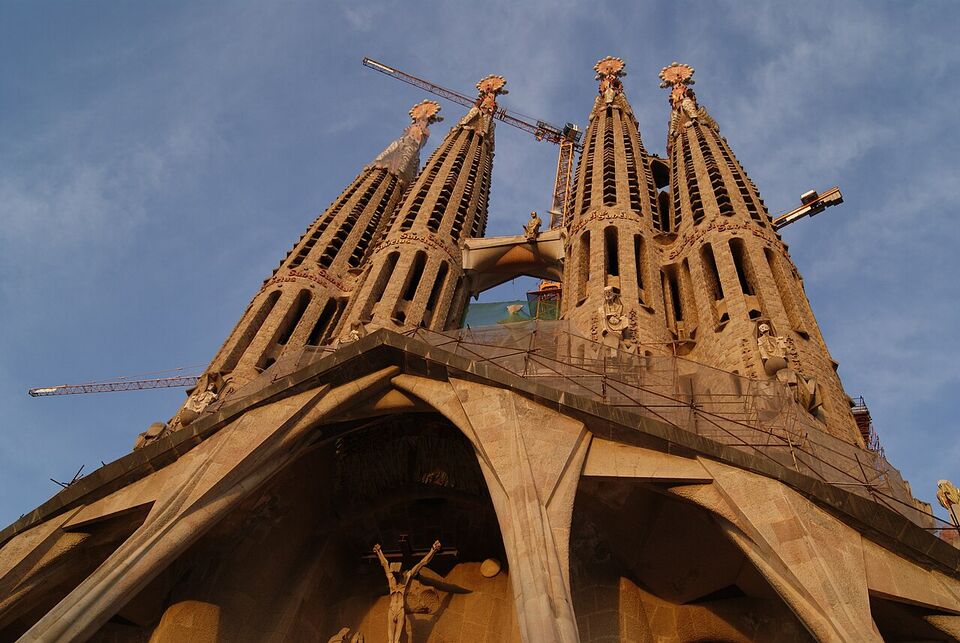
Antoni Gaudí took over the design of this basilica in 1883 and worked on it until his death in 1926. It is still being built, paid for by visitors' tickets, and it is unlike any church you have seen: a forest of stone columns that branch like trees, and stained glass that floods the nave with blue and green on the east side in the morning and orange and red on the west in the afternoon.
On June 10, 2026, the centenary year of Gaudí's death, Pope Leo XIV blessed and inaugurated the central Tower of Jesus Christ. At 172.5 meters (566 feet), it makes the Sagrada Família the tallest church in the world. As of November 2026 the tower was not open for visitors to climb; check the official site for news before your trip. Work continues on the Glory facade, and full completion is expected some years off.
Tickets and prices
| Ticket | Full price | Under 30 or student | Seniors |
|---|---|---|---|
| Basilica with audioguide app | €26 (about $29) | €24 (about $27) | €21 (about $24) |
| Basilica with a guided tour | €30 (about $34) | €28 (about $31) | €23 (about $26) |
| Basilica with a tower | €36 (about $40) | €34 (about $38) | €28 (about $31) |
| Guided tour with a tower | €40 (about $45) | €38 (about $43) | €32 (about $36) |
Children under 11 and visitors with disabilities enter free, but still need a ticket. Buy only at sagradafamilia.org, which charges no booking fee. Tickets carry your name, and staff check photo ID at the door. They are generally non-refundable, and you cannot get in if you miss your slot.
Hours
From November to February the basilica opens 9 a.m. to 6 p.m. Monday to Saturday and 10:30 a.m. to 6 p.m. on Sundays. In March and October it stays open until 7 p.m. on weekdays and Sundays, and from April to September until 8 p.m. (Saturdays close at 6 p.m. all year). Hours are shorter on December 25 and 26 and January 1 and 6, and the basilica sometimes closes for Masses and special events, so check the calendar for your date.
The towers
A tower ticket takes you up one of the two finished facades by elevator, then you walk down a narrow spiral staircase. The Nativity towers, on the side Gaudí built himself, face the sea; the Passion towers face the city and the mountains. Bags are not allowed (there is free temporary storage), the climb down is tight and not suitable for anyone with mobility problems, and towers close in rain or high wind. Check the official FAQs for any age limits before booking a tower for a child.
Insider tip
The first hour of the day is the calmest, and since February 2026 the basilica has kept 9 to 10 a.m. as a quiet hour for prayer, with audio on headphones only. For the best light through the windows, choose a late-afternoon slot on a sunny day. Our full Sagrada Família tickets page covers when slots sell out and what to do if your date is gone.
Dress for a church: shoulders covered, nothing shorter than mid-thigh, no swimwear, and no hats in the nave. Allow about 90 minutes, two hours with a tower. The metro stop is Sagrada Família on L2 and L5.
Park Güell
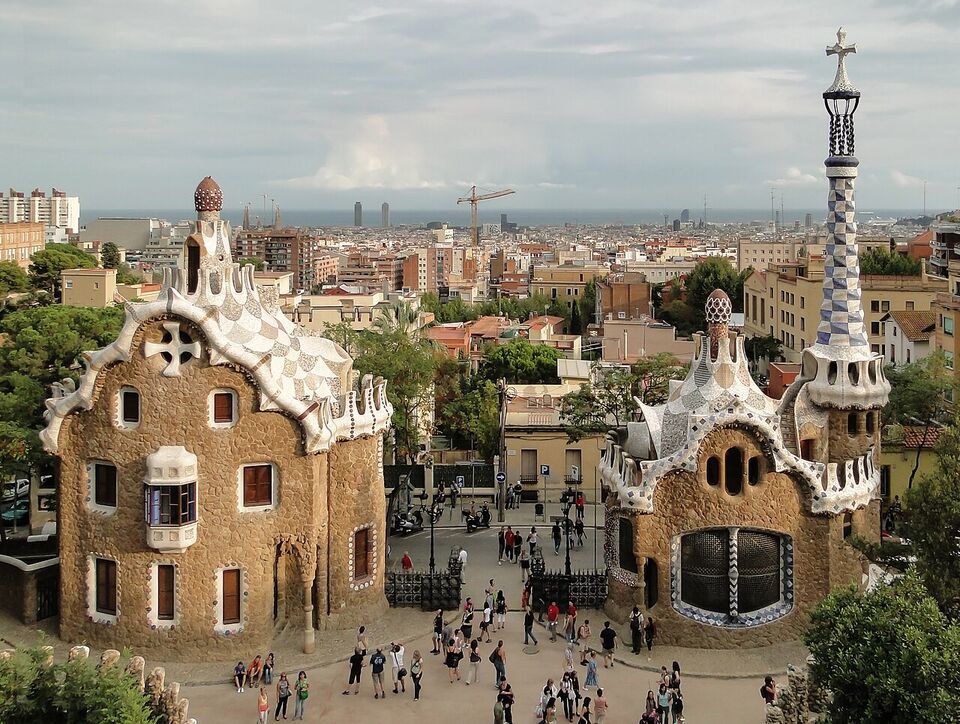
Gaudí designed this hillside park as a garden city for wealthy families. Only two houses sold, and it became a public park in 1926. The famous part is the monumental zone: the mosaic dragon on the stairs, the hall of 86 columns, and the serpentine bench around the main terrace with its views over the city to the sea.
The monumental zone requires a timed ticket, sold online only at parkguell.barcelona. General admission is €18 (about $20); children 7 to 12 and visitors over 65 pay €13.50 (about $15), and children under 7 are free but need a ticket. You have 30 minutes after your slot time to enter, you can stay as long as you like, and you cannot re-enter. Early-morning and evening slots are reserved for residents. Expect to spend 60 to 90 minutes.
Gaudí's own house, the Casa Museu Gaudí, sits in the park and needs a separate ticket. Some areas close from time to time for conservation work; the site posts current disruptions.
Insider tip
The nearest metro stops (Lesseps and Vallcarca on L3) leave you with a steep 20 minute uphill walk. A city bus (lines 24 and V19 stop nearby) or a short taxi ride to the main entrance on Carrer d'Olot saves your legs for the park.
Casa Batlló and La Pedrera
Two blocks apart on Passeig de Gràcia, these are Gaudí's great town houses. If you only go inside one, pick Casa Batlló for color and theatre, or La Pedrera for architecture and the rooftop.
Casa Batlló
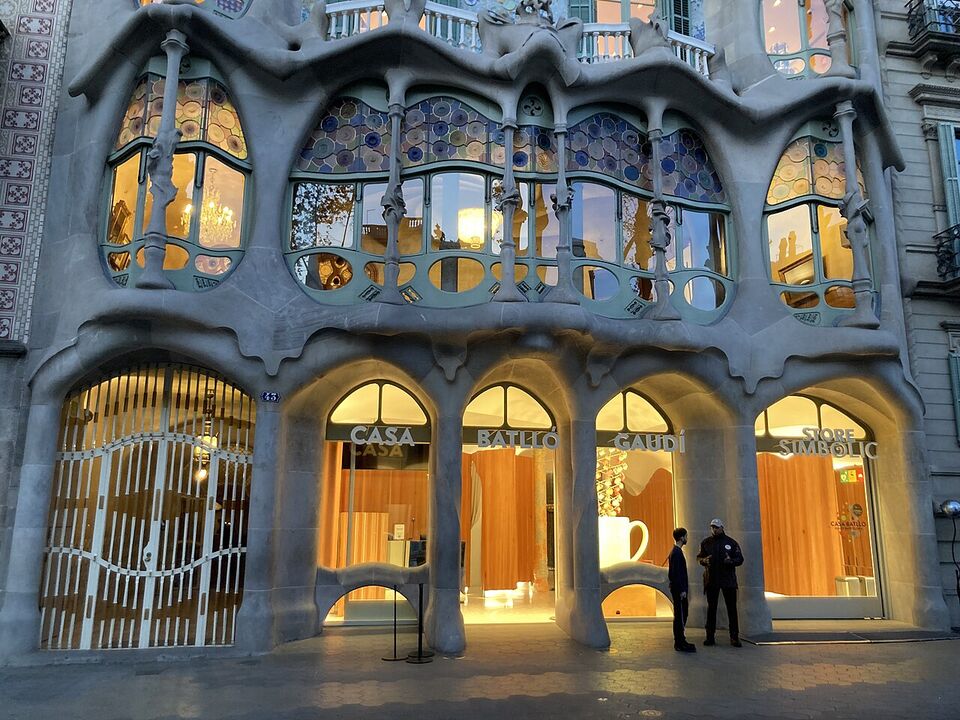
Gaudí remodeled this house between 1904 and 1906, giving it a facade of broken-tile mosaic, balconies like masks and a roof shaped like a dragon's back. The visit, with a tablet or audioguide and digital effects, takes about 75 minutes. Daytime visits run every day from 9 a.m. (last entry 7:45 p.m.), with night visits after that in some seasons.
General visits start at €29 (about $32) when booked ahead at casabatllo.es, and prices rise for prime times and on the day. Children 12 and under go free with an adult. After a restoration project that ran from 2018 to 2026, the third floor, the house's last inhabited apartment, can be seen on some special ticket types, and the house runs evening concert visits for the Gaudí year.
La Pedrera (Casa Milà)
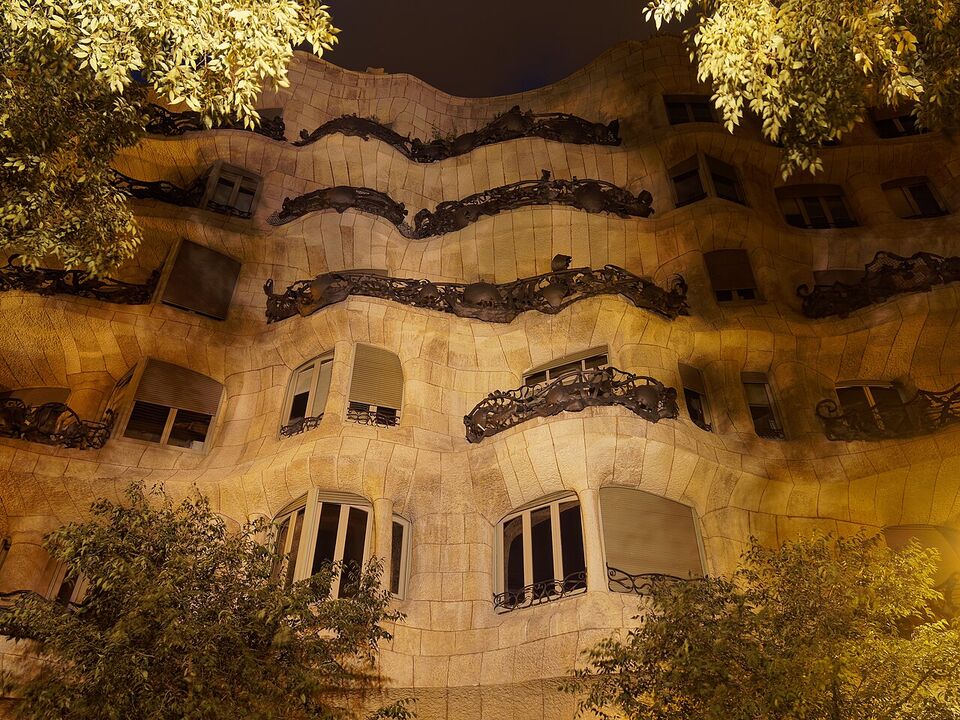
La Pedrera ("the stone quarry"), finished in 1912, is an apartment building with no straight walls, a wavy stone facade and a rooftop of warrior-like chimneys. The attic, with its brick arches, holds a clear exhibition on how Gaudí worked. Allow about 90 minutes.
Booked at lapedrera.com, the standard Essential ticket starts at €29 (about $32), with savings of up to 25 percent for booking ahead. The Night Experience, with a rooftop light show, starts at €39.50 (about $44), and there are sunset and sunrise visits in some seasons.
Save money
You can see both facades free from the sidewalk, and the Manzana de la Discordia (the "block of discord") on Passeig de Gràcia also has houses by Domènech i Montaner and Puig i Cadafalch next to Casa Batlló. If your budget runs to one Gaudí interior beyond the Sagrada Família, that is plenty for most people.
More modernisme
Gaudí was one of several architects who remade Barcelona around 1900. These are the best of the rest.
Palau de la Música Catalana
Lluís Domènech i Montaner's concert hall (1908) has a stained-glass skylight that hangs over the audience like an inverted dome. Take the guided tour, or better, buy a ticket for any concert and see it as intended.
Sant Pau Recinte Modernista
A former hospital of tiled pavilions and gardens by the same architect, a 15 minute walk up Avinguda de Gaudí from the basilica. Far calmer than the Gaudí sites.
Casa Vicens
Gaudí's first major commission (1880s), a summer house in Moorish-influenced tile and brick. Small, rarely crowded, and a good add-on to an afternoon in Gràcia.
Palau Güell
The mansion Gaudí built for his patron Eusebi Güell, just off Las Ramblas, with a parabolic central hall and a rooftop of mosaic chimneys.
The Gothic Quarter
The Barri Gòtic grew on top of Roman Barcino, and you can see both layers. Start at the Cathedral of Barcelona, with its cloister of palm trees and 13 white geese (one for each year of the life of Saint Eulàlia, the city's martyr). The cathedral charges a fee during tourist visiting hours, which includes the rooftop; entry at worship times is free.
From there, walk to Plaça del Rei, where the city history museum (MUHBA) takes you down into excavated Roman streets, a laundry and a fish-sauce factory under the square. Find the four surviving columns of the Roman Temple of Augustus inside a courtyard on Carrer del Paradís, the arcaded Plaça Reial with Gaudí's early lampposts, and the quiet Plaça de Sant Felip Neri, its walls still pitted by a 1938 Civil War bombing that killed children sheltering in the church.
Barcelona also had a medieval Jewish quarter, the Call, around Carrer de Sant Domènec del Call, until the violence of 1391. A small interpretation center explains its history.
El Born and the Picasso Museum
Across Via Laietana, the church of Santa Maria del Mar is the finest Catalan Gothic building in the city: built in about 55 years in the 1300s, with slender octagonal columns and an enormous, light-filled nave. Visiting hours and paid rooftop tours vary; come during the free hours or for a service.
The Picasso Museum fills five medieval palaces on Carrer de Montcada. Its strength is the young Picasso, who lived in Barcelona as a teenager: student work, the Blue Period, and his 1957 series of 58 variations on Velázquez's Las Meninas. It opens Tuesday to Sunday, 10 a.m. to 7 p.m., and is closed Mondays.
Tickets are €12 (about $13) online or €13 at the door, €7 for ages 18 to 25 and over 65, and free under 18. Entry is free on Thursdays from 4 to 7 p.m. and on the first Sunday of each month, but you must reserve those slots online; bookings open four days ahead at 10 a.m. Book at museupicassobcn.cat.
Nearby, El Born Centre de Cultura i Memòria, inside the old iron market, shows excavated streets of the city that Philip V's troops tore down after the siege of 1714, the date that still anchors Catalan national feeling (the Catalan national day, September 11, marks it).
Montjuïc
The hill above the port holds a cluster of museums, gardens and 1929 World's Fair and 1992 Olympic buildings. Give it a full morning or afternoon.
- MNAC (Museu Nacional d'Art de Catalunya): the grand palace at the top of the stairs from Plaça d'Espanya. Its collection of Romanesque church murals, rescued from Pyrenean village churches in the 1920s, is the best in the world. General admission is €12 (about $13); closed Mondays.
- Fundació Joan Miró: a white modernist building full of Miró's paintings, sculptures and tapestries, with a roof terrace. Closed Mondays.
- Montjuïc Castle: an 18th-century fortress with the best views of the port and the cruise terminals.
- The Olympic Ring: the 1992 stadium and Santiago Calatrava's communications tower.
- Poble Espanyol: a 1929 open-air museum of copies of buildings from all over Spain. Touristy, but fun with children.
Get up by the funicular from Paral·lel metro station (it takes regular transit tickets), the Montjuïc cable car to the castle, bus 150 from Plaça d'Espanya, or the cable car across the harbor from Barceloneta, which is expensive but memorable. Then walk down through the gardens to Poble-sec for tapas.
Save money
Articket BCN costs €38 (about $43) for one entry each to six art museums: the Picasso Museum, MNAC, the Fundació Joan Miró, MACBA, the CCCB and the Fundació Antoni Tàpies. It is valid for 12 months, so it pays off if you visit three or more. It does not cover any Gaudí building.
The beaches
Barcelona has about 3 miles (4.5 km) of city beaches, made largely for the 1992 Olympics. Barceloneta, closest to the old city, is the busiest and the worst for theft. Walk or bike northeast past the Olympic Port to Nova Icària, Bogatell and Mar Bella for more space; Mar Bella has a section where nudity is common.
The sea is warm enough for most Americans from late June to early October, peaking around the mid-70s °F (about 24–25°C) in August. Lifeguards work the main season, and flags show sea conditions: green for safe, yellow for caution, red for no swimming. There are showers and chiringuitos (beach bars) along the front. For better beaches, take the train to Sitges or drive to the Costa Brava (see Costa Brava and Girona).
Different from home
Drinking on the sand and walking around town in swimwear are both restricted in Barcelona, and beach vendors selling cans and mojitos are unlicensed. Topless sunbathing is normal and nobody will look twice.
Markets, views and football
La Boqueria (Mercat de Sant Josep) on Las Ramblas is the city's most famous market. Go early, before 10 a.m., for the fish and produce stalls without the crowds, and sit at a counter for breakfast. Santa Caterina in El Born and Sant Antoni are more local. Markets close on Sundays.
For views, the free choice is the Bunkers del Carmel (Turó de la Rovira), old Civil War anti-aircraft emplacements with a 360-degree panorama; the city now restricts access late in the evening to limit noise for neighbors. Tibidabo, the city's highest hill, has a vintage amusement park and a church on top, reached by FGC train and bus, then a funicular.
FC Barcelona's rebuilt Spotify Camp Nou reopened for matches in late 2025, with construction still going on around it. The club museum and stadium tour are among the most visited attractions in the city. Buy match and tour tickets only from the club's official site; see football in Spain.
Prices at a glance
| Sight | Adult price | Time needed | Book ahead? |
|---|---|---|---|
| Sagrada Família | €26 (about $29); €36 (about $40) with a tower | 1.5–2 hr | Yes, weeks ahead in busy months |
| Park Güell | €18 (about $20) | 1–1.5 hr | Yes, days ahead |
| Casa Batlló | From €29 (about $32) | 1 hr 15 min | Recommended |
| La Pedrera | From €29 (about $32) | 1.5 hr | Recommended |
| Picasso Museum | €12 (about $13) online | 1.5–2 hr | Yes, for free sessions |
| MNAC | €12 (about $13) | 2 hr | No |
| Articket BCN (6 museums) | €38 (about $43) | Valid 12 months | No |
Prices are full adult fares at the official sites in November 2026; the Gaudí houses use variable pricing, so the "from" price is for advance booking at quieter times.
A sightseeing order that works
- Book the Sagrada Família as soon as your dates are firm, ideally for an early morning slot on day 2 of your trip (day 1 is for jet lag).
- Book Park Güell for a morning on a different day; it is across town from the basilica, uphill.
- Choose one Gaudí house and book it for the afternoon after the Sagrada Família, since Passeig de Gràcia is on the way back to the center.
- Leave the Gothic Quarter, El Born and the markets unbooked, apart from a Picasso Museum slot.
- Keep one half-day for Montjuïc and one for the beach, and swap them around the weather.
For day trips beyond the city, see Girona, Figueres, Montserrat and Sitges. For the history behind the buildings, see art and architecture, and for Madrid's museums, Madrid sights.
Add it to a route in the trip builder, or ask us to plan the hotels, trains and guides for you.