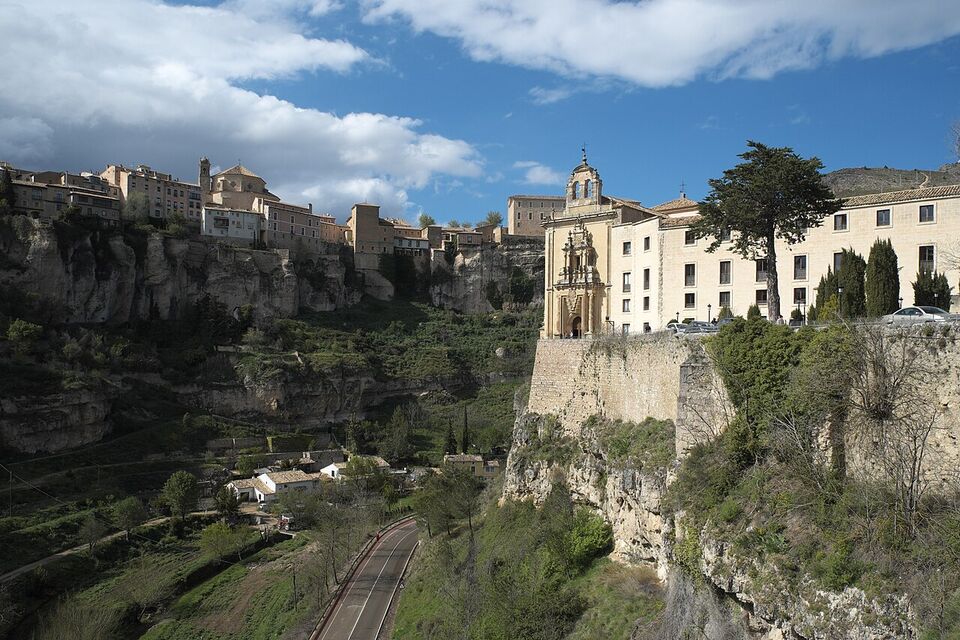
How Spain sleeps
Spain has one of the deepest hotel markets in Europe, from five-star palaces in Madrid to family-run hostales (small budget hotels) above a bar in a village square. Outside the big cities and the peak weeks, you get more for your money than in France or Italy: a central, air-conditioned double with a private bathroom in Seville, Salamanca or León often costs less than a chain motel near a US airport.
The big change of the last few years is in apartments. Spain's cities have cracked down hard on short-term rentals, and Barcelona plans to end them in residential buildings altogether. Hotels, paradores and properly licensed apartments are the safe choices. This page explains each, then goes city by city.
The types of lodging, decoded
Each of Spain's 17 regions sets its own lodging categories, so the details vary, but the letters on the blue plaque by the door are consistent enough to read anywhere.
| Plaque or name | What it is | Typical tier |
|---|---|---|
| H with 1–5 stars, hotel | A full hotel with reception and usually breakfast. Stars measure facilities such as elevators and room size. | $ to $$$$ |
| HS or Hs, hostal | A small, simpler hotel, often on upper floors of an apartment building. Private rooms, usually private bathrooms. Not a hostel. | $ to $$ |
| P, pensión | A guesthouse; basic rooms, sometimes shared bathrooms. | $ |
| Apartahotel | Hotel-run apartments with kitchens and a front desk. A good legal alternative to private rentals. | $$ to $$$ |
| Parador | The state-run hotel chain, often in historic buildings (see below). | $$ to $$$$ |
| Casa rural, hotel rural | A rural house rented whole or by the room. | $ to $$ |
| Albergue | A hostel with dorms; on the Camino, a pilgrim hostel for walkers with a credential. | $ |
| Vivienda de uso turístico (VUT, HUT, VFT, ETV) | A licensed private tourist apartment. | $ to $$$$ |
Tiers are per night for two: $ under €100 (about $112), $$ €100–200 (about $112–224), $$$ €200–400 (about $224–448), $$$$ over €400.
Different from home
Room rates in Spain usually include tax (IVA, Spain's VAT) but not the local tourist tax, and often not breakfast. A double bed (cama de matrimonio) is often 135 cm wide (about 53 in, a US full) or 150 cm (about 59 in, close to a queen). If you want two beds, ask for dos camas; if you want one big bed, say so, or you may get two singles pushed together.
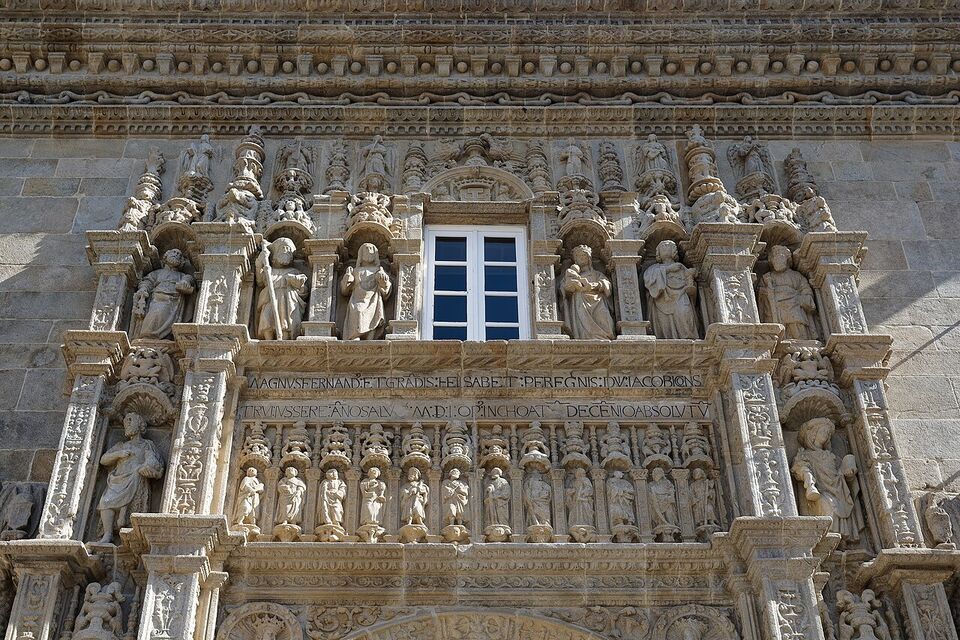
Paradores: castles, convents and palaces
Paradores de Turismo is a state-owned chain founded in 1928 to bring travelers to parts of Spain with few good hotels. Today there are 98, and many occupy historic buildings: medieval castles, Renaissance palaces, monasteries and pilgrim hospitals. The rest are modern buildings in spectacular places, on a cliff, a beach or a mountain pass. Most have a restaurant that serves the region's cooking, often with views and a menu of local wines.
A few that fill months ahead:
Parador de Granada
A former convent within the Alhambra's walls, in its gardens. The most requested parador in Spain; book as soon as your dates are firm, and remember that a room does not come with a Nasrid Palaces ticket. See Alhambra tickets.
Parador de Santiago de Compostela
The Hostal dos Reis Católicos, a royal pilgrims' hospital from around 1500, facing the cathedral. Pilgrims finishing the Camino splurge here. See Galicia.
Parador de León
A vast former monastery and pilgrims' hospital on the Camino, with a carved Plateresque facade and a cloister. A base for León's cathedral and tapas. See Salamanca and Castile.
Paradores in castles
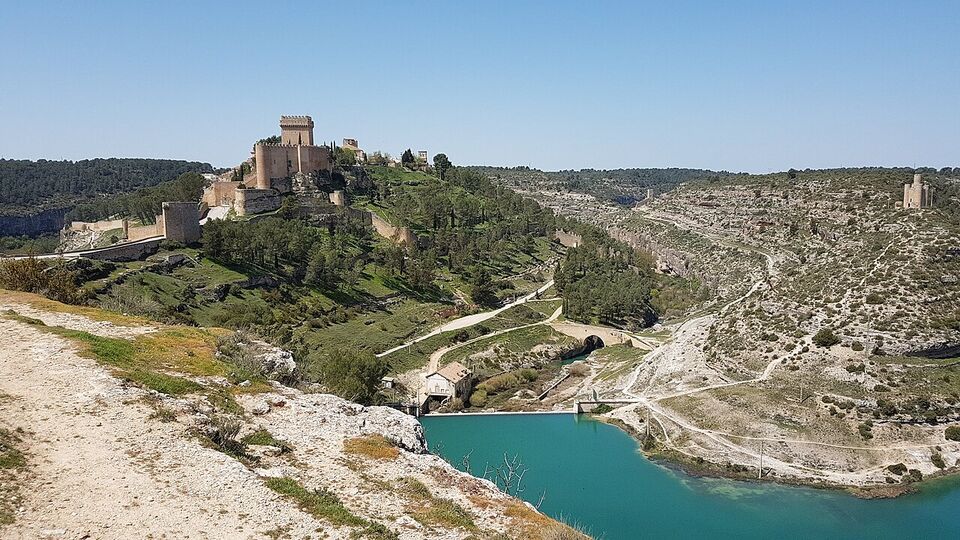
Hilltop fortresses in Catalonia, Castile and the Basque border, often cheaper than the famous names and quieter at night.
- Book direct at paradores.es. The free Paradores Amigos program gives 5% off online bookings, points toward free nights and breakfast on your first stay as a member.
- Watch for sales. Paradores run frequent promotions; check the offers page before booking.
- Check the room type. In castle paradores, rooms vary a lot; a few euros more often buys the view.
- Eat in. Even if you do not stay, a parador restaurant is a good lunch stop on a road trip.
- Some paradores close for renovation each year, so confirm yours is open for your dates.
Apartments and the rental crackdown
Holiday apartments are the most political subject in Spanish travel right now. Housing costs in Barcelona, Madrid, Málaga, Palma, Valencia, San Sebastián and the Canary Islands have soared, and residents blame tourist flats for part of it. Large protests against overtourism in 2024 and 2025, with marches through the tourist centers of Barcelona, Palma and the Canaries, pushed governments to act.
What has changed
- Barcelona plans to cancel all 10,101 licenses for tourist apartments (HUT) by November 2028. The plan faces legal challenges, so check before booking a 2028 or later stay. New licenses have not been issued for years.
- Spain's consumer affairs ministry ordered Airbnb in 2025 to remove tens of thousands of listings, about 65,000, that broke the rules, mainly for missing or false license numbers.
- Building residents now have a veto. Since April 2025, owners who want to start renting a flat to tourists need the approval of three-fifths of the building's owners' association.
- The national registry was struck down. Spain introduced a single national registration number for short-term rentals in July 2025, but the Supreme Court annulled it in a ruling made public on May 21, 2026, finding the state lacked the power to create it. Regional licenses still apply, and platforms must still share data with the authorities.
- Cities have their own limits. Madrid, Málaga, Palma, Valencia, Seville and others restrict new tourist flats in central districts, and rules keep tightening.
How to rent legally
- Look for the regional license number in the listing. Catalonia uses HUT numbers (HUTB in Barcelona), Andalusia VFT, the Balearics ETV and most other regions VUT. A listing without one is a red flag.
- In Barcelona, check the number on the city's public register of licensed tourist flats before you pay.
- Pay only through the platform or a licensed agency, never by bank transfer to a stranger. Fake listings with stolen photos are common in Barcelona, Madrid and the islands.
- Expect the host to ask for your passport details before arrival, which the law requires (see check-in below).
- Be a good neighbor: keep noise down after 11 p.m., use the building's recycling bins and do not let a group of ten into a flat licensed for four.
Watch out
An unlicensed flat can be closed by inspectors, and the host can cancel at the last minute if they are fined or the platform removes the listing. You may be refunded, but you will be looking for a room in August in Barcelona. For a city stay, an apartahotel gives you the kitchen and the space with none of the risk.
Rural houses and country estates
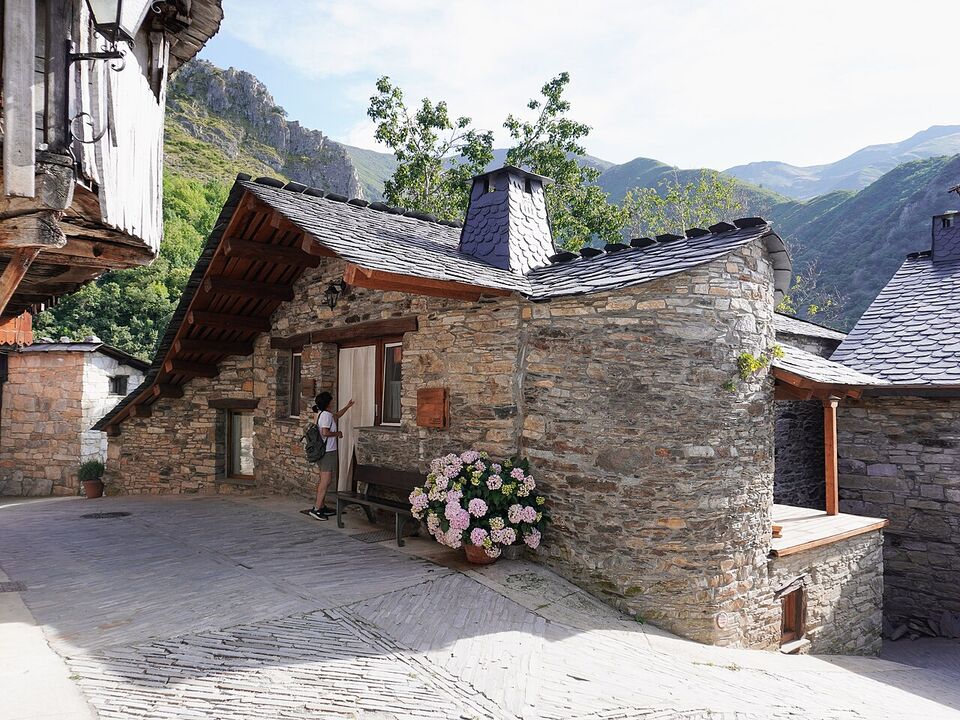
Rural tourism is huge in Spain and mostly aimed at Spaniards, which keeps it good value. A casa rural may be a stone farmhouse in Asturias rented whole for a week or a village house in the Alpujarras with three rooms and breakfast. Each region has its own name and flavor:
- Andalusia: the cortijo, a whitewashed farmstead among olive groves, and cuevas, cave houses near Guadix and in the Granada hills.
- Catalonia: the masia, a stone farmhouse, often in the Empordà behind the Costa Brava.
- Basque Country and Navarra: the caserío (baserri in Basque), a big farmhouse, often with a family kitchen. See the Basque Country.
- Galicia: the pazo, a stone manor house with gardens and, often, its own vineyard.
- Mallorca and Menorca: the agroturismo, a working or restored country estate, often with a pool. See Mallorca and the Balearics.
- Canary Islands: restored farmhouses on La Palma, La Gomera and in the hills of Gran Canaria and Tenerife. See the Canary Islands.
You will need a car for nearly all of them; see Driving. Many rural houses rent only by the weekend or week in summer, and a few have a two-night minimum year-round.
Insider tip
Spanish families book rural houses for puentes (long weekends when a holiday falls next to a weekend), such as the early-December week around the December 6 and 8 holidays. Midweek outside those dates you can often get the best house in the valley at a lower rate.
Where to stay, city by city
A short guide to bases; each city page goes deeper.
Madrid
First-timers do best between Sol, the Barrio de las Letras (Huertas) and the Prado: walkable to the museums, tapas and the Royal Palace. Malasaña and Chueca are younger and livelier; Salamanca is elegant, quieter and pricier; La Latina is the place for Sunday tapas. See Madrid.
Barcelona
The Eixample is the most comfortable base: wide streets, modernista buildings, the metro and fewer pickpockets than the old town. The Gothic Quarter and El Born are atmospheric but noisy; Gràcia feels like a village; Poblenou and Barceloneta put you near the beach. See Barcelona.
Seville
Stay in Santa Cruz or the Arenal, near the cathedral and the Alcázar, or across the river in Triana. Air conditioning is essential from May to September. Prices jump for Holy Week and the Feria. See Seville.
Granada
The Albaicín has the views and the steep cobbled lanes (hard with luggage, and cars are restricted). The flat center near the cathedral is easier. A night inside the Alhambra precinct is the splurge. See Granada.
San Sebastián
One of Spain's most expensive cities for hotels in summer. The Parte Vieja (old town) puts you in the pintxo bars; Centro and Gros are a short walk away and quieter. Book far ahead for July and August and for the film festival in September. See the Basque Country.
Valencia
The old town (Ciutat Vella) and Ruzafa for food and nightlife; near the beach in Cabanyal for sea air. Las Fallas, March 15–19 every year, sells out and is loud all night. See Valencia.
Mallorca
Palma's old town for a city break with beaches nearby; Sóller and Deià for the mountains; the northeast and east coasts for family beach resorts. Many coastal hotels close from November to March. See Mallorca.
Málaga and the Costa del Sol
Málaga's historic center for museums and food; Nerja for a calmer coast; Marbella and Estepona for resorts. See Málaga and the Costa del Sol.
Tourist taxes
A tourist tax is charged per person per night at the property, usually at check-in or check-out, and it is often left out of the price you see online. Children are generally exempt, and in Catalonia the tax is charged for up to seven nights of a stay. These are the main ones as of November 2026; for how they fit into a daily budget, see Money.
| Where | Per person per night | Notes |
|---|---|---|
| Barcelona, five-star hotels | €12 (about $13.45) | Regional tax plus a city surcharge, since April 1, 2026 |
| Barcelona, four-star hotels | €8.40 (about $9.40) | Same |
| Barcelona, tourist apartments | €9.50 (about $10.65) | Same |
| Barcelona, other hotels and hostels | €6–7 (about $6.70–7.85) | Same |
| Rest of Catalonia | Lower, a few euros at most even in luxury hotels | Towns may add their own surcharge; under-17s exempt |
| Balearic Islands, summer (May–October) | €1–4 (about $1.10–4.50) | By category; under-16s exempt; lower in winter and on long stays |
| Santiago de Compostela and A Coruña | About €1 in Santiago | City taxes on tourist lodging, in force since fall 2025 |
| Basque Country (San Sebastián, Bilbao, Vitoria and others) | From January 1, 2027; San Sebastián about €1.25–6.50 (about $1.40–7.30) | Set city by city; up to six nights, under-18s exempt in San Sebastián; check final rates |
Barcelona's city surcharge is planned to rise by €1 a year until 2029, and other places, including Vigo, Toledo and Asturias, are studying their own taxes. Madrid, Andalusia and the Valencia region had none as of November 2026. Expect this table to grow.
Save money
For a family of four in a Barcelona apartment, the tourist tax alone can pass €100 (about $112) a week. Splitting a week between Barcelona and Girona, Sitges or the Costa Brava, where the Catalan tax is lower and there is no Barcelona surcharge, cuts both the tax and the room rate. See the Costa Brava and Girona.
When to book and what it costs
Spanish prices follow events more than seasons. A room in Seville that costs $$ in November can triple during Holy Week. Book these as early as you can, often six months to a year ahead:
- Holy Week (Semana Santa) everywhere, especially Seville, Málaga and Granada. In 2027, Easter Sunday is March 28.
- Seville's Feria de Abril, normally about two weeks after Easter.
- Las Fallas in Valencia, March 15–19.
- San Fermín in Pamplona, July 6–14; rooms in the old town sell out a year ahead. See Rioja and Navarra.
- August on the coasts and islands, when all of Spain is on vacation.
- Big trade fairs and matches: Barcelona's Mobile World Congress in late winter fills the city, and Real Madrid or Barça home games can push up nearby prices. See Football.
- Christmas, New Year and Three Kings (January 5–6) in Madrid and the Canary Islands. See Festivals.
The cheapest months in the cities are generally January, February and November, plus July and August in hot inland cities like Madrid, Seville and Córdoba, where locals leave and many hotels cut rates. The catch is the heat. See When to go.
Save money
Compare the platform price with the hotel's own website, and write to small hotels directly. Many offer a better rate, breakfast or a free cancellation window when you book with them, because they avoid a platform commission. Check the cancellation terms either way: non-refundable rates in Spain really are non-refundable.
Check-in, rooms and house rules
Your passport and the new data rules
Since December 2024, Spanish law requires every hotel, hostal, campsite and rental host to send the police a long record of each guest: name, passport number, date of birth, nationality, home address, phone and email, the dates of the stay, how you paid and, for minors, your relationship to them. Expect a form or an online pre-check-in link. It is legitimate, but the request should come from your hotel or booking platform, not a random text message.
Floors, rooms and noise
- Floor numbering: the ground floor is planta baja (0), and the US "second floor" is the primero. Older buildings, especially in Barcelona and Madrid, add an entresuelo and a principal before the first floor, so "first floor" can be three flights up. Ask about the elevator (ascensor) if stairs are hard for you.
- Interior or exterior: an habitación exterior faces the street, often with a balcony; an habitación interior faces a courtyard and is darker but much quieter. Spanish streets are busy until 1 or 2 a.m., and street cleaners and delivery trucks start early.
- Air conditioning is standard in hotels in the south and the cities, but not universal in rural houses in the north and older hostales. Ask if you are traveling June to September.
- Breakfast: a hotel buffet often costs more than a café con leche and toast with tomato at the bar on the corner. Book room-only if you like to eat out.
- Check-in times are usually from 2 or 3 p.m.; small hostales and rental flats may need you to give an arrival time, and some charge for late arrivals after the front desk closes.
- Parking in city hotels is usually a nearby public garage at extra cost. See Driving.
Different from home
Many hotels and hostales put a key card slot by the door that controls the room's power, so the air conditioning switches off when you leave. It saves energy and is normal. In older buildings, the water heater may be small: a family of four taking long showers back to back may find the last one cool.
Families, accessibility and long stays
Families: Spanish hotel rooms are smaller than US ones, and many limit triples and quads. Ask for a family room (habitación familiar) or connecting rooms, or book an apartahotel. Spanish children stay up late, and hotel pools and restaurants welcome them in the evening.
Accessibility: newer hotels and paradores in modern buildings usually have adapted rooms; castles, convents and old-town hostales often have steps, narrow lifts or none. Ask for photos of the bathroom and the entrance. See Spain by interest.
Longer stays: for a month or more, mid-term rentals (alquiler de temporada) follow different rules from holiday lets, and stays beyond 90 days need a visa. See Long stays and Entry rules. Walkers on the Camino de Santiago sleep in albergues; see the Camino.
Add it to a route in the trip builder, or ask us to plan the hotels, trains and guides for you.