Overview
Football (fútbol) in Spain is closer to religion than sport. It shapes city identities, splits families, fills bars on weeknights and carries real political weight in Catalonia and the Basque Country. Seeing a match in a full stadium is one of the best evenings you can have in Spain, even if you have never watched a game at home.
The top division is La Liga (officially LaLiga EA Sports), with 20 clubs. The two giants, Real Madrid and FC Barcelona, have won most titles between them, with Atlético de Madrid the third force. Spanish clubs also play in Europe midweek in the UEFA Champions League, the Europa League and the Conference League. Spain's men's team won the European Championship in 2024, and the women's team won the World Cup in 2023.
This page covers the calendar, the main clubs city by city, how to buy tickets without getting burned, what match day is like, stadium tours, and the big events coming up. For the cities themselves, see Madrid and Barcelona.
Different from home
There is no tailgating, no beer in the stands and no fixed schedule months ahead. Spanish law bans the sale of alcohol inside football stadiums (you will find alcohol-free beer), and fans eat sandwiches and crack sunflower seeds (pipas) instead. Night games often kick off at 9 p.m. and end near 11 p.m., after which the city goes out to dinner.
The calendar and kickoff times
La Liga runs from mid-August to late May, with a short break around Christmas. The 2026–27 season started in August 2026, a few weeks after the World Cup in North America, and runs to late May 2027.
- Weekend league games: spread from Friday night to Monday night, to suit television. Kickoffs range from early afternoon to 9 p.m.
- Champions League: Tuesday and Wednesday nights, usually at 9 p.m. Spanish time. The league phase runs from September to January, the knockout rounds from February to May, and the 2027 final is at Atlético's Metropolitano in Madrid on Saturday, June 5, 2027. Europa League and Conference League games are mostly on Thursdays.
- Copa del Rey: the national cup, with early rounds against small clubs (a cheap, fun ticket if a giant visits a small town) and a final in spring.
- International breaks: a few weekends each season have no league games while national teams play.
Watch out
La Liga confirms the exact day and kickoff time of each round only a few weeks in advance, once television picks are made. When fixtures first come out in summer, every game is just listed for a weekend. Do not build a trip around a match on a specific Saturday night until the time is confirmed; book flexible hotels or give yourself the whole weekend in the city.
Madrid: Real Madrid and Atlético
Real Madrid at the Santiago Bernabéu
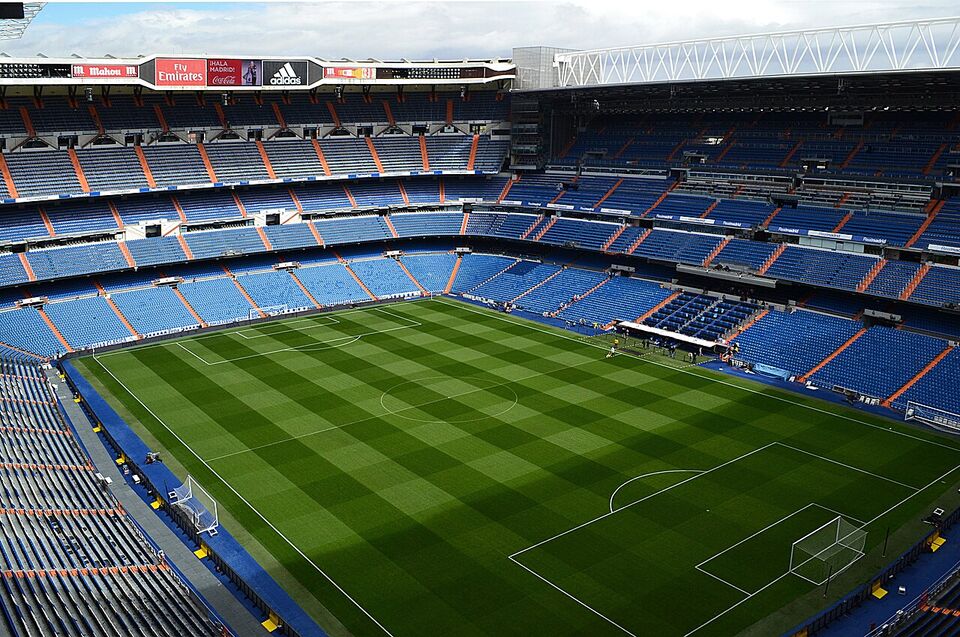
The most successful club in European history plays at the Bernabéu, on the Paseo de la Castellana in the Chamartín district, with its own metro stop (Santiago Bernabéu, Line 10). A rebuild finished in recent years added a steel skin, a retractable roof and a pitch that slides away under the stands, and the stadium hosted an NFL regular-season game in November 2025. Capacity is about 80,000.
Real Madrid sells most seats to its members (socios) and season-ticket holders first. Tickets for the general public go on sale through realmadrid.com, often only in the days before a match, and the best games sell out within minutes. Prices depend heavily on the opponent and the seat: a routine league game against a mid-table side costs a fraction of El Clásico against Barcelona or a Champions League knockout night.
Atlético de Madrid at the Metropolitano
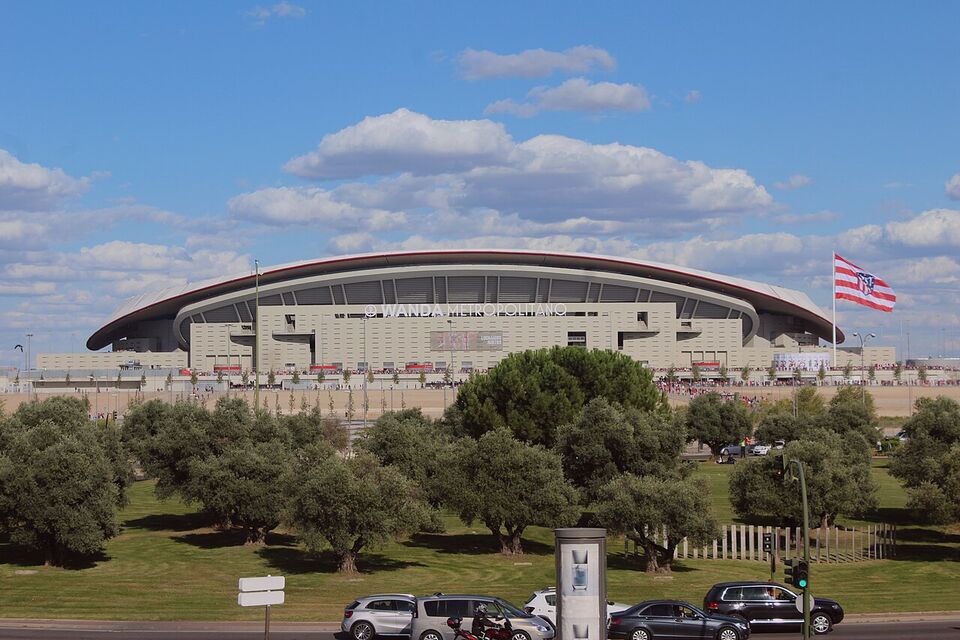
Atlético plays at the Riyadh Air Metropolitano, a modern stadium of about 70,000 in the east of the city, with a metro stop (Estadio Metropolitano, Line 7) about 30 minutes from the center. Atlético's fans are loud and loyal, and the club has been a regular in the Champions League for more than a decade. Tickets are generally easier to get and cheaper than at the Bernabéu; buy at atleticodemadrid.com. The Metropolitano also hosts the 2027 Champions League final.
Smaller Madrid clubs
Rayo Vallecano plays in a tight neighborhood ground in Vallecas, a working-class district with a strongly left-wing fan culture; one end has no stand at all. Getafe and Leganés play in the southern suburbs. Tickets at these clubs, in whatever division they are in that season, are cheap and easy, and the atmosphere is far more local than at the big two.
Insider tip
The Madrid derby (Real against Atlético) is the hottest ticket in the city after El Clásico. If you cannot get in, watch it in a bar near the stadium of the team you prefer, and wear neutral colors anywhere else.
Barcelona: Barça and Espanyol
FC Barcelona at the Spotify Camp Nou
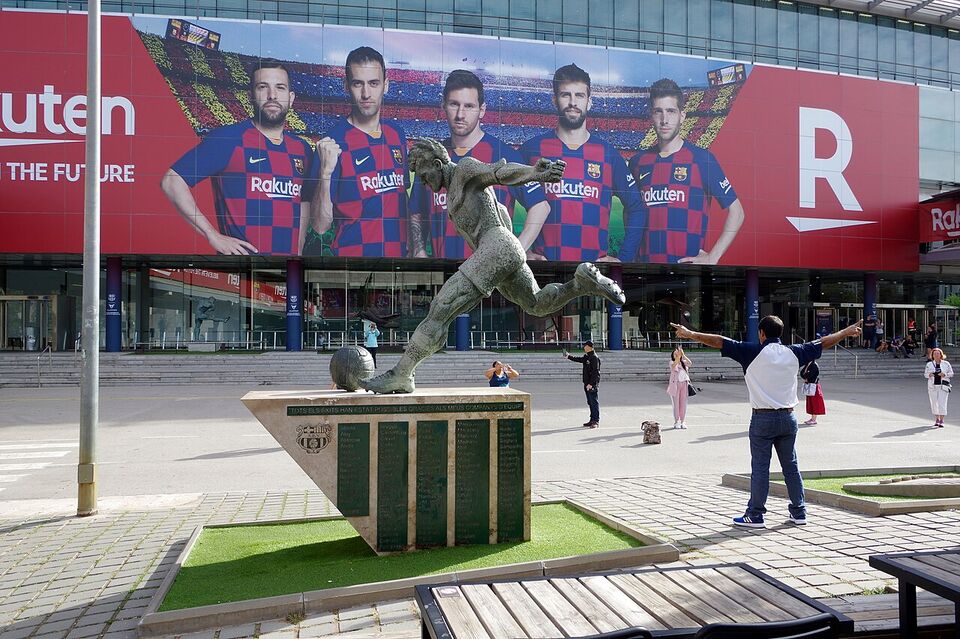
Barça is more than a club in Catalonia ("més que un club", its motto), tied up with Catalan identity, and owned by its members. After more than two seasons playing at the Olympic stadium on Montjuïc while the Camp Nou was rebuilt, the team moved back home in November 2025. The stadium is reopening in phases: in March 2026 the city granted a license that took capacity past 62,000, with a new North stand and a section for the most vocal fans. Work on the upper tier and roof continues, toward a final capacity of more than 100,000. Expect building sites around the stadium for some time.
The stadium is in Les Corts, west of the center; the nearest metro stops are Palau Reial and Les Corts (Line 3) and Collblanc and Badal (Line 5). Buy tickets only through fcbarcelona.com or the official Barça app. Many general-sale seats come from season-ticket holders who release seats they cannot use, so more tickets can appear in the final days before a match.
Espanyol and Girona
Espanyol, Barcelona's other club, plays at its stadium in Cornellà-El Prat, on the way to the airport, with cheaper tickets and a smaller, friendlier crowd. The Catalan derby with Barça is intense. Girona, under an hour north by high-speed train, plays at the small Montilivi stadium. See Girona.
The rest of Spain
Some of the best atmospheres are outside the capitals. Club fortunes change from season to season, so check the current table and which division a club is in before you plan around it.
Athletic Club
A club that fields players from the Basque Country and nearby areas only, playing in a modern stadium nicknamed "the Cathedral". Fans sing in Basque and Spanish and the noise is famous. See the Basque Country.
Real Sociedad
The other Basque giant, in a rebuilt stadium a short bus or bike ride from the old town. The Basque derby with Athletic is a festive, family occasion.
Sevilla and Real Betis
The Seville derby is the most passionate rivalry in Spain. Sevilla plays at the Ramón Sánchez-Pizjuán in Nervión. Betis has been playing at the Estadio de La Cartuja while its Benito Villamarín is rebuilt; check the venue on your ticket. See Seville.
Valencia
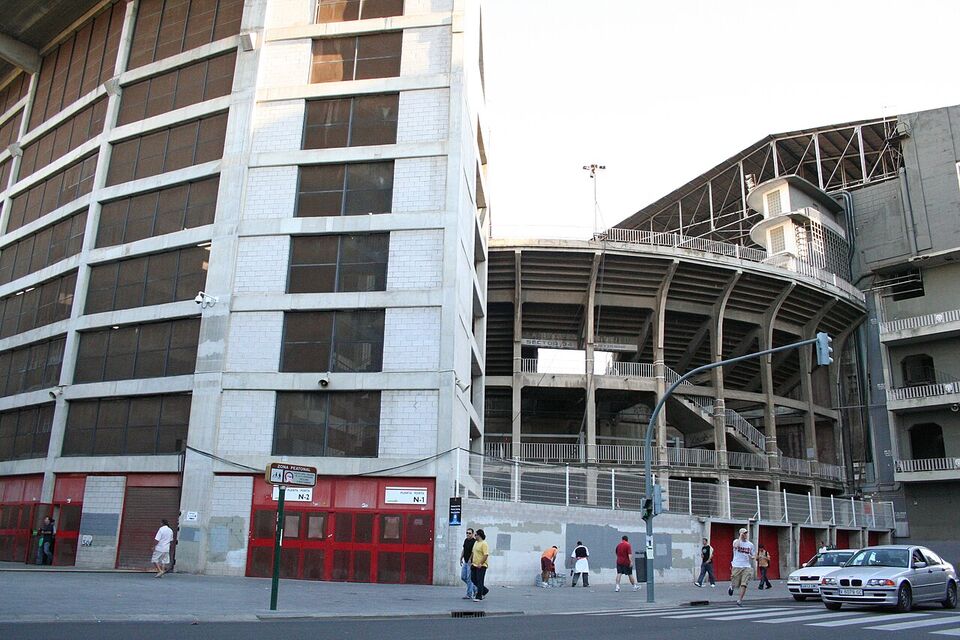
One of Europe's steepest and oldest big stadiums, right in the city. A long-delayed new stadium is under construction elsewhere in Valencia, so enjoy Mestalla while you can. See Valencia.
Villarreal
The "Yellow Submarine" from a town of about 50,000 that keeps reaching European competition. An easy day trip by train from Valencia.
Northern and island clubs
Celta Vigo, Osasuna, Real Oviedo, Mallorca, Las Palmas and others bring big local followings. Tickets are usually easy to buy on the club site a week or two ahead.
Buying tickets safely
The rule is simple: buy from the club. Every Spanish club sells general-sale tickets on its official website or app, and the big clubs also sell official hospitality packages. Here is how it works in practice.
- Wait for the confirmed date and time. Check La Liga's or the club's fixture page until the kickoff is fixed, usually a few weeks out.
- Know when general sale opens. Members buy first. At Real Madrid and Barça, general-sale tickets often appear in the last week before a match; at most other clubs you can buy a week or two ahead. Big games can sell out in minutes.
- Create your account before the sale. Register on the club site or app ahead of time, with your name exactly as on your passport. Some clubs ask for an ID number; use your passport number.
- Check the seat. Seat maps show the stand (tribuna is the main side stand, lateral the opposite side, fondo or gol behind the goals). The top tiers are cheapest and very high in the big stadiums.
- Keep the ticket on your phone. Tickets are usually digital, in the club app or as a QR code. Screenshots may not work if the code refreshes, so download the app and log in before match day.
Watch out
Clubs' terms generally ban the resale of tickets, and resold or duplicated tickets can be canceled before or on match day, leaving you outside the gate. That is the risk with secondary-market sites and "ticket agents" on social media, whatever guarantee they offer. Never buy from touts outside the stadium: fake and duplicate tickets are common at the big games. If the club site is sold out, an official hospitality package is the only safe fallback.
Save money
The cheapest great experience is a smaller club or a less glamorous opponent: you will pay a fraction of a Clásico price and still get a full stadium and real noise. Early Copa del Rey rounds and women's games are cheaper still. Basketball is another option: Real Madrid and Barça also have top EuroLeague basketball teams, and tickets are much easier to get.
Match day
- Arrive early: gates open 1–2 hours before kickoff and security lines at the big stadiums are long. Bags are searched; large bags are not allowed, and few stadiums have a place to leave them.
- Bring ID: clubs can check that the name on the ticket matches your passport. Carry the passport or a good copy, kept in a front pocket.
- Pickpockets: crowded metros before and after the big games are prime territory, especially Line 3 in Barcelona and Line 10 in Madrid. See safety.
- Colors: wear the home team's colors or neutral clothes. Away fans have their own section; in home sections, an away shirt can draw hostility and staff may move you.
- Food: stadium food is basic. Eat a bocadillo (sandwich) in a bar nearby, or bring one if the stadium allows; many locals do.
- Getting home: metros run extra trains after matches but are packed for half an hour. Taxis are scarce near the stadium; walk a few blocks away first.
- Weather: the stands are open to the elements in most stadiums. Night games from November to March are cold, even in Seville.
Spanish crowds whistle rather than boo, wave white handkerchiefs to protest a bad performance (or to celebrate a great one), and chant through most of the match. Violence inside stadiums is rare, but clubs and La Liga have cracked down hard on racist chanting, which has led to stadium bans and fines; report abuse to stewards.
Watching in bars
If you cannot get a ticket, a bar is the next best thing. League and Champions League matches are on pay TV, so most bars show them, and many put a sign outside listing the day's games. Big matches fill bars an hour early. Order a caña (small draft beer) and some tapas, and pick a bar in the right neighborhood for the team you support. Supporters' clubs (peñas) have their own bars in many towns.
Kickoff times are Spanish time, six hours ahead of US Eastern time for most of the year. A 9 p.m. game in Madrid is 3 p.m. in New York. The Canary Islands are one hour behind the mainland.
Stadium tours and museums
Bernabéu Tour
Real Madrid's tour includes the club museum (with the Champions League trophies), panoramic views of the stadium, and the changing rooms and dugouts when they are open. It runs every day except December 25 and January 1, 9 a.m. to 7 p.m. Monday to Saturday and 9:30 a.m. to 6:30 p.m. on Sundays and holidays.
| Ticket (adult) | Online | Ticket office |
|---|---|---|
| Classic | From €37 (about $41) | €40 (about $45) |
| Classic, flexible time | From €44 (about $49) | €47 (about $53) |
| Guided | From €56 (about $63) | €59 (about $66) |
| Classic + RM Games | From €59 (about $66) | €62 (about $69) |
Tickets are for a fixed date and time, non-changeable and non-refundable. Book at realmadrid.com and enter on Avenida de Concha Espina with your phone. On match days the tour closes 5 hours 30 minutes before kickoff, and the changing rooms and dugouts are closed on match days and the day before.
Save money
The Madridista Premium fan membership costs €35 (about $39) a year and cuts the Classic tour to €29 (about $32). It only pays off for a group or if you plan to use its other perks.
Camp Nou and the Barça Museum
Barça runs the Barça Immersive Tour with its museum. Routes and prices change as new parts of the stadium open, so check what is included on fcbarcelona.com before you book, and avoid match days.
Other tours
Atlético runs a tour and museum at the Metropolitano, and Athletic Club's museum at San Mamés is excellent for the club's unusual history. Sevilla, Valencia and Real Sociedad also offer tours. Check each club's site for days, since tours stop or shorten on match days.
Women's football
Spain's women's league, Liga F, is one of the strongest in the world, and Barça Femení has been Europe's dominant team in recent years. Most of Barça's women's games are at the Estadi Johan Cruyff, a small stadium at the club's training ground in Sant Joan Despí, with cheap tickets and players a few yards away; the biggest games move to the main stadium. Real Madrid's women play at the Alfredo Di Stéfano stadium at the club's training complex in Valdebebas, near the airport. Tickets for most games are easy to buy on the club sites.
Big events ahead
- Champions League final, June 5, 2027: at the Metropolitano in Madrid. Tickets are sold by UEFA, mostly to the two finalists' fans plus a public ballot; buy only through uefa.com. Madrid hotels will be expensive and full that weekend, so book early and cancelably if you plan to be in town, ticket or not.
- The 2030 World Cup: Spain is co-hosting with Portugal and Morocco, with opening games in South America. Several Spanish stadiums are being renovated for it.
- El Clásico: Real Madrid and Barcelona meet twice a season in La Liga, and often in the cups as well. Dates are set by the league with the rest of the calendar; check when the kickoff is confirmed.
Planning a trip around a match? Pair it with Madrid's museums, Barcelona's Gaudí or Madrid's tapas bars, or see Spain by interest for more ideas. We can also plan the trip for you.
Add it to a route in the trip builder, or ask us to plan the hotels, trains and guides for you.