The State Department advisory
As of November 2026, the US State Department rates Spain at Level 2: Exercise Increased Caution, citing terrorism and civil unrest. Level 2 is the tier it has given France, Germany, Italy and the United Kingdom in recent years, and it is a general caution rather than a warning to stay away. The advisory says terrorist groups continue to plot possible attacks that could come with little or no warning, at places such as tourist sites, transport hubs, markets, hotels, restaurants, places of worship, parks and big events. It also notes that demonstrations are common.
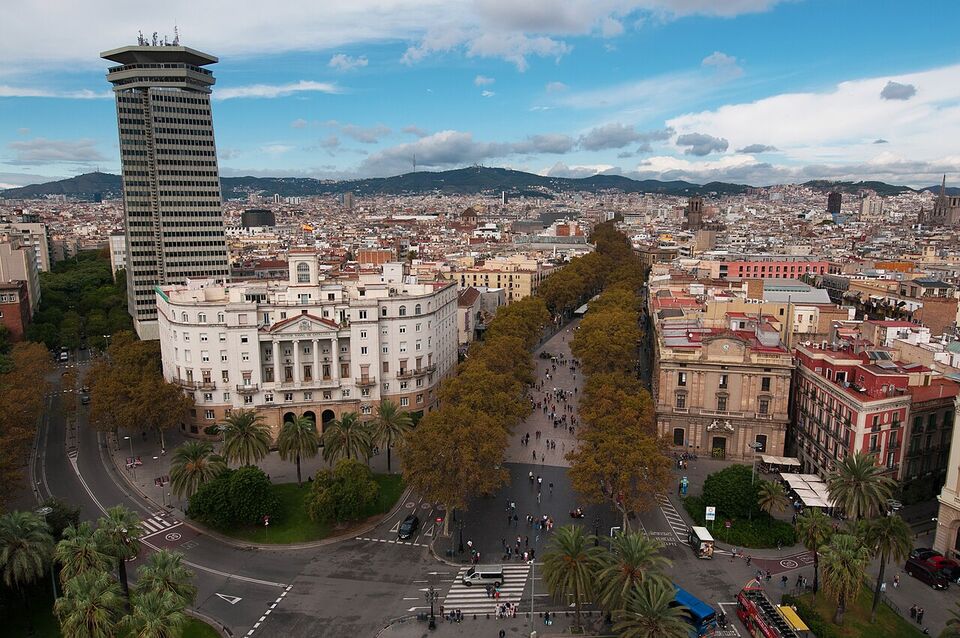
Spain has a long experience of terrorism, from the Madrid train bombings of 2004 to the van attack on Barcelona's La Rambla in August 2017, and the country has kept its national anti-terrorism alert at level 4 of 5 since 2015. In practice that means a visible police presence at stations, airports and big squares, and bag checks at stadiums and some monuments. For a visitor, the everyday risks are theft, scams and travel disruption, and most of this page is about those.
Spain's two small North African cities, Ceuta and Melilla, sit on borders with Morocco that have seen tense migration episodes. If your plans include either city, check the State Department advisory for any separate wording on Ceuta and Melilla before you go. See Spain with Morocco and its neighbors.
- Enroll your trip in the State Department's Smart Traveler Enrollment Program (STEP) so the embassy can reach you in an emergency.
- Check the current Spain advisory again the week before you fly, since levels and wording change.
- Save 112 and the embassy number in your phone, and keep a photo of your passport photo page in your email or cloud storage.
Pickpockets and distraction theft
Petty theft is the crime American visitors are most likely to meet in Spain, and Barcelona has a long-standing reputation as one of Europe's pickpocket capitals. Thieves often work in small teams: one distracts, one takes, one walks away with the goods. Many are well dressed and look like tourists. They are after phones, wallets and passports, and they are very good at it.
Where it happens
Barcelona
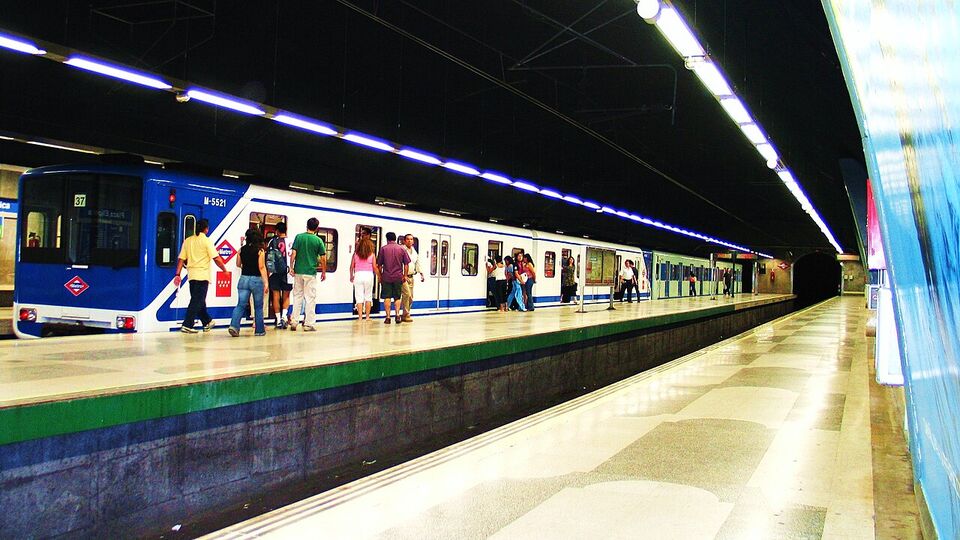
La Rambla and the Boqueria market, the Gothic Quarter, Plaça de Catalunya, the Sagrada Família and Passeig de Gràcia crowds, the beach at Barceloneta (bags left on the sand), and Metro Lines L3 and L5, especially stops near sights. The Aerobús and the airport train are also worked. See Barcelona.
Madrid
Puerta del Sol, the Gran Vía, Plaza Mayor, the Sunday Rastro flea market, Atocha and Chamartín stations, and Metro Line 1 and the airport line. See Madrid.
Seville and Granada
Around the cathedral and the Alcázar in Seville, the Albaicín viewpoints and the Alhambra approach in Granada, and crowds at Holy Week processions. See Seville and Granada.
Trains and buses
On high-speed and regional trains, luggage racks by the doors are a target at stops. Keep valuables on you and big bags in sight. See getting around.
Café terraces
A phone on the table at an outdoor café is the classic loss: someone drops a flyer or map over it and lifts both. Keep it in a pocket or bag.
Beaches and cars
Bags left on the sand while you swim, and rental cars with luggage in view at viewpoints, beach lots and highway rest stops.
How to avoid it
- Carry a zippered cross-body bag, worn in front in crowds. Never a wallet in a back pocket.
- On the metro, stand away from the doors and keep a hand on your phone; thieves strike as doors are closing.
- Carry one card and the day's cash. Leave a backup card and your passport in the hotel safe, with a copy or photo on you.
- Be wary of anyone who bumps you, points out a stain on your clothes, asks you to sign something or crowds you at a ticket machine.
- At restaurants, loop your bag strap around your leg or chair, and never hang it on the back of the chair.
- Use a phone tether or lanyard in the busiest areas, and set up remote locking and Find My before you leave.
Insider tip
Metro riders in Barcelona sometimes call out carteristas (pickpockets) when they spot a known group boarding. If you hear it, put a hand on your bag and phone at once.
Common scams
None of these are dangerous, but they cost money and time. The fix for almost all of them is the same: say no, gracias, keep walking and do not let anyone put anything in your hand.
- Rosemary sprig: around Seville's cathedral and in Granada, women press a sprig of rosemary into your hand, offer to read your palm and then demand payment loudly. Keep your hands to yourself and walk on.
- Petition clipboard: someone asks you to sign for a charity, often claiming to be deaf, then demands a donation, or a partner lifts your phone while you write.
- Stain trick: someone squirts something on your back, then helpfully offers to clean it while a partner empties your bag.
- Fake police: plainclothes "officers" ask to see your wallet to check for counterfeit money. Real Spanish police do not do this. Offer to walk to the nearest station instead.
- Shell game: the cups-and-ball game on La Rambla and elsewhere is rigged, and the winners in the crowd are part of the team.
- Flat tire: on highways out of airports and big cities, someone flags you down to point out a flat (sometimes one they caused). When you pull over, a partner takes bags from the car. Drive on to a busy gas station before checking. See driving in Spain.
- Unlicensed taxis: at airports and stations, use only the official taxi line or a ride app. Madrid has fixed airport fares to the city center; see flights and airports.
- Ticket resellers: copycat sites sell Alhambra, Sagrada Família and football tickets at large markups, or not at all. Buy only from official sites. See Alhambra tickets and football.
- Rental fraud: listings that ask for a deposit by bank transfer or outside a booking platform. Spain has cracked down on unlicensed holiday flats, so check that a listing shows a tourist license or registration number from the regional government. See where to stay.
Save money
When a card terminal or ATM offers to charge you in dollars, always choose euros. The "convenience" conversion uses a poor rate. Our money page explains dynamic currency conversion and which ATMs to avoid.
Nightlife, drinking and drugs
Spain's nightlife starts late, with clubs filling after 1 am, and it is generally safe. The risks are the familiar ones, amplified by long nights and strong pours: drinks spiked or left unattended, pickpockets in clubs, and arguments outside bars. Stay with friends, watch your drink being made, and use licensed taxis or ride apps to get home.
In party resorts on Mallorca and Ibiza, a notorious danger is "balconing," jumping between hotel balconies or into pools from them, which kills or badly injures young tourists most summers. The Balearic government has restricted alcohol sales and happy hours in the busiest party zones, such as Magaluf and parts of Playa de Palma and Sant Antoni, and cities from Palma to Málaga fine people for drinking in the street. See Mallorca and the Balearics.
Different from home
Possessing drugs in public, including small amounts of cannabis, is an administrative offense in Spain with fines that start at €601 (about $670), even where you see it smoked openly. Barcelona's cannabis clubs are private associations, not shops, and buying on the street is illegal. The legal drinking age is 18.
Spain is one of the most LGBTQ+-friendly countries in the world, with same-sex marriage legal since 2005, and Madrid's Pride is among the largest in Europe. Women traveling alone generally find Spain comfortable, including at night in city centers. See travel by interest for solo, LGBTQ+ and accessible travel.
Protests, strikes and disruption
Demonstrations are part of Spanish life, and most are peaceful, permitted and announced. Recent years have seen large marches against mass tourism and housing costs in Barcelona, Palma, Málaga, San Sebastián and the Canary Islands, Catalan independence rallies (especially on September 11, Catalonia's national day), and protests over the war in Gaza, which forced the cancellation of the final stage of the Vuelta cycling race in Madrid in September 2025.
Anti-tourism protests target policy, not individual visitors, though a few in Barcelona have included protesters spraying diners with water pistols. Walk around marches, avoid filming confrontations, and if police form lines, leave the area.
Strikes
Strikes (huelgas) by rail workers, airport ground staff, air traffic support staff and airline crews happen several times a year. Spanish law requires minimum services (servicios mínimos) during transport strikes, so some trains and flights keep running, and strikes are announced days or weeks ahead. Check Renfe and your airline before travel days, and keep a buffer day before an international flight.
Rail accidents and line closures
Spain's trains are normally a safe and reliable way to travel, but 2026 brought serious accidents. In January a derailment and collision near Adamuz, in Córdoba province, killed 46 people, and speed restrictions on that stretch were still in place in October. After a fatal collision near Urda (Toledo) on October 28, 2026, high-speed trains between Madrid and Andalusia were suspended; Renfe stopped selling tickets on the route until December 13, 2026, though service may return sooner. Check Renfe, Iryo and Ouigo before you plan, and consider flying or taking a long-distance bus in the meantime. See getting around.
Watch out
On April 28, 2025, a power failure blacked out mainland Spain and Portugal for most of a day, stopping trains and metros, traffic lights and card terminals. It was exceptional, but it is a good reason to carry a charged power bank, a little cash and a printed or offline copy of your hotel address.
Heat waves and wildfires
Summer heat is the most underestimated hazard in Spain. Seville, Córdoba and the Guadalquivir valley regularly pass 104°F (40°C) in July and August, Madrid often reaches the high 90s (35–37°C), and heat waves push temperatures higher still. The Spanish weather service, AEMET, issues yellow, orange and red heat warnings by region.
- Do outdoor sightseeing before noon and after 6 pm, and rest indoors in the afternoon as Spaniards do.
- Drink water steadily; tap water is safe to drink almost everywhere.
- Watch older travelers and children closely, and know the signs of heat stroke (golpe de calor): confusion, hot dry skin, collapse. Call 112.
- Book a hotel with air conditioning in the south; it is not universal in older or budget hotels.
Wildfires (incendios forestales) are a summer risk across the country. August 2025 brought some of the worst fires in decades to Galicia, Castile and León and Extremadura, closing roads, rail lines and trails. If you hike or drive in rural areas in summer, check fire warnings, never light a fire outdoors, and obey evacuation orders at once. See outdoors and our health page for more on heat.
Flash floods and storms
From late summer into autumn, a weather pattern Spaniards call a DANA (an isolated pocket of cold air high up) can dump months of rain in hours on the Mediterranean coast. On October 29, 2024, a DANA caused catastrophic flash floods around Valencia that killed more than 220 people, the deadliest flood in modern Spanish history. The city of Valencia is open and welcoming visitors; see Valencia.
- Spain sends emergency alerts to every phone in an area through its ES-Alert system. If your phone sounds an alert, read it and follow it.
- Never drive through flooded roads or underpasses, and do not park in dry riverbeds (ramblas) or underground garages during a red rain warning.
- Check AEMET warnings before hiking in canyons or gorges.
Beaches, sea and mountains
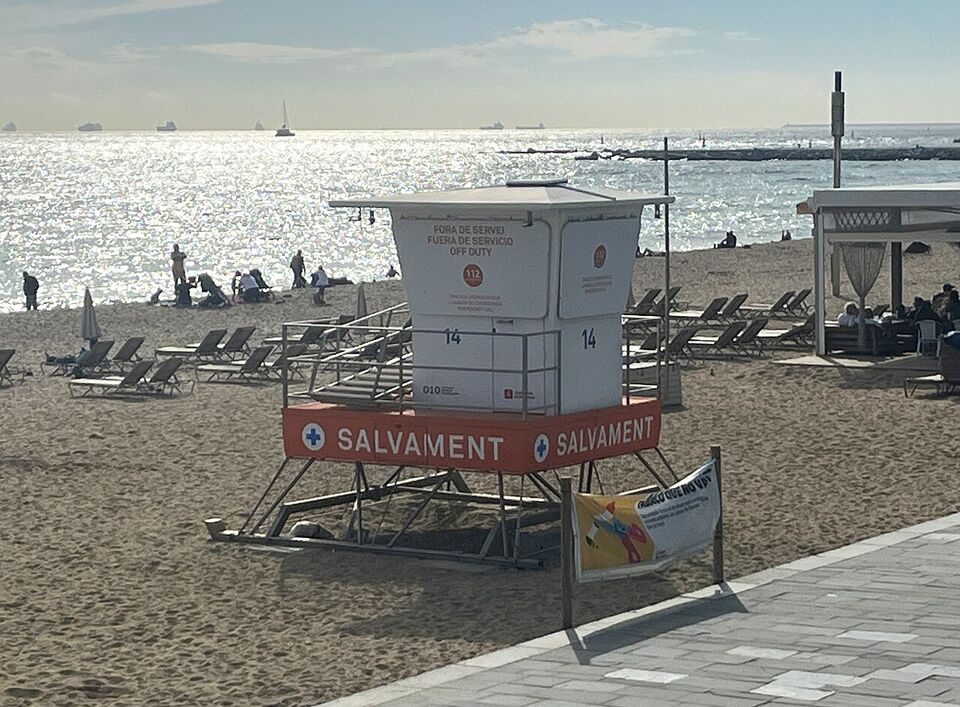
Many Spanish beaches have lifeguards in summer and a flag system: green for safe bathing, yellow for caution, red for no swimming. Some beaches also fly a flag for jellyfish. Outside the summer season, many beaches have no lifeguards at all.
Watch out
The Atlantic is far rougher than the Mediterranean. On the Canary Islands, the Costa de la Luz near Cádiz, and the Galician and Cantabrian coasts, strong currents and big surf drown visitors every year, often on beaches without lifeguards or on rocky shorelines where a wave sweeps people off. Swim only at staffed beaches, respect red flags and stay off wet rocks. See the Canary Islands.
In the Pyrenees, the Picos de Europa and the Sierra Nevada, weather changes fast and summer storms are common in the afternoon. Start early, carry water and a layer, and tell someone your route. Mountain rescue is reached through 112, and some regions can bill for rescues caused by recklessness. Many popular routes, such as the Caminito del Rey near Málaga or the summit of Mount Teide on Tenerife, require advance tickets or permits. See outdoors.
Emergency numbers and police
Call 112 for any emergency: police, ambulance, fire or mountain rescue. It is free from any phone, works without a local SIM, and operators can usually connect you to an English speaker.
| Number | Service |
|---|---|
| 112 | All emergencies (use this first) |
| 091 | Policía Nacional (national police, cities) |
| 062 | Guardia Civil (highways, rural areas, coasts) |
| 092 | Local police (traffic, local matters) |
| +34 91 587 2200 | US Embassy Madrid, including after-hours emergencies for US citizens |
| +1 888 407 4747 | State Department Overseas Citizens Services from the US; +1 202 501 4444 from abroad |
Spain has several police forces, which confuses visitors. The Policía Nacional covers cities, and the Guardia Civil covers highways and the countryside. Catalonia has its own force, the Mossos d'Esquadra, and the Basque Country has the Ertzaintza; they take crime reports in those regions. Cities also have local police (in Barcelona, the Guàrdia Urbana).
Reporting a theft
- Cancel cards and lock your phone first; most thefts are of these.
- File a police report (denuncia), which you will need for insurance claims and a replacement passport. The Policía Nacional lets you start a report online for simple thefts and then sign it at a station within a set time; in Catalonia, the Mossos accept online reports too.
- In Madrid and some other cities, police offer a tourist assistance service with interpreters. Ask at the nearest station.
- Download Spain's official police app, AlertCops, which lets you send an alert or chat with police, in English among other languages.
- Ask for a copy of the report in English if one is available, and keep it with your receipts.
Different from home
Spanish law expects you to carry identification. Police rarely ask tourists, but if they do, show your passport or a good copy of it. Keeping the passport in your hotel safe and a photocopy plus a phone photo on you is the usual compromise.
The US Embassy and consulates
The US Embassy in Madrid is at Calle de Serrano 75 (Metro: Gregorio Marañón or Núñez de Balboa); call +34 91 587 2200, which also reaches the duty officer after hours in a real emergency. The Consulate General in Barcelona is at Paseo Reina Elisenda de Montcada 23; call +34 93 280 2227. Both offer passport and citizen services by appointment, which you book through the embassy website.
The State Department also has consular agencies in several cities, in Seville, Valencia, Palma de Mallorca, Las Palmas de Gran Canaria and Fuengirola on the Costa del Sol. They offer limited services by appointment, and their hours are short, so check the embassy website before going.
If your passport is lost or stolen
- Report the theft to the police and get a copy of the denuncia.
- Contact the embassy in Madrid or the consulate in Barcelona for an appointment. Bring a passport photo, any ID you have, the police report and your travel itinerary.
- For an urgent departure, ask for an emergency passport, which can often be issued quickly; you then replace it with a full passport at home.
- Tell your airline; you may also need a new boarding pass at check-in.
The embassy cannot pay your bills, get you out of jail or give legal advice, but it can provide lists of English-speaking lawyers and doctors, contact family, and help in a crisis. Check entry rules for passport validity, which matters if you get a replacement.
Before you go: a safety checklist
- Enroll in STEP and check the Spain advisory the week before you leave.
- Buy travel insurance with medical cover and medical evacuation; US health plans and Medicare give little or no cover abroad. See health.
- Leave copies of your passport and card emergency numbers with someone at home.
- Pack a zippered cross-body bag and a phone lanyard for Barcelona and Madrid.
- Download AlertCops and offline maps, and save 112 and the embassy number.
- In summer, plan around the heat; in autumn on the Mediterranean, watch rain warnings.
- Check for transport strikes before every travel day. See getting around.
- Read our etiquette page for the local rules that keep you out of trouble, like beachwear in town and noise in apartment buildings.
For broader trip planning, start with our planning guide and when to go. US passport holders should also read about the EU's ETIAS and Spain's entry rules.
Add it to a route in the trip builder, or ask us to plan the hotels, trains and guides for you.