The basics in one minute
Spain is an easy country to get along in. People are direct, sociable and loud by American standards, and they forgive almost any mistake from a visitor who says hola (hello) and gracias (thank you) and goes along with the rhythm of the day. Most friction comes from that rhythm: Americans arrive hungry at 6 pm to find kitchens closed, or wait 20 minutes for a check nobody thought to bring.
A handful of habits cover most situations. Greet people when you walk into a shop, bar or elevator. Eat later than you think you should. Ask for the bill when you want it. Cover up in cathedrals and away from the beach. Keep your voice down in apartment buildings at night, even though the street outside is anything but quiet. And remember that "Spain" is a country of strong regions, several of them with their own language.
The rest of this page goes through greetings, meals and bar manners, tipping, dress, shop hours and the famous siesta, the regional question, conversation topics to handle with care, and the city rules on drinking, swimwear and noise that now carry real fines.
Greetings and how to address people
When you meet someone socially in Spain, expect dos besos (two kisses): a light touch of the cheeks, first one side, then the other, with a kissing sound rather than lips on skin. Women greet women and men this way; men usually shake hands with each other, though male relatives and close friends often hug or kiss too. Follow the other person's lead and you will not go wrong.
In business, at a hotel desk or with older people you do not know, a handshake is normal. Spaniards do not do the American hovering half-hug, and they tend to stand closer and touch arms more during conversation. None of it signals anything beyond friendliness.
Hello, goodbye and the shop greeting
Say hola or buenos días (good morning) when you walk into a small shop, a bakery, a pharmacy or a bar, and adiós or hasta luego (see you later) when you leave. In Spain you even greet strangers in an elevator or a doctor's waiting room. Walking up to a counter and launching straight into a request in English comes across as brusque, in a way it would not in a US chain store.
After lunch, roughly from 2 pm, the greeting becomes buenas tardes; after dark, buenas noches, which works for both hello and goodbye. A casual buenas covers any time of day. See our Spanish phrases page for pronunciation.
Tú, usted and names
Spanish has a familiar "you" (tú) and a formal one (usted). Spain uses tú far more than Latin America does: waiters, shop staff and people your age will usually address you that way, and you can answer in kind. Use usted with older people, officials and anyone in a formal role until they invite you to switch.
Spaniards carry two surnames, the father's first and the mother's second, and women keep their own names after marriage. If you are writing to a "María García López", she is Señora García. You will also hear don and doña before first names as a mark of respect for older people.
Different from home
In the US, "How are you?" is a greeting that expects no answer. In Spain, ¿Qué tal? is similar, but a friend who asks ¿Cómo estás? may expect a real reply. On the other hand, nobody expects a server or shop clerk to make small talk or to tell you their name, and there is no "Hi, I'm Jessica, I'll be taking care of you tonight".
Meal times, and why they matter
Spain runs about two hours later than the US, and food is where you feel it most. Spain sits on Central European Time even though it lies in line with the UK, so the sun rises and sets late, and so do people. Rather than fight it, shift your whole day.
| Meal | Typical time | What it is |
|---|---|---|
| Desayuno (breakfast) | 7:30–9:30 am | Light: coffee and toast (tostada) with tomato and olive oil, or a pastry |
| Mid-morning | 10:30 am–noon | A second coffee, maybe a slice of tortilla (potato omelet) or a small sandwich |
| Comida (lunch) | 2–4 pm | The main meal; on weekdays, often the menú del día (set lunch) |
| Merienda (snack) | 5:30–7 pm | Coffee and something sweet, churros, or a sandwich for kids |
| Drinks and tapas | 8–10 pm | A caña (small draft beer) or a glass of wine with a small bite |
| Cena (dinner) | 9–11 pm | Lighter than lunch for many Spaniards; later on weekends and in summer |
Restaurant kitchens typically open for lunch around 1 or 1:30 pm and for dinner around 8 or 8:30 pm. A place full of foreigners at 7:30 pm is serving tourists; the Spanish crowd arrives at 9:30. Catalonia and the north eat a little earlier than Madrid and Andalusia, but only by half an hour or so.
The easiest fix is to make lunch your big meal, have a merienda or a round of tapas in the early evening, and keep dinner light and late. That also saves money: the weekday menú del día, with a first course, a main, dessert or coffee, bread and a drink, is the best-value meal in the country. See Spanish food and money and costs for what it costs.
Insider tip
Traveling with kids, or with jet lag? Nobody will look twice at children in a restaurant at 10 pm, and in summer you will see toddlers in strollers in town squares near midnight. If you need an early dinner, tapas bars and markets serve food all afternoon and evening, and in big cities some kitchens now stay open all day (cocina ininterrumpida or horario continuo).
At the table and the bar
Spanish restaurant service is professional and unhurried. Your server will not check on you every five minutes, will not clear one plate while others are still eating, and will never bring the check until you ask. Lingering over coffee and conversation after a meal is called sobremesa, and it is the point of eating out, rather than a delay.
- Getting attention. Catch the server's eye, raise a hand slightly, or say perdona (excuse me). Snapping fingers or calling "hey" is rude in Spain too.
- Asking for the bill. Say la cuenta, por favor, or make the universal air-scribble gesture. In busy tapas bars you often pay at the end at the counter, and the staff keep track of what you had.
- Bread. Bread is often brought automatically and appears on the bill, sometimes with olives, as a small charge. If you do not want it, say so when it arrives.
- Water. Since 2022, national waste law requires bars and restaurants to offer tap water (agua del grifo) free of charge. Ask for it by name; otherwise you will get bottled water, which you pay for.
- Bar, table or terrace. Many bars charge a little more for table service and more again on the outdoor terrace (terraza). That is legal as long as the prices are posted.
- Sharing. Dishes for sharing (raciones, full plates; medias raciones, half plates) are normal, and nobody minds a table of four ordering six plates to split.
- Splitting the check. Spanish groups usually split evenly or take turns treating each other. Asking for six separate checks at a busy bar will not make you popular; one bill paid by card, then settled among yourselves, is easier.
- Napkins on the floor. In a few old-school tapas bars you will still see paper napkins and toothpicks on the floor. It is a tradition that is fading; use the bin if there is one.
Drinking
Spaniards drink often but rarely get drunk in public, and visible drunkenness draws more disapproval than it would in a US college town. Wine and beer come with food. The legal drinking age is 18. If someone says te invito (I'm inviting you), they mean they are paying; return the favor with the next round.
Smoking has been banned inside bars and restaurants since 2011, but it is still common on terraces. In July 2026 the government approved a draft law, still to go through parliament, that would extend the ban to bar and restaurant terraces and to beaches; it was not yet law in the fall of 2026, so until it passes, sitting outside means you may sit near smokers. For Spain's wine, sherry and vermouth culture, see Spanish wine.
Tipping recap
Tipping in Spain is a small gesture of thanks, and staff are paid a wage that does not depend on it. Menu prices include VAT and service. Nobody will chase you down the street if you leave nothing, and nobody expects 20%.
| Situation | What locals do |
|---|---|
| Coffee or a drink at the bar | Leave the small change, or nothing |
| Tapas round or casual lunch | Round up, or leave €1–2 (about $1.10–$2.25) |
| Menú del día | A euro or two, or the coins from your change |
| Sit-down dinner, good service | 5–10%; more only at high-end restaurants if you were delighted |
| Taxi | Round up to the next euro or two |
| Hotel porter or housekeeping | €1–2 per bag or per night, if you like |
| Free walking tour or private guide | Tip the guide; €5–10 (about $6–11) per person for a free tour is typical |
Watch out
Card machines in tourist areas sometimes prompt for a tip or offer to charge you in dollars. Pick "no tip" if you plan to leave cash, and always choose to pay in euros: the dollar option uses a poor exchange rate. Our money page explains dynamic currency conversion.
Dress in churches and around town
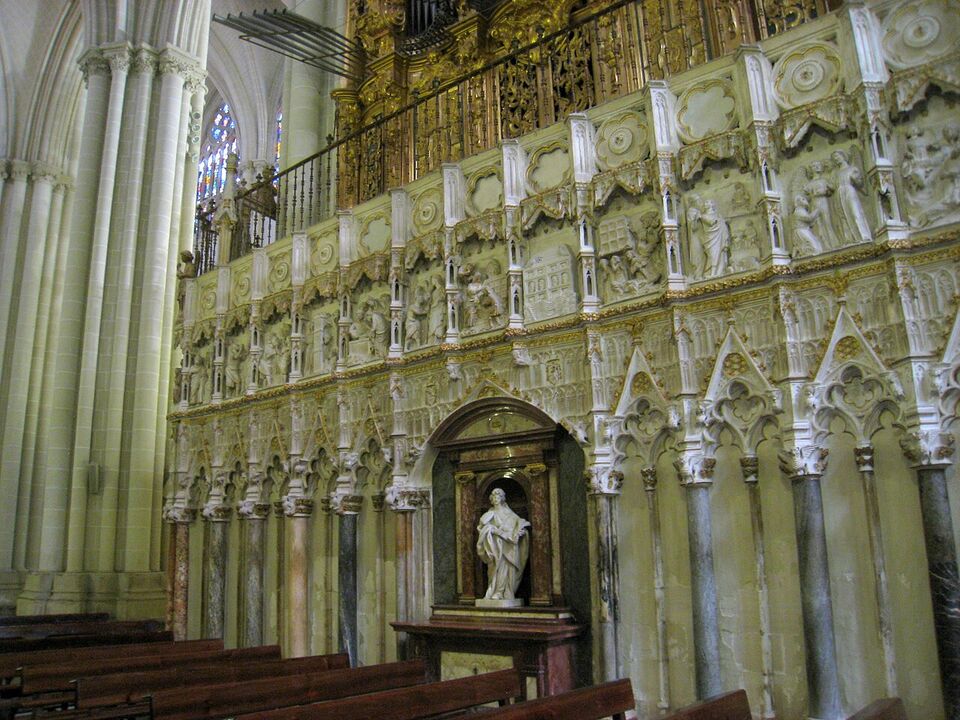
Spain is largely secular in daily life but deeply Catholic in its buildings and calendar, and its great churches are working places of worship. At cathedrals and major basilicas, cover your shoulders and knees, and take off hats. That applies to men and women alike. Tank tops, very short shorts and beachwear can get you turned away, even after you have bought a timed ticket.
- Sagrada Família, Barcelona: the basilica publishes a dress code and staff enforce it; plan for covered shoulders and no very short shorts or skirts. See Sagrada Família tickets.
- Seville Cathedral, the Mezquita-Catedral of Córdoba, Toledo and Santiago de Compostela: the same standards apply, and tourist visits stop during services. See Seville and Córdoba.
- Small village churches: often open only for Mass. If you walk in during a service, stay at the back, keep quiet and do not take photos.
A light scarf or shawl in your day bag solves the shoulder problem in summer, and lightweight trousers or a midi skirt solve the rest. Our packing list has more.
Everyday dress
Spaniards dress neatly. Shorts are fine for sightseeing in summer heat, but adults in cities rarely wear them to dinner, and athletic wear reads as gym clothes. Flip-flops are for the beach. You will never be refused service for being a casually dressed tourist, but smart-casual clothes will help you blend in and make you less of a target for pickpockets.
Different from home
Topless sunbathing is legal and unremarkable on Spanish beaches, and many coastal areas have official nudist beaches (playas nudistas). Nobody stares. The flip side is that swimwear stops at the beach: walking through town in a bikini or shirtless is frowned on, and in several cities it is now finable.
The siesta, shop hours and Sundays
The siesta as Americans imagine it, everyone going home for a nap after lunch, is mostly a myth in big cities. Madrid and Barcelona office workers have a long lunch and get back to work. What does survive is the split working day in small shops, especially in Andalusia, small towns and the countryside.
- Small, independent shops: often open around 10 am–2 pm and again around 5–8:30 pm, closed in between. In southern towns in summer, the afternoon break can run until 6.
- Chains, department stores and malls: open all day, typically 10 am–9 or 10 pm. El Corte Inglés, Spain's national department store, is your fallback.
- Supermarkets: usually 9 am–9:30 pm Monday to Saturday.
- Sundays and holidays: most shops close across Spain, with exceptions. Madrid lets stores open on Sundays and many do. Barcelona and other cities allow Sunday trading in designated tourist zones and on certain dates. Bakeries, markets, cafés and restaurants usually open Sunday morning.
- Mondays: many museums close, and some restaurants that work all weekend take Monday or Sunday night off.
- Pharmacies: each town has a duty pharmacy (farmacia de guardia) open at night and on Sundays; the address is posted on every pharmacy door. See health.
August
Much of Spain takes vacation in August. In Madrid and inland cities, family-run restaurants, bakeries and shops may put up a cerrado por vacaciones (closed for vacation) sign for two to four weeks, especially around August 15, a national holiday. Tourist areas and the coasts are at their busiest. Our when to go page covers the trade-offs.
Regional identities and languages
Spain is a country of 17 autonomous communities, several with their own language, history and, for many residents, a strong sense of nationhood. Getting this right is the single most appreciated sign of respect you can show.
- Catalonia (Barcelona, Girona): Catalan (català) is co-official with Spanish and the main language of schools, government and much daily life. Signs, menus and metro announcements are often in Catalan first. Valencian, spoken in the Valencia region, and the language of the Balearic Islands are forms of Catalan.
- The Basque Country and part of Navarra: Basque (euskara) is unrelated to any other language in Europe. Bilbao is Bilbo, San Sebastián is Donostia, and street signs show both.
- Galicia: Galician (galego), close to Portuguese, is widely spoken, especially outside the cities. A Coruña and Ourense use their Galician names officially.
Everyone in these regions also speaks Spanish, and nobody will be offended if you use it. But learning gràcies in Barcelona or eskerrik asko in San Sebastián earns real warmth, and our Spanish page has a short list for each. Do not call Catalan or Basque a "dialect", and do not tell a Catalan that they are "just Spanish".
Insider tip
Regional pride shows up in food as much as politics. Calling a Basque pintxo a "tapa", praising Madrid's paella in Valencia, or putting chorizo in a paella anywhere is a reliable way to start a lively argument. See the Basque Country, Valencia and Galicia.
Conversation: easy topics and touchy ones
Spaniards are curious, frank and happy to talk about food, football, family, travel and where you are from. They will ask direct questions that Americans might find personal, about your job, your rent or why you have no children, and they will tell you with equal directness if they think you are wrong. It is all meant warmly.
Handle with care
- Catalan and Basque independence. Catalonia's 2017 independence referendum and its aftermath still divide families and friends. Listen more than you talk, and do not assume which side anyone is on.
- The Civil War and Franco. The 1936–39 Civil War and the dictatorship that lasted until Franco's death in 1975 are recent history, with mass graves still being exhumed. People discuss it, but it is not small talk.
- Bullfighting. Many Spaniards oppose it, many others see it as culture, and it is a political marker. Barcelona has not held a bullfight since 2011, and the Canary Islands banned it in 1991. Ask questions rather than offer verdicts.
- Football. Club loyalties (Real Madrid, Atlético, Barça, Athletic Bilbao, Sevilla and Betis) run deep and often map onto city and regional identity. Wearing a Real Madrid shirt in a Barcelona bar on match night invites teasing. See football in Spain.
- Overtourism. Housing costs and tourist crowds are a live issue in Barcelona, Málaga, Palma, the Canaries and elsewhere, and residents have staged large protests since 2024. Showing that you understand why goes a long way.
Queues and personal space
At a market stall, bakery or pharmacy without a ticket machine, there may be no visible line. Walk in and ask ¿quién es el último? (who's last?). Someone will raise a hand; you go after them, and you answer the next person who asks. Many delis and markets use take-a-number machines instead. Personal space is smaller than in the US, conversations are louder, and people interrupt each other as a sign of engagement.
Time and invitations
Social time is relaxed: arriving 10–15 minutes late to dinner at a friend's home is normal, and a dinner at "9" may start at 9:30. Business meetings, trains, tours and timed tickets run on time. If you are invited to someone's home, which is less common than in the US because Spaniards socialize in bars and restaurants, bring wine, pastries from a good bakery, or flowers.
City rules on drinking, swimwear and noise
Several Spanish cities and islands have responded to overtourism and party tourism with local ordinances that come with fines. They apply to visitors as much as residents, and police do enforce them in the hot spots.
| Rule | Where | What to know |
|---|---|---|
| No drinking in the street | Most Spanish cities, including Madrid, Barcelona, Seville and Málaga | The botellón (drinking outdoors from store-bought bottles) is banned in public spaces; fines vary by city |
| Alcohol limits in party zones | Parts of Palma (Playa de Palma), Magaluf and Sant Antoni (Ibiza) | Restricted shop sales of alcohol at night, bans on organized pub crawls and happy hours, and street-drinking fines that can reach €1,500 (about $1,680) |
| No swimwear or bare chests in town | Barcelona, Málaga, Palma and many beach towns | Cover up when you leave the beach area; fines can run to several hundred euros |
| No "balconing" | The Balearic Islands | Climbing or jumping between hotel balconies can get you evicted and fined |
| Quiet hours | Apartment buildings everywhere | Neighbors expect quiet from late evening; noise complaints are a main source of tension over tourist rentals |
Rules and fine amounts change often, so look for signs and ask your hotel. The Balearics and Barcelona pages have local detail.
Being a good guest in a tourist rental
Short-term rentals are at the center of Spain's housing debate. Barcelona plans not to renew any of its roughly 10,000 tourist-apartment licenses, so they would end by November 2028, though the plan faces legal challenges. Spain introduced a national registration number for short-term rentals in July 2025, but the Supreme Court struck it down in May 2026; what still counts is the regional tourist license. Book places that display a license or registration number from the regional government, keep noise down after about 11 pm, sort your trash the way the building does, and do not wheel suitcases through a courtyard at 3 am. See where to stay for the rental rules.
Watch out
The protests against mass tourism in Barcelona, Palma, Málaga and the Canaries have been peaceful and aimed at policy, not at individual visitors. If you come across one, step aside and let it pass. Our safety page covers demonstrations and strikes.
Photos, processions and sacred moments
Spain's festivals and Holy Week processions are public and you are welcome to watch, but they are religious acts for the people taking part. During Semana Santa, do not cut through a procession, keep quiet as a statue passes, and never use flash on the bearers or penitents. Find a spot on the route and stay put; crossing the city on those nights takes planning.
At a flamenco show, follow the house rule on photos: many tablaos ban filming during the performance, and a phone screen in the front row ruins it for everyone. Clap along only if the performers invite it; offbeat clapping is worse than none. See flamenco.
Ask before photographing people in markets, children, or anyone in a church. Spaniards are generally relaxed about it, but privacy law is stricter than in the US and a quick ¿puedo? (may I?) is the polite way.
What offends, and what does not
A quick reference for the moments when you are not sure.
Fine
Kids out late in restaurants and squares. Loud, overlapping conversation. Topless sunbathing. Public affection between couples of any gender (Spain legalized same-sex marriage in 2005). Lingering at the table for an hour after eating. Ordering water from the tap.
Mildly rude
Skipping the greeting in shops. Asking for dinner at 6:30 and complaining it is closed. Expecting staff to speak English. Separate checks for a large group. Shouting "excuse me" across a crowded bar.
Genuinely offensive
Drunken behavior in residential streets. Swimwear in churches or town centers. Dismissing Catalan, Basque or Galician as dialects. Treating a Holy Week procession as a photo op. Lecturing locals about bullfighting or Franco.
If you get it wrong, a smile and perdón (sorry) fixes almost everything. Spaniards value warmth and effort more than perfect manners.
Quick checklist before you go
- Learn hola, buenos días, por favor, gracias, perdona and la cuenta, plus thanks in Catalan or Basque if you are heading there.
- Plan lunch around 2 pm and dinner at 9 pm or later; keep snacks for the gaps.
- Pack a scarf or light layer for cathedrals and something other than shorts for dinner.
- Carry a few euro coins for tips, small purchases and the occasional paid restroom.
- Check Sunday and Monday opening hours for museums and shops before you build your days.
- Book licensed accommodation and keep the noise down at night.
For the language itself, see Spanish phrases; for the calendar of fiestas, see festivals; and for the food that all these customs revolve around, see Spanish food.
Add it to a route in the trip builder, or ask us to plan the hotels, trains and guides for you.