The short version
Spain is bigger than most Americans expect. It is roughly twice the size of Oregon, and its great cities sit hundreds of miles apart. The good news is that it has one of the best high-speed rail networks in the world, so Madrid to Barcelona, Seville or Málaga normally takes about two and a half hours, center to center. One big exception for late 2026: high-speed trains between Madrid and Andalusia were suspended after a fatal collision near Urda (Toledo) on October 28, 2026, and Renfe stopped selling tickets on the route until December 13, though service may return sooner.
For a first trip, pick two or three bases and give each at least three nights. The classic combination is Madrid, Barcelona and Andalusia (Seville, Córdoba and Granada). If you have been before, the Basque Country, Valencia, Galicia, the Canary Islands or a slow week in one region will show you a very different country.
The planning order matters more than in most of Europe because a handful of things sell out: Alhambra tickets in Granada, timed entry to the Sagrada Família in Barcelona, and hotels during Holy Week, Seville's April Fair and San Fermín in Pamplona. Book those as soon as your dates are firm, then fill in the rest.
Different from home
Spain runs late. Lunch is the main meal and starts around 2 p.m.; dinner rarely starts before 9 p.m., and 10 p.m. is normal in summer and in the south. Shops in smaller towns often close from about 2 to 5 p.m., while big-city chains and department stores stay open all day. Plan sightseeing in the morning and late afternoon, and do not expect a restaurant kitchen to serve dinner at 6.
How many days do you need?
Most US visitors have a week to two weeks. Here is what each length realistically covers, counting the overnight flight and a first day that is mostly about getting over jet lag.
| Trip length | What fits | Pace |
|---|---|---|
| 5 days | One city plus a day trip: Madrid with Toledo, or Barcelona with Montserrat or Girona | Comfortable |
| 7 days | Madrid and Barcelona, or Andalusia alone (Seville, Córdoba, Granada) | Comfortable |
| 10 days | Madrid, Seville, Córdoba and Granada; or Barcelona, Madrid and Seville | Steady |
| 14 days | Barcelona, Madrid, Andalusia and either the Basque Country or a beach stay | Steady, with one rest day |
| 3 weeks | A real loop: Barcelona, Valencia, Andalusia, Madrid, the north, or add Portugal | Relaxed |
A good rule: one base for every three or four days of travel, and no more than one long train ride every second day. Spain rewards slowness. Evenings are when the cities come alive, and a schedule that has you packing every morning means you miss the best part.
Insider tip
Fly into one city and home from another. An "open-jaw" ticket (for example, into Barcelona and out of Madrid, or into Madrid and out of Málaga) usually costs little or nothing more than a round trip and saves you a day of backtracking. See flights to Spain for nonstop routes.
The first routes, by train
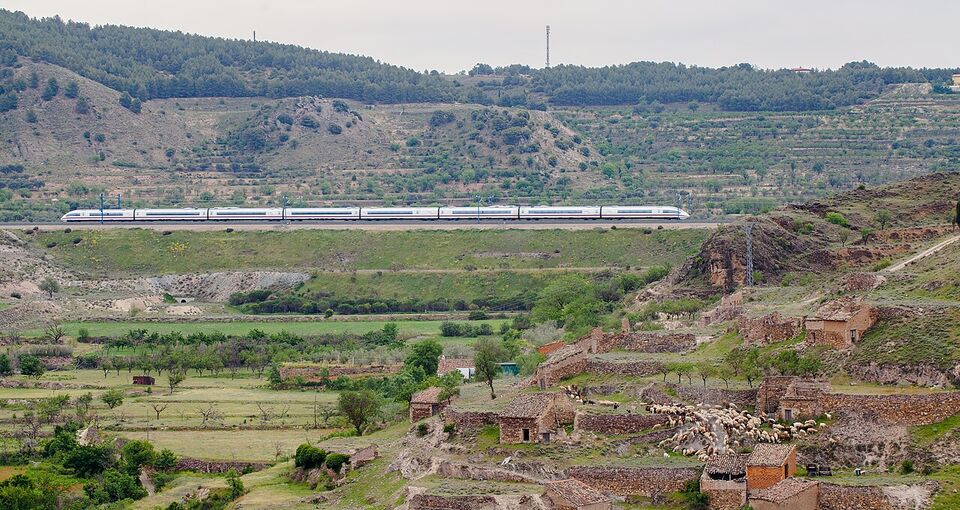
Trains are the default way to travel between Spanish cities, and three companies now compete on the main lines: Renfe (the state operator, with its AVE and budget Avlo trains), Iryo and Ouigo. Competition since 2021 has pushed advance fares down sharply. These are typical fastest times when the lines run normally; check live schedules before you build a day around them.
Watch out
After the October 28, 2026 collision near Urda, the Madrid to Córdoba, Seville, Málaga and Granada high-speed trains were suspended, with Renfe not selling tickets before December 13, 2026. Check Renfe, Iryo and Ouigo before you plan; in the meantime, fly between Madrid or Barcelona and Seville or Málaga, or take a long-distance bus. Trains within Andalusia, such as Málaga to Seville, were reported running normally. Even when the line reopens, temporary speed limits near Córdoba can add time.
| Route | Fastest train | Notes |
|---|---|---|
| Madrid–Barcelona | About 2 hr 30 min | Renfe, Iryo and Ouigo; many departures a day |
| Madrid–Seville | About 2 hr 30 min | Stops in Córdoba (about 1 hr 45 min from Madrid) |
| Córdoba–Seville | About 45 min | Easy day trip either way |
| Madrid–Málaga | About 2 hr 45 min | Gateway to the Costa del Sol and Ronda |
| Madrid–Granada | About 3 hr 20 min | Direct high-speed service |
| Madrid–Valencia | About 1 hr 45 min | Several operators |
| Barcelona–Valencia | About 3 hr | Coastal line, slower than the AVE routes |
| Madrid–Toledo / Segovia | About 30 min each | Classic day trips; see day trips from Madrid |
| Madrid–Bilbao or San Sebastián | About 5 hr or more | Many people fly instead |
Granada is the awkward one. It sits off the main Madrid–Seville line, so going from Seville to Granada takes about 2 hours 30 minutes by train or bus. Alsa buses between Andalusian cities are comfortable, cheap and often as fast as the train. Our getting around Spain page covers operators, fares and passes in detail.
Save money
On the Madrid–Barcelona, Madrid–Seville, Madrid–Málaga and Madrid–Valencia lines, book a few weeks ahead and compare all three operators. Advance fares on Ouigo, Iryo and Renfe's Avlo can be a fraction of what you pay the week before, especially on weekdays. Last-minute fares on Friday afternoons and holiday weekends climb quickly.
Six sample itineraries
These assume you arrive on an overnight flight from the US and want a mix of big sights and time to eat and wander. Each one works by train or bus unless noted. Swap days around to match your interests and the days museums close (many close on Mondays).
1. One week: Madrid and Barcelona
The classic first trip. You see Spain's two great cities and how different they feel, the royal, Castilian capital and the Mediterranean, Catalan port.
- Day 1
Arrive in Madrid
Land in the morning, drop your bags, and walk from Puerta del Sol to Plaza Mayor and the Royal Palace. Stay awake until a late dinner. See our Madrid guide for neighborhoods.
- Day 2
The Prado and Retiro
Book a morning slot at the Prado, then walk into Retiro Park. In the evening, do a tapas crawl in La Latina. Details on Madrid's sights and eating in Madrid.
- Day 3
Toledo
A 30-minute train takes you to Toledo, the old capital of Christian, Muslim and Jewish Spain. Be back in Madrid for dinner, or see the Reina Sofía in the evening.
- Day 4
Train to Barcelona
Take a mid-morning train (about 2 hr 30 min) and spend the afternoon in the Gothic Quarter and El Born.
- Day 5
Gaudí
Sagrada Família in the morning on a timed ticket, then Passeig de Gràcia for Casa Batlló and La Pedrera. See Barcelona's sights.
- Day 6
Montjuïc or a day out
Park Güell early, then Montjuïc and the beach, or a half-day trip to Montserrat or Girona (see Costa Brava and Girona).
- Day 7
Fly home
Barcelona's airport is about 30 minutes from the center. Allow extra time at passport control on the way out.
2. Ten days: Madrid and Andalusia
This is the route for Moorish palaces, flamenco and orange trees. It works best from March to June and from mid-September to November, when the south is warm but not scorching. Until the Madrid to Andalusia high-speed line is running again (see above), fly from Madrid to Seville and do Córdoba as a day trip from there.
- Days 1–3
Madrid
The Prado, the Royal Palace, Retiro and a day trip to Toledo or Segovia.
- Day 4
Córdoba
Train to Córdoba (about 1 hr 45 min). See the Mezquita-Catedral and the old Jewish quarter, and stay the night. See Córdoba.
- Days 5–7
Seville
A 45-minute train. The cathedral and Giralda, the Real Alcázar, Triana across the river and a flamenco show. See Seville and flamenco.
- Days 8–9
Granada
Bus or train (about 2 hr 30 min). The Alhambra on a timed ticket, the Albaicín at sunset, free tapas with your drinks. See Granada.
- Day 10
Fly home
Train back to Madrid (about 3 hr 20 min) for your flight, or fly home from Málaga, 1 hr 30 min to 2 hr away by bus or train.
3. Two weeks: the grand tour
Barcelona, Madrid and Andalusia in one go, with the time each deserves. Fly into Barcelona and home from Málaga or Madrid.
- Days 1–4
Barcelona
Gaudí, the Gothic Quarter, the Boqueria and Sant Antoni markets, and one day trip.
- Days 5–7
Madrid
Train in the morning. Museums, tapas, and Toledo or Segovia.
- Days 8–10
Seville, with Córdoba
Base yourself in Seville and do Córdoba as a day trip, or stop there on the way.
- Days 11–12
Granada
The Alhambra and the Albaicín.
- Days 13–14
Málaga
The Picasso Museum, the old town and the beach before flying home. See Málaga and the Costa del Sol.
4. Ten days: the green north and its food
For food lovers and anyone who prefers 75°F (24°C) to 100°F (38°C) in summer. A car helps for the coast and wine country but is optional for the cities.
- Days 1–2
Madrid
Arrive and recover; there are nonstops from several US cities. Fly or take the train north on day 3.
- Days 3–4
Bilbao
The Guggenheim, the old town's pintxos (small snacks on bread, the Basque take on tapas) bars and the riverside. See the Basque Country.
- Days 5–7
San Sebastián
About 1 hr 20 min by bus. La Concha beach, the old town bars, and a day along the coast to Getaria.
- Days 8–9
Rioja
Logroño's Calle Laurel for tapas and two days of winery visits, booked ahead. See Rioja and Navarra and Spanish wine.
- Day 10
Back to Madrid
Train or drive to Madrid (Logroño to Madrid is about 3 hr 30 min by road) for your flight home.
5. One week: an Andalusian road trip
The white towns, sherry country and the Atlantic coast are hard to do without a car. Pick the car up in Seville after your city days and drop it in Málaga. Read driving in Spain first.
- Days 1–2
Seville
Explore on foot; you do not want a car in the old center.
- Day 3
Jerez and Cádiz
A sherry bodega in Jerez, then on to Cádiz, one of Europe's oldest cities, for the night.
- Day 4
Vejer and Arcos
Hilltop Vejer de la Frontera, then Arcos de la Frontera.
- Day 5
The white towns to Ronda
Through the Sierra de Grazalema via Grazalema and Zahara de la Sierra to Ronda and its gorge.
- Days 6–7
Málaga
Drop the car and finish with two nights in the city. See Andalusia road trip.
6. Ten days: Barcelona, Valencia and an island
A Mediterranean trip for beaches, rice dishes and easy logistics. Good from May to early July and in September.
- Days 1–4
Barcelona
City sights, with a beach afternoon in Barceloneta or a day in Sitges.
- Days 5–6
Valencia
About 3 hr by train. The old town, the Turia gardens, the City of Arts and Sciences and a proper paella in the Albufera rice fields. See Valencia.
- Days 7–10
Mallorca
Ferry or a short flight to Palma, then the old town, the Serra de Tramuntana villages and a few beach days. See Mallorca and the Balearics. Fly home via Madrid or Barcelona, or on a seasonal nonstop.
Other good first trips
Walk the last 100 km (62 miles) of the Camino de Santiago in about a week; spend a winter week in the Canary Islands, where it is often in the 70s°F (about 21–24°C) in January; or see Salamanca, León and Burgos on a Castile loop. You can also combine Spain with Lisbon or Porto, Morocco or the south of France; see Spain and its neighbors.
Choosing between regions
Spain's regions differ in climate, language, food and even opening hours. A quick sketch to help you choose:
- Madrid and the center: the great art museums, royal sites, Castilian food and a nightlife that runs to dawn. Hot in summer, cold and sunny in winter.
- Catalonia: Barcelona, Gaudí, the Costa Brava and the Pyrenees. Catalan is the first language you will see on signs; Spanish is spoken everywhere too.
- Andalusia: Seville, Córdoba, Granada, Málaga and the white towns. The Moorish past, flamenco, Holy Week and the hottest summers in Europe.
- The green north: the Basque Country, Cantabria, Asturias and Galicia. Mild summers, rain, mountains and the best eating in the country. See northern Spain and Galicia.
- The islands: the Balearics (Mallorca, Menorca, Ibiza) are a summer destination; the Canaries, off the coast of Africa, are warm year-round.
Our regions hub maps them all, and Madrid vs Barcelona helps if you only have time for one. For interests from football to accessibility, see Spain by interest.
When to go, in brief
Spring (April to June) and fall (September to early November) are the best overall. July and August bring heat waves inland, with Seville and Córdoba regularly topping 104°F (40°C), plus peak crowds on the coasts and higher hotel prices. Winter is quiet, cheap and pleasant in the south and the Canaries, but cold in Madrid and the north.
August is when many Spaniards take their vacations. Madrid empties out and some family-run restaurants and shops close for two to four weeks, while beach towns fill up. Easter week (Holy Week, or Semana Santa) is spectacular in Seville, Málaga and many other towns, but hotel prices double and some sights change their hours. In 2027, Easter Sunday falls on March 28. Month-by-month detail is on when to go and festivals.
Watch out
Summer heat waves and wildfires are now a regular planning factor. If you travel from late June to early September, plan outdoor sightseeing for early morning, choose hotels with air conditioning (check, especially in older buildings), and build in a flexible day. Our safety page covers heat, fires and flash floods.
Planning timeline: what to book when
Spain is easy to travel in spontaneously once you are there, with a few big exceptions. Here is the order that works.
Six to twelve months ahead
- Check your passport: it must be valid at least three months past your departure from the Schengen area and issued within the last 10 years. See entry requirements.
- If your dates are tied to an event (Holy Week, Seville's April Fair, Las Fallas in Valencia in March, San Fermín in Pamplona in July), book hotels now. They sell out and prices jump.
- Book paradores (state-run hotels in castles and monasteries) and small boutique hotels if you have your heart set on a specific one.
- Decide if you need help: our trip planning service builds custom routes.
Three to six months ahead
- Book flights. Nonstops from the US go mainly to Madrid and Barcelona, with seasonal routes to Málaga and Palma.
- Book hotels for summer, Christmas and any city you visit on a Friday or Saturday night.
- Book Alhambra tickets as soon as they go on sale for your dates. They are sold for a specific day and Nasrid Palaces time slot, and spring and fall dates often sell out weeks ahead. Buy only from the official site or its authorized sellers.
- Book the Sagrada Família on its official site. Tower visits and peak-season slots go first. On November 1, 2026 the official ticket page said the basilica was temporarily closed to the public, with no reopening date given, so check sagradafamilia.org before you build your Barcelona days around it.
- Think about a top restaurant in San Sebastián, Girona or Madrid; the famous ones open bookings months ahead.
One to three months ahead
- Book long-distance trains once your dates are fixed. Spanish operators release seats on rolling schedules, and the cheapest fares go first.
- Book timed museum slots for the Prado, Casa Batlló, La Pedrera and the Real Alcázar in Seville in busy months.
- Rent a car if you need one, and get an International Driving Permit from AAA. See driving.
- Buy travel insurance with medical coverage; Medicare does not cover you in Spain. See health.
- Book a flamenco show, football tickets (see football) or a cooking class.
The last two weeks
- Tell your bank you are traveling, get a no-foreign-fee card, and read money in Spain.
- Set up your phone plan or an eSIM; see staying connected.
- Enroll in the State Department's Smart Traveler Enrollment Program (STEP).
- Check for transport strikes, which are announced in advance in Spain, and pack for the weather; see packing.
Watch out
Resale sites for Alhambra and Sagrada Família tickets often charge double or triple the face price, and some sell tickets that are not valid for the Nasrid Palaces or that carry someone else's name. The Alhambra checks ID against the name on the ticket. If official tickets are gone, a guided tour from an authorized operator is the legitimate fallback.
What a trip costs
Spain is cheaper than France, Italy or the UK for most things, especially food and wine, though Barcelona, Madrid, San Sebastián and the islands in summer are no longer bargains. These are rough daily costs per person, sharing a double room, excluding flights.
| Style | Per person per day | What that buys |
|---|---|---|
| Budget | €80–120 (about $90–135) | Hostel or simple hotel, menú del día (set lunch) and tapas, public transport |
| Mid-range | €150–250 (about $170–280) | A good three- or four-star hotel, sit-down dinners, one paid sight a day, trains |
| Comfort | €300 and up (about $335 and up) | Boutique hotels or paradores, guided tours, tasting menus |
Add tourist taxes in Catalonia and the Balearics (in Barcelona, several euros per person per night on top of the room rate) and big-ticket sights, which run roughly €15 to €40 (about $17 to $45) each. Full numbers, tipping and card tips are on money, and you can build your own estimate with our budget calculator.
Save money
Eat your main meal at lunch. The menú del día, a weekday set lunch with two or three courses, bread and a drink, is still one of Europe's best deals, typically €13 to €20 (about $15 to $22) outside the most touristy streets.
What has changed recently
If you last visited Spain a few years ago, several things are different.
- The Entry/Exit System. The EU now registers non-EU visitors with a face photo and fingerprints at the first border, replacing passport stamps. Lines at passport control in Madrid and Barcelona can be longer. ETIAS, the online travel authorization, is still not required as of November 2026. See entry.
- Higher tourist taxes. Catalonia raised its tourist tax in April 2026, and Barcelona adds its own city surcharge, which is set to keep rising each year. The Balearics charge their own tax, Santiago de Compostela and A Coruña in Galicia have small city taxes, and the Basque Country's cities start charging from January 2027. Madrid, Andalusia and the Valencia region had no tourist tax as of November 2026.
- Short-term rental crackdowns. Spain introduced a national registration number for short-term rentals in July 2025, but the Supreme Court struck it down in May 2026; what still counts is the regional tourist license. Barcelona plans not to renew any of its roughly 10,000 tourist-apartment licenses, so they would end by November 2028. Book only listings that show a regional license or registration number. See where to stay.
- Overtourism protests. Residents in Barcelona, Mallorca, Málaga and the Canaries have marched against mass tourism since 2024. They have been peaceful and target housing and tourism policy, though they can disrupt traffic. Being a considerate guest helps: stay in licensed lodging and keep noise down in residential buildings.
- Train competition. Iryo and Ouigo now compete with Renfe on the main high-speed routes, so fares are lower and there are more departures.
Practical basics for Americans
- Language: Spanish (castellano) everywhere, plus Catalan in Catalonia, Valencia and the Balearics, Basque (euskara) in the Basque Country and parts of Navarra, and Galician in Galicia. English is common in hotels and big-city restaurants, less so elsewhere. Learn a few phrases from our Spanish page.
- Plugs: Type C and F, 230 volts. Most phone and laptop chargers handle this; hair tools often do not.
- Water: tap water is safe to drink almost everywhere.
- Tipping: small. Round up, or leave 5 to 10 percent for good table service. See etiquette.
- Safety: violent crime is low, but pickpockets work the Barcelona and Madrid metros, Las Ramblas and the big sights. The State Department rates Spain at Level 2, "exercise increased caution". See safety.
- Emergencies: dial 112.
- Sundays and holidays: many shops close on Sundays, though museums and restaurants mostly open. National holidays such as December 6 and 8 and January 6 close banks and many shops.
Different from home
The famous siesta is mostly a myth in Madrid and Barcelona, where people work through the afternoon. What is real is the long lunch and the break in small-town and southern shop hours, especially in summer heat. Use those hours for a long lunch of your own or a rest at the hotel, then go out again at 6.
Next steps
Once you have a rough route, read entry rules, money, getting around and where to stay. Use our trip builder to sketch the days, check what to pack, and see the Spain FAQ for quick answers. If you would rather hand it over, our custom trip planning service can build it for you.
Add it to a route in the trip builder, or ask us to plan the hotels, trains and guides for you.