Overview
The province of Girona, in Catalonia's northeast corner, gives you more variety in a 90-minute radius of Barcelona than most US states. There is a medieval city with one of Europe's best-kept Jewish quarters, the town where Salvador Dalí was born and built his own museum, the rocky coastline a Catalan journalist named the Costa Brava ("rugged coast") in 1908, and the volcanic hills and stone villages of the Empordà inland.
Two more classic trips sit closer to Barcelona: the mountain monastery of Montserrat, an hour inland, and the beach town of Sitges, 40 minutes down the coast. All of them work as day trips from Barcelona, but Girona and the Costa Brava reward a night or two.
Different from home
The Costa Brava is seasonal in a way American beach towns often are not. In small resorts such as Llafranc, Tamariu or Cadaqués, many hotels and restaurants close from November to March, and buses run a fraction of their summer timetable. Girona, Figueres, Montserrat and Sitges stay open all year.
Girona
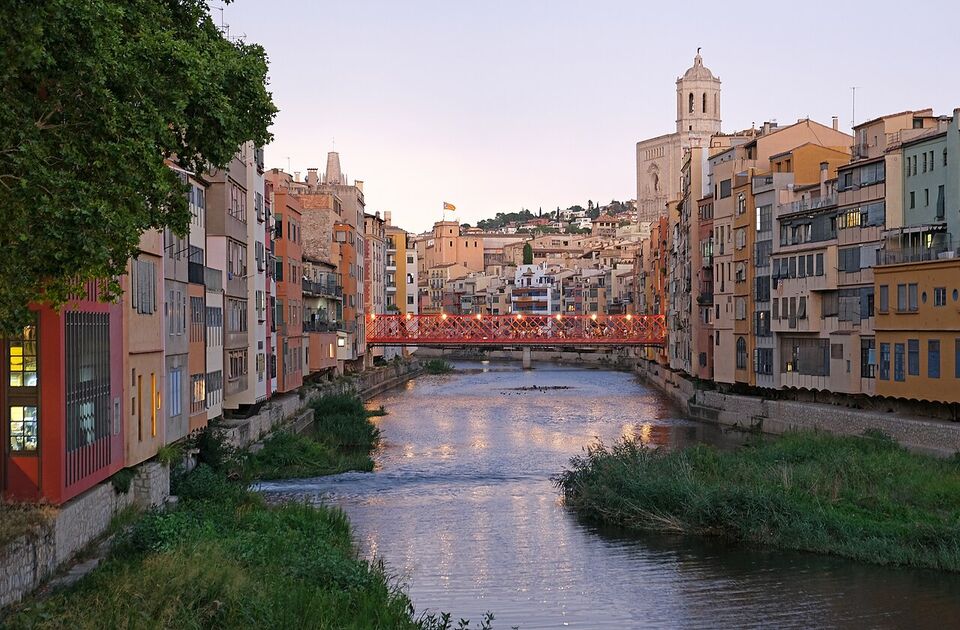
Girona (in Spanish, Gerona) is a compact city of about 100,000 on the Onyar river, with a hilltop old town, the Barri Vell, wrapped in medieval walls. The view everyone photographs is from the bridges over the Onyar: a row of houses painted ochre, red and pink hanging over the water. Behind them, the stepped lanes climb to the cathedral.
What to see
- Girona Cathedral: reached by a broad Baroque staircase of about 90 steps, it has the widest Gothic nave in the world and a museum holding an 11th-century Romanesque embroidery of the Creation, the Tapís de la Creació. Fans of Game of Thrones will recognize the steps and several old-town streets from the sixth season.
- The Call: Girona's Jewish quarter, a maze of narrow, high-walled lanes that was home to a Jewish community from the 9th century until the expulsion of 1492. The Museum of Jewish History, in a former synagogue complex, tells the story of the community and of the Kabbalist scholars who worked here.
- The walls (Passeig de la Muralla): a free walk along the ramparts, with views over the rooftops to the Pyrenees on clear days.
- Arab Baths: in fact a 12th-century Romanesque bathhouse built on the Roman model, with a small domed pool room.
- Sant Feliu and Sant Pere de Galligants: a Gothic church with a truncated spire, and a Romanesque monastery that now houses the archaeology museum.
Girona is also one of Europe's best-known bases for road cyclists, with dozens of professional riders living in the area and rental shops for visitors. In mid-May, the Temps de Flors festival fills courtyards, churches and staircases with flower installations for about ten days; it is lovely and very crowded. Check the 2027 dates when they are announced.
Eating in Girona
Girona's most famous restaurant is El Celler de Can Roca, run by the three Roca brothers and repeatedly ranked among the best in the world $$$$. Reservations open months ahead and go quickly. For everyday eating, the Rambla de la Llibertat and the Barri Vell have plenty of bars with a weekday menú del día. Try a xuixo, a cream-filled fried pastry dusted with sugar, invented in the city.
Getting there
Renfe's high-speed trains (AVE, Avlo and Avant) run from Barcelona Sants to Girona in under 45 minutes on the fastest services, with advance fares that can drop to around €10 (about $11). Slower regional trains on the R11 line take about 1 hour 15 minutes to 1 hour 30 minutes and are cheap and flexible. Girona station is a 15 minute walk from the old town. Girona's small airport (GRO) mainly serves low-cost flights from elsewhere in Europe; there are no flights from the US.
Insider tip
Stay one night in Girona. Day-trippers and tour groups thin out by 6 p.m., and the old town at dusk, with the cathedral lit up and locals out for a drink on Plaça de la Independència, feels like a different place. Rooms cost noticeably less than in Barcelona, mostly in the $–$$ tiers.
Figueres and the Dalí Theatre-Museum
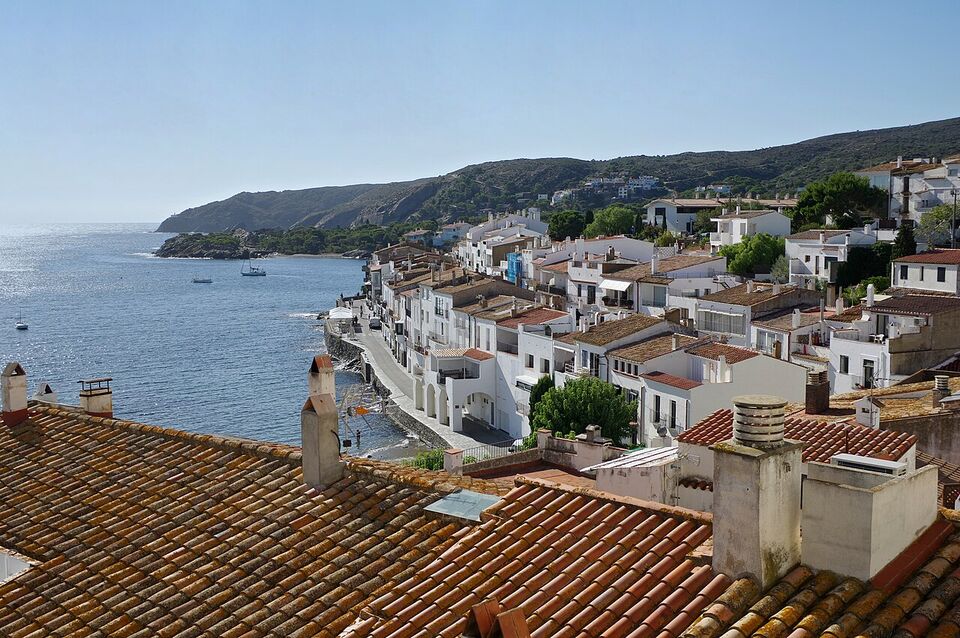
Dalí was born in Figueres in 1904 and turned its burned-out municipal theater into his own museum, opened in 1974. He is buried in a crypt beneath it. The building is part of the art: a red facade topped with giant eggs and studded with bread loaves, a glass dome over the old stage, a car that rains inside, and the Mae West room, where furniture becomes a face when you look through a lens. A separate section, the Dalí Jewels, shows the jewelry he designed.
| Ticket | Price |
|---|---|
| General | From €18.50 (about $21) |
| Reduced (students over 18, ages 9–17, over 65) | From €15 (about $17) |
| Guided visit | €26.50 (about $30); €23 (about $26) reduced |
| Children 8 and under | Free |
For most of the year the museum opens Tuesday to Sunday, 10:30 a.m. to 6 p.m.; from late March through May and in September it opens at 9:30 a.m., and in July and August it opens every day from 9 a.m. to 8 p.m. It is closed on Mondays outside July and August (with a few exceptional Monday openings around holidays), and on January 1 and December 25. Last entry is 45 minutes before closing. Book a time at tickets.salvador-dali.org, the foundation's official shop; entry depends on capacity, and summer and weekend slots fill. Allow 1.5 to 2 hours.
Getting there: high-speed trains from Barcelona Sants stop at Figueres-Vilafant, outside town, in about an hour; a shuttle bus runs to the center. Regional R11 trains arrive at Figueres station in the center, closer to the museum, in about two hours. Figueres-Vilafant is also on the high-speed line to France, so you can continue to Perpignan, Montpellier and beyond (see Spain with France).
Watch out
The Dalí Theatre-Museum is closed on Mondays from September to June, apart from a few holiday openings. If you book a Monday day tour from Barcelona, check that it actually includes entry to the museum.
The Dalí Triangle: Portlligat and Púbol
Figueres is one point of what the tourist board calls the Dalí Triangle. The other two are smaller and, for many visitors, more moving.
- Salvador Dalí House-Museum, Portlligat: the fishermen's cottages above a cove next to Cadaqués that Dalí and his wife Gala joined into a rambling home and studio, with a phallic swimming pool and an olive grove full of his objects. Visits are in small groups at set times, so you must book a date and time ahead, and you must collect your tickets 30 minutes before your slot or lose them without a refund. It takes about an hour, including a short guided section.
- Gala Dalí Castle, Púbol: the medieval castle Dalí bought for Gala in 1969, which he could visit only with her written invitation. Gala is buried in the crypt. The visit is self-guided and takes about 75 minutes. Púbol has no direct public transport; the nearest train stop is Flaçà, about 3 miles (5 km) away, so drive or take a taxi.
Both have shorter seasons than Figueres and can close for part of the winter. Check the dates on the Dalí Foundation site before you plan around them.
Cadaqués and Cap de Creus
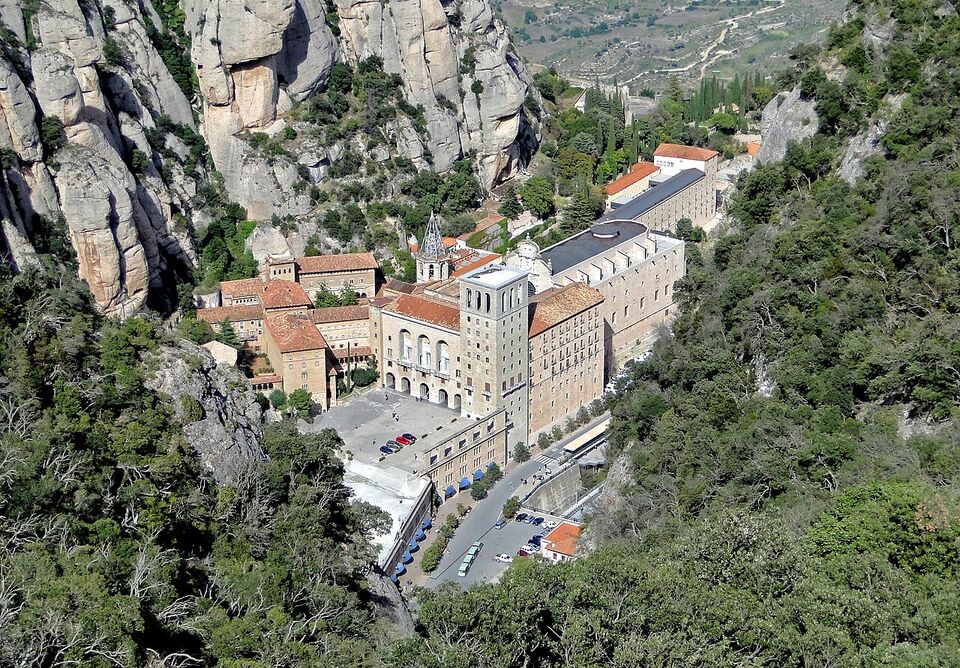
Cadaqués is a whitewashed fishing town on a bay at the end of a long, winding road over the hills from Roses. It drew Dalí, Picasso, Lorca, Duchamp and generations of artists after them, and it still has more galleries than most towns its size. The village is all slate lanes, steep steps and the church of Santa Maria at the top, with a small pebble beach in the middle of town.
Past it, the Cap de Creus Natural Park is the easternmost point of mainland Spain: a wild, wind-carved headland of dark rock where the Pyrenees meet the sea. A lighthouse with a café sits at the end of the road, and walking trails link the coves. The tramuntana, the cold north wind of the Empordà, can blow hard here for days; it is said to explain the region's eccentrics, Dalí included.
Getting there without a car means a bus from Barcelona or Figueres (Moventis runs the routes), which is slow and infrequent outside summer. With a car, it is about 2 hours 15 minutes from Barcelona. In July and August, parking in Cadaqués is very limited; use the paid lots at the edge of town.
The Costa Brava coast
The Costa Brava runs about 125 miles (200 km) from Blanes, just north of Barcelona, to the French border. The south end has the big package resorts (Lloret de Mar is the best known, and the loudest). The real draw is farther north, around Palafrugell and Begur, where pine-covered cliffs drop to small coves with clear water.
Tossa de Mar
The best-preserved fortified medieval town on the Catalan coast, with its Vila Vella (old town) of walls and towers on a headland above a sandy bay. About 1 hr 15 min from Barcelona by direct bus in season.
Calella de Palafrugell, Llafranc and Tamariu
Three small villages a short walk apart along the coastal path, with whitewashed houses, boats pulled up on the sand and seafood restaurants on the front. In summer, Calella holds an evening festival of havaneres, sea shanties brought back from Cuba.
Begur and its coves
A hilltop town with a ruined castle and colonial-style houses built by locals who made money in Cuba, above coves such as Aiguablava, Fornells and Sa Tuna. Parking at the coves is limited and paid in summer.
Pals and Peratallada
Two honey-colored stone villages a few miles inland, with arcaded squares and narrow lanes. Peratallada is surrounded by a moat cut into the rock.
Empúries and L'Escala
The ruins of a Greek trading colony founded around 575 BC and the Roman town that grew beside it, right on the beach. Next door, L'Escala is famous for its salted anchovies.
The coastal path
The Camí de Ronda, an old patrol path used by coast guards to watch for smugglers, links coves and villages along much of the coast, now marked as part of the long-distance GR 92. The section from Calella de Palafrugell to Llafranc and on to Tamariu is easy and takes about two hours one way; the stretches around Begur are rockier, with steps. Bring water and real shoes, and start early in summer to avoid the heat.
Beaches and the sea
The water is warm enough for most Americans from late June to late September. The coves fill by late morning in July and August, so arrive early or walk the path to the smaller ones. Watch for the red flag on windy days, when waves on the open coves can be dangerous, and for jellyfish in some summers; lifeguard stations post warnings. Summer wildfires are a real risk in the pine forests of the Empordà; obey any closures of trails and roads, and follow official alerts.
Montserrat
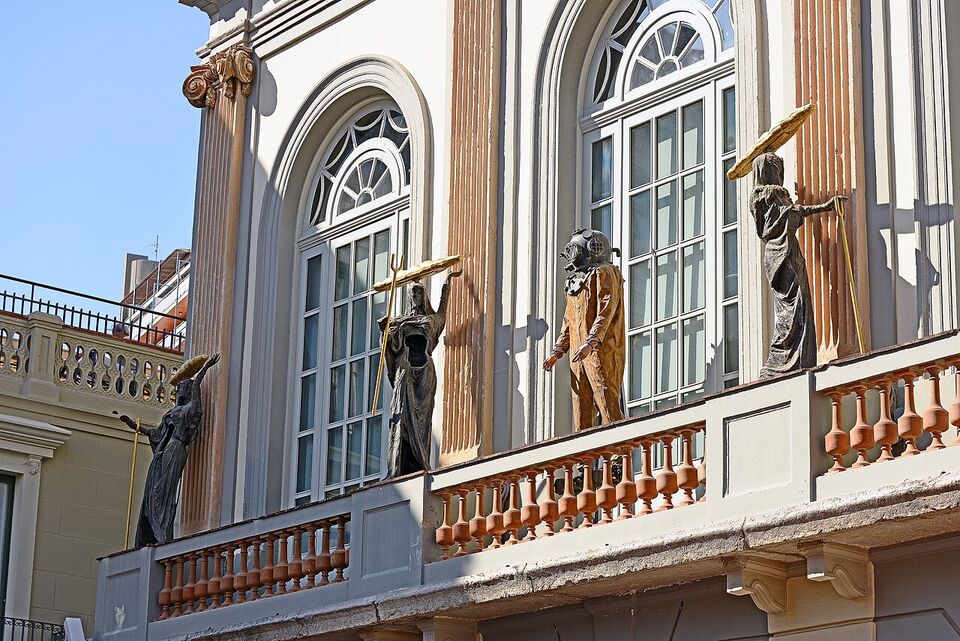
Montserrat ("serrated mountain") is a range of strange, finger-shaped pink rock pinnacles topping out at about 4,050 feet (1,236 m), an hour northwest of Barcelona. Halfway up sits a Benedictine monastery founded in the 11th century, home to the Moreneta, a dark-faced Romanesque statue of the Virgin that is the patron saint of Catalonia. Pilgrims line up inside the basilica to touch the orb in her hand.
The monastery's boys' choir, the Escolania, is one of the oldest in Europe and sings short services in the basilica most days, except during school vacations. Check the current schedule on the monastery's site before you go, because it is the highlight of many visits. Beyond the monastery, two funiculars lead up to hiking trails toward Sant Jeroni, the highest point, and down to the Santa Cova chapel.
Getting there
Take the FGC R5 line (toward Manresa) from Plaça d'Espanya in Barcelona; trains run about hourly. Then choose:
- The cable car (Aeri de Montserrat): get off at the Aeri stop for a short, steep ride in a small cabin. Fun, but lines can be long in summer and it stops in high wind.
- The rack railway (Cremallera): stay on to Monistrol de Montserrat, where the rack railway climbs about 3 miles (5 km) and 2,000 feet (over 600 m) to the monastery in about 15 minutes, with departures about every 20 minutes. Its Monistrol station has a free parking lot of about 900 spaces if you drive.
Combined tickets covering the train, the rack railway or cable car and sometimes the funiculars and a meal are sold at Plaça d'Espanya station and online at montserratvisita.com. A day trip takes 6 to 8 hours door to door.
Insider tip
Take the first train of the morning. Tour coaches from Barcelona arrive from about 10 a.m., and by midday the line to see the Moreneta can take an hour. It is noticeably cooler on the mountain, so bring a layer, even in summer.
Sitges
Sitges is a whitewashed seaside town about 22 miles (35 km) southwest of Barcelona, with a dozen beaches, a church on a promontory over the sea and a long seafront promenade. Since the 19th century it has drawn artists, and it has been one of Europe's best-known LGBTQ+ destinations for decades. It is also a real town with year-round life, which makes it a good winter escape from the city.
See the Cau Ferrat, the house-museum of the painter Santiago Rusiñol, and the Maricel Museum next to it, then walk the promenade and eat seafood. The town's calendar peaks with Carnival in February, one of the wildest in Spain, and the Sitges Film Festival of fantasy and horror cinema in October. Rodalies R2 Sud trains from Barcelona Sants and Passeig de Gràcia take about 40 minutes and run frequently; the regular fare is a few euros. See Spain by interest for LGBTQ+ travel.
Getting around: train, bus or car
| Destination | Best way from Barcelona | Time each way | Day trip? |
|---|---|---|---|
| Girona | High-speed train from Sants | Under 45 min | Yes, easily |
| Figueres | High-speed train to Figueres-Vilafant | About 1 hr, plus shuttle | Yes; can combine with Girona |
| Montserrat | FGC R5 from Plaça d'Espanya, then rack railway or cable car | About 1 hr 30 min | Yes |
| Sitges | Rodalies R2 Sud | About 40 min | Yes, or a half day |
| Tossa de Mar | Direct bus (in season) or car | About 1 hr 15 min | Yes |
| Calella de Palafrugell, Begur | Car | About 1 hr 30 min | Better with a night |
| Cadaqués | Car, or bus via Figueres | About 2 hr 15 min by car | Better with a night |
For the coves, Pals, Púbol and Cadaqués, rent a car for a day or two, ideally picking it up at Girona instead of in Barcelona to skip city traffic. The AP-7 highway north of Barcelona has been toll-free since 2021; a few other Catalan roads still charge tolls, so carry a card. Speed limits are 120 km/h (75 mph) on highways and 90 km/h (56 mph) on most two-lane roads, and summer parking in the coastal villages is scarce and paid. See driving in Spain for licenses, the International Driving Permit and rental tips.
Watch out
Thieves target rental cars at highway rest stops between Barcelona and the French border, sometimes faking a flat tire to get you out of the car. Keep luggage out of sight, lock the doors while you drive, and never leave bags in a parked car at a beach.
How to plan your days
Give the region as much time as you can spare from Barcelona. Here is a four-day loop that works by train and a short car rental.
- Day 1
Girona
Morning high-speed train from Barcelona. Walk the walls, visit the cathedral and the Call, and have a long lunch. Stay overnight and eat late in the Barri Vell.
- Day 2
Figueres and Cadaqués
Pick up a rental car in Girona and drive 40 minutes to Figueres for the Dalí museum (not a Monday outside summer). In the afternoon, drive over the hills to Cadaqués for a booked late-afternoon slot at Portlligat. Sleep in Cadaqués or Roses.
- Day 3
The central coast
Drive south through Empúries to Pals and Peratallada, then on to Begur. Walk the Camí de Ronda from Calella de Palafrugell to Llafranc, swim, and stay near the coast.
- Day 4
Púbol and back
Visit Gala's castle at Púbol on the way back to Girona, return the car, and take the train to Barcelona in under an hour.
With only one day to spare, do Girona and Figueres together by train. With two half days, do Montserrat in one and Sitges in the other. For full itineraries, see planning your trip; for food and wine nearby (cava from the Penedès and the Priorat's reds), see Spanish wine.
Where to base yourself
- Girona $–$$: the best year-round base, with trains, restaurants and car rental.
- Begur and Palafrugell area $$–$$$: boutique hotels and rental houses near the best coves; book months ahead for July and August.
- Cadaqués $$–$$$: small, atmospheric and expensive in summer; many places close in winter.
- Sitges $$–$$$: a seaside base with fast trains to Barcelona, good for a beach week that includes city days.
Catalonia's tourist tax applies across the region, at lower rates than in Barcelona; the hotel adds it to your bill. For the rules on holiday rentals and how to spot a licensed one, see where to stay in Spain.
Add it to a route in the trip builder, or ask us to plan the hotels, trains and guides for you.