Overview
Galicia is Spain's green, rainy, Atlantic corner, tucked above Portugal. It looks and feels more like Ireland or Brittany than the Spain of postcards: stone villages, granite churches, misty hills, eucalyptus forests, and a coastline cut by long sea inlets called rías. Bagpipes (gaitas) are the folk instrument, and locals talk about their Celtic roots.
Most Americans arrive for one reason: Santiago de Compostela, the cathedral city at the end of the Camino de Santiago, the medieval pilgrimage route that hundreds of thousands of people walk every year. Fewer stay to see the rest, which is a mistake. Galicia has the best seafood in Spain, often at prices that would be unthinkable in the US, a fine white wine in Albariño, Roman walls, wild beaches and a national park on islands you need a permit to visit.
It is also one of Spain's least expensive regions for hotels and meals, and outside August it rarely feels crowded. If you are walking the Camino, see our Camino de Santiago guide for routes, the Compostela certificate and albergues. This page covers Galicia as a destination.
Different from home
Galician (galego) is a language close to Portuguese, spoken by about half the population, and road signs use it. Look for A Coruña (not La Coruña), Ourense (not Orense) and Sanxenxo. The letter x sounds like "sh": Xunta, the regional government, is "SHOON-ta". A few words help: ola (hello), grazas (thank you), bo día (good morning), praia (beach), rúa (street).
Santiago de Compostela
Santiago is a granite city of about 100,000 people, built around the shrine where, according to tradition, the remains of the apostle St. James (Santiago) were found in the 9th century. Its old town is a UNESCO World Heritage Site, compact, hilly and arcaded against the rain. It is also a university town, so evenings are livelier than you might expect.
The cathedral
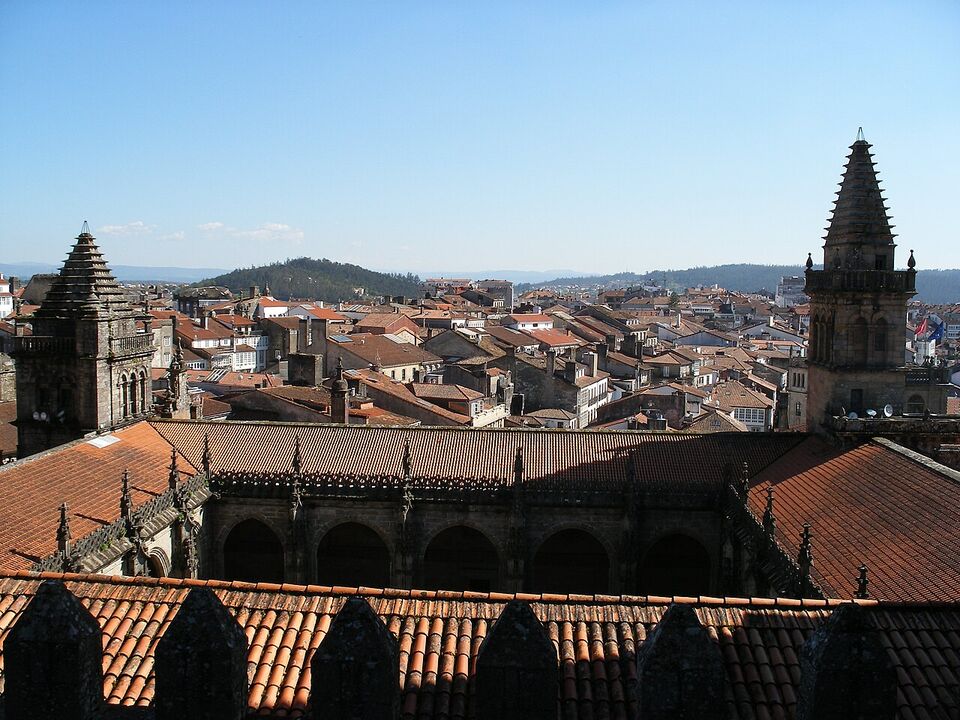
The cathedral faces the vast Praza do Obradoiro, where pilgrims finish their walk, drop their packs and lie on the stones staring up at the baroque facade. Inside, behind that facade, is the Pórtico da Gloria, a 12th-century Romanesque doorway carved by Master Mateo, with much of its original paint revealed by a long restoration.
- Entry: the basilica is open daily from 7 a.m. to 9 p.m., entered through the Praterías door on the south side, and you do not need a ticket to go in. Expect a line at busy times. Backpacks are not allowed inside for security reasons, so leave yours at your hotel or a luggage service before you go.
- Ticketed visits: the Pórtico da Gloria (in small, timed groups), the cathedral museum and Gelmírez Palace, and the guided rooftop tour (cubiertas) with views across the city run from 10 a.m. to 8 p.m. Book on the cathedral's official booking site, visitas.catedraldesantiago.es, especially in summer and throughout the 2027 Holy Year.
- The apostle: you can climb the steps behind the main altar to embrace the statue of St. James and visit the crypt with his silver casket. Both have their own lines.
- The botafumeiro: the giant silver incense burner swung across the transept by a team of men on ropes. It flies on major feast days and at some other masses, but there is no fixed daily schedule; check the cathedral's calendar and arrive early, since the church fills.
- Pilgrims' mass: held daily; check current times on the cathedral site.
The rest of Santiago
- Mercado de Abastos: the granite food market, busiest Saturday mornings. Some stalls will cook seafood you buy at the market's bar area for a small charge.
- Rúa do Franco and Rúa da Raíña: the old town's main eating streets. Good for octopus and seafood, but compare menus; quality varies.
- Alameda park: the classic view of the cathedral's towers, best in the late afternoon.
- Museo do Pobo Galego: the museum of Galician life and traditions, in a former convent with a famous triple spiral staircase.
- Centro Galego de Arte Contemporánea and the Cidade da Cultura: a contemporary art museum and a vast, unfinished hilltop culture complex by Peter Eisenman.
- Pilgrim Office: where walkers collect their Compostela. Even if you arrive by car, it is moving to watch.
Insider tip
See Santiago twice: once in the morning when tour groups and arriving pilgrims crowd the Obradoiro, and again after 9 p.m., when the square empties, the stone glows under the lamps and someone is usually playing the bagpipes under the arches of the Palacio de Xelmírez.
The 2027 Holy Year
When July 25, the feast of St. James, falls on a Sunday, Santiago celebrates a Holy Year (Año Santo or Xacobeo). 2027 is one. The cathedral's Holy Door, sealed in other years, is opened at the end of December 2026 and stays open through 2027, and pilgrim numbers are expected to break records. The next Holy Year after that is 2032.
What it means for you: more pilgrims on the trails, more events, fuller hotels and albergues, and longer lines at the cathedral, especially from May to October and around July 25. Book rooms in Santiago early, and consider staying in a nearby town or arriving on weekdays.
A Coruña
A Coruña, about 40 minutes north of Santiago by train, is Galicia's lively, windy port city on a peninsula with beaches on one side and the harbor on the other. It is known for its glassed-in balconies (galerías) along the waterfront, which give the Avenida da Mariña a wall of white-framed windows.
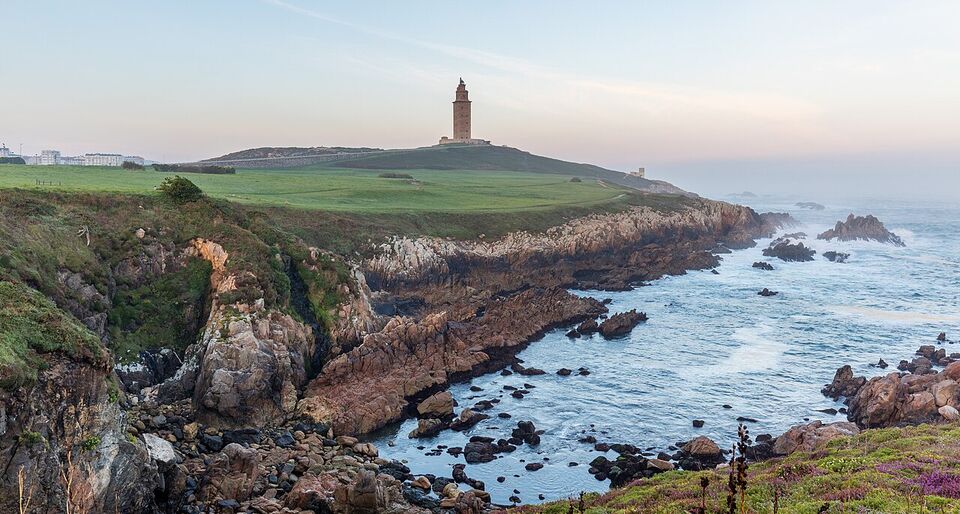
- Torre de Hércules: a Roman lighthouse from the 1st or 2nd century, still working, the oldest lighthouse in use in the world and a UNESCO World Heritage Site. You can climb to the top; it is closed on some holidays and in bad weather.
- The paseo marítimo: a seafront promenade of several miles that loops around the peninsula, good for walking or cycling.
- Riazor and Orzán: two city beaches back to back, with surf on Orzán.
- Praza de María Pita: the main square, named for a woman who led the defense of the city against Francis Drake's English fleet in 1589.
- Eating: the streets around Rúa da Franxa and Rúa da Estrela are packed with seafood and tapas bars.
Inland from A Coruña, Lugo has the only complete Roman walls in the world, a UNESCO site you can walk all the way around on top: about 1.3 miles (2.1 km). It is an easy stop if you are driving between the coast and the Ribeira Sacra.
The Rías Baixas
South of Santiago, the Rías Baixas (the "lower estuaries") are Galicia's main beach and wine area: four wide inlets of calm water, mussel rafts, fishing towns and white sand. It is sunnier and a little warmer than the north coast, and where Spaniards from Madrid come in August.
Pontevedra
A handsome small city that banned most cars from its center decades ago. Granite squares, cafés and a good provincial museum. A pleasant base for the region.
Cambados
The capital of Albariño, with stone manor houses and wineries offering tastings. The Albariño festival is held in early August.
Combarro
A seaside village of stone granaries on stilts (hórreos) and carved stone crosses (cruceiros) right on the water. Very busy in summer; go early or late.
O Grove and A Toxa
A fishing town famous for shellfish, with boat trips to the mussel rafts that include a tasting. Its seafood festival is held in October.
Baiona
The port where the caravel Pinta landed in 1493 with the first news of Columbus's voyage. A replica sits in the harbor, and a parador fills the old fortress on the headland.
Vigo
Galicia's biggest city, a working port. Oysters are sold and shucked on the street at the old fishmongers' lane in the old town. Its oversized Christmas lights, from late November into January, draw crowds from all over Spain.
The Cíes Islands
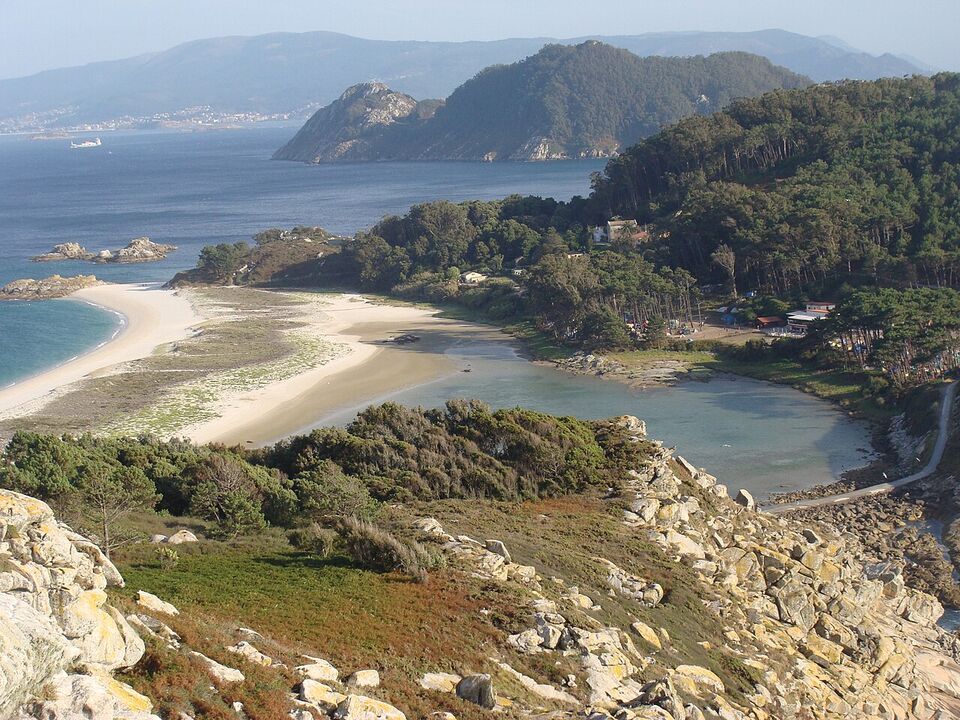
The Cíes Islands, at the mouth of the Ría de Vigo, are part of the Atlantic Islands of Galicia National Park: steep granite islands with pine woods, seabird colonies, hiking trails to lighthouses, and Praia de Rodas, a long curve of white sand and clear (very cold) water. There are no cars and few services.
- Get the permit. From May 15 to September 15 (the 2026 dates), you need a free authorization from the Xunta for a specific day, because daily visitor numbers are capped. You request it online and must then buy a ferry ticket within a short window, about two hours, or the authorization lapses.
- Buy the ferry. Licensed boats sail from Vigo (about 45 minutes), and in summer also from Cangas and Baiona. Book in advance for July and August weekends, which sell out.
- Pack for the day. Bring water, food, sunscreen and a warm layer. There is a campsite (book separately) and a couple of simple places to eat, but no shops to speak of. Pets are not allowed.
Outside the permit season you can visit without authorization when boats run, but sailings are fewer and can be canceled in rough seas. Check the national park and Xunta pages, and see our outdoors page for more of Spain's parks.
Watch out
Galicia's Atlantic water is cold even in August, around 61–64°F (16–18°C), and the open-ocean beaches on the Costa da Morte and north coast can have dangerous currents. Swim at guarded beaches in the rías, follow the flags, and keep away from rocks in heavy swell; waves on this coast have swept people off headlands.
The Costa da Morte and the north coast
West of Santiago, the Costa da Morte ("coast of death," named for its shipwrecks) is wild and lonely. Fisterra (Finisterre), the Romans' "end of the earth," is where many pilgrims continue after Santiago to watch the sunset at the lighthouse. Nearby Muxía has a sanctuary on the rocks above the surf. Both are about 1 hour 30 minutes by car from Santiago, with buses on slower schedules.
On the north coast near the Asturias border, Praia das Catedrais (Cathedrals Beach) near Ribadeo has rock arches you can walk under at low tide. In Holy Week and summer you need a free reservation from the Xunta to go down to the beach, and the visit only makes sense at low tide, so check the tide table. Farther west, the cliffs of the Serra da Capelada near Cabo Ortegal are among the highest sea cliffs in mainland Europe.
Ourense and the Ribeira Sacra
Inland, the Miño and Sil rivers cut deep canyons lined with steep terraced vineyards, planted since Roman times. This is the Ribeira Sacra ("sacred riverbank"), named for its many medieval monasteries. You can take a catamaran cruise through the Sil canyon, taste red wines made from the Mencía grape, and stay in the monastery of Santo Estevo, now a parador.
Ourense, the gateway city, is known for hot springs: free outdoor thermal pools line the Miño riverbank, and the As Burgas springs bubble up in the old town. It is on the high-speed line from Madrid, about 2 hours 15 minutes. A car makes the Ribeira Sacra far easier; see our driving guide.
Seafood, food and wine
Galician seafood (marisco) is the reason many Spaniards visit. Shellfish is often sold by weight, so check the price per kilo on the menu or ask before ordering.
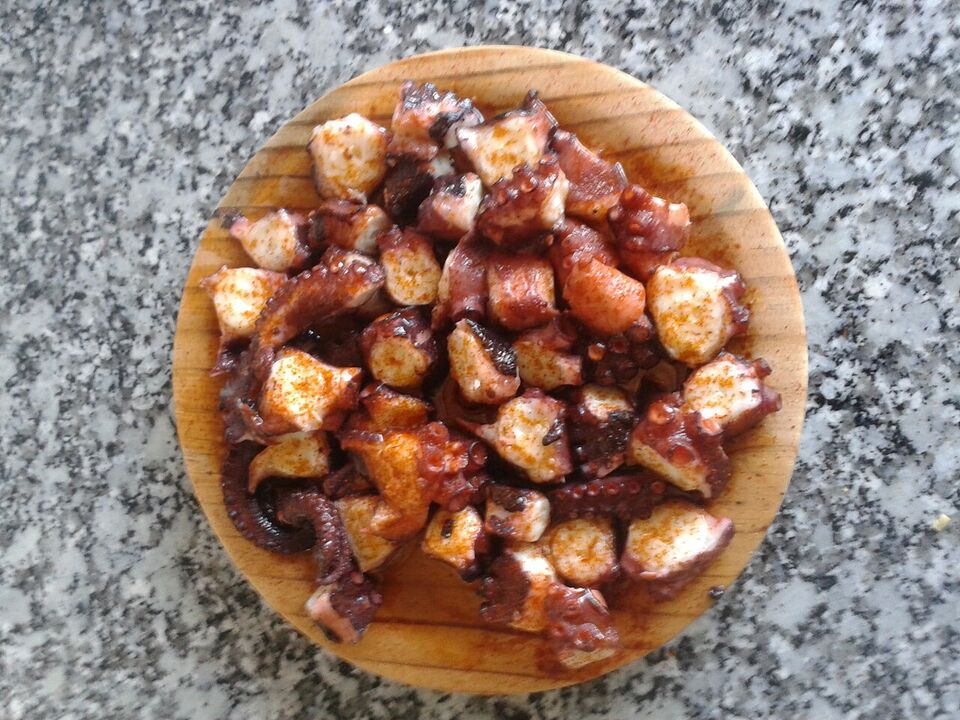
- Pulpo á feira: boiled octopus, sliced with scissors onto a wooden plate, dressed with olive oil, coarse salt and paprika. The classic Galician dish, served in pulperías.
- Percebes: goose barnacles, picked off wave-battered rocks by licensed harvesters. Strange-looking, briny and among the most expensive seafood in Spain.
- Zamburiñas and vieiras: small queen scallops and larger scallops, usually baked. The scallop shell is the Camino's symbol.
- Navajas, berberechos, mejillones: razor clams, cockles and mussels from the rías.
- Pimientos de Padrón: small fried green peppers from the town of Padrón near Santiago. Most are mild, the odd one is hot.
- Empanada gallega: a flat savory pie, often with tuna or scallops, sold by the slice.
- Caldo gallego and lacón con grelos: the winter food of the interior: a broth of greens, potatoes and beans, and boiled ham with turnip tops.
- Cheese and dessert: soft, mild tetilla cheese and the almond tarta de Santiago, marked with the cross of St. James in powdered sugar.
- Drinks: Albariño (crisp white from the Rías Baixas), Ribeiro (white, from near Ourense), Mencía reds from the Ribeira Sacra, and the local beer, Estrella Galicia. After dinner, queimada is a punch of grape spirit (orujo) set alight while someone recites a spell against witches.
Save money
Galicia is good value. A menú del día (set lunch with two courses, bread, wine or water and dessert) often costs less here than in Madrid or Barcelona, and a ración (shared plate) of octopus, mussels or cockles costs a fraction of US prices for the same seafood. Many bars in Santiago and Lugo still serve a free small tapa with each drink.
Different from home
Meal times run late, as everywhere in Spain: lunch 2 to 4 p.m., dinner from 9 p.m. Seafood restaurants that look plain are often the best, and the menu may list the catch at precio de mercado (market price) or by weight. Shellfish is often best in the colder months; summer is the season for Albariño and grilled sardines.
Getting there and around
From the US
United launched the first-ever nonstop from Newark to Santiago de Compostela (SCQ) on May 27, 2026, with three flights a week in summer. Check whether it returns for 2027, a Holy Year, before booking around it. Otherwise, fly to Madrid or Barcelona and connect to Santiago, A Coruña (LCG) or Vigo (VGO), or connect through Lisbon or another European hub. Porto airport in Portugal, about 2 hours by road from Vigo, is another option. See our flights page.
From Santiago airport, buses run to the city center in about 20 to 30 minutes for a few euros; a taxi takes about 20 minutes.
From Madrid and elsewhere in Spain
- Train: since the high-speed line to Galicia was completed in 2021, Renfe's fastest trains reach Ourense in about 2 hours 15 minutes and Santiago in about 3 hours 30 minutes from Madrid, with A Coruña and Vigo a little farther. Book on renfe.com.
- Flights: about 1 hour 15 minutes from Madrid and 1 hour 45 minutes from Barcelona.
- From Portugal: trains and buses connect Vigo and Porto; see Spain with Portugal.
Within Galicia
A fast coastal rail line, the Atlantic Axis, links A Coruña, Santiago, Pontevedra and Vigo: about 30 to 40 minutes between Santiago and A Coruña, about 1 hour between Santiago and Vigo. That makes Santiago a workable base without a car. For the Costa da Morte, the north coast, the Ribeira Sacra and small wineries, rent a car. Galicia's roads are good and traffic is light outside cities. See getting around Spain.
Where to stay
Parador de Santiago (Hostal dos Reis Católicos)
Founded by Ferdinand and Isabella in 1499 as a hospital for pilgrims, now a parador with four cloisters, right beside the cathedral. Often called one of the oldest hotels in the world.
Old-town guesthouses
Small hotels and pensiones in granite houses inside the old town. Rooms can be small and some streets are noisy on weekends, but you walk everywhere.
Pontevedra or Sanxenxo
Pontevedra for a city base on the train line; Sanxenxo for a summer beach resort (busy and pricier in August).
Pazos and rural houses
Galician manor houses (pazos) and casas rurales converted to inns, often with gardens and vineyards. Best with a car.
Tourist taxes
Galicia's two biggest tourist cities now charge one. A Coruña started on September 29, 2025, and Santiago de Compostela on October 1, 2025. Rates run from €1 to €2.50 (about $1.10 to $2.80) per person per night depending on the type and category of lodging (about €1 at most places in Santiago), for a limited number of nights (five, under the Galician rules). Minors and some other groups are exempt, and pilgrims in public albergues typically are too. Your hotel collects it. Vigo is preparing its own tax and other towns may follow, so check with your lodging. See our money page and where to stay in Spain.
When to visit
Galicia is the wettest part of Spain. Santiago gets rain on more days than not between October and April, and locals joke that the rain is an art form there. Summers are mild, with highs in the 70s°F (about 22–26°C); winters are cool and damp, highs in the 50s°F (about 12°C), rarely freezing on the coast.
- June to September: the best weather and long evenings. August is crowded on the coast and in Santiago.
- May and late September to October: fewer people, good food, lower prices, but pack for rain.
- November to March: wet and quiet, prime shellfish season, and Vigo's Christmas lights. Good for a city trip to Santiago if you like atmosphere and do not mind an umbrella.
Festivals
- Entroido (Carnival), February: masked processions in villages of Ourense province such as Laza and Xinzo de Limia.
- Noite de San Xoán, June 23: bonfires and sardines on the beaches, biggest in A Coruña.
- Rapa das Bestas, early July: wild horses rounded up and groomed by hand in Sabucedo and other villages.
- Feast of St. James and Galicia Day, July 24–25: fireworks on the Obradoiro the night of the 24th, and big celebrations in 2027.
- Albariño festival in Cambados (early August) and the seafood festival in O Grove (October). Check each year's dates.
More in our festivals guide and when to go.
Sample itinerary
- Day 1
Santiago
Arrive by train or plane. The cathedral and Obradoiro in the afternoon, dinner in the old town, then back to the square after dark.
- Day 2
Santiago
Market in the morning, the Pórtico da Gloria or rooftop tour (booked ahead), the Museo do Pobo Galego, and a long seafood lunch.
- Day 3
Fisterra and Muxía
By rental car or tour: the Costa da Morte, sunset at the Fisterra lighthouse, back to Santiago or overnight on the coast.
- Day 4
Rías Baixas
Drive or take the train south. Albariño tasting in Cambados, Combarro in the late afternoon, overnight in Pontevedra.
- Day 5
Cíes Islands
Ferry from Vigo (permit and tickets booked ahead in summer). Hike to the lighthouse, swim at Rodas, oysters in Vigo's old town in the evening.
- Day 6
Ribeira Sacra or A Coruña
Either the Sil canyon cruise and a monastery night, or a day in A Coruña at the Tower of Hercules and the promenade.
Continue east along the coast into Asturias and Cantabria, south into León and Castile, or across the border to Porto. Our planning page has more routes.
Good to know
- Rain gear: a real rain jacket and shoes that handle wet granite. Old-town stones are slippery.
- Sundays and August: many shops close Sundays, and some family restaurants close for a few weeks in late summer or winter.
- Safety: Galicia has low crime. Watch bags in crowds at the cathedral and on the Obradoiro. The State Department rates Spain Level 2, "Exercise increased caution"; see our safety page. Summer wildfires have hit inland Galicia hard in recent years, including August 2025; follow local alerts and road closures. Emergencies: 112.
- Cash: cards are accepted almost everywhere, but small village bars and market stalls may prefer cash.
- Pilgrims: if you are walking, the last 100 km (62 miles) into Santiago is busy from May to October, and 2027 will be busier. See the Camino guide.
Add it to a route in the trip builder, or ask us to plan the hotels, trains and guides for you.