Overview
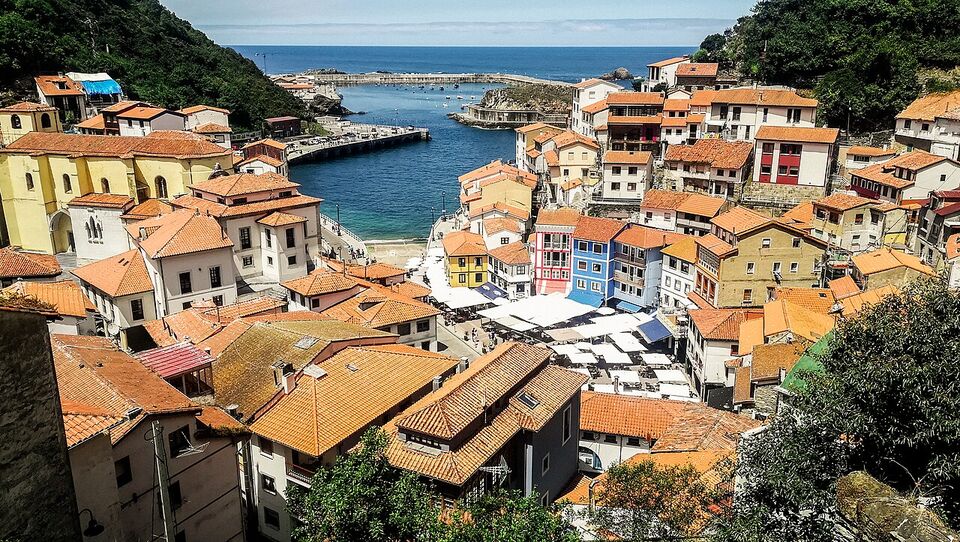
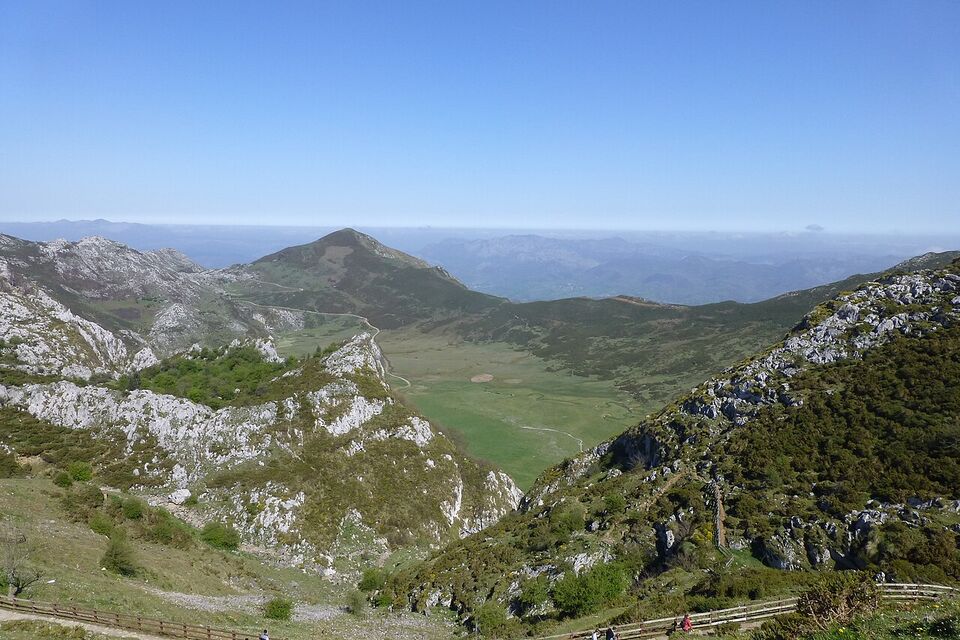
Between the Basque Country and Galicia, along the Bay of Biscay, lie two small regions that Spaniards call the España Verde (Green Spain): Cantabria and Asturias. They are where Spaniards go to escape the summer heat, and they look nothing like the Spain most Americans imagine. Think limestone peaks over 8,000 feet (2,500 m) dropping almost straight to the sea, dairy cows in green meadows, fishing villages, cider bars and empty beaches under cliffs.
The centerpiece is the Picos de Europa, Spain's oldest national park, a compact range of jagged limestone massifs shared by Asturias, Cantabria and Castilla y León. Cantabria also holds some of the world's most important Ice Age cave art, starting with Altamira. Asturias has its own cider culture, a pre-Romanesque architecture found nowhere else, and a fiercely local identity: it calls itself a principality, and the heir to the Spanish throne holds the title Princess of Asturias.
This is road trip country. Combine it with the Basque Country to the east, Galicia to the west, or León and Castile to the south. For hiking across Spain, see our outdoors page.
Different from home
This is a damp, Atlantic climate, closer to the Pacific Northwest than to Southern California. Summer highs are usually in the 70s°F (about 22–25°C), mountain weather changes fast, and fog can hide the peaks for days. Pack layers and a rain jacket in any month, and keep a flexible plan for mountain days.
The Picos de Europa
The Picos are small enough to cross by car in a few hours but rugged enough for serious climbing. Three massifs are split by deep river gorges, and the gateway towns are Cangas de Onís and Arenas de Cabrales in Asturias and Potes in Cantabria. The park was created in 1918 as the Montaña de Covadonga, Spain's first national park.
Covadonga and the lakes
Covadonga, a few miles above Cangas de Onís, is where, according to tradition, the Asturian leader Pelayo beat a Moorish force around 722, the battle Spaniards treat as the start of the Christian Reconquista. A small chapel sits in the Holy Cave (Santa Cueva) in the cliff above a waterfall, and a pink stone basilica stands nearby.
From Covadonga, a steep, narrow road climbs about 7 miles (12 km) to the Lagos de Covadonga, Enol and Ercina, two glacial lakes in high pasture with grazing cows and views of the peaks. An easy loop trail of about 3 miles (5 km) links them.
Watch out
To control traffic, private cars cannot drive up to the lakes during regulated periods, typically Holy Week, summer and some long weekends and holidays. You park in Cangas de Onís or at set lots and take the park-and-ride bus. Outside those periods the road is open, but the barrier comes down when the parking at the top fills. Check the current calendar and bus times on Turismo Asturias or the national park site before you go, and go early.
The Cares Gorge
The Ruta del Cares is Spain's most famous gorge walk: a path cut into the cliffs above the Cares River between Poncebos (Asturias) and Caín (León), about 7.5 miles (12 km) each way. It is mostly level after a steep first climb from Poncebos, with tunnels, bridges and sheer drops, and it takes about 3 to 4 hours one way.
- Most people walk in from one end and turn back when they have had enough. Doing the whole route and back is about 15 miles (24 km), a full day.
- A one-way walk means arranging a transfer back, and the drive around the mountains between the two ends takes well over 2 hours. Local taxi and transfer companies run this in summer.
- There are no railings on most of the path. It is safe if you watch your footing, but not for anyone with a fear of heights, or for small children who might dart off.
- Start early in July and August, carry water, and park in Poncebos before mid-morning.
Bulnes and the Naranjo
From Poncebos, a funicular runs inside the mountain to Bulnes, a stone village that had no road access. You can also hike up in about 1 hour 15 minutes. Beyond it rises the Naranjo de Bulnes (Picu Urriellu in Asturian), a sheer orange-tinted rock tower that is the symbol of the Picos and a classic climb.
Fuente Dé and Potes
On the Cantabrian side, the Fuente Dé cable car lifts you about 2,470 feet (753 m) in a few minutes to a viewpoint at about 6,000 feet (1,823 m). From the top, easy trails cross a lunar landscape of limestone toward mountain huts. Lines for the cable car can run over an hour on summer days; go at opening time.
Potes, the market town below, is good for lunch and a stroll. Nearby, the monastery of Santo Toribio de Liébana keeps what is said to be the largest surviving piece of the True Cross. Liébana is also known for orujo, a strong grape spirit, and a hearty chickpea stew (cocido lebaniego).
Insider tip
Base yourself on one side of the Picos for two or three nights instead of trying to see everything from the coast. Cangas de Onís or Arenas de Cabrales works for Covadonga and the Cares; Potes works for Fuente Dé. Roads between the two sides are slow, so a "loop of the Picos" is a full driving day.
Cantabria: Santander and the coast
Santander
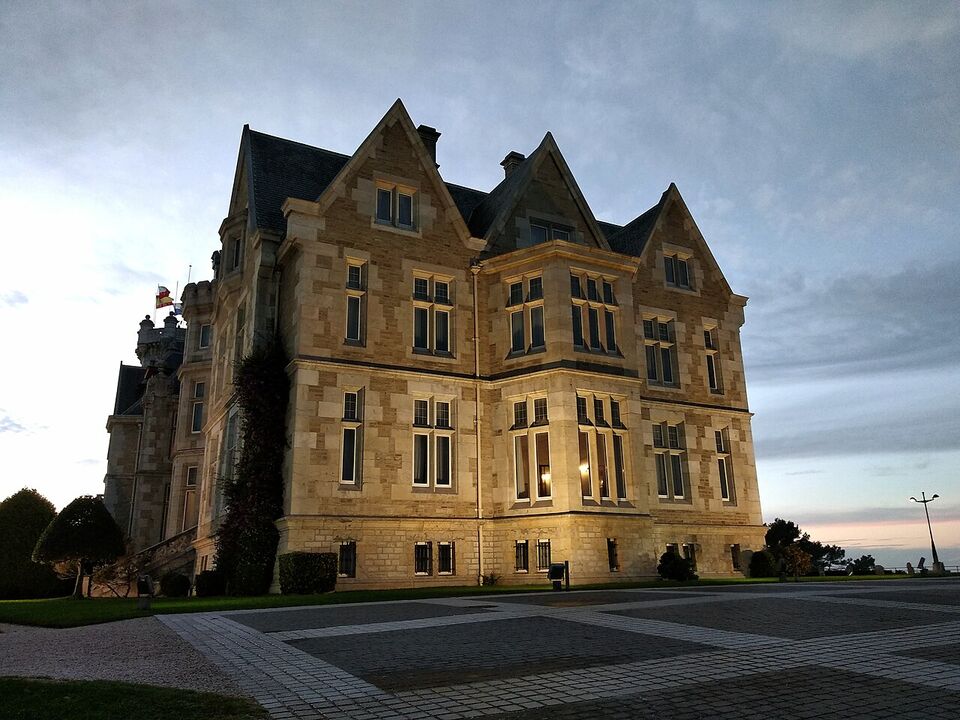
Santander, Cantabria's capital, is a relaxed port city on a deep bay, rebuilt after a great fire in 1941. It became a royal resort in the early 1900s, and the Magdalena Palace, built as a summer home for King Alfonso XIII, sits on a park-covered peninsula you can walk around. The Sardinero beaches, lined with belle époque hotels and a casino, are the city's main draw in summer.
The Centro Botín, an arts center designed by Renzo Piano, cantilevers over the harbor beside the old Pereda gardens. In the evening, locals eat rabas (fried squid strips) and anchovies in the bars around Calle Peña Herbosa and the fishermen's quarter.
Santillana del Mar and Comillas
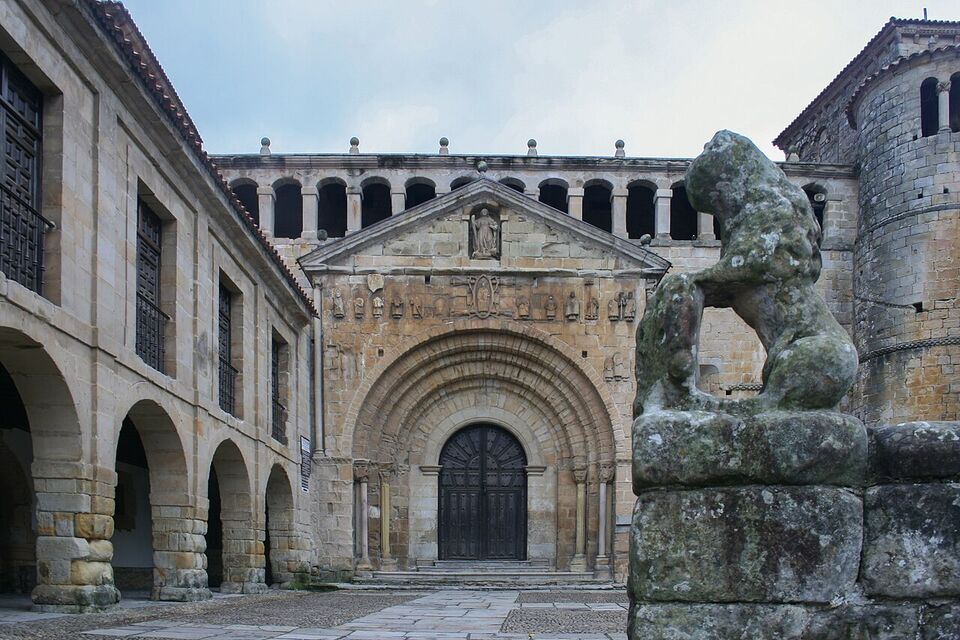
Santillana del Mar, about 30 minutes west of Santander, is a perfectly preserved village of stone manor houses and a Romanesque collegiate church. Locals call it the town of three lies: it is not holy (santa), not flat (llana), and not on the sea (mar). It is very busy midday in summer and lovely in the evening.
Comillas has one of the few Gaudí buildings outside Catalonia, El Capricho, an early, playful summer villa covered in sunflower tiles, open for visits. Farther west, San Vicente de la Barquera is a fishing port with views of the Picos behind the estuary.
Altamira and the painted caves
The Cave of Altamira, near Santillana del Mar, holds the bison, deer and handprints painted and engraved by Ice Age people roughly 36,000 to 13,000 years ago. Its ceiling of polychrome bison is one of the masterpieces of prehistoric art. The original cave is closed to protect the paintings, which were damaged by visitors' breath and body heat in the 20th century.
The Altamira museum and the Neocueva
What you visit is the Museo Nacional y Centro de Investigación de Altamira, with an excellent exhibition on prehistoric life and the Neocueva, a precise full-size replica of the painted cave.
- Hours: Tuesday to Saturday 9:30 a.m. to 6 p.m. (November to April) or to 8 p.m. (May to October); Sundays and holidays 9:30 a.m. to 3 p.m. The ticket office closes 30 minutes earlier. Closed every Monday and on several holidays, including January 1 and 6, May 1 and December 24, 25 and 31.
- Tickets: €3 (about $3.40); €1.50 reduced. Free for everyone on Saturday afternoons from 2 p.m. and all day Sunday, and for visitors under 18 or over 65 with ID. Show a Renfe long-distance ticket from the previous 48 hours for half price.
- Booking: the museum recommends booking online in summer, on the Ministry of Culture site, cultura.gob.es/mnaltamira.
- The real cave: an experimental research program has let a handful of visitors, chosen by lot, into the original cave on a limited basis. Ask the museum whether it is running when you visit; do not plan a trip around it.
Caves you can still enter
Cantabria's regional government runs small guided visits to several original painted caves, with tight group limits. The best known is El Castillo at Puente Viesgo, about 30 minutes south of Santander, where a red disk has been dated to more than 40,000 years, among the oldest known cave art in the world. Las Monedas next door has stalactites and animal drawings. Visits sell out in summer, so book as soon as you know your dates. In Asturias, Tito Bustillo in Ribadesella has original paintings with limited visits in season and a visitor center.
Insider tip
Do Altamira's museum first and a real cave like El Castillo second. The replica gives you the full ceiling under good light; the real cave gives you the cold, the darkness and the sense of standing where the painters stood. Together they are one of the most memorable days in Spain.
Asturias: Oviedo, Gijón and the coast
Oviedo
Oviedo, the capital, is a tidy, prosperous city with a pedestrian old town around a Gothic cathedral. On Mount Naranco just above town stand Santa María del Naranco and San Miguel de Lillo, 9th-century churches and royal halls from the Kingdom of Asturias. This "pre-Romanesque" style, built when most of Spain was under Moorish rule, is part of a UNESCO World Heritage Site and exists almost nowhere else.
Every October, Oviedo hosts the Princess of Asturias Awards, Spain's best-known international prizes, presented by the heir to the throne at the Teatro Campoamor.
Gijón and Avilés
Gijón, the biggest city, is a seaside town with a long urban beach (San Lorenzo), the old fishermen's quarter of Cimadevilla on a headland, and Eduardo Chillida's concrete sculpture Elogio del Horizonte on the cliff top. Avilés has a medieval center and the Centro Niemeyer, an arts center by the Brazilian architect Oscar Niemeyer.
The coast
Llanes
A busy summer town with dozens of small coves nearby, sea-spouting blowholes (bufones) on the cliffs, and the harbor breakwater painted in bright cubes by the artist Agustín Ibarrola.
Ribadesella
A river-mouth town with a beach, the Tito Bustillo cave, and the International Descent of the Sella, a canoe race and party held each August.
Cudillero
Colorful houses stacked up a steep ravine above a tiny harbor. Very photogenic, very busy at lunchtime in August.
Lastres and Gulpiyuri
Lastres is a steep fishing village; Gulpiyuri is a tiny inland beach in a meadow, fed by seawater through tunnels in the rock.
Bears and wild Asturias
West of Oviedo, Somiedo Natural Park is home to one of Western Europe's largest populations of brown bears. Local guides run early-morning and evening bear-watching outings with spotting scopes; spring and early summer give the best odds. The park also has traditional thatched shepherds' huts (teitos) and good hiking.
Cider and food
Asturian cider culture was added to UNESCO's list of intangible cultural heritage in 2024, and you will see why in any sidrería (cider bar). Natural cider (sidra natural) is still and tart, and to aerate it the waiter pours it from a bottle held high above his head into a glass held low, a technique called escanciar. You get a small splash (a culín), and you drink it at once, before it goes flat. Leave the last drop to rinse the rim. Calle Gascona in Oviedo is a whole street of cider bars.
- Fabada asturiana: the classic bean stew with chorizo, blood sausage and pork. Heavy, best at lunch.
- Cachopo: two large veal fillets stuffed with ham and cheese, breaded and fried. One easily feeds two.
- Cheeses: Asturias makes dozens, including the strong blue Cabrales, aged in mountain caves.
- Cantabrian anchovies: salt-cured and packed by hand in Santoña.
- Sobaos and quesadas pasiegas: rich butter sponge cakes and a cheesecake-like dessert from Cantabria's valleys.
- Cocido montañés: Cantabria's bean, cabbage and pork stew.
- Arroz con leche: rice pudding, often with a burnt-sugar crust, a point of Asturian pride.
Save money
Portions in Asturias are famously large. Order one main dish to share, or a few raciones (shared plates), and ask for a half portion (media ración) where offered. The weekday menú del día at village restaurants is one of the best-value meals in Spain.
Getting there and around
Arriving
- By air: Asturias Airport (OVD), near Avilés, and Santander Airport (SDR), close to the city, have flights from Madrid, Barcelona and some European cities. For US travelers, Bilbao (seasonal United nonstop from Newark in summer) is often the most convenient airport: about 1 hour 15 minutes by road to Santander. See our flights page.
- By train from Madrid: since the high-speed tunnels through the Pajares pass opened in late 2023, the fastest trains reach Oviedo in about 3 hours 15 minutes and Gijón a little later. Santander is about 4 hours. Book on renfe.com.
- By sea: Brittany Ferries sails from Santander and Bilbao to southern England, useful if you are combining Spain with the United Kingdom.
Getting around
A car is the only practical way to see the Picos de Europa, the caves and the small coastal villages. Roads are good, mountain roads are narrow and twisting, and summer weekends bring traffic jams around Cangas de Onís, Potes and the beaches. See our driving guide.
Without a car, ALSA buses link Bilbao, Santander, Oviedo and Gijón, and run to Cangas de Onís, Potes and Llanes on lighter schedules. The coastal narrow-gauge railway (the old FEVE line, now run by Renfe) connects Bilbao, Santander and Oviedo through small towns, but it is slow and infrequent; treat it as a scenic ride for its own sake. Renfe has also long run a luxury tourist train, the Transcantábrico, along this coast on multi-day trips; check its current season.
Where to stay
Paradores
State-run hotels in historic buildings: in a monastery at Cangas de Onís, in a manor house at Santillana del Mar, and at the foot of the Fuente Dé cable car. Book through paradores.es.
Village inns and casas rurales
Family-run country houses (casas rurales) and small hotels in stone villages, often with breakfast and home-cooked dinners. The best way to stay in the Picos.
City hotels
Good-value business and boutique hotels, useful at the start or end of a trip. Santander's Sardinero hotels cost more in July and August.
Book July and August, and Spanish long weekends, well ahead: this is where Madrid families spend their summer holidays. See where to stay in Spain for paradores and rental rules.
Tourist taxes
Asturias has drafted a tourist tax: a 2026 proposal would let town councils charge €0.50 to €3 (about $0.55 to $3.40) per person per night, depending on the type of lodging, for up to five nights in high season (June to September and Holy Week), with minors exempt. It was still going through approval in 2026, so Asturias had no tourist tax as of November 2026; if it passes, each town would decide whether to apply it. Ask your hotel in Asturias or Cantabria whether any local tax applies to your stay.
When to visit
- June and September: the best months for hiking, with long days, green meadows and fewer crowds than midsummer.
- July and August: the warmest and driest, with all services open, but expect crowds, lake-road restrictions and full hotels. Mid-August is the peak.
- May and October: quieter and cheaper, with more rain. Many high-mountain routes are still fine on good days.
- November to April: wet, with snow in the Picos and some mountain services closed. Cities, cider bars and caves stay open, and the coast has a moody beauty.
Festivals to plan around: the Descent of the Sella in Ribadesella (August), Gijón's Semana Grande in August, the Battle of Flowers in Laredo (late August), and the Princess of Asturias Awards in Oviedo (October). See festivals and when to go.
Sample route
- Day 1
Santander
Arrive from Bilbao or Madrid. The Magdalena peninsula, the Centro Botín and rabas in the evening.
- Day 2
The caves and Santillana
El Castillo cave in the morning (booked ahead), Altamira's museum after lunch, evening and overnight in Santillana del Mar.
- Day 3
Comillas to Potes
El Capricho in Comillas, then inland through the Desfiladero de la Hermida gorge to Potes.
- Day 4
Fuente Dé
The first cable car up, a morning walk at the top, Santo Toribio in the afternoon.
- Day 5
Cares Gorge
Drive to Arenas de Cabrales and Poncebos. Walk the Cares as far as you like; Cabrales cheese and cider in the evening.
- Day 6
Covadonga
The basilica and Holy Cave, then the lakes (by bus if the road is restricted). Overnight in Cangas de Onís.
- Day 7
Coast to Oviedo
Ribadesella, Lastres and Gulpiyuri, then Oviedo for the pre-Romanesque churches and a cider crawl on Calle Gascona.
From Oviedo, continue west to Galicia or take the train back to Madrid. More routes on our planning page.
Good to know
- Mountain safety: trails are well marked, but fog rolls in quickly and there is no cell signal in some gorges. Tell your hotel your route, carry water and a layer, and call 112 in an emergency.
- Livestock: cows, horses and goats graze free in the Picos, including on roads. Drive slowly and close gates behind you.
- Swimming: the Cantabrian Sea is cold and has strong currents on open beaches. Swim at guarded beaches and follow the flags.
- Language: Spanish everywhere; Asturian (asturianu) shows up on signs and menus, such as picu for peak.
- Safety: crime is low. The State Department rates Spain Level 2, "Exercise increased caution"; see our safety page.
- Wine: this is cider country, but you are a few hours from Rioja and Ribera del Duero; see the wine page.
Add it to a route in the trip builder, or ask us to plan the hotels, trains and guides for you.