How Spanish fiestas work
Spain has more festivals than anywhere you are likely to visit, and most of them are local. Every town and city has a patron saint and a fiesta mayor (main festival) with processions, music, fireworks and late nights. On top of that come the big religious seasons, the spring fairs of Andalusia, regional national days and a few events, like Pamplona's bull runs and Buñol's tomato fight, that the whole world has heard of.
A few patterns hold almost everywhere. Fiestas run late, with the main events often after dark and the party going until dawn. They are family affairs, with children and grandparents out at 1 am. The religious ones are genuinely religious for the people taking part, even in a largely secular country. And they change the city around them: streets close, hotels triple their prices, museums shorten their hours, and restaurants fill with locals.
- Fiesta, feria, romería: a fiesta is any celebration; a feria is a fair, usually with tents, dancing and a fairground; a romería is a pilgrimage to a country shrine, often on horseback or in decorated carts.
- The puente: when a holiday falls on a Tuesday or Thursday, many people take the day between it and the weekend off, making a "bridge". Trains, roads and hotels fill up.
- Local holidays: each town adds two local holidays a year, so shops may close in one city and open 20 miles (30 km) away.
Different from home
US holidays are mostly about staying home with family or heading out of town. Spanish fiestas fill the streets. If your trip overlaps a big one, the city will be more crowded, more expensive and harder to get around, and also far more alive. Decide whether you want to be in the middle of it or a town away.
Semana Santa (Holy Week)
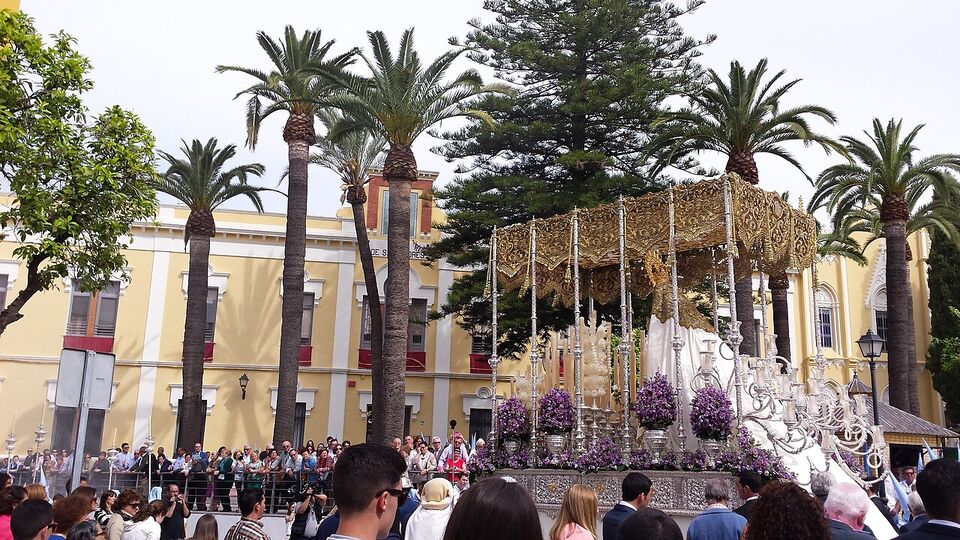
For one week before Easter, cities across Spain fill with processions organized by Catholic brotherhoods (hermandades or cofradías). Each carries one or two pasos, huge floats bearing carved and dressed figures of Christ or the Virgin Mary, some of them baroque masterpieces several centuries old. Behind and around them walk hundreds of penitents (nazarenos) in robes and tall pointed hoods, with bands playing slow marches.
In 2027, Holy Week runs from Palm Sunday, March 21, to Easter Sunday, March 28, earlier than usual. Holy Thursday (March 25) is a public holiday in most regions (not Catalonia) and Good Friday (March 26) everywhere; Easter Monday (March 29) is usually a holiday in Catalonia, the Valencia region, the Balearics, the Basque Country and Navarra; check the 2027 regional lists. In 2028 Easter falls on April 16.
Different from home
The pointed hoods (capirotes) startle many Americans. They are a centuries-old Spanish penitential garment and have no connection to the Ku Klux Klan, which appeared long after. Spaniards are used to the question; just don't make jokes about it.
Seville
Seville's Holy Week is the most famous and the most intense. Some 60 or more brotherhoods process from their home churches to the cathedral and back, some taking 12 hours or more, along an official route (Carrera Oficial) through the center. The heart of it is the Madrugá, the night of Holy Thursday into Good Friday, when the city's most revered images, including Jesús del Gran Poder and the Virgin of La Macarena, are out until morning. Along the way you may hear a saeta, an unaccompanied flamenco lament sung from a balcony as a paso stops beneath it.
The seats along the official route are mostly held by local families from year to year, so most visitors watch standing in the side streets, which is often more atmospheric anyway. Brotherhood websites and the city's tourism office publish routes and times; download the schedule and pick two or three processions to see at quieter points rather than trying to get near the cathedral. See Seville.
Watch out
Crowds in Seville's narrow streets are dense, and there have been moments of panic during the Madrugá in past years. Know where you are on the map, avoid pressing into the tightest lanes, keep your phone and wallet zipped away, and never try to cross through a procession. Hotel prices for Holy Week in Seville are among the highest of the year; book 9–12 months out.
Málaga, Castile and elsewhere
- Málaga: the floats (tronos) are among the biggest in Spain, carried by teams of well over 100 bearers, and the processions feel more festive. On Holy Thursday the Spanish Legion carries the Cristo de la Buena Muerte. See Málaga.
- Valladolid, Zamora, León and Salamanca: Castile's Holy Week is sober and silent, built around remarkable Renaissance and baroque sculpture. Zamora's is one of the oldest. See Salamanca and Castile.
- Granada, Córdoba and Toledo: processions against extraordinary backdrops: the Alhambra, the Mezquita, the hilltop old town.
- Murcia region: Cartagena and Lorca stage elaborate, competitive processions with costumes and horses.
Las Fallas in Valencia
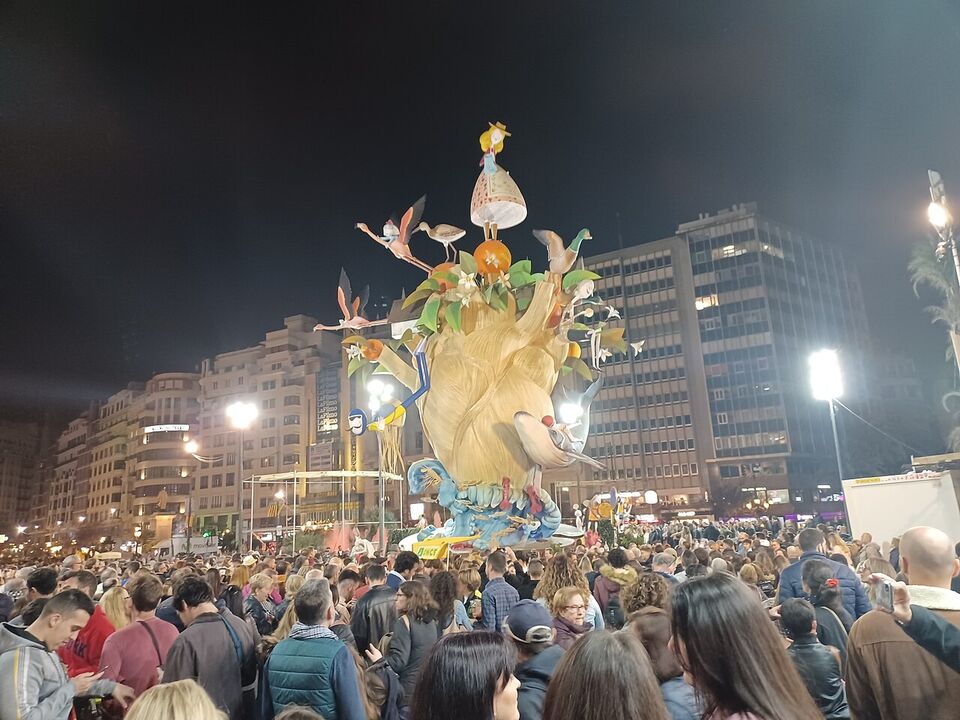
Every March, Valencia builds hundreds of giant satirical sculptures of wood, cardboard and polystyrene (fallas), some several stories high, mocking politicians, celebrities and the news of the year, then burns nearly all of them on the night of March 19. Las Fallas has been on UNESCO's list of intangible cultural heritage since 2016, and it is loud, smoky, crowded and unforgettable.
- The mascletà: every day from March 1 to 19 at 2 pm in the Plaza del Ayuntamiento, a fireworks display built for noise and ground-shaking rhythm rather than light. Arrive an hour early, and bring earplugs for children.
- The plantà: the sculptures go up across the city by March 15, when the official fiesta begins. Walking between them is the main daytime activity.
- The Ofrenda: on March 17 and 18, thousands of falleros in traditional dress carry flowers to the Plaza de la Virgen, where they are woven into a huge figure of the city's patron.
- The Nit del Foc: the night of March 18 brings the biggest nighttime fireworks show.
- The cremà: on the night of March 19 the fallas burn, the children's ones first and the city hall's last, late at night. One figure each year, chosen by public vote at the ninot exhibition, is saved for the Fallas museum.
In 2027, March 19 falls on a Friday, and Holy Week starts two days later, so the two can be combined with a fast train to Seville, once you have checked that the Madrid-Andalusia high-speed line is running (it was suspended after a fatal collision near Urda on October 28, 2026). Expect Valencia's hotel prices to spike for the whole of mid-March, and expect streets to be closed to traffic. See Valencia.
Insider tip
If you want Fallas without the deepest crowds, come for a day or two between March 1 and 14: the mascletàs run daily, the exhibition of the ninots (the figures) is open, and rooms are easier. Then leave before the final weekend or stay to the end knowing what you are in for.
Seville's April Fair and the spring ferias
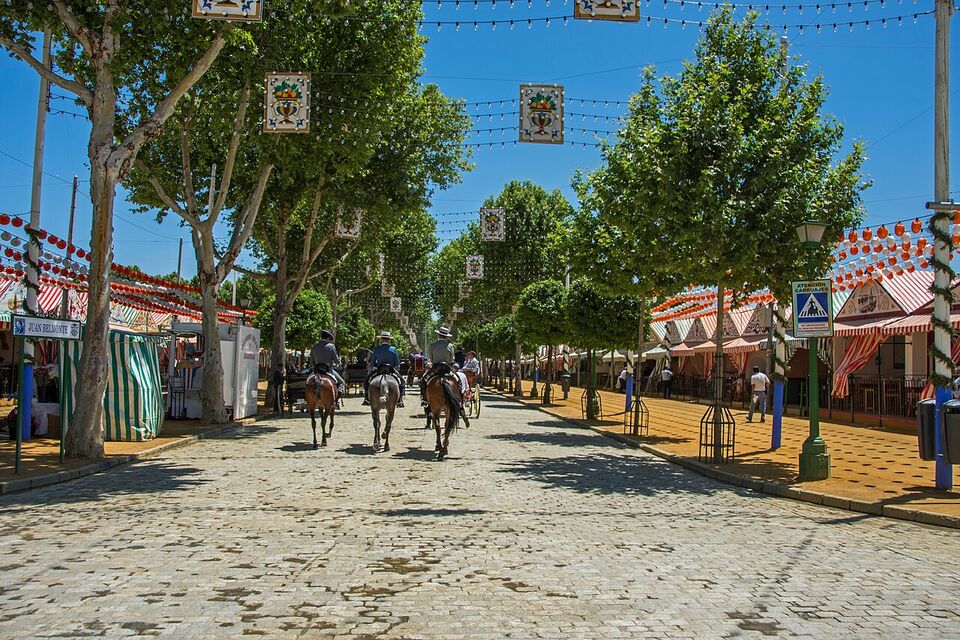
About two weeks after Easter, Seville moves to a fairground of more than a thousand striped tents (casetas) in the Los Remedios district for a week of sherry, horses, dancing and very late nights. Women wear the ruffled traje de flamenca, men wear suits or riding dress, and everyone dances sevillanas, the four-part folk dance of the city.
The 2027 Feria is expected to run from Monday, April 12, to Sunday, April 18, following the usual pattern of the pescaíto (fried fish dinner) and the lighting of the great entrance gate (alumbrado) on the Monday night, and fireworks to close it at midnight on the Sunday. Confirm the dates with the city before booking.
How to enjoy it as an outsider
- Most casetas are private, owned by families, clubs and companies, and you need an invitation to enter. A minority are public, including the district and party tents; look for them and for open tents on weekdays.
- Go at midday to see the horse-drawn carriages and riders parade through the fairground, which is free and open to all.
- Drink a rebujito, dry manzanilla sherry with lemon-lime soda, served by the jug.
- The Calle del Infierno is the fairground's funfair, a hit with kids.
- Getting there: the metro and shuttle buses run late; taxis are scarce at closing time.
A guided Feria experience or a contact in Seville is the only reliable way into private casetas. Be wary of street offers to sell "entry": nobody can sell access to a private tent.
May in Andalusia
- Cruces de Mayo (early May): flower-decked crosses in squares and courtyards in Córdoba, Granada and other towns.
- Fiesta de los Patios, Córdoba (usually the first half of May): residents open their flower-filled private courtyards to visitors; it is on UNESCO's intangible heritage list. Lines form at the best-known patios in the afternoon. See Córdoba.
- Feria del Caballo, Jerez (May): Jerez's horse fair, with public casetas and a sherry-soaked atmosphere. See Andalusia.
- Romería de El Rocío (Pentecost weekend: May 15–17, 2027): hundreds of thousands of pilgrims travel by horse, cart and on foot to the village of El Rocío near Doñana. It is a spectacle, and the village is overwhelmed; most visitors watch the processions on the way.
- Corpus Christi (Thursday, May 27, 2027): solemn processions in Toledo, Seville and Granada, where it coincides with the city's main fair.
San Fermín and the running of the bulls
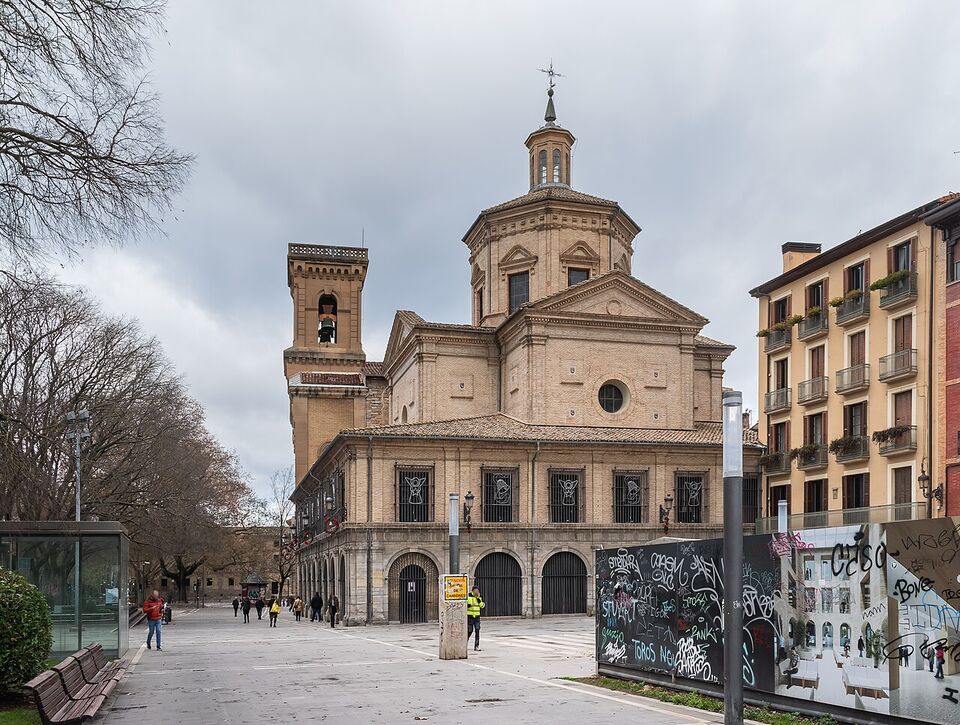
Pamplona's fiesta of San Fermín runs from noon on July 6 to midnight on July 14 every year, made famous in the US by Hemingway's The Sun Also Rises. It opens with the chupinazo, a rocket fired from the city hall balcony into a square packed with people in white with red kerchiefs, and closes with candles and the mournful song Pobre de mí.
Each morning from July 7 to 14, at exactly 8 am, six fighting bulls and a group of steers run through the old town's streets to the bullring, a run of about 875 m (just over half a mile) that usually takes two to four minutes. The bulls are fought in the ring that evening. In between, the city holds nine days of concerts, parades of giant figures (gigantes), music and drinking that never really stops.
Watch out
The bull run (encierro) is genuinely dangerous. Runners are gored or trampled every year, and deaths, though rare, have happened, most recently in 2009. You must be 18 or older, sober and without cameras or backpacks, and police remove anyone who breaks the rules. Most injuries come from falls and crowding. If you have never seen a run, watch first, on TV or from a balcony, and study the route before even thinking about joining in.
Watching and staying
- From the barriers: the double wooden fences fill up very early, often by 6 am, and police clear the route beforehand.
- From a balcony: residents along the route rent balcony places for each run; it is the most comfortable view. Book well ahead and only through established operators.
- In the bullring: tickets to see the runners and bulls arrive, followed by young cows released among the crowd, are inexpensive and sold at the ring.
- Rooms: Pamplona hotels sell out a year ahead at several times normal rates. Many visitors stay in San Sebastián or elsewhere in Navarra and come in by bus.
San Fermín is a bullfighting festival, and many Spaniards and visitors object to it; animal rights groups protest in Pamplona each July. See Rioja and Navarra.
La Tomatina
On the last Wednesday of August, the town of Buñol, about 25 miles (40 km) west of Valencia, holds the world's biggest food fight. Trucks dump tons of overripe tomatoes into the streets, and for about an hour the crowd throws them at each other until the town runs red. Then the fire hoses come out and everyone heads for the river or showers set up by residents.
Entry has required a ticket since 2013. In 2026 the fight took place on August 26, with 22,000 tickets at €15 (about $17) each, sold through the town council's official site; packages with a T-shirt, paella and an after-party cost more. The 2027 edition should fall on Wednesday, August 25; check bunol.es for the date and when tickets go on sale.
- Wear old clothes you can throw away and closed shoes with grip; the streets get slippery.
- Swim goggles protect your eyes from tomato acid.
- Leave your phone at your room, or use a waterproof pouch.
- Squash each tomato before throwing it, and never throw anything else.
- Stop throwing when the second cannon sounds.
- Take the commuter train from Valencia early; it gets packed.
There is also a free children's Tomatina, for ages 4 to 14, on the Saturday before.
Summer and fall fiestas
From June to October, there is a major fiesta somewhere in Spain almost every week.
Sant Joan
Midsummer's eve: bonfires, fireworks and cava on the beaches. Barcelona's beaches and squares crackle with firecrackers all night, and Alicante's Hogueras festival burns its own giant figures. June 24 is a holiday in Catalonia.
Batalla del Vino
A wine fight on a hillside outside the Rioja wine town, with thousands of liters of red wine sprayed from bottles, buckets and water pistols. Wear white, and expect it to turn purple. See wine.
Santiago Apostle Day
Galicia's national day, with fireworks on the cathedral square the night before. July 25, 2027, falls on a Sunday, making 2027 a Holy Year (Xacobeo), which draws far more pilgrims than usual. See the Camino and Galicia.
Semana Grande
San Sebastián's week centers on an international fireworks contest over the bay around August 15; Bilbao's Aste Nagusia follows with concerts and street parties. See the Basque Country.
Feria de Málaga
A daytime party in the old town and a nighttime fairground, with flamenco dresses, sweet Málaga wine and fireworks. Hot and crowded. See Málaga.
Festa Major de Gràcia
Residents of the Gràcia neighborhood compete to decorate their streets with elaborate homemade themes, with concerts every night.
La Mercè
Barcelona's main fiesta: human towers (castells), giant figures, free concerts and the correfoc, where costumed devils run through crowds spraying fireworks. Wear long sleeves and cotton if you stand close. See Barcelona.
Fiestas del Pilar
Zaragoza honors its patron with a flower offering that builds a mountain of blooms around the Virgin's statue, plus concerts and fairs. October 12 is also Spain's National Day.
Spain's summer music festivals (Primavera Sound and Sónar in Barcelona, Mad Cool in Madrid, BBK Live in Bilbao and others) and the San Sebastián Film Festival in September draw their own crowds; check their dates before booking those cities.
Carnival and winter fiestas
- San Antón (around January 17): blessings of pets and farm animals at churches, including Madrid's San Antón church.
- Tamborrada, San Sebastián (January 20): 24 hours of drumming, starting at midnight, by companies dressed as cooks and soldiers.
- Carnival (in 2027, the week around Tuesday, February 9): Cádiz is the most famous on the mainland, with satirical singing groups (chirigotas and comparsas) competing in its theater and performing in the streets. Santa Cruz de Tenerife holds one of the largest carnivals anywhere, with parades and costume competitions. See the Canary Islands.
- Festival de Jerez (February 19 to March 6, 2027): the great flamenco dance festival. See flamenco.
Christmas, New Year and Three Kings
Spain's Christmas season runs from early December to January 6, and the climax is Three Kings rather than December 25. Lights go up in cities from late November, with Madrid and the Galician city of Vigo competing for the most elaborate displays. Nativity scenes (belenes) appear in churches, town halls and shop windows.
| Date | What happens | What it means for you |
|---|---|---|
| Late November–December | Christmas markets: Madrid's Plaza Mayor, Barcelona's Fira de Santa Llúcia by the cathedral (running since 1786) | Ornaments, nativity figures and seasonal sweets such as turrón (nougat) |
| December 6 and 8 | Constitution Day and the Immaculate Conception, both public holidays | The puente de diciembre: busy trains and hotels |
| December 22 | El Gordo, the Christmas lottery, with schoolchildren singing the winning numbers on TV all morning | The whole country stops to listen |
| December 24 | Nochebuena, the main family dinner | Many restaurants close in the evening; book or plan ahead |
| December 25 | Christmas Day, a public holiday | Most museums and shops closed |
| December 28 | Día de los Santos Inocentes, Spain's April Fools' Day | Don't trust the news |
| December 31 | Nochevieja: twelve grapes eaten on the twelve chimes of midnight, famously at Madrid's Puerta del Sol | Dinner is expensive; parties start after midnight |
| January 5 | Cabalgata de Reyes: parades of the Three Kings, throwing sweets to children | Huge crowds in the evening; bring a bag for the candy |
| January 6 | Día de Reyes: children open presents; families share a roscón (ring cake) | Public holiday; the winter sales start the next day |
Insider tip
In Catalonia, look for two odd traditions: the caga tió, a smiling log that children beat with sticks to make it "poop" presents, and the caganer, a squatting figure hidden in nativity scenes, now sold in the likeness of footballers and politicians. Both make great souvenirs. See Spain in December and January.
Public holidays, 2026–2027
National holidays apply everywhere; regions add their own, and when a holiday falls on a Sunday some regions move it to Monday. Banks, many shops and some museums close on these days, and public transport runs a Sunday schedule. Regions publish their final lists late in the year, so check your region's 2027 calendar before you travel.
| Date | Holiday | Where |
|---|---|---|
| Sun, Dec 6, 2026 | Constitution Day | National (some regions move it to Monday, Dec 7) |
| Tue, Dec 8, 2026 | Immaculate Conception | National |
| Fri, Dec 25, 2026 | Christmas Day | National |
| Fri, Jan 1, 2027 | New Year's Day | National |
| Wed, Jan 6, 2027 | Epiphany (Three Kings) | National |
| Thu, Mar 25, 2027 | Holy Thursday | Most regions, not Catalonia (check the Valencia region) |
| Fri, Mar 26, 2027 | Good Friday | National |
| Mon, Mar 29, 2027 | Easter Monday | Catalonia, Valencia region, Balearics, Basque Country, Navarra and some others |
| Sat, May 1, 2027 | Labor Day | National |
| Sun, Aug 15, 2027 | Assumption | National |
| Tue, Oct 12, 2027 | National Day of Spain | National |
| Mon, Nov 1, 2027 | All Saints' Day | National |
| Mon, Dec 6, 2027 | Constitution Day | National |
| Wed, Dec 8, 2027 | Immaculate Conception | National |
| Sat, Dec 25, 2027 | Christmas Day | National |
Regional days to know: February 28 (Andalusia), April 23 (Aragón and Castile and León), May 2 (Madrid region), June 24 (Catalonia), July 25 (Galicia), September 11 (Catalonia's Diada), October 9 (Valencia region). Cities add their own: Madrid's San Isidro on May 15 and Barcelona's La Mercè on September 24, among others.
Festival calendar, 2026–2027
| When | Festival | Where |
|---|---|---|
| Late Nov–Dec 2026 | Christmas markets and lights | Madrid, Barcelona, Vigo, Seville and most cities |
| Dec 22, 2026 | El Gordo Christmas lottery | Nationwide |
| Dec 31, 2026 | New Year's Eve and the twelve grapes | Puerta del Sol, Madrid, and everywhere |
| Jan 5–6, 2027 | Three Kings parades and holiday | Nationwide |
| Jan 20, 2027 | Tamborrada | San Sebastián |
| Around Feb 9, 2027 | Carnival | Cádiz, Santa Cruz de Tenerife, Las Palmas, Sitges |
| Feb 19–Mar 6, 2027 | Festival de Jerez | Jerez de la Frontera |
| Mar 1–19, 2027 | Las Fallas (main days March 15–19) | Valencia |
| Mar 21–28, 2027 | Semana Santa | Seville, Málaga, Castile and nationwide |
| Apr 12–18, 2027 (expected) | Feria de Abril | Seville |
| Apr 23, 2027 | Sant Jordi: books and roses | Barcelona and Catalonia |
| Early–mid May 2027 | Cruces de Mayo and Fiesta de los Patios | Córdoba |
| May 15, 2027 | San Isidro | Madrid |
| May 15–17, 2027 | Romería de El Rocío | El Rocío (Huelva) |
| May 27, 2027 | Corpus Christi | Toledo, Granada, Seville |
| Jun 23, 2027 | Sant Joan (night) | Barcelona, Alicante and the Mediterranean coast |
| Jun 29, 2027 | Batalla del Vino | Haro |
| Jul 6–14, 2027 | San Fermín | Pamplona |
| Jul 24–25, 2027 | Santiago Apostle Day, in a Holy Year | Santiago de Compostela |
| Mid-Aug 2027 | Semana Grande, Feria de Málaga, Festa Major de Gràcia | San Sebastián, Bilbao, Málaga, Barcelona |
| Aug 25, 2027 (expected) | La Tomatina | Buñol |
| Around Sep 24, 2027 | La Mercè | Barcelona |
| Around Oct 12, 2027 | Fiestas del Pilar | Zaragoza |
Planning around a festival
- Decide early. For Holy Week in Seville, the Feria, Las Fallas and San Fermín, book rooms 6–12 months ahead, and take a refundable rate if your plans may change. Prices can run two to four times normal.
- Consider a base nearby. Stay in Córdoba or Jerez for Seville's big weeks, in a coastal town for Valencia's Fallas, or in San Sebastián for San Fermín, and use trains or buses. See getting around.
- Book trains as soon as sales open. High-speed trains to Seville and Valencia for festival weekends sell out, and cheaper fares go first. After a fatal collision near Urda (Toledo) on October 28, 2026, high-speed trains between Madrid and Andalusia were suspended; Renfe stopped selling tickets on the route until December 13, 2026, though service may return sooner, so check Renfe, Iryo and Ouigo before you plan.
- Check monument hours. Cathedrals change visiting hours during Holy Week, and many museums close on public holidays; book timed tickets such as the Alhambra for other days if you can.
- Plan your meals. Restaurants fill with locals; reserve a lunch table, and keep snacks and water with you for long nights on the street.
- Protect your valuables. Pickpockets work festival crowds. Carry a copy of your passport, one card and some cash in a front pocket. See safety.
- Prepare for heat. San Fermín, the Tomatina and the August ferias happen in summer temperatures that can top 95°F (35°C). Drink water and seek shade. See health.
For the full year's picture, including when crowds and prices peak region by region, see when to go. For flamenco festivals, see flamenco.
Add it to a route in the trip builder, or ask us to plan the hotels, trains and guides for you.