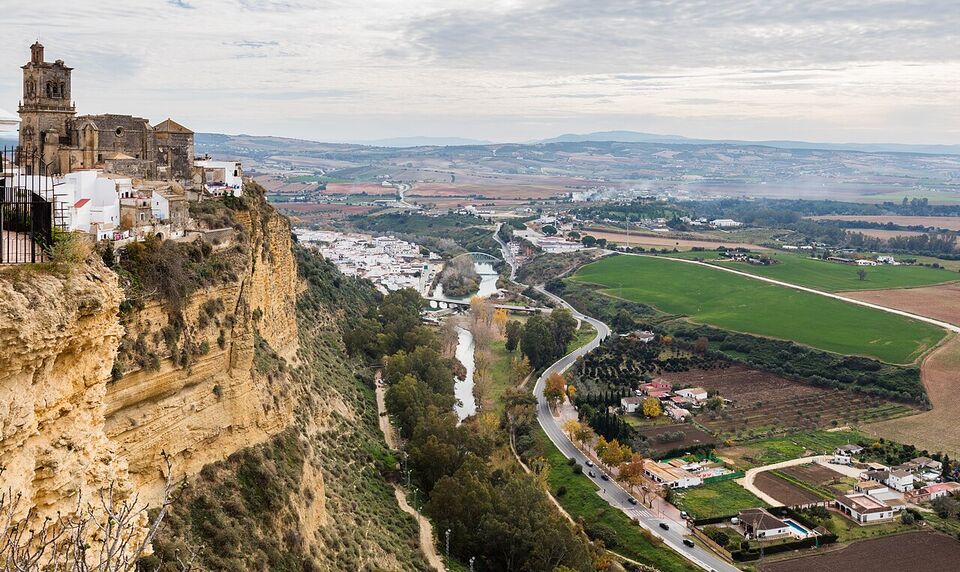
November is one of the best-value months for Spain's cities and for Andalusia, if you accept shorter days, a real chance of rain in Madrid and the north, and beaches that are pleasant to walk on but mostly too cold to swim. Seville, Granada, Córdoba and Málaga still see days near 68°F (20°C), the big museums have short lines, and hotel rates drop sharply after the first weekend.
It is the wrong month for Mallorca, Menorca and Ibiza, where many hotels and beach restaurants close for the winter, and the mountains sit between hiking and ski season. In 2026, plan around two disruptions: Spain's main unions have called a general strike on Wednesday, November 11, which can cut trains, flights and city transit, and high-speed trains between Madrid and Andalusia were suspended after a fatal collision on October 28 (see getting around). Spain also votes in a general election on Sunday, November 29.
Weather by region
Spain is big and varied, and November shows it. The south and the Mediterranean coast hold on to fall: crisp mornings, sunny afternoons warm enough for a T-shirt, and the occasional heavy storm. Madrid and the interior plateau cool quickly, with frosty nights possible by the end of the month. The Atlantic north (Bilbao, San Sebastián, Asturias, Galicia) is green for a reason: November is one of its wettest months.
| Place | Average high | Average low | Rainy days |
|---|---|---|---|
| Madrid | 56°F (14°C) | 43°F (6°C) | About 7 |
| Barcelona | 64°F (18°C) | 48°F (9°C) | About 5 |
| Seville | 69°F (20°C) | 50°F (10°C) | About 6 |
| Granada | 63°F (17°C) | 40°F (4°C) | About 7 |
| Málaga | 68°F (20°C) | 53°F (11°C) | About 5 |
| Valencia | 68°F (20°C) | 52°F (11°C) | About 4 |
| Bilbao | 62°F (17°C) | 47°F (8°C) | About 14 |
| Santa Cruz de Tenerife | 76°F (24°C) | 65°F (18°C) | About 5 |
These are 1991–2020 averages from Spain's weather agency, AEMET; individual years vary a lot. Granada sits at about 2,300 feet (700 m), so its nights are close to freezing by late November, and the Sierra Nevada above it often has its first snow. The Mediterranean coast can get a DANA (a cut-off low that drops torrential rain), the same kind of storm that caused the deadly Valencia floods of October 2024; if one is forecast, follow AEMET warnings and local advice and stay away from dry riverbeds and underpasses.
The Canary Islands are the only place you can count on beach weather, with the sea still around 70°F (21°C). See when to go for the year-round picture.
What's on in November 2026
| Date | Event | Where |
|---|---|---|
| Sunday, November 1 | All Saints' Day (Todos los Santos); families visit cemeteries | Nationwide |
| Monday, November 2 | All Saints' holiday moved to Monday | Madrid region, Andalusia, Aragón, Asturias, Canary Islands, both Castiles, Extremadura, Navarra |
| Monday, November 9 | Feast of the Virgen de la Almudena, Madrid's patron saint and a local holiday in the city, with a Mass and procession; the Reina Sofía is closed | Madrid |
| Wednesday, November 11 | General strike called by the CCOO and UGT unions | Nationwide |
| Around November 11 | Magosto (chestnut and new-wine festivals for St. Martin's Day) | Galicia, León, Asturias |
| All month | Olive harvest and the first new-season oil | Jaén, Córdoba and the rest of Andalusia; Catalonia |
| Late November | Christmas lights switched on | Madrid, Málaga's Calle Larios, Vigo, Barcelona |
| Late November to December 23 | Fira de Santa Llúcia Christmas market (November 28 to December 23 in 2025) | Barcelona, outside the cathedral |
| Late November to December 31 | Christmas market | Madrid, Plaza Mayor |
| Thursday, November 26 and Friday, November 27 | US Thanksgiving; Black Friday sales, now a big event in Spanish stores too | US; Spanish shops |
| Sunday, November 29 | General election for Spain's parliament, called by royal decree on October 5; campaign rallies in the two weeks before | Nationwide |
Christmas comes early
Spanish cities switch on their Christmas lights in the second half of November, and the evenings fill with families walking the main streets. Málaga's Calle Larios runs a light-and-music show every evening, Vigo in Galicia puts up one of the biggest displays in Spain, and Madrid lights up Gran Vía, Calle Alcalá and the Puerta del Sol. The Plaza Mayor market (Nativity figures, decorations, joke shops) and Barcelona's Fira de Santa Llúcia (moss, Nativity scenes and the Catalan caganer, a squatting figure hidden in Nativity scenes) both open in late November. Exact 2026 dates are announced by each city in November; the December page has the full Christmas calendar.
Olive harvest and new oil
From late October through winter, Andalusia's olive groves are in full harvest. Jaén province alone produces a large share of the world's olive oil, and many mills (almazaras) sell the first green, peppery oil of the season. Ask a hotel in Úbeda, Baeza or the Córdoba countryside about mill visits, or look for aceite temprano (early-harvest oil) in shops. See food and Andalusia.
Chestnuts, mushrooms and stews
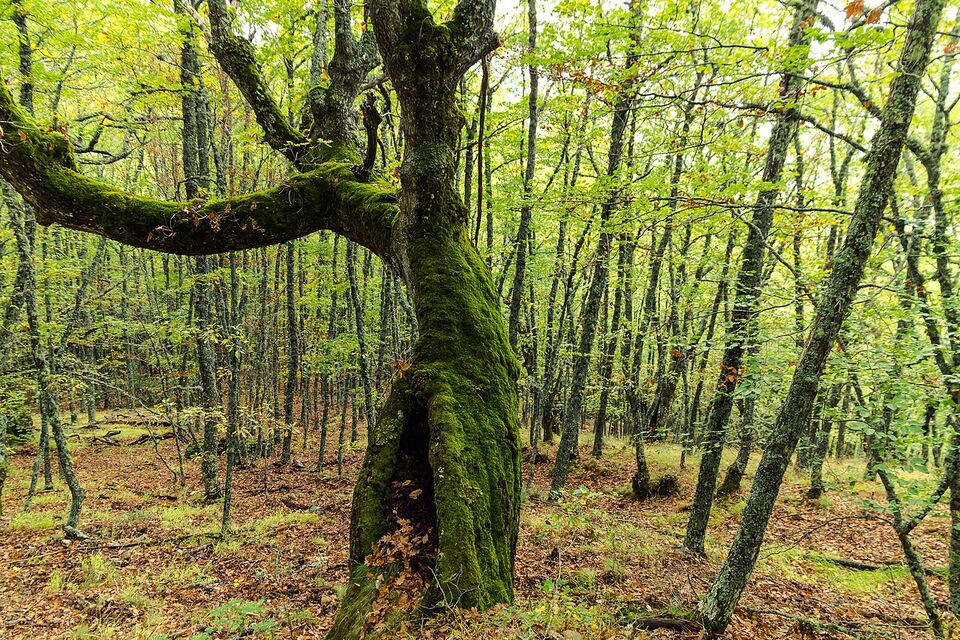
November is the start of comfort-food season. Street carts sell roasted chestnuts (castañas) in Madrid, Galicia celebrates the magosto with chestnuts and young wine around St. Martin's Day (November 11), and Catalan and Basque markets fill with wild mushrooms (setas). Madrid's cocido madrileño (chickpea, meat and vegetable stew served in courses) returns to lunch menus. See Madrid food and the Basque Country.
The November 11 general strike
Spain's two largest unions, CCOO and UGT, have called a general strike for Wednesday, November 11, 2026, over wages, working hours and housing costs. In late October the unions had not yet published the exact stoppage hours, so check the news in the days before. It is the first general strike with both big unions behind it in more than a decade, so expect real disruption.
- Trains: Spain's government sets minimum services (servicios mínimos) for Renfe and other operators a few days before a strike. In past general strikes, a share of AVE and long-distance trains ran and commuter services ran mainly at rush hours. Check your train in the Renfe, Iryo or Ouigo app the day before.
- Flights: Airlines usually publish a list of protected flights; others can be cancelled or delayed. If you fly into or out of Spain on November 11, check with your airline and keep a buffer day before any connection home.
- Cities: Metro and buses run reduced service; marches fill central streets in Madrid, Barcelona and other cities. Some museums, shops and restaurants close or shorten hours.
- What to do: treat November 11 as a walking day. Avoid booking a long train trip or an Alhambra or Sagrada Família slot that you cannot easily reschedule.
Watch out
The State Department notes that demonstrations in Spain are common and can turn confrontational. Large strike marches are usually peaceful, but avoid the front lines of protests, watch for road closures to airports, and keep your phone and wallet zipped away in crowds. See safety.
Holidays and closures
All Saints' Day, Sunday, November 1, 2026, is a national holiday. Because it falls on a Sunday, nine regions, including the Madrid region and Andalusia, move the day off to Monday, November 2. Banks, offices and many shops close that Monday in those regions, and trains run holiday timetables. Catalonia, Valencia, the Basque Country, Galicia and the Balearics work as normal on November 2. There are no other national holidays in November; the next is the long weekend of December 5–8.
Winter hours at sights
- Sagrada Família: on November 1, 2026 the official ticket page said the basilica was temporarily closed to the public, with no reopening date given; check sagradafamilia.org before you plan around a visit. Tickets are sold online only. See Sagrada Família tickets.
- Alhambra: winter hours apply from mid-October, with daytime visits ending earlier in the evening than in summer. Nasrid Palace slots still sell out on weekends. See Alhambra tickets.
- Prado and Reina Sofía: no seasonal change, and both keep their free evening hours. See Madrid sights.
Do outdoor sights such as Park Güell, the Alcázar gardens in Seville and the Generalife in Granada in the morning or early afternoon; by 5:30 p.m. the light is going.
Seasonal shutdowns
- Balearic Islands: Ibiza and Formentera largely shut from late October; Menorca is very quiet, and many Mallorca beach resorts close until spring. Palma itself stays open all year. See Mallorca and the Balearics.
- Beach bars: many chiringuitos (beach bars) on the Costa Brava and Costa Blanca close; on the Costa del Sol more stay open. See Costa Brava and Costa del Sol.
- Mountains: high trails in the Picos de Europa and the Pyrenees can get snow, and some mountain huts close. Ski resorts aim to open in late November or early December, depending on snow. See outdoors.
- Camino de Santiago: many private albergues (pilgrim hostels) close for the winter, so book ahead or stick to municipal ones. See the Camino.
Crowds and prices
After the All Saints' weekend, tour groups thin out. The Prado, the Royal Palace and the Reina Sofía have short lines on weekdays, and the Alhambra can often be booked a week or two out instead of a month (check the Sagrada Família's status first, see above). Hotel rates in Seville, Granada and Madrid drop well below their spring and October levels; the Andalusian cities are among Spain's best values this month. See where to stay and budget.
Two things push prices up. Big trade fairs and conferences (Barcelona hosts large ones at its Fira Gran Via venue most Novembers) can fill business hotels on weekdays, and late-November weekends bring Spanish visitors in for the lights. From the US, Thanksgiving week costs more; the weeks before and after are among the cheapest of the year to fly. See flights.
Save money
Barcelona's tourist tax rose on April 1, 2026, to about €8.40 (about $9) per person per night at a four-star hotel and €12 (about $13) at a five-star, collected by the hotel for up to seven nights. Madrid has no tourist tax. If you are splitting a week between them, it is one more reason to give Madrid the extra nights in November. See money.
Different from home
Lunch is the main meal, from about 2 p.m., and restaurants rarely start dinner service before 8:30 p.m. In November that means eating well after dark. The menú del día (set lunch of two courses, bread, a drink and dessert, usually €12–18, about $13–20, on weekdays) is the best-value meal in Spain. See etiquette.
Where to go, where to skip
Seville, Córdoba and Granada
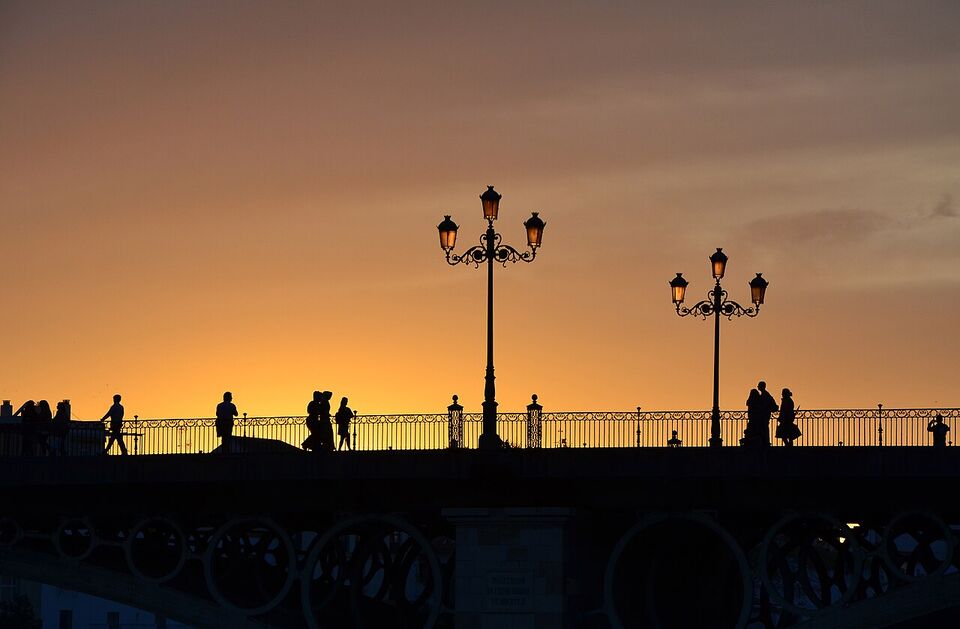
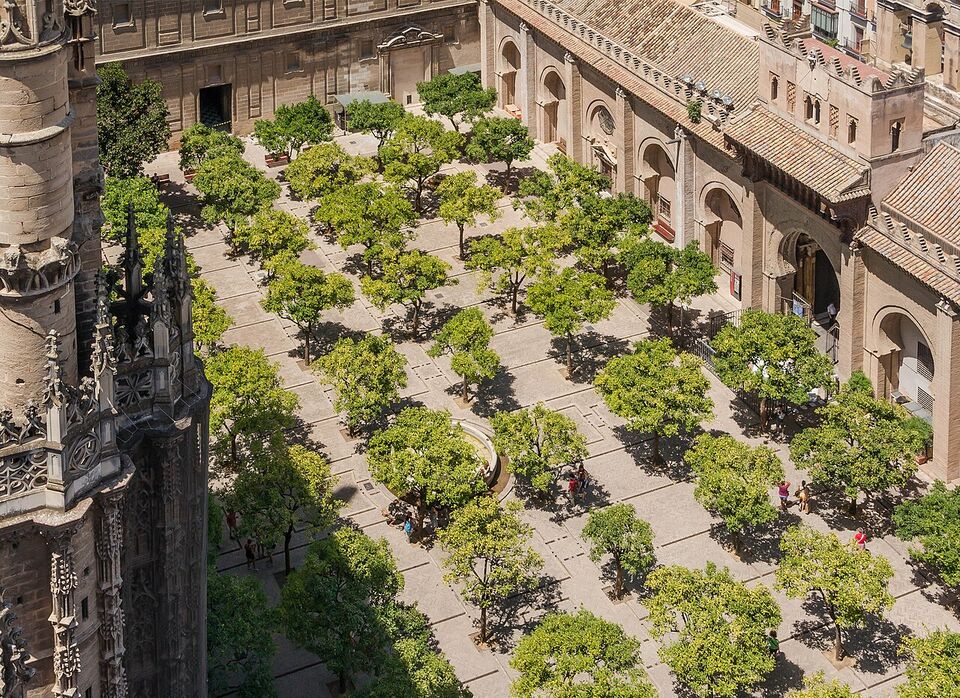
The month's sweet spot: warm afternoons, orange trees, no summer heat and easier Alhambra tickets. Link the three by train or bus in about 45 minutes to 1 hour 30 minutes per hop; getting there from Madrid is the hard part this month (see getting around). See Seville, Córdoba and Granada.
Madrid
Cool, often sunny, and at its best indoors: the Prado, tapas bars, the first cocido of the season. Late November adds the lights. See Madrid.
Barcelona
Mild and much calmer than summer. The beach is for long walks; the sea is too cold for most swimmers. See Barcelona and Barcelona sights.
Málaga and Valencia
Days near 68°F (20°C), museums, good food and open seafront promenades. See Málaga and Valencia.
Canary Islands
The one sure bet for beach weather, with high season starting and prices rising toward Christmas. See Canary Islands.
Skip or rethink
Ibiza, Menorca and Mallorca's resorts, and mountain hiking in the Pyrenees and Picos. The Basque Country is great for food, but pack for rain.
What to pack
- Layers: a sweater and a light down jacket or warm coat for Madrid and Granada evenings, which can drop toward freezing.
- A waterproof jacket and compact umbrella, especially for the north and for Mediterranean storms.
- Comfortable walking shoes with grip; polished stone streets in Seville and Barcelona are slick when wet.
- A scarf for churches and for cold, sunny mornings.
- Swimwear only for the Canary Islands or a hotel spa.
- Type C/F plug adapters (Spain runs on 230 volts). See staying connected.
The packing page has a full list.
A sample week in November
- Day 1
Arrive in Madrid
Land at Barajas, take the airport express bus or the Metro into town, and walk Plaza Mayor and the Puerta del Sol at dusk. An early (by Spanish standards) dinner of tapas in La Latina.
- Day 2
The Prado and the Retiro
The Prado at opening time, lunch on a menú del día, then the Retiro park in the afternoon light. See Madrid sights.
- Day 3
Toledo
About 33 minutes by fast train each way. Cathedral, synagogues, the El Greco museum, back for dinner. See day trips from Madrid.
- Day 4
To Córdoba and Seville
AVE south when the line is running, stopping in Córdoba for the Mezquita, then on to Seville in the evening. While Madrid–Andalusia trains are suspended (see below), fly from Madrid to Seville and visit Córdoba as a day trip from there.
- Day 5
Seville
The Real Alcázar in the morning, the cathedral and Giralda after lunch, flamenco in the evening. See flamenco.
- Day 6
Granada
Train or bus to Granada; afternoon in the Albaicín, sunset from the Mirador de San Nicolás, tapas that come free with drinks.
- Day 7
The Alhambra and home
A morning Nasrid Palaces slot, then fly home via Madrid, or add Málaga for two more nights.
The planning page has more routes, and the December and January pages cover the next two months.
Getting around this month
Watch out
After a fatal collision near Urda (Toledo province) on October 28, 2026, high-speed trains between Madrid and Andalusia were suspended; Renfe stopped selling tickets on the route until December 13, 2026, though service may return sooner. Check Renfe, Iryo and Ouigo before you plan, and consider flying or taking a long-distance bus in the meantime. Madrid–Toledo trains kept running.
On the lines that are running, November fares on Madrid–Barcelona and Madrid–Valencia are among the lowest of the year, with Renfe's AVE competing against Iryo and Ouigo. Madrid–Barcelona trips can take longer than the fastest timetables of past years, so check the current timetable. Book a week or two ahead for the best prices, and avoid the Friday and Sunday evenings of the late-November weekends. See getting around.
Clocks and daylight
Spain fell back to standard time on October 25, 2026, and the US follows on Sunday, November 1, 2026. From then on, mainland Spain and the Balearics are 6 hours ahead of New York and 9 ahead of Los Angeles, and the Canaries are one hour behind the mainland. Spain's clocks are set far west for its time zone, so the sun rises late (around 8:15 a.m. in Madrid by month's end) and sets before 6 p.m.
Roads
Driving is easy in Andalusia and along the coast. In the mountains, some passes require chains or winter tires when snow is forecast; check the DGT (Spain's traffic authority) before driving in the Pyrenees, the Picos or the Sierra Nevada. Country roads are slow and unlit after dark. See driving.
Bottom line
Go in November if you want Andalusia's cities without heat or crowds, the big museums of Madrid and Barcelona with short lines, and lower prices. It is also a good month for a food trip, from new olive oil to Basque mushrooms, if you pack for rain.
Pick another month if you want swimming, island beaches outside the Canaries, or long evenings outside. For those, go in May, June or September. For Christmas markets, the Puerta del Sol on New Year's Eve and skiing, see Spain in December, and for the Three Kings parades and the winter sales, see Spain in January.
Add it to a route in the trip builder, or ask us to plan the hotels, trains and guides for you.