
Overview
For decades, Americans flew into Málaga, picked up a rental car and drove straight to a beach hotel. The city itself has changed that. Since the Picasso Museum opened in 2003, Málaga has rebuilt its old center, pedestrianized its streets, turned its port into a promenade and added a string of serious museums. It is now a destination in its own right: a working Spanish city of about 590,000 people, with a Moorish fortress, a Roman theater, a city beach and some of the best tapas bars in Andalusia.
The Costa del Sol (Sun Coast) runs west and east of the city along the Mediterranean. It is the original Spanish package-holiday coast, with high-rises in Torremolinos and Benalmádena, glamour in Marbella, a big British and Scandinavian population in Fuengirola, and quieter whitewashed towns like Nerja and Frigiliana at the eastern end. Behind it rise mountains, gorges and white villages that most beach visitors never see.
Málaga is also the best international gateway for the rest of the south: Granada, Ronda and Córdoba are all within about two hours. See the Andalusia road trip, Granada and Seville to plan a loop.
Málaga city: what to see
The historic center is compact and flat, wedged between the port and the Gibralfaro hill. You can walk from the cathedral to the beach in 15 minutes.
Museo Picasso Málaga
A collection spanning Picasso's whole career, much of it given by his family, in a 16th-century palace a few steps from Plaza de la Merced, where he was born in 1881. The house where he was born is now a small museum too. Open daily from 10 a.m.; book a timed ticket online for weekends and summer.
Alcazaba and Gibralfaro
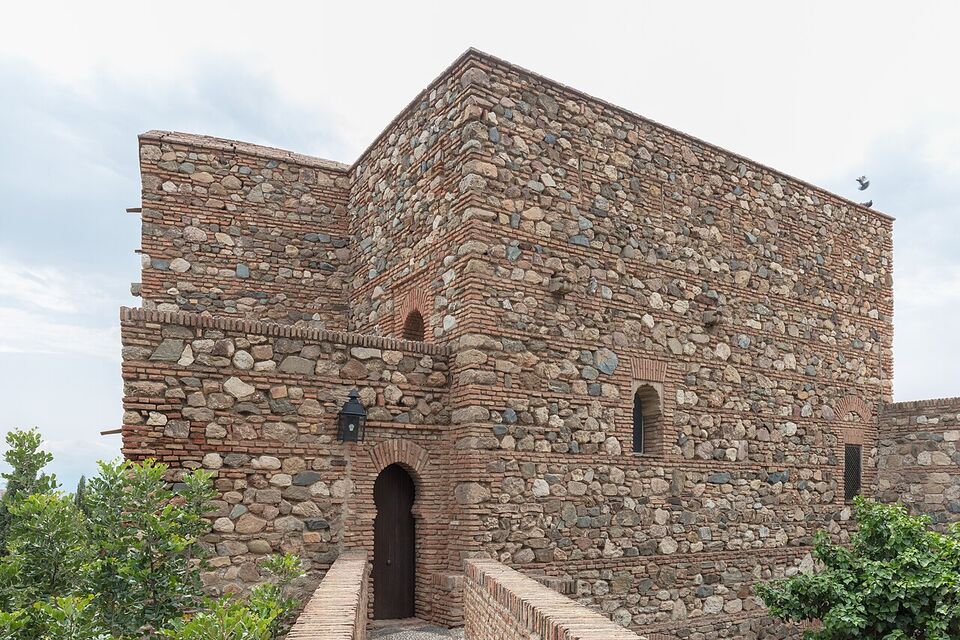
The 11th-century Moorish palace-fortress climbs the hill in terraces of patios and fountains; the Gibralfaro castle above has ramparts with the best view in town. Tickets are €7 (about $8) each or €10 (about $11) combined, free on Sundays from 2 p.m. Hours are 9 a.m. to 6 p.m. from November to March and to 8 p.m. from April to October.
Roman Theatre
A theater from the first century BC, rediscovered in 1951 under a demolished building. Free to visit, with a small interpretation center.
Cathedral
Locals call it La Manquita (the one-armed lady) because its south tower was never finished. Book the rooftop tour, which walks you across the vaulted roof with views over the port.
More museums
The Carmen Thyssen Museum (Spanish and Andalusian painting of the 1800s), the Museo de Málaga in the old customs palace (fine arts and archaeology), and the Centre Pompidou Málaga, under the glass cube on the port's Muelle Uno.
Atarazanas Market
The central food market, built behind a surviving Moorish shipyard gate, with a stained-glass window and bars serving fried fish and a glass of wine from late morning.
Beyond the center, the port promenade (Muelle Uno and the Palmeral de las Sorpresas) leads to La Malagueta, the city beach. The Soho district, between the center and the river, is covered in large street-art murals. North of the city, the Concepción historic botanical garden is a cool green escape on a hot afternoon.
Save money
Do the Alcazaba and Gibralfaro on a Sunday after 2 p.m., when entry is free, and walk the Roman Theatre any day for nothing. If you climb to Gibralfaro on foot, go up in the morning or late afternoon; the path is steep and unshaded. City bus 35 runs up the hill from the center.
Eating and drinking in Málaga
Málaga is a fish town. People from the city are nicknamed boquerones after the small anchovies they fry, and the signature dish is the espeto: sardines threaded on a cane skewer and grilled over a wood fire, often in an old boat filled with sand, at beach bars called chiringuitos. Go east to Pedregalejo and El Palo, former fishing villages now inside the city, for the best of them, at $–$$ prices.
- Pescaíto frito: mixed fried fish (anchovies, small squid, red mullet), shared from a plate.
- Ajoblanco: a cold soup of almonds, garlic and bread, served with grapes, older than gazpacho.
- Porra antequerana: a thick tomato and bread purée from nearby Antequera, topped with ham and egg.
- Málaga wine: sweet Moscatel and Pedro Ximénez. In old-style taverns it is poured from the barrel and your tab is chalked on the wooden counter.
Different from home
Málaga has its own coffee vocabulary, invented at a café on Plaza de la Constitución in the 1950s. A solo is an espresso, a mitad is half coffee and half milk, a sombra (shadow) is mostly milk and a nube (cloud) is a splash of coffee in hot milk. Breakfast is coffee and toast, often with olive oil and crushed tomato; lunch runs from 2 to 4 p.m., dinner from 9 p.m.
The tapas bars cluster in the old center around Calle Larios, Plaza de la Merced and the streets behind the cathedral; they are busiest from 8:30 p.m. A menú del día at lunch is the best deal in town. For more on ordering and meal times, see our Spanish food guide and Spanish wine guide.
The Costa del Sol, town by town
The coast is a near-continuous strip of development for about 60 miles (100 km) west of Málaga. Each town has a different feel, and choosing the right base matters more than choosing the right hotel.
| Town | From Málaga | Feel | Best for |
|---|---|---|---|
| Torremolinos | 20 min by C1 train | 1960s resort, lively, long beaches, an established LGBTQ+ scene | Budget beach weeks, nightlife |
| Benalmádena | 25 min by C1 train | Marina, cable car, family attractions; an old village up the hill | Families |
| Fuengirola | About 45 min by C1 train | Big expat community, long promenade, end of the train line | Easy beach base without a car |
| Mijas Pueblo | About 40 min by car | White hilltop village above Fuengirola | A half-day visit with views |
| Marbella | 45 min–1 hr by car or bus | Pretty old town, beach clubs, luxury resorts on the Golden Mile | Couples, golf, splurges |
| Puerto Banús | About 1 hr by car or bus | Yacht marina, designer shops, late nights | People-watching, nightlife |
| Estepona | About 1 hr 15 min by car or bus | Calmer old town with flowerpots and murals | A quieter base in the west |
| Nerja | About 1 hr by car or bus, east | Clifftop town, coves, the Nerja Cave | Couples, families, walkers |
Marbella
Marbella's old town is a maze of whitewashed lanes and flower-hung balconies around the Plaza de los Naranjos (Orange Tree Square). Along the coast west of town, the Golden Mile is lined with villas and luxury hotels, including the Marbella Club, a resort since the 1950s, and ends at the marina of Puerto Banús. Away from the beach clubs, Marbella is a real town with ordinary prices in its back streets.
Nerja and Frigiliana
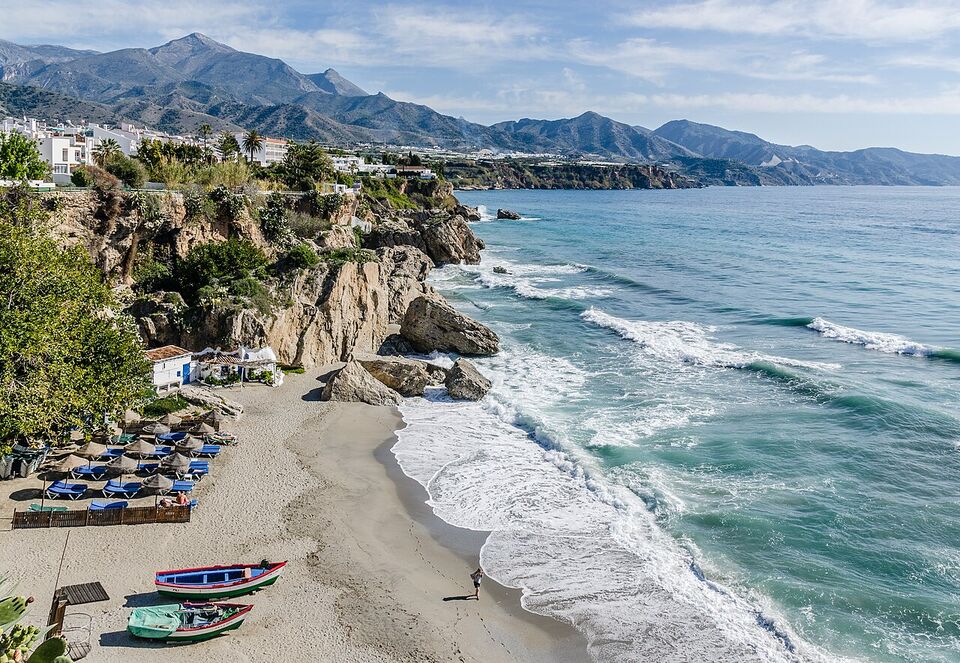
Nerja, east of Málaga at the foot of the Sierra Almijara, is the prettiest town on the coast. The Balcón de Europa, a promenade on a headland, looks out over small coves; Burriana beach is the family favorite. The Nerja Cave, discovered in 1959, has huge chambers and hosts summer concerts. Frigiliana, a white Moorish-era village 4 miles (6 km) inland, is a short bus ride away and best early or late in the day.
Watch out
The C1 commuter train stops at Fuengirola. There is no train to Marbella, Estepona or Nerja; you take an intercity bus from the Málaga bus station or the airport, or drive. If you want a car-free beach week, pick Torremolinos, Benalmádena or Fuengirola.
Beaches and the sea
Costa del Sol beaches are mostly coarse gray-brown sand or pebbles, with calm water, lifeguards in summer, sunbed and umbrella rentals and a chiringuito every few hundred yards. They are dependable and easy; for white sand and turquoise water, the Balearics or the Atlantic beaches of Cádiz in western Andalusia are better.
The water is cooler than many Americans expect: roughly 59 to 61°F (15 to 16°C) in winter and in the mid-70s°F (about 23 to 24°C) by August. Swimming season runs from June to October. Lifeguard flags work as at home (green, yellow, red), and jellyfish appear some summers; ask at the lifeguard post if you see warning signs.
- Málaga city beaches: La Malagueta (10 minutes from the center), then Pedregalejo and El Palo for fish lunches.
- Coves near Nerja: Burriana, Calahonda and, a little east, the Maro coves under the cliffs.
- Quieter sand: the dunes of Cabopino, east of Marbella.
- Topless sunbathing is common and legal on Spanish beaches; full nudity only on designated beaches.
Day trips inland
Caminito del Rey
A boardwalk pinned to the walls of a deep limestone gorge, once called the world's most dangerous path and rebuilt safely in 2015. The route is about 4.8 miles (7.7 km) one way, with about 1.8 miles (2.9 km) on the walkways. General tickets cost €10 (about $11), official guided visits €18 (about $20), and the shuttle bus back to the start €2.50 (about $3). Children under 8 are not allowed. Book on the official site, caminitodelrey.info, and check its schedule for closing days and wind closures.
Ronda
A town split by a gorge, joined by the 18th-century Puente Nuevo bridge, with one of Spain's oldest bullrings. Stay overnight to see it without the tour buses. See Andalusia's white towns.
Antequera
Prehistoric burial mounds (the Dolmens of Antequera, a UNESCO site) and the El Torcal nature reserve, a maze of eroded limestone towers with easy marked trails.
Granada
Possible as a long day trip if you have an Alhambra ticket, much better with a night. See Granada.
Gibraltar
The Rock, its macaques and the views to Morocco. Park on the Spanish side in La Línea and walk in with your passport; since the EU–UK treaty took effect in July 2026 there is no routine passport check at the land crossing, though customs limits still apply. See Spain with Gibraltar and Morocco.
Sierra de las Nieves
A national park since 2021, with Spanish fir forests and limestone peaks above Marbella and Ronda. See outdoors in Spain.
Where to stay
For a city break with day trips, stay in Málaga. For a beach week, choose a coast town by the table above. For a mix, split your stay.
Málaga old town
Walk to everything and to the beach. The streets are lively until late; ask for a room off the street on weekends.
Soho and the port
Modern hotels between the station and the center, handy for trains and early departures.
La Malagueta
Beachfront hotels a 10-minute walk from the old town. The Parador de Málaga Gibralfaro sits on the hill above, next to the castle, with a pool and terrace views.
Nerja
Small hotels near the Balcón de Europa and a modern parador on the cliff above Burriana beach, with a lift down to the sand.
Marbella
Boutique hotels in the old town, and resort hotels with beach clubs along the Golden Mile. August prices are among the highest in Spain.
Watch out
Housing costs have become a hot issue in Málaga. Residents marched against overtourism and rising rents in 2024 and 2025, and the city announced a moratorium on new tourist apartments in much of the city in 2025. Book only licensed rentals, which show an Andalusian registration number, and expect hotels to be the more reliable choice. See where to stay in Spain.
Getting there and getting around
By air
Málaga airport (AGP) is one of Spain's busiest, with flights from all over Europe. United has flown a seasonal summer nonstop from Newark; check whether it runs in 2027 when schedules are published. Otherwise, connect through Madrid, Barcelona, Lisbon, London or another European hub. See flights to Spain.
Airport to town
The airport is about 5 miles (8 km) from the center. The C1 Cercanías (commuter train) runs every 20 minutes to Málaga María Zambrano station and Centro-Alameda in about 12 minutes, and west to Torremolinos, Benalmádena and Fuengirola. An express bus runs to the center and the port, and intercity buses go straight to Marbella and Estepona. Taxis wait outside arrivals.
By train
Málaga María Zambrano station has high-speed trains to Madrid (about 2 hr 45 min to 3 hr), run by Renfe (AVE and its low-cost Avlo), Iryo and Ouigo, so fares are competitive if you book early. Córdoba is about an hour away and Seville about 2 hr. Book at renfe.com, iryo.eu or ouigo.com.
Watch out
After a fatal collision near Urda (Toledo) on October 28, 2026, high-speed trains between Madrid and Andalusia were suspended; Renfe stopped selling tickets on the route until December 13, 2026, though service may return sooner. Check Renfe, Iryo and Ouigo before you plan, and consider flying (about 1 hr 10 min from Madrid) or taking a long-distance bus in the meantime. Málaga–Seville trains were reported running normally. It caps a rough year for this line: after the fatal January crash near Adamuz (Córdoba), a landslide near Álora cut the direct Madrid–Málaga route until April 30, trains ran on a single track until July 17, and temporary speed limits near Córdoba were still adding time in October.
Driving
A car makes sense for Ronda, the white villages and the Caminito del Rey, and for staying outside the towns. The coast has two roads: the free A-7, busy and full of roundabouts, and the faster AP-7 toll road above it. Limits are 120 km/h (75 mph) on highways and 50 km/h (31 mph) or less in towns. Do not drive into central Málaga, which has a low-emission zone, limited parking and pedestrian streets. Our driving guide covers rentals, tolls and the International Driving Permit.
For cruise passengers, the terminals are a short shuttle ride or a 15 to 25-minute walk from the center; see cruises in Spain.
When to go
The Costa del Sol has the mildest winter on the European mainland. January days average about 63°F (17°C) with lows around 46°F (8°C), and many northern Europeans spend the season here. Summer is hot and humid, around 88°F (31°C) in August, and the terral, a hot dry wind from inland, can push the city past 100°F (38°C) for a day or two.
- Holy Week, March 21–28, 2027: Málaga's processions are among Spain's largest, with huge floats (tronos) carried by hundreds of bearers. Hotels book up months ahead. See festivals.
- Málaga Film Festival: usually March; check the 2027 dates when announced.
- Night of San Juan, June 23: bonfires and late-night parties on the city beaches.
- Feria de Málaga: a week of street parties and fairground nights in mid to late August; check the 2027 dates.
- Christmas: the light show on Calle Larios draws crowds from late November to early January. See Spain in December.
July and August are the most expensive and crowded months on the coast; May, June, September and October give you warm water with fewer people. See when to go to Spain.
Safety and practical tips
The US State Department rates Spain at Level 2, "Exercise increased caution," because of terrorism and civil unrest. On the Costa del Sol the everyday risks are theft from beach towels, rental cars and café tables, and drink spiking in nightlife areas such as Torremolinos and Puerto Banús. Do not leave bags visible in a parked car, especially at viewpoints and beach parking lots. See our safety guide.
- Sunscreen and water from April to October; the sun is stronger than it feels with a sea breeze. See health in Spain.
- Many shops in Málaga close from about 2 to 5 p.m. and on Sundays; supermarkets and malls stay open.
- Tap water is safe to drink.
- Spain uses Type C and F plugs at 230 volts; bring an adapter (see staying connected).
- Emergency number: 112.
A sample week
- Day 1
Old Málaga
Arrive, take the C1 into town, walk Calle Larios to the cathedral, and have espetos at sunset in Pedregalejo.
- Day 2
Picasso and the Alcazaba
The Picasso Museum at opening time, the Roman Theatre, the Alcazaba, and Gibralfaro for the view. Lunch in the Atarazanas market area, beach in the afternoon.
- Day 3
Caminito del Rey
Pick up a car and drive to El Chorro for a morning walk through the gorge, then on to Antequera for the dolmens and El Torcal.
- Day 4
Ronda
Drive to Ronda and stay the night to see the bridge at dusk.
- Day 5
Marbella
Back down to the coast through the mountains. Old town in the morning, beach afternoon.
- Day 6
Nerja and Frigiliana
Drive east past Málaga. The Nerja Cave, a swim at Burriana, then dinner in Frigiliana.
- Day 7
Departure
Return the car at the airport, or continue to Granada by bus.
Add it to a route in the trip builder, or ask us to plan the hotels, trains and guides for you.