Should you drive at all?
For the big cities, no. Madrid, Barcelona, Seville, Valencia, Bilbao and San Sebastián are compact, have good metro, tram or bus networks, and are connected by some of the fastest trains in Europe. A car in any of them costs you garage fees, low-emission rules and one-way streets that loop you back to where you started.
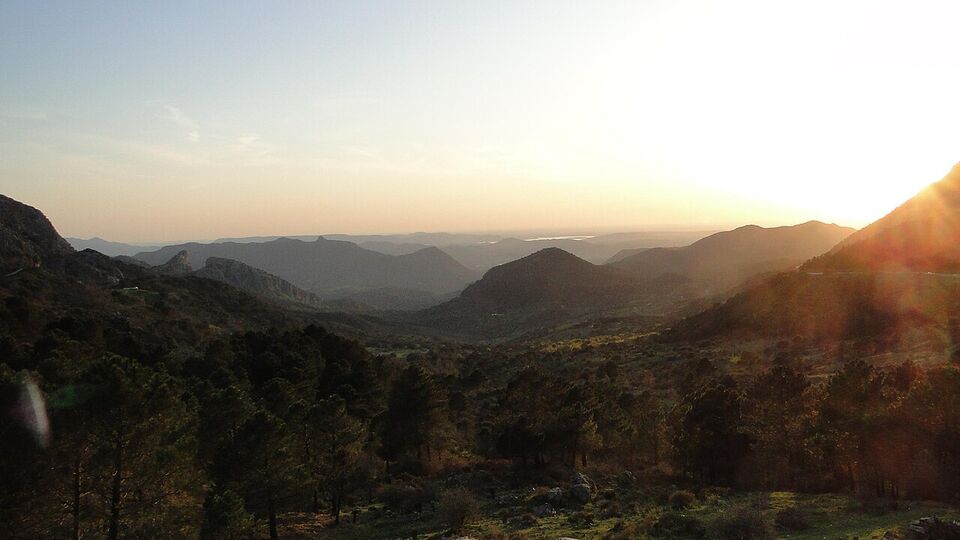
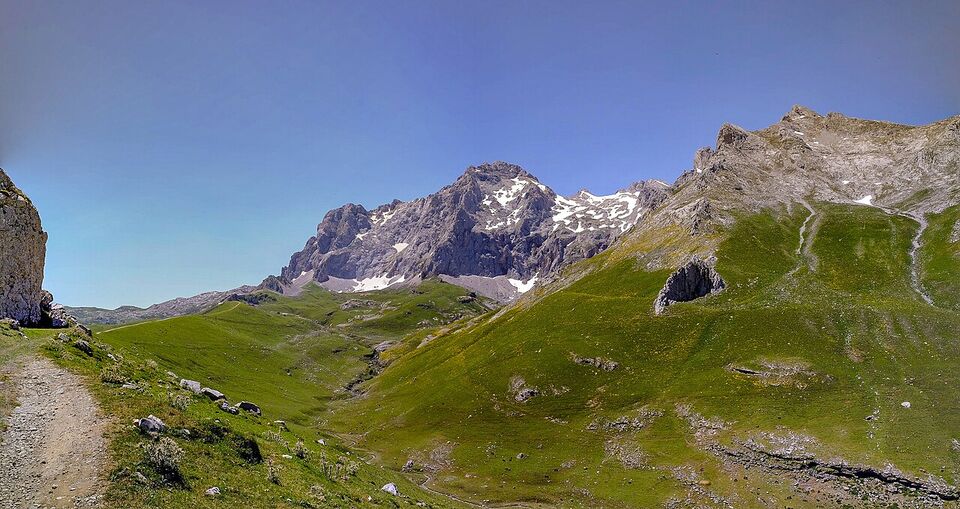
For the countryside, often yes. A car is the best way to see the white towns of Andalusia, the wineries of Rioja and Ribera del Duero, the green coast of Asturias and Cantabria, the Picos de Europa, the Costa Brava coves, and most of Mallorca, Menorca and the Canary Islands. Buses reach many of these places, but on schedules built around commuters and schoolchildren.
The plan that works for most first trips: take the train between cities, then pick up a car for the rural stretch and drop it before the next city. Madrid to Seville by AVE (or by air while the Madrid to Andalusia high-speed line is suspended after the October 28, 2026 Urda collision; check Renfe), a car for five days around Ronda, Cádiz and Jerez, then the train on to Granada or Córdoba. See Getting around Spain and the Andalusia road trip.
Insider tip
Rent from a station or airport desk, never a downtown office. Seville's Santa Justa station, Málaga airport and Madrid's Atocha station put you on a ring road within minutes, instead of threading through a historic center with camera-controlled streets on your first drive.
Your license and the International Driving Permit
The US State Department is blunt about this: you must get an International Driving Permit (IDP) before you arrive if you plan to drive in Spain, and it says renting a car without one is illegal. The IDP is a small booklet that translates your license. It is not a license on its own, so carry it together with your valid US license and your passport.
- Where to get it: only in the US, from AAA or the American Automobile Touring Alliance (AATA), the two groups the State Department authorizes. AAA charges about $20. You cannot get one once you are in Spain.
- What you need: your license, two passport-style photos and the form. An AAA office does it in minutes; by mail, allow a few weeks.
- How long it lasts: one year from issue. Check the date if you got one for an earlier trip.
- Who needs one: every driver named on the rental contract.
Some rental desks ask for the IDP and some never look. The person who matters is the Guardia Civil officer at a checkpoint or the insurer after an accident. Without it you risk a fine and a messy claim.
Different from home
Spanish police can fine visitors on the spot and hand you a receipt. If you live outside Spain and cannot pay there (cards are accepted), the car can be held until you do. Paying promptly usually earns a 50% discount, which is why officers ask whether you want to pay now.
Renting a car: insurance, automatics and the fuel trap
All the big international names operate in Spain alongside Spanish companies like Centauro and budget brands that crowd the airport halls at Málaga, Alicante, Palma and the Canary Islands. Prices swing hugely by season and by how far ahead you book. Summer and Holy Week rates on the coast and islands can be several times the winter price, so book as soon as your dates are firm.
Automatics
Most Spanish rental cars have a manual gearbox (cambio manual), and automatics (automático) are a smaller and pricier part of the fleet. If you cannot drive a stick shift, this is the single most important thing to get right.
- Book an automatic early, especially for July, August, Holy Week and the islands.
- Choose a category the company labels as automatic, and read the confirmation. "Or similar" refers to the model, so the transmission should be stated separately.
- Bring the confirmation to the desk. If they offer a manual, ask for an automatic in a higher class at no extra cost.
- Consider a hybrid or electric car. Most are automatic by design, and their environmental label makes city zones easier (see below).
Insurance and deposits
Spanish rental rates include the third-party liability insurance the law requires, and usually a collision damage waiver with a high deductible (the "excess") of often €1,000 or more (about $1,120). At the desk you will be offered a daily add-on that cuts the deductible to zero. If you decline it, expect a large hold on your credit card for the deposit, and some budget desks will refuse a debit card entirely.
Watch out
Budget airport desks in Spain are known for a hard sell at the counter: pricier insurance, upgrades and fuel packages. Decide before you arrive. If your US credit card covers rental cars, call the issuer, confirm that Spain is included and get it in writing, then decline politely and expect the bigger deposit hold.
Fuel policies
Choose full to full (lleno a lleno): you get the car with a full tank and return it full. The alternative, full to empty (lleno a vacío), charges you up front for a whole tank at the company's price plus a service fee, and refunds nothing you bring back. On a short trip, it can add more than the rental itself.
At the desk
- A credit card in the main driver's name, your US license, the IDP and your passport.
- Drivers under 25 usually pay a daily surcharge, and many companies set the minimum age at 21 with a license held for at least a year or two.
- Photograph or film the car all around, inside and out, before you drive off, and again when you return it.
- Check which fuel it takes (gasolina, gasoline, or gasóleo/diésel, diesel) and note it on your phone.
- Ask whether the car has a toll transponder (Vía-T) and how tolls will be billed.
- Check that the car carries a V-16 beacon and a reflective vest (see below).
- Ask about taking the car to Portugal, France or Gibraltar. Most companies allow it for a fee if you declare it; ferries to Morocco and between islands are usually forbidden.
Save money
One-way rentals between Spanish cities often carry a drop fee, and returning a car in another country (Lisbon, for example) can cost hundreds of euros. Loop back to where you started, and pair the loop with an open-jaw flight. See Flights and Spain with Portugal and France.
Motorways and tolls
Spain has two kinds of motorway, and the letters tell you which is which. An autovía (A-4, A-7) is a free, state-built dual carriageway. An autopista (AP-7, AP-6) was built by a private concession and may charge a toll (peaje). The signs are blue for both. When a toll is coming, the sign says peaje, and there is almost always a free alternative marked sin peaje or by its A-number.
Spain has scrapped tolls on many of its old motorways since 2018, as concessions expired. The AP-7 along the Mediterranean from the French border through Barcelona, Tarragona and Valencia, the AP-4 between Seville and Cádiz, and the AP-2 between Zaragoza and the coast are all free now. On November 10, 2026, the state concession on the AP-68 between Bilbao and Zaragoza expires. The Rioja, Navarra and Aragón sections then become free for cars, but the Basque sections in Álava and Bizkaia stay tolled under the Basque authorities, at lower rates and with barrier-free camera tolling.
Where you still pay
- The Costa del Sol: the AP-7 toll road between Málaga and Guadiaro, west of Marbella. The free A-7 runs parallel and is slower, busier and fine outside rush hour.
- Northwest of Madrid: the AP-6 over the Guadarrama mountains and its spurs to Segovia (AP-61) and Ávila (AP-51), handy for day trips.
- Madrid's radial motorways (R-2, R-3, R-4, R-5), which parallel free roads into the city.
- Galicia: the AP-9 linking A Coruña, Santiago, Pontevedra and Vigo. See Galicia.
- The Basque Country: the AP-8 and AP-1 near Bilbao and San Sebastián, run by the Basque provinces. See the Basque Country.
- León to Asturias: the AP-66 through the Huerna tunnels, the motorway route between Madrid and Oviedo. See northern Spain.
- Around Barcelona: some regional roads, such as the C-32 toward Sitges, have toll sections, though the rules there have shifted recently.
Rates and the list change as concessions end, so check your route on a mapping app with tolls shown, or on the operator's site, before a long drive.
How to pay
| Lane sign | What it takes | Use it? |
|---|---|---|
| Manual (a hand or a person) | Cash and cards, staffed or automatic | Yes, the safe choice |
| Tarjetas (cards) | Credit and debit cards only | Yes, with a backup card |
| Telepeaje or Vía-T | Electronic transponder only | Only if your car has one fitted |
On the Basque roads moving to barrier-free tolling, cameras read the plate and the charge reaches the vehicle's registered owner, which for a rental is the rental company. It then bills you, often with an admin fee. Ask at the desk how they handle it.
Speed limits and cameras
| Road | Car limit |
|---|---|
| Autopista and autovía | 120 km/h (75 mph); minimum 60 km/h (37 mph) |
| Other roads outside towns | 90 km/h (56 mph) |
| Towns and cities, streets with two or more lanes each way | 50 km/h (31 mph) |
| City streets with one lane each way | 30 km/h (19 mph) |
| Streets where sidewalk and road are one level | 20 km/h (12 mph) |
Posted limits override these defaults, and they change often near junctions, tunnels and villages, so watch the round signs with a red border. Spain has also dropped the old allowance to exceed the limit while overtaking on two-lane roads.
Speed cameras (radares) are everywhere: fixed boxes, mobile units in parked cars, cameras on DGT helicopters and drones, and tramos de control that measure your average speed over a stretch of several miles. Fixed cameras are usually signed. Fines start around €100 (about $110) and climb with the speed; they reach you through the rental company, which adds its own handling fee, sometimes weeks or months later.
Rules that surprise Americans
- No right turn on red, ever, unless a flashing amber arrow or a green arrow allows it.
- Alcohol: the limit is 0.5 grams per liter of blood (0.05%), and 0.3 (0.03%) for drivers licensed less than two years. Fines run €500–1,000 (about $560–1,120). Police run frequent breath tests, including random checkpoints on Sunday mornings and holiday evenings. The government is preparing a rule to cut the general limit to 0.2 grams (0.02%); it was still a draft in autumn 2026. With wine at lunch, the only safe rule is not to drive after drinking.
- Phones: hands-free only. Holding a phone while driving costs €200 (about $225), even stopped at a light.
- Seat belts for everyone, front and back, including in taxis.
- Children under 135 cm (about 4 ft 5 in) must ride in a suitable car seat or booster, and in the back seat, with few exceptions. Reserve seats with the rental, or bring your own.
- Roundabouts (rotondas): traffic already in the circle has priority. Spanish drivers use the inner lanes to go around and move to the outer lane before exiting; exiting from an inner lane across traffic is a common cause of fender-benders.
- Overtaking on the left only, and move back right after passing on the motorway. Hogging the left lane gets you a flash of headlights.
- Headphones and anything that blocks hearing are banned while driving.
The V-16 beacon has replaced warning triangles
Since January 1, 2026, every Spanish-registered car, including every rental, must carry a V-16 connected beacon: a small battery light you switch on and stick to the roof from inside the car after a breakdown or accident. It flashes amber in every direction and sends your location to the DGT (Dirección General de Tráfico, the national traffic authority), which warns other drivers through navigation apps and road signs. Triangles no longer count for Spanish cars. The fine for not carrying a beacon is €80 (about $90), so check it is in the glove box before you leave the rental lot. The beacon does not call for help; you still call 112 or the rental company.
Keep the reflective vest inside the car, not in the trunk, and put it on before you step out onto the road.
Different from home
Spanish drivers are fast on the motorway and patient in villages. Expect cars to tailgate if you sit in the left lane, motorbikes to filter between lanes in Madrid and Barcelona, and drivers to stop for pedestrians at zebra crossings, which is the law. Pedestrians step out expecting you to stop, so do.
Low-emission zones and environmental labels
Every Spanish city of more than 50,000 people is required to set up a low-emission zone (zona de bajas emisiones, ZBE), and the big ones enforce them with cameras. Access depends on the car's DGT environmental label (distintivo ambiental), a round sticker on the windshield:
| Label | Cars |
|---|---|
| 0 (blue) | Fully electric and long-range plug-in hybrids |
| ECO (blue and green) | Hybrids and gas-powered cars |
| C (green) | Recent gasoline and diesel cars |
| B (yellow) | Older gasoline and diesel cars |
| No label | The oldest cars, banned from most zones |
A current rental car will have a C, ECO or 0 label, so you can drive in nearly every zone. The exceptions are the tight inner zones:
- Madrid: the whole city is a low-emission zone, and the historic center (Distrito Centro) is stricter. Cars with a B or C label may enter it only to park in a public garage or a private space; ECO and 0 cars move freely. If your hotel is inside, ask it how to register your plate. See Madrid.
- Barcelona: the ZBE Rondes covers the area inside the ring roads, on weekdays from 7 a.m. to 8 p.m. Rental cars with a label are fine. See Barcelona.
- Historic centers: many old towns, including the Albaicín in Granada, the old quarters of Córdoba and Toledo, and Santiago de Compostela, are closed to non-resident traffic by cameras or bollards. Your GPS will happily route you through them. Park outside and walk in.
Parking and the color code
Street parking in Spanish cities is regulated by colored lines, and the rules are posted on a sign at the start of each block.
| Lines | Meaning |
|---|---|
| Blue (zona azul, also called ORA or SER) | Paid, time-limited parking. Pay at the machine or with an app such as ElParking, Telpark or EasyPark. Limits are often two to four hours. |
| Green (zona verde) | Mainly for residents. In Madrid, visitors may park only briefly and pay more. |
| White | Free, unless a sign says otherwise. |
| Yellow | No parking: loading, taxis, bus stops or permit holders. |
- Paid hours vary by city, and many charge nothing on Saturday afternoons, Sundays and holidays. In August some towns stop charging.
- Cars left in tow-away spots (grúa, tow truck) go to the municipal lot, and getting one back costs well over €100 plus a daily storage fee.
- In Madrid, Barcelona and Seville, an underground garage (blue sign with a white P) is the easy answer. Central garages can cost more than €30 (about $34) a day; many sell cheaper 24-hour or multi-day passes through their own apps.
- In white towns like Ronda, Arcos and Vejer, use the signed car parks below the old town and walk up.
- Never leave luggage or anything visible in a parked car, especially at beach car parks, viewpoints and on the Costa del Sol. Break-ins of rentals are common.
Fuel and charging
Fuel is sold by the liter and costs much more than in the US. On October 10, 2026, Spain's national averages, based on the Ministry for the Ecological Transition's station data, were about €1.78 a liter for 95 gasoline (about $7.55 a US gallon) and €1.89 a liter for diesel (about $8 a US gallon). Both had risen since August after a spike in late September, so expect them to move during your trip. A compact car's 50-liter tank of gasoline costs roughly €89 (about $100).
- Gasolina 95 (also sin plomo 95) is regular unleaded; 98 is premium. Gasóleo or diésel is diesel, often labeled Gasóleo A. Putting in the wrong one is expensive.
- Many stations are self-service (autoservicio), and some ask you to pay inside before pumping. Tell the cashier your pump number and an amount, or leave your card.
- Unstaffed discount stations take cards at the pump; some US cards without a PIN fail there, so carry a backup card and some euros.
- Fuel in hypermarkets and on the edge of town is usually cheaper than on motorways and near airports. The ministry's Geoportal map and apps built on its data show prices by station.
- Electric cars: charging is easy in cities and along main motorways, thinner in rural Castile and Aragón. Several networks need their own app, so download two or three before you rent an EV.
Region by region
Andalusia. Excellent motorways connect Seville, Málaga, Granada and Córdoba. The roads to the white towns are good but winding, and old-town streets in Arcos, Vejer and Frigiliana were built for donkeys. Summer heat over 104°F (40°C) inland is normal, so drive early and keep water in the car. See Andalusia and Málaga and the Costa del Sol.
The green north. The coastal A-8 through Cantabria and Asturias is free and scenic. Roads into the Picos de Europa are narrow, and the road to the Covadonga lakes is closed to private cars at busy times, with a bus instead. Rain and fog are common.
Mountains in winter. In the Pyrenees, the Sierra Nevada above Granada and high passes in León and the Picos, snow chains or winter tires may be required from November to April. Ask the rental company, and check the DGT's live road conditions before you set out.
The islands. Rent on each island; inter-island ferries usually do not allow rental cars. On Mallorca, the road to Sa Calobra is all hairpins and tour buses, and the Formentor peninsula closes to private cars for much of the day in summer, with a bus instead. On the Canary Islands, a car is close to essential on Tenerife, Lanzarote, La Palma and Fuerteventura; the trail to the summit of Mount Teide needs a permit booked well ahead (€15, about $17, for visitors from outside the Canaries since January 2026).
Over the border. Portugal's motorways have electronic tolls; ask the rental company how its cars pay them. Since the July 2026 EU-UK treaty there are no routine passport checks at the Gibraltar crossing, but customs checks continue and traffic and parking on the Rock are tight, so most visitors park in La Línea and walk across. Cars rented in Spain rarely go to Morocco.
Insider tip
Spaniards eat lunch from about 2 to 4 p.m., and many rural petrol stations, shops and village restaurants close in that window and on Sunday afternoons. Plan fuel stops and a picnic or a set lunch (menú del día) around it. See Food.
Breakdowns, accidents and emergencies
- Pull as far off the road as you can, turn on the hazard lights and switch on the V-16 beacon from inside the car.
- Put on the reflective vest before you get out, and wait behind the barrier, away from traffic.
- Call 112 if anyone is hurt or the road is blocked. Operators can connect you with an English speaker.
- For a minor accident with another car, fill in the joint accident report (declaración amistosa de accidente), usually in the glove box, with the other driver. Photograph both cars, the plates and the other driver's documents. Do not sign anything you do not understand.
- Call the rental company's roadside assistance number, on the key tag or contract.
For theft, scams and emergency contacts, see Safety; for medical care, Health.
Add it to a route in the trip builder, or ask us to plan the hotels, trains and guides for you.