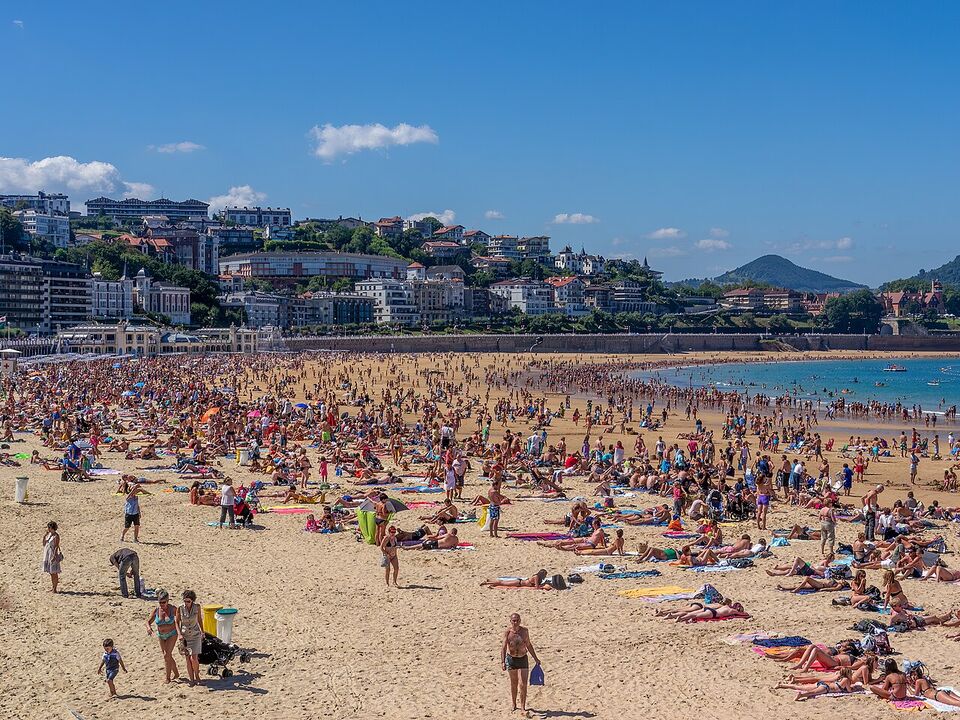
The short answer
For a first trip that covers Madrid, Barcelona and Andalusia, aim for late April through early June or mid-September through October. Days are warm enough to eat outside, nights are comfortable, the sea is swimmable from June to October, and you avoid the worst of the summer heat and the August crowds on the coast.
Spain is big, about three-quarters the size of Texas, and its climates differ more than the beach posters suggest. The interior plateau around Madrid has hot summers and cold winters. Andalusia gets brutal summer heat and mild, sunny winters. The green north (Galicia, Asturias, Cantabria and the Basque Country) is cooler and wetter, a little like the Pacific Northwest. The Canary Islands, off the coast of Africa, stay springlike all year.
So the right month depends on where you are going. A November trip to Seville, Granada and Málaga can be lovely; a November week in Santiago de Compostela can be gray and wet. A July week in San Sebastián is perfect; a July week in Córdoba is a test of endurance. Use this page with the region pages, the festivals guide and the month pages for November, December and January.
Seasons by region
The averages below are typical highs and lows from Spain's national weather service, AEMET. Treat them as a guide: recent summers have run hotter than these long-term averages, and a cold snap can bring frost to Madrid or snow to Granada.
| Region | Spring (Apr–May) | Summer (Jul–Aug) | Autumn (Oct) | Winter (Jan) |
|---|---|---|---|---|
| Madrid and Castile | Highs 64–75°F (18–24°C) | Highs about 90°F (32°C), dry | Highs about 66°F (19°C) | Highs about 50°F (10°C), frosty nights |
| Seville, Córdoba, inland Andalusia | Highs 75–82°F (24–28°C) | Highs 95–97°F (35–36°C), often hotter | Highs about 79°F (26°C) | Highs about 61°F (16°C) |
| Barcelona and the Catalan coast | Highs 66–72°F (19–22°C) | Highs about 84°F (29°C), humid | Highs about 72°F (22°C) | Highs about 57°F (14°C) |
| Málaga and the Costa del Sol | Highs 70–75°F (21–24°C) | Highs about 88°F (31°C) | Highs about 77°F (25°C) | Highs about 63°F (17°C) |
| Basque Country, Cantabria, Asturias, Galicia | Highs 61–68°F (16–20°C), showers | Highs 75–79°F (24–26°C) | Highs about 68°F (20°C), rain returns | Highs about 54°F (12°C), wet |
| Canary Islands (coast) | Highs about 73°F (23°C) | Highs about 81°F (27°C) | Highs about 79°F (26°C) | Highs about 70°F (21°C) |
Madrid and the interior
Madrid sits about 2,130 feet (650 m) up on the central plateau, which explains its dry air, big temperature swings and blue winter skies. Spring and autumn are glorious. Summer afternoons are hot but dry, and evenings on a terrace are part of the point. In winter, pack a real coat: January nights often hover near freezing, and Segovia, Ávila and Salamanca are colder still.
Andalusia
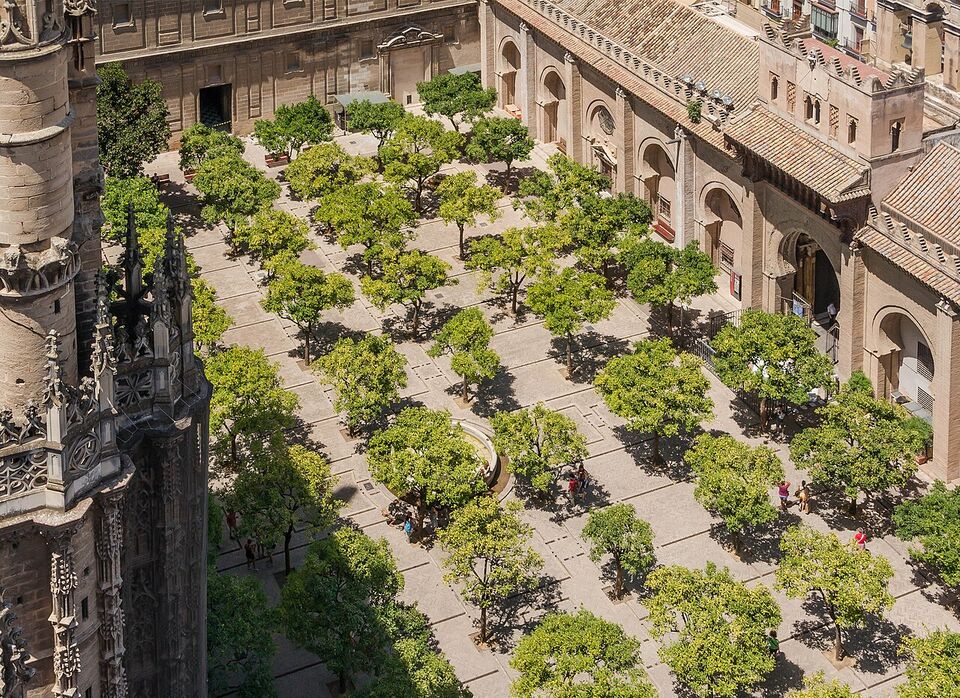
Seville, Córdoba and the Guadalquivir valley are among the hottest places in Europe in July and August. Locals stay inside from about 2 to 8 p.m., and sightseeing in that window is miserable. Granada is a little cooler thanks to its altitude, and the coast around Málaga and Cádiz is tempered by the sea. Winter is the region's secret: highs in the 60s°F, oranges on the trees and short lines at the Alhambra. See Seville, Granada and Andalusia.
The green north
Bilbao, San Sebastián, Santander, Oviedo and Santiago get rain in every month, with the wettest stretch from November to March. In return, summer is the most comfortable in Spain, with highs in the 70s°F when Seville is baking. This is where Spanish families escape the heat, so book July and August rooms in San Sebastián early. See the Basque Country, northern Spain and Galicia.
The islands
The Balearics (Mallorca, Menorca, Ibiza) have a classic Mediterranean season: busy and hot from June to September, quiet and partly shuttered from November to March, when many beach hotels and island ferries reduce service. The Canary Islands are the winter sun destination, warm enough for the beach in January. They also run one hour behind mainland Spain, the same as London.
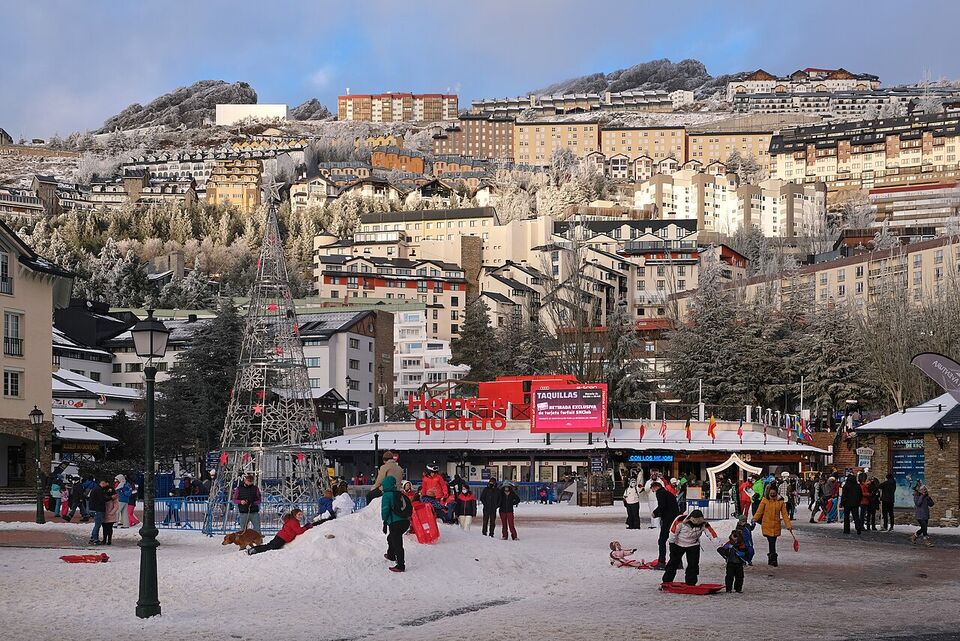
Summer heat, wildfires and storms
Recent Spanish summers have been the hottest on record, with repeated heat waves pushing inland Andalusia, Extremadura and the Madrid region above 104°F (40°C) for days at a time. AEMET issues yellow, orange and red heat warnings by province. If you travel in July or August, plan sightseeing for the morning, take a long lunch and a rest, and go back out after 8 p.m. like everyone else.
Summer is also wildfire season. August 2025 brought some of the worst fires in decades to Galicia, Castile and León and Extremadura, closing roads and some rail lines. If you plan to hike in summer, check regional fire warnings, which can close trails and forest tracks on high-risk days. See safety and health for heat precautions.
Late summer and autumn bring the opposite risk on the Mediterranean coast: sudden torrential storms that Spaniards call a DANA (a cut-off low pressure system). The October 2024 DANA caused deadly flash floods around Valencia. From September to November, take official weather alerts seriously, keep away from dry riverbeds and underpasses during heavy rain, and follow instructions sent to your phone through Spain's emergency alert system.
Different from home
Many older Spanish hotels, apartments and even some restaurants have weaker air conditioning than Americans expect, and some rural houses in the north have none. In summer, check that "air conditioning" is listed for the room itself as well as the lobby. In winter, the reverse applies: stone houses and older apartments can feel cold indoors.
Crowds and prices
Spain received a record number of international visitors in 2025, and the pressure shows in Barcelona, Palma, Málaga, San Sebastián and the Canary Islands, where residents have held protests against mass tourism and short-term rentals. Visiting outside peak season is the single best thing you can do for your budget and your experience.
- Peak: late June to early September on the coasts and islands, Holy Week everywhere in Andalusia, Christmas and New Year in Madrid and Barcelona. Expect the highest hotel rates and sold-out timed tickets.
- Shoulder: April to mid-June and mid-September to October. Prices are high in the big cities (these are the busiest months for city sightseeing), but the coasts are calmer and cheaper.
- Low: November to mid-March, outside the holidays. City hotels can cost a third less than in May, and the Alhambra and Sagrada Família are easier to book, though still not walk-up easy.
Watch for event spikes. Barcelona hotel prices jump for the Mobile World Congress (late February or early March) and for big football weekends, Madrid fills for the FITUR tourism fair in January and for major concerts, Seville's rates can triple during Holy Week and the April Fair, and Pamplona is booked solid for San Fermín. The where to stay page covers booking tactics and the tourist taxes, which are highest in Catalonia and the Balearics in summer.
Save money
The cheapest round-trip fares from the US usually fall between November and March, excluding the holidays. Pair that with Andalusia or the Canaries and you get warm weather, lower rates and emptier monuments. Book trains as soon as sales open, since Renfe, Iryo and Ouigo fares rise as seats sell. See flights and getting around.
August and Sunday closures
August is Spain's vacation month. Madrid empties out as residents head to the coast or their family village, and many family-run restaurants, tapas bars and shops close for two to four weeks, often with a handwritten cerrado por vacaciones (closed for vacation) sign on the door. Big museums, monuments and chain restaurants stay open, and the city is calmer, but some of the places you read about may be shut. Check opening dates before you cross town.
The flip side: the coasts, islands and northern beach towns are at their most crowded and expensive in August, and roads out of the big cities jam on the first and last weekends of the month.
Year-round, Sunday is quieter than Americans expect. Many shops close (rules vary by region, and big-city tourist zones are more relaxed), some restaurants close Sunday evening and Monday, and many museums close on Monday. Plan your Sundays around markets that open (Madrid's El Rastro flea market runs Sunday mornings), long lunches and parks.
Different from home
Spaniards eat lunch around 2 to 3:30 p.m. and dinner at 9 or later, even later in summer. Many restaurants do not open their kitchens for dinner before 8:30. In August heat, the whole day shifts later still. See food and etiquette.
Public holidays 2026–2027
Spain has national public holidays, regional ones and local ones, so a date that is a normal working day in Madrid may be a holiday in Barcelona. On holidays, banks, most shops and many offices close; museums often keep Sunday hours; trains and buses run reduced schedules and sell out. When a holiday falls on a Tuesday or Thursday, many Spaniards take a puente (bridge) to make a four-day weekend, which fills hotels and trains.
| Date | Holiday | Where |
|---|---|---|
| Sun Dec 6, 2026 | Constitution Day | National; some regions move it to Monday Dec 7 |
| Tue Dec 8, 2026 | Immaculate Conception | National; a big puente weekend |
| Fri Dec 25, 2026 | Christmas Day | National |
| Sat Dec 26, 2026 | Sant Esteve (St. Stephen) | Catalonia and the Balearics |
| Fri Jan 1, 2027 | New Year's Day | National |
| Wed Jan 6, 2027 | Epiphany (Three Kings) | National |
| Thu Mar 25, 2027 | Holy Thursday | Most regions, but not Catalonia (and often not the Valencia region; check its calendar) |
| Fri Mar 26, 2027 | Good Friday | National |
| Mon Mar 29, 2027 | Easter Monday | Catalonia, Valencia region, Balearics, Basque Country, Navarra and others |
| Sat May 1, 2027 | Labor Day | National |
| Sun Aug 15, 2027 | Assumption | National |
| Tue Oct 12, 2027 | National Day of Spain | National |
| Mon Nov 1, 2027 | All Saints' Day | National |
| Mon Dec 6 and Wed Dec 8, 2027 | Constitution Day, Immaculate Conception | National |
| Sat Dec 25, 2027 | Christmas Day | National |
Regions add their own days: Catalonia on September 11 (La Diada), Andalusia on February 28, Madrid on May 2, the Valencia region on October 9, Galicia on July 25 (St. James, also Santiago's big festival day). Regional governments sometimes move a holiday that falls on a Sunday, so check the official 2027 calendar for the region you will be in once it is published.
Watch out
On Good Friday and Easter weekend, and on the eve of a puente, trains out of Madrid and Barcelona sell out weeks ahead. Lock in train seats as soon as you know your dates.
Big festivals 2026–2027
Spain's festival calendar is a reason to travel and a reason to plan carefully, since the biggest events fill every bed in town. The festivals guide has the detail; here are the dates that shape travel plans.
- Christmas season (December 2026 to January 6, 2027): lights in Madrid, Barcelona and Vigo, Christmas markets in Madrid's Plaza Mayor and outside Barcelona Cathedral, the El Gordo lottery draw on December 22, grapes at midnight on New Year's Eve, and Three Kings parades on the evening of January 5. See December and January.
- Carnival (around February 9, 2027): Cádiz and Santa Cruz de Tenerife hold the biggest carnivals, running over several days around the Tuesday before Ash Wednesday.
- Las Fallas, Valencia (March 15–19, 2027): giant satirical sculptures, daily firecracker barrages at 2 p.m. in the Plaza del Ayuntamiento, and the burning of the fallas on the night of March 19. Events build from March 1.
- Semana Santa (March 21–28, 2027): Holy Week processions in every town, most spectacular in Seville, Málaga, Granada, Valladolid and Zamora. Holy Week is early in 2027, so expect cooler evenings than in an April year.
- Feria de Abril, Seville (mid-April 2027): a week of tents, horses, flamenco dresses and rebujito (sherry with lemon soda). It traditionally falls about two weeks after Easter; confirm the city's official 2027 dates before booking.
- May in Andalusia: Córdoba's Cruces de Mayo and the Patios festival, the Jerez Horse Fair and the El Rocío pilgrimage on Pentecost weekend (mid-May in 2027).
- San Isidro, Madrid (around May 15): the city's patron saint festival, with free concerts and traditional dress.
- San Juan (night of June 23): bonfires and beach parties along the Mediterranean; Alicante's Hogueras burn on June 24.
- San Fermín, Pamplona (July 6–14): the running of the bulls. Rooms sell out a year ahead. See Rioja and Navarra.
- August fiestas: San Sebastián's Semana Grande and Bilbao's Aste Nagusia (both mid-August), Barcelona's Festa Major de Gràcia, and La Tomatina in Buñol (the last Wednesday of August, so August 26, 2026 has passed and the next is August 25, 2027). La Tomatina is ticketed with a capped number of participants.
- Autumn: the San Sebastián Film Festival (September), Barcelona's La Mercè (around September 24), grape harvest festivals in Rioja and Jerez (September), and Zaragoza's Fiestas del Pilar (around October 12).
Spain month by month
November
Mild and sunny in Andalusia and the Canaries, rainy in the north, crisp in Madrid. Prices drop, autumn colors reach the Pyrenees and the Picos de Europa, and the Sierra Nevada ski season usually opens in late November or early December, snow permitting. More on the November page.
December
Short days and cold nights inland, but the cities glow with Christmas lights and markets. Rates rise around the December 6–8 puente and from Christmas to January 6. See December.
January
Three Kings on January 5–6 is the high point of the Spanish Christmas. After that, January is the cheapest month of the year, and the winter rebajas (sales) start on January 7. See January.
February
Almond trees blossom in Mallorca and Málaga province, Carnival comes to Cádiz and Tenerife, and the Jerez Flamenco Festival usually starts in late February. Still quiet and cheap almost everywhere.
March
Las Fallas in Valencia, and in 2027 Holy Week at the end of the month. Andalusia warms into the 70s°F. Spain moves its clocks forward on March 28, 2027, two weeks after the US does, so for those two weeks Madrid is five hours ahead of New York instead of six.
April
One of the best months for Andalusia, with orange blossom in Seville and the April Fair. Barcelona and Madrid are pleasant but busy. Sea still too cold for most swimmers.
May
Arguably the best month overall: long days, flowers, Córdoba's patios, Madrid's San Isidro, and warm but rarely extreme heat. Book Andalusia and the Alhambra early.
June
Beach season starts, the north turns green and gold, and the Camino routes fill with walkers. Seville and Córdoba start getting very hot by late June. San Juan bonfires on June 23.
July
Hot inland, crowded on the coasts and islands, perfect in the north. San Fermín in Pamplona. Summer rebajas start July 1.
August
Peak beach month and peak prices on the coast; Madrid half closed. Good for the Basque coast, Asturias, Galicia and the Pyrenees if you book early. Watch heat and fire warnings.
September
The sea is at its warmest, crowds thin after the first week, the harvest starts in Rioja and Jerez, and cities come back to life. Watch for late-summer storms on the Mediterranean.
October
Excellent nearly everywhere: warm in the south, mild in Madrid and Barcelona, with good food and wine season in the north. Clocks go back on the last Sunday of October, one week before the US. DANA storm risk persists on the east coast.
Best time by trip type
First trip: Madrid, Barcelona, Andalusia
Late April to early June or late September to October. If you can only go in summer, start in the cities early in the morning and add a few days on the northern coast instead of the Costa del Sol. Start with plan your trip.
Beach week
June and September give warm water without August prices. For winter sun, go to the Canary Islands from November to March. See the Balearics and the Costa del Sol.
Camino de Santiago
May, June and September are the sweet spot. July and August are hot on the meseta and crowded on the last 62 miles (100 km); winter means closed albergues and rain. See the Camino.
Food and wine
September and October for the harvest, wild mushrooms and cider season starting in January in the Basque cider houses. See food and wine.
Hiking and mountains
Mid-June to early October for high trails; spring and autumn for lower routes in Andalusia and Mallorca's Serra de Tramuntana. Skiing in the Sierra Nevada and Pyrenees from about December to April. See outdoors.
Families
US summer break overlaps with Spain's peak season and its hottest weather. Favor the north or the islands in July and August, or use spring break for Andalusia. See Spain by interest.
What to pack for the season
- Summer: breathable clothes, a hat, high-SPF sunscreen and a refillable bottle (tap water is safe almost everywhere). Shoulders covered for churches and cathedrals.
- Spring and autumn: layers, a light rain jacket, and a sweater for evenings in Madrid and the north.
- Winter: a warm coat for Madrid, Castile and Granada nights; waterproof shoes for the north; swimwear for the Canaries.
- Year-round: comfortable walking shoes for cobblestones and hilltop old towns, and a cross-body bag for crowded metros.
See the full packing list, and check the latest State Department advice on our safety page before you go.
Add it to a route in the trip builder, or ask us to plan the hotels, trains and guides for you.