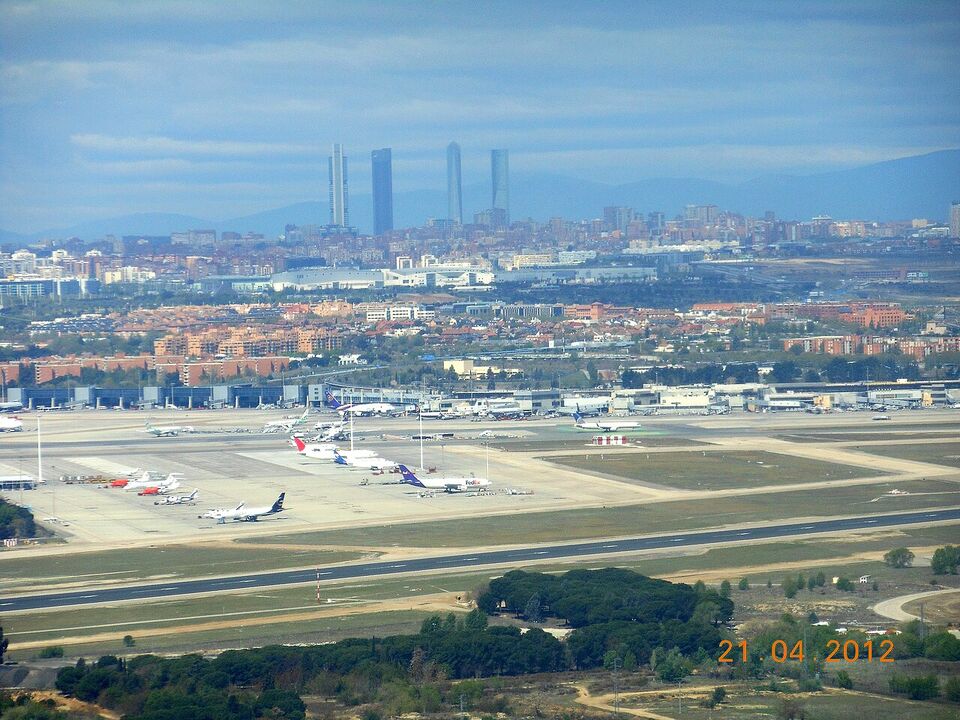
Getting to Spain from the US
Spain is one of the best-connected countries in Europe for American travelers. Madrid is the main hub for flights between Europe and Latin America, so Iberia and its partners run a deep schedule to the US, and Barcelona has grown into a second transatlantic gateway with nonstops on four US airlines plus Spain's own Iberia-group carriers. In summer, United adds seasonal nonstops from Newark to the Spanish leisure airports, and 2026 brought several new routes.
If your city has no nonstop, connecting is easy: through a US hub, or through Lisbon, London, Paris, Amsterdam, Frankfurt, Dublin or Reykjavík. This page covers the nonstops, the airlines, booking strategy, every major airport transfer and the trip home. For your arrival paperwork, see entry rules.
Nonstop routes from the US
The table below shows the nonstop routes listed for winter 2026–2027 and summer 2026. Airlines adjust schedules every season, and "seasonal" routes typically run from spring to early fall. Always confirm on the airline's site before you plan around a route.
| Spanish airport | US cities with nonstops | Airlines |
|---|---|---|
| Madrid (MAD) | New York JFK, Newark, Boston, Washington Dulles, Philadelphia, Charlotte, Atlanta, Chicago O'Hare, Miami, Orlando, Dallas/Fort Worth, Los Angeles, San Francisco, plus San Juan, Puerto Rico | Iberia, American, Delta, United, Air Europa, JetBlue |
| Barcelona (BCN) | New York JFK, Newark, Boston, Washington Dulles, Philadelphia, Atlanta, Chicago O'Hare, Miami, Dallas/Fort Worth, Seattle, Los Angeles, San Francisco (Charlotte returns May 2027) | American, Delta, United, JetBlue, Level |
| Málaga (AGP) | Newark (seasonal) | United |
| Palma de Mallorca (PMI) | Newark (seasonal) | United |
| Bilbao (BIO) | Newark (seasonal) | United |
| Santiago de Compostela (SCQ) | New York area (seasonal, launched May 2026) | United |
Madrid
Iberia is the biggest player, flying from Madrid to New York JFK (twice daily), Boston, Washington Dulles, Chicago, Miami, Orlando, Dallas/Fort Worth, Los Angeles and San Juan, with seasonal flights to San Francisco and to Newark, which Iberia added in March 2026. Its joint business partners American and British Airways sell many of the same flights, so you will often see an Iberia flight under an American flight number.
American flies to Madrid from Dallas/Fort Worth, Philadelphia, Charlotte, Miami and JFK, with Chicago in summer. Delta flies from Atlanta and JFK and added a seasonal Boston route in May 2026. United flies from Newark and Washington Dulles. Air Europa, Spain's second long-haul airline and a SkyTeam member, flies from Miami and JFK. JetBlue flies a seasonal Boston route.
Barcelona
Barcelona's US flights are spread among more airlines. Delta flies from Atlanta and JFK year-round, plus Boston and a new Seattle route (from May 2026) in summer. American flies from Miami and Philadelphia year-round and from JFK, Chicago and Dallas/Fort Worth in summer; its Charlotte route is scheduled to return on May 28, 2027. United flies from Newark and Washington Dulles, adding Chicago and San Francisco in summer. JetBlue began seasonal Boston flights in April 2026.
Level, the low-cost long-haul airline of Iberia's parent group IAG, flies from Barcelona to JFK, Boston, Miami and Los Angeles, with San Francisco in summer. Its base fares are often the cheapest nonstop option, but checked bags, seat selection and meals cost extra, so compare the total.
Leisure airports and new routes
United is the only US airline flying nonstop to Spain's smaller airports, all seasonally from Newark: Málaga for the Costa del Sol, Palma for Mallorca, Bilbao for the Basque Country and, from late May 2026, Santiago de Compostela for Galicia and the end of the Camino. The Santiago flight ran three times a week until mid-September in its first summer. Check whether these routes return for summer 2027 and on what dates, since seasonal flights are announced months ahead and can change.
Insider tip
Seville, Granada, Valencia, Alicante and the Canary Islands have no US nonstops. For Seville and Córdoba, fly into Madrid and take the high-speed train (about 2 hr 30 min to Seville when the line is running). After a fatal collision near Urda on October 28, 2026, high-speed trains between Madrid and Andalusia were suspended and Renfe stopped selling tickets on the route until December 13, 2026, so until service returns, connect by air to Seville or Málaga instead. For Valencia, Madrid plus the train (about 1 hr 45 min) usually beats a connecting flight. See getting around.
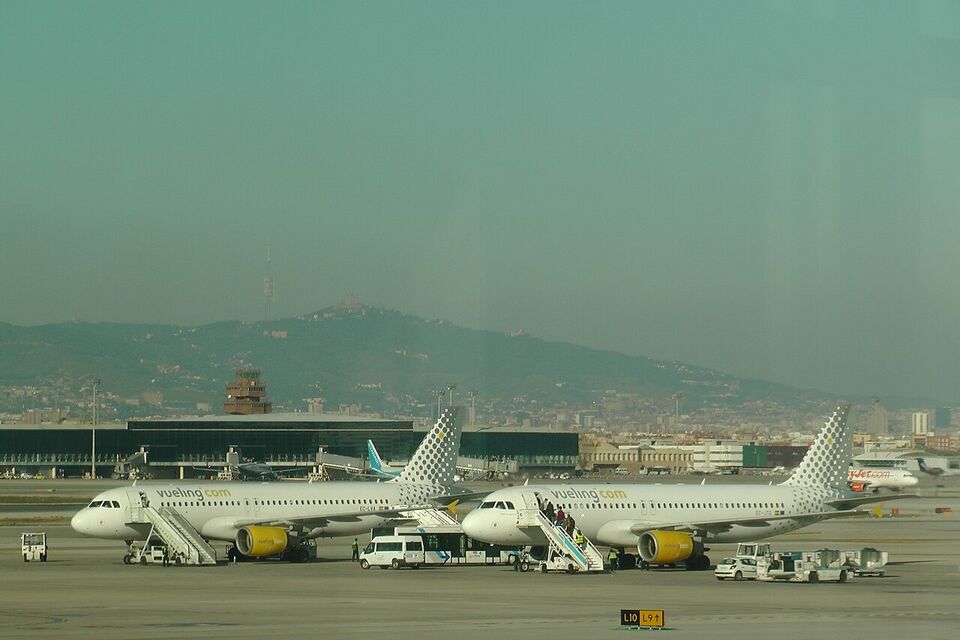
Choosing an airline
Most transatlantic fares to Spain now come in tiers. Basic economy usually bans changes, assigns seats at check-in and may exclude a full-size carry-on or checked bag, depending on the airline and route. Read the fare rules before you buy; a "cheaper" fare can end up costing more once you add a bag and two seats together.
Iberia
The widest Madrid network and easy same-terminal connections to Iberia and Iberia Express flights across Spain, including Seville, Málaga, Bilbao, Vigo, the Balearics and the Canaries. Earns and redeems with American AAdvantage and British Airways Avios.
American Airlines
Good from the Southeast, Texas and the Philadelphia area, and codeshares on Iberia flights. Connections in Madrid onto Iberia domestic flights are straightforward on one ticket.
Delta
Strongest from Atlanta and New York, with Boston and Seattle added in 2026. Partners with Air Europa for onward connections within Spain.
United
The only nonstops to Málaga, Palma, Bilbao and Santiago, all from Newark in season. Year-round to Madrid and Barcelona from Newark and Washington Dulles.
Air Europa
Madrid flights from Miami and New York, with connections across Spain and to the Balearics and Canaries.
Level and JetBlue
Level runs low-cost nonstops from Barcelona to five US cities; JetBlue flies seasonally from Boston to Madrid and Barcelona. Both charge extra for many items included on full-service fares.
Connecting through Europe
If you fly from a city without a nonstop, a European connection can be shorter than a US one. TAP Air Portugal connects many US cities via Lisbon to Madrid, Barcelona, Seville, Málaga, Bilbao and Valencia, and offers free stopovers in Portugal. Aer Lingus connects via Dublin, where you clear US immigration before boarding on the way home. Icelandair connects via Reykjavík in season. Air France, KLM, Lufthansa and British Airways connect via their hubs.
Watch out
Two separate tickets (for example, a US airline to London and a budget airline to Seville) save money until something goes wrong. If the first flight is late, the second airline owes you nothing. Leave at least three to four hours between separate tickets, and longer if you must collect and recheck bags.
When and how to book
For summer and Holy Week, book transatlantic flights about three to six months ahead. For November to March, outside the holidays, one to three months is usually enough and fares are typically the lowest of the year. Fares rise sharply for travel around Christmas, New Year and Three Kings (January 6), and for late June to August.
- Open-jaw tickets (into one city, home from another) are usually priced close to a round trip and save you a backtrack. Into Barcelona and out of Madrid, or into Madrid and out of Málaga in summer, are classic patterns. Use the multi-city search on the airline site.
- Tuesday, Wednesday and Saturday departures are often a little cheaper, but schedules vary; flexible-date searches show the pattern for your route.
- Points: AAdvantage and Avios are both useful on Iberia, whose transatlantic awards often carry lower surcharges than other European carriers. Delta SkyMiles works on Delta and Air Europa; United MileagePlus works on United and Star Alliance partners.
- Domestic connections: if your final stop is Seville, Bilbao or the islands, booking the connection on the same ticket protects you if the first flight is late. If you prefer the train, see getting around.
Save money
Spain is a cheap place to start a Europe trip because of how many seats fly into Madrid and Barcelona. Compare a nonstop to Spain plus a short European flight against flying directly to Lisbon, Paris or Rome. See Spain and its neighbors.
Your rights when flights go wrong
EU Regulation 261 covers every flight departing an EU airport, and flights into the EU on an EU airline. If your flight is canceled at short notice, you are denied boarding, or you arrive more than three hours late for reasons within the airline's control, you can claim fixed compensation, up to €600 (about $670) per person on long-haul flights, plus meals and hotel while you wait. Weather and air traffic control strikes do not qualify for compensation, but the airline still owes care and rerouting. Claim directly with the airline first.
Arriving in Spain
At your first Schengen airport, you go through passport control. The EU's Entry/Exit System, which reached full operation in April 2026, records your fingerprints and a facial photo the first time you enter, then checks your face at later crossings. Expect the first entry to take longer, especially at peak morning arrival times in Madrid and Barcelona. ETIAS, the EU travel authorization, is not yet required. See entry rules and ETIAS explained.
If you connect in another Schengen country, such as Lisbon, Paris or Frankfurt, you clear passport control there and arrive in Spain on what is effectively a domestic flight. Your checked bags still clear customs at your final airport.
Different from home
Spanish airport taxis and rideshares work differently from US ones. In Madrid, licensed white taxis charge a fixed fare between the airport and the city center. Uber and Cabify operate in Madrid, Barcelona and Málaga, but Barcelona's rules keep their numbers limited, so the official taxi line is often the faster choice there.

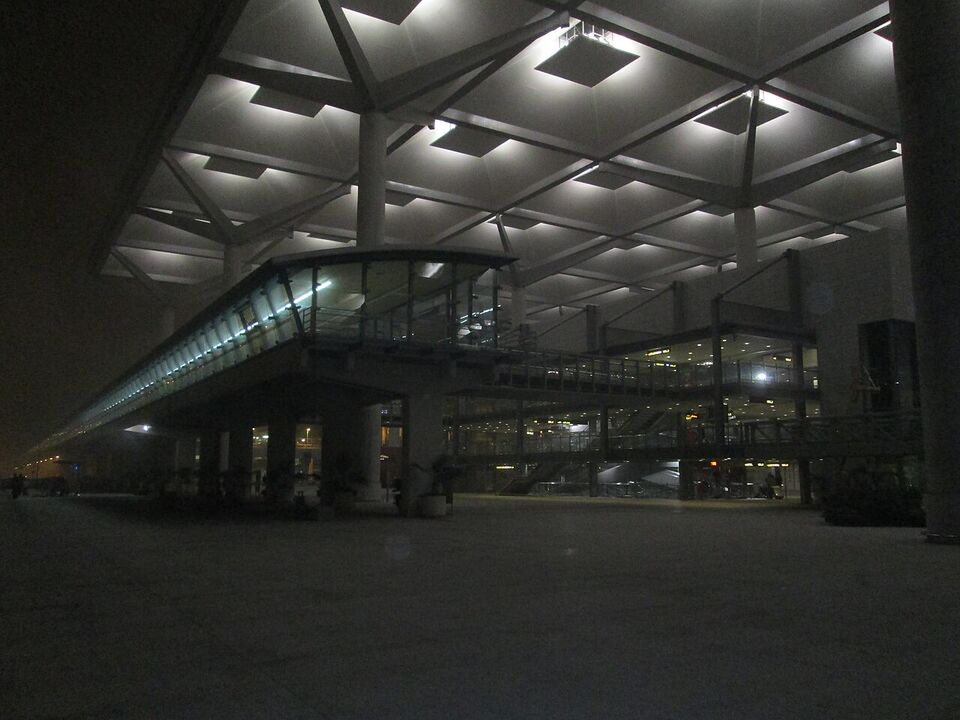
Madrid-Barajas airport to the city
Madrid-Barajas (officially Adolfo Suárez Madrid-Barajas) is about 8 miles (13 km) northeast of the center. Iberia, American, British Airways and other oneworld airlines use Terminal 4 and its satellite, T4S. Most other airlines, including Delta, United and Air Europa, use Terminals 1, 2 and 3, which sit together. A free shuttle bus links T4 with the other terminals; allow 20 minutes.
- Airport Express bus: runs 24 hours from all terminals to Plaza de Cibeles and Atocha station (Cibeles only at night), about 40 minutes, a flat fare of €5 (about $6) paid by card on board. The best value for most visitors.
- Metro Line 8: from T4 and from T2 (for T1–T3) to Nuevos Ministerios, where you change to other lines. The airport journey carries a €3 supplement on top of the normal fare. Good if your hotel is near a metro line in the north or center.
- Cercanías train: line C1 runs from T4 to Chamartín, Nuevos Ministerios, Sol (on some trains) and Atocha in 25 to 30 minutes, and is free if you are connecting to a long-distance Renfe train and enter the code on your ticket. Handy if you are heading straight to an AVE.
- Taxi: a fixed fare to anywhere inside the M-30 ring road, which covers all central neighborhoods, about 30 to 40 minutes. The fixed fare was €33 (about $37) at last check; confirm it on the sign at the rank, and use the official line.
More on neighborhoods and where to base yourself on the Madrid page.
Barcelona-El Prat airport to the city
Barcelona-El Prat (BCN) is about 8 miles (13 km) southwest of the center. Long-haul flights, including all US routes, use the newer Terminal 1. Terminal 2 handles mainly low-cost European carriers. A free shuttle bus links the two.
- Aerobús: express buses from T1 and T2 to Plaça d'Espanya and Plaça de Catalunya every few minutes, about 35 minutes. Buy online, by card at the stop, or on board. The simplest choice for most hotels in the Eixample and the old city.
- Train R2 Nord: Rodalies commuter trains from T2 to Sants, Passeig de Gràcia and Clot, roughly every 30 minutes. From T1, take the free shuttle bus to T2 first.
- Metro L9 Sud: from both terminals to Zona Universitària, with connections to the rest of the network. The airport stations need a special airport ticket that costs more than a normal metro ride. Slow for the center, but useful for some neighborhoods.
- Taxi: metered with an airport supplement, about 30 minutes to the center outside rush hour.
Watch out
Pickpockets work the Aerobús and the metro between the airport and Plaça de Catalunya, targeting tired travelers with luggage. Keep your phone and wallet in a front pocket or a zipped bag, and do not put a bag on the rack by the door out of your sight. See Barcelona and safety.
Other Spanish airports
Spain's airports are run by the state operator AENA, and most are modern and efficient. All have taxis, car rental and some form of public transit.
| Airport | Into town | Notes |
|---|---|---|
| Málaga (AGP) | Cercanías train every 20 min to Málaga Centro-Alameda (about 12 min) and west to Torremolinos and Fuengirola; buses to the center and Marbella | Busiest airport in Andalusia; gateway to the Costa del Sol, Granada and Ronda |
| Palma de Mallorca (PMI) | Airport bus to the center and port; taxis | Extremely busy in summer; build in time for security |
| Seville (SVQ) | Airport bus to the center, about 35 min; taxis with set fares | European connections only; many visitors arrive by train instead |
| Bilbao (BIO) | Bizkaibus to the center about every 15 min, about 15–20 min; buses to San Sebastián | Also the easiest airport for San Sebastián, about 1 hr 15 min by direct bus |
| Valencia (VLC) | Metro lines 3 and 5 to the center, about 20 min | European connections only |
| Santiago de Compostela (SCQ) | Bus to the center, about 30 min | Main airport for the end of the Camino |
| Tenerife South (TFS) and Gran Canaria (LPA) | Buses to the resorts and Las Palmas; taxis | Connections via Madrid, Barcelona or other European hubs |
For flights within Spain, the Balearics and the Canaries, see getting around. The Balearics and Canary Islands pages cover the island airports in more depth.
Jet lag and the first day
Most US flights to Spain leave in the late afternoon or evening and land between about 6 and 10 a.m. Spanish time. Hotels rarely have rooms ready before 2 or 3 p.m., so ask about early check-in or plan to leave your bags at the desk.
The Spanish timetable works in your favor on day one. Stay out in daylight, eat a late lunch around 2, take at most a short nap, and you will be ready for a 9 p.m. dinner like everyone else. Plan a light first day: a walk, a market, a long lunch. Save timed tickets such as the Prado, the Alhambra or the Sagrada Família for day two or later.
Flying home
Get to the airport early. For a flight to the US, arrive three hours before departure at Madrid and Barcelona, longer in summer.
- Check in and drop bags. US-bound flights sometimes include extra document checks or security questions at check-in or the gate.
- Clear security. Lines at Madrid T4 and Barcelona T1 can be long in summer mornings.
- Exit passport control. Under the Entry/Exit System, your exit is recorded, which is how the EU counts your days under the 90/180-day rule. At Madrid T4, non-Schengen flights leave from the T4S satellite, reached by an underground train after passport control; allow at least 20 minutes for the transfer.
- VAT refunds. If you are claiming a tax refund, validate your forms at the DIVA kiosks before security and bag drop, since customs may want to see the goods. See money and shopping.
- US arrival. CBP's Mobile Passport Control app or Global Entry speeds up entry at most big US airports. Returning residents have long had an $800 duty-free exemption per person; confirm the current figure on cbp.gov.
Watch out
Meat products, including jamón (cured ham) and chorizo, are generally not allowed into the US in your luggage, even vacuum-packed, and undeclared food can bring a fine. Cheese that is hard, olive oil, wine (within airline limits) and canned seafood are usually fine but must be declared. Check the current rules on the shopping and customs page.
Before you fly
- Passport valid at least three months past your departure from Schengen, issued within the last ten years (see entry rules).
- Travel insurance that covers medical care abroad; Medicare does not (see health).
- A phone plan or eSIM ready for arrival (see staying connected).
- Euros not required on landing: cards and contactless work almost everywhere (see money).
Add it to a route in the trip builder, or ask us to plan the hotels, trains and guides for you.