Overview
The Basque Country (Euskadi in Basque, País Vasco in Spanish) is a small, green, hilly region on the Bay of Biscay, right against the French border. It has three provinces: Gipuzkoa, with San Sebastián; Bizkaia, with Bilbao; and inland Álava, with the regional capital, Vitoria-Gasteiz. You can drive across the whole thing in about two hours.
Americans come for the food, and they are right to. San Sebastián has one of the densest concentrations of serious restaurants on earth and an old town full of bars where the counters are covered in small, elaborate snacks called pintxos. Bilbao has the Guggenheim, Frank Gehry's titanium museum that turned a declining port into one of Europe's best city-break stops. Between them runs a coast of cliffs, surf beaches and fishing towns that most visitors never see.
This is also a place with its own language, its own sports and a strong sense of identity. Basque (euskara) is unrelated to Spanish or any other language in Europe. Everyone also speaks Spanish. Still, knowing a few words and understanding that Basques see themselves as Basque first will make your trip richer.
The region fits easily into a longer trip through the green north: west to Cantabria and Asturias, south to Rioja wine country and Pamplona, or east across the border to Biarritz and the French Basque coast (see our France guide).
Different from home
Place names come in two versions, and both appear on signs: Donostia is San Sebastián, Gasteiz is Vitoria, Bizkaia is Vizcaya. Google Maps and train apps may use either. Basque spelling uses tx (pronounced "ch") and tz (like "ts"), so txakoli is "chah-koh-lee".
San Sebastián (Donostia)
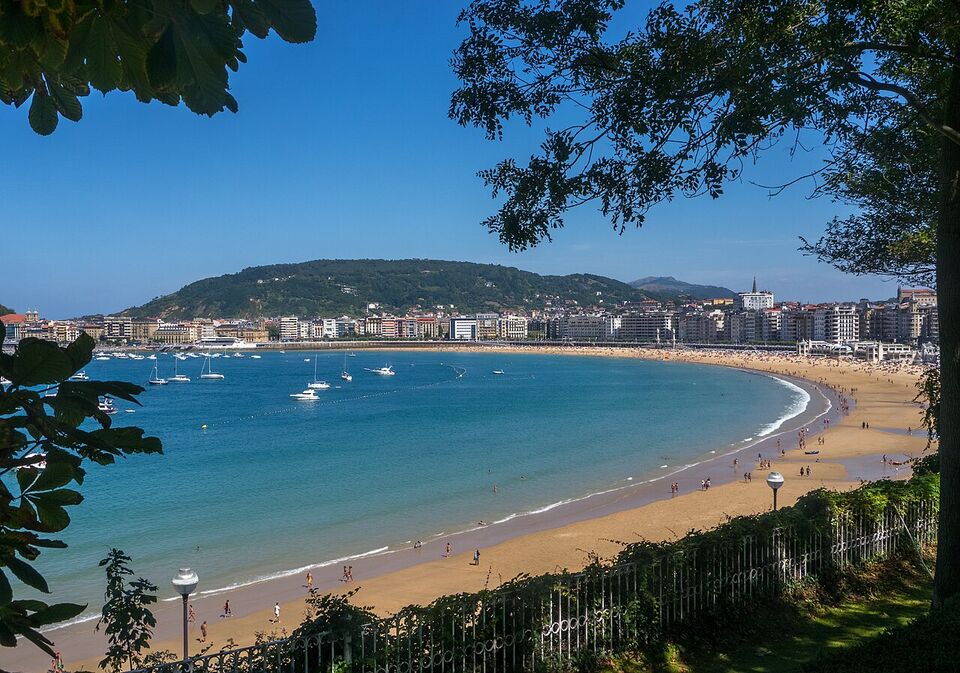
San Sebastián is a compact, elegant beach city of about 190,000 people wrapped around a shell-shaped bay, La Concha. It became a royal summer resort in the late 1800s, and the belle époque promenades, iron railings and grand hotels still set the tone. It is walkable end to end in about 45 minutes.
The neighborhoods
- Parte Vieja (old town): a grid of narrow streets under Monte Urgull, packed with pintxo bars. This is where you eat. It is lively until late and noisy at night.
- Centro (Área Romántica): the 19th-century grid of shops and apartment blocks behind the old town, around the cathedral of the Buen Pastor. Calmer, central and a good base.
- Gros: across the Urumea River, a local neighborhood with its own pintxo scene and Zurriola beach, the surfers' beach. Often better value than the old town.
- Antiguo and Ondarreta: the quieter, residential west end of La Concha, by the Igueldo funicular.
What to do
- La Concha and Ondarreta beaches: a gently curving city beach with calm water, a promenade made for evening walks, and Santa Clara Island in the middle of the bay (small boats run out in summer).
- Monte Igueldo: a wooden funicular, running since 1912, climbs to an old-fashioned amusement park and the best view of the bay.
- Monte Urgull: a free, wooded walk up from the old town to the ruins of a castle and a big statue of Christ, with views both ways.
- Peine del Viento: Eduardo Chillida's iron sculptures bolted into the rocks at the far west end of the bay. Go at high tide when waves blast through the blowholes.
- San Telmo Museoa: the museum of Basque society and culture, in a former convent in the old town. A good rainy-day stop and the best quick introduction to Basque history.
- Tabakalera: a former tobacco factory turned contemporary culture center, with a free rooftop view.
- Chillida Leku: the sculptor's open-air museum in the hills outside town at Hernani, a short taxi or bus ride. Check opening days before you go.
Insider tip
San Sebastián is a morning-swim, long-lunch, evening-walk city. Do the beach or a hike in the morning, eat a proper lunch around 2 p.m., rest, then start the pintxo crawl around 8 p.m. Bars are busiest from 8:30 to 10:30 p.m.
Pintxos and how to order them
A pintxo (the Basque spelling of pincho) is a small snack, often on a slice of bread and held together with a toothpick. They are the Basque answer to tapas, but more elaborate. The classic is the gilda: an anchovy, an olive and a pickled green chili on a stick, named after Rita Hayworth's film character.
The ritual is simple once you know it:
- Walk in, find a spot at the bar and catch the bartender's eye. Crowds are normal; push politely toward the counter.
- Order a drink: a txakoli (the local, slightly sparkling white wine, poured from a height), a zurito (a very small beer), a txikito (a small glass of red), or cider.
- Cold pintxos sit on the counter. In some bars you take a plate and help yourself; in others you point and they serve you. Watch what locals do.
- Hot pintxos (pintxos calientes) are listed on a chalkboard and cooked to order. These are usually the best thing in the bar, so ask what the house specialty is.
- Have one or two things and a drink, then move on. A typical pintxo crawl covers three to five bars in an evening.
- Pay at the end. The bartender will ask what you had and trusts your count.
Expect to pay a few euros per pintxo, more for made-to-order hot dishes, so a crawl with drinks typically runs €25–€45 (about $28–$50) per person in the old town. Tipping is minimal: leave the small change, or round up.
What to look for
- Anchovies from the Cantabrian Sea, fresh (boquerones) or salt-cured.
- Txuleta: a thick bone-in steak from older cattle, grilled over coals and sold by weight. Ask the price per kilo.
- Grilled turbot (rodaballo) cooked whole over coals, the specialty of Getaria.
- Bacalao al pil pil: salt cod in an emulsified olive oil and garlic sauce.
- Tortilla: Spanish potato omelet, often served runny in the middle.
- Burnt Basque cheesecake: the caramelized, creamy-centered cheesecake that went global started in the San Sebastián old town.
- Idiazabal: a smoked sheep's cheese from the Basque hills.
Different from home
Lunch is 1:30 to 3:30 p.m. and dinner starts at 9 p.m. Between about 4 and 7:30 p.m. most kitchens are closed, though bars still pour drinks. Many bars close one day a week, often Sunday evening, Monday or Tuesday, and some close for a few weeks in winter. Check before you plan a whole evening around one place.
Fine dining
The San Sebastián area has long had several restaurants holding Michelin's top rating; in the 2026 guide these were Arzak in the city, Akelarre on the slopes of Igueldo and Martín Berasategui in nearby Lasarte-Oria, plus Azurmendi outside Bilbao. Tasting menus at this level run around €300 (about $335) or more per person before wine. Book as far ahead as the restaurant allows, often two to three months for summer weekends, and check the current Michelin Guide, since ratings change every year.
The cheaper way into high-end Basque cooking is lunch at a smaller restaurant with a set menu, or a sidrería (cider house) meal: see below.
Insider tip
Basque food culture has a private side you rarely see: the txoko, or gastronomic society, a members-only club where (mostly) men cook for friends. Some food tours arrange a visit. It is the closest you will get to a Basque home kitchen.
Bilbao
Bilbao is the region's biggest city, with about 345,000 people and a million in the metro area. For a century it was an iron, steel and shipbuilding town. When heavy industry collapsed in the 1980s, the city bet on culture and urban design: the Guggenheim opened in 1997, Norman Foster designed the metro, and the riverfront docks became parks and promenades. Today it is one of Spain's most pleasant cities to walk.
The Guggenheim Museum Bilbao
Gehry's building, a curling mass of titanium, glass and limestone on the Nervión River, is the reason most people come. Inside, the permanent collection is small and the big draws are the rotating exhibitions and Richard Serra's walk-through steel sculptures, The Matter of Time. Outside, Jeff Koons's Puppy, a giant West Highland terrier covered in flowers, guards the entrance, and Louise Bourgeois's bronze spider, Maman, stands by the river.
- Hours: Tuesday to Sunday, 10 a.m. to 7 p.m. Open later (to 8 p.m.) and on Mondays in summer and around Easter. Closed most Mondays, December 25 and January 1.
- Tickets: €12 (about $13) for adults in November 2026, €6 for students under 26 and seniors over 65, free under 18. A combined ticket with the Bilbao Fine Arts Museum is €16 (about $18). Prices change with the exhibition program, so check before you go.
- Booking: buy only on the museum's official site, guggenheim-bilbao.eus. The museum itself warns about fake ticket sites. An audio guide is included.
- Time: 2 to 3 hours inside, plus a walk around the outside, which is free.
The rest of Bilbao
- Casco Viejo: the medieval old town, the "Seven Streets," with the Santiago cathedral and the arcaded Plaza Nueva, lined with pintxo bars. Sunday morning in Plaza Nueva is a local tradition.
- Mercado de la Ribera: a large riverside market hall with fish, meat and produce downstairs and a food court upstairs.
- Museo de Bellas Artes: the Fine Arts Museum, a short walk from the Guggenheim, with El Greco, Goya and Basque painters.
- Artxanda funicular: a short ride up to a hilltop park with a view over the whole city.
- Vizcaya Bridge: at Portugalete, on the metro line to the sea, the world's oldest transporter bridge (1893), a UNESCO World Heritage Site. A suspended gondola still carries cars and people across the river, and you can pay to walk across the top.
- San Mamés: the stadium of Athletic Club, which famously fields only players born or raised in the Basque Country. Stadium tours run on non-match days. See our football page.
Save money
Bilbao hotels usually cost noticeably less than San Sebastián's, especially in July and August. If San Sebastián is full or very expensive, stay in Bilbao and visit San Sebastián as a long day trip by bus.
The coast between the cities
The 110 miles (about 175 km) of coast between Bilbao and the French border are the best reason to rent a car for a day or two. Roads are winding, and towns are small and busy on summer weekends.
San Juan de Gaztelugatxe
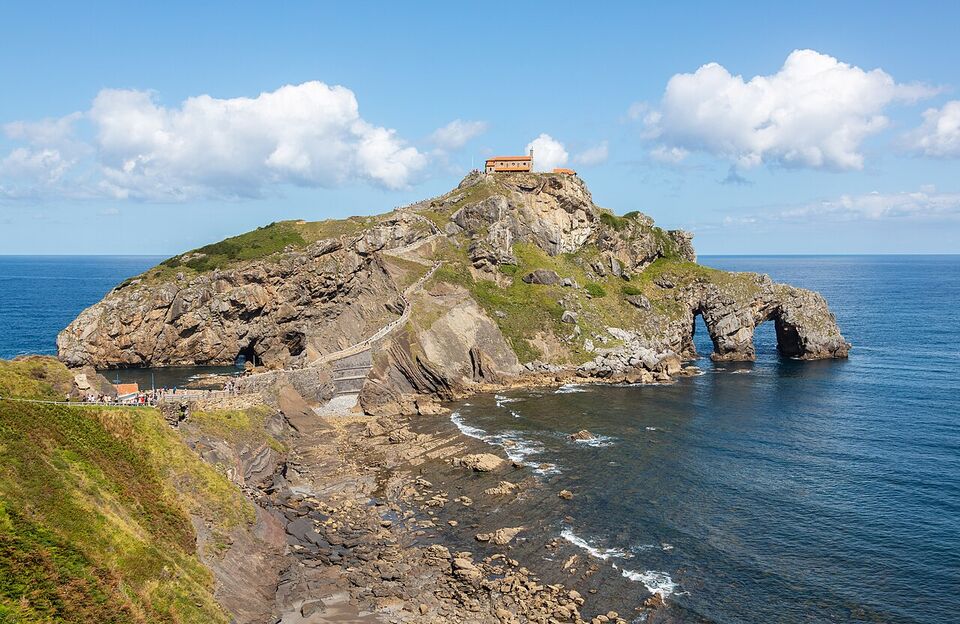
A tiny hermitage on a rocky islet joined to the mainland by a stone causeway and about 240 steps. The walk down and back up is steep. In busy months access requires a free online reservation for a time slot, so check the Bizkaia provincial site before you go.
Gernika
The town bombed by German and Italian aircraft for Franco in 1937, the event Picasso painted in Guernica. The Peace Museum explains it well, and the Assembly House shelters the Tree of Gernika, the old oak that symbolizes Basque self-government.
Mundaka, Bermeo and Lekeitio
Fishing ports around the Urdaibai estuary. Mundaka has a famous surf break, Bermeo a working harbor, and Lekeitio a beach and an island you can walk to at low tide.
Zumaia
Layered cliffs of tilted rock called flysch, millions of years of geology exposed by the sea, best at low tide from Itzurun beach or the coastal path. Boat trips run along the cliffs in summer.
Getaria and Zarautz
Getaria is a stone fishing village known for whole turbot grilled over coals, txakoli vineyards on the hills, and the Cristóbal Balenciaga Museum (the designer was born here). Zarautz next door has a long surf beach.
Hondarribia and Pasaia
Hondarribia is a walled hill town with brightly painted fishermen's houses, facing France across the river. Pasai Donibane is a one-street village on a fjord-like harbor, reached by a small ferry.
Watch out
The Bay of Biscay is cold (low 60s°F, about 17°C, at best in August) and can have strong currents and big swells. Swim only on beaches with lifeguards and flags, respect red flags, and check tide times for coastal walks and Zumaia's cliffs. Coastal paths get slick after rain.
Vitoria-Gasteiz and inland
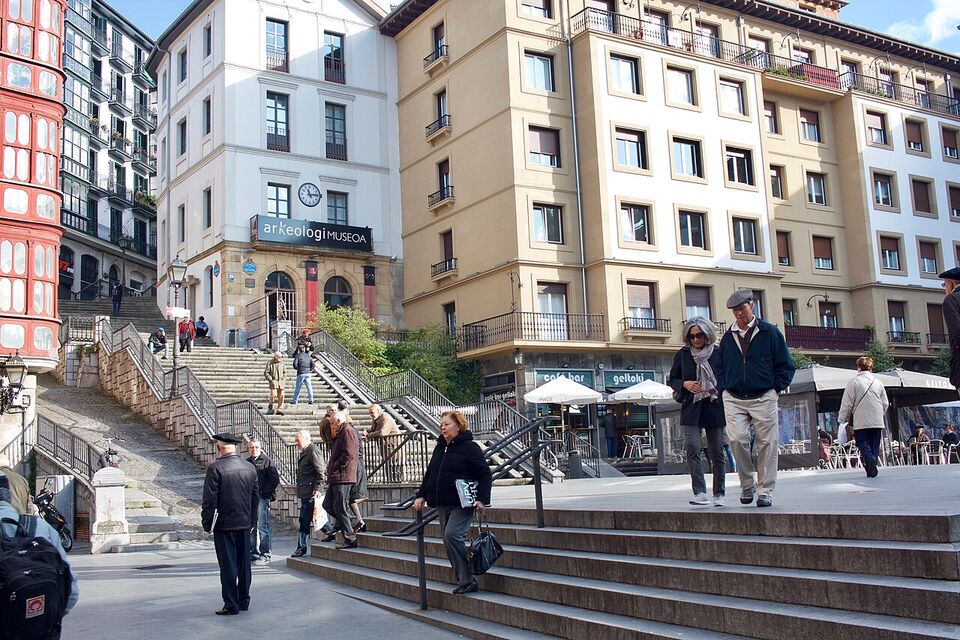
Vitoria-Gasteiz, the regional capital, gets a fraction of San Sebastián's visitors. Its hilltop medieval quarter is well preserved, the Gothic cathedral of Santa María offers guided "open for works" tours through its restoration, and the city is known for green belts and bike paths. Pintxos here are excellent and cheaper. It is about 1 hour by bus from Bilbao.
South of Vitoria, the Rioja Alavesa is the Basque slice of Rioja wine country, with the medieval town of Laguardia and wineries such as the Frank Gehry-designed hotel at Marqués de Riscal in Elciego. We cover it on the Rioja and Navarra page and the wine page.
Cider houses and txakoli
From roughly mid-January to April, the cider houses (sagardotegiak) around Astigarraga and Hernani, just outside San Sebastián, open the new season's barrels. The meal is a fixed menu: salt cod omelet, cod with peppers, a huge txuleta steak, then cheese, quince paste and walnuts. When someone shouts txotx, everyone takes a glass to the barrel and catches a thin stream of cider poured straight from the cask. Some houses serve the same menu year-round.
Txakoli is the other local drink: a light, dry, slightly fizzy white from vineyards near Getaria and in Bizkaia. Several small producers on the coast offer tastings, usually by appointment.
Getting there and around
From the US
In summer, United flies nonstop from Newark to Bilbao Airport (BIO), the region's main airport: the route launched in 2025 and returned for summer 2026 with three flights a week from May 30. Check whether it is back for 2027 and its season dates before you plan around it. The rest of the year, connect through Madrid or Barcelona, or a European hub such as Paris, Amsterdam, Frankfurt, London or Lisbon. San Sebastián's small airport (EAS) at Hondarribia has a few domestic flights. Biarritz (BIQ), across the border in France, is about 40 minutes from San Sebastián by road. See our flights page.
From Bilbao Airport, a Bizkaibus shuttle runs to central Bilbao in about 20 minutes, and direct buses go to San Sebastián in about 1 hour 15 minutes. Taxis to central Bilbao take about 15 to 20 minutes.
From elsewhere in Spain
- Train from Madrid: Renfe's Alvia trains reach Bilbao and San Sebastián in about 5 hours. The Basque high-speed line (the "Basque Y") is still under construction, so this is slower than the AVE runs to the south. Buses from Madrid take a similar time and can be cheaper. Book on renfe.com.
- Flights: Madrid and Barcelona to Bilbao take about an hour, often the fastest option.
- From France: Euskotren's local line runs from San Sebastián to Hendaye on the French border in about 40 minutes, where you connect to French trains, including TGVs toward Bordeaux and Paris. See Spain and its neighbors.
Within the region
- Bilbao to San Sebastián: frequent express buses take about 1 hour 20 minutes and are the best option. The Euskotren regional train is cheap and scenic but takes well over 2 hours.
- In the cities: walk. Bilbao has a good metro and tram; San Sebastián has city buses (Dbus). Both have contactless payment on many lines.
- The coast: buses reach most towns, but a rental car makes it far easier to combine Gaztelugatxe, Gernika and the fishing ports in a day. Parking in San Sebastián is expensive and limited; drop the car when you arrive. See our driving guide.
Where to stay
San Sebastián is one of the most expensive places to sleep in Spain, especially from July through September and during the film festival. Book early, and expect to pay $$$ for an ordinary, well-located double in summer. The city has also tightened rules on tourist apartments, so check that any rental shows a regional tourist license or registration number from the Basque government (see where to stay in Spain).
Hotel María Cristina
The grand dame, open since 1912, where film festival stars stay. Classic, formal and central.
Hotel de Londres y de Inglaterra
A 19th-century hotel on the promenade. Ask for a bay-view room, which costs more.
Gros or Centro guesthouses
Small family-run pensiones on upper floors of apartment buildings. Simple rooms, central locations, and quieter than the old town.
Bilbao near the Guggenheim or Casco Viejo
Abando and the riverfront put you between the museum and the old town, with the metro and bus station nearby.
The new Basque tourist tax
The Basque Country is the latest Spanish region to bring in tourist taxes. Under new provincial rules, towns can charge their own per-night tax from January 1, 2027. San Sebastián gave initial approval in July 2026 to rates of about €1.25 (about $1.40) per person per night at farm stays up to €6.50 (about $7.30) at higher-category hotels and tourist flats, for up to six nights, with under-18s exempt; cruise passengers would pay €7 (about $7.85). Bilbao and Vitoria are preparing their own. Rates were not final in November 2026, so check them with your lodging, which will charge the tax, usually at checkout. See our money page for taxes elsewhere in Spain.
When to visit
The Basque climate is mild and damp, more like Oregon than Andalusia. Summer highs are usually in the 70s°F (about 22–26°C), with occasional heat spikes; winter highs are in the 50s°F (about 12°C). It rains on many days in every season, so bring a light rain jacket.
- June to September: beach weather, long evenings and everything open, but also the highest prices and fullest bars, especially in August.
- May and October: the sweet spot for food trips, with lower prices and decent weather.
- November to March: wet and quiet, but the food is just as good, and it is cider season from mid-January.
Festivals
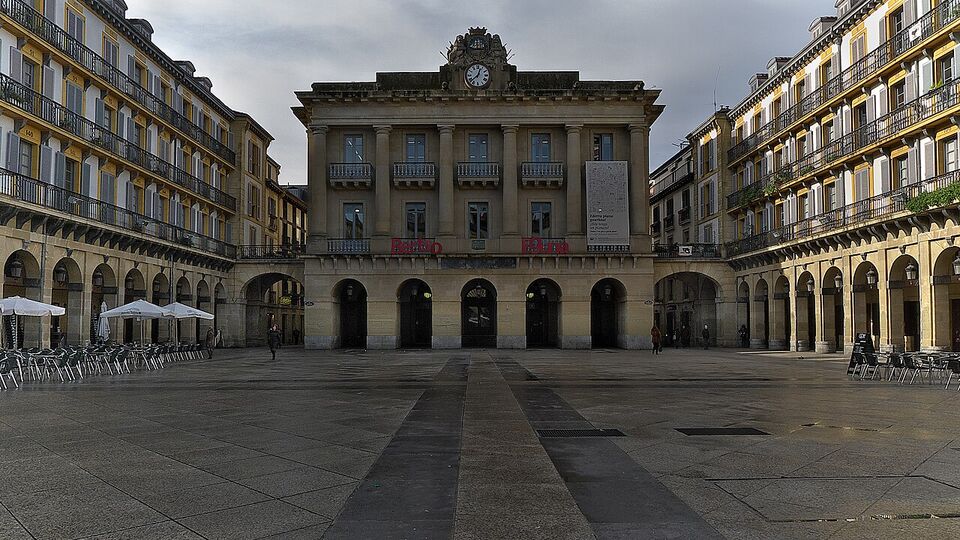
- Tamborrada, January 20: San Sebastián's feast day, 24 hours of drumming bands in chef and soldier costumes, starting at midnight in the Plaza de la Constitución.
- Jazzaldia, July: one of Europe's oldest jazz festivals, in San Sebastián, with free outdoor stages.
- Semana Grande (Aste Nagusia), August: both cities hold a week of fireworks, concerts and street parties; San Sebastián's centers on August 15, and Bilbao's starts the following Saturday.
- Rowing regattas, September: traditional boats race in La Concha on the first two Sundays of September.
- San Sebastián International Film Festival, late September: big stars, packed hotels. Book months ahead or avoid those dates.
See our festivals page and when to go for national holidays.
Sample itinerary
- Day 1
Bilbao
Arrive in Bilbao. Walk the river to the Guggenheim for the afternoon, then the Casco Viejo and Plaza Nueva for pintxos in the evening.
- Day 2
The Bizkaia coast
Pick up a car. Gernika in the morning, San Juan de Gaztelugatxe (with your time slot) at midday, and lunch in Bermeo or Mundaka. Drive on to San Sebastián, about 1 hour 30 minutes.
- Day 3
San Sebastián
Return the car. Walk La Concha to the Peine del Viento, ride the Igueldo funicular, long lunch, then a pintxo crawl in the Parte Vieja.
- Day 4
Getaria and Zumaia
By bus or tour: the Zumaia cliffs at low tide, turbot and txakoli in Getaria. Pintxos in Gros in the evening.
- Day 5
Hondarribia or France
Hondarribia and Pasaia, or the train to Hendaye and on to Saint-Jean-de-Luz and Biarritz. Splurge on a tasting menu for your last night.
With more time, add Vitoria and the Rioja Alavesa on the way south, or continue west to Cantabria and the Picos de Europa. Our planning page has longer routes.
Good to know
- Safety: both cities are generally safe. Watch bags in packed pintxo bars and on beaches. The US State Department rates Spain Level 2, "Exercise increased caution," for terrorism and civil unrest; see our safety page. Emergencies: 112.
- Politics: the armed group ETA disbanded in 2018 and is not a concern for visitors. Basque identity is still a serious subject, and political posters and demonstrations are part of street life. Listen more than you opine.
- Language: everyone speaks Spanish, many young people speak English, and a few Basque words go down well: kaixo (hello), eskerrik asko (thank you), agur (goodbye). See our language page.
- Sports: beyond football, look for pelota (a fast handball game played against a wall in a frontón) and the rural sports of wood chopping and stone lifting at village festivals.
- Sundays: most shops close, but bars and the Guggenheim stay open.
- Entry: you are in the Schengen area; your 90 days in any 180 count here. See our entry page.
Add it to a route in the trip builder, or ask us to plan the hotels, trains and guides for you.