Wine in Spain
Spain has more land under vines than any other country, and wine is part of ordinary daily life. A glass comes with a weekday lunch, a caña (small draft beer) or a vermouth comes before it, and nobody thinks twice about a bottle of Rioja on a Tuesday. Prices are low by US standards: a good bottle in a shop often costs what an ordinary one does at home, and restaurant markups are gentle.
The quality revolution of the last 30 years has also been dramatic. Old regions like Rioja and Jerez have been joined by Priorat's slate terraces, the steep river canyons of Galicia, volcanic vineyards in the Canary Islands and a new wave of small growers making lighter, fresher wines from old local grapes. This page covers the great regions, the other drinks that matter (cava, cider, vermouth) and how to visit.
How to order in a bar
| Ask for | What you get |
|---|---|
| Un tinto / un blanco | A glass of red or white house wine |
| Un crianza, un Rioja, un Ribera | A glass of a better red, by category or region |
| Una copa de cava | A glass of sparkling wine |
| Un fino, una manzanilla | A glass of dry sherry, well chilled |
| Un vermut | Sweet red vermouth on ice with an orange slice and an olive |
| Tinto de verano | Red wine with lemon soda over ice, what locals drink in summer |
| Kalimotxo (calimocho) | Red wine and cola, a Basque party drink |
| Una caña / un tercio / una clara | A small draft beer / a 33 cl bottle / beer with lemon soda |
In wine regions, the house wine is often excellent and local. In tourist areas, it is cheap and drinkable. If you want something better, ask for the list (la carta de vinos) or simply name a region.
Different from home
Sangria is mostly something Spaniards make at home for parties or order on a beach; in an ordinary bar, a pitcher of it marks you as a tourist and often costs more than it should. Order tinto de verano instead. And beware the gin and tonic: Spain serves it in a balloon glass with a pour that would get a US bartender fired.
How to read a Spanish wine label
Most Spanish wine is labeled by region (the Denominación de Origen, DO) and by how long it has been aged. Rioja and Priorat hold the top rank, DOCa or DOQ (Calificada in Spanish, Qualificada in Catalan). A handful of single estates have their own appellation, Vino de Pago.
For reds in Rioja and Ribera del Duero, the aging terms are set by the regional rules:
| Term | Minimum aging for reds | Style |
|---|---|---|
| Joven or genérico | Little or none in oak | Young and fruity |
| Crianza | Two years, at least one in oak | The everyday restaurant red |
| Reserva | Three years, at least one in oak | Rounder, more oak; good value in Spain |
| Gran Reserva | Five years, at least two in oak | Made in the best vintages; mellow, complex |
The terms describe aging only, and many of Spain's most exciting modern wines ignore them. Rioja also now labels wines by zone, by village (vino de municipio) and by single vineyard (viñedo singular).
Rioja
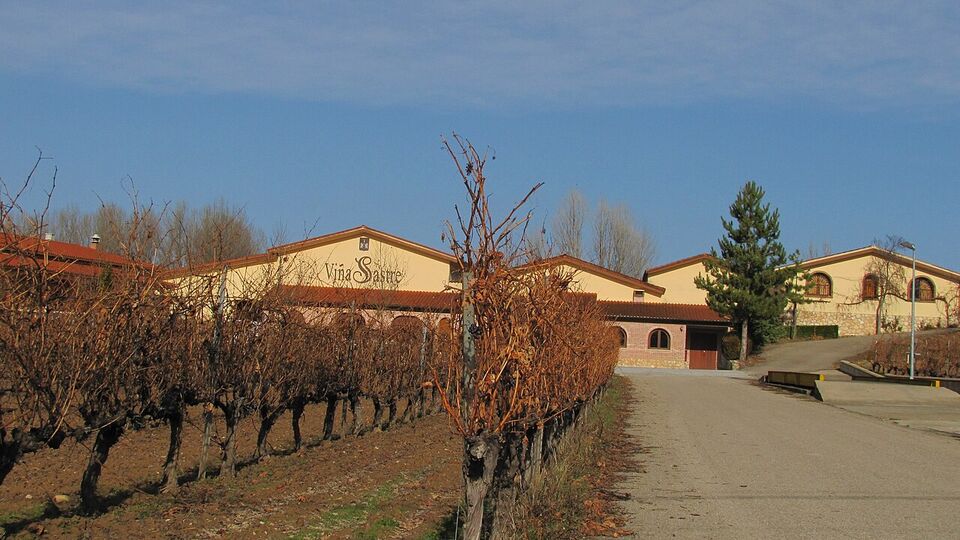
Spain's most famous region sits along the Ebro river in La Rioja, with parts in the Basque province of Álava and in Navarra. It has more than 66,000 hectares (about 163,000 acres) of vines and three zones: Rioja Alta, around Haro; Rioja Alavesa, the Basque side north of the river, below the Cantabrian mountains; and Rioja Oriental, warmer, to the east. Tempranillo is the main grape, blended with Garnacha, Graciano and Mazuelo; whites are mostly Viura.
Rioja is also one of Spain's busiest wine-tourism regions, with a large number of wineries open to visitors, mostly by appointment.
Where to go
- Haro: the old wine capital. Its Barrio de la Estación, beside the railway station, holds a cluster of historic wineries founded in the late 1800s, when the railway carried Rioja to France during the phylloxera crisis. Several are within a few minutes' walk of each other.
- Laguardia: a walled hilltop village in Rioja Alavesa with medieval cellars dug under its streets, and modern wineries by star architects in the vineyards around it.
- Elciego: home to the Marqués de Riscal winery and its titanium-ribboned hotel by Frank Gehry, the architect of the Bilbao Guggenheim.
- Briones: a hill village with the Vivanco Museum of Wine Culture, a large museum covering wine history, art and objects.
- Logroño: the regional capital, with the Calle Laurel and Calle San Juan, two streets of tapas bars that each specialize in one dish, with a glass of Rioja for each.
Insider tip
Make Logroño or Haro your base and spend two nights. You can visit two wineries a day (one in the morning, one after lunch), walk to the bars in the evening and never drive after tasting. On June 29, Haro holds its Wine Battle (Batalla del Vino), when thousands of people in white soak each other with red wine on a hillside outside town. See Rioja and Navarra.
Ribera del Duero and the Duero valley
Ribera del Duero, on the high plateau of Castile about two hours' drive north of Madrid, makes powerful, dark reds from Tempranillo, which locals call Tinto Fino or Tinta del País. Hot days and cold nights at around 2,500–2,800 feet (750–850 m) give the wines their structure. It holds Spain's most famous single estate, Vega Sicilia, which rarely opens to visitors, and dozens of wineries that do.
- Peñafiel: a long castle on a ridge above the town houses the provincial wine museum. Below, the Plaza del Coso is a medieval square ringed with wooden balconies.
- Aranda de Duero: the town sits on a maze of medieval underground cellars, some open for tours, and is famous for roast lamb (lechazo) cooked in wood-fired ovens.
Along the same river, the Duero (the Douro in Portugal), Rueda makes crisp white Verdejo, the most popular white in Spanish bars, and Toro makes big, sun-drenched reds. Combine them with Valladolid, Salamanca or Segovia. See Salamanca and Castile and Day trips from Madrid.
Priorat, Penedès and cava
Priorat
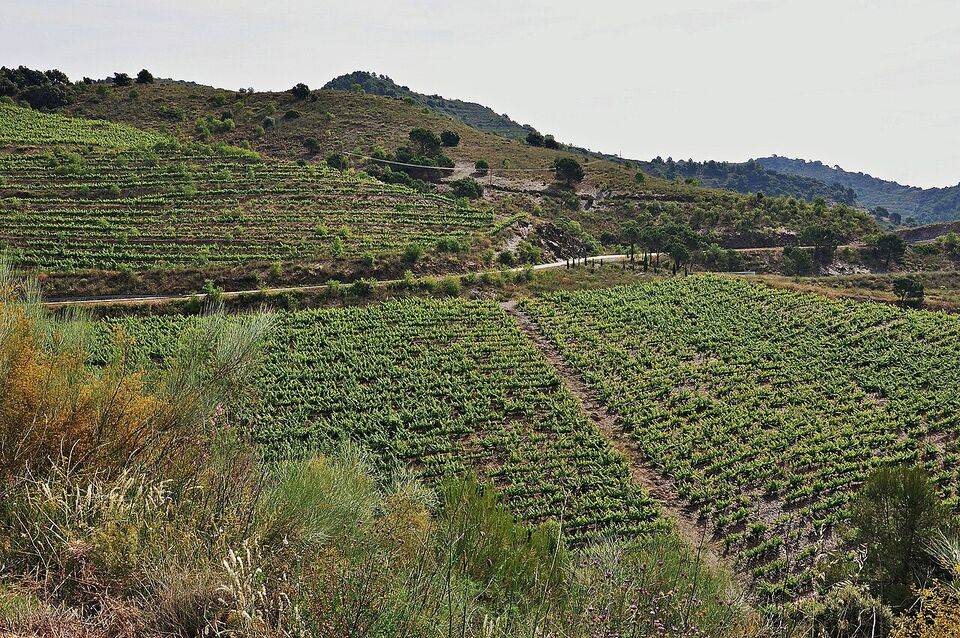
Two hours southwest of Barcelona by car, Priorat is a small, rugged region of terraced hillsides on black-and-gold slate called llicorella. Carthusian monks planted the first vines near the monastery of Scala Dei in the Middle Ages; a group of young winemakers revived the region in the late 1980s, and within two decades Priorat became Catalonia's only DOQ. The wines, mostly old-vine Garnacha and Cariñena, are intense and expensive. The surrounding Montsant region makes similar wines for less. Gratallops, Porrera and the ruins of Scala Dei make a good day; the roads are narrow and winding, so go with a driver or a designated one.
Cava and Sant Sadurní d'Anoia
Cava is Spain's traditional-method sparkling wine, made like Champagne with a second fermentation in the bottle. Most of it comes from the Penedès, west of Barcelona, around the town of Sant Sadurní d'Anoia, which is about 45 minutes from Barcelona by the Rodalies R4 commuter train. The big houses there, including Codorníu with its modernista cellars by the architect Josep Puig i Cadafalch, and Freixenet, run tours with tastings; smaller family producers offer more personal visits. Book ahead.
Cava's labels by aging on the lees, from the regulator's rules:
- Cava de Guarda: at least 9 months.
- Reserva: at least 18 months.
- Gran Reserva: at least 30 months.
- Cava de Paraje Calificado: single-site cavas, aged at least 36 months.
Sweetness runs from brut nature (no added sugar) through extra brut and brut to semiseco and dulce. Some top Penedès producers have left the Cava appellation to label their sparkling wines as Corpinnat or Clàssic Penedès, with stricter rules; you will see these on better wine lists. See Barcelona and the Costa Brava and Girona, where the Empordà makes its own wines too.
Save money
Cava is the bargain of the Spanish wine world. A very good bottle in a Barcelona shop or supermarket often costs less than a mediocre Champagne at home. Locals drink it with lunch and at every celebration, not only at New Year.
Sherry: Jerez and the sherry triangle
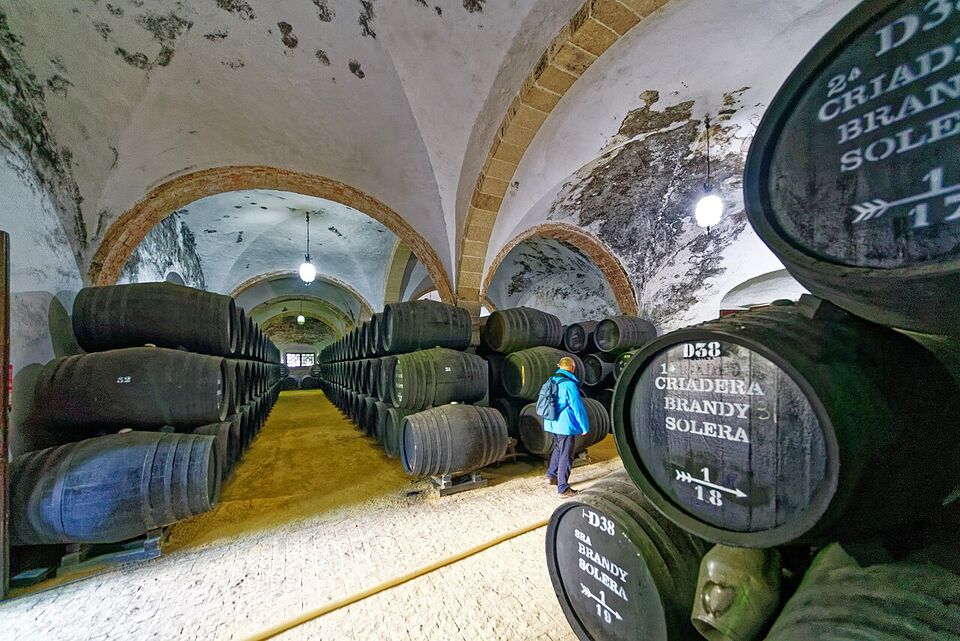
Sherry (vino de Jerez) is one of the world's great wines and one of its least understood. It comes only from a triangle of towns in the province of Cádiz: Jerez de la Frontera, El Puerto de Santa María and Sanlúcar de Barrameda. Nearly all of it is made from the Palomino grape, fortified and aged in a solera, a system of stacked barrels where younger wine is blended into older wine over years.
| Style | What it is | Drink with |
|---|---|---|
| Fino | Dry, pale, aged under a layer of yeast (flor); bone-dry and salty | Olives, almonds, ham, fried fish |
| Manzanilla | A fino made only in Sanlúcar, by the sea, even lighter and tangier | Shrimp, seafood, fried fish |
| Amontillado | Starts as a fino, then ages without the yeast; dry, nutty, amber | Soups, mushrooms, artichokes |
| Oloroso | Aged without yeast from the start; dry, dark, rich | Red meat, stews, aged cheese |
| Palo cortado | A rare style between amontillado and oloroso | Cheese, or on its own |
| Pedro Ximénez (PX) | Made from sun-dried PX grapes; dark, syrupy, very sweet | Poured over vanilla ice cream, or with blue cheese |
| Cream | Oloroso sweetened with PX; the style most Americans know | Dessert |
- Drink fino and manzanilla well chilled, from a small glass, and finish an open bottle within a few days, like a white wine.
- Jerez's big bodegas run daily tours in English with tastings; book on their websites. Smaller and older houses open by appointment.
- Look for Jerez's tabancos, old-fashioned taverns that pour sherry from the barrel, some with flamenco at night. See Flamenco.
- Jerez is about an hour from Seville by train, an easy day trip without a car. In Sanlúcar, pair manzanilla with shrimp and fried fish by the mouth of the Guadalquivir.
- Near Córdoba, the Montilla-Moriles region makes similar wines from Pedro Ximénez grapes, mostly without fortification. A cold glass of Montilla fino is the classic aperitif in Córdoba's taverns.
Galicia, the Basque Country and the green north
Rías Baixas, along Galicia's southern estuaries, makes Albariño: fresh, aromatic white wine perfect with the region's seafood. Inland, Ribeira Sacra has vineyards on terraces so steep above the Sil and Miño rivers that grapes are picked by hand and carried out in baskets, in places on small rail lifts; its reds are made mostly from Mencía. Valdeorras and the neighboring Bierzo (in León) make Godello whites and Mencía reds. See Galicia.
In the Basque Country, txakoli (txakolina in Basque) is a light, slightly sparkling, tart white from the coast around Getaria and from Bizkaia and Álava. Bartenders pour it from a height to bring out the fizz. It is the default glass in San Sebastián's pintxo bars. See the Basque Country.
Cider in Asturias and the Basque Country
In the north, cider (sidra) is as important as wine. It is natural, still, cloudy and tart, nothing like the sweet sparkling cider sold in the US.
Asturias
Asturias has hundreds of sidrerías (cider bars), especially in Oviedo's Calle Gascona and in Gijón and Villaviciosa. The waiter pours (escanciar) from a bottle held high above his head into a glass held low, so the cider splashes and briefly sparkles. You get a culín, a small pour, and drink it at once, before it goes flat, leaving a drop to rinse the glass. Asturian cider culture is on UNESCO's list of intangible cultural heritage. See Northern Spain.
Basque cider houses
In the hills around Astigarraga and Hernani, a short drive or bus ride from San Sebastián, cider houses (sagardotegiak, singular sagardotegi) open for the new cider season, roughly mid-January to April. Dinner is a set menu: salt-cod omelet, cod with peppers, a thick txuleta steak, then sheep's cheese with quince paste and walnuts. Between courses, someone shouts txotx, and everyone lines up to catch a stream of cider straight from a huge barrel into their glass. Book ahead, especially on weekends. Some cider houses stay open year-round with the same menu.
Vermouth hour
Vermouth (vermut) has made a big comeback in Spain over the last 15 years. La hora del vermut is the hour before Sunday lunch, roughly noon to 2 p.m., when friends meet at a bar for a glass of sweet red vermouth on ice with an orange slice and an olive, plus a plate of olives, potato chips, anchovies or canned mussels. Many bars serve vermut de grifo, vermouth on tap, often their own house blend. The town of Reus, near Tarragona, has a long history of making vermouth; Madrid and Barcelona have the liveliest vermouth bars. It is cheap, social and finished in time for a 2:30 lunch.
More regions worth a glass
- The Canary Islands: on Lanzarote, in La Geria, vines grow in hollows dug into black volcanic ash, each protected from the wind by a low stone wall. The local Malvasía is a fine white. Tenerife and La Palma make their own wines from old local grapes. See the Canary Islands.
- La Mancha: Spain's largest wine region by area, mostly bulk wine, with a growing number of good, very cheap bottles.
- Jumilla and Yecla: in Murcia, rich reds from Monastrell (the grape called Mourvèdre in France).
- Navarra: known for rosado (rosé) and Garnacha, and for pacharán, a sloe-and-anise liqueur served after dinner.
- Mallorca: small regions around Binissalem and the island's center, with local grapes like Manto Negro. See Mallorca.
- Galicia's spirits: orujo, a grape-pomace brandy, and the queimada, a flaming punch made with it and recited over with a spell against witches.
Visiting wineries
Spanish wine tourism is well organized, but it works differently from Napa. Most wineries (bodegas) do not have walk-in tasting rooms. You book a guided visit (visita) at a set time, which usually includes the vineyard, the cellar and a tasting of two to four wines, sometimes with food.
- Book on the winery's website a few days to a few weeks ahead. Tours in English run on set days and times, often only once a day; Spanish tours are more frequent.
- Plan around opening hours. Many wineries close on Sunday afternoons and some on Mondays, and small ones may close in August or during the harvest.
- Allow about two hours per visit plus driving time, and plan lunch, which in wine country is long, late and excellent.
- Do not drive after tasting. Spain's limit is 0.05% blood alcohol, stricter than the US 0.08%, and police run checkpoints on wine-country roads. Use the spittoon, take a taxi, hire a driver or join a tour from Logroño, Haro, Bilbao, San Sebastián, Jerez or Barcelona. See Driving.
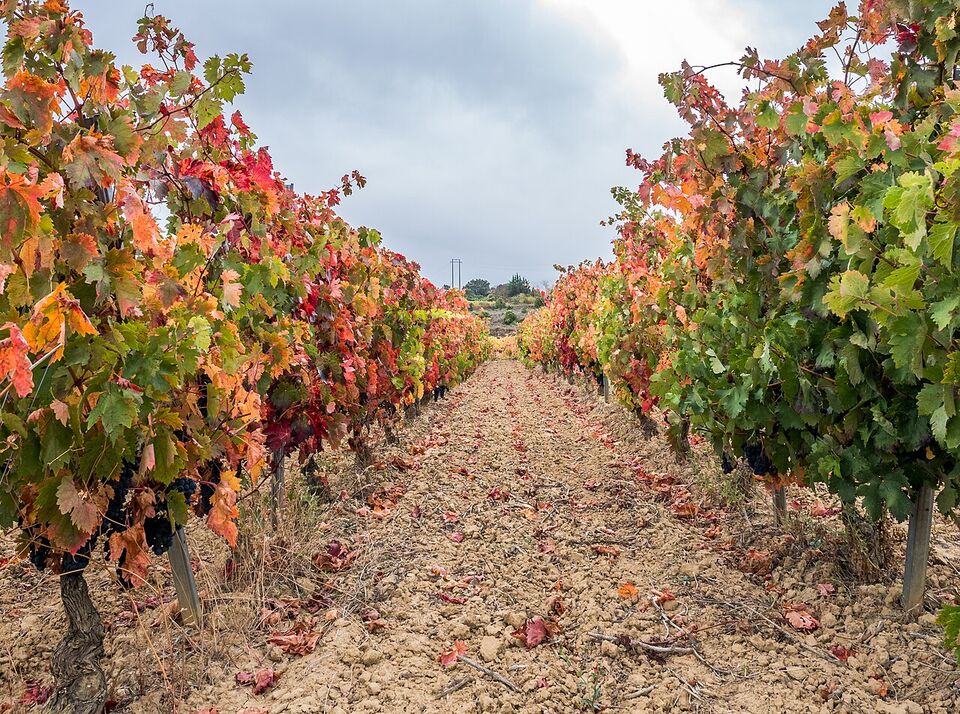
- Consider the harvest. The vendimia, from roughly late August in the south to October in the north, is the most beautiful and busiest time. Some wineries close to visitors then; others run harvest experiences.
Regional wine-tourism networks, the Rutas del Vino de España, list wineries, tours and lodging for each region. Rioja's regulator also runs a route planner at riojawine.com.
Insider tip
Some of the most memorable visits are at small family wineries that host only a few groups a week, where the owner pours. Ask your hotel in wine country to recommend one and call ahead. Many of these owners speak some English, or will find a family member who does.
Buying and bringing wine home
- Where to buy: a wine shop (vinoteca or bodega), the winery itself or the wine section of El Corte Inglés. Even supermarkets have good regional selections at low prices.
- US customs: each traveler 21 or older may bring 1 liter of alcohol duty-free. More is allowed for personal use, but you must declare it and pay duty and federal excise tax, which for a few bottles of wine is usually modest. State laws can also limit how much you bring in. See Shopping and bringing things home.
- Packing: wine goes in checked luggage, wrapped in clothes or in padded wine sleeves, which wine shops sell. Liquids over 100 ml (3.4 oz) cannot go in your carry-on.
- Duty-free trap: bottles bought after security at Madrid or Barcelona come in sealed, tamper-evident bags. If you connect in the US, you clear security again: keep the bag sealed with the receipt inside, or move the bottles to your checked bag after customs.
- Shipping: some wineries ship to the US, but costs are high and many states restrict direct shipments to consumers. It is usually simpler to carry a few bottles.
For what to eat with all of this, see Spanish food; for planning a wine route, see Rioja and Navarra and Planning your trip.
Add it to a route in the trip builder, or ask us to plan the hotels, trains and guides for you.