Overview
Castile is the high, wide plateau north and west of Madrid where the Spanish language and the Spanish state took shape. The region today is called Castilla y León, the largest in Spain, and it holds an astonishing share of the country's cathedrals, castles and walled towns. Most Americans see only Segovia or Ávila on a day trip from Madrid. That is a mistake: the best of Castile happens after the day-trippers leave.
This page covers Salamanca, the golden university city; León and its glass cathedral; Burgos, with one of the great Gothic churches of Europe; Segovia as an overnight rather than a rush; and the castles and vineyards along the Duero River. For Toledo, Ávila and El Escorial as day trips, see day trips from Madrid.
Castile rewards travelers who like old stone, serious food and evenings in a plaza. It does not have beaches, flamenco or late-night clubbing on the scale of the south and the coasts, and it is far quieter than Madrid or Barcelona. Prices are noticeably lower, too.
Different from home
Castile is cold in winter, colder than most Americans expect from "Spain." Burgos and León sit around 2,800 feet (850 m) above sea level, and January nights regularly drop below freezing, with occasional snow. Pack a real coat from November to March.
Salamanca
Salamanca is built almost entirely of piedra de Villamayor, a local sandstone that glows gold at sunset. Its university, founded in 1218, is the oldest in Spain still operating, and the city has been on UNESCO's World Heritage list since 1988. About 140,000 people live here, plus tens of thousands of students, including many Americans studying Spanish. That makes the old town lively at night on weekdays as well as weekends.
The whole historic center is walkable. From the Plaza Mayor to the cathedrals is about 10 minutes on foot along the Rúa Mayor; the train station is about 20 minutes' walk from the plaza, or a short taxi ride.
Plaza Mayor
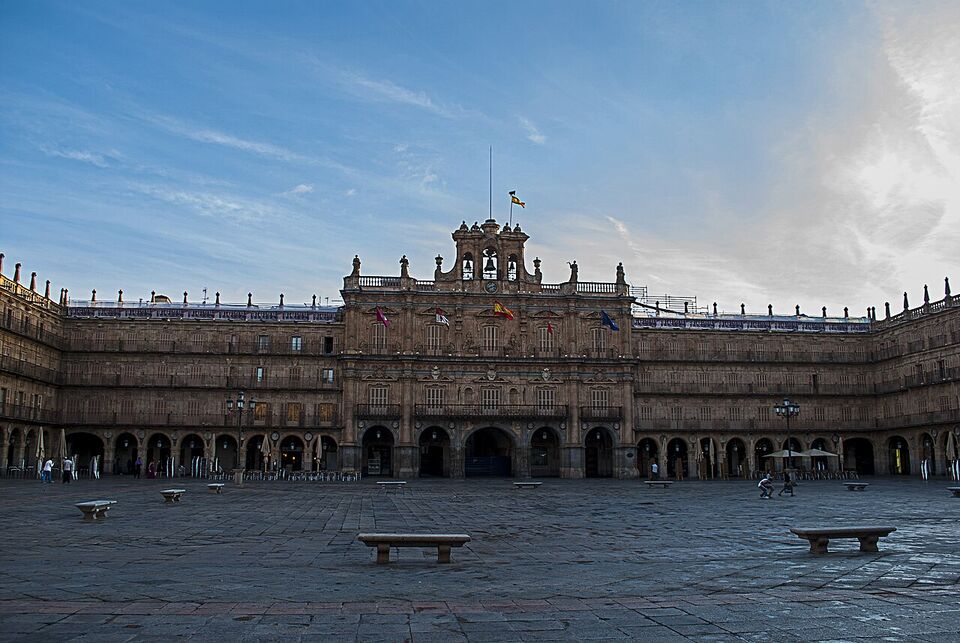
Many Spaniards will tell you this is the most beautiful main square in the country. It was built between 1729 and 1755 in an exuberant Baroque style, enclosed on all four sides by arcades and medallions of kings and heroes. Come twice: once in the morning for coffee under the arcades, and once at night when it is floodlit and full of students, families and buskers. Cafés on the square charge a premium; you pay for the view.
The two cathedrals and Ieronimus
Salamanca has two cathedrals joined together: the Romanesque Catedral Vieja (12th century) and the Gothic and Renaissance Catedral Nueva, begun in 1513 and finished more than two centuries later. One ticket covers both, at €10 (about $11) with an audioguide. Hours are 10 a.m. to 8 p.m. Monday to Saturday and 10 a.m. to 6 p.m. Sunday, with last entry 45 minutes before closing. Entry is free on Tuesdays from 4 to 6 p.m.
Don't miss the Old Cathedral's 15th-century altarpiece of 53 painted panels, and the cloister chapels. Outside, on the New Cathedral's Puerta de Ramos, look for the small carved astronaut and a dragon eating ice cream, added by restorers in 1992. People hunt for them all day.
Ieronimus is the separate visit to the cathedral towers, galleries and roof walkways, with views over the whole city. It costs €4 (about $4.50), is open 10 a.m. to 8 p.m. daily, and there is a night visit for €10 (about $11). Go for the night visit if your dates allow it.
The University and the frog
The historic university building, the Escuelas Mayores, has a carved Plateresque facade so dense it looks like lace. Hidden in it is a tiny frog on a skull; students say finding it brings luck in exams. Inside you can see the lecture hall of Fray Luis de León, kept with its rough wooden benches, and the old library. Entry is €10 (about $11), €5 for seniors and students; it is free on Monday afternoons from 3 to 7 p.m. Hours are 10 a.m. to 7 p.m. Monday to Saturday and 10 a.m. to 2 p.m. on Sunday.
Save money
Plan your Salamanca days around free windows: the University on Monday from 3 p.m., the cathedrals on Tuesday from 4 p.m., the Scala Coeli towers on Tuesday morning from 10 to noon, and Casa Lis on Thursday from 11 a.m. to 2 p.m. The Casa de las Conchas is always free.
More in Salamanca
Casa Lis
A modernist mansion with a stained-glass facade over the old city walls, filled with glass, porcelain dolls and decorative art. Open 11 a.m. to 7 p.m. (8 p.m. Saturday). Free Thursday mornings and for children under 14.
Clerecía and Scala Coeli
The Baroque Jesuit college across from the Casa de las Conchas. Guided visits run through the day; the Scala Coeli climb up its towers is €3.75 (about $4), or €6 combined with the church visit.
Convento de San Esteban
A huge Plateresque facade, a gilded altarpiece by José Benito de Churriguera and a quiet cloister. Open 10 a.m. to 2 p.m. and 4 to 6 p.m.
Casa de las Conchas
A 15th-century palace studded with about 300 carved scallop shells, the symbol of the pilgrims to Santiago. Step into the courtyard.
Puente Romano
Walk across the Tormes on the Roman bridge in the late afternoon for the classic view back at the cathedrals.
Huerto de Calixto y Melibea
A walled garden by the old walls, tied to the 15th-century novel La Celestina, with views of the New Cathedral's dome.
Eating in Salamanca
Salamanca is a tapas town with student prices. Around the Plaza Mayor and on Calle Van Dyck, north of the center, bars put out small plates of jamón ibérico (cured Iberian ham) from nearby Guijuelo, farinato (a soft local sausage, often fried with eggs) and chanfaina (a rice and offal stew). Try hornazo, a bread pie stuffed with pork loin, chorizo and egg, eaten in spring around the Lunes de Aguas festival after Easter.
Lunch is the big meal, from about 2 p.m. A weekday menú del día (set lunch with two courses, bread, a drink and dessert) is good value across the region; see Spanish food for how it works.
León
León was the capital of a medieval kingdom older than Castile, and it still feels distinct: a compact old town, Roman walls, and a Gothic cathedral with some of the finest stained glass in Europe. It is also a main stop on the Camino Francés, so you will see pilgrims with shells on their packs all over town (see the Camino de Santiago).
The cathedral
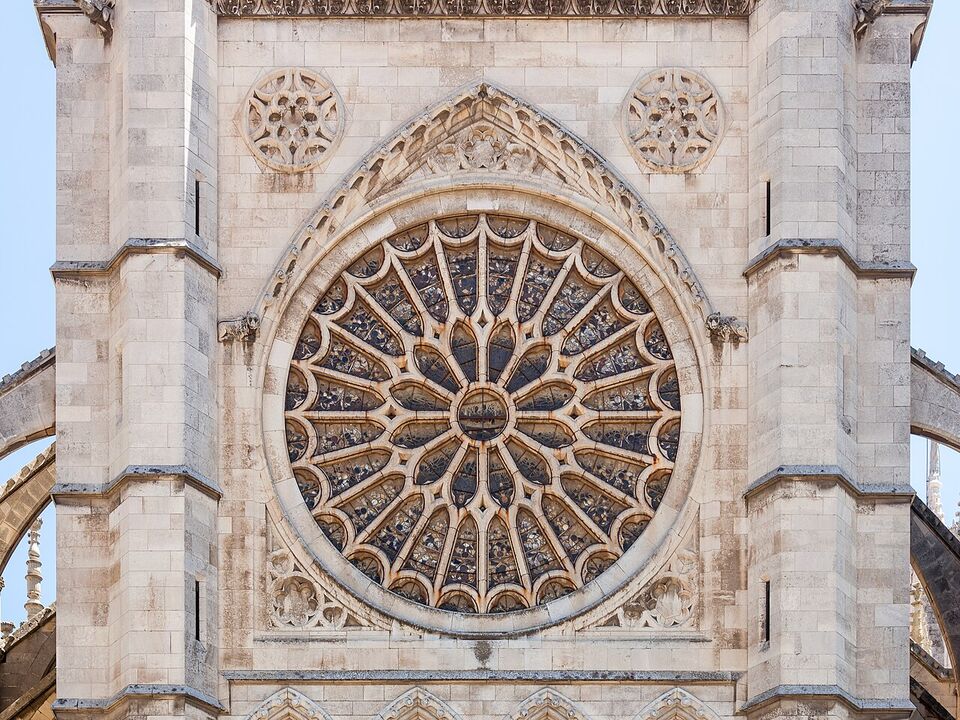
Santa María de León, built mostly in the 13th and 14th centuries, has walls that are more glass than stone. On a sunny morning the nave fills with colored light from nearly 1,800 square meters (about 19,000 square feet) of medieval and later windows. Admission is €8 (about $9), €7 for seniors, students and pilgrims with a credential. It is free on Tuesdays from 5:30 to 7 p.m. and for children under 12 with an adult. Hours run 9:30 a.m. to 1:30 p.m. and 4 to 7 p.m., with a midday break, and can change for services.
Insider tip
See León's cathedral in the morning, when the sun is on the east and south windows. Midday closures are common across Castile: many churches and smaller museums shut from about 1:30 or 2 p.m. to 4 or 5 p.m. Plan lunch for that gap.
San Isidoro and Gaudí
The Romanesque Basílica de San Isidoro holds the Panteón de los Reyes, a royal burial vault whose 12th-century painted ceilings are among the best-preserved Romanesque frescoes anywhere. The museum visit also takes in the treasury and library. Two blocks away, Gaudí's Casa Botines, a neo-Gothic apartment block he designed in the 1890s, is now a museum, one of only three Gaudí buildings outside Catalonia.
Tapas in the Barrio Húmedo
León keeps alive a tradition that has mostly died elsewhere in Spain: order a drink in the bars of the Barrio Húmedo and Barrio Romántico and a free tapa comes with it, from a slice of cecina (cured, smoked beef) to a small plate of potatoes or morcilla (blood sausage). Bar-hop with a corto (small beer) or a glass of local Prieto Picudo wine at each stop.
Burgos
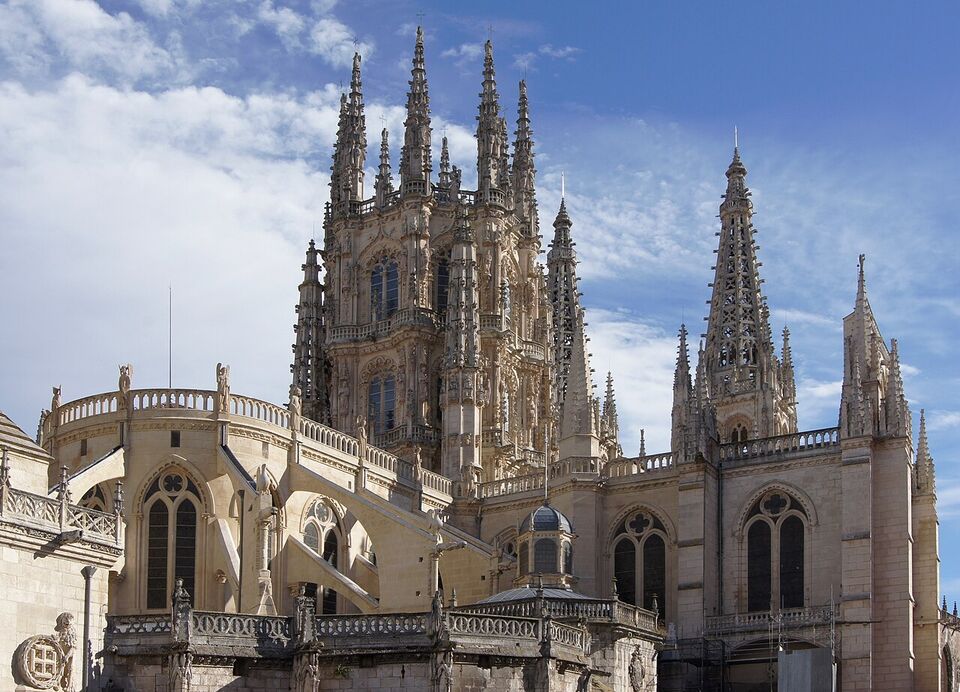
Burgos is a sober, elegant city on the Arlanzón River, and its cathedral is one of the masterpieces of Gothic Europe. Begun in 1221, it is a UNESCO World Heritage site in its own right and holds the tomb of El Cid, the 11th-century warrior who became Spain's national hero.
General admission is €11 (about $12) since April 2026, with a €1 radioguide or a free multimedia guide through the official app. From November 1 to March 18 it opens 9:30 a.m. to 6 p.m.; from March 19 to October 31, 9:30 a.m. to 6:30 p.m., and you can stay an hour after last entry. Free entry is only on Tuesdays from 9:30 to 11:25 a.m., with tickets handed out at the ticket office until 11:15 a.m., never online. Book regular tickets at catedraldeburgos.es.
Inside, look for the Golden Staircase by Diego de Siloé, the star-vaulted Constable's Chapel and the Papamoscas, a clockwork figure high in the nave that opens its mouth on the hour.
Atapuerca and the Museum of Human Evolution
About 9 miles (15 km) east of the city, the caves of the Sierra de Atapuerca have produced some of the oldest human fossils in Western Europe, more than a million years old. Start at the Museo de la Evolución Humana in Burgos, a modern museum on the riverbank, which also books guided visits to the excavation sites. Check the museum's site for the bus schedule to the sites, which runs more often in summer.
Burgos is also famous for morcilla de Burgos, a blood sausage made with rice, and for lamb roasted in wood ovens. The Camino Francés passes right through town.
Segovia overnight
Most visitors give Segovia four hours: aqueduct, cathedral, Alcázar, a plate of suckling pig, back to Madrid. Stay the night instead. When the tour buses leave at about 6 p.m., the old town goes quiet, the Roman aqueduct is lit up, and you can walk the walls and have dinner with locals.
- The aqueduct: built around the late 1st or early 2nd century, with more than 160 granite arches stacked without mortar, rising to about 93 feet (28.5 m) at the Plaza del Azoguejo.
- The cathedral: the last great Gothic cathedral built in Spain, from the 16th century, on the old town's highest point.
- The Alcázar: the castle on a cliff at the tip of town, often compared to a Disney castle, with royal rooms and a tower climb.
- Cochinillo asado: roast suckling pig, carved at the table with the edge of a plate to show how tender it is. It is a midday meal; book a table for 2 or 2:30 p.m. on weekends.
Fast trains (Avant and AVE) from Madrid Chamartín reach Segovia-Guiomar station in about 30 minutes. That station is outside town, so take the city bus or a taxi to the aqueduct (about 15 minutes). Slower buses from Madrid's Moncloa terminal take about 1 hour 15 minutes but drop you closer to the center. More in day trips from Madrid.
Insider tip
From Segovia, the medieval walled village of Pedraza (about 25 miles, 40 km, northeast) is a short drive. It is known for candlelit concerts on two Saturdays in July and for its roast lamb restaurants. You need a car.
Castles and the Duero
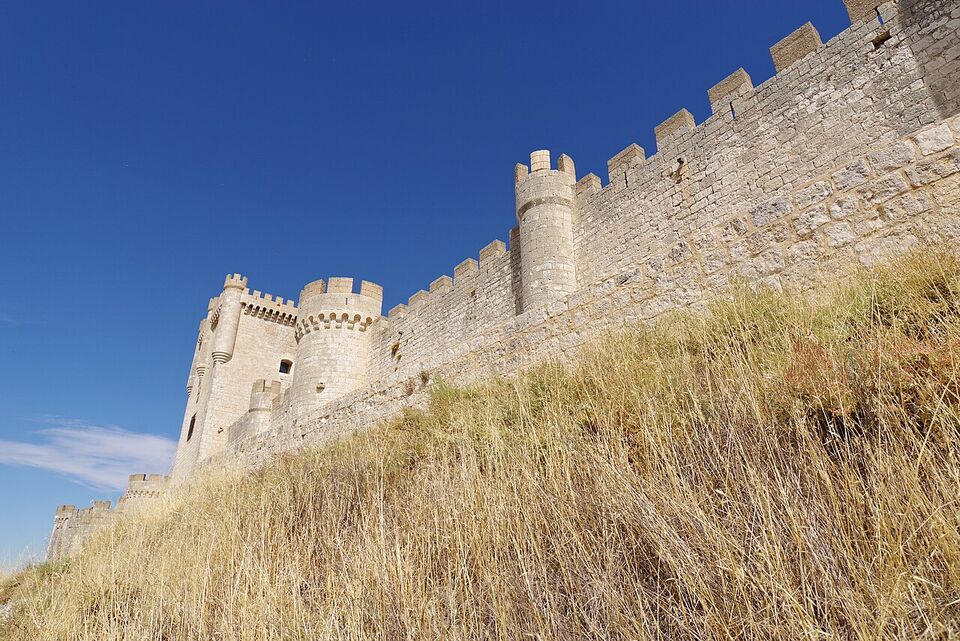
Castile is named for its castles, and the Duero River valley, which crosses the region from east to west, is lined with them. This is road-trip country: a rental car turns scattered sights into an easy loop. See driving in Spain for the rules and the speed limits, usually 120 km/h (75 mph) on autovías (toll-free divided highways), which is what most of the region has.
Castillo de Coca
A 15th-century castle of pink brick built by Moorish craftsmen for a Christian archbishop, with a deep dry moat. About 30 miles (50 km) northwest of Segovia.
Peñafiel
A long, ship-shaped castle on a ridge above the town houses the provincial wine museum. Below it, the square Plaza del Coso still hosts bullfights and festivals ringed by wooden balconies.
Castillo de la Mota
A massive brick fortress where Queen Isabella spent time and Cesare Borgia was imprisoned. Medina del Campo is on the rail line between Madrid and Salamanca.
Ciudad Rodrigo
A complete walled town about an hour west of Salamanca, with a cathedral, a parador in its castle and a famous Carnival with bulls in February.
Ribera del Duero wine
The stretch of the Duero between Aranda de Duero and Valladolid is Ribera del Duero, one of Spain's two great red wine regions alongside Rioja. The grape is Tempranillo, called Tinto Fino here. Many wineries take visitors, but almost all need a booking, and few open on Sunday afternoons or in August. In Aranda, old underground cellars run beneath the town center, and some can be toured. Further west, Toro and Rueda make powerful reds and crisp Verdejo whites. See Spanish wine.
Watch out
Spain's drink-driving limit is 0.5 g/l of blood alcohol, and 0.3 g/l for drivers with less than two years' experience, stricter than most US states. A bill to cut the general limit to 0.2 g/l was before parliament in fall 2026 but was not law as of November 2026; check the current limit before you drive. At a winery tasting, the driver should spit or skip. Roadside breath tests are common.
More towns worth a stop
- Ávila: the most complete medieval walls in Spain, with 87 towers, and the city of St. Teresa. An easy stop between Madrid and Salamanca by train or car.
- Valladolid: the regional capital, with the National Museum of Sculpture, full of painted wooden saints that are carried in Holy Week processions. Busy, real and largely untouristed.
- Zamora: a small city on the Duero with more than 20 Romanesque churches and some of the most solemn Holy Week processions in Spain.
- Astorga: on the Camino west of León, with a second Gaudí building (the Episcopal Palace) and a chocolate museum.
- La Alberca: a mountain village of half-timbered houses in the Sierra de Francia, about 1 hour 15 minutes south of Salamanca.
Getting there and around
Trains from Madrid are the easy way in. Most leave from Chamartín, Madrid's northern station, not Atocha. Check schedules and buy at renfe.com; low-cost Ouigo trains have also served Valladolid, so compare fares if you are heading that way. See getting around Spain for how the operators compare.
| From Madrid to | Fastest train | Notes |
|---|---|---|
| Segovia | About 30 min | Arrives at Segovia-Guiomar, outside town |
| Valladolid | About 1 hr | Frequent high-speed service |
| Ávila | About 1 hr 30 min | Slower conventional line; also on the way to Salamanca by some trains |
| Salamanca | About 1 hr 35 min | Alvia and Avant trains via Medina del Campo |
| Burgos | About 1 hr 30 min–2 hr | Via the high-speed line through Valladolid |
| León | About 2 hr | High-speed line; continues to Asturias |
Connections between the Castilian cities are less convenient. Salamanca to León or Burgos usually means a change in Valladolid or Medina del Campo, or an intercity bus. If you want to see three or more cities plus castles, rent a car for that leg. Parking garages near the old towns are easy to find, and old centers have pedestrian zones and in some cities low-emission rules, so park outside and walk.
From Salamanca you can continue west to Portugal: Porto is about 3 hours 30 minutes by car. Public transport across that border is limited, so check bus schedules before you commit.
When to go
Castile's climate is continental: hot dry summers, cold clear winters, short springs and autumns. In July and August, afternoons in Salamanca and Valladolid often reach the low 90s°F (33–35°C), but nights cool off at this altitude. In January, highs are around 46°F (8°C) and nights below freezing.
- Spring and fall are best for walking cities and visiting wineries; harvest is in late September and October.
- Holy Week (Semana Santa) is Castile's great festival, silent and solemn in Valladolid, Zamora, León and Salamanca. In 2027 it runs from Palm Sunday, March 21, to Easter Sunday, March 28. Book rooms early. See festivals.
- Winter is cheap and quiet, and the food (roasts, stews, soups) suits the cold.
Month by month details are in when to go.
Where to stay
Stay inside or right next to the old towns; everything you want is on foot. Hotels across the region cost far less than in Madrid or Barcelona, and many mid-range rooms fall in the $ to $$ range.
- Salamanca: around the Plaza Mayor and the cathedrals. The Parador de Salamanca sits across the river with a view of the skyline but is a walk or short taxi from the center.
- León: near the cathedral or the Barrio Húmedo. Weekend nights are lively, so ask for a quiet room.
- Segovia: inside the walls, between the aqueduct and the cathedral. The parador is outside town with a view back at the skyline.
- Countryside: casas rurales (rural guesthouses) in the Sierra de Francia or near Pedraza, and wine hotels in Ribera del Duero. Several historic paradores (state-run hotels in castles and monasteries) are in this region, including Ciudad Rodrigo and Zamora.
Sample itinerary: five days
- Day 1
Madrid to Segovia
Morning train to Segovia. Aqueduct, cathedral, Alcázar, a long lunch of cochinillo. Stay the night and walk the lit-up old town after dinner.
- Day 2
Ávila to Salamanca
Drive or take the bus or train via Ávila to walk the walls. Continue to Salamanca by late afternoon and see the Plaza Mayor at night.
- Day 3
Salamanca
Cathedrals, University, Casa de las Conchas and Clerecía in the morning; Casa Lis and the Roman bridge after lunch. Book the Ieronimus night visit.
- Day 4
Salamanca to León
About 2 hours by car. Cathedral in the afternoon light, then San Isidoro, then free tapas in the Barrio Húmedo.
- Day 5
Burgos
About 1 hour 45 minutes east by car. Cathedral in the morning, lunch of lamb or morcilla, then the Museum of Human Evolution. Train back to Madrid in the evening.
With more time, add a day in Ribera del Duero for wineries and Peñafiel, or continue north from León to Asturias and the Picos de Europa, about 2 hours away. For more routes, see planning your trip.
Practical tips
- Midday closures. Smaller churches, shops and some museums close from about 2 to 5 p.m. Many monuments close one day a week, often Monday.
- Sunday and August. Many shops close on Sundays; family restaurants and wineries may close for part of August.
- English is less common than on the coasts, though widely spoken in hotels. A few phrases go a long way; see Spanish phrases.
- Tipping is small: round up or leave a few coins at a bar, 5 to 10 percent for a good sit-down meal. See money.
- Dress for churches. Cover shoulders and avoid beachwear in cathedrals. See etiquette.
- Safety. These cities are calm, but watch bags on crowded festival nights. See safety; in an emergency, call 112.
Add it to a route in the trip builder, or ask us to plan the hotels, trains and guides for you.