How Spain moves
For an American used to driving everywhere or flying between cities, Spain is a revelation. Its high-speed rail network is the largest in Europe and second only to China's in the world, and it connects Madrid with Barcelona, Seville, Málaga, Valencia, Alicante, Granada, Valladolid, León, Asturias and Galicia in roughly 1 to 4 hours. Trains leave from city-center stations, have no liquid rules, and usually beat flying once you count airport time.
Since 2021, Renfe, the state railway, has competed with two newcomers on the busiest routes: Iryo (backed by Italy's Trenitalia) and Ouigo (owned by France's SNCF). Fares on those routes have fallen sharply, and buying early can get you across the country for the price of a Madrid lunch.
Trains do not reach everywhere. For the white towns of Andalusia, the Picos de Europa, rural Galicia or the coves of the Costa Brava, you will want a bus or a car (see driving in Spain). For the islands, you fly or sail. This page covers all of it, plus metros, taxis and rideshares in the cities.
High-speed trains: AVE, Avlo, Iryo and Ouigo
| Operator | Style | Main routes from Madrid | Good to know |
|---|---|---|---|
| Renfe AVE | Full service, flexible fares, choice of standard and premium classes | Almost every high-speed line in Spain | The widest network and most frequent trains; the only high-speed choice on many routes |
| Renfe Avlo | Renfe's low-cost brand, one class | Barcelona, Valencia, Alicante, Andalusia and others | Small bag included; larger bags and seat choice extra |
| Iryo | Three classes, food service, red trains | Barcelona, Valencia, Alicante, Córdoba, Seville, Málaga | Competitive fares; Eurail and Interrail passes are not accepted |
| Ouigo | Low-cost, double-deck blue trains, pay for extras | Barcelona, Valencia, Alicante, Córdoba, Seville, Málaga, Valladolid | Strict bag limits; direct Seville to Barcelona trains since December 2025; no rail passes |
Journey times
Watch out
After a fatal collision between a Renfe AVE and an Iryo train near Urda (Toledo province) on October 28, 2026, high-speed trains between Madrid and Andalusia (Córdoba, Seville, Málaga, Granada, Cádiz and Huelva, plus Barcelona to Andalusia through trains) were suspended. Renfe stopped selling tickets on the route until December 13, 2026, though service may return sooner; Madrid to Toledo and Málaga to Seville were reported running normally. Check Renfe, Iryo and Ouigo before you plan, and consider a domestic flight or a long-distance bus in the meantime. Even when the line runs, temporary speed limits near Córdoba since the January 18, 2026 Adamuz derailment can make trips slower than the times below.
These are typical times on the fastest direct trains when the lines are running normally. Slower trains with more stops can add 30 minutes or more, and some routes run slower in 2026 because of temporary speed limits, so check the current timetable for your departure.
| Route | Fastest time | Operators |
|---|---|---|
| Madrid to Barcelona | About 2 hr 30 min | Renfe, Iryo, Ouigo |
| Madrid to Zaragoza | About 1 hr 20 min | Renfe, Iryo, Ouigo |
| Madrid to Córdoba | About 1 hr 45 min | Renfe, Iryo, Ouigo |
| Madrid to Seville | About 2 hr 30 min | Renfe, Iryo, Ouigo |
| Madrid to Málaga | About 2 hr 45 min | Renfe, Iryo, Ouigo |
| Madrid to Granada | About 3 hr 15 min | Renfe |
| Madrid to Valencia | About 1 hr 50 min | Renfe, Iryo, Ouigo |
| Madrid to Alicante | About 2 hr 15 min | Renfe, Iryo, Ouigo |
| Madrid to Toledo | About 35 min | Renfe (Avant) |
| Madrid to Segovia | About 30 min to Segovia-Guiomar, outside town | Renfe, Ouigo |
| Madrid to Santiago de Compostela | About 3 hr 20 min | Renfe |
| Madrid to Oviedo | About 3 hr 15 min | Renfe |
| Barcelona to Girona | About 40 min | Renfe, SNCF |
| Barcelona to Seville | About 5 hr 30 min direct | Renfe, Iryo, Ouigo |
| Seville to Córdoba | About 45 min | Renfe, Iryo, Ouigo |
Some important trips are slower. Madrid to Bilbao and San Sebastián has no complete high-speed line yet, so trains take around 5 hours; buses or a short flight are often as quick. Barcelona to Valencia runs along the coast in roughly 3 hours 15 minutes. Seville to Granada takes about 2 hours 30 minutes by train via Antequera, similar to the bus.
Different from home
Long-distance trains in Spain run on time to a degree Amtrak riders may find hard to believe, and most cross the country at up to 186 mph (300 km/h). But you must reserve a specific seat on a specific train, there is no walk-up "next train" flexibility on cheap fares, and doors close a couple of minutes before departure.
Tickets, fares and booking
Spanish train fares work like airline fares: they rise as the train fills. Advance low-cost fares on Avlo, Iryo and Ouigo between Madrid and Barcelona, Valencia or Andalusia can be under €20 (about $22), and promotions sometimes start under €10. The same trip bought the day before on a full AVE can cost €100 (about $112) or more.
- Booking windows vary by operator and route, from a few weeks to several months ahead. Renfe sometimes opens summer and holiday trains late, so if the trains for your date are not on sale yet, check back.
- Where to buy: the operators' own websites and apps (renfe.com, iryo.eu, ouigo.com) have no booking fee. Trainline and other resellers compare several operators in one search for a small fee, and they accept US cards reliably.
- Fare types: Renfe's Básico fares are cheapest but restrictive; Elige lets you pick extras and changes; Prémium adds lounge access and meals on AVE. Iryo and Ouigo sell bag, seat and flexibility add-ons.
- Tickets: keep the QR code on your phone or print it. Carry your passport; staff can ask for ID matching the name on the ticket.
Watch out
Renfe's website sometimes rejects US credit cards or asks for an extra verification step. If payment fails twice, switch to the Renfe app, a different card, or a reseller rather than trying repeatedly, which can trigger your bank's fraud block.
Save money
If you are flexible on time, check all three operators for the same route. On Madrid to Barcelona or Madrid to Seville, the difference between the cheapest and the most expensive departure on the same morning can be more than €50 (about $56). Midday and late-evening trains are usually cheapest.
At the station and on board
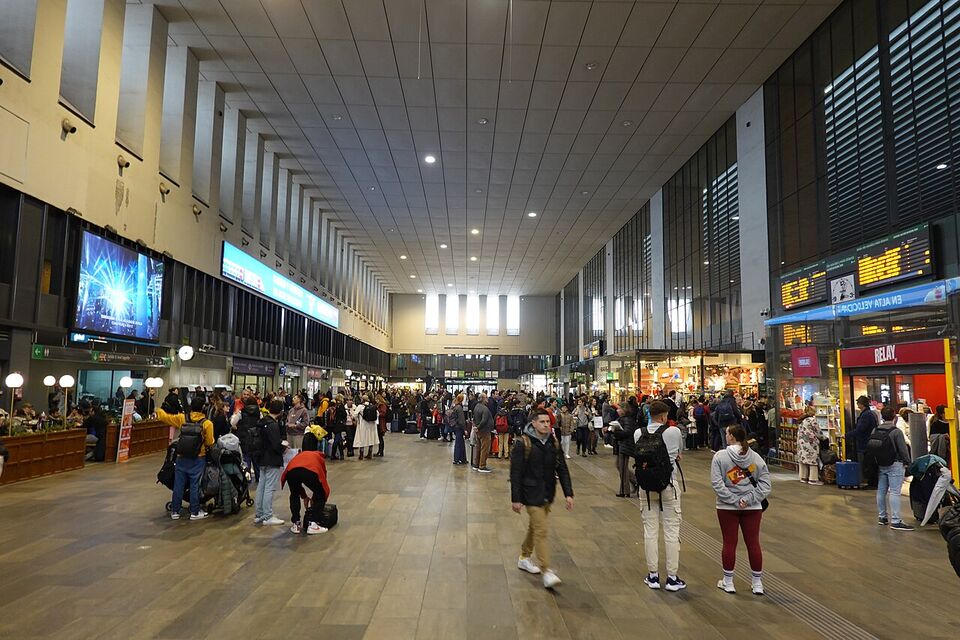
Long-distance and high-speed platforms have an airport-style bag X-ray before the gates (you keep your shoes on, and there are no liquid rules). Arrive at least 20 to 30 minutes before departure at big stations, and more on Friday afternoons and before holidays. The departure board shows the platform (vía) about 15 to 20 minutes before departure.
The big stations
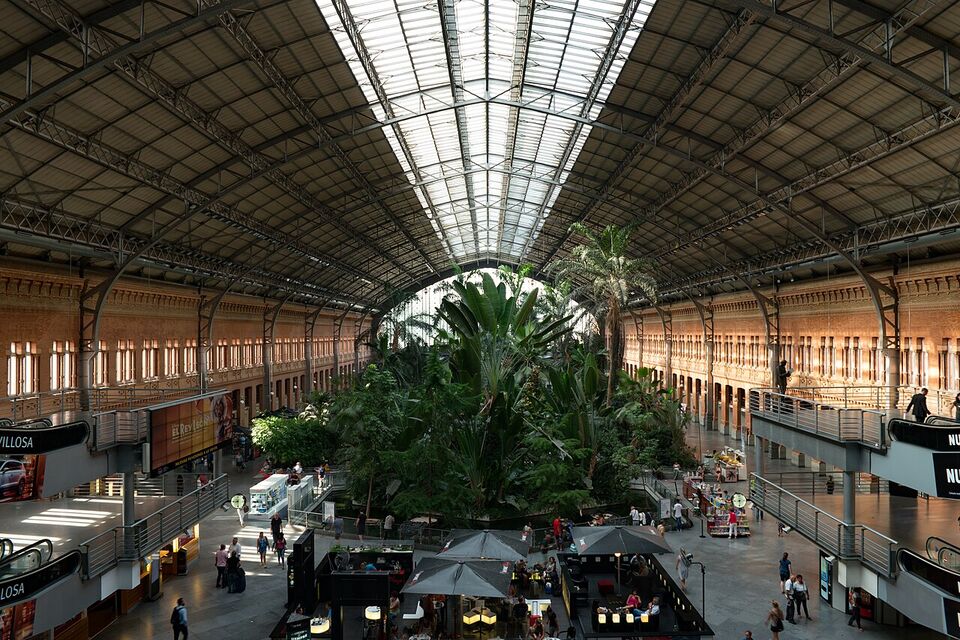
- Madrid: Puerta de Atocha (officially Madrid-Puerta de Atocha-Almudena Grandes) handles most trains to Andalusia, Valencia, Alicante, Barcelona and Toledo; Chamartín-Clara Campoamor in the north handles trains to Segovia, Valladolid, Galicia and Asturias, and some trains to Valencia and Alicante. Check which one is on your ticket. Some weekend mornings in 2026, tunnel works around Atocha have shifted or delayed early services.
- Barcelona: almost all long-distance trains use Sants, which is undergoing internal reorganization; allow extra time to find your gate.
- Seville: Santa Justa, a 20-minute walk or short bus ride from the center.
- Málaga: María Zambrano, a 15-minute walk from the old town, with the airport train on the same site.
- Valencia: high-speed trains arrive at Joaquín Sorolla, a short walk or free shuttle from the older Estació del Nord, which serves regional trains.
Luggage
Renfe AVE fares let you bring a reasonable amount of luggage that you carry yourself, stored on racks at the ends of the car and overhead. The low-cost brands (Avlo, Ouigo and the cheapest Iryo fares) include only a small bag or one cabin bag and charge for larger suitcases, and staff do check. If you travel with a big case, compare the fare with the bag added.
Food and comfort
AVE and Iryo trains have a café car, and premium classes include a meal on some routes. Ouigo sells snacks. Most high-speed trains have power outlets (Type C/F European plugs, see staying connected), and Wi-Fi is patchy. Station cafés sell sandwiches, called bocadillos, for the road.
Insider tip
Renfe's free Cercanías connection (the Combinado Cercanías) lets you ride the local commuter train to or from the station on the same day as a long-distance trip. Look for the code on your AVE ticket and enter it at the Cercanías ticket machine. It covers the Madrid airport train from Terminal 4 to Atocha and Chamartín.
Rail passes: Renfe Spain Pass, Eurail
For most visitors, individual advance tickets are cheaper than a pass, because Spain's low-cost high-speed fares are so low. A pass makes sense if you will take many long trips, cannot commit to dates in advance, or are traveling in peak periods when last-minute fares are high.
Renfe Spain Pass
Renfe sells its own pass to non-residents in packs of 4, 6, 8 or 10 one-way journeys, used within one month of the first trip (you have six months from purchase to start). It covers Renfe AVE, Alvia, Avant and regional trains, but not Iryo or Ouigo. In 2025, prices started around €220 (about $246) for four journeys in standard class, with a higher Comfort tier; check Renfe's site for current prices. You must reserve each journey online or at a station before you board, free of charge. Each train counts as one journey, so a trip with a change uses two.
Eurail and Interrail
Americans use Eurail passes (Interrail is for European residents). They are valid on Renfe trains, but you must pay a seat reservation fee for high-speed and long-distance trains, often around €10 (about $11) per trip, and reservation quotas for passholders can sell out. Iryo and Ouigo do not accept passes. A Eurail pass makes the most sense if Spain is one part of a longer trip through France, Italy or Portugal (see Spain and its neighbors).
Regional and commuter trains
Below the high-speed network, Renfe runs Media Distancia (regional) trains and Cercanías commuter networks around Madrid, Barcelona (where it is called Rodalies), Seville, Málaga, Valencia, Bilbao, San Sebastián, Asturias, Cantabria, Cádiz, Murcia and Zaragoza.
- Madrid Cercanías reach El Escorial, Alcalá de Henares and Aranjuez, all easy day trips.
- Barcelona Rodalies run to Sitges, the Costa del Maresme and Montserrat (with connecting trains run by the Catalan railway FGC). Rodalies has a long record of delays and disruption, so give yourself slack.
- Málaga Cercanías line C1 runs from the city past the airport to Torremolinos, Benalmádena and Fuengirola. See the Costa del Sol.
- In the north, narrow-gauge lines (including Euskotren in the Basque Country and Renfe's old FEVE lines along the Cantabrian coast) are slow but scenic. Euskotren connects San Sebastián with the French border at Hendaye.
Regional train tickets are usually sold at fixed prices without big advance discounts, and you can often buy them at the station on the day. Avant trains (mid-distance high-speed, such as Madrid to Toledo or Segovia, Seville to Córdoba, and Barcelona to Girona) need a seat reservation and can sell out at weekends.
Long-distance buses
Spain's intercity buses are modern, cheap and comfortable, and in some places they beat the train. ALSA is the biggest national operator; regional companies such as Damas in Huelva, Comes in Cádiz, Monbus in Galicia and La Sepulvedana between Madrid and Segovia fill in the map. FlixBus runs some long-distance and international routes.
- Andalusia's white towns: Ronda, Arcos de la Frontera, Vejer, Zahara and Grazalema are much easier by bus (or car) than by rail. See Andalusia.
- Granada: ALSA buses to Málaga (about 1 hr 45 min), Seville and Córdoba are frequent and compete well with the train.
- Madrid to Segovia: the bus drops you near the Aqueduct, while the fast train stops at a station several miles outside town.
- The Basque Country: frequent buses link Bilbao, its airport and San Sebastián in about 1 hr 15 min.
Buy tickets on the operator's app or site, or at the bus station. Many buses have reserved seats and allow one large suitcase in the hold. Buses on routes popular with tourists (Seville to Ronda, Granada to the Alpujarras) can fill on weekends and holidays.
Domestic flights
Flying makes sense for the islands, for long diagonals the train does poorly (Barcelona to Seville is about 1 hr 45 min in the air versus 5 hr 30 min on the train), and for Bilbao, Santiago or Vigo from the south or east. Iberia and its regional partner Air Nostrum, Vueling, Air Europa, Volotea and Ryanair cover the mainland. Binter is the main airline between the Canary Islands and also flies to the mainland.
Budget fares often include only an under-seat bag; a full carry-on and a checked bag can double the price. Compare the total against a train once airport transfers and security are counted. For the Madrid and Barcelona airports, see flights.
Different from home
On domestic flights you still need ID. Bring your passport; a US driver's license is not accepted as ID at Spanish airports.
Ferries to the islands and beyond
Balearic Islands
Baleària, Trasmed and GNV sail from Barcelona, Valencia and Dénia to Palma, Ibiza and Menorca. Overnight sailings from Barcelona to Palma take roughly 7 to 8 hours (book a cabin); faster crossings from Dénia reach Ibiza in a few hours. Between the islands, fast ferries link Ibiza and Formentera in about 30 minutes, and ferries cross from Alcúdia in Mallorca to Ciutadella in Menorca. Taking a car is possible but costly in summer. See the Balearics.
Canary Islands
Naviera Armas and Fred. Olsen connect the Canary Islands with each other: Tenerife to La Gomera in under an hour on fast ferries, Tenerife to Gran Canaria in under 2 hours, and Lanzarote to Fuerteventura in about 30 minutes. There is also a weekly ferry from Huelva and Cádiz to the Canaries that takes about a day and a half, but almost everyone flies. Remember the islands run one hour behind the mainland. See the Canary Islands.
To Morocco, Italy and the UK
Ferries cross from Tarifa and Algeciras to Morocco, from Barcelona to Italy, and from Bilbao and Santander to England. See Spain and its neighbors.
Metros, buses and taxis in the cities
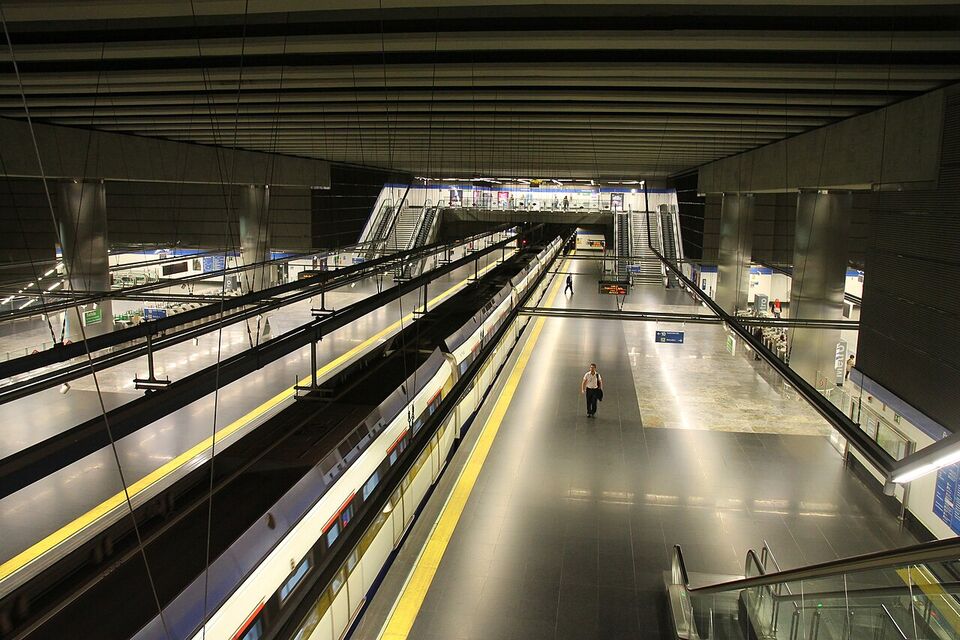
Spanish cities have excellent public transit. Madrid, Barcelona, Valencia, Bilbao, Seville, Málaga and Palma all have metros or light rail, and every city has city buses. Most central old towns are best on foot.
| City | How to pay | Tips |
|---|---|---|
| Madrid | Rechargeable Multi card, or contactless bank card on buses and at metro gates where supported | Tourist Travel Pass for 1 to 7 days; airport Metro trips carry a €3 supplement |
| Barcelona | T-casual 10-ride card, Hola Barcelona travel card for up to 5 days | Hola Barcelona includes the airport metro; pickpockets work lines L1 and L3 |
| Seville | Bus and tram cards; single metro line | The center is compact and walkable; summer heat makes buses appealing |
| Valencia | Metrovalencia SUMA card, contactless | Metro to the airport and the beach at Malva-rosa via tram |
| Bilbao | Barik card or contactless | Norman Foster's metro and a tram to the Guggenheim |
Licensed taxis are white (black and yellow in Barcelona), metered, and cheaper than most US cities. Uber, Cabify, Bolt and FreeNow work in Madrid, Málaga, Seville, Valencia and other cities; in Barcelona, rideshare supply is limited by local rules and official taxis are often faster. Bike-share systems such as BiciMAD in Madrid, Sevici in Seville and Valenbisi in Valencia have tourist options; Barcelona's Bicing is for residents only.
Watch out
Pickpockets work the metros in Madrid and Barcelona, especially at airport stations, Sol, Gran Vía, Sagrada Família, Plaça de Catalunya and Passeig de Gràcia, and on crowded escalators. Keep your phone out of back pockets, wear a cross-body bag in front, and be wary of anyone who crowds you at the doors. See safety.
When to rent a car
Do not rent a car for Madrid, Barcelona, Seville or Valencia: traffic, low-emission zones and parking costs make a car a burden. Rent one for the white towns and the Cádiz coast, the Rioja wine country, Asturias and the Picos de Europa, Galicia's Rías Baixas, the Costa Brava, Mallorca and the Canary Islands. A common pattern is to train between cities and pick up a car for two or three days at a station, then drop it before the next city. Speed limits, tolls and the international driving permit are covered on the driving page.
Strikes, holidays and accessibility
Rail and transit strikes happen a few times a year. Spanish law requires minimum services (servicios mínimos) during strikes, often 60 to 75 percent of long-distance trains, and operators publish which trains will run a few days before. If your train is canceled, the operator must offer a refund or a seat on another train.
Trains and buses sell out on holiday weekends, around Christmas and Three Kings, Holy Week (March 21–28, 2027), and the first and last days of August. Book those dates as early as possible. See when to go.
Renfe's free assistance service for passengers with reduced mobility, called Atendo, operates at major stations; request it in advance when you book. Newer high-speed trains have accessible spaces and toilets. See Spain by interest for more on accessible travel.
- Download the Renfe, Iryo and Ouigo apps before you go, and check tickets show the right station (Atocha or Chamartín in Madrid).
- Book high-speed trains as soon as your dates are fixed.
- Arrive 20 to 30 minutes early for the bag scan.
- Keep your passport with you on every train and flight.
- Check for strikes (huelga) a few days before a big travel day.
Add it to a route in the trip builder, or ask us to plan the hotels, trains and guides for you.